

The final compromise in US digital asset regulation: How far is a 630-page document from 60 votes?
The 114 proposed amendments still lack bipartisan support; September 15th will be a test of whether the US can truly enshrine digital asset regulations into federal law.
Who will define the boundaries of digital finance? 630 pages, 114 amendments, and 60 votes constitute the three most crucial figures in the new Clarity Act. While controversies surrounding DeFi, anti-money laundering, stablecoin yields, credit unions, and political ethics have been revisited in the text, bipartisan support remains unclear as of September 11th. The procedural vote on September 15th will test whether the US can truly enshrine the long-standing, fragmented boundaries of crypto regulation—discussed by the SEC, CFTC, and courts—into federal law.
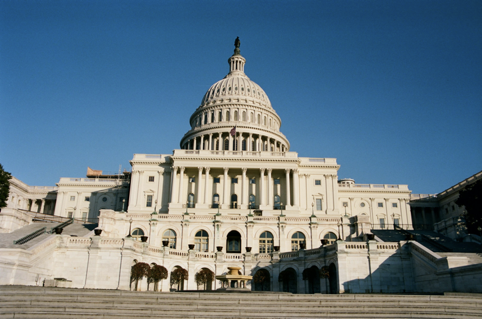 (Image caption) Exterior view of the U.S. Capitol in Washington, D.C. The Senate is scheduled to hold a procedural vote on the motion to put HR3633 into consideration on the afternoon of September 15, which is the first political hurdle for the CLARITY Act to proceed this year.
114 amendments, still 60 votes short.
At 2:15 PM on September 15th, the US Senate will hold a vote that is easily misinterpreted. It is not the final passage of the Clarity Act, nor the formal implementation of the new US encryption regulation law. The Senate will be dealing with HR3633's motion to proceed, that is, whether to end the debate on the motion to "proceed with the bill" and allow the bill to actually enter the Senate agenda.
The process itself appears highly technical, but it could determine whether the United States still has a chance to complete legislation on the structure of the digital asset market this year.
On September 10, 2026, Senate Republicans released the latest version of the Digital Asset Market Clarity Act (CLARITY Act), which is approximately 630 pages long. Cynthia Lummis, chairwoman of the Senate Banking Committee's Digital Assets Subcommittee, stated that Republicans had incorporated "more than 114" amendments requested by their Democratic counterparts during months of negotiations.
This number is striking, but it needs to be interpreted with caution. The 114 items are Lummis's public statement of the negotiation results and cannot be directly equated with the 114 formal Democratic amendments that have been individually confirmed. What is certain is that the new version does address several long-standing controversies, including DeFi control standards, the scope of the Bank Secrecy Act, the potential legal repercussions for prediction markets, and the rights of credit unions to enter the digital asset business.
However, as of September 11, while the new version of the text had resolved many technical issues, it still hadn't addressed the most critical political question: whether it could garner enough votes.
September 15th is just the first hurdle.
The CLARITY Act had already shown a certain degree of bipartisan support during its run in the House of Representatives.
On July 17, 2025, the House of Representatives passed HR3633 with 294 votes in favor and 134 against. 216 Republicans voted in favor, and 78 Democrats joined in supporting it. For a market structure bill that simultaneously involves the SEC, CFTC, banking system, trading platforms, and DeFi, this is not a marginal result.
The real challenge lies in the Senate.
Instead of directly accepting the House text, the Senate re-examined issues such as the division of power between the SEC and CFTC, DeFi, anti-money laundering, stablecoin yields, banking competition, credit unions, and political ethics. On May 14, 2026, the Senate Banking Committee advanced the CLARITY Act by a vote of 15 to 9. Democratic Senators Ruben Gallego and Angela Alsobrooks joined Republicans in voting in favor, but neither extended their support at the committee stage to a commitment to the final Senate version.
This situation perfectly illustrates the current political reality of legislation. Cross-party cooperation exists, but it is not unconditional.
The vote on September 15 was more accurately a cloture of the motion to proceed, that is, whether to end the debate on the motion to proceed to HR3633. Even with 60 votes, it only means that the bill has crossed an important procedural hurdle, and it is still quite far from being passed by the Senate.
Further formal deliberations, amendments, and congressional votes are possible; if the Senate and House versions differ, both chambers must also address the textual differences. Only when both chambers ultimately adopt the same wording and send it to the president for signature will the CLARITY Act become law.
Therefore, September 15th is more like a test of political feasibility: whether the Senate is willing to continue investing time, agenda, and political capital into this bill.
 (Image caption) Wyoming Republican Senator Cynthia Lummis publicly explains digital assets policy. As chair of the Senate Banking Committee's Digital Assets Subcommittee, she released a new 630-page document on September 10, stating that it incorporated over 100 amendments proposed by Democrats.
DeFi is starting to focus on "who controls it".
One of the most noteworthy changes in the new CLARITY Act is in DeFi.
Over the past few years, the regulation of DeFi in the United States has been entangled in a fundamental question: when is a protocol deployed on a blockchain merely software, and when does it have the substance of a financial intermediary?
This issue is not abstract. If a development team still retains the power to upgrade smart contracts, can modify transaction logic, restrict certain users, or change protocol operation through administrator keys, then even if it is marketed as DeFi, there may still be a clear center of control.
The new version in September addresses this line more explicitly.
Lummis' revised statement proposes that certain "non-decentralized finance protocols," if they meet certain conditions, need to register with the CFTC and be subject to the requirements of the Bank Secrecy Act (BSA). The focus of the assessment is gradually shifting from "what a project claims to be" to "whether anyone can still directly or indirectly control, modify, or substantially influence the protocol's functionality and rules."
The long-term impact of this change may far outweigh some of the more attention-grabbing clauses.
In the past, "decentralization" was simultaneously a technological description, a governance philosophy, and a market term. If the law begins to require it to undergo a control test, many arrangements originally considered engineering-level will take on regulatory implications. Administrator keys, smart contract upgrade rights, front-end control, and the right to modify protocol rules may all become evidence in determining whether a project needs to assume financial intermediary obligations.
In other words, the legal identity of DeFi will increasingly depend on its actual governance structure rather than its brand label.
BSA enters the heart of DeFi
Another aspect of the DeFi controversy is how anti-money laundering regulations should be applied.
The fundamental logic of the traditional U.S. anti-money laundering system is the existence of an intermediary that can assume responsibility. Banks, securities firms, exchanges, and other financial institutions are all clearly defined legal entities capable of fulfilling obligations such as customer identification, suspicious transaction monitoring, and reporting.
Truly highly decentralized protocols, on the contrary, break this premise.
If a smart contract, once deployed, cannot be unilaterally controlled or shut down by anyone, then directly transplanting the responsibilities of traditional financial institutions into it would encounter structural difficulties. Therefore, the new CLARITY Act does not choose to treat all DeFi as financial institutions, but instead attempts to distinguish between protocols without a de facto controller and systems where key power is still held by identifiable individuals.
This approach has a very practical advantage: it pulls a debate that easily devolves into ideological arguments back to the level of facts. Regulators don't need to first determine whether blockchain itself is good or bad; instead, they can first examine who holds the power in the protocol, including who has the ability to modify the rules, control the front end, collect fees, and who can truly intervene in the event of risks.
However, Democrats are not entirely reassured about the anti-money laundering issue. Democratic minority staff on the Senate Banking Committee publicly argued in August that the then-current version of the bill still falls short in addressing decentralized mixing tools and illicit financial activities. This is a Democratic policy assessment and cannot be written as a legal flaw already confirmed by courts or regulators, but it at least illustrates that defining control over DeFi only addresses part of the anti-money laundering problem.
The law can define who should be held accountable, but law enforcement also has to deal with systems that are deliberately designed to leave no one accountable.
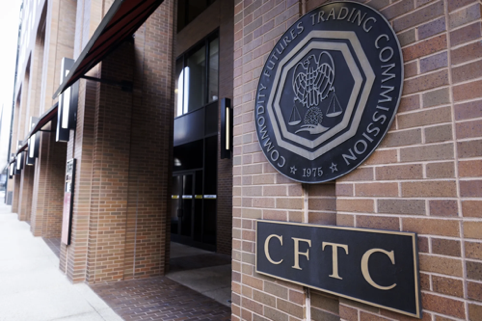 (Image caption) Signage on the exterior wall of the Commodity Futures Trading Commission (CFTC) headquarters in Washington, D.C. The new CLARITY Act directs some "non-decentralized finance protocols" that still have substantial control to register with the CFTC and may be subject to the Bank Secrecy Act; if congressional legislation is blocked, the CFTC has also indicated that it will assess establishing a crypto market framework based on existing mandates.
Predicting unexpected market entry
Another easily overlooked change in the new version is that it limits the relevant DeFi regulations to spot and cash transactions of digital goods.
Lummis stated that this amendment was made in response to concerns from Indigenous communities that the CLARITY Act might impact the forecasting market.
This section might seem abrupt if the Clarity Act is simply viewed as a cryptocurrency law. Why does digital asset legislation encounter Indigenous communities and prediction markets?
The reason is that digital finance in the United States is no longer a closed industry. Prediction markets may involve political elections, sporting events, economic data, and various event contracts; some Indigenous groups enjoy special federal and state legal arrangements for gambling-related businesses. If the definition of digital goods is written too broadly, a bill originally intended for the structure of the crypto market may inadvertently change the jurisdictional boundaries of another system.
The new version attempts to separate the two, reflecting the real complexity that digital asset legislation now faces. Commodity law, securities law, banking law, anti-money laundering regulations, software governance, and prediction markets are no longer completely separate areas; they are beginning to overlap in the same kind of digital transactions.
The existence of the 630-page text itself reflects the intersection of these institutional boundaries.
Credit cooperatives strive for entry tickets
The new version also clarifies the authority of credit unions to engage in digital asset activities.
This part doesn't attract market attention as easily as Bitcoin prices, DeFi, or stablecoins, but it has a longer-term significance for the US financial system.
The U.S. financial market is not solely comprised of large Wall Street banks. Numerous households, small businesses, agricultural communities, and local economies rely on credit unions and community banks for financial services. As digital assets increasingly become part of the infrastructure for payments, custody, investment, and financing, the final market participants will directly impact the competitive landscape.
Digital finance may rapidly consolidate if only large banks, major crypto platforms, and global asset management companies can afford the compliance costs; the market will be stratified if credit unions and small and medium-sized financial institutions also have clear legal entry points.
Therefore, the Clarity Act doesn't just answer the question of whether crypto companies can operate legally. It also addresses a more traditional financial question: when assets and trading methods change, are existing small and medium-sized financial institutions still eligible to remain in the market?
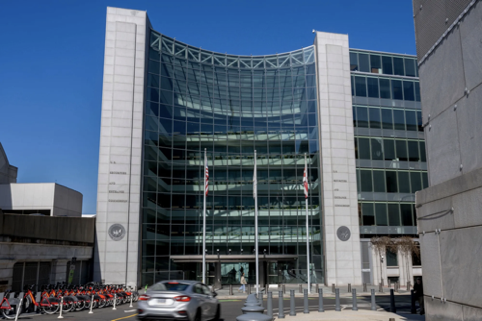 (Image caption) Headquarters of the U.S. Securities and Exchange Commission in Washington, D.C. The SEC proposed the "Regulation Crypto Assets" rule in August, creating an executive path parallel to congressional legislation alongside the CFTC, highlighting the core disagreement over whether market structure is ultimately defined by legislatures or regulators.
Stablecoins meet bank deposits
On September 10, the day the new text was released, the U.S. banking industry was still lobbying the Senate in its final round.
The 77 state-level bankers associations across the United States, along with the American Bankers Association (ABA) and the Independent Community Bankers of America (ICBA), have jointly called on senators to further restrict the interest, yield, and reward arrangements for payment-based stablecoins.
The banking industry's concerns are quite straightforward. If users can exchange dollars for stablecoins, maintaining near-cash liquidity while earning rewards or interest-like returns through trading platforms, then theoretically, some funds that would otherwise remain in bank accounts could be transferred to the stablecoin system.
For large banks, this is primarily a product competition; for many community banks, the impact could be more profound. Deposits are a crucial source of funding for their lending, and if low-cost deposits are absorbed by stablecoins, the banking industry anticipates that funding costs for mortgages, small business loans, and agricultural credit may rise.
This is still a risk assessment made by the banking industry, not a result that has already occurred.
The crypto industry clearly has another set of interests. Stablecoin rewards help attract users, increase the frequency of on-chain dollar usage, and are also part of the business model for trading platforms.
Therefore, the real dispute between the two sides is no longer just about whether stablecoins can pay interest, but about the institutional boundary between stablecoins and bank deposits. If a tool issued by private institutions, backed by US dollar assets, and capable of circulating globally around the clock gradually assumes the functions of storing value, making payments, and even generating returns, how much it differs from traditional bank accounts will become a problem that future financial regulation will find difficult to avoid.
The September update still hasn't found a universally accepted answer to this problem.
Political ethics remain a tough nut to crack.
Beyond all the technical controversies, the CLARITY Act raises a more sensitive question: what kind of conflict of interest restrictions should be imposed on politicians who draft rules on digital assets?
The July Republican version added a set of ethics provisions that restrict certain public officials, government employees, and their spouses from issuing or sponsoring digital assets. Enforcement of these provisions is overseen by the Department of Justice, and the provisions expire in January 2029.
The Democrats believe this is still insufficient.
On July 22, seven Democratic senators—Angela Alsobrooks, Cory Booker, Catherine Cortez Masto, Ruben Gallego, John Hickenlooper, Mark Warner, and Raphael Warnock—jointly stated that the text still needed improvement in areas such as ethics, consumer protection, illicit finance, conflicts of interest, and market integrity. Thom Tillis and Gallego subsequently continued to seek bipartisan compromises.
By September 10, the new version still had not made any major breakthroughs in this area that would be enough to eliminate the differences.
The difficulty in addressing this issue lies not in the complexity of legal techniques, but in its direct challenge to institutional credibility. When the president, members of Congress, senior officials, or their families may hold significant economic interests related to digital asset industries, Congress must decide how stringent the restrictions should be on rulemakers themselves.
Such standards have very limited institutional value if they are only applied to a particular administration; and if they are only emphasized when a particular party is in power, it is difficult to build long-term trust.
A truly viable financial law must assume that today's rules will also apply to another political party, another government, and another group of officials in the future.
114 amendments do not equal 60 votes
Lummis is currently emphasizing a number of 114, but the Senate is actually facing a number of 60.
There is no direct conversion between the two.
Currently, the Senate has 53 Republican senators, 45 Democratic senators, and 2 independent senators. Assuming all 53 Republicans support the Senate, theoretically at least 7 Democratic or independent senators are still needed to cross the 60-vote threshold; if dissenting votes occur within the Republican Party, the need for bipartisan support will naturally increase.
But congressional legislation is never a simple arithmetic exercise.
A senator's successful request to amend one clause does not guarantee his support for the entire bill; a party's acceptance of hundreds of suggestions from the opposing party does not guarantee a proportional share of votes.
As of September 11, publicly available information did not indicate that the new version had secured sufficient Democratic support. A Reuters report on September 9 showed that Democrats still had reservations on anti-money laundering and ethical issues, and some Republican lawmakers were also under pressure from the banking industry regarding stablecoin yields and deposit competition.
This makes the current political landscape of the CLARITY Act very clear: it is no longer just partisan negotiation between Republicans and Democrats, nor is it a one-sided conflict between the crypto industry and regulators. Banks, exchanges, DeFi developers, credit unions, law enforcement agencies, and political ethics are all influencing the final few votes.
Amendments can be written into the text, but votes of support still need to be won one by one.
The SEC and CFTC will not wait.
The CLARITY Act is particularly important this year because regulatory bodies have begun to prepare their own paths.
On August 18, 2026, the SEC proposed the "Regulation of Crypto Assets." It is currently a proposed rule and has not yet officially taken effect, but its institutional design is already quite detailed.
The Startup Exemption allows for raising up to $5 million over a period of up to four years; the Fundraising Exemption is divided into two tiers: Tier 1 allows up to $20 million over 12 months, and Tier 2 allows up to $75 million, the latter requiring audited financial statements. The SEC also proposed a conditional safe harbor to address how certain crypto assets can be decoupled from their original "investment contract" legal relationship after meeting specific conditions.
When proposing the rule, SEC Chairman Paul Atkins did not describe the executive rule as a replacement for congressional legislation. Instead, he emphasized that congressional laws remain important because executive rules can change with committee composition, chairpersons, and changes in government.
CFTC Chairman Michael S. Selig also signaled a similar sentiment on August 20. He stated that if the CLARITY Act continues to face obstacles, the CFTC will utilize its existing legal powers to establish a regulatory framework for the crypto asset market, including studying how trading platforms and on-chain financial protocols can enter the compliance system.
This leaves the United States with two parallel paths.
If Congress succeeds, the market may gain a framework established by the legislature, which is costly to amend; if Congress fails, the SEC and CFTC will continue to develop rules using existing legal authority, but the market will simply become more reliant on administrative interpretations and the regulatory agencies themselves.
For businesses, the difference between the two is not whether there is regulation or not, but whether it is predictable.
Companies can invest in compliance costs for a strict but stable system; the real challenge lies in managing rules that constantly change between different governments. This is why many large financial institutions and crypto companies today hope that Congress will eventually pass legislation.
They are concerned not only with the tightness of regulation, but also with how long a set of rules can be maintained.
 (Image caption) A branch of a U.S. credit union. The new text clarifies the authority of credit unions to engage in digital asset activities, extending market structure legislation from the battle between large banks and crypto platforms to whether community financial institutions can access new payment, custody, and investment infrastructure.
Who will define the boundaries of digital finance?
As it stands today, the CLARITY Act can hardly be described as a simple "cryptocurrency act".
What it truly deals with is a new financial market order, including the boundaries between securities and digital goods, the jurisdictions of the SEC and CFTC, the registration obligations of trading platforms, DeFi control standards, anti-money laundering responsibilities, the relationship between stablecoins and bank deposits, market access for credit unions, and the distance between the interests of politicians and private digital assets.
These issues were previously scattered across different regulatory agencies, court cases, enforcement actions, and industry disputes. What the CLARITY Act does is attempt to bring them together into a single federal market structure framework.
That's why things get more difficult as the final negotiations approach.
At the principle level, almost everyone can support "clear regulation"; at the clause level, every definition, every exemption, and every allocation of power will change the interests and responsibilities of certain agencies.
Banks consider their deposit and lending capacity, platforms consider their business models, DeFi teams consider whether control constitutes regulatory responsibility, and regulatory agencies need to define their legal boundaries. When these issues are actually written into law, achieving political consensus is naturally much more difficult than simply paying lip service.
After page 630, what you really need to see are the 60 votes.
The new 630-page version of the CLARITY Act is close to a complete list of the long-standing controversies surrounding the regulation of digital assets in the United States.
DeFi, BSA, stablecoin yields, bank deposits, credit unions, political ethics, and the power division between the SEC and CFTC are all being brought into the same legislative negotiation. The increasingly complete text does not guarantee that political consensus will form at the same pace.
The 60 votes on September 15 will first answer a very real question: Has the Senate found a minimum consensus that is acceptable to different interests for the time being?
If this hurdle is overcome, the Clarity Act only qualifies to move forward; further considerations include legislative deliberation, text harmonization, and a final vote. If it fails to secure enough votes, the U.S. will not return to a state of unregulated governance; the SEC and CFTC are prepared to leverage their existing authority to continue advancing their regulatory framework.
Therefore, the real difference in the future will not lie in whether the United States regulates digital assets, but in who ultimately establishes these rules and whether they can transcend different government and political cycles.
If Congress passes legislation, the United States will have its first opportunity to enshrine the key boundaries of the digital asset market into a relatively stable set of federal laws. If Congress fails again, the market will still move forward, but those boundaries will continue to be pieced together piece by piece by the SEC, CFTC, courts, and successive administrations.
September 15 will not end this institutional competition, but it will tell the market whether the U.S. Congress still has the ability to truly turn this regulatory blueprint, which has been drawn up for many years, into law.
Disclaimer
This article is for informational purposes only, focusing on news research, public policy, and market regulations. It is based on publicly available information as of September 11, 2026. The CLARITY Act is still in the legislative process, and its text, voting arrangements, and regulatory impacts are subject to change. This article does not constitute investment, legal, or tax advice.