

Sun Yuchen's 30 million yuan property dispute: Reputation cannot replace evidence
Before the court has even begun substantive proceedings, public opinion has already reached a conclusion.
Justin Sun has long been active in token issuance, the crypto asset market, cross-border capital relations, and regulatory cases. Therefore, this property dispute involving over 30 million yuan carries market implications that extend beyond personal relationships. GFM.News's focus on this case stems from an institutional issue: when a public financial figure with significant market influence and numerous controversies enters civil proceedings, how should the media report on their existing record, and how can they avoid allowing their established reputation to supersede the evidence and proceedings required for a specific case?
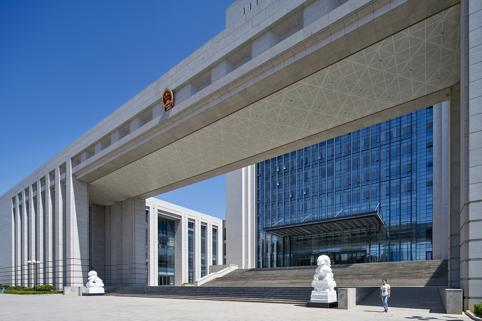 (Image caption) Exterior of a Chinese court building: A property dispute involving more than 30 million yuan has been filed and an application for property preservation has been made. However, due to an objection to jurisdiction, the case has not yet entered the substantive trial stage. Whether the money constitutes a bride price and whether it should be returned still needs to be determined by the court based on the specific facts.
Public opinion precedes court ruling.
If a person's reputation has become so bad that many people are unwilling to believe him, then when he goes to court again, is there any room for evidence?
This is precisely the problem that Sun Yuchen is facing now.
In late August 2026, a property dispute involving more than 30 million yuan between Sun Yuchen and actress Jing Tian came into the public eye. Many people's first discussion wasn't about how the money was paid, its legal nature, whether there was a prenuptial agreement, or how the court would handle the case; rather, they were discussing what kind of person Sun Yuchen really was.
This reaction is not hard to understand.
Justin Sun's past controversies in the crypto market, regulation, and public communication are certainly enough to warrant caution. But the question remains: can a person's past controversies directly determine the outcome of a civil case that hasn't even entered substantive trial?
GFM.News does not seek sympathy for Justin Sun, nor does it offer a defense for either side. This article simply aims to uphold a boundary that is easily lost in trending topics: a person's history can serve as background for examining their credibility, but it cannot replace evidence that should appear in another case.
 (Image caption) Justin Sun speaks with a microphone at a public event in the crypto industry. As a public financial figure with sustained market influence, the article uses this to illustrate that while regulatory records and controversial reputations can constitute a credit background, they cannot replace the evidence that should be presented in property disputes that have not yet entered substantive trial.
The controversy surrounding Sun Yuchen cannot be ignored.
When discussing whether Justin Sun should receive a fair review, his public record cannot be ignored.
On March 22, 2023, the U.S. Securities and Exchange Commission filed a lawsuit in the U.S. District Court for the Southern District of New York against Justin Sun, Tron Foundation Limited, BitTorrent Foundation Ltd., Rainberry Inc., and other defendants, case number 1:23-cv-02433.
The SEC accused the entities of issuing and selling TRX and BTT without registration, and alleged that Justin Sun arranged large-scale wash trading of TRX, i.e., repeated trading without a change in actual beneficial ownership, to create the illusion of a vibrant market. The SEC stated at the time that these individuals conducted more than 600,000 TRX wash trades between 2018 and 2019; the SEC also accused Justin Sun of arranging undisclosed payments to celebrities to promote TRX and BTT.
These are civil charges brought by the SEC, not the criminal convictions leveled against Justin Sun by the court at the time.
Three years later, the final resolution of the case should not be simplified.
In March 2026, the SEC reached a final settlement agreement with the defendants. The court ultimately ruled that Rainberry must pay a $10 million civil penalty for a claim related to wash trading and issued an injunction against it; the SEC withdrew its remaining claims against Rainberry, as well as all claims against Justin Sun, the Tron Foundation, and the BitTorrent Foundation, on a "with prejudice" basis.
The relevant consent documents indicate that Rainberry neither acknowledges nor denies the SEC's allegations in response to the settlement request.
Therefore, neither statement is accurate.
The statement that "the SEC has never made any serious charges against Justin Sun" is inconsistent with public records; the statement that "a U.S. court has ruled that Justin Sun himself committed market manipulation or fraud" is also inconsistent with the final legal documents of this civil case.
Justin Sun's regulatory record is enough to keep the market, media, and public on their toes; it does not automatically answer the question of another property dispute in China that has yet to enter substantive trial.
The SEC's handling of this case subsequently drew criticism from members of the U.S. Congress. On March 30, 2026, Senator Richard Blumenthal wrote to SEC Chairman Paul Atkins, requesting access to records and internal communications related to the Justin Sun case and related enforcement decisions, questioning whether regulatory independence could have been influenced by political and business relationships.
These questions deserve investigation, but they remain just questions, not evidence of a proven political exchange.
The media should allow skepticism to be the starting point of an investigation, but should not directly write skepticism as the end point of the facts.
 (Image caption) A file photo of actress Jing Tian attending a public awards ceremony: She should not be prejudicially deemed unable to bear financial responsibility due to public sympathy, nor should she be subjected to unsubstantiated personal accusations based on private relationships.
Let's clarify this lawsuit first.
On August 27, 2026, Zhang Qihuai, Sun Yuchen's lawyer, publicly stated that Sun Yuchen had filed a civil lawsuit against "Jing Mou" and his parents as defendants due to a property dispute. The amount involved in the case was over 30 million yuan. The case has been accepted and the plaintiff has also applied for property preservation.
According to Zhang Qihuai's public statement, the defendant had raised an objection to jurisdiction, and the case had not yet entered the substantive trial stage at that time.
Zhang Qihuai later confirmed to the media that "Jing" refers to actress Jing Tian; he stated that the two had been a couple and discussed marriage. Sun Yuchen's side argued that the funds in question were betrothal gifts given with the intention of marriage.
"Bride price" is the plaintiff's claim regarding the legal nature of the payment, not a determination made by the court.
Jing Tian's studio issued a statement that evening, calling the related public attacks "an attempt to extort money from an artist by threatening their reputation," and stating that everything would be handled by the courts. Jing Tian later also publicly stated that she believes in the law, fairness, and justice.
The public narratives of the two sides are clearly very different.
What the public sees so far is mainly the public statements of the parties involved, their lawyers, and related individuals; what the court will need to deal with in the future are payment records, communication content, facts of the relationship between the parties, the use of property, and a complete chain of evidence that can corroborate each other.
As of the time of writing, GFM.News has not been able to obtain publicly available judicial documents showing that the court has made a substantive ruling on the legal nature of the funds in question or the liability for their return. This article does not fill this evidentiary gap with private narratives circulating online.
What exactly is the legal meaning of over 30 million yuan?
The questions that civil trials truly need to answer are often more specific and also more tedious than the moral judgments made online.
When was the payment made? Who made the payment and who received it? Are there bank statements, transfer vouchers, agreements, or chat logs? Did both parties make any clear agreements regarding marriage registration, cohabitation, or property arrangements? Was the payment a dowry, gift, loan, or other form of property arrangement? Has the payment been used for cohabitation, household expenses, or other purposes?
Before these issues are proven, neither party should be prejudicially judged by public opinion.
The judicial interpretation on betrothal gifts issued by the Supreme People's Court of China, which came into effect on February 1, 2024, clearly states that there is no simple rule that "the full amount is automatically returned if the couple is not married" in such cases.
When determining the scope of betrothal gifts, the court should consider the purpose of the payment, the local customs of both parties, the time and method of payment, the value of the gifts, and the giver and receiver. If the parties have not registered their marriage but have lived together, and one party requests the return of the betrothal gifts, the court should also consider the actual use of the gifts, cohabitation, pregnancy, fault of both parties, and local customs to determine whether and how much should be returned.
Whether the more than 30 million yuan constitutes a bride price in the legal sense needs to be proven.
Even if the court ultimately determines that some or all of it is in the form of betrothal gifts, whether it should be returned and how much should be returned still depends on the specific facts ascertained by the court.
This is not about leaving a way out for either party. It's simply the normal way the law handles property disputes.
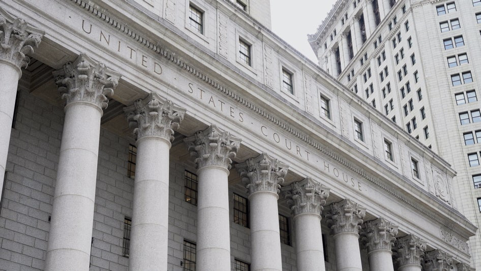 (Image caption) U.S. Federal Court: The institutional background of Justin Sun's previous defense in a U.S. securities regulatory civil case, where some of his claims were granted and the rest were dismissed; this history should be accurately recorded, but should not be rewritten as a pre-existing conclusion in another civil case in China.
There are issues of dignity and issues of property.
Justin Sun's public disclosure of his private interactions sparked a strong backlash. Hu Xijin's involvement brought a crucial line to this debate.
Hu Xijin's criticism is not about denying that there may be a legal basis for claiming the return of betrothal gifts in unmarried situations; what he opposes is placing a property dispute into a widely disseminated private narrative, subjecting the other party to reputational and privacy pressures beyond the litigation itself.
This criticism is valid and should be taken seriously.
After a romantic relationship breaks down, should the parties involved bring highly private matters into the public sphere? Could doing so infringe upon the other party's right to privacy and dignity? How can someone with substantial capital and media resources use their influence in a dispute over private property?
These are real public issues.
However, they each have their own legal and ethical consequences and cannot replace each other.
Whether it is appropriate to disclose private information should be handled in accordance with the principles of personality rights, privacy, and communication ethics; whether the more than 30 million yuan should be returned still needs to be determined based on the specific flow of funds, specific agreements, and specific evidence.
Anger over the previous issue cannot be directly transferred to the next issue, replacing the work that the court has not yet completed.
Reputation can influence credit, but it cannot serve as a basis for judgment.
Justin Sun is a highly controversial crypto entrepreneur. He has been a defendant in SEC enforcement cases and has also invested in crypto projects related to the Trump family; his capital relationship with World Liberty Financial has entered into public discussions on US political finance, regulatory independence, and token governance.
In April 2026, Justin Sun sued World Liberty Financial in the U.S. District Court for the Northern District of California, alleging that the latter illegally froze his tokens and restricted his governance rights. World Liberty Financial, on the other hand, publicly stated that Justin Sun's legal claims were baseless.
In May of the same year, World Liberty Financial sued Justin Sun for defamation in Florida, accusing him of public smear campaigns and making allegations involving token transfers and transactions. Sun countered that the lawsuit was a baseless public relations stunt.
Both parties have submitted their respective versions to the court. The court has not yet drafted a final version.
When GFM.News previously studied the Trump family's related crypto-financial system, it considered Justin Sun as an important example of Asian crypto capital entering the World Liberty Financial ecosystem. This involves the institutional relationship between governance, economic power, asset control, and political power, which deserves continued investigation.
There is no reason to romanticize these backgrounds.
However, they also cannot lead to another conclusion: because a person is highly controversial in case A, his claims in case B must be false.
Once this logic is accepted, the law will gradually degenerate into a vote of personality.
Reputation can influence how we interpret a person's statements. Courts also don't judge facts without considering a person's specific creditworthiness, conduct, and the credibility of the evidence. Ultimately, however, credit evaluation must return to specific statements, documents, financial transactions, and evidence.
It cannot serve as a judgment in another case.
The media should remain neutral.
Numerous claims about personal relationships, family arrangements, and other power dynamics have emerged online surrounding this dispute.
Some of this content is widely circulated and is even said to be "known to everyone".
The number of transmissions is not evidence.
As of the time of writing, GFM.News has not been able to obtain sufficient primary source material to meet the standards for public reporting and to verify these highly confidential claims that could potentially harm the reputation and personal rights of the parties involved. Therefore, this article will not relay these claims, nor will it use them as a basis for determining the rights and obligations of any party.
A rumor that has circulated for years may still remain just a rumor; even if ten thousand accounts copy the same sentence, it will not automatically add a legal document, a confirmation from the parties involved, or a piece of evidence that can be independently verified.
The media is most likely to lose its discipline of evidence in places that "everyone knows".
The value of institutional media lies not in spreading information faster or knowing more secrets than others, but in knowing what content, even if it is exciting or popular enough, cannot be written as fact.
This is not an entertainment news story.
If this were just a typical celebrity relationship dispute, GFM.News wouldn't need to get involved.
Justin Sun is not a typical entertainment news figure. He wields sustained influence in the global crypto asset market, token issuance, trading platforms, investment relations, and regulatory cases; his relationship with World Liberty Financial has also brought his business activities into the public debate on the independence of American politics, finance, and regulation.
His credit has market implications.
His property rights also have institutional implications.
When a private property dispute encounters a highly controversial public financial figure, how the media handles the distance between his historical reputation, current rights, and unverified rumors is itself part of the press system.
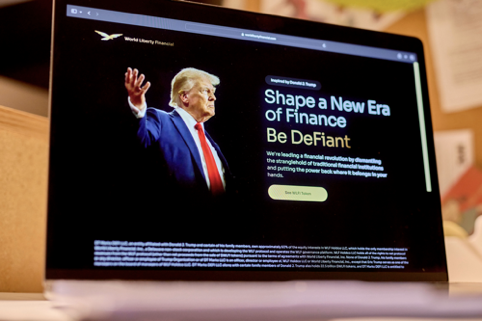 (Image caption) The screen displayed on the World Liberty Financial official website: Justin Sun's dispute with the ecosystem over tokens and governance rights has entered into mutual lawsuits in the US courts. These backgrounds are worth exploring, but cannot be used to directly negate his claims in another property case.
Systems don't just protect likeable people.
Three years ago, Justin Sun was a defendant in an SEC enforcement case.
This year, he sued World Liberty Financial as the plaintiff, seeking court protection for his tokens and related rights; subsequently, he became a defendant in a defamation lawsuit filed by World Liberty Financial. Now, in a related civil dispute in China, he is again seeking court intervention to address his property claims.
A person can accept regulation or demand that the law protect their rights.
These two things are not contradictory.
One of the most important functions of modern legal systems is to separate "whether a person is worthy of liking" from "what rights this person actually enjoys".
When a wealthy, powerful, and controversial person is placed under investigation, the media should investigate thoroughly; if the legitimate property rights of the same person may be infringed, the law should not refuse to adjudicate the case simply because of their bad reputation.
This standard also applies to Jing Tian.
She should not be prejudicially deemed unable to bear any financial responsibility simply because she currently enjoys greater public sympathy; nor should she be forced to endure unsubstantiated rumors and character accusations simply because she had a private relationship with a wealthy and controversial man.
Like Justin Sun, she enjoys the rights to privacy, personality rights, the right to defend herself, and procedural rights.
The truly difficult system is not one that only protects those who are easily pitied, but one that is willing to bring everyone back to the same set of rules of evidence, even when emotions are at their strongest and reputations are most unbalanced.
The bottom line that the media must uphold
Whether Justin Sun is trustworthy is a question the market can continue to assess.
His cryptocurrency history, regulatory record, and relationship with political capital should continue to be scrutinized by the media, investors, and public institutions.
Whether Jing Tian needs to return any property, and whether the more than 30 million yuan belongs to betrothal gifts, donations, loans, or other property arrangements, should be determined by the court based on the evidence.
Public figures can comment on how someone should maintain their dignity after a breakup; the public can criticize the words and actions of either party; and the media can question how money, power, reputation, and media influence a private dispute.
But there is one line that cannot be crossed.
We can remember a person's history, but we cannot let their history testify to the evidence of today.
The existing controversies surrounding Sun Yuchen cannot be erased or downplayed.
He and Jing Tian should both receive the same treatment: the evidence should be examined before the court makes a judgment.
Disclaimer
This article is for news research and public information reference only. All litigation, property disputes, and related allegations are subject to the final and effective documents of the competent judicial authorities. Some content in this article is based on public statements made by parties involved, their lawyers, government agencies, public figures, or the media, and does not represent judicial determinations; this article does not constitute investment, legal, or other professional advice.