

The boundary between TradFi and DeFi is being redrawn: Five financial infrastructure signals released by Money20/20 USA 2026.
AI, stablecoins, RWA, tokenization, and regulation are moving from the testing ground into the financial infrastructure and institutional agenda.
The 2026 Money20/20 USA conference will bring together banks, stablecoins, tokenization, RWA, artificial intelligence, and regulation onto a single agenda. This arrangement reflects a new phase in fintech development: market focus is gradually shifting towards issuance eligibility, asset rights, clearing and settlement, AI permissions, cross-border interoperability, and the responsibility and trust that comes with technology entering the real financial system.
 (Image caption) Attendees walk and talk in front of the conference logo inside the Money20/20 exhibition hall in Las Vegas. The event has consistently brought together banking, payments, stablecoins, and tokenization in the same space, serving as GFM.News's entry point for observing how the financial infrastructure agenda is structured.
The fintech agenda is beginning to focus on infrastructure.
Money20/20 USA will be held in Las Vegas from October 18 to 21.
According to information released by the organizers, the conference is expected to attract more than 11,000 participants, over 3,400 companies, and more than 630 speakers from over 85 countries, with more than 320 media and analysis organizations also participating.
For me, what's really worth observing this year isn't these scale figures, but rather what changes have occurred in the agenda itself.
William Demchak, Chairman and CEO of PNC, Tarek Mansour, CEO of Kalshi, and executives from various financial and technology institutions, including Citi, JP Morgan, BNY, Standard Chartered, Circle, Coinbase, Fireblocks, Ripple, and Stripe, were brought together in the same conference room. Previously, topics such as banking, payments, stablecoin, tokenization, AI, digital identity, and regulation were often discussed separately; now, they began to revolve around a shared set of financial infrastructure issues.
Money20/20 lists "Borderless Financial Architecture" as one of its four core content pillars for 2026, encompassing cross-border financial modernization, tokenization, stablecoins, interoperability, and security. Another dedicated section, "The Intersection," is directly positioned as "Where TradFi and DeFi Converge," covering Programmable Money, Blockchains, Stablecoins, Tokenization, Digital Identity, and CBDCs.
On October 20th, representatives from Citi, Coinbase, Stripe, and other institutions will discuss "The Tokenized RWA and Stablecoins Flywheel," extending the discussion to Stablecoin liquidity, RWA, collateral management, and settlement. Other agenda items include Stablecoin issuance and redemption, Tokenized Money Market Funds, Agentic AI permissions, and mechanisms for handling Open Finance malfunctions or liability disputes.
A business conference is not enough to prove that the financial system has completed its structural transformation, but it can clearly reflect what issues the market is currently focusing on.
If we observe the Money20/20 USA 2026 agenda within the context of financial regulation and capital market changes over the past three years, we can see a fairly clear trend: new digital financial instruments are entering the existing systems of banking, payments, and capital markets, and the standards by which the market evaluates these instruments are shifting from purely technical feasibility to legal rights, asset liability, liquidation arrangements, risk-bearing, and regulatory boundaries.
This is also the part that GFM.News should study most this year.
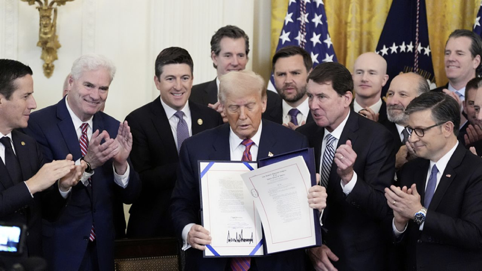 (Image caption) On July 18, 2025, the US President displayed the signed text of the GENIUS Act at the White House, where officials applauded. This law establishes a legal framework for payment-based stablecoins at the federal level for the first time. This article uses it as a key milestone for stablecoins to enter the banking system, and points out that subsequent implementation rules are still being developed.
Stablecoin begins to enter the banking system.
A few years ago, discussions about Stablecoin primarily focused on Crypto trading, DeFi liquidity, exchange applications, and the market size of USD-denominated tokens. By 2026, the issues facing financial institutions have become significantly more specific.
If a bank or payment institution truly wants to incorporate Stablecoin into its business, it must understand which level of regulation the issuer accepts, how reserve assets are managed, whether the redemption mechanism is stable, how anti-money laundering and sanctions responsibilities are allocated, and how Stablecoin will ultimately connect with commercial bank deposits, central bank money, and existing payment networks.
The United States will cross a significant legal threshold in 2025.
On July 18, 2025, the GENIUS Act was officially signed into Public Law 119-27, establishing for the first time a dedicated legal framework for Payment Stablecoin at the federal level, covering institutional arrangements such as eligible issuers, reserve assets, redemption, disclosure, and regulatory authority.
Even after the law is passed, the implementation rules that truly determine how the market operates still need to be established gradually.
The GENIUS Act itself includes a delayed implementation period; the main provisions will take effect 18 months after legislation or 120 days after the main federal regulatory agency completes its final rules, whichever is earlier. On February 25, 2026, the Office of the Comptroller of the Currency (OCC) published its main implementing rule proposals, covering the issuance of Payment Stablecoin and some custody activities; on June 22, it proposed the Bank Secrecy Act, AML/CFT, and sanctions compliance rules. As of the time of writing, these documents are still proposals and have not yet become final rules.
This stage itself has institutional significance. The United States has completed the basic legal definition of Stablecoin, but what operational standards banks, issuers, and other financial institutions will ultimately need to follow still depends on subsequent regulatory details.
The market size continued to expand at the same time.
A study published by the Federal Reserve in April 2026 indicated that the total market capitalization of Stablecoins grew by approximately 50% in 2025, reaching approximately $317 billion as of April 6, 2026. The study also noted that Stablecoins with higher reserve asset quality and liquidity typically have a lower risk of bank runs, but as their use in payments expands, their interdependence with the traditional financial system will also increase.
This interdependence deserves more attention than market capitalization itself.
When Stablecoin was still relatively small, the market mainly discussed whether its price could be maintained around one dollar; once it began to participate in cross-border payments, corporate settlements, and financial institution operations, the analytical framework had to be extended to the quality of reserve assets, redemption capacity, concentration of bank deposits, custody arrangements, and liquidity under market stress scenarios.
In his speech at the Third Stablecoins and Tokenization Conference in May 2026, IMF financial advisor Tobias Adrian also focused his analysis on the monetary architecture itself. He argued that Tokenized Finance needs to answer what assets are used for final settlement, and how different digital currency forms such as Stablecoins, Tokenized Deposits, and CBDCs allocate credit, liquidity, and operational risk.
In my view, this is the crucial turning point for Stablecoin to truly enter the mainstream financial market.
GFM.News believes that the maturity of Stablecoin can no longer be measured solely by market capitalization, trading volume, or the number of wallets. As it begins to be incorporated into banks' compliance systems, payment processes, asset and liability management, and crisis management arrangements, its functions and risk characteristics will gradually resemble those of financial infrastructure, rather than simply being a trading tool in the cryptocurrency market.
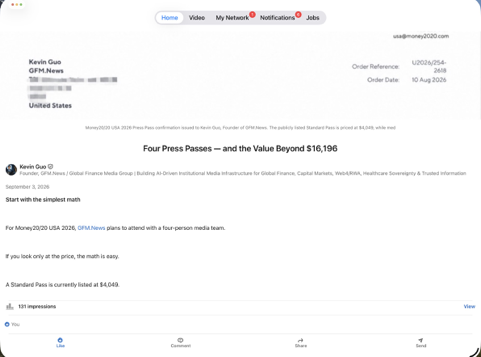 (Image caption) GFM.News was invited to participate in Money20/20 USA 2026, and the organizers issued four media access passes; the image also shows the participation instructions posted by founder Kevin Guo on LinkedIn.
Tokenization Leads to Rights and Settlement
The news that most easily attracts attention in the RWA market is usually that another type of asset is being tokenized.
Tokenization has already emerged in various forms in US Treasury bonds, funds, private lending, gold, stocks, and real estate. However, for institutional investors, digitizing assets is only the first step. The real challenges arise after assets enter trading, custody, collateralization, and liquidation.
What legal rights do investors have after acquiring tokens? Who keeps the legally valid record of ultimate ownership? How should discrepancies between on-chain records and traditional registers be handled? Who holds the assets in custody? At what point will the transaction be finalized? Who will intervene if an error occurs in the Smart Contract? And can the underlying assets be effectively isolated after the platform enters bankruptcy proceedings? These questions collectively determine whether a tokenized asset can truly enter the institutional financial market.
On July 2, 2026, the IMF published "The Rise of Tokenization: Deciphering New Trends in Payments and Asset Tokenization," breaking down tokenized finance into three layers: Infrastructure, Assets, and Services. The importance of this analytical framework lies in its refocusing of market attention on the complete financial chain.
The assets themselves are only one layer.
The underlying layers also include Ledger, Settlement, Interoperability, and Governance, while the upper layers involve Wallet, Exchange, Custody, and other financial services. Any legal or operational disruptions at any layer could weaken the token's financial value.
Another IMF working paper released on the same day, "The Evolution of Financial Market Infrastructures in a Tokenized Economy," further analyzes that Smart Contracts can gradually take over some of the recording, settlement, collateral management, and reporting functions that were previously handled by central securities depositories, central counterparties, and transaction databases.
Technology can reconfigure processes, but institutional accountability still needs to be maintained.
Legal certainty, governance, accountability, and discretionary power under extreme market conditions cannot be simply delegated to code. This is also the layer most easily overlooked in current tokenization research by the market.
Early blockchain narratives often conflated "reducing intermediaries" with "eliminating intermediaries." The actual development of large financial markets is more likely to involve a redistribution of roles: some of the verification, transfer, reporting, and collateral management work will be handled by Smart Contracts and Distributed Ledgers, while existing financial institutions will continue to be responsible for legal rights, asset segregation, bankruptcy proceedings, and governance in special circumstances.
U.S. securities regulators have begun addressing the same issue.
On January 28, 2026, staff from the SEC’s Division of Corporation Finance, Division of Investment Management, and Division of Trading and Markets jointly released “Statement on Tokenized Securities,” which distinguishes between tokenization conducted by the issuer or its representatives and tokenization conducted by a third party, and analyzes what rights holders acquire under different structures.
This document represents the position of an SEC staff member, not a formal rule of the committee, and does not create any new legal obligations or exemptions. Even so, the regulatory direction it reflects is quite clear: the legal nature of securities, the rights of holders, and market responsibilities do not automatically disappear after the technological carriers of securities change.
GFM.News believes that the real competition in the next stage of tokenization will not only focus on the speed of issuance and the scale of on-chain assets, but will gradually shift to whether legal rights, custody, settlement finality, liquidity, and bankruptcy protection can be established simultaneously.
This is also a hurdle that RWA must overcome when it moves from the conceptual market to the institutional market.
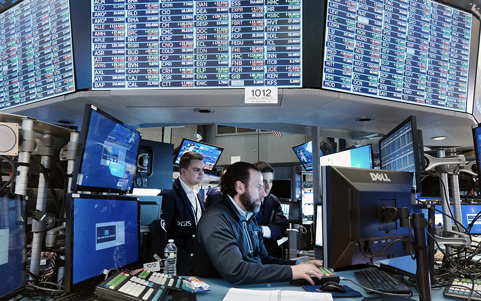 (Image caption) Inside the New York Stock Exchange trading floor, staff members handle market operations in front of multi-tiered market data screens. With tokenization entering the institutional market, the key is no longer just about digitizing assets, but whether legal rights, custody arrangements, and final settlement can be integrated with existing market infrastructure.
AI governance is beginning to revolve around permissions.
Another prominent theme of Money20/20 USA 2026 is Artificial Intelligence.
Citi’s Naveed Anwar is listed as the Global Head of AI, Digital & Data Platforms in the official speaker list; the agenda also covers Agentic AI, AI & Machine Learning, Fraud, Payments, Cybersecurity, and Regulation.
The use of AI in the financial industry is not a new phenomenon.
For years, banks have been applying models to credit assessment, fraud detection, risk monitoring, transaction monitoring, and back-office processes. What will truly transform governance in 2026 is the increased ability of Agentic AI to invoke and execute tools.
When AI is only responsible for organizing data or making suggestions, financial institutions can still leave the final decision to human staff; once AI agents can access tools, enter accounts, initiate workflows, process payments, or influence transactions, traditional model governance is insufficient to cover all risks.
Several sessions at Money20/20 this year have directly addressed this issue. "Agents Decide. Customers Complain. Banks Must Resolve" discusses the liability arrangements following AI's involvement in lending, dispute resolution, and customer decision-making; while "Agentic AI and Open Finance: Security, Standards, and Control" places Permissions and Controls at the heart of the discussion.
The problem is shifting from model accuracy to access control.
Financial institutions need to clearly define what data AI can access, which systems it can call, what amount of money or risk it can handle on its own, and which actions must be approved by humans. In the event of a system malfunction, the institution must also have a clear shutdown mechanism and accountability arrangements.
If multiple AI agents can also call each other, the chain of responsibility will become more complex.
On June 10, 2026, the Financial Stability Board (FSB) released an advisory report entitled "Sound Practices for Responsible Adoption of Artificial Intelligence," proposing 12 sound practices covering institutional-level AI governance, model lifecycle management, and cyber risk, ICT, and third-party vendor risk. The comment period ended on July 22, and the official report is expected to be released in October.
On August 31, FSB Chairman Andrew Bailey further pointed out in a letter to G20 finance ministers and central bank governors that cutting-edge AI is changing the speed, scale and complexity of the financial system's response to cyber risks, and that financial institutions' concentrated reliance on a few cloud, model and cybersecurity vendors may amplify systemic risks.
There is a change here that the financial industry should seriously consider.
In the past few years, one of the main issues banks have faced in evaluating AI has been how much cost it can save and how much efficiency it can improve. As Agentic AI gains greater execution capabilities, financial institutions also need to simultaneously measure how much operational authority it actually has, and whether there are complete approval, monitoring, and accountability mechanisms behind these authority.
I believe that the truly important regulatory target for future financial AI will likely not be a single model, but rather the system comprised of models, data, tools, permissions, and a chain of responsibility.
This change will directly impact how banks design their AI governance architecture.
 (Image caption) Staff members push carts in and out of the vault, with standard gold bars stacked on one side. The World Gold Council's proposed shared digital gold infrastructure focuses on physical custody, reconciliation, segregation, and redemption; this is also the trust test that this article judges RWA must undergo.
TradFi and DeFi increase institutional interfaces
In the past few years, the question of whether DeFi will replace banks has been a frequently asked topic in fintech discussions.
The agenda for Money20/20 USA 2026 offers another way of looking at the event.
The Intersection directly puts TradFi and DeFi in the same arena; the Stablecoin agenda begins to discuss how banks, card organizations, payment networks, issuers, wallets, and identity compliance can work together; and the discussion of Tokenized RWA simultaneously brings together institutions such as Citi, Coinbase, and Stripe, which were originally in different market positions.
These arrangements do not necessarily mean that the two financial systems are merging into one, but they do indicate that more institutional and technological interfaces are being established between the two sides.
Stablecoins need bank deposits, government bond reserves, and redemption channels to support their value stability; tokenized securities still require legal registers, custody, and market infrastructure; and traditional banks that want to use blockchain to improve the efficiency of cross-border payments or collateral must also deal with wallets, digital identities, smart contracts, and on-chain liquidity.
With the addition of these interfaces, the relationship between TradFi and DeFi will become more complex.
Banks remain subject to capital adequacy, liquidity, anti-money laundering, and prudential regulations; stablecoins do not automatically become equivalent to bank deposits simply because they are connected to payment networks; and DeFi protocols do not automatically acquire the legal status of financial institutions simply because they begin using Smart Contracts.
Differences still exist in legal status, credit basis, and liability structure.
Therefore, I believe that "the boundary between TradeFi and DeFi is being redrawn" is more accurate than "the boundary is disappearing".
The real change is that previously isolated technologies, assets, and payment networks are becoming increasingly interconnected. With each new interface, the market needs to re-process settlement assets, credit risk, ownership records, identity compliance, liquidity, and cross-border legal connections.
This is why interoperability has gradually become a core issue.
Central bank money, commercial bank deposits, stablecoins, tokenized deposits, tokenized securities, digital asset platforms, and traditional clearing systems are likely to coexist for a long time. The efficiency of future financial infrastructure will largely depend on the ability to securely transfer assets, data, and rights between these different systems.
If an asset moves between traditional ledgers, blockchain, and another jurisdiction, the market ultimately needs to ensure that legal ownership remains continuous, the finality of the transaction can be confirmed, and that investors can still clearly identify and enforce their rights if any link fails.
This is closer to the real problem that the financial market needs to solve than "who will replace whom".
RWA will ultimately have to undergo a trust test.
The World Gold Council is among the official sponsors of Money20/20 USA this year.
This case is well-suited for observing the next phase of RWA.
On March 19, 2026, the World Gold Council and the Boston Consulting Group released "Digital Gold: The Case for a Shared Infrastructure," proposing the concept of Gold as a Service, hoping to establish a shared infrastructure that connects physical gold custody, inventory management, reconciliation, compliance and redemption with digital product issuance and lifecycle management.
The key point of this idea is not to issue another gold token.
The gold market already has ETFs, digital gold accounts, certificates, and tokenized gold. What remains unresolved are the custody, liquidity, governance, redemption, and guarantee mechanisms behind these different digital gold products.
The World Gold Council's own research also acknowledges that the digital gold market remains significantly fragmented.
This case clearly illustrates the most fundamental issues of RWA.
After a real asset is digitally represented, the market still needs to confirm that the underlying asset actually exists, that there is sufficient segregation between custody and issuance, that the asset has not been double-collateralized, that investors can redeem according to the established conditions, and that if the platform or issuer encounters problems, the holder still has the right to enforce the law.
The same applies to gold, real estate, private credit, funds, and other RWAs.
Therefore, I have always believed that the maturity of the RWA market cannot be measured solely by the total value of on-chain assets.
More meaningful metrics include the actual volume of delivery versus payment transactions, whether collateral can be moved across platforms, whether investors can redeem their assets stably, whether the custody is truly independent, and whether the underlying assets can be effectively isolated from other claims after the platform enters bankruptcy proceedings.
GFM.News's assessment of RWA is clear: technology can improve asset liquidity, but what the market ultimately buys are rights that can be verified, redeemed, and legally pursued.
Without this layer, a token can only represent a digital record, not complete financial trust.
Guardrails is gradually becoming a common language.
Money20/20 has named another content pillar for 2026 "Brave New World: Setting Guardrails".
This statement is quite consistent with the policy direction of major international regulatory agencies.
The US already has the GENIUS Act, but its implementation rules are still being developed; Tokenized Securities has received further clarification from SEC staff, but its legal rights, custody, clearing, and market infrastructure are still evolving; AI is rapidly expanding in the banking and payments sectors, and the FSB's global governance framework is still in its formative stages.
Open Finance faces problems with a similar structure.
While data and financial services can flow more freely, it remains to be addressed whether existing laws are sufficient to clearly define liability when data breaches, erroneous transactions, or service disruptions occur between banks, aggregators, and third-party providers.
Money20/20 organized a workshop titled "Liability Without Borders: Who Pays When Open Finance Breaks?"
This is a very representative question.
Any financial innovation will eventually enter the stage of responsibility allocation.
Technology can reduce transaction friction, code can improve processing efficiency, and new asset forms can improve liquidity, but when the system experiences runs, cyberattacks, Smart Contract vulnerabilities, identity fraud, or disputes over asset ownership, the financial market still needs an enforceable accountability mechanism.
The foundation for the long-term operation of the financial system lies not only in the ability to complete transactions, but also in the existence of clear procedures for handling errors, so that investors and clients know how their rights can be restored, and regulators can identify which party should bear the responsibility.
This is precisely why Guardrails gradually became a common language.
Policymakers are currently facing a task that is far from being simplified to a binary choice between supporting or restricting innovation. Recent public documents from the IMF, FSB, and US regulators show that stablecoins, tokenization, and AI do indeed have the potential to reduce friction, improve payments, and increase the efficiency of financial services. However, new financial infrastructure must still establish legal certainty, liquidity, operational reliance, governance, accountability, and public trust.
There is still a gap between the speed of technological development and the speed of institutional establishment, and many of the most worthy issues for study in the financial industry in 2026 fall within this gap.
 (Image caption) In the operations and risk control rooms of financial institutions, staff simultaneously deal with multiple systems and pending processes. Agentic AI changes not only model efficiency, but also how data, tool access, and execution permissions are defined, monitored, and how accountability can be established in case of anomalies.
Money20/20 provides a new institutional map
Money20/20 is neither a regulatory body nor a financial market itself, so it cannot be assumed that the relevant technology is mature simply because a certain topic is on the conference agenda.
However, when more than 11,000 financial industry participants, over 3,400 companies, and hundreds of people from the banking, payments, asset management, digital assets, technology, and regulatory sectors gather in the same venue, the issues they spend time discussing still have clear industry intelligence value.
The 2026 agenda has already outlined several fairly clear lines.
Stablecoins are moving from cryptocurrency market issues into banking, payment, and monetary systems; the research focus of tokenization is gradually shifting from asset on-chaining to legal rights, custody, and settlement; RWA needs to undergo institutional testing in terms of liquidity, bankruptcy remoteness, and investor protection; Agentic AI is beginning to push the governance focus of the financial industry towards authority and accountability; and the relationship between TradeFi and DeFi is increasingly dependent on whether different systems can establish secure, traceable, and legally certain interfaces.
I believe these changes are more worthy of being documented than any new product or hot concept.
Financial technology can change how assets are represented, the speed of transactions, and the cost of services, but it can hardly bypass the fundamental requirements that have been established by the financial system over time. Markets will ultimately still require clear ownership, reliable custody, certain settlement, enforceable legal liability, and governance mechanisms that can continue to function under market pressure.
The real change presented by Money20/20 USA 2026 is that these issues, which were originally scattered across the fields of banking, crypto, AI, payments, and regulation, are now being placed into the same financial infrastructure map.
The boundaries between TradFi and DeFi are therefore being redefined. Technology will continue to increase connectivity between the two systems, while institutions need to determine the extent to which these connections can extend, how risks should be allocated, and how to maintain the trust required for the long-term operation of the market while improving efficiency.
Disclaimer
This article is based on publicly available regulatory documents, research from international organizations, and official Money20/20 data as of September 14, 2026. It is intended for research on financial systems and industries and does not constitute investment, legal, or regulatory advice. Relevant regulations, agendas, and market arrangements are subject to change; please refer to the latest official documents from the competent authorities and relevant institutions.