

After the crypto industry spent over $300 million on elections, why is the CLARITY Act still unable to cross the 60-vote threshold?
The vote was 49 to 50; disputes over Stablecoin benefits, political ethics, and SEC/CFTC authority kept the bipartisan coalition outside the 60-vote mark.
The CLARITY Act garnered 294 votes in the House of Representatives, and the crypto industry has invested over $300 million in the bill over two election cycles, but it failed to cross the 60-vote threshold in the Senate. The core issue revealed by this vote is the lack of a bipartisan market structure that bridges stablecoins, bank deposits, political ethics, and regulatory authority.
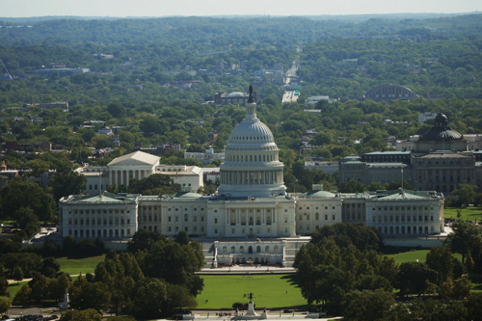 (Image caption) The U.S. Capitol in Washington, D.C. On September 15, 2026, the Senate voted on the cloture motion to enter the CLARITY Act into consideration. The result was 49 votes in favor and 50 against, failing to reach the 60-vote threshold. The image shows the actual institutional obstacle to the bill, not the 294-vote consensus previously seen in the House of Representatives.
The result was 49 to 50; 60 votes were the threshold.
At 2:19 PM on September 15, 2026, the U.S. Senate held a key procedural vote on HR 3633, the Digital Asset Market Clarity Act of 2025, also known as the CLARITY Act. The senators voted on whether to initiate cloture on the motion to "enter HR 3633 for consideration," thus limiting further debate and allowing the bill to proceed to the next formal processing stage. This was not the final decision on whether the CLARITY Act would pass or be rejected.
According to official Senate records, Cloture received 49 votes in favor, 50 against, and one senator did not vote, failing to reach the three-fifths majority required by Senate rules, or the threshold of 60 votes.
A 49-50 vote could easily create the impression of a close call, but that wasn't the case. Republican Senator Thom Tillis changed his vote to "no" towards the end of the count, preserving the procedural space for a motion for reconsideration. Before this change, the supporters effectively held 50 votes, 10 short of the 60 required. Other Republicans who ultimately voted against the bill included Susan Collins, Josh Hawley, and Jerry Moran, while Democratic Senator Chris Coons did not participate in the vote. After the vote, Tillis formally introduced the motion for reconsideration, allowing the bill to remain procedurally subject to further processing.
If we only look at the September 15th vote, it's easy to interpret it as the crypto industry failing to convince enough senators. But if we move back fifteen months, things become far more complex.
On July 17, 2025, the CLARITY Act passed the House of Representatives by a vote of 294 to 134, with 216 Republicans and 78 Democrats voting in favor. In May 2026, the Senate Banking Committee advanced related market structure legislation by a vote of 15 to 9. On September 14, the day before the Senate procedural vote, Cynthia Lummis, John Boozman, and Tim Scott released a 635-page final draft, stating that after more than a year of negotiations, the text had incorporated 126 substantive amendments requested by the Democrats.
This 635-page document contains an easily overlooked procedural detail. It is not the new text of HR 3633 that the Senate has formally adopted, but rather a replacement amendment intended for submission after a successful cloture. The issuer explicitly stated that this document would only be submitted as an Amendment in the Nature of a Substitute once the procedural vote passed. Since the September 15th cloture failed, the Senate has not even reached the stage of formally processing this replacement text.
This also gives the 49-50 vote a different meaning. It doesn't reject the Stablecoin, DeFi, ethics, or banking provisions in the 635-page draft clause by clause; it shows that after more than a year of negotiations, extensive clause exchanges, and electoral political investment, the supporters still haven't been able to organize a coalition strong enough to cross the 60-vote threshold.
The issues addressed by the CLARITY Act go beyond a binary choice like "Does Washington support or not support cryptocurrencies?" Market structure legislation touches upon some of the most difficult interfaces to reconcile in the US financial system: the jurisdictional boundaries between securities and commodities, the competition for funds between bank deposits and stablecoins, the ethical controversies surrounding federal officials holding digital assets, and how far the SEC and CFTC can go without new congressional authorization.
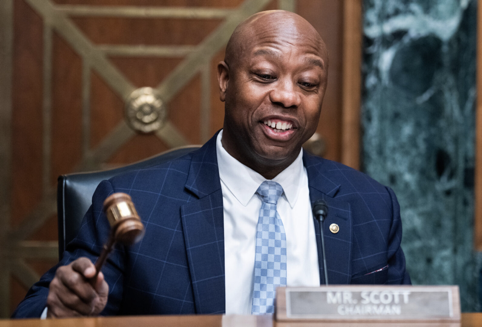 (Image caption) Senator Tim Scott, Chairman of the Senate Banking Committee, holds the gavel. The committee had previously advanced related legislation by a vote of 15 to 9; on September 14, he, along with Lummis and Boozman, released a 635-page alternative draft. This is the committee meeting where Stablecoin's benefits, ethical provisions, and regulatory authority were written into the text.
Why didn't the 294 votes in the House of Representatives translate into 60 votes in the Senate?
The basic goal of the CLARITY Act is to establish a market structure for U.S. digital assets, while more clearly defining the regulatory responsibilities of the Securities and Exchange Commission and the Commodity Futures Trading Commission.
The House of Representatives passed HR 3633 in 2025, establishing a regulatory framework for digital commodities, expanding the CFTC's statutory role in the digital commodities market, while retaining the SEC's authority over securities and related securities transactions, and covering arrangements for trading platforms, brokers, dealers, disclosures, client assets, and other market infrastructure.
After the bill entered the Senate, the issue became increasingly unlike simple crypto legislation.
The Banking Committee and the Agriculture Committee handle the relevant sections of the SEC and CFTC respectively. Subsequent drafts have added content on DeFi, illicit finance, software developer protection, stablecoin yields, banking activities, customer assets in bankruptcy, law enforcement tools, and public official ethics. The 635-page alternative draft released on September 14 has gone far beyond the classification question of "whether a certain token is a security or a commodity."
This actually aligns well with the typical trajectory of large-scale financial legislation in mature markets. Banks focus on deposits and credit funds, securities regulators on investor rights, commodity regulators need to define their market authority, law enforcement is concerned with money laundering, sanctions, and national security, and state and tribal governments examine whether new federal laws infringe upon existing jurisdictions.
The same bill can represent completely different risks in the eyes of different people.
Therefore, the 294 votes in the House of Representatives demonstrate that there was once a fairly broad consensus in the U.S. Congress that the digital asset market needed a more complete legal framework; the Senate’s 60-vote threshold requires an even higher level, demanding that all parties reach a long-term compromise on the specific allocation of power, interests, and risks.
Acknowledging the need for legislation does not equate to agreeing that legislation should be based on this version.
More than $300 million in election spending is still not enough to form a 60-vote coalition.
Another undeniable factor in this vote is the rapidly expanding US political spending in the crypto industry in recent years.
Reuters estimates, based on campaign funding and industry data, that the crypto industry will spend over $300 million in the 2024 and 2026 election cycles to support candidates perceived as having more favorable policies toward digital assets and to advance related national political initiatives. Fairshake and its affiliates Protect Progress and Defend American Jobs are among the most important political action platforms in this effort.
This $300 million needs to be understood very carefully.
It is not a bill paid directly to CLARITY Act supporters, nor can it be used to prove which fund determined a particular member's vote. The separate expenditures of Super PACs, candidate support, and national initiatives have different meanings under U.S. election law, and there are also fund transfers between related political action committees. Mechanically adding up figures from different accounts could even result in double counting.
This further demonstrates that the crypto industry already possesses the capital, organizational capabilities, and ability to continuously influence the policy agenda in mainstream American politics.
Political funding can make it easier for an industry to sit at the negotiating table, support candidates whose policy directions are closer to its own, and bring issues that were originally on the fringes of technology and finance into congressional hearings, committee agendas, and even presidential policy.
But the Senate's 60 votes cannot be secured by mere visibility.
As the bill progresses to this stage, its political influence must be transformed into a legislative coalition capable of transcending partisan, banking interests, regulatory bodies, regional politics, and voter pressure. September 15th demonstrated that industry has the capacity to enter Washington's core policy agenda, but it lacks the ability to resolve the differences between various stakeholders.
I prefer to interpret this vote as a test of the limits of political capital, rather than a test of whether money is "effective" in Washington.
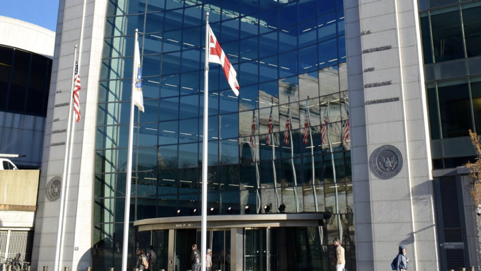 (Image caption) The headquarters of the U.S. Securities and Exchange Commission on F Street, Washington. Even after the CLARITY Act failed to meet procedural hurdles, the market did not return to a state of chaos. The SEC has issued an interpretation of Crypto Assets, and Tokenized Securities will continue to be handled under existing securities laws. In the absence of written congressional legislation, the executive branch continues to proceed using its existing authority.
The battle over Stablecoin yields has now entered the realm of bank deposits.
A key point of contention that kept the negotiations going until the eve of the vote was what form of economic reward Payment Stablecoin could offer to its holders.
This may seem like a product design issue; however, for the banking industry, it directly impacts the most important part of the balance sheet—deposits.
The American Bankers Association, Independent Community Bankers of America, and other banking groups have argued that if digital asset platforms can offer Stablecoin holders returns that function similarly to bank deposit interest rates, a portion of funds could flow from insured bank deposits to Stablecoin, ultimately impacting funds that community banks could use for housing, small business, and agricultural loans. This is a risk assessment proposed by the banking industry and cannot yet be considered a market outcome.
The alternative draft on September 14 has actually addressed this controversy quite extensively.
Section 10404 stipulates that covered Digital Asset Service Providers may not directly or indirectly pay interest or yield simply because a customer holds Payment Stablecoin, nor may they provide returns that are economically or functionally equivalent to bank deposit interest. Meanwhile, the draft retains the right to rewards or incentives related to real payments, transfers, transactions, liquidity provision, collateralization, governance, staking, or other activities.
The debate then shifted to a more specific line.
The draft allows some compliant activity rewards to be calculated based on Stablecoin balance, holding period, or tenure. Banking groups such as ABA and ICBA are concerned that in actual product design, there may still be a gray area between activity rewards and returns that are economically similar to deposit interest, and therefore are calling for further tightening of restrictions.
The final draft also includes a so-called regulatory circuit breaker, bringing deposit-taking institutions or holding companies with total assets below $10 billion into the scope of community banks. It requires the Treasury Secretary to assess within a specified period whether stablecoin activities have a material adverse effect on these institutions' interest-bearing deposits; once a legal threshold is reached, regulators can take further action. Supporters of the bill see it as a safety valve to protect community banks, while banking groups argue that if remediation is only initiated after significant deposit outflows occur, regulation may already be lagging behind the market.
This debate uses the Stablecoin language, but at its core is a very traditional financial question: who can provide a product that serves as a deposit substitute, and what regulatory responsibilities should be assumed after providing this economic function?
For RWA, this is not a side issue.
Tokenized treasuries, tokenized funds, and other on-chain assets all require cash settlement instruments, collateral, and liquidity. If Stablecoin gradually becomes an important cash leg in the on-chain market, whether it primarily serves payment and settlement functions or also possesses savings and yield attributes will directly impact the overall funding structure of bank deposits, money markets, and on-chain assets.
Political ethics were incorporated into market structure negotiations.
Another important point of contention stems from the financial relationship between federal public officials and digital assets.
According to a Reuters report based on Trump's 2025 financial disclosures, his crypto-related businesses generated over $1.4 billion in revenue. These disclosures have made the digital assets and interests of the president and his family a political issue in the CLARITY Act negotiations and a key reason for Democratic lawmakers demanding stricter ethical constraints on public officials. While public disclosures confirm the existence of related revenue and financial interests, they cannot automatically imply illegality, quid pro quo, or that a policy decision was influenced by private interests.
The alternative draft released on September 14th therefore added a complete section on Digital Asset Ethics Requirements.
Lummis, Boozman, and Scott stated that the new text incorporates key elements of the Tillis-Gallego ethical framework and enhances the enforcement role of state attorneys general. Democrats, however, argue that the provisions still leave loopholes regarding the holding structure, immunity, and actual enforcement. These disagreements stem from political and legal judgments about the bill's design, and no independent judicial conclusion can currently provide a final ruling for either side.
Therefore, there is no reason why the score of 49 to 50 on September 15th can be simplified into a single sentence.
Senate records only tell us how each senator voted. Senator statements, industry positions, and media interviews show that political ethics, Stablecoin yields, bank deposits, DeFi, national security, and state and tribal rights were all negotiated. Different senators didn't agree on which issue to prioritize.
This is also one of the most important differences between institutional reporting and political slogans: a ballot is very clear, but why people cast their votes is usually much more complex.
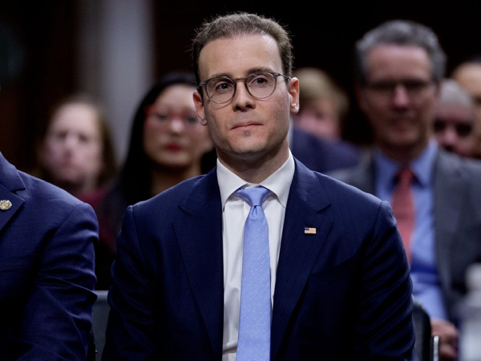 (Image caption) CFTC Chairman Michael S. Selig attends a congressional hearing. He has instructed his staff to study establishing a partial cryptocurrency market structure within the existing powers of the Commodity Exchange Act and to allow regulated exchanges to list Bitcoin perpetual contracts. While the administrative approach can proceed first, the extent to which the spot market can develop still faces potential judicial scrutiny.
Congress is stuck at the procedural threshold, while the SEC and CFTC are still moving forward.
The CLARITY Act failed to cross the September 15 procedural threshold, and the U.S. digital asset market did not return to a state of no rules as a result.
On March 17, 2026, the SEC released a formal interpretation outlining how federal securities laws apply to certain crypto assets and related transactions. The CFTC simultaneously joined, indicating it would coordinate the administrative application of the Commodity Exchange Act according to this interpretation. This formal interpretative release began providing clearer administrative classifications for Digital Commodities, Digital Securities, Stablecoins, and other types of crypto assets, and took effect on March 23.
There are also relatively specific regulatory directions for tokenized securities.
On January 28, the SEC's Division of Corporation Finance, Division of Investment Management, and Division of Trading and Markets jointly issued a staff statement defining tokenized security as a financial instrument that is itself considered security under federal securities laws, but whose ownership records are maintained wholly or partially through a cryptocurrency network. This document represents staff opinions and is not a formal commission rule, but it reflects a clear current legal approach: changing the technological carrier of a financial instrument does not automatically alter its security nature.
The CFTC also did not wait for Congress to complete market structure legislation.
Chairman Michael S. Selig has instructed CFTC staff to investigate how to utilize existing powers under the Commodity Exchange Act to establish partial Crypto Asset Market Structures, including exploring whether existing registrants and unregistered Crypto Exchanges can become a type of Designated Contract Market under certain conditions. He has also asked staff to work with the developers of the Onchain Finance Protocol to explore pathways to providing compliant services in the United States.
The CFTC has also begun to promote regulated cryptocurrency derivatives at the product level. In May 2026, Selig publicly stated that the CFTC had allowed regulated exchanges to list Bitcoin perpetual contracts; CFTC product filings in September also showed that several digital commodity perpetual futures had been certified.
However, there is a boundary that cannot be ignored along this administrative route.
Selig's proposed broader market structure remains a matter of rule research and policy direction, and does not represent that the CFTC has obtained full regulatory power over the cryptocurrency spot market as explicitly granted by Congress. Especially in the non-leveraged, non-margined digital commodity spot market, how far regulators can go relying on the existing authorization of the Commodity Exchange Act still faces legal interpretation, administrative procedures, and judicial review.
Administrative rules can be implemented first, but the long-term durability of laws still depends on Congress.
For businesses, the administrative actions of the SEC and CFTC have significant practical value.
An asset management firm designing a tokenized fund, a bank preparing to integrate with Stablecoin settlement, or a startup team hoping to operate an on-chain trading platform in the United States cannot indefinitely postpone all product, investment, and compliance decisions simply because Congress has not yet completed market structure legislation.
Regulatory bodies can interpret existing laws, set operational requirements for market participants, harmonize jurisdictional boundaries, and approve specific product and market structures. For businesses, these administrative decisions directly impact legal advice, board discussions, compliance budgets, and capital allocations.
But when a company is preparing to invest capital for five or ten years, it will ask another question: Will the regulatory answers we get today still hold true five years from now?
This is one of the most important differences between executive policy and congressional written law.
A new commission can amend the interpretation of the previous commission; administrative rules may be subject to court review; and if regulatory actions exceed the original legal authority, the market may return to litigation to find the boundaries.
One of the issues the CLARITY Act aims to address is to incorporate the market boundaries between the SEC and CFTC, which have long relied on administrative interpretations, enforcement cases, and judicial rulings, into a more comprehensive set of federal statutory laws.
Therefore, the results of September 15 cannot be generalized as "the United States does not have Crypto rules." The United States already has securities laws, commodity laws, banking laws, the GENIUS Act, and a large number of regulatory agency administrative documents; what is still lacking is a comprehensive market structure fully authorized by Congress that can handle the Digital Commodity spot market and interfaces with different financial systems in the long term.
An on-chain transaction can be completed in seconds, but investments in an exchange, a tokenized fund, a cross-border RWA platform, or the infrastructure of a regulated financial institution may be calculated over a period of five years, ten years, or even longer. The certainty required for these projects will ultimately be reflected in financing costs, legal opinions, product launch timelines, and whether the board of directors is willing to approve the investment.
These issues, which may seem far removed from congressional processes, ultimately come down to specific decisions made by businesses and individuals.
 (Image caption) A Bank of America branch counter is processing a deposit; the FDIC logo is visible on the counter. Banking groups are concerned that if Stablecoin offers returns similar to deposit interest rates, funds could flow out of deposited accounts. The proposed alternative has restricted direct yields and included a community banking circuit breaker. The real issue in this debate is the traditional financial interface of deposits.
RWA's greater uncertainty lies in its institutional interface.
Despite the obstruction of the CLARITY Act, Tokenized Securities did not lose its legal basis.
Stocks, bonds, fund units, and other financial instruments that are inherently security, even when tokenized, are still subject to existing federal securities laws and regulations concerning broker-dealers, transfer agents, custody, clearing, and investor protection. Wall Street's tokenization process never waited for the passage of the Clarity Act to begin.
GFM.News' previous research on DTCC, exchanges, tokenized securities, and on-chain market infrastructure has already shown this path: traditional finance is gradually integrating blockchain into existing market systems, rather than first dismantling existing laws and then establishing a completely independent on-chain financial system.
The impact of the CLARITY Act's obstruction on the RWA is more pronounced where different institutions intersect.
An RWA platform may issue tokenized security, complete cash settlement with payment stablecoin, obtain liquidity through the Digital Commodity Market, manage collateral with DeFi Protocol, and even allow the same wallet to hold both security and non-security digital assets simultaneously.
At this stage, the product team is no longer just facing the question of "whether this asset can be put on the blockchain".
They need to know where the SEC's authority ends, where the CFTC's authority begins, whether the platform needs to register, whether software development activities can be exempted, how customer assets should be segregated, and which set of laws should be followed when different assets enter bankruptcy proceedings.
For a startup, these answers could determine whether a product can be launched; for banks and asset management companies, they could determine whether a board approves hundreds of millions of dollars in infrastructure investment; and for investors, they could further translate into valuation and risk discounts.
The failure of the procedure on September 15 did not stop the asset on-chain process; it extended the time when these institutional interfaces still need to be addressed through administrative interpretation, rule-making, and case-by-case legal analysis.
This is also what I believe to be the most important connection between the Clarity Act and the RWA.
What is technically feasible is separated from whether a large financial institution is willing to entrust its clients' assets to it in the long term by legal durability and certainty of liability.
The 60-vote threshold raises a longer-term systemic issue.
The CLARITY Act has not yet been formally terminated through legislative procedures.
Following the vote on September 15, Tillis formally filed a motion for reconsideration, leaving the procedural possibility of reprocessing the cloture vote. With Congress entering the political cycle leading up to the 2026 midterm elections, there remains considerable uncertainty as to when the bill can re-form a 60-vote coalition.
The U.S. digital asset system did not come to a halt because of this vote. The GENIUS Act has become federal law, and the SEC and CFTC continue to use their existing powers to establish rules for the Crypto market. Tokenized securities, stablecoins, and on-chain market infrastructure are still under development.
What remains to be done is to integrate these different markets, regulatory bodies, and stakeholders into a market structure with long-term legal stability.
The over $300 million in election spending demonstrates that the crypto industry has the ability to enter the center of mainstream American politics and financial policy; the 294 votes in the House of Representatives also prove that the digital asset market structure does not lack bipartisan support.
The Senate's 60 votes represented a different demand.
Banks need to know that their deposit and lending models will not be accidentally rewritten by a new product; the cryptocurrency industry needs enough room for innovation; investor protection systems cannot leave obvious loopholes; law enforcement agencies need to maintain anti-money laundering and national security tools; and members of both parties must be able to explain to their respective voters why this new system is worth accepting in the long term.
What I care more about is the systemic issues left by this vote, rather than whether one side won or lost on September 15.
For Web4 and RWA to operate large assets on-chain long-term, they require technological maturity, capital investment, and a legal framework capable of withstanding political cycles, regulatory changes, and judicial scrutiny. To engineers, this may seem like a distant Washington issue; for banks, funds, and enterprises truly preparing to connect billions of dollars in assets to on-chain systems, it ultimately becomes a very concrete issue of cost, responsibility, and trust.
The 49-50 scoreline on September 15th did not determine how the US digital asset market would ultimately turn out.
This makes a reality clearer: technology has taken the lead, and capital has entered the market, but a federal market structure that can allow Crypto, Tokenization, and RWA to operate in the long term still needs to find 60 votes willing to share the responsibility for these rules.
Disclaimer
This article is based on publicly available information from the U.S. Congress, SEC, CFTC, and credible media as of September 16, 2026, and is intended for news research and institutional analysis only. It does not constitute investment, legal, or policy advice. The text of the bill, regulatory interpretations, and the legislative process are subject to change, and the latest official documents from the competent authorities and Congress should be referred to.