

Binance's tokenized shares: Assets on-chain, where does the responsibility lie?
Whether you become a shareholder after purchasing the shares, whether you can redeem them, and who you can seek recourse from depends on the terms of the issuance.
What does a tokenized share balance on the Binance app represent for the holder? The answer isn't just about the stock name. What the user acquires may be the rights to notes issued by an offshore issuer, not shares in the underlying company. Even if backed by securities, the holder may not be able to directly demand delivery of the shares or dispose of the collateral at their own discretion. This necessitates understanding the issuance terms: who holds the securities, who can apply for redemption, and who enforces the guarantee if the issuer fails to fulfill its obligations. Even when tracking the same stock price, the rights granted to the holder by different products can vary significantly.
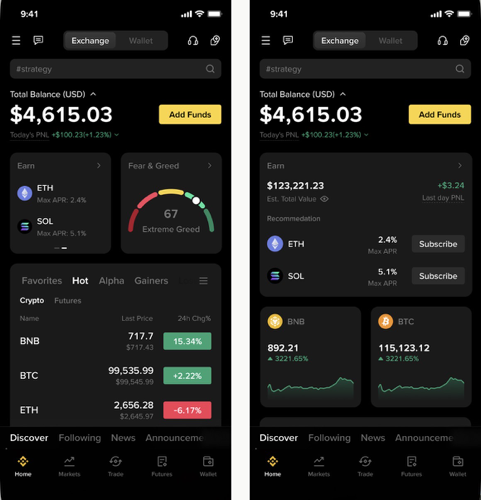 (Image caption) Binance App trading interface. In February 2026, Binance launched ten Ondo tokenized US stocks and ETFs on Binance Alpha. A single balance that a user sees on the same interface may be linked to a platform account, custody ledger, offshore issuer debt, and securities held by US brokers; the interfaces may be similar, but the ownership structures may be different.
A stock token balance may represent a claim against an offshore issuer.
On February 24, 2026, Binance listed ten Ondo tokenized US stocks and exchange-traded funds (ETFs) on Binance Alpha, including AAPLon, NVDAon, TSLAon, and QQQon. Familiar stock and ETF names thus entered the crypto asset platform, but users need to clarify the legal implications: the issuers of Ondo-related offshore products are located in the British Virgin Islands, and the products use structured note arrangements; holders do not acquire ownership of the underlying stocks simply because the tokens track the stock price.
This distinction directly affects who investors can demand payment from, what assets back this obligation, and whether they can request the return of specific assets in the event of performance issues. The same balance may simultaneously be linked to platform accounts, custodial ledgers, issuer debt, guarantee arrangements, and securities held by U.S. brokerages.
Token holders, legal owners, beneficial owners, platform account holders, and underlying asset creditors may overlap in some cases, but such overlap must be supported by law and documentation. When studying how assets enter Binance, the first question to answer is: what level of rights do users acquire, and who exercises those rights?
Returning to the stock token market requires more specific arrangements.
Binance offered equity tokens in 2021, but announced on July 16th of the same year that it would cease new purchases and gradually end the service. The announcement at the time stated that the equity tokens were issued and sold by the German company CM-Equity AG. Therefore, the fact that the tokens were issued by a third party is not sufficient to distinguish between the two arrangements; what needs to be compared is the issuer, product documentation, trading venue, custody structure, and regulatory scope.
Currently, Binance's Ondo product description distinguishes between two independent entry points: the non-custodial Binance Wallet and the Binance Alpha account. The former allows users to hold tokens through their personal wallets, while the latter records holdings in the Alpha account. Due to the different entry points, the relevant service providers, custody methods, and applicable documents may also differ.
The Wallet service description lists Binance Barbados Limited and states that the Wallet service is not regulated by the Abu Dhabi Global Markets Financial Services Regulatory Authority (ADGM FSRA). This disclosure has a clearly defined scope of services and cannot be extended to reflect the regulatory status of Binance's operations; similarly, it cannot extend the license of another group company to all activities within the Wallet.
Regulatory procedures must also be verified item by item. The FSRA's securities classification list places products such as AAPlon and NVDAon under classification dates of February 16, 2026; Ondo's announcement on March 3rd states that ten products have been added to Binance's FSRA-regulated multilateral trading facility. The date of a company's announcement and the date the regulatory body makes its decision are not interchangeable.
Being designated as a security, being granted access to a trading venue, and having a prospectus approved each address different issues. NVDAon's trading access documents clearly distinguish between the prospectus approved by Liechtenstein and ADGM trading access, and state that there was no prospectus approved by the FSRA for this access. Grouping these procedures together as "regulatory approval" makes it difficult for readers to determine which part of the regulation is actually covered.
 (Image caption) Maria Island, Abu Dhabi, where the Abu Dhabi Global Market (ADGM) is located. Binance's structure within ADGM separates the functions of trading venue, clearing and custody, and brokerage services into different legal entities. The Abu Dhabi Global Market's securities classification, trading access, and prospectus approval are handled by different regulatory procedures.
The five identities must first clarify the objects of their rights.
Before discussing ownership, it's necessary to clarify whether the user holds tokens, fund shares, underlying stocks, or a debt instrument with payments calculated based on the value of other assets. Having rights to one asset does not automatically grant ownership of another.
A token holder is a person who holds tokens or enjoys token rights under relevant arrangements. Private key control can prove important facts of technical control, but on-chain addresses do not fully reveal trusteeships, delegated authority, or disputed transfers. When tokens are held in a pooled wallet, the rights of individual users may be primarily identified by the custodian's internal ledger, rather than through the user's own on-chain address.
A legal owner is someone who has legal ownership of specific property under applicable law. In the securities market, it is also necessary to distinguish between the registered holders on the issuer's register and the investors recorded in the intermediary's books. The registered name, the person controlling the private key, and the person who actually bears the investment profits and losses may not be the same.
Beneficial ownership must be understood in conjunction with specific assets and regulations. In the United States, investors can indirectly hold securities through banks or brokerages without necessarily registering them in their own names on the issuer's register; the absence of direct registration is not sufficient to presume they are merely ordinary unsecured creditors. The concepts of beneficial ownership, trust beneficial rights, and related tax or anti-money laundering regulations in securities holding systems cannot be confused simply because their names are similar.
A platform account holder is a person who enters into an account contract with the relevant service provider. The account balance may record entrusted property, securities interests, contractual claims, or a combination of such rights. An account establishes a service relationship, but ownership of assets is still subject to determination according to applicable arrangements.
A creditor of an underlying asset is someone who legally has a claim against the underlying debt. If an investor holds notes issued by a third party and linked to the value of bonds, they typically first assert their rights against that third party based on the notes, and do not become a direct creditor of the underlying bond issuer simply because of the price linkage. If the underlying asset is stocks, the legal status of shareholders and creditors must be distinguished.
These categories ultimately correspond to different remedies: some can demand the delivery of property, some can demand payment, and others must exercise their rights through a trustee or guarantor. By reporting them all as "owning assets," the most crucial part of the explanation is omitted.
One account can connect to three different companies.
Binance's ADGM structure entrusts the trading venue to Nest Exchange Limited, clearing and custody to Nest Clearing and Custody Limited, and brokerage functions to Nest Trading Limited. The terms of use, effective July 21, 2026, maintain different legal entities and contractual relationships under a unified account.
This division of labor requires analysis down to the specific transaction: which company receives the instructions, which company provides the market, which company holds the assets, and who bears the settlement obligation? The new architecture announced by the platform explicitly mentions the central counterparty clearing of exchange-traded derivatives, but it cannot be assumed that all tokenized securities are equally protected simply because the group has a clearing institution.
The same terms of use also do not support another overgeneralization: that users are left with only ordinary claims simply because they entrust their assets to the platform for safekeeping. Article 8.4 establishes trust beneficiary arrangements for applicable digital assets, identifying interests based on internal ledgers, and the trust is not extinguished even if a collective wallet is used on-chain. The terms also address bankruptcy protection, statutory priority, and the possibility of customers bearing a portion of the distribution fees in specific circumstances.
But trust protection still needs to answer a more fundamental question: What is being held in custody?
If the underlying asset of the trust is a token representing the issuer's debt, a user's beneficial interest in that token does not translate into ownership of the stock backing the token. Therefore, the same investor could simultaneously be a platform account holder, a beneficiary of the escrow token, and a creditor of the token issuer, but not a shareholder of the underlying company.
The general account terms should be read in conjunction with the product documentation, trading rules, and clearing rules. The brand provides an identification point; specific documents explain which entity investors can contact and what requests they can make.
 (Image caption) Nvidia's headquarters building in Santa Clara, California. NVDAon's trading access document states that holders acquire contractual rights over the token issuer, but do not acquire direct ownership, voting rights, or direct dividend claims to Nvidia stock; the stock name indicates the price reference, and the payment obligation rests with the issuer.
Stock names and bill payment obligations belong to different relationships.
Ondo's public legal statement defines the relevant offshore tokenized shares as structured notes, issued by Ondo Global Markets (BVI) Limited, with the terms of sale governed by Swiss law. The payable amount of the notes is adjusted for the actions of the reference securities and related companies; the share name indicates the economic performance reference, and the terms of issue specify the party obligated to make payments.
NVDAon provides a concrete example. Its trading access documentation states that holders acquire contractual rights to the token issuer, but do not thereby acquire direct ownership, voting rights, or direct dividend claims to NVIDIA stock. The documentation also describes purchases on the trading platform as secondary market transactions acquiring products from existing holders, and each purchase should not be interpreted as the issuer simultaneously creating new tokens.
The securities supporting the product still exist within the traditional brokerage system. When Alpaca announced its partnership with Ondo on September 3, 2025, it stated that its brokerage infrastructure was involved in the service and listed that the underlying securities were held by Alpaca Securities LLC; the issuance and tokenization of the tokens were handled by a third party.
Investors' rights to notes issued by BVI issuers and the arrangements for issuers to hold securities through U.S. brokers are therefore two distinct relationships. A guarantee can use the latter's assets to support the former's obligations, but it does not merge the legal entities and liabilities of the two.
The same judgment applies to other reference stocks and ETFs. Holding a note linked to a company's stock price is not sufficient to prove that the company borrowed money from token investors.
Whether a guarantee can provide protection depends on how the enforcement rights are connected.
Ondo's disclosed protective measures include a special purpose vehicle for bankruptcy remoteness, separation of assets and books, underlying securities and cash in transit support, and additional guarantees; its public documents also list Ankura Trust as the guarantor.
These arrangements help identify how risks are allocated, but it's crucial to maintain a clear distinction between source and conclusion. A company disclosing a protective framework is different from how much recovery that framework actually generates in a specific default or bankruptcy proceedings. Under limited recourse arrangements, collateralized assets and additional support may still be insufficient to cover losses.
Asset verification and enforcement of rights also answer different questions. Confirming that a particular batch of securities exists in a brokerage account is insufficient to prove that an investor can demand a sale, when such instructions can be given, and how the proceeds should be distributed. Enforcement conditions, holder eligibility, notification procedures, and fee priority all affect whether protection can be effectively implemented.
Collective holdings especially require clear coordination. Individual investors may appear on the platform's ledger, while the issuer's records may identify another wallet or custodian; both arrangements must explain how individual interests translate into effective collective directives or recourse claims. When holders are scattered across different service platforms, the process of proving eligibility and coordinating actions can itself take time.
Furthermore, full coverage cannot be directly rewritten as a permanent "one token equals one share." Dividend reinvestment, corporate actions, and interface display methods may alter the relationship between token units and the reference shares. Investors need to understand both asset coverage and product calculation methods.
Voting preferences can be transferred, but shareholder eligibility still needs to be verified separately.
On April 28, 2026, Ondo and Broadridge announced the addition of voting participation capabilities for their tokenized stocks and ETFs. The mechanism described in the announcement allows token holders to express their preferences to the token issuer, suggesting how the issuer should vote on the underlying shares they beneficially hold.
This feature can expand investor participation, but its legal basis remains the arrangement between the holder and the token issuer. Whether the issuer must comply with preferences and what remedies holders can claim need to be confirmed by applicable documents; obtaining company information or seeing a voting button is not sufficient to prove that the holder has acquired all the rights of a traditional shareholder.
The same brand may also employ a different product structure. On July 2, 2026, Ondo and Broadridge separately announced arrangements in the United States involving custodial tokenized securities interests. This news does not directly rewrite the rights to BVI offshore notes, and also illustrates that the U.S. person restrictions on specific offshore products cannot be extended to all Ondo products.
The Binance offshore note service discussed in this article is still subject to the relevant product documents and platform eligibility restrictions. The launch of another US business does not constitute proof that Binance's related services have been opened to US investors.
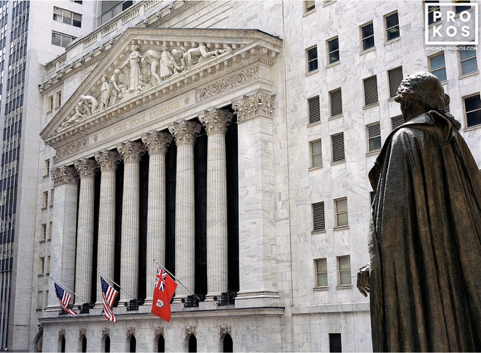 (Image caption) Exterior view of the New York Stock Exchange on Wall Street, New York. The US listed company stocks and ETFs that the tokenized stocks are based on are still traded in the traditional securities market, and the securities supporting the related products are held by US brokerage firms in the traditional brokerage system; the tokens circulate on-chain and do not change the registration and holding system of the underlying securities.
For each app asset, ten responsible locations need to be identified.
Organizing the above relationships, we can examine an on-chain asset using ten points. These include the legal entity, the technical mechanism, the asset and rights holders. This does not mean that every product involves ten companies, nor does it mean that all products must adopt the same architecture.
The first position is the token issuer, responsible for creating product rights; the second is the trading venue, providing rules and trading mechanisms; the third is the broker, who receives, transmits, or executes instructions, and may also act as a counterparty in a proprietary trading role. The interface can combine these functions, but legal responsibility still rests with the specific entity.
The fourth position is the clearinghouse, which needs to confirm whether there is a central counterparty and what performance obligations it undertakes. Successful matching, settlement completion, and the issuer maintaining solvency are different issues. The fifth position is the custodian, which is usually divided into two layers: token custody and underlying securities/cash custody; the company holding the on-chain private key may not necessarily hold the stock of the underlying product.
The sixth and seventh positions are related to blockchain and smart contracts. They provide mechanisms for recording, verifying, and executing data, but liability for damages cannot be solely attributed to the code. It is necessary to identify who can upgrade contracts, suspend transfers, adjust whitelists, and correct errors, and who is responsible for these operations.
The eighth element is the underlying asset, which must confirm its existence, location, holder, and the relationship through which the tokens are linked—through ownership, trust, guarantee, or payment commitment. The ninth element is legal registration, which must separate the registered holders on the register from the registration or transfer authority that maintains the register; maintaining the register does not equate to owning property, and token transfers do not necessarily result in a simultaneous change to the underlying shareholder register.
The tenth position is the ultimate beneficiary in the holding arrangement, that is, the person who ultimately enjoys the relevant economic benefits. This discussion concerns how investment rights are allocated, and we cannot directly apply the anti-money laundering system's definition for identifying the ultimate controller of a company.
The research focuses on what evidence connects the various positions, and whether the remaining relationships can continue to function if one entity ceases to fulfill its obligations.
Sale, redemption, and recourse have different conditions.
There are at least three paths that investors need to understand separately when leaving a product. Secondary market sales depend on trading eligibility, market openness, buyer demand, and the available price; the screen continuously displays quotes, but there is no guarantee that a specific quantity can be realized at that price.
Direct redemption from the issuer depends on a different set of qualifications and procedures. Related documents have separate requirements for account opening, identity verification, and operational conditions. Being able to purchase tokens from other holders does not equate to meeting the conditions for direct redemption. After a normal redemption fails, recourse will also involve holder eligibility, notification, asset disposal, and distribution procedures.
The funding sources and timelines for the three pathways differ. The availability of someone willing to take over the position and fulfill payment obligations with the issuer are not interchangeable; the continued operation of the blockchain does not imply simultaneous opening of banks, securities firms, the underlying market, and redemption services. The completion of the technological transfer must be confirmed separately from the fulfillment of contractual payment obligations.
In its October 2024 report on tokenization, the Bank for International Settlements and the Committee on Payments and Market Infrastructures discussed the potential to reduce transaction costs, while also emphasizing governance and risk management. For investors who need to pay living expenses and adjust their financial arrangements, these institutional differences ultimately translate into concrete questions: what proofs are required, how long will the wait be, and can they exit when they need cash?
BENJI's legal starting point is fund units.
Tokenization does not necessarily involve third-party price-linked notes. Franklin Templeton's Franklin OnChain US Government Money Fund uses BENJI to represent fund units, with a transfer agent maintaining official holding records through a blockchain-based system. This arrangement incorporates tokens into the fund's own unit holding structure, differing from the starting point of third-party-issued debt instruments that track share prices.
The fund's prospectus dated August 1, 2026, retains transfer control and procedures for correcting erroneous or unauthorized transactions. The on-chain record can therefore be linked to formal securities holding regimes while maintaining identifiable registration responsibility; an address receiving tokens due to an erroneous transfer does not establish its legal rights solely based on this technical record.
Even if tokens directly represent fund units, the object of the rights must still be clearly stated. Investors own fund units, and cannot be described as directly holding every single Treasury bond in the fund's portfolio.
On February 11, 2026, Franklin Templeton and Binance announced an institutional off-exchange collateral program that allows eligible clients to use eligible tokenized money market fund units issued through the Benji platform as collateral for trading. According to the announcement, the unit value is reflected in the Binance trading system, while the assets remain off-platform and are held in custody by Ceffu Custody FZE; the company's custody license is listed in the Dubai Virtual Assets Regulatory Authority's registration information.
Benji here is the platform name. This partnership announcement should not be interpreted as meaning that all platform funds, all US fund units, or all investors can use the program. Its significance lies in the fact that a single trading interface can connect fund units, external custodians, and collateral usage arrangements without automatically placing them under the same legal entity or regulatory scope.
A statement issued on January 28, 2026, by staff from three departments of the U.S. Securities and Exchange Commission (SEC) distinguishes between issuer-led tokenization and third-party custodial or synthetic arrangements. This is a non-legally binding staff statement and should not be considered a separate classification ruling for the product discussed in this article, but it raises a useful question: Does the holder's right derive from the original security or from another newly issued instrument?
For Ondo offshore notes, it's necessary to distinguish between notes issued by BVI companies and the third-party shares they reference; for Benji, it's necessary to distinguish between fund units and the securities held by the fund. Using the same technical name does not eliminate these differences.
 (Image caption) Franklin Templeton's headquarters in San Mateo, California. Its Franklin OnChain US Government Money Fund uses BENJI as the fund unit name. The official holding record is maintained by a transfer agent through a blockchain-based system, placing it on a different legal footing from third-party issued notes that track share prices.
The location of the fault determines where to begin the investigation.
The following scenarios are used to analyze the above structure and do not represent any related accidents that have occurred in any organization.
If a platform suspends services, but the tokens and underlying assets still exist, the first step is to verify the account ownership certificates, escrow ledgers, and transfer procedures. Self-custody can reduce reliance on a particular trading platform, but it does not remove the issuer credit risk inherent in the tokens themselves.
If the issuer is unable to fulfill its obligations, but the collateral still has value, the questions then turn to whether the asset segregation is valid, whether the guarantee can be enforced, and who has the right to act on behalf of the holder. On-chain balances can provide evidence, but they still need to be connected to legally recognized claimants and applicable procedures.
When the underlying company's operations deteriorate and its stock price falls, losses may stem from the investment itself. Full custody does not prevent market declines, and adequate support does not guarantee the principal; even if several factors contribute to the loss, market risk, issuer default, and service provider negligence must be analyzed separately.
If a smart contract or transfer record contains an error, it is necessary to determine the legitimate correction mechanism, administrative authority, and how the corrected record will correspond to the official ledger. Administrative authority can provide remedies, but it may also increase operational and governance risks; therefore, the problem cannot be considered resolved simply because the contract allows for correction.
Cross-border arrangements will further influence the handling of the transaction. The BVI issuer, the Swiss-law-mandated sales terms, the securities held by the US brokerage, and the tokens held by the ADGM custodian involve different legal relationships. The governing law of a single contract cannot determine all property, bankruptcy, and regulatory issues within the entire structure; the investor's location and applicable protections may also affect the outcome.
These differences may not be noticeable during normal transactions, but they can affect whether a paper fortune can be converted into usable funds under stress.
AI agents need pricing information and also need records of rights.
Within the GFM research framework, Web4 serves as an analytical perspective to study how to maintain identifiable and verifiable accountability after AI agents, programmable transactions, and on-chain asset connectivity. This article does not consider it a globally agreed-upon technical or legal standard.
When AI-powered agents allocate assets on behalf of users, they cannot simply compare yields, prices, and fees. Securities held in brokerage accounts and notes issued by offshore issuers may refer to the same stock, yet expose investors to different obligors, custody systems, and recourse procedures. If the agent treats them as completely interchangeable, even if the trades are executed correctly, the allocation judgment may still be based on flawed assumptions about rights.
Authorization also needs to be processed independently. An agent's technical ability to submit instructions is insufficient to prove that a user has authorized the transaction, is eligible for the product, or can use the selected service. Automation should preserve these distinctions, ensuring that faster operations still rely on valid authorization.
Therefore, GFM proposes a research and disclosure recommendation: each tokenized asset should be accompanied by a traceable rights record linking the issuer, product identifier, contract version, blockchain and contract address, custodian asset, official register, redemption eligibility, guarantor, administrative authority and dispute resolution method, and indicating the update date.
This is a policy recommendation, not a claim that GFM or related platforms have already built such a system. Machine-readable data cannot replace original documents, nor can it arbitrarily adjudicate disputed rights; its role is to help users and agents find the correct documents, identify changes, and stop treating assumptions as facts when data is insufficient.
For large platforms, the information presented before placing an order is especially important. When products with different rights use similar buttons and balance styles, the interface needs to clearly explain who is responsible for issuance, trading, custody, and recourse. Financial media's institutional research should also allow readers to see the relationships that are not fully presented in these interfaces.
Liability must be assigned to an identifiable person with the obligation.
This article will advance the research on Changpeng Zhao, He Yi, and Binance to the level of how platforms connect assets and systems. Different regulated companies, custodian trusts, secured notes, and on-chain fund registers each have their own design and boundaries; to assess their value, it is necessary to observe what rights they establish for specific holders, and whether evidence and procedures can still be used after a dispute arises regarding performance.
Token holders may not own the underlying stock, and beneficial rights must specify the property from which the benefits are received. Platform account holders need to confirm their contractual and property rights, and claims against token issuers will not automatically be converted into claims against the issuers of the reference assets.
An app may display only one balance, but the system supporting that balance must retain sufficient information to allow investors to prove what they hold, identify who is obligated to fulfill their obligations, and make valid demands when necessary. Asset tokenization can improve record-keeping and circulation; however, whether these improvements can generate lasting financial value depends on whether rights and responsibilities are clearly defined, and whether ordinary people can rely on this system when they need to access their assets.
Disclaimer
This article is for news research and informational purposes only and does not constitute investment, legal, or tax advice. Product rights and risks must be determined in accordance with applicable laws and the latest contracts; readers should consult a qualified professional on an individual basis.