

How did Changpeng Zhao talk about Binance from prison?
Looking back on his choice, how does he view his responsibilities?
While in prison, Changpeng Zhao began writing about Binance's past, reflecting on his entrepreneurial journey, the crisis, and his choice to plead guilty. However, he admitted in a letter that he should have established compliance controls earlier, written before his imprisonment. Comparing publicly available excerpts, interviews, and documents from the same period reveals his understanding of user protection and his ability to discern the gap between personal commitments and platform obligations. With the founder stepping down and new management taking over, can the decisions he once made still provide users with continued security?
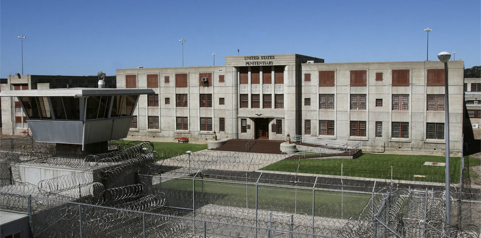 (Image caption) The buildings and fence of the Federal Penitentiary in Lompoc, California. The official photo is taken under the former name USP Lompoc; the facility is now called FCI Lompoc II. Bloomberg reported in June 2024 that Changpeng Zhao began serving his sentence there.
Write down Binance's past in fifteen minutes.
According to Zhao Changpeng's recollection, during his imprisonment in 2024, he was limited to fifteen minutes of computer use each time, and he was not allowed to copy and paste. Whenever he thought of something, he would quickly type it out and send it to his assistant for saving; when the time was up, he would wait for the next opportunity to use it. Moving even a single sentence was inconvenient; he could only delete and retype it, and his originally continuous train of thought was often interrupted after waiting.
These scattered notes became the first draft of his memoir. The founder of the exchange, who could once quickly mobilize his team and launch products, began to organize the decisions he had made according to a schedule set by others. He later described that although the writing conditions were limited, it also left him no time for repeated deliberation, so he first preserved his memories.
In November 2023, Changpeng Zhao admitted to violating the U.S. Bank Secrecy Act and resigned as CEO of Binance; in April 2024, he was sentenced to four months in prison. On April 8, 2026, the Freedom of Money Foundation announced the release of his memoir, "Freedom of Money," with the Traditional Chinese edition published by The Commercial Press in Hong Kong titled "Binance Life: A Memoir of Luck, Resilience, and Protecting Users."
This book began as it was written in prison and extends into its post-release period, with the published table of contents also including a chapter on his pardon. What readers see is a revised version of his personal memoir, not a complete record written day by day during his imprisonment. This article begins with excerpts from the book and named interviews, comparing them with the announcements and legal documents from that time, reading his explanations of Binance, and also questioning what those decisions left for the company and its users.
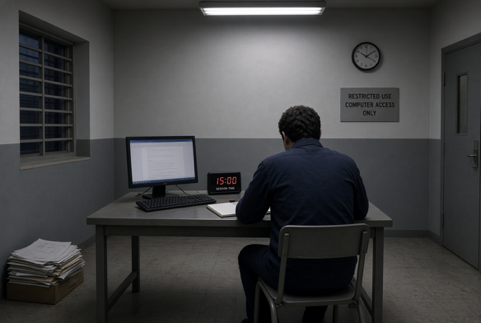 (Image caption) Inside a restricted room at the facility, a basic computer workstation and timer indicate brief periods of use. A person, with their back to the camera, is recording text under these limited conditions, depicting the environment in which the initial draft of a memoir was completed in segments during incarceration. (This image was created using AI.)
The platform has launched, but token holders are still losing money.
In an excerpt published in CommonWealth Magazine, Changpeng Zhao recalled that BNB experienced a sell-off when it was listed on Binance. The team continued to add features, but the price did not improve accordingly. He chose to repeatedly livestream to let the community know that the team was still working; he placed the news of He Yi joining the team at a turning point in this early turmoil.
This initial launch differed from the success stories that followed. For developers, a smooth system operation and continuous functional improvements constituted a successful launch; for those who bought tokens, the most direct experience was likely a paper loss. Two groups were looking at the same platform, but measuring success and failure differently. Project progress cannot answer the price question on its own, and the team's investment cannot guarantee profits for token holders.
Changpeng Zhao chose to remain where users could see him. In his account, the founder's responsibilities included consistently appearing in public and answering questions, ensuring that people could see the team was still working. For a newly established company with limited information, this communication reduced suspicion and allowed outsiders to observe whether it was fulfilling its promises.
Users' expectations of the product, price, and founder are easily intertwined. Some care about whether the transaction will go smoothly, some care about whether BNB can recover, and some just want to confirm that the team hasn't left. Public appearances can address some of these anxieties, but the specific obligations the platform must fulfill still require clear rules.
In a July 2026 interview with CommonWealth Magazine, Changpeng Zhao mentioned his experience recruiting He Yi and the customer service team, stating that directly interacting with consumers made him realize the importance of customer service and market operations. For a transaction system to become a service that people use continuously, it needs people to develop it, as well as people to handle customer issues, resolve complaints, and bring external feedback back to the company.
He Yi represents a significant turning point in his narrative, but her arrival cannot be directly equated with subsequent changes in pricing and community response. Prices are influenced by multiple factors, and community trust cannot be built by a single individual. What this recollection clearly reveals is that Zhao Changpeng began to face a responsibility that went beyond engineering work: people had brought money and trust into the platform, and he needed to explain things to them.
Personal credit thus becomes a part of Binance's operating model. Users may stay because they trust the founders, but when their assets are threatened or withdrawals are restricted, they need more specific answers. What exactly "protecting users" entails will also be tested in these moments.
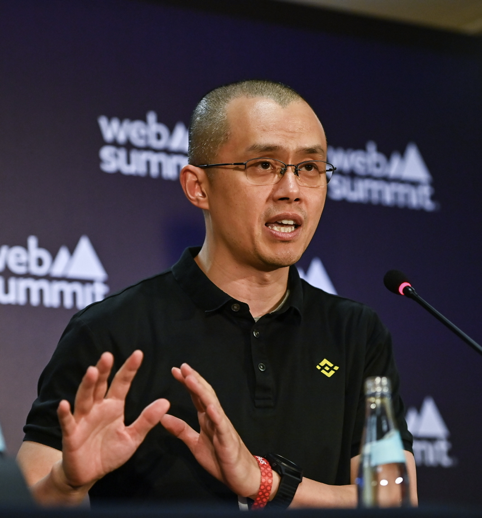 (Image caption) On November 2, 2022, then-Binance CEO Changpeng Zhao attended a media event at the Web Summit in Lisbon, Portugal. The photo shows his public image before his resignation and imprisonment, not at the event when his memoir was published.
Who will bear the loss after 7,000 bitcoins were stolen?
"Protecting users" is written into the subtitle of the memoir, and it is also a principle that Zhao Changpeng has long used when explaining company decisions.
In a signed memoir published back in 2019, he mentioned that the company had decided in 2017 to spend approximately $6 million to cover some of the shortfall in refunds for token projects. He linked this choice to subsequent user trust and business growth. This retrospective account illustrates that, before his imprisonment, he had already described the company culture he hoped to build through stories of taking on losses.
The security incident in May 2019 provides a more complete record of the event. On May 7, Binance announced that attackers had transferred approximately 7,000 bitcoins from a Bitcoin hot wallet through a single transaction. The company pledged to fully cover the loss using its Security Assets Fund (SAFU), while suspending deposits and withdrawals. Security checks were expected to take about a week, but trading would remain open.
For users, this announcement conveyed two different messages. The company stated it would address the asset shortfall caused by the theft without requiring users to share the burden; however, the assets remained in their accounts and could not be transferred out as usual. Therefore, securing the remaining balance and restoring usage became separate tasks that had to be handled during the crisis.
Restricting withdrawals is justified to prevent the risk from escalating. The platform is still investigating the extent of the impact and needs to confirm the security of other accounts and systems. However, users who need to access their assets will have to wait. For the company, this is a period of security checks; for individual customers, it may affect existing payments, transactions, or funding arrangements. The fact that the paper losses have not been transferred does not mean that the service interruption is without cost.
In a public Q&A session following the incident, Changpeng Zhao discussed a Bitcoin blockchain reorganization idea from the community. Binance subsequently updated its statement, indicating that it would not adopt it. On May 10, he apologized for his previous mention of a reorganization and explained that the team was improving security measures such as the application interface, two-factor authentication, and withdrawal verification.
This concept remained in the discussion stage and did not become the processing solution announced by Binance. It still reveals an important boundary: companies can decide how to use their resources, but Bitcoin transaction records are not controlled by a single exchange. Attempts to alter existing transaction outcomes involve miners, nodes, and other network participants, and must consider interests beyond the platform's customers. The goal of recovering losses cannot be determined solely by deciding which methods can be used.
In a subsequent statement, Changpeng Zhao described his role as coordination and communication, and admitted that he was not writing code or debugging. The engineering and safety teams inspected the system, managers allocated resources and service limits, and the founder continuously provided external explanations—each undertaking different tasks. Whether the crisis can be properly handled depends on how these tasks coordinate and how public commitments are fulfilled.
Binance's commitment to utilizing its fund and assuming losses should be fully documented. The specific payments made and the losses covered require corresponding accounts and processing rules to confirm. The initial announcement did not detail the handling of each type of loss; therefore, it cannot be used to assume that direct asset theft, withdrawal delays, and other indirect impacts have all been compensated in the same way.
Whether the same treatment applies to the next incident depends on the terms, fund rules, application procedures, and dispute resolution arrangements. Timely compensation for losses builds trust, while continued protection requires prior knowledge of what is protected, who has the authority to decide, and how to object if refused. These questions will persist even after the incident has ended.
 (Image caption) On November 21, 2023, U.S. Attorney General Merrick Garland announced the arrangements for Binance and Changpeng Zhao's guilty plea at a Department of Justice press conference. The scope of guilty pleas differs between company and founder cases, which is the legal background that needs to be distinguished when reading Changpeng Zhao's personal memoirs.
The plea agreement states that there was more than one registration procedure.
In later interviews, Zhao Changpeng offered his own explanation for pleading guilty.
In a July 2026 interview published in *CommonWealth Magazine*, he summarized the case as Binance serving early US users without registering in the US. A book by the overseas copyright agency 2 Seas Agency also discussed the case in terms of the effectiveness of its documents and compliance plans. The former is his public statement, and the latter is published promotional material; both need to be compared with the contents of the plea agreement.
According to his individual plea agreement in November 2023, Changpeng Zhao admitted that he intentionally caused Binance to fail to maintain an effective anti-money laundering program, violating the U.S. Bank Secrecy Act. The statement of fact in the agreement included: he knew that Binance served U.S. users, was aware of the resulting registration and anti-money laundering obligations, and knew that customer identity verification might cause some customers to leave.
Anti-money laundering programs include specific operational requirements. These include agreements outlining internal policies and controls, designating compliance officers, employee training, and independent audits. These arrangements affect who the platform accepts, how much customer data it possesses, and how it identifies and handles risks. Simply summarizing a case as one of incomplete registration omits the crucial questions of how administrators organize operations and fulfill known obligations.
The Department of Justice's explanation of the case on the same day also revealed that after Binance announced restrictions on US users, senior management planned to assist some high-trading-volume VIP clients in opening accounts and transferring assets through offshore entities. The company wanted to retain clients who provided trading volume and liquidity, and was aware of the corresponding legal requirements. How management handled the conflict between these business interests and legal obligations is an indispensable part of understanding the case.
The scope of guilt for companies and individuals differs. Binance's case involves the Bank Secrecy Act, unregistered operation of a money transfer business, and sanction violations; Zhao Changpeng's personal conviction must be interpreted according to his personal agreement. All of the company's charges cannot be directly attributed to him personally, and his personal charges do not involve fraud, nor can they encompass all the problems facing the company.
During sentencing, the defense requested a non-custodial probation, citing his admission of responsibility, personal circumstances, and similar cases; the prosecution requested 36 months imprisonment. On April 30, 2024, the court sentenced him to four months. According to a Reuters report on the trial, the judge pointed out that Zhao Changpeng possessed the resources and manpower needed to promote compliance but failed to seize the opportunity to implement it. This criticism targets how a manager capable of organizing company operations used the resources at his disposal.
Zhao Changpeng's most direct statement about his mistakes appeared in a letter to the judge. The letter, dated February 2, 2024, was submitted to the court on April 23. He admitted that he should have prioritized compliance reforms earlier, writing, "I have no excuse for failing to establish the necessary compliance controls at Binance."
This statement differs in its scope of interpretation from later accounts that summarized the case as a registration issue. The letter acknowledges the lack of necessary controls, while the simplified descriptions in the interviews could easily lead readers to interpret the issue as an administrative procedure. Even without speculating on his motivations for using different wording, this difference still influences public perception of the case.
In a September 2026 interview with Hong Kong 01, he explained his choice to accept the case from the perspective of the company's and the industry's situation. He believed that by taking responsibility, he could prevent Binance and the industry from suffering greater impact. This was his assessment of his choice at the time; the alternative outcome, which did not occur, cannot be verified in the same way.
Accepting a guilty plea, resigning from his post, and serving his sentence demonstrates how he accepted the consequences of the case; explaining why he failed to fulfill his known obligations requires returning to the business decisions made at the time. Accepting the consequences cannot replace an explanation of previous actions, nor does questioning previous actions negate the fact that he was subsequently dealt with. Both constitute this history, and omitting either aspect would make the outline of responsibility incomplete.
In October 2025, President Trump pardoned Changpeng Zhao. According to the U.S. Department of Justice's explanation of the pardon system, a pardon does not automatically erase a criminal record. The plea documents submitted to the court at the time remain an important record for understanding his choices and responsibilities.
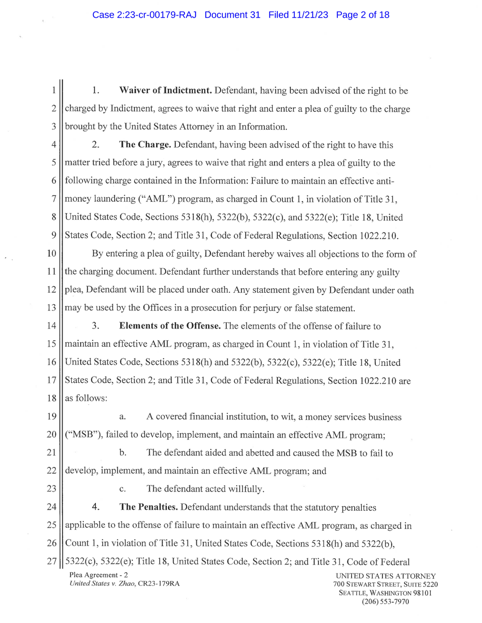 (Image caption) Page 2 of Zhao Changpeng's personal plea agreement, submitted to the court on November 21, 2023. The page lists the charges and elements of the crime for failing to maintain an effective anti-money laundering program, providing direct evidence for the article's comparison of its public interpretation with judicial records. The image retains the original case number, date, line number, and page number.
After serving his sentence, he re-evaluated the balance between time and freedom.
That letter to the judge provides a temporal coordinate for understanding his prison recollections: Zhao Changpeng's written admission of responsibility for the compliance errors predates his imprisonment. Prison life may bring other reflections, but the introspection that emerged beforehand cannot be entirely attributed to the experience of losing his freedom.
His description of his priorities after his release is quite clear. In an interview with Foresight News, Zhao Changpeng stated that the uncertainty during his detention caused significant psychological stress; he especially missed his family and friends and placed greater emphasis on his health. His concerns included whether his detention would be extended; he believed that if he could confirm the end date, he would feel more at ease.
He also stated that he would cherish the time spent with his family more after his release and adjust his life priorities. This is his specific description of the impact of his imprisonment: the time and attention he previously devoted to work needs to be reallocated, and family and health take on different weight in his life.
In a 2026 interview with Hong Kong 01, he described the reduced pressure of life after stepping down as shifting his focus to investment and other matters. Leaving the CEO position gave him the opportunity to choose new areas to invest in. For a founder who has long linked his personal identity with the company, this lifestyle arrangement is a change in itself, and it doesn't have to be measured entirely by the success or failure of the next investment.
His fundamental beliefs did not disappear while he was serving his sentence. In an interview with Hong Kong 01, he still affirmed the value of blockchain and financial freedom, while acknowledging that freedom needs constraints. Believing in the future of a technology and admitting mistakes in business can coexist; admitting mistakes does not require him to deny the entire industry he has invested in for many years.
He acknowledged compliance errors and explained his plea bargaining in a later interview; he re-emphasized his family and health while remaining confident in the future of crypto finance. Whether corporate governance has improved remains to be seen, depending on policies, implementation, and accountability arrangements. While Changpeng Zhao can rearrange his life, Binance users will still need to rely on the company's rules to resolve issues.
 (Image caption) This photo, taken in September 2016, shows the Seattle Federal Courthouse at 700 Stewart Street, the location of the U.S. District Court for the Western District of Washington. Zhao Changpeng's personal criminal case was handled by this court; this photo illustrates the judicial environment of the case and is not from the day of the plea or sentencing.
After the founder steps down, who will continue to fulfill the promises?
While Changpeng Zhao was in prison sorting out his past, Binance had already begun to replace him with others in management positions. On November 21, 2023, the company announced that Richard Teng would succeed him as CEO. The same announcement stated that Changpeng Zhao remained a majority shareholder and could advise on historical business. This was the company's public statement regarding the relationship between the two parties at the time.
The company's plea agreement at the time included a clause prohibiting Zhao Changpeng from participating in operations or management. Shareholder status, providing advice, and formal management authority need to be understood separately. The company announcement explains the publicly announced handover, while legal documents list corresponding restrictions; who makes the specific decisions depends on the actual authorization and execution records.
On December 3, 2025, Binance announced that He Yi and Richard Teng would serve as co-CEOs. He Yi, initially known as a co-founder, later assumed one of the highest publicly announced management positions. How she and other managers continue or adjust company principles is up to their own decisions.
Changpeng Zhao's experience, shareholding, and personal reputation remain factors that may need to be considered when understanding his relationship with Binance, but they are not interchangeable. Having someone consult the founder is different from the founder having formal decision-making power; the market's attention to his statements does not equate to him deciding every aspect of the platform's daily operations.
For users, there are more direct ways to measure the effectiveness of a handover. When withdrawals are restricted, which department handles the situation? When asset losses occur, who decides whether compensation is provided? If there are objections to the handling results, to whom can users appeal? If these answers are consistent with the duties and procedures, users won't need to first find the founder to know who is responsible for their problems.
The 2019 incident is thus linked to subsequent handover issues. The then-managers publicly promised to address the losses, restrict withdrawals, and adjust security measures; the key to whether this promise can be upheld lies in what decisions the new managers can make and what rules they are bound by in similar situations in the future. This is also a responsibility issue that must be further explored after the seventh discussion of asset rights.
In his public recollections and interviews, Zhao Changpeng emphasized the importance of whether he stepped in during a crisis, whether he was willing to bear the losses, and whether the company could continue operating. His letter to the court, however, acknowledged that some compliance work should have been completed earlier. The former responsibility focuses on how to handle problems after they occur, while the latter concerns what should be established before problems arise. Both are related to the user's situation and require specific institutional arrangements to support them.
When withdrawals are suspended again, users need to know which rule they can rely on and who they can contact for a response. Even if the founder who made the promise has left the company, this question still needs an answer.
Disclaimer
This article is for news research and informational purposes only and does not constitute investment, legal, or tax advice. Personal statements, company statements, and legal records are categorized by source; individual rights and obligations must be determined in accordance with applicable law, contracts, and relevant documents.