

Why are Chinese consumer assets re-emerging in the Hong Kong capital market?
Taking SHEIN, Mixue Group, Guming Holdings, Dongpeng Beverage and Watson Group as examples
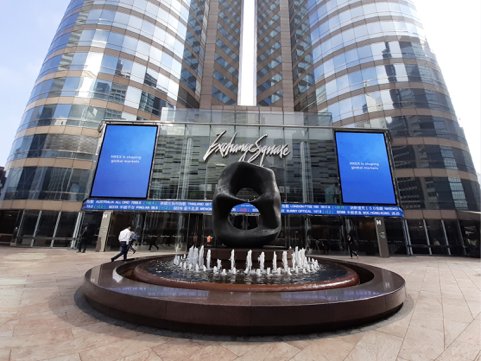 (Image caption) Exterior of the Hong Kong Stock Exchange
On March 3, 2025, Mixue Group was listed on the Hong Kong Stock Exchange.
A company that entered Chinese county towns and streets with ice cream costing three yuan, lemonade costing four yuan, and low-priced tea drinks, finally went public on the Hong Kong Stock Exchange at HK$202.50 per share. The Hong Kong public offering received 264,992 valid applications, an oversubscription of approximately 5,258 times. On its first day of trading, the stock closed at HK$290, up about 43% from the offering price. The IPO raised approximately HK$3.455 billion, with net proceeds of approximately HK$3.291 billion after deducting listing expenses.
More than a year later, the story has entered another chapter.
After its IPO, Mixue became one of the most watched companies in Hong Kong's new consumer sector, with its share price reaching a high in June 2025, followed by a sustained and sharp decline in valuation. Gu Ming's share price fell below its IPO price on its first day of trading, but later regained market attention as its performance improved. Dongpeng Beverage, after completing its A+H listing, also began accepting simultaneous pricing from both domestic and overseas capital markets. SHEIN's listing plans in New York and London were stalled for many years, only achieving significant progress in overseas listing filing and Hong Kong listing hearings in July 2026. AS Watson, the parent company of Watsons, has been planning a dual listing in Hong Kong and London for many years, but news has emerged that it may be delayed until 2027.
These IPOs vary widely in age, equity structure, and internationalization. They are grouped together not because they belong to the same sub-sector, but because they all share a vast and concrete network of entities: factories, raw materials, franchisees, cold chain logistics, distributors, cross-border parcels, retail stores, and hundreds of millions of consumers.
The question Hong Kong needs to answer is not just whether it can list these companies on the stock exchange. It also needs to prove that the market can establish a price language that can be understood, tested, and used long-term by international investors for several completely different consumer assets.
The so-called "re-gathering in Hong Kong" does not mean that these five companies have all left Hong Kong and then returned. Rather, it means that after changes in the overseas listing environment, the gradual improvement of the A+H system, and the resurgence of the Hong Kong IPO market, Hong Kong has once again become an important location for Chinese supply chain companies and Asian consumer assets to consider listing.
There is capital and liquidity here; there is policy support and stock price pullbacks. Companies can complete their IPOs in Hong Kong, but they cannot escape continuous scrutiny after listing. This is the reality of the capital market: listing is just opening the door; pricing has only just begun.
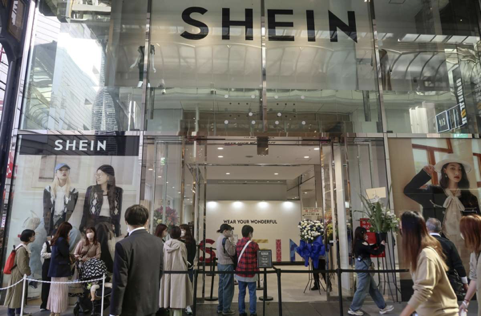 (Image caption) In June 2026, news broke that SHEIN had confidentially submitted its listing application to the Hong Kong Stock Exchange.
SHEIN: A company changes capital markets three times
SHEIN was founded in China and later moved its headquarters to Singapore, but its most important apparel supply chain remains concentrated in China, especially in Guangzhou and the Pearl River Delta region.
The company initially sought a New York listing, hoping to leverage the US capital market for a higher valuation and to position itself as a global fashion and internet platform rather than a Chinese supply chain company. However, issues such as supply chain sourcing, labor standards, the Xinjiang cotton controversy, tax exemption policies for small cross-border parcels, US-China regulatory coordination, and data security gradually increased the cost of the listing. Ultimately, the US listing plan failed to meet the necessary regulatory and political conditions.
SHEIN then turned to London. The UK Financial Conduct Authority had approved its listing application, but Chinese regulatory filings failed to materialize simultaneously, and the London plan did not proceed to the formal IPO stage. The company spent years searching for an exit strategy between New York and London, ultimately returning to a market capable of simultaneously addressing Chinese overseas listing regulations, international investors, and cross-border supply chain issues.
In June 2026, rumors circulated that SHEIN had confidentially submitted its listing application to the Hong Kong Stock Exchange. On July 10, the China Securities Regulatory Commission (CSRC) completed its overseas listing filing; on July 16, the company underwent a hearing with the Hong Kong Stock Exchange Listing Committee. Subsequently, media outlets, citing sources familiar with the matter, reported that SHEIN had obtained approval for the listing hearing, taking another step towards the formal IPO. The company still needs to complete market promotion, pricing, and final regulatory procedures, with the official listing date likely to fall at the end of the third quarter or the beginning of the fourth quarter of 2026.
The disparity in valuation best illustrates the cost of this migration.
SHEIN's valuation once reached approximately $100 billion during its 2022 funding round, but dropped to around $66 billion in its 2023 funding round. Currently, the initial valuation discussed for its Hong Kong IPO is around $40 billion to $50 billion, equivalent to 40% to 50% of its peak valuation. Some market analysts believe that, under pressure from tariffs, slowing growth, and governance risks, the final valuation could even approach $30 billion.
This doesn't mean SHEIN has lost its growth potential. Public data shows that the company's revenue exceeded $40 billion in 2025, indicating it remains a large company. The problem is that the business conditions upon which its rapid expansion relied are changing.
Starting May 2, 2025, the United States will cease providing duty-free treatment for small parcels valued under $800 originating from mainland China and Hong Kong that previously met the "de minimis" rule. The European Union will also eliminate tariff exemptions for imports under €150 starting July 1, 2026, and impose a temporary tariff of €3 per item on eligible low-priced e-commerce imports, with this measure tentatively scheduled to continue until July 2028. For a company relying on large volumes of low-priced, small-batch cross-border direct mail, these policies will directly impact product prices, fulfillment costs, and conversion rates.
Based on filings from SHEIN's Singapore-related entities and publicly available media reports, the company's key financial data for recent years is as follows. Since the scope of the entity and accounting standards may differ from the future Hong Kong IPO prospectus, these figures are more suitable for observing trends and should not be considered as the final financial figures for the listing.
In fiscal year 2022, SHEIN's revenue was approximately US$21.582 billion, EBIT was approximately US$703 million, and net profit was not fully disclosed.
In fiscal year 2023, the company's revenue rose to approximately $30.915 billion, EBIT increased to approximately $1.498 billion, and net profit was approximately $1.298 billion.
In fiscal year 2024, SHEIN's revenue further increased to approximately US$37.044 billion, but EBIT fell back to approximately US$1.325 billion. Due to the different entity scopes and accounting methods, the net profit shown in the publicly available information is between approximately US$1.099 billion and US$1.29 billion.
While revenue continued to grow in 2024, profits declined, indicating that traffic acquisition, logistics fulfillment, tariffs, and market competition have begun to erode the quality of growth. Public data also shows that Europe accounts for about one-third of SHEIN's revenue, making its European operations particularly sensitive to new import tariffs.
Third-party traffic and consumption data also show that growth in the US and some other major markets is slowing. However, website traffic, credit card spending samples, and third-party sales estimates cannot be directly equated with a company's audited revenue. They can help gauge market sentiment, but they cannot replace formal financial disclosures.
The significance of SHEIN's listing in Hong Kong is therefore more than just a large-scale IPO taking place in Hong Kong. It is more like a systemic migration that has lasted for several years.
This global consumer company once aspired to achieve the highest valuation in New York and attempted to leverage London's international financial status to tell its story. However, as geopolitics, supply chain scrutiny, and cross-border regulations increasingly become central to IPOs, the theoretically most attractive market may not necessarily be the easiest to complete an offering in reality.
Hong Kong may not be able to offer SHEIN the highest price, but under the current conditions, it may be a path with lower regulatory coordination costs and a higher feasibility of completing the listing.
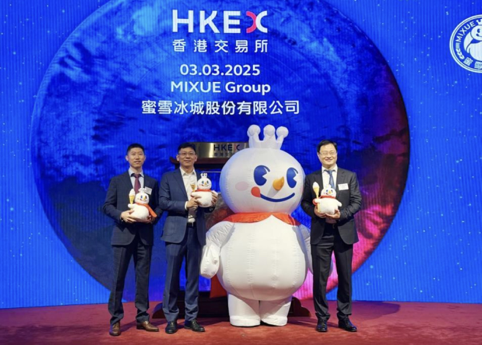 (Image caption) Mixue Group held its listing ceremony on the Hong Kong Stock Exchange on March 3, 2025.
Mixue Group: The capital market didn't just buy a glass of lemonade.
Mixue Group was founded in Zhengzhou in 1997 by Zhang Hongchao. In its early days, Mixue was just a small shaved ice shop with no prestigious background and no conditions to be noticed by the capital market from the beginning.
Looking at the company's business path over the next thirty years, the real investment of its time was not in making a beverage more expensive, but in deepening its involvement in raw materials, production, packaging, equipment, logistics, and franchise network.
By the end of 2025, Mixue Group had a total of 59,823 stores, and its brand network had entered multiple overseas markets. In terms of the number of stores, it has become one of the world's largest freshly made beverage chains; compared with large restaurant chains, its store scale has also exceeded that of McDonald's and Starbucks.
Most of Mixue's stores are operated by franchisees. The company itself does not directly bear the rent and retail risks of the vast majority of stores, but instead sells ingredients, packaging materials and equipment to the franchise network, while providing operation and management services.
In the first three quarters of 2024, sales of goods and equipment accounted for approximately 97.4% of the company's total revenue. Its revenue structure is closer to that of a supply chain company serving tens of thousands of retail stores, except that this supply chain is seen by ordinary people on the streets of the city in the form of ice cream and lemonade.
Looking at the financial performance over the past three years, in 2023, Mixue Group's operating revenue was RMB 20.302 billion and its net profit was approximately RMB 3.19 billion. The gross profit data for that year was not fully listed in this set of data.
In 2024, the company's operating revenue increased to 24.829 billion yuan, gross profit reached 8.06 billion yuan, and net profit rose to 4.454 billion yuan.
In 2025, Mixue Group's operating revenue further increased to RMB 33.56 billion, gross profit was approximately RMB 10.45 billion, and net profit was approximately RMB 5.88 billion.
This shows that Mixue's operating revenue increased from RMB 20.302 billion to RMB 33.56 billion between 2023 and 2025, while its net profit increased from approximately RMB 3.19 billion to approximately RMB 5.88 billion. In 2025, the company's revenue increased by 35.2% year-on-year, and net profit also maintained rapid growth. These figures demonstrate that even with significant adjustments in its share price after listing, the company maintained a considerable growth rate at the operational level.
Mixue's IPO issued approximately 17,059,900 H shares at a price of HK$202.50 per share, raising net proceeds of approximately HK$3.291 billion. The prospectus disclosed that approximately 66% of the funds are planned for supply chain expansion and overseas business development, 12% for the "Snow King" brand and IP, 12% for digital and intelligent upgrades, and the remainder for working capital.
This funding arrangement clearly demonstrates Mixue's understanding of itself. Instead of primarily investing new capital in the renovation of franchised stores, or changing the fundamental structure where franchisees bear the operational risks, it has chosen to continue strengthening its factories, warehousing, logistics, overseas supply, and brand assets. For Mixue, beverages are the products consumers encounter, but the supply chain is the foundation upon which the company can continuously replicate its stores.
The story behind the stock price is far more complex than the prospectus.
Mixue closed at HK$290 on its first day of trading, up approximately 43% from its offering price. Subsequently, the share price rose to around HK$618.50 in June 2025, and market expectations for the company quickly expanded from low-priced tea drinks to a global catering network, supply chain platform, and new consumer brand. As valuations reached higher levels, investors began to ask more specific questions: How quickly can stores continue to grow? Can franchisees continue to be profitable? Can same-store sales be maintained? How much time is needed to invest in overseas markets? And can the low-price strategy withstand rising costs of raw materials, labor, and platform fees in the long term?
As of July 2026, Mixue's stock price had fallen significantly from its historical high, and the market's valuation of it had also shrunk considerably. This decline cannot be simply equated with a deterioration in the company's operations, but it illustrates that the high valuations driven by scarcity and sentiment in the early stages of its IPO are gradually giving way to calculations based on per-store profitability, supply chain returns, and long-term growth rates.
Mixue has also entered a new management phase. The company's management team now needs to handle more than just opening new stores; it also needs to address food quality, franchisee relations, overseas governance, product upgrades, and organizational efficiency.
The capital market has never bought just a four-yuan glass of lemonade. It has bought the daily orders generated by tens of thousands of stores, the operations between factories and warehouses, and the organizational capabilities that Zhang Hongchao has developed over the years by deepening and strengthening a low-price business.
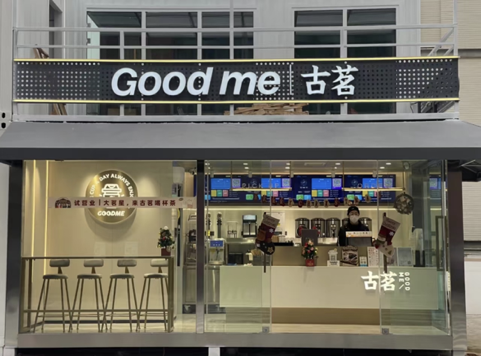 (Image caption) Gu Ming's brand store is located in Fuding City, Fujian Province.
Guming Holdings: Another Capital Solution on the Same Street
Gu Ming was founded in Zhejiang in 2010 by Wang Yun'an. It also relies on the franchise model for expansion, and its main market is concentrated in second-tier and lower-tier cities in China, but it has chosen a product path that is different from Mixue.
Mixue prioritizes highly standardized, easily stored, and transportable industrial raw materials, while Gu Ming has long relied on fresh fruit, fresh milk, and short-shelf-life products. This necessitates the establishment of more frequent and sophisticated warehousing and cold chain distribution capabilities.
As of the end of 2025, GuMing had 24 warehouses with a total building area of approximately 258,000 square meters and a cold storage capacity of over 70,000 cubic meters, enabling it to provide high-frequency delivery services to the vast majority of its stores. Cold chain delivery is not a capability easily seen by consumers, but it directly determines whether fresh fruit tea can be stably supplied in counties, towns, and lower-tier cities.
Based on financial and store data from the past three years, in 2023, Gu Ming's operating revenue was RMB 7.676 billion, the profit attributable to owners of the parent company was RMB 1.096 billion, and the number of stores at the end of the year was 9,001.
In 2024, the company's operating revenue increased to RMB 8.791 billion, the profit attributable to owners of the parent company rose to RMB 1.479 billion, and the number of stores at the end of the year increased to 9,914.
In 2025, Gu Ming's operating revenue increased significantly to RMB 12.914 billion, and the profit attributable to owners of the parent company reached RMB 3.109 billion. The number of stores at the end of the year further increased to 13,554.
In three years, the number of Gu Ming stores increased from 9,001 to 13,554, an increase of more than 4,500 stores; operating revenue increased from RMB 7.676 billion to RMB 12.914 billion; and profit attributable to owners of the parent company increased from RMB 1.096 billion to RMB 3.109 billion.
In 2025, GuMing's revenue increased by 46.9% year-on-year, and profit attributable to owners of the parent company increased by 110.3%. However, this profit figure includes accounting factors such as changes in the fair value of convertible preferred shares related to the pre-IPO listing. To assess the company's core operating capabilities, adjusted profit should also be observed. The company disclosed adjusted profit of approximately RMB 2.575 billion and adjusted core profit of approximately RMB 2.808 billion in 2025, both maintaining rapid growth.
GuMing was listed in Hong Kong on February 12, 2025, with an issue price of HK$9.94 per share, at the upper end of the offering range. On its first day of trading, it closed at HK$9.30, a drop of approximately 6.4% from the issue price.
This start contrasts sharply with Mixue's 40% surge on its first day of trading, reminding investors that companies in the same industry, with similar listing dates and franchise models, do not automatically receive the same price.
What truly changed market perceptions was the company's performance after going public.
In 2025, GuMing's total GMV reached approximately RMB 32.732 billion, with an average daily GMV of approximately RMB 7,800 per store. These figures still need to be understood within the context of store opening years, regional structure, and delivery subsidies, but at least it shows that while GuMing rapidly expanded its stores, the output per store did not stall.
Gu Ming's share price subsequently recovered gradually, and brokerages also raised their earnings forecasts for the company. A research target price of around HK$36 appeared in the market, equivalent to approximately 3.6 times the issue price of HK$9.94. While the target price reflects the analysts' assessment of the future and does not necessarily mean the stock has already achieved the same increase, it does reflect a significant shift in the capital market's view on Gu Ming's profit growth and store efficiency.
In June 2026, Gu Ming announced the issuance of approximately HK$1.96 billion in zero-coupon convertible bonds. The funds are planned to be used for raw material procurement, research and development, overseas business and capital structure management, and in conjunction with share repurchase arrangements to reduce the potential dilution effect.
Zero-interest financing does not mean that the funds have no cost. The cost of convertible bonds is often reflected in future conversion to shares, equity dilution, and the design of the terms. GuMing's simultaneous repurchase arrangements indicate that the company has begun to more proactively manage financing costs, equity structure, and earnings per share since its listing.
Mixue and Guming were launched less than a month apart, but they took different market paths.
Two companies are competing for similar consumers on the same commercial street, but they operate under two different supply chain logics. The Hong Kong market offers investors a rare opportunity for open comparison: they can compare raw material models, franchisee returns, cold chain costs, single-store efficiency, and store space, and form their own price judgments beyond the stories told by the companies themselves.
Such comparisons are not always fair, nor are they effective every day, but they are an important reason for the existence of open markets.
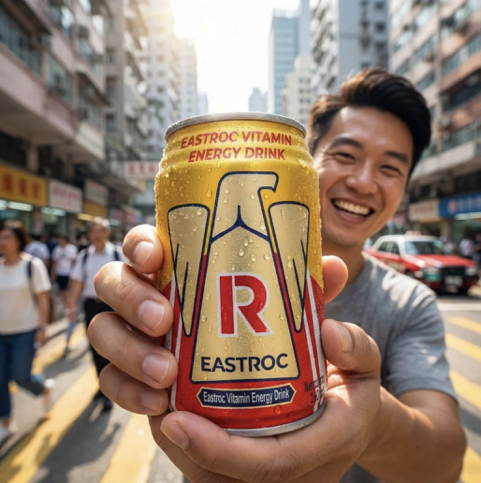 (Image caption) Product image of functional beverages under Dongpeng Beverage.
Dongpeng Beverage: Why does it still want Hong Kong shares when it already has A-shares?
Dongpeng Beverage's origins were not particularly illustrious.
Its predecessor was a state-owned beverage company in Shenzhen. After the company was restructured, Lin Muqin and his team took over the company and gradually made "Dongpeng Special Drink" one of the largest domestic brands in China's functional beverage market.
The energy drink business is highly dependent on distribution channels. When consumers feel temporarily tired, they often don't wait for e-commerce delivery but instead go to a nearby convenience store, gas station, or small shop. Whoever can establish a denser network of freezers, shelves, and distributors will find it easier to achieve sales.
To date, Dongpeng has established approximately 4,300 dealers and approximately 4.3 million terminal outlets, covering the vast majority of prefecture-level cities in China.
Looking at the financial data from the past three years, in 2023, Dongpeng Beverage's operating revenue was RMB 11.26 billion, net profit attributable to shareholders of the parent company was RMB 2.04 billion, and net profit margin was 18.11%.
In 2024, the company's operating revenue increased to RMB 15.839 billion, net profit attributable to shareholders of the parent company increased to RMB 3.327 billion, and net profit margin increased to approximately 21.0%.
In 2025, Dongpeng Beverage's operating revenue further increased to RMB 20.875 billion, and the net profit attributable to the parent company's shareholders reached RMB 4.415 billion, with a net profit margin of approximately 21.1%.
Over the course of three years, Dongpeng Beverage's operating revenue nearly doubled, increasing from RMB 11.26 billion to RMB 20.875 billion; net profit attributable to shareholders of the parent company increased from RMB 2.04 billion to RMB 4.415 billion, more than doubling. The net profit margin also improved from 18.11% in 2023 to approximately 21% in 2024 and 2025, demonstrating that the company's profitability improved while expanding its revenue scale.
On February 3, 2026, Dongpeng Beverage was listed on the Hong Kong Stock Exchange, issuing approximately 40.8899 million H shares at the upper limit of the offering price range of HK$248, raising a total of approximately HK$10.14 billion. The Qatar Investment Authority, Temasek, BlackRock, Tencent, and Sequoia China were among the cornerstone investors. On its first day of trading, the stock closed at HK$251.8, up approximately 1.5% from the offering price, indicating a relatively stable market reaction.
Why would a company already listed in Shanghai, with growing revenue and cash flow, still need to issue H shares?
The answer is clearly not just about replenishing daily operating funds.
Dongpeng hopes to leverage Hong Kong to attract more international institutional shareholders, establish a Hong Kong dollar and foreign currency equity financing platform, and prepare capital instruments for overseas factory construction, channel expansion, and potential mergers and acquisitions. The prospectus discloses that part of the funds raised will be used for overseas warehousing and supply chain facilities, with additional funds allocated to overseas business and potential acquisitions over the next three to five years.
A-shares provide Dongpeng with a domestic Chinese capital identity, while H-shares help the company reach a wider range of international shareholders. The investor structure, liquidity, and risk appetite of these two markets are not entirely the same, therefore Dongpeng must be examined under both valuation systems simultaneously.
Following its listing, the market's perception of Dongpeng went beyond mere revenue growth. Investors paid closer attention to the demand cycle of functional beverages, weather factors, channel inventory, price competition, and the impact of the RMB exchange rate on overseas revenue. Some securities firms subsequently lowered their earnings forecasts and H-share target prices, reflecting a weakening of short-term expectations.
This does not mean that the stock price has fallen to the brokerage's target price, nor should analysts' forecasts be taken as actual trading results. Target prices are only one part of the market's judgment; what truly needs to be continuously observed are the company's revenue, inventory, end-user sales, and return on overseas investments.
Dongpeng still relies heavily on energy drinks. In 2025, energy drink revenue will account for nearly three-quarters of its total revenue, while overseas revenue will remain very low. This means that although the company already has a distribution network covering millions of retail outlets in China, it still needs to prove whether this successful model, consisting of distributors, freezers, and retail displays, can be re-established in Southeast Asia or other overseas markets.
H-shares opened the door to international capital for Dongpeng, but they cannot replace its internationalization. Capital can support a company's progress for a while, but ultimately, the answers lie in its products, distribution channels, and local market capabilities.
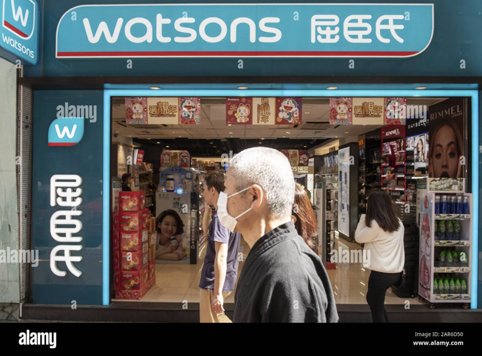 (Image caption) As early as 2013 to 2014, CK Hutchison had studied listing AS Watson in Hong Kong and London.
Watsons: How a 185-year-old retail network is repricing
Of these five samples, AS Watson has the longest history.
Its history can be traced back to the Hong Kong Dispensary, founded in Hong Kong in 1841. After several changes, it has developed into the AS Watson Group of today. The listed entity discussed in this article is the entire AS Watson Group, not just the Watsons drugstore brand familiar to Chinese consumers.
AS Watson is currently controlled by CK Hutchison Holdings and owns retail brands including Watsons, Superdrug, Savers, Marionnaud, ParknShop, and Fortress, with over 17,000 stores and a large membership system in 31 markets worldwide.
Back in 2013-2014, CK Hutchison had explored listing AS Watson in Hong Kong and London. Li Ka-shing publicly stated at the time that if it were to be listed, "one of them would definitely be Hong Kong." However, due to market conditions and valuation considerations, the listing plan was ultimately shelved.
In 2014, CK Hutchison sold approximately 24.95% of its stake in AS Watson to Singapore's Temasek Holdings for about HK$44 billion, equivalent to about US$5.7 billion to US$6 billion at the time. This transaction not only introduced a significant institutional shareholder to AS Watson, but also raised questions about future exit arrangements: when and how would Temasek recoup this long-term investment?
The following are AS Watson's recent retail business data:
This set of data presents a very meaningful divergence.
AS Watson's global retail revenue continues to grow, with a relatively stable performance in the European market. The group's full-year revenue has exceeded HK$209 billion. However, revenue and EBITDA in China continue to decline, and the number of stores has also decreased. The Chinese market has become one of the group's weakest performing major regions. The competitive advantages it previously relied on from mall stores, imported brands, and membership promotions are being impacted by e-commerce, instant retail, local beauty collection stores, and changing consumer habits.
In early 2026, CK Hutchison selected Goldman Sachs and UBS to proceed with the listing of AS Watson. The market discussion proposed a dual listing in Hong Kong and London, with a valuation of approximately US$30 billion and a fundraising target of approximately US$2 billion. For Temasek, the listing would provide a clearer exit strategy; for CK Hutchison, it would also be an opportunity to restructure its retail assets, shareholder structure, and market valuation.
In July 2026, the plan encountered further changes.
The Financial Times, citing sources familiar with the matter, reported that AS Watson is considering postponing its planned dual listing in Hong Kong and London, originally scheduled for autumn 2026, to 2027, with the final arrangements yet to be determined. The group is also reportedly exploring the sale of French perfume retailer Marionnaud to restructure its pre-listing asset portfolio.
AS Watson's IPO issues are completely different from those of Mixue and Guming.
It's not a young company relying on IPO funds to continue expanding, nor is it a new brand eager to prove its business model is viable. It boasts a 185-year history, a retail network spanning Asia and Europe, and a well-established cash flow. This IPO is more akin to a large-scale asset securitization, shareholder liquidity arrangement, and revaluation of global retail assets.
Hong Kong investors are familiar with the Watson brand, while London investors are more familiar with Superdrug and its European retail operations. AS Watson needs to find a common ground between these two market perceptions and convince investors that the decline in the Chinese market will not negate the growth brought by the European business.
Twelve years ago, Li Ka-shing said, "One of them will definitely be Hong Kong." This statement has yet to fully materialize, and it has become a long-lasting echo in Hong Kong's capital market.
Hong Kong's IPO System: What's Supporting This Round of Recovery?
To understand why these companies flocked to Hong Kong at such a similar timeframe, we need to go back to the Hong Kong market itself.
In 2025, Hong Kong saw 114 companies list, raising approximately US$36.5 billion in IPOs, equivalent to between HK$284 billion and HK$287 billion, regaining its position as the world's largest IPO market. Compared to 2024, both the number of listings and the amount raised saw a significant rebound.
This year, Hong Kong IPO financing was highly concentrated in a few large projects, with several HK$10 billion-level IPOs and A+H listings being the main sources of growth. While there is significant overlap between the two categories and they cannot be simply added together, they both illustrate that large Chinese companies have once again become a crucial pillar of the Hong Kong IPO market.
Hong Kong's current recovery is not solely driven by market sentiment; institutional adjustments have also played a role.
In recent years, the Hong Kong Stock Exchange has gradually improved its listing rules for specialized technology, biotechnology, and large A+H share companies, and has assisted companies in addressing eligibility, structure, and disclosure issues before formally applying for listing through a dedicated pre-listing consultation mechanism. For eligible applicants, confidential submission arrangements also help reduce the risk of business information leakage during the application process.
For large A-share companies, Hong Kong and mainland regulators are also attempting to establish clearer review timelines. These arrangements do not mean that all companies can complete their listing within a fixed number of days, nor do they mean that regulatory inquiries will be omitted. Companies still need to submit complete materials and address issues related to corporate governance, related-party transactions, data security, and business compliance, but the predictability of the process has improved.
The new regulations, which will take effect on August 4, 2025, also introduce more flexible initial public shareholding arrangements for eligible A+H share issuers. Some companies can meet the requirements by using the proportion of H-shares publicly held or by having a market capitalization of no less than a certain amount in Hong Kong dollars, depending on the issuance structure and applicable rules.
These modifications may seem like mere changes in proportions, amounts, and procedures, but they are crucial for large enterprises. For a leading A-share company with a massive market capitalization, if the requirement for an excessively high public shareholding ratio in the H-share portion is still mechanically applied, the company may be forced to issue far more shares than it actually needs to raise, increasing market absorption pressure.
The Hong Kong Stock Exchange has also adjusted the book-building placement, public offering clawback, public shareholding calculation and cornerstone investor arrangements in an effort to achieve a more reasonable balance between large cornerstone subscriptions and post-listing liquidity.
These systems cannot guarantee the success of every IPO, nor can they prevent stock prices from falling after listing. What they really address is another problem: whether a large, complex company, subject to both domestic and overseas regulations, can find a workable path between compliance, efficiency, and international capital access.
The simultaneous listings of Mixue and Guming marked the first time that the Chinese tea beverage industry underwent continuous horizontal comparison on the same public market; Dongpeng Beverage validated the role of the A+H platform in supplementing capital for mature consumer companies; SHEIN's years of twists and turns demonstrated that when geopolitics influences listing decisions, the most famous market is not necessarily the easiest to complete the issuance; AS Watson's repeated restarts and delays reflect that Hong Kong still plays an important role in Asian brand recognition, European asset valuation, and global shareholder liquidity.
Hong Kong is not the only option for businesses, but it is often the more feasible one in reality.
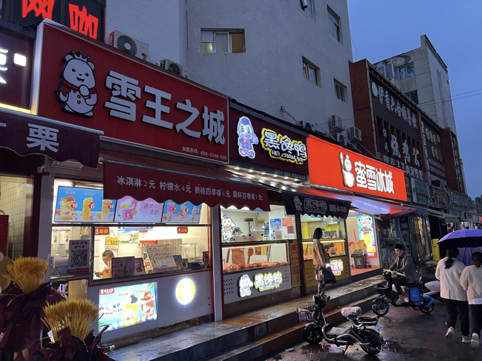 (Image caption) Street scenes of consumption in lower-tier cities in China.
The Chinese Economy Behind the Consumer IPO Boom
Putting the five companies together reveals a thread that goes deeper than just brands.
SHEIN manages the on-demand cross-border apparel supply chain. Mixue manages raw materials, factories, equipment, franchisees, and low-cost logistics. GuMing manages fresh fruit, fresh milk, cold storage, and high-frequency delivery. Dongpeng Beverages manages factories, distributors, freezers, and millions of retail outlets. AS Watson manages stores, sourcing, brands, and membership systems across Asia and Europe.
Consumers see a cup of tea, a bottle of beverage, a piece of clothing, and a store. What investors are really buying is the network behind it that needs to operate every day and cannot stop.
In the past, consumer investment was easily attracted by brand stories. Companies talked about young people, lifestyles, emotional value, and consumption upgrades, which are certainly important. However, whether a company can survive the cycle still comes down to many unromantic things: who purchases the raw materials, who bears the inventory, whether franchisees make money, how long it takes for products to be delivered to stores, whether distributors are willing to continue to hold inventory, how much capital is needed for overseas warehouses, and whether consumers are willing to continue to buy without subsidies.
The different stock price curves of Mixue and Guming after their IPOs cannot be simply attributed to one company being good and the other bad. Stock prices are influenced by factors such as the number of shares outstanding, cornerstone investors' holdings, lock-up period expiration, overall market sentiment, and valuation styles. It is more suitable as a window into changes in market expectations than as a sole indicator of whether a company's fundamentals have improved or deteriorated.
What's truly worth comparing is whether the company can turn the number of stores into stable profits, whether it can ensure franchisees maintain returns during expansion, and whether it can find new sources of revenue after China's consumption growth slows down.
These companies chose Hong Kong because the problems they face have long since gone beyond the growth of consumption within China.
These companies need overseas factories and logistics, international institutional shareholders, foreign currency financing, and a corporate governance framework acceptable to different jurisdictions. For them, the listing location is more than just a stock ticker symbol; it affects regulatory relationships, shareholder structure, brand reputation, financing currency, and future mergers and acquisitions.
Whether Hong Kong can accommodate these companies depends on whether it still has the ability to translate China's physical supply chain to the international capital market.
The glass of water seen by the capital market
A glass of lemonade, a cup of fresh fruit tea, a bottle of energy drink, a piece of clothing shipped from a Chinese supply chain to a European family, and a drugstore in Hong Kong, Bangkok, or London have all become objects of research and pricing in Hong Kong's capital market.
Consumers see price and taste. Investors see stores, cash flow, and growth potential. Regulators, however, see how many regions these business networks span, how many companies they connect, and how much risk they bear.
Mixue's stock price has fallen sharply from its high, Guming regained market attention after its share price fell below its issue price, Dongpeng accepted pricing in both markets after completing its A+H listing, SHEIN entered the Hong Kong listing process with a valuation significantly lower than its peak, and AS Watson's dual listing is once again facing time adjustments.
These changes have demonstrated that the recovery of Hong Kong's IPO market is never a straight line that only goes up.
The market can sometimes overvalue a company, and sometimes drive prices down too low when it loses patience. The purpose of regulations is not to eliminate these fluctuations, but to require companies to disclose information continuously, allowing investors to make comparisons repeatedly and enabling prices to be corrected over time.
What truly deserves to be recorded is Zhang Hongchao's stubbornness in turning a small shaved ice shop into a supply chain company, Wang Yun'an's fifteen years of patience in fresh fruit and cold chain, and Lin Muqin and his team's tenacity in starting from a restructured beverage company and spreading local functional beverages to millions of terminal outlets.
SHEIN's story shows that even a company with a global consumer base may not have the freedom to choose its own capital markets. When supply chains, tariffs, labor standards, and national regulations are all factored into the same IPO application, business size is no longer the sole criterion for success.
AS Watson waited twelve years. Li Ka-shing's famous quote, "One of them will definitely be Hong Kong," is still awaiting a complete answer.
What the Hong Kong Stock Exchange needs to prove is never just whether it can host the next large IPO. It needs to prove that when these vast, complex, and real business networks come to the market, it still has the ability to make international investors understand them, to constrain them under regulatory frameworks, and to allow companies to continue to be valued over time after the hype dies down.
Disclaimer
The company financial data, stock price performance, brokerage forecasts, and market valuations mentioned in this article may differ due to variations in statistical timeframes, accounting standards, exchange rate fluctuations, and data sources. The views expressed in this article represent the author's independent research and judgment based on publicly available information and do not constitute any form of investment advice, securities recommendation, trading invitation, legal advice, accounting advice, or tax advice. Any investment decisions should be made independently by the reader based on their own circumstances, after reviewing the relevant company's official disclosure documents and consulting with qualified professionals.