

National valuation of a memory chip
—The Industrial Capital, Technological Blockade, and New Path for China's Semiconductor Industry Behind Changxin Technology's IPO
GFM Editor's Note
Capital markets price companies every day. Revenue, profit, cash flow, growth rate, and market share constitute the most common language in this pricing system. However, there are always some companies that investors look at more than just a financial statement. Behind a memory chip company may stand the industrial choices of a city over nearly a decade, the process capabilities accumulated by generations of engineers, a country's long-term anxiety about supply chain security, and the traces of the global technological order being forced to reorganize under geopolitical pressure.
Changxin Technology Group Co., Ltd. is about to be listed on the Shanghai Stock Exchange's STAR Market. The offering price is RMB 8.66 per share, with an initial offering of approximately 6.69 billion shares, raising a basic amount of approximately RMB 57.92 billion. If the over-allotment option is fully exercised, the total amount raised may increase further. Based on the offering price and the total share capital after the offering, the market values the company at approximately US$80 billion to US$86 billion.
Fundraising amount and company valuation are two different things. The former is the new capital raised by the company in this issuance, while the latter is the price set by the public market for its entire equity. This distinction determines how the outside world should interpret every number in Changxin's IPO, and also determines whether this listing should be seen as an ordinary financing or a public valuation experiment of China's strategic industrial assets.
The so-called "national valuation" is not about the state setting prices for companies, nor is it about the market unconditionally giving a higher valuation to a company simply because it has national strategic significance. The real issue is how the public market should identify values that cannot be fully represented by the current profit and loss statement when a company simultaneously undertakes commercial, technological, industrial chain, and supply chain security functions, and how to prevent "national strategy" from becoming a valuation narrative detached from cash flow, technological capabilities, and governance efficiency.
Based on the initial fundraising size, as of July 2026, Changxin Technology's IPO was one of the largest in Asia that year, and a crucial test for China's semiconductor industry entering the public capital market. The tests it underwent were destined to extend beyond Changxin's own operating performance: whether local governments could become long-term investors with industry judgment; whether technological restrictions had compressed a country's industrial space or accelerated the establishment of alternative systems; what valuation criteria should be used for a company that undertakes supply chain security functions; and how public capital should be subject to public market supervision and accountability after entering the company.
Changxin's listing has, unusually, brought these issues to the forefront of the public market at the same time.
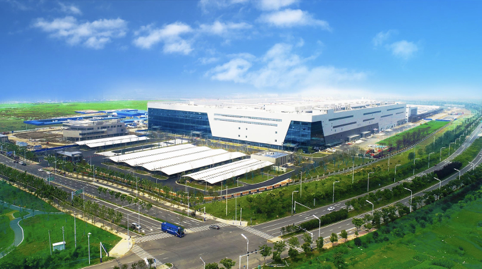 (Image caption) Changxin Memory's wafer manufacturing base in Hefei, Anhui Province. The massive factory buildings, power systems, and supporting facilities demonstrate the heavy asset investment required for the DRAM industry, and also form an important foundation for Changxin's transformation from a local industrial project to the global memory market.
What is the world waiting for before Shanghai opens?
If the listing proceeds as scheduled on July 27, 2026, the Shanghai Stock Exchange will welcome a company that is unfamiliar to ordinary consumers but has been repeatedly studied by the global semiconductor industry.
Changxin's Dynamic Random Access Memory (DRAM) has long been hidden inside mobile phones, computers, servers, automotive electronics, and artificial intelligence systems. People can hardly see it, yet almost all modern digital devices rely on it.
The processor handles computation, while DRAM stores the data being processed, enabling the processor to access it at high speed. Insufficient memory capacity and bandwidth can force even the most advanced processor to wait; as artificial intelligence models continue to scale, the demand for high-speed memory from training, inference, cloud computing, and data centers increases rapidly, amplifying the costs associated with this waiting time. Therefore, DRAM is no longer just a traditional, cyclical electronic component, but is becoming a critical constraint in global computing infrastructure.
According to Omdia's forecast cited in Changxin's IPO prospectus, the global DRAM market size may grow from US$150.5 billion in 2025 to US$571 billion in 2030, with a compound annual growth rate of approximately 30.56%; the proportion of server DRAM in downstream demand is expected to increase from about 50% in 2025 to about 71% in 2030.
These predictions will still be influenced by memory price cycles, AI capital expenditures, new production capacity, and global economic growth, and cannot be considered as certain outcomes. However, they at least indicate that the market is reassessing the role of memory in the age of artificial intelligence.
According to Omdia data cited in the prospectus, Changxin's global DRAM market share by sales revenue reached 7.67% in the fourth quarter of 2025, ranking fourth globally and first in China. Ahead of it are SK Hynix, Samsung Electronics, and Micron Technology.
These three companies, through decades of competition, consolidation, and industry consolidation, have long controlled the vast majority of the global DRAM supply. Their capacity adjustments are enough to influence global prices, their technological approaches are enough to change the cost structure of the server, smartphone, and artificial intelligence industries, and their accumulated advantages in manufacturing processes, patents, customers, talent, and cash flow cannot be quickly caught up by a newcomer with just one large-scale financing round.
The global industry's attention on Changxin is not because its fourth-place ranking globally is closing in on the top three. Its 7.67% market share still lags significantly behind the three giants, and high-end products such as high-bandwidth memory remain dominated by existing companies. What is truly noteworthy is that after multiple rounds of consolidation and consolidation in the global DRAM industry, a competitor from mainland China has finally emerged with large-scale production capabilities and is preparing to secure long-term financing in the public market.
Whether Changxin can become a stable global fourth pole will affect the global memory market's capacity allocation, pricing discipline, technology investment, and supply chain security. However, what the public market really needs to judge is not just whether Changxin can produce more chips, but whether it can establish a development path that can transcend industry cycles, continuously narrow the technology gap, and ultimately form a stable cash flow.
Hefei's Ten-Year Choice
Changxin's story began in Hefei.
In 2016, Hefei Zhiju, the predecessor of Changxin Technology, was established with an initial registered capital of RMB 10 million, funded by an investment entity from Hefei. This RMB 10 million should not be interpreted as the total start-up capital for the entire DRAM project, nor can it be directly compared to the market value of the relevant equity today.
Over the next decade, Changxin received resources including multiple rounds of equity capital, land and factory buildings, industry funds, bank financing, equipment investment, technical teams, policy coordination, and trial and verification opportunities provided by the domestic market. The true symbolic significance of the initial 10 million yuan lies not in its monetary amount, but in the fact that it marked the earliest instance of local public capital taking on the risk of choosing a direction.
Wafer manufacturing cannot rely entirely on the natural market. Building a factory requires huge amounts of capital, equipment debugging and yield improvement take years, early products may not have price and performance advantages, and a downturn in the memory market can wipe out cash flow before a company matures. Private capital usually requires a relatively clear exit timeframe, but semiconductor manufacturing requires the patience to endure long-term losses, technological failures, and process iterations.
In its investments in industries such as display panels, new energy vehicles, and semiconductors, Hefei has gradually developed a method that has garnered continuous attention: local governments not only provide land, subsidies, and administrative services, but also directly acquire equity in companies through investment platforms, assuming early-stage risks; once companies have established production capacity, products, and markets, national industrial funds, social capital, and the public market are then introduced. This approach has since been summarized as the "Hefei Model."
However, the "Hefei model" cannot be simplified to government funding, company listings, and huge paper returns for state-owned capital. Successful projects can transform a city's industrial structure, while failed projects can leave behind unmanageable factories, equipment, debts, and financial liabilities. Any industrial policy analysis that only discusses successful cases and ignores the costs of failure is easily misled by a narrative that works backward from the outcome.
Therefore, one of the most important significances of Changxin's IPO is that it provides local governments with a public market pricing opportunity for participating in strategic industrial investments, and also brings the investment efficiency, governance capabilities and exit arrangements of public capital to the public.
According to the prospectus, Changxin had no controlling shareholder or actual controller prior to its listing. Shareholders holding more than 5% of the shares directly included Qinghui Integrated Circuit, Hefei Changxin Integrated Circuit, the second phase of the National Integrated Circuit Industry Investment Fund, the employee stock ownership platform Hefei Jixin, and Anhui Provincial Investment Group.
This shareholding structure retains traces of joint participation by local state-owned assets, national industrial funds, employees, and other investors, but it also leaves Changxin with a governance challenge after its listing: when the company has to make trade-offs between long-term technology investment, short-term profits, local interests, national strategies, and public shareholder returns, who has the ability to maintain stable and professional decision-making?
The relevant investment entities in Hefei did not sell any existing shares in this issuance. What they are currently receiving is primarily a book value that can be recognized by the market, rather than actual cash returns.
This also means that while public capital has completed the most difficult early-stage nurturing phase, it has not yet fully exited. The true investment success will depend on whether Changxin can maintain its technological competitiveness after its listing, whether public shareholders can gradually achieve capital circulation without disrupting the company's stability, and whether the existing book value can be reinvested in next-generation technologies and new enterprises.
Changxin's listing is not the end of the "Hefei model," but the beginning of the second stage of the test.
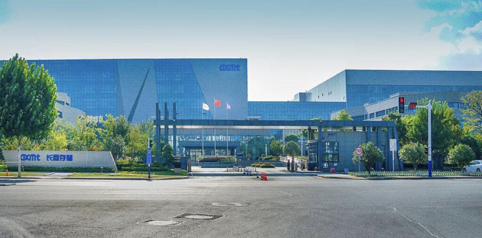 (Image caption) Entrance and headquarters building of Changxin Memory's Hefei campus. Changxin's growth is closely linked to Hefei's long-term industrial investment, making its listing an important case study for observing how local public capital cultivates, holds, and exits strategic industrial assets.
How technological limitations simultaneously cause delays and substitutions
The advanced semiconductor industry was once built on a highly globalized division of labor.
Chip design tools are mainly from the United States, lithography equipment is mainly from the Netherlands, semiconductor materials are largely from Japan, memory manufacturing is concentrated in South Korea, mainland China, and Taiwan, and packaging, testing, and final assembly are distributed across different regions of Asia. Almost no single company can complete all stages of the process entirely within a single country.
In recent years, US-led export restrictions have brought national security logic into this supply chain. The cross-border flow of advanced lithography equipment, chip manufacturing tools, artificial intelligence processors, and related technologies has been subject to increasingly stringent controls. For Chinese companies, catching up in technology is no longer just a matter of their own R&D capabilities, but also limited by restrictions on access to equipment, software, materials, and technical services.
Changxin cannot freely acquire some of the world's most advanced manufacturing equipment. Against this backdrop, Chinese DRAM companies must rely on existing equipment, process integration, multiple patterning, material improvements, and engineering management to continuously drive technological iteration. This path typically means more processes, higher costs, more complex yield control, and longer production line ramp-up times, also meaning that technological gaps are difficult to close quickly through a single equipment purchase.
Therefore, the effect of export restrictions is not one-way.
On the one hand, it has indeed slowed down the speed at which Chinese companies acquire advanced process capabilities, increased R&D costs and mass production difficulties, especially in the most advanced equipment, high-end memory and artificial intelligence-related products. The generational gap caused by the restrictions is real.
On the other hand, it has also changed the assessment of supply chain risks by the Chinese government, enterprises, and financial institutions. In the past, the issues that could be resolved through international procurement have gradually been included in the list of areas where domestic alternatives must be established, resulting in a more concentrated flow of public capital, bank credit, research resources, and market orders into the semiconductor industry.
Restrictions do not automatically create technology, nor do they guarantee the success of investments. A large influx of capital into an industry designated as a strategic priority may also lead to redundant construction, inefficient investment, local competition, and the risk of administrative judgment replacing market judgment.
Changxin's ability to go public proves at least one thing: while external pressure raises the technological threshold, it also increases the strategic priority of China in building its own DRAM capabilities, enabling resources that might have been scattered across different cycles, companies, and regions to be concentrated more quickly on a few projects with the potential for large-scale development.
Whether US technology restrictions have slowed down China's semiconductor industry or accelerated the formation of an independent supply system cannot be answered in a single sentence. For the most advanced equipment and high-end products, the delays caused by the restrictions are quite real; however, in terms of capital investment, policy mobilization, domestic supply chains, and domestic market acceptance, they have objectively created stronger demand for alternatives.
Changxin is moving forward amidst these two contradictory forces.
What separates the fourth-ranked team from the top three globally?
The harsh realities of the DRAM industry are often masked by market share figures.
The manufacture of a chip signifies that a company has crossed the first technological hurdle. What follows is the need for stable yield rates, long-term reliability, sufficient production capacity, controllable costs, customer certification, and continuous iteration capabilities. Once customers in the server, smartphone, automotive, and industrial equipment sectors have selected a memory supplier, they are typically unwilling to easily bear the system risks associated with replacing chips.
Samsung, SK Hynix, and Micron's advantages are built on decades of accumulated patents, processes, talent, customer relationships, and cash flow. They can rapidly expand production during economic booms and cut output when prices fall, influencing global prices through production discipline. Even though Changxin has already risen to fourth place globally, it still faces many technological and product hurdles to climb.
Publicly available information shows that Changxin has launched products such as DDR5, LPDDR5, and LPDDR5X, with applications covering mobile terminals, personal computers, servers, virtual reality, and the Internet of Things. Changxin has already achieved commercialization capabilities in the general DDR and mobile memory fields.
The real battleground is in high-bandwidth memory.
HBM is not simply about making regular DRAM faster. It requires multi-layered chip stacking, advanced packaging, through-silicon vias (TSVs), thermal control, and deep integration with AI processors. SK Hynix, Samsung, and Micron not only possess the product capabilities but also entered the supply chains of Nvidia and major global cloud computing companies early on.
The rapid growth in demand for artificial intelligence may simultaneously amplify both Changxin's opportunities and its gaps. An expanded market size can provide more revenue and R&D space for latecomers; while the high profits that leading companies obtain from HBM can be reinvested in next-generation products, further solidifying their technological leadership.
Therefore, Changxin's competitiveness cannot be judged solely by its production volume, nor solely by whether the Chinese market can absorb its products. In the coming years, the open market should pay more attention to the revenue share of DDR5 and server products, the certification progress of major customers, process yield and unit cost, capital expenditure efficiency, the speed of R&D investment in mass production, the actual progress of HBM and other high-end products, and whether the company can maintain a sustainable technology iteration curve under the condition of not being able to fully acquire the world's most advanced equipment.
Only when these indicators gradually stabilize will the fourth-largest global position become a stable industry position, rather than a snapshot of market share during a period of high prosperity.
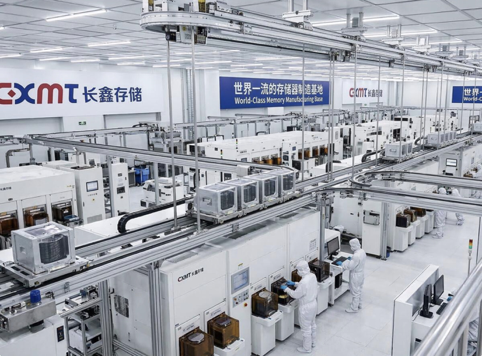 (Image caption) The production line inside Changxin Memory's memory manufacturing base. The automated transport system, wafer manufacturing equipment, and engineering personnel in the cleanroom together constitute the process, yield control, and engineering management capabilities required for DRAM mass production.
How much of the surge in revenue might include cyclical dividends?
Changxin's financial statements present the most typical and dramatic growth curve of a capital-intensive technology company.
In 2023, the company's operating revenue was approximately RMB 9.087 billion, and the net loss attributable to shareholders of the parent company was approximately RMB 16.34 billion. In 2024, operating revenue increased to approximately RMB 24.178 billion, and the net loss attributable to the parent company narrowed to approximately RMB 7.145 billion. In 2025, operating revenue further increased to approximately RMB 61.799 billion, and the net profit attributable to the parent company was approximately RMB 1.875 billion, while the net profit attributable to the parent company after deducting non-recurring gains and losses was approximately RMB 5.316 billion.
A net profit excluding non-recurring items exceeding the net profit attributable to the parent company indicates that the company incurred a significant non-recurring net loss in that year. When assessing Changxin's normal profitability, investors should not rely solely on one figure but need to further analyze non-recurring items, asset impairment, government subsidies, investment gains and losses, and other one-off factors.
Within three years, Changxin's revenue increased nearly sixfold, and its losses gradually narrowed and turned into profits, which shows that capacity release, product upgrades and market demand have brought great flexibility to the company.
It also serves as a reminder to investors that the memory industry is highly cyclical.
According to the prospectus, the unit price of Changxin's DDR series products increased by 61% year-on-year in 2025, and the sales volume by capacity increased by 282.22%, corresponding to an increase in operating revenue of 515.36%; the unit price of LPDDR series products increased by 24.46%, the sales volume increased by 65.18%, and the revenue increased by 105.59%.
Profitability can only improve so rapidly when both prices and sales volume rise simultaneously. A booming market can quickly amplify wafer fab profits, but once prices turn, they can erode profits at a similar rate, because the significant depreciation, personnel, energy, and operating costs of wafer fabs do not disappear in tandem with falling product prices.
Once the entire industry expands production and creates new supply, or if the growth rate of capital expenditure on artificial intelligence slows down, DRAM prices may re-enter a downward cycle. The profitability levels a company exhibits at the time of its IPO cannot be simply extrapolated to the next few years.
This is precisely the most difficult part of valuing Changxin. Based on 2025 net profit attributable to shareholders, an offering valuation of approximately US$80 billion to US$86 billion appears very expensive; however, if future profits continue to grow, the forward valuation multiple could rapidly decline. But this judgment is highly dependent on DRAM prices, capacity utilization, product structure, and revenue from high-end products; profits during a boom cycle cannot be directly equated with the company's established normal profitability.
The price-to-earnings ratio (P/E ratio) for any given year can be severely distorted by memory cycles. What the public market truly needs to answer is how much revenue, gross margin, R&D investment, and free cash flow Changxin can maintain after experiencing a complete cycle of price increases and decreases. This question cannot be answered by the financial statements of the first one or two quarters before the IPO.
What will 57.9 billion yuan change?
Changxin originally planned to raise approximately RMB 29.5 billion, mainly for projects such as upgrading the mass production line technology of memory wafer manufacturing, upgrading DRAM technology, and research and development of forward-looking technologies.
The final offering raised approximately RMB 57.92 billion, nearly double the original plan; if the over-allotment option is fully exercised, the amount raised will increase further.
This funding will first change Changxin's balance sheet, and then may change the order structure of the entire Chinese semiconductor equipment, materials, packaging and design ecosystem.
Every expansion and technology upgrade at a wafer fab requires a large amount of equipment and materials. Photolithography, etching, thin film deposition, cleaning, testing, chemicals, silicon wafers, and packaging testing together constitute a vast and complex supply chain. Changxin's increased capital expenditure may see some funds flowing to international suppliers where supplies are still available, while another portion may be used to expand the verification and adoption of domestic Chinese equipment and materials companies.
For China's semiconductor industry, Changxin's value is therefore not only reflected in its own revenue.
A DRAM company with large-scale production capacity can provide upstream equipment and materials companies with a real production environment. Products that meet the standards in the laboratory can only be transformed into reliable industrial capabilities after entering the wafer fab, undergoing long-term operation, yield verification, and mass production.
This is also one of the key reasons why state-owned industrial capital is willing to invest in large manufacturing enterprises for the long term. What it is buying is not just the return on equity of a single company, but also the possibility of acquiring customers, industrial data, and iterative opportunities across an entire industrial chain.
However, capital size cannot replace capital efficiency.
The 57.9 billion yuan can support major R&D and capacity upgrades, but it will also increase management complexity. Whether the equipment can arrive on time, whether the production lines can ramp up smoothly, whether the new capacity corresponds to real demand, and whether the R&D projects can be transformed into marketable products will all determine whether this IPO creates new industrial capabilities or completes an overexpansion during a period of high prosperity.
This also touches on an aspect often overlooked in "national valuation": strategic security has not only benefits, but also costs.
Government subsidies, policy-based financing, the opportunity cost of public capital, potential overcapacity, local government fiscal burdens, and international trade frictions should all be included in the assessment. If only the contribution of enterprises to supply chain security is calculated, without considering the public resources consumed in building such capabilities, the "national security value" may become an unverifiable valuation premium.
The most important institutional change that the public market brings to Changxin may not be the acquisition of huge sums of money at once, but rather that capital allocation, which previously mainly existed within government funds, bank financing, and the private equity system, will now be subject to public disclosure, investor inquiries, and continuous comparison.
Every major capital expenditure must ultimately answer an unavoidable question: whether it has truly translated into technology, products, revenue, and cash flow.
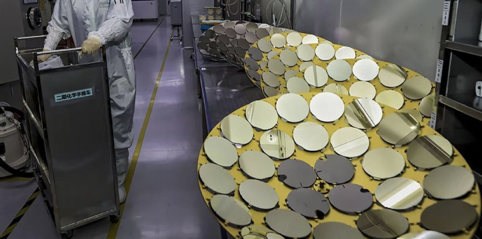 (Image caption) Semiconductor manufacturing workers handle wafers in a clean environment. From a single wafer to a memory chip that can be installed in servers and smart terminals, a large number of complex processes are required, illustrating that the gap between the world's fourth-largest and the top three DRAM companies is not just a market share.
How should strategic industrial assets be valued, supervised, and held accountable?
The valuation of a typical company is primarily based on its future free cash flow. However, Changxin simultaneously embodies several different values.
It has commercial value, derived from chip sales, market share, profitability, and future cash flow; technological value, derived from its R&D team, patents, process platform, product certification, and ability to continuously narrow the gap; industrial value, derived from the localization platform it provides for equipment, materials, packaging, design, and end-user companies; and security value, derived from its ability to reduce reliance on external suppliers for critical memory products, enabling some key systems to still obtain products when the supply chain is constrained.
These values do exist, but not all of them can be directly converted into cash returns for listed company shareholders.
Just because a company is important to national security doesn't mean it's worth buying at any price; receiving policy support doesn't mean the company is immune to the consequences of technological obsolescence, mismanagement, and industry cycles. Once strategic importance is exaggerated to an extreme, the capital market loses its most basic pricing discipline.
Conversely, if investors price Changxin solely based on short-term profits, they will overlook the inherent formation process of asset-heavy technology industries. These types of companies bear huge depreciation and R&D expenses in their early stages, and ramping up production capacity will suppress profits. Many technological investments also take many years to translate into market share.
National strategic assets may require a different framework for observation than ordinary consumer businesses, but this framework cannot simply add a premium factor to "national security".
It must answer at least a few questions: Is the supply chain security provided by enterprises truly irreplaceable? Has the technological investment resulted in verifiable product capabilities? Has public capital established a transparent, professional, and accountable governance mechanism? Has the strategic value ultimately translated into sustainable business cash flow?
If security value cannot be translated into technology, products, and governance, it easily becomes just a valuation narrative; if technological capabilities cannot be translated into revenue, profit, and cash flow, it is also difficult to rely on public capital support in the long term. What Changxin truly needs to build is a bridge between strategic value and commercial value that can be continuously tested by the public market.
After listing, the market should at least track several key indicators: whether gross profit margin and free cash flow can weather the DRAM cycle, whether the revenue share of DDR5 and server products continues to increase, whether R&D investment can be effectively transformed into mass-produced products, whether the localization verification of equipment and materials has made actual progress, whether HBM and other high-end memory have formed product capabilities, and whether the reduction of holdings and reinvestment of public shareholders and corporate governance arrangements are transparent, stable and predictable.
For public capital, an IPO should not just be a price discovery process, but rather the starting point for capital circulation and public accountability.
Prolonged failure to exit may lead to the continuous concentration of local public capital in a single project; exiting too quickly may undermine the stability of the enterprise; and directly regarding book value-added as disposable fiscal resources may ignore stock price fluctuations, lock-up periods, and market liquidity.
A more mature public capital cycle should involve releasing some funds in a transparent, phased manner, without disrupting corporate governance, after enterprises and industries have gradually matured, and then reinvesting them in next-generation technologies and new enterprises, while retaining necessary but limited long-term shareholdings in truly strategic companies.
Only in this way can an IPO become a part of the industrial capital cycle, rather than a victory that only happens on paper.
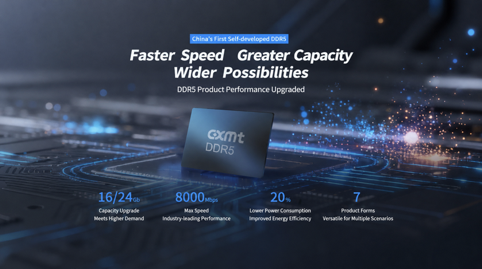 (Image caption) Changxin Memory's DDR5 memory products. The revenue share of DDR5 and server-related products, customer certifications, mass production yield, and unit cost will be important indicators for the public market to judge whether Changxin can move from scale growth to stable technological competitiveness.
Can the Hefei model be replicated?
After Changxin goes public, many local governments may re-examine Hefei.
They may see early-stage investments, industry funds, major projects, public listings, and impressive book values, but the truly decisive factors are often not fully represented in a simplified case report.
Hefei possesses a strong manufacturing base, scientific research resources, engineering talent, and local investment and financing capabilities. It has also accumulated experience in attracting and managing large-scale industrial projects such as display panels. The formation of Changxin also coincided with a historical period of increased investment in semiconductors in China, a massive domestic electronics market, and the restructuring of the global supply chain.
These conditions are difficult to replicate with a single policy document.
Local governments can learn from long-term capital, professional teams, supply chain investment attraction, and post-investment management, but they cannot regard "government investment" itself as a successful model. Funds without technological judgment will only turn industrial risks into fiscal risks; factories without market demand will not automatically gain competitiveness simply because they are listed as strategic industries.
The most noteworthy aspect of the Hefei model is not that the government replaces the market, but that it allows public capital to build the industrial foundation when private capital is unwilling to take early risks; and then, once the technology, products, and market have matured, the enterprises are handed over to a broader capital market for pricing, supervision, and accountability.
This path requires an extremely difficult balance to strike. The government needs sufficient patience, but also needs to know when to stop intervening; businesses need strategic support, but must also uphold professional decision-making; capital needs to accept a longer return cycle, but cannot abandon financial discipline; the public market needs to recognize the long-term nature of strategic industries, but cannot therefore lose its valuation standards.
China is not the only economy that uses state power to support the semiconductor industry.
South Korea has long promoted the memory industry through policy-based finance, industrial coordination, and large conglomerates; the United States supports domestic chip manufacturing through subsidies, tax breaks, and loans; Japan invests public funds to support advanced manufacturing projects such as Rapidus; and the European Union is also promoting regional chip production capacity.
The real difference lies not in whether the government intervenes, but in how the government intervenes, how it allocates risks, how it avoids political objectives replacing technical judgment, and who bears the responsibility after failure.
From this perspective, Changxin's story is not unique to China. It presents a systemic issue faced by major global economies in an era of technological competition: when semiconductors are considered national infrastructure, how should public capital and market mechanisms be redistributed?
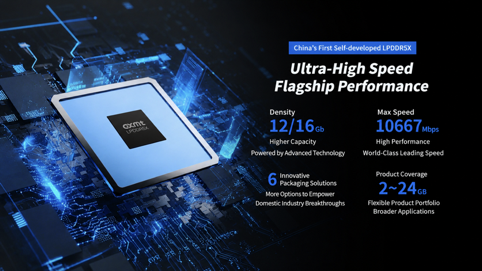 (Image caption) Changxin Memory's LPDDR5X low-power memory products. The development of smartphones, tablets, wearable devices, and edge artificial intelligence is increasing market demand for high-speed, low-power memory, and also providing new market space for Changxin to expand its product structure.
The capital market only gives the first price.
On the day of listing, the trading system will assign a price to Changxin in a very short time. This price may rise, or it may fluctuate due to market volatility, liquidity pressures, and investor caution regarding mega-IPOs.
Market demand during the issuance phase can reflect investors' interest in Chinese semiconductor assets; however, such a large-scale financing may also raise concerns about liquidity and capital outflow from the A-share market.
The first-day price can reflect sentiment, but it cannot answer all the questions Changxin faces.
It cannot prove that China has established a complete and independent DRAM technology system, nor can it determine when Changxin will truly enter the high-end HBM market, nor can it prove that local government-led industrial investment can be successfully replicated in every city.
What it can confirm is a relatively limited but still important thing: an industry selection process initiated by Hefei ten years ago has now obtained pricing qualifications in the public capital market.
However, obtaining pricing authority does not equate to completing the proof of value.
When the bell rang at the Shanghai Stock Exchange, a listed company called Changxin Technology entered the market. Behind it stood nearly a decade of patience from a city, the high costs paid by China's semiconductor industry, and a nation's effort to rebuild its memory chip supply capabilities after the global technological order changed.
From the day it went public, Changxin will no longer only need to prove itself to industrial policies, government funds, and bank financing. It will also need to continuously prove to the public market whether the capital raised has truly formed technology, whether the technology has formed products, whether the products have generated revenue and cash flow that can weather economic cycles, whether the strategic value can withstand commercial discipline, and whether public capital can withstand transparent accountability.
A DRAM chip is tiny, its size measured in nanometers, but the issues it addresses extend far beyond the wafer itself. The capital market's assessment at the time of listing is merely a public judgment of the company's current value; what truly determines whether Changxin can establish itself in the global memory industry is not its initial public offering price, but rather its ability, over the years to come, to transform its massive capital into sustainable technological capabilities, policy support into market competitiveness, and the national need for supply chain security into market-tested products, governance, and cash flow.
This is the question that the public market needs to answer in the long term after Changxin's IPO, and it is also an unavoidable institutional test for China's strategic industrial assets as they move from policy cultivation to market pricing.
Disclaimer
This article is based on Changxin Technology's publicly disclosed prospectus, issuance announcements, third-party market research data, and publicly available information. It is intended solely for news reporting, industry research, and institutional analysis, and does not constitute any form of securities recommendation, investment advice, trading invitation, or legal, accounting, or tax advice. Any investment decisions should be based on regulatory approvals, official company disclosures, and independent professional judgment. Investors should bear all risks arising therefrom.