

Nine years after bankruptcy, Westinghouse returns to Wall Street with anxieties about AI and electricity.
AI has brought nuclear power back into the spotlight, but Westinghouse still faces the same old question: who ultimately bears the burden of the time, cost, and responsibility for a reactor?
An old name has reappeared in IPO news.
On July 31, Westinghouse Electric Company confidentially filed its initial public offering (IPO) S-1 form with the U.S. Securities and Exchange Commission (SEC). The number of shares to be offered, the price range, and the listing date are yet to be determined, and the transaction is subject to SEC review, market conditions, and the company's final decision. A confidential filing does not guarantee the completion of an IPO, but it typically signifies that the company has officially entered the public market preparation phase.
The reappearance of this name in IPO news carries a historical contrast. A few years ago, Westinghouse was more associated with cost overruns, delays, contractor liability, and bankruptcy protection related to the AP1000 project in the US capital markets. Now, it stands in a completely different context: AI data centers are consuming massive amounts of electricity, the US is re-evaluating energy security, and tech companies are seeking more stable, long-term, and politically acceptable baseload power sources. This IPO, ostensibly a capital move by a nuclear power company, is actually more akin to an upstream pricing test in the AI energy chain.
Westinghouse is currently 51% owned by Brookfield Renewable Partners and its institutional partners, and 49% owned by Cameco, which completed its acquisition of the company in 2023 for approximately $7.9 billion. Its history dates back to 1886, and it has long been a representative of U.S. nuclear energy technology and engineering capabilities. In 1957, it built the world's first commercial pressurized water reactor in Shippingport, Pennsylvania, and since then, more than half of the world's nuclear reactors have used its technology.
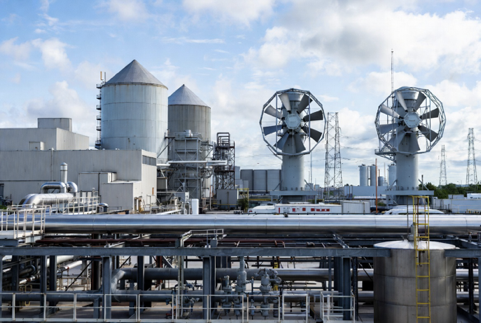 (Image caption) Exterior view of a commercial nuclear power plant in the United States. The classic industrial landscape consisting of the containment vessel and cooling tower symbolizes Westinghouse's long-standing accumulated pressurized water reactor technology and engineering capabilities.
History is both an asset and a burden.
This history is both an asset and a burden for IPO pricing. It's an asset because Westinghouse isn't a nuclear energy startup going public based on a concept; it has mature technology, a long-term service system, and an international customer base. It's a burden because the history of nuclear power is also a history of engineering risks. A new reactor often spans more than a decade from design, licensing, supply chain to grid connection. If anything goes wrong at any stage, the costs can ultimately fall on shareholders, power companies, governments, and even ordinary users.
In 2017, Westinghouse filed for bankruptcy protection due to cost overruns and delays in its AP1000 project. At the time, Plant Vogtle and VC Summer carried the hopes of a new generation of nuclear power, but ultimately revealed deep-seated problems with fixed-price contracts, supply chain capabilities, and risk allocation. The VC Summer project was eventually cancelled. Vogtle, completed between 2023 and 2024 after years of delays, was originally planned to cost only $14 billion, but ultimately cost over $35 billion, exceeding its budget by more than $20 billion and delaying its construction by approximately seven years, making it one of the most expensive power projects in U.S. history.
This history should not be overshadowed by today's AI craze. On the contrary, it is the part of this IPO that investors most need to re-examine.
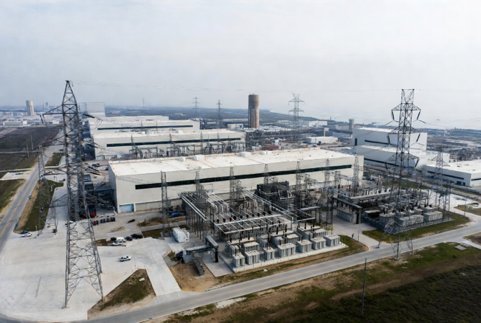 (Image caption) The ultra-large-scale AI data center park and its supporting power facilities demonstrate the continuous demand of artificial intelligence infrastructure for stable, high-capacity base load power.
AI is pushing nuclear power back to the center of the capital market.
In recent years, nuclear power has regained importance due to energy security, carbon reduction pressures, grid stability, and geopolitical factors. The emergence of AI has amplified these factors in a short period. Large-scale AI data centers do not require ordinary electricity; they demand a stable, continuous, and predictable supply. Solar and wind power can reduce carbon emissions, but they rely on energy storage and dispatch systems. Natural gas units can expand rapidly, but they still face risks related to carbon emissions and fuel prices. The appeal of nuclear power lies in its ability to provide long-term, high-capacity, low-carbon baseload power, which is precisely the resource that AI infrastructure most desires and is most difficult to acquire in one go. Westinghouse's IPO came at this opportune moment.
Unlike some nuclear energy companies that previously relied on SPACs for listing, Westinghouse chose the traditional IPO route, reflecting a shift in the nuclear energy capital market from conceptual financing to more stringent public disclosure. In June of this year, the U.S. Department of Energy announced a $17.5 billion American Nuclear Supply Chain Loan commitment to support supply chain financing for ten large commercial nuclear reactors across the U.S., with the aim of accelerating the progress of some projects by up to three years. This combination of policy and capital signals provided Westinghouse with a ready-made listing narrative: the U.S. needs nuclear power, AI needs electricity, and Westinghouse possesses the technology and a foothold in the supply chain.
But whether this narrative can be truly supported by financial, engineering, and institutional accountability is a question that GFM is more concerned with.
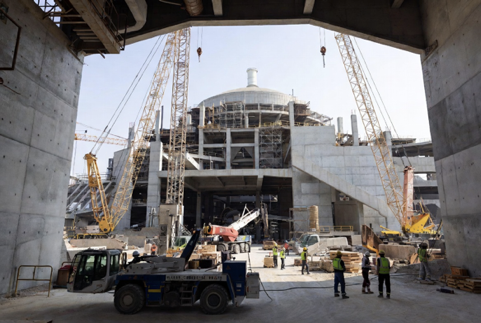 (Image caption) At the construction site of a large nuclear reactor, cranes and unfinished structures demonstrate the complexity, time constraints, and cost risks of a nuclear power project spanning many years.
The story of nuclear power should not only focus on demand, but also on responsibility.
In the AI era, almost all electricity-related assets are being revalued. Natural gas power generation, transmission lines, energy storage, data center cooling systems, and even nuclear fuel services are all being crammed into the larger basket of "AI infrastructure." This presents both opportunities and dangers: the market is prone to equating "AI needs electricity" directly with "all energy assets should be revalued."
Westinghouse's value cannot be solely based on the growth in AI-driven electricity consumption. What investors really need to see is how much of its revenue comes from fuel, maintenance, and technology licensing, and how much from EPC (Engineering, Procurement, and Construction) contracts for new projects; whether its order backlog has been signed and whether it has secured financing; and if it participates in the construction of new reactors, whether the company's role is equipment supply, technology licensing, or fixed-price delivery. Different contract types have vastly different impacts on risk.
How government loans are triggered, how power companies and users share costs, and who bears the losses if a project is cancelled—these terms are often hidden in the details of risk factors, related-party transactions, and revenue recognition, rather than in the market size figures on the prospectus cover. The nuclear power industry's biggest fear is never a lack of demand, but rather that demand is overly optimistically factored into valuations, ultimately proving that the optimism was excessive through irreversible engineering costs.
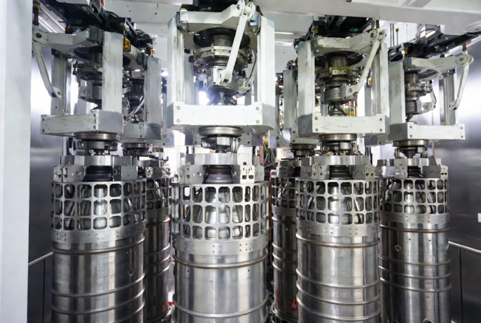 (Image caption) Nuclear fuel assemblies and precision processing equipment, reflecting the important position of the nuclear fuel supply chain and technical services in Westinghouse's revenue structure.
Brookfield, Cameco, and Westinghouse repricing
Westinghouse's current shareholder structure is also worth examining closely. Brookfield excels in infrastructure and energy asset management, while Cameco is a major global uranium producer and nuclear fuel supply chain company. The combination of the two gives Westinghouse both financial capital and fuel industry resources, and this combination has its logic.
However, after the IPO, investors need to distinguish two things: Westinghouse's own profitability and the capital narrative built by its shareholders. Whether Brookfield and Cameco will sell shares after the IPO, and whether they will continue to provide services or make procurement arrangements, these related-party transaction terms will directly affect the interests of new shareholders and are the most important parts to verify after the public version of S-1 is released.
Bankruptcy, Restructuring and Relisting
The most valuable story of Westinghouse today is not the phrase "nuclear power revival," but rather its journey through bankruptcy, restructuring, and relisting.
The 2017 bankruptcy demonstrated that even America's most iconic nuclear energy company could be dragged down by large projects if risks were not properly allocated and costs were out of control; Brookfield's acquisition of Cameco in 2023 put it back into the energy transition and nuclear fuel industry chain; and the confidential filing in 2026 pushed it to the public market, allowing a wider range of investors to participate in this repricing.
Westinghouse today cannot be fully defined by its past, but it shouldn't be easily whitewashed by the AI hype either. Bankruptcy is not a permanent stain, and returning to the market is never an automatic success. For a nuclear energy company, true credibility lies not in how high a valuation the capital market gives it in a single year, but in its ability to keep safety, cost, delivery, and responsibility in the same account over a ten- or twenty-year engineering and service cycle.
AI increasing electricity demand will not simplify nuclear power projects. A more stable power consumption curve for data centers may improve the economics of baseload power sources, but the permits, supply chain, engineering management, and financing costs required for reactor construction still need time to prove themselves, rather than being bypassed by a wave of IPO enthusiasm.
 (Image caption) The exterior of the New York Stock Exchange on Wall Street, echoing the moment when Westinghouse returned to the public market and faced a repricing of capital after bankruptcy reorganization.
GFM Observation: AI-Driven Power Anxiety Cannot Replace Nuclear Power Responsibility
Westinghouse's return to Wall Street shows that the capital chain for AI infrastructure is extending further upstream. Data centers need electricity, the electricity market needs a stable supply, and nuclear power is thus regaining the imagination of the capital market. This direction has a realistic basis, but it also requires very strict institutional review.
If a public version of S-1 is released, GFM's primary focus will not be on promotional materials, but rather on several very specific ledgers: revenue sources, order backlog, contract types, government support terms, project responsibilities, related-party transactions, the percentage of shares sold by existing shareholders, and risk disclosures related to the new reactor.
AI needs electricity, Wall Street needs a story, and nuclear power needs time.
Whether Westinghouse's IPO can truly succeed depends on whether it can put all three into a single, credible ledger.
Disclaimer
This article is for news research and public discussion purposes only and does not constitute investment, legal, tax or transaction advice; relevant data and transaction arrangements are subject to official announcements and regulatory documents.