

Five shipping lanes converge in Hong Kong
—The Institutional Logic Behind the Surge of Chinese Technology Companies Listing in Hong Kong
[Editor's Note]
Over the past year, several significant IPO prospectuses have come to the public's attention through the Hong Kong Stock Exchange's electronic disclosure system. CATL, Zhipu, Momenta, Jinghe Integrated Circuits, and Luxshare Precision, despite their diverse industries, vastly different sizes, and varying stages of development, have all included Hong Kong in their respective capital portfolios.
Looking at these five companies together reveals a structural shift taking place in Hong Kong's IPO market. The companies' capital needs for R&D, production capacity, and globalization have converged with Hong Kong's gradually developing multi-tiered listing system during this period.
This issue of "IPO System Deconstruction" uses five companies as examples to try to clarify their respective paths to Hong Kong, and in doing so, to understand why Hong Kong has once again become an important listing destination for Chinese technology companies, as well as the industrial and capital impact that this trend may bring.
Jeff Morgan
⸻
 (Image caption ) Five companies entered Hong Kong via different regulatory pathways. As a converter between Chinese technology companies and global capital, Hong Kong's listing system is adapting to companies with strong R&D intensity, capacity expansion, and internationalization needs.
Over the past fourteen months, five Chinese technology companies have arrived in Hong Kong along different timelines.
CATL was the first to be listed in May 2025; Zhipu Huazhang completed its listing in January 2026; and by that summer, the prospectuses of Momenta, Jinghe Integrated Circuits and Luxshare Precision appeared on the Hong Kong Stock Exchange's disclosure page almost simultaneously.
Zhipu Huazhang needs to transform its expensive computing power, continuously iterating models, and still-developing business model into value that can be understood by the public market. Momenta needs to make its road data, algorithm systems, and automaker contracts subject to market pricing. Jinghe Integrated Circuits brought its 12-inch wafer manufacturing capabilities to Hong Kong; Luxshare Precision is backed by a precision manufacturing network that has already spread globally; CATL has established a new capital platform for its overseas factories and international customers.
Artificial intelligence, autonomous driving, semiconductors, new energy, and precision manufacturing belong to different industries, with vastly different investment structures and return cycles. Yet, these five companies chose the same market around the same time.
The recovery of Hong Kong IPOs therefore has significance beyond the number of transactions and the scale of funds raised. Chinese technology companies are entering a development stage with greater capital needs and deeper international presence, and Hong Kong's listing system is gradually forming multiple channels connecting these companies.
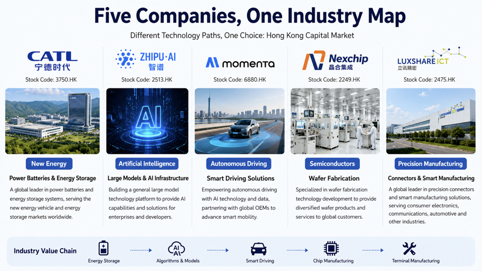 (Image caption ) Five representative Chinese technology companies, from five major industries including new energy, artificial intelligence, autonomous driving, semiconductors and precision manufacturing, have chosen Hong Kong as an important international financing platform in recent years, despite their different technological paths, business models and development stages.
Five companies, three institutional pathways
Although the five companies are all categorized under China's technology and advanced manufacturing sector, their institutional pathways to Hong Kong differ.
CATL, JCET Group, and Luxshare Precision were already listed in Shenzhen or Shanghai. After issuing H shares, they formed an A+H share structure, subject to the listing rules, information disclosure, and market pricing of both mainland China and Hong Kong. This channel primarily serves industry leaders with mature businesses, substantial revenue, and a strong domestic capital base, who require international investors and overseas capital instruments.
Zhipu Huazhang is pursuing a Chapter 18C Specialized Technology Company (STDM) listing. The prospectus explicitly states that the company applied for listing under Chapter 18C because it failed to meet the general financial eligibility requirements under Rule 8.05 of the Main Board. Its artificial intelligence business is classified as a STDM under the next-generation information technology sector.
Momenta meets the market capitalization/revenue test under Rule 8.05(3) of the Main Board. The company’s revenue will exceed HK$1 billion in 2025, and its expected market capitalization based on the issue price will exceed HK$10 billion. It also adopts the weighted voting rights structure regulated in Chapter 8A.
The three institutional pathways are thus clearly presented: mature A-share leaders can issue H-shares; technology companies that have not yet met the traditional financial tests but have met the R&D and market capitalization requirements can use Chapter 18C; and new economy companies that have already achieved a certain revenue scale can enter the market through the general main board financial tests and retain different voting rights arrangements for the founding team when they meet the conditions.
Hong Kong's institutional value does not depend on any single specific rule. It has established a listing system that can accommodate different stages of development, different asset structures, and different governance needs.
Five companies, one industry map
CATL is positioned in the capital-intensive power battery and energy storage segment of the new energy industry; Jinghe Integrated is in the wafer manufacturing field, which requires continuous purchase of equipment, improvement of yield, and upgrading of processes; Luxshare Precision's business has extended to consumer electronics, communications, automotive electronics, and intelligent manufacturing; Momenta embeds artificial intelligence into automotive driving systems; and Zhipu is trying to build large models into a technological infrastructure that can be widely used by enterprises and developers.
Their needs for Hong Kong are not the same.
CATL needs a capital platform to support its European production capacity, international customers, and global shareholders. Luxshare Precision needs to allocate funds for cross-regional manufacturing, equipment investment, and industrial mergers and acquisitions. Jinghe Integrated Circuits faces the long-term capital required for semiconductor process upgrades. Momenta still needs to invest huge resources in next-generation autonomous driving models, computing power, and commercial deployment. Zhipu, on the other hand, needs to maintain its R&D speed and technological position before the commercial returns of its large-scale models are fully mature.
The common characteristic of these five companies is that their long-term value cannot be answered solely by current profits.
Algorithms may not be fully commercialized yet, factory capacity may not be available for several years, and overseas markets may still be in the investment phase. R&D personnel, patents, processes, customer contracts, data resources, and supply chain capabilities are gradually becoming factors that cannot be ignored when evaluating companies in the market.
These companies must first undertake huge R&D and capital expenditures before they can generate revenue and profits in the next stage. Hong Kong is learning how to identify these capabilities that are not yet fully reflected in the profit and loss statement, and is also trying to establish public market prices for them.
CATL: Establishing a Capital Lever for Global Production Capacity
On May 20, 2025, CATL's H shares were listed on the main board of the Hong Kong Stock Exchange, with the stock code 3750. The company published its prospectus on May 12 of the same year, with a final issue price of HK$263 per share. The prospectus estimated the net proceeds from the global offering to be approximately HK$30.718 billion.
CATL is already one of the most representative new energy manufacturing companies in the A-share market. The main challenge for its Hong Kong listing stems from capital allocation after the globalization of its business.
The power battery industry has transcended the production and sales boundaries of a single country. Companies need to follow automakers into Europe and other markets, establish local production capacity, and cope with industry subsidies, tariffs, localization requirements, and regulatory demands. With revenue, assets, customers, and supply chain risks spread across multiple jurisdictions, the importance of offshore capital instruments has increased.
CATL's use of proceeds almost perfectly illustrates this logic. The prospectus discloses that approximately 90% of the net proceeds, or about HK$27.646 billion, are planned to be invested in the first and second phases of the project in Hungary. Located in Debrecen, the project has a combined designed annual production capacity of 72 GWh across both phases, and the funds will be used for factory construction, key production equipment, preliminary preparations, and trial production.
This financing is not just abstract "international funding." It corresponds to a real factory, equipment procurement, production capacity construction, and local supply capabilities close to European automotive customers.
The A-share market provides CATL with a large domestic capital base, while the H-share market expands the company's access to international investors and the allocation of overseas capital instruments. The two markets serve different functions, making the company's capital structure more closely resemble its global business structure.
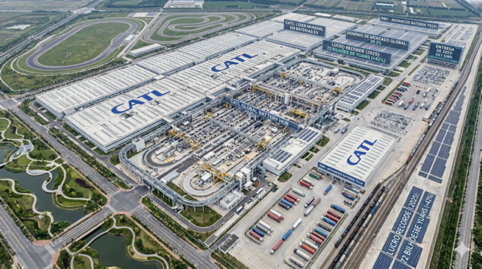 (Image caption ) CATL was listed on the main board of the Hong Kong Stock Exchange on May 20, 2025 (stock code 3750). The net proceeds from the global offering amounted to approximately HK$30.718 billion, of which about 90% is planned to be invested in the construction of the Debrecen project in Hungary, to establish a capital base for its global production capacity and international customers.
Zhipu: Capital is beginning to price capabilities that are still developing.
Zhipu Huazhang published its prospectus on December 30, 2025, and listed on the Hong Kong Stock Exchange on January 8, 2026, with the stock code 2513. The company issued 37,419,500 H shares at an issue price of HK$116.20 per share, with estimated net proceeds of approximately HK$4.173 billion.
The costs of Zhipu are mainly distributed across computing power, data, R&D talent, model training, and inference services. Model capabilities require continuous updates, computing power expenditures often precede revenue, and the deployment, adaptation, and payment habits of enterprise customers take time to establish.
Large-scale model companies thus face a unique capital dilemma: technology updates rapidly, but stable commercial returns take longer to materialize. The computing power invested today may not be fully converted into profits within the same fiscal year, and the technological advantages gained today may be quickly challenged by the next generation of models.
Zhipu's revenue reached approximately RMB 724 million in 2025, representing a year-on-year increase of 131.9%, but the company still recorded a significant adjusted net loss. This data reflects both the pace of commercialization and the pressure of R&D investment.
The allocation of its raised funds further illustrates that the core resources raised by large-scale model companies remain R&D capabilities. The prospectus shows that approximately 70% of the net proceeds, or about HK$2.921 billion, will be invested in the R&D of general-purpose large-scale models. This includes pre-trained models, deep inference models, AI agents, cutting-edge technologies, the GLM framework, data processing platforms, and high-quality corpora. The portion used solely to improve large-scale model capabilities and training infrastructure accounts for approximately 60% of the net proceeds.
Zhipu's listing under Chapter 18C makes it one of the most institutionally representative examples of this round of Hong Kong technology IPOs.
Chapter 18C does not eliminate risk requirements; instead, it assesses companies using a different set of metrics. Market capitalization, R&D investment, third-party professional investment, and commercialization progress replace the single profitability test, becoming important barriers to market entry. For large-scale companies, this system acknowledges the time lag between technological development and profit generation, and also leaves the relevant risks entirely to the public market for assessment.
 (Image caption ) Zhipu Huazhang will be listed on the Hong Kong Stock Exchange in January 2026 (stock code 2513) in accordance with the Chapter 18C Specialized Technology Company pathway. The company will invest most of the raised funds in the research and development of general-purpose large-scale models, computing infrastructure and data platforms, and capital will begin to price its emerging capabilities.
Momenta: After Algorithms Entered the Automotive Industry
Momenta published its Hong Kong IPO prospectus on June 29, 2026, with the stock code 6880. It will offer 19,938,300 shares globally at an issue price of HK$295.60 per share. The prospectus estimates net proceeds of approximately HK$5.615 billion, of which approximately 60% will be used for research and development.
Autonomous driving technology must be integrated across the entire automotive industry to generate revenue.
The algorithm needs to be implemented in real vehicles and continuously validated in both road and regulatory environments. Behind this lies data collection, automotive-grade safety, hardware adaptation, collaboration with OEMs, and long-term testing. Even after the system is installed in mass-produced vehicles, the supplier still bears the responsibility for iteration, delivery, maintenance, and safety.
Momenta's business is divided into intelligent driving solutions for mass-produced vehicles and Robotaxi service solutions. The company has established partnerships with numerous global and Chinese automakers and has reached an overseas Robotaxi deployment agreement with Uber. These collaborations expand its commercialization scope and also increase regulatory, data, and safety responsibilities in different markets.
The prospectus outlines a highly focused plan for the use of proceeds: approximately 60% of the net proceeds, or about HK$3.369 billion, will be invested in core technologies and next-generation autonomous driving research and development. Of this, approximately 40% will be used to enhance AI computing power and data storage infrastructure, including high-performance GPU clusters, large-scale data storage, high-speed networks, and the training, testing, and operation of autonomous driving models.
Both Momenta and Zhipu rely on artificial intelligence, but their listing regimes differ. Momenta has met the main board's market capitalization and revenue tests and uses a weighted voting rights structure; Zhipu, on the other hand, bypasses the traditional financial qualification tests by relying on Chapter 18C.
This difference illustrates that Hong Kong's acceptance of technology companies does not rely on a single entry point. The applicable systems vary depending on the company's level of commercialization, revenue size, and governance arrangements.
 (Image caption ) Momenta will be listed on the Hong Kong Stock Exchange in June 2026 (stock code 6880), with approximately 60% of its net proceeds invested in core technologies and next-generation autonomous driving research and development. Once algorithms are integrated into the automotive industry, they will require continuous support in terms of computing power, data, and commercial deployment.
Jinghe Integration: Capital Enters the Deepest Parts of Manufacturing
Jinghe Integrated Circuits published its prospectus on June 30, 2026, and listed on the Hong Kong Main Board on July 10, with the stock code 2249. The company offered approximately 216 million H shares globally, with a final issue price of HK$32.30 per share, raising a total of approximately HK$6.98 billion. The company's existing A shares were traded on the Shanghai Stock Exchange's STAR Market, thus forming an A+H share structure.
Wafer manufacturing is one of the most capital-intensive segments in the modern technology industry.
A wafer fab requires factory buildings, a clean environment, lithography and process equipment, as well as long-term process verification, yield ramp-up, and customer certification. After the production line is built, stable returns still depend on the gradual improvement of capacity utilization and product structure.
Jinghe Integrated's use of proceeds has a distinctly industrial character. Based on the median of the offering price range as estimated in the prospectus, approximately 53.6% of the net proceeds, or about HK$3.503 billion, are planned for the research and optimization of its next-generation 22nm technology platform. Of this, approximately HK$2.667 billion will be used to purchase and install specialized equipment; the remaining funds will be invested in IP, EDA tools, testing equipment, silicon wafers, photomasks, and the R&D team.
In addition, the company plans to allocate a portion of the funds to servers, data nodes, storage hardware, and cloud-based EDA collaboration platforms required for intelligent R&D and production, with approximately 10% used as working capital and for general corporate purposes.
These applications reveal the true nature of semiconductor companies seeking financing in Hong Kong. Capital flows directly into equipment, processes, software tools, and talent, generating returns years later through yield improvements, increased capacity, and product upgrades.
Hong Kong IPOs are typically priced in Hong Kong dollars. The Hong Kong dollar is pegged to the US dollar, and Hong Kong also possesses an international underwriting, placement, and cross-border capital flow system. Companies gain access to financing channels that are closer to international investors and foreign currency capital markets; it cannot be simply categorized as directly obtaining US dollars.
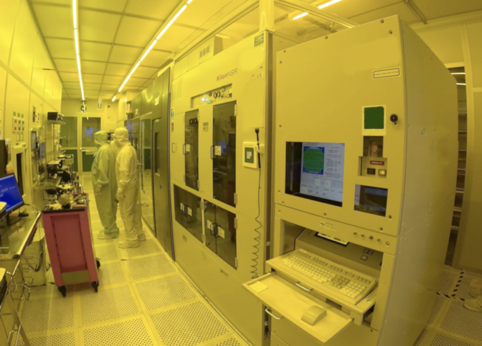 (Image caption ) Jinghe Integrated Circuits will be listed on the Hong Kong Main Board in July 2026 (stock code 2249), forming an A+H share structure. The funds raised will be mainly used for the research and development of the 22-nanometer technology platform, equipment purchase and process optimization, with capital entering the deepest part of semiconductor manufacturing.
Luxshare Precision: The global supply chain needs a new capital structure
Luxshare Precision published its prospectus on June 30, 2026, with the stock code 2475. The company offered approximately 383 million H shares globally, with a final issue price of HK$63.28 per share. The net proceeds disclosed in the allotment results announcement were approximately HK$24.039 billion.
Luxshare Precision has transcended the business scope of a traditional contract manufacturer. According to industry data cited in its prospectus, the company will be the largest provider of precision intelligent manufacturing solutions in mainland China by revenue in 2025, with business covering consumer electronics, communications, automotive electronics, and other intelligent manufacturing fields.
As supply chains move towards multi-regional manufacturing, companies need to simultaneously allocate factories, equipment, technical teams, customer service, and working capital. The tax, logistics, talent, regulatory, and supplier structures of different countries will also be reflected on the same balance sheet.
Luxshare Precision's fundraising arrangements clearly reflect its manufacturing sector characteristics. The prospectus shows that approximately 35% of the net proceeds, or about HK$8.414 billion, are planned to be used to expand production capacity and upgrade existing production bases, focusing on products such as automotive wiring harnesses, domain controllers, intelligent driving system hardware, and intelligent chassis. The funds will primarily be used for purchasing and upgrading equipment and constructing production bases.
Approximately 10% of the net proceeds will be invested in basic technology research and development in acoustics, optics, electromagnetics, thermodynamics, etc.; 15% will be used to invest in or acquire high-quality targets in upstream, downstream and related industries; 10% will be used to repay part of interest-bearing bank loans; and another 10% will be used as working capital and for general corporate purposes.
The significance of Luxshare Precision's issuance of H shares lies in its connection between its global industrial network and capital platform. Domestic manufacturing capabilities remain the foundation of the company, while Hong Kong provides another layer of capital support for overseas operations, industrial mergers and acquisitions, and international shareholder structures.
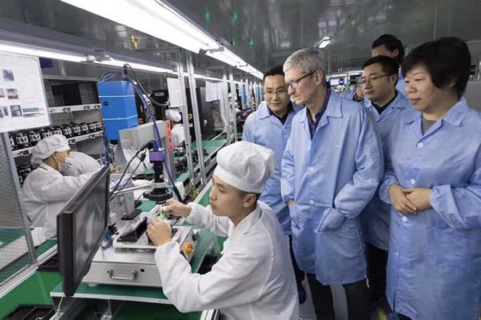 (Image caption ) Luxshare Precision will be listed on the Hong Kong Stock Exchange in June 2026 (stock code 2475), raising net proceeds of approximately HK$24.039 billion, which will be used for capacity expansion, technology research and development, and industrial mergers and acquisitions. The global supply chain needs a new capital structure, and H-shares provide international support.
What institutional interfaces has Hong Kong changed?
By putting these five companies together, we can see three aspects of the adjustments made to Hong Kong's listing system in recent years.
The first level is the company's eligibility to enter the market.
The 2018 listing system reforms accommodated companies with different voting rights and unprofitable biotech companies. Chapter 18C, implemented in 2023, further covers specialized technology fields such as next-generation information technology, advanced hardware, advanced materials, and new energy. The market is beginning to accept companies with high market capitalization, R&D intensity, and professional investment support, but which have not yet met traditional profitability tests.
Momenta's listing demonstrates that new economy companies that have reached the market capitalization and revenue thresholds can enter the market under the ordinary main board rules and use the Chapter 8A weighted voting rights structure. The A+H share model, represented by CATL, Jinghe Integrated Circuits, and Luxshare Precision, allows industry leaders already listed in mainland China to obtain Hong Kong market status.
The second aspect is pre-listing regulatory communication.
The Hong Kong Securities and Futures Commission (SFC) and the Hong Kong Stock Exchange (HKEX) will launch a dedicated hotline for technology companies in 2025, providing a dedicated team and early communication mechanism for applicants under Chapter 18A and Chapter 18C. The technology and business models of technology companies often defy categorization into traditional industry classifications; early regulatory communication helps clarify issues related to products, revenue, professional investors, and listing eligibility.
China's overseas listing filing system has gradually become an important procedure for companies seeking to list in Hong Kong. Taking CATL as an example, the company obtained the filing notice for overseas listing from the China Securities Regulatory Commission (CSRC) in March 2025. This system arrangement creates a clearer connection between mainland regulation and Hong Kong listing review.
The third level involves new share pricing and share allocation.
The IPO market reforms, effective in 2025, increase the initial allocation ratio for book-building and placement, and adjust the clawback and public shareholding requirements for public offerings. The core consideration of these policies is to increase the space for institutional investors to participate in price discovery.
Technology companies have long R&D cycles, and their performance and valuations may fluctuate significantly after listing. Institutional funds that understand the industry, bear the risks, and hold shares for the long term are particularly important in shaping the price of these companies.
Why focus on this moment?
This round of technology companies listing in Hong Kong is primarily related to the industry's own stage of development.
Large-scale models are entering the application, intelligent agent, and enterprise deployment stages, but computing power and R&D investment remain enormous; autonomous driving is beginning to enter more mass-produced vehicles, and infrastructure needs to be built for Robotaxi and next-generation models; new energy companies are accelerating the construction of overseas production capacity; semiconductor manufacturing still requires continuous investment in equipment and processes; and precision manufacturing companies are restructuring their global production capacity in line with their customers.
The more a company commercializes and internationalizes, the greater its capital needs tend to be. Factories, computing power, R&D, and overseas expansion all require long-term funding that exceeds daily operating cash flow.
The private equity market also cannot sustain these investments indefinitely. Early-stage capital needs exit channels, while companies need the public market to provide subsequent financing capabilities and sustained valuations.
The recovery of the Hong Kong market itself has provided a window of opportunity for these demands. Data released by the Hong Kong Stock Exchange shows that as of December 19, 2025, a total of 106 companies have been listed, raising HK$274.6 billion, making Hong Kong the world's leading IPO market in terms of fundraising amount.
According to KPMG statistics, approximately 85 new listings were completed in Hong Kong in the first half of 2026, raising approximately HK$209.9 billion. The number of listings and the amount raised represent year-on-year increases of 102% and 92%, respectively. Different institutions may publish slightly different figures due to variations in their statistical cutoff dates and whether listings by introduction are included.
Market recovery does not mean the disappearance of risks.
Hong Kong can provide listing regimes, international placements, and capital flow channels, but it cannot guarantee high valuations for companies, nor can it guarantee sustained share price increases after listing. Once a company enters the public market, its revenue, losses, capital expenditures, technological risks, and corporate governance will be continuously scrutinized by investors.
Hong Kong as a capital converter
Hong Kong's role as a bridge between Chinese technology companies and global capital can be understood as a capital converter.
The A-share market boasts a large base of domestic investors who have a more direct understanding of China's industrial policies and the local market. Hong Kong, on the other hand, offers international placements, cornerstone investors, a common law environment, a free-flowing capital system, and global financial intermediaries, while also attracting southbound capital through the Shanghai-Hong Kong Stock Connect and Shenzhen-Hong Kong Stock Connect.
The market pricing that Chinese companies receive in Hong Kong is actually determined by a combination of international institutions, local Hong Kong funds, and mainland southbound funds.
Different investors may have different assessments of a company's technological, policy, and geopolitical risks, which may lead to price differences between A-shares and H-shares. Dual market status also increases costs related to information disclosure, governance, and compliance.
These frictions do not diminish the significance of the A+H share structure. The two markets have different investor bases and capital functions, which is why it is necessary for companies to operate in both simultaneously.
Hong Kong connects China's industrial capabilities and supply chain infrastructure on one end, and international institutions, offshore capital instruments, and global operations on the other. As the production, customers, and assets of Chinese technology companies increasingly cross national borders, the importance of this intermediary also rises.
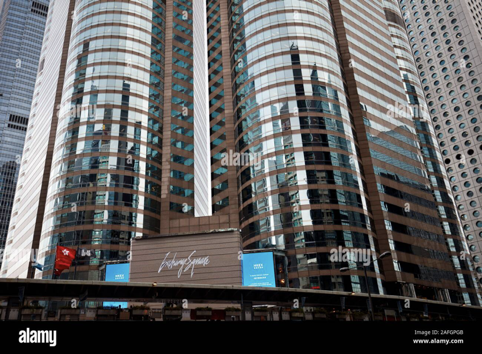 (Image caption ) Hong Kong's listing system reforms in recent years have created multiple pathways to accommodate technology companies at different stages of development. The listings of CATL, Zhipu Huazhang, Momenta, Jinghe Integrated Circuits, and Luxshare Precision in Hong Kong signify that the capital market is readjusting to the structural changes in China's technology industry.
Common direction of fundraising
Although the five companies have different focuses in their use of the funds raised, they ultimately concentrate on research and development, production capacity, and internationalization.
Zhipu invests most of its funds in large models, inference, intelligent agents, computing power, and corpora; Momenta invests in autonomous driving algorithms, GPU clusters, data storage, and commercial deployment; Jinghe Integration needs 22-nanometer process equipment, EDA tools, and R&D talent; Luxshare Precision aims to upgrade its production base, develop automotive electronics, and seek industrial M&A opportunities; CATL, on the other hand, uses the vast majority of its raised funds for its battery factory in Hungary.
These funds will purchase R&D capabilities, production capacity, and market positions for the next few years. Whether these will translate into stable returns depends on technological advancements, cost control, customer demand, and the international environment.
The industrial landscape of Chinese companies entering global capital markets is also changing.
Over the past two decades, internet platforms and consumer technology companies have been the most prominent group of Chinese companies listing overseas. Today, the Hong Kong IPO market is seeing an increase in companies involved in large-scale manufacturing, wafer fabrication, power batteries, autonomous driving, and precision manufacturing.
Capital is beginning to flow into deeper technological areas and heavier industrial assets. The return cycle is lengthening, and industrial value is becoming more dependent on engineering capabilities, manufacturing systems, and global supply chains.
Hong Kong is rewriting the capital grammar of technology companies.
The arrival of five companies in Hong Kong does not prove that all Chinese tech companies will succeed, nor has Hong Kong resolved all the difficulties in tech financing.
Zhipu needs to prove that its revenue growth can gradually cover its computing power and R&D investment; Momenta needs to complete larger-scale security verification and commercial deployment; Jinghe Integrated must improve its process capabilities and navigate through the semiconductor cycle; Luxshare Precision needs to manage its global supply chain and customer concentration risks; and CATL faces pressure from new energy competition, overseas policies, and long-term capital expenditures.
Going public brings these issues into the public market. Companies gain new capital, but also face higher demands for information disclosure, governance, and market accountability.
In Hong Kong's evolving capital grammar, the profit and loss statement remains important, but it is no longer sufficient to solely answer the question of a technology company's value. R&D intensity, technological position, industrial capabilities, commercialization progress, and global footprint have also come into the market's pricing considerations.
CATL, Zhipu, Momenta, Jinghe Integrated Circuits, and Luxshare Precision entered Hong Kong along three different institutional pathways. These five listings thus form a longer, interconnected thread: the capital market is readjusting to the structural changes in China's technology industry.
Whether Hong Kong can sustain this momentum in the long term depends on market liquidity, international capital participation, the quality of listed companies, and the continuous evolution of its regulatory system. For Chinese technology companies, listing in Hong Kong is merely one step in the globalization process.
The real test will come after the bells have rung.
Disclaimer
This article is for news reporting, institutional research, and market observation purposes only. It does not constitute any advice on securities trading, investment, legal, tax, or financial matters, nor should it be considered a recommendation or endorsement of any company, security, or transaction. Readers should independently verify information, assess their own risk tolerance, and consult a qualified professional advisor if necessary before making any investment decisions.