

For the first time, the capital market has offered a price for digital civilization.
—A breakdown of Animoca Brands' systems on the eve of its US IPO
GFM.News | IPO System Breakdown
 (Image caption) Starting in Hong Kong, Animoca Brands connects gaming, blockchain, and a global investment network into an ever-expanding digital empire.
A ship ticket that hasn't been fully signed yet.
In an office building in Central, Hong Kong, Animoca Brands has spent more than a decade building a business empire that is difficult to summarize using traditional industry names.
Mobile games were its starting point, and acquisitions of game studios enabled its expansion. Blockchain platforms, digital wallets, NFT marketplaces, decentralized identity, artificial intelligence, edtech, and tokenized assets have gradually entered its empire. It holds Bitcoin and Ethereum, and also has minority stakes in hundreds of companies worldwide. Through projects like The Sandbox, it participates in building a world comprised of virtual land, digital identity, and community economy.
Now, this vast digital empire is looking for a way back to the open market.
On November 2, 2025, Animoca Brands and Nasdaq-listed Currenc Group signed a non-binding term sheet. According to the arrangement announced at the time, Currenc intended to acquire all of Animoca Brands' equity through a scheme of arrangement under Australian law. Upon completion of the transaction, Animoca Brands' existing shareholders were expected to hold approximately 95% of the shares in the merged company, while Currenc's existing shareholders would retain approximately 5%. The merged company was expected to retain the name Animoca Brands.
In May 2026, both parties extended the exclusivity period to June 30, reaffirming the target closing date as the third quarter of 2026, with a long-term deadline tentatively set for December 31 of the same year; the period could be extended for another six months with the consent of both parties. As of the time of writing, neither party has publicly announced the signing of a formal merger agreement, nor has it disclosed whether the exclusivity arrangement after June 30 will be extended again. Due diligence and preparation of formal documents are still underway, and key procedures such as the formal agreement, regulatory approvals, and shareholder voting are yet to be completed.
An unsigned ticket has already pushed Animoca to the brink of an even greater institutional hurdle.
Capital markets have long since learned to price software, patents, user networks, and future cash flows. Animoca presents an even greater challenge: some of its assets are both usage rights and governance rights; they have market prices but lack sufficient liquidity; they are part of the company's ecosystem but may not be recognized as company assets in accounting.
These assets grow on the blockchain, without a warehouse or fixed form. Some are traded daily on global markets, some are still subject to lock-up periods, some represent the equity of an immature project, and some value is tied to the community, the protocol, and the network effect itself.
The "digital civilization" mentioned in this article does not refer to all digital economies, but rather to a new type of economic relationship composed of on-chain property rights, protocol governance, token incentives, digital identities, and community networks.
When a company like this prepares to list on Nasdaq, it's not just that company that faces the test. The public market must also answer a long-standing question: how exactly should a digital empire be written onto a balance sheet?
 (Image caption ) A ticket that hasn't even been fully signed has already pushed Animoca to the brink of institutional hurdles. For the first time, the capital markets are offering a price for digital civilization, requiring proof that these new rights can be verified, governed, and endure after the storm.
Morphological evolution over more than ten years
Animoca Brands initially entered the market with mobile game development and publishing, and went public on the Australian Securities Exchange in 2015. At that time, investors could still understand it in the language of game companies. Downloads, paying users, intellectual property, publishing revenue, and game lifecycle were all familiar valuation metrics.
The real turning point came around 2018. Animoca began to enter Web3 on a large scale and gradually established "digital property rights" as its core narrative. The projects it participated in or invested in later included digital asset and blockchain companies such as OpenSea, Consensys, Yuga Labs, Axie Infinity, Polygon, Magic Eden, and Dapper Labs, as well as The Sandbox and a large number of games, infrastructure, and token projects.
By the end of 2024, Animoca's disclosed investment portfolio had exceeded 540 companies, a further expansion from over 450 in 2023. By May 2026, Currenc was using the figure of "over 600 companies and digital assets" in its transaction announcements. While the scope of these figures may not be entirely consistent, they are sufficient to demonstrate that this investment network is still expanding rapidly.
Holding hundreds of minority stakes is already a complex governance undertaking for a company. A significant portion of these investments are also linked to tokens, protocol interests, lock-up arrangements, convertible instruments, and early-stage projects that haven't yet generated stable revenue, blurring the traditional definition of the "core business." It may simultaneously possess multiple identities: a gaming company, a holding group, a venture capital firm, and a digital asset management platform.
This hybrid form is precisely the source of Animoca's appeal, and also the most difficult part to explain to the outside world when it went public.
Gaming revenue can be measured by revenue multiples, minority stakes in established companies can be referenced by the most recent funding round, and publicly traded tokens show market prices; however, locked tokens, NFTs, and early protocol rights may not have sufficiently deep trading markets. When these different types of assets are put into the same report, the total amount can appear very large, but the comparability between the assets is quite limited.
Between $1.4 billion and $2.9 billion
Animoca's 2024 investor data provides an entry point into the company's financial structure.
As of the end of 2024, the company disclosed holding $293 million in cash and stablecoins, and approximately $538 million in digital assets on its books. Of this, approximately $356 million was classified as saleable digital assets, and approximately $182 million was subject to lock-up arrangements and had not yet vested. The estimated fair value of more than 540 minority equity investments was approximately $564 million, lower than the $690 million disclosed in 2023. These three disclosed financial assets and investments totaled approximately $1.395 billion.
The company also disclosed approximately $2.9 billion in off-balance-sheet token reserves, primarily issued by Animoca's Web3 subsidiaries or projects in which Animoca has participated as a launch partner. These include tokens such as SAND, EDU, MOCA, and GMEE. According to the company, these reserves are not included on Animoca's balance sheet as assets. Whether and how the economic benefits ultimately accrue to the company depends on platform usage, incentive arrangements, legal rights, and market realization capabilities.
If this $2.9 billion is also included in the broader economic equity observation, the relevant scale is close to $4.3 billion. However, off-balance-sheet token reserves are not assets recognized by accounting standards and cannot be directly added to balance sheet items.
"Off-balance sheet reserves" is a very imaginative term.
When digital asset prices rise, it's like an untapped mining area, easily seen as potential wealth by the market; when token prices fall, liquidity dries up, or projects fail, this mining area may only be a map that can't be cashed out at the listed price.
The challenge here isn't whether the token's price is available. Many tokens do have real-time quotes, with prices changing every second. The real issue is whether these quotes represent the actual value of the large positions the company holds that could be sold.
The fact that a token's final transaction price on an exchange is one dollar does not mean that an institution holding 100 million tokens can exit for 100 million dollars. When market depth is insufficient, tokens are subject to lock-up periods, and large-scale sales themselves impact prices, there may be a significant gap between the market price displayed on the screen and the actual value of the asset.
Animoca's balance sheet thus possesses a rare duality. Its assets can be clearly recorded on the blockchain, and ownership and transfer paths are sometimes even more transparent than those of traditional assets; however, their economic value may be more difficult to confirm steadily than that of real estate, bonds, and listed stocks.
Blockchain can prove how many tokens a company owns, but it cannot prove to auditors how much those tokens will still be worth tomorrow.
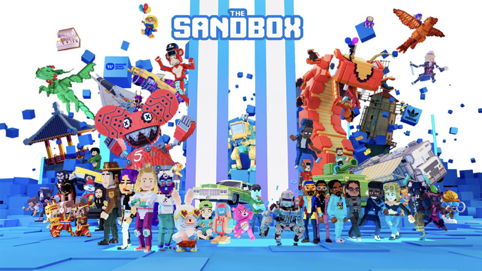 (Image caption ) Animoca Brands is building a digital world comprised of virtual land, digital identities, and the community economy through projects like The Sandbox. This vast digital empire is seeking a way back to the public market.
Bookings and a difficult-to-read profit and loss statement
According to Animoca's unaudited, non-IFRS data, the company's bookings in 2024 totaled $314 million, an increase of approximately 12% from $280 million in the previous year.
This figure is not equivalent to operating revenue in the financial statements. According to the company's own definition, Bookings includes both revenue already recorded in the income statement and sales activities that have not yet been fulfilled and are temporarily classified as deferred revenue. Deferred revenue is a liability in accounting, and can only be gradually recognized as revenue after the company has fulfilled its related obligations.
Of the $314 million in Bookings, digital asset advisory services contributed approximately $165 million, Web3 operations contributed approximately $110 million, and investment activities contributed approximately $39 million. The company also disclosed that its adjusted annual operating expenses were $217 million, a decrease of approximately 12% from the previous year. Since Bookings and adjusted operating expenses are both non-IFRS metrics used by the company, they cannot directly substitute for operating revenue, operating profit, or EBITDA in the audited income statement.
These figures still provide a noteworthy signal: Bookings for digital asset advisory services have surpassed Web3 operations, indicating a shift in Animoca's business focus.
However, the open market needs to see much more than just the total amount.
Investors need to know how much of the different Bookings has actually generated revenue and how much is still deferred fulfillment; which are settled in cash and which are paid in tokens; which come from individual customers and which come from ecosystem projects that the company has invested in, incubated, or governed; which are sustainable and which only come from one-time token issuances, consulting transactions, or asset disposals.
Animoca has previously used Bookings to measure token sales, NFT sales, and other business activities. 2022 data shows that Bookings totaled approximately AUD 594 million that year, including token, NFT, and non-blockchain activities.
In digital asset companies, "receiving value" and "recognizing revenue" are often not the same thing.
If a company exchanges consulting services for a batch of project tokens, the tokens may have market value at the time of acquisition, but whether they can be sold immediately, whether they can ultimately be redeemed, and how their price changes thereafter will all affect the meaning of the financial statements. If the tokens come from projects in which the company has invested or incubated, even more complex boundaries may emerge between revenue recognition, fair value, and related-party transactions.
The public market needs a clear explanation of where Bookings comes from. It should make it clear to investors how much of Animoca's profitability comes from repeatable operations, how much depends on digital asset market cycles, and how much comes from transactions and value exchanges within the company's own vast ecosystem.
How do tokens get into accounting systems?
Digital assets have existed for many years, but the accounting system's understanding of them still shows obvious signs of transition.
The International Financial Reporting Standards Interpretation Board has determined that, generally speaking, cryptocurrencies are not considered cash, nor do they necessarily constitute traditional financial assets. If a company holds cryptocurrencies for sale in the ordinary course of business, the inventory standard may apply; otherwise, the intangible asset standard generally applies. If measured at fair value, the corresponding fair value measurement and disclosure requirements must also be followed.
This framework can handle a portion of Bitcoin and Ethereum, but it's difficult to naturally cover all of Animoca's holdings.
A token may represent governance rights, eligibility to use platform services, share in protocol revenue, or even simultaneously function as an investment, consumer, and community member. NFTs are all different from each other, the transferability of locked tokens is restricted, airdrops promised by project teams have not yet fully materialized into legal rights, and the governance influence in DAOs is difficult to directly apply to the definition of traditional equity.
Things that are all called "digital assets" may have vastly different economic natures. Categorizing them all into a single total makes the numbers clear, but it hides the most important differences.
"Fair value" sounds like an objective number, but in reality, it is often based on a great deal of judgment. Bitcoin and Ethereum have relatively active global markets, making it easier to find observable inputs for valuation; however, tokens with lower trading volumes, locked tokens, and private company equity rely on discounts, models, and management assumptions.
The first problem that emerges is determining which market's quote counts. The same token may be quoted on multiple exchanges, and the liquidity, regulatory environment, and counterparty risk vary across different markets. Prices on some exchanges may be affected by wash trading or concentrated holdings, and some tokens may appear to have a market capitalization, but the actual freely tradable portion is very low.
If a batch of tokens cannot be sold for a year, today's market price cannot be applied indiscriminately. Discounts need to take into account volatility, lock-up period, market depth, and project risk; different models may yield vastly different results.
In some projects, Animoca may also act as a significant investor, director, advisor, or ecosystem partner. When a company has an impact on the development of an asset and uses that asset's valuation to reflect its own financial condition, independent valuation and auditing procedures become particularly important.
Market prices can provide a figure, but the system needs to answer whether that figure is trustworthy.
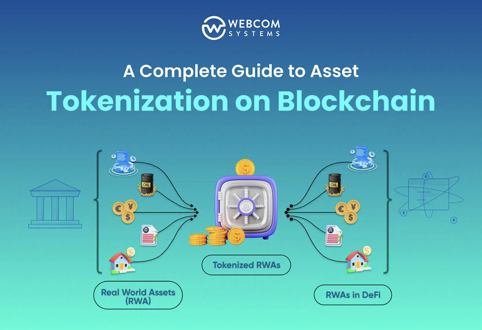 (Image caption ) Animoca's digital assets represent both usage rights and governance rights, possessing market value yet lacking sufficient liquidity. The capital markets need to answer: How should a digital empire be written onto its balance sheet?
The weight of hundreds of investments
Animoca's most representative asset is perhaps not any single token, but rather the network formed by hundreds of investments.
This network covers multiple sectors including blockchain gaming, digital identity, wallets, trading platforms, infrastructure, artificial intelligence, and tokenized assets. As Web3, blockchain gaming, tokenized assets, and digital identity continue to grow, some of these companies may become the next generation of infrastructure.
In terms of financial governance, it is also a huge valuation factory.
For every stake in a private company, it is necessary to determine whether the most recent round of financing is still representative, whether the company's business has deteriorated, whether the shares held come with different rights, and whether market participants are truly willing to take over at the so-called fair value.
Early-stage Web3 companies may not receive new funding for years, their previous valuations were formed at market peaks, while their teams and products have already undergone significant changes. When the number of investments reaches hundreds, a few overvaluations or undervaluations may not change the overall picture; however, if the valuation benchmark for the entire industry is raised during the same period, the error may become systematic.
These investments are not entirely independent of each other.
Animoca may be both a shareholder and a partner, holding shares in the project company and the project's issued tokens; it may participate in ecosystem building and provide consulting, issuance, marketing, or financial support. The success of a project may simultaneously increase equity, token, and service revenue; the failure of a project may leave losses in multiple areas.
This ecosystem collaboration is part of Animoca's business capabilities and also requires a higher level of disclosure of related-party transactions and management of conflicts of interest.
When a company simultaneously acts as builder, advisor, asset holder, and valuation beneficiary in the world it invests in, the system must distinguish for the market who is actually wearing each of these roles.
The day I left Australia
This is not the first time Animoca has entered the public market.
On March 9, 2020, the Australian Securities Exchange (ASX) removed Animoca Brands from its official list pursuant to Listing Rule 17.12. The ASX's dissatisfaction at the time went beyond a single technical disclosure. Its formal statement addressed multiple listing rules, ongoing disclosures, periodic reporting, and compliance issues, questioning whether the company possessed the resources, systems, and controls necessary to fulfill its listing obligations.
That history cannot be simplified to "regulators don't understand cryptocurrencies".
The controversy at the time involved corporate governance, information disclosure, the legal and accounting treatment of digital assets, and conflicts between the company's new business and traditional listing rules. Animoca later expanded rapidly in the private market, with a funding round in 2022 bringing the company's valuation to nearly $6 billion, proving that delisting did not end its business life.
Some private secondary market transactions and reference quotes subsequently showed that their implied valuations were significantly lower than the 2022 funding peak. These secondary market quotes are not equivalent to formal funding valuations, but they reflect the impact of digital asset cycles, liquidity, and investor sentiment on company pricing.
Commercial success cannot replace answering historical questions.
As Animoca prepares to re-enter the public market, investors have reason to be concerned about how the company will rebuild its financial reporting system, improve the independence of its board of directors, manage hundreds of investments, handle conflicts of interest between its tokens and related projects, and ensure that critical information no longer lags behind business expansion.
For a company that has previously delisted from an exchange, relisting is more like a make-up exam. This time, the exam venue has moved from Australia to the US capital market, which boasts the world's most liquid market and the most mature securities litigation system.
 (Image caption ) As of the end of 2024, Animoca had approximately $1.395 billion in on-balance-sheet financial assets and investments, and approximately $2.9 billion in off-balance-sheet token reserves. These assets are built on the blockchain, making value verification challenging.
The insurmountable hurdles of reverse mergers
Animoca's chosen path to market deserves separate analysis.
According to the disclosed arrangements, Currenc will legally acquire all of Animoca's shares, but Animoca's original shareholders are expected to hold approximately 95% of the shares in the merged company. In economic terms, this is a typical reverse merger: a private company enters the public market through the legal vehicle of an existing listed company, while the original listed company shareholders retain only a small percentage after the merger.
Currenc itself is also undergoing restructuring.
The company has announced plans to sell its 60% stake in cross-border payments company Tranglo for $400 million in cash, with $200 million expected to be paid upon closing and the remaining $200 million within 90 days of closing. The transaction is still subject to regulatory approvals from Bank Negara Malaysia, the Monetary Authority of Singapore, and other relevant authorities, with a target completion date of September 30, 2026. Currenc stated that the proceeds from the sale will be used to reduce debt and support its artificial intelligence and Web3 businesses.
This means that Currenc's own assets, cash, liabilities, and business scope may still undergo significant changes before the Animoca transaction is completed. These changes will directly affect the capital structure of the merged company and the economic position of the original shareholders.
For Animoca, a reverse merger could shorten the time required to set up a listing structure and may give both parties more flexibility in arranging control and equity ratios, but it is not a side door to bypass regulations.
If the transaction proceeds, the merging company will still need to submit sufficiently complete documentation to the U.S. Securities and Exchange Commission, disclosing Animoca's business, risks, financial statements, shareholding structure, management compensation, related-party transactions, and significant litigation. Nasdaq will also need to determine whether the merged company meets the relevant listing and continuing listing requirements.
Reverse mergers do not solve the valuation problem; they merely introduce the valuation problem into the transaction structure.
Both parties have proposed a relative shareholding framework of approximately 95% for Animoca's original shareholders and approximately 5% for Currenc's original shareholders. However, the final number of shares to be exchanged, the full dilution of share capital, pre-transaction financing, the sale of Currenc's assets, and other capital arrangements are still subject to disclosure in formal agreements and transaction documents.
The market needs to know on which Animoca valuation and which Currenc valuation this ratio is based, and how to handle the cash, liabilities and potential obligations left behind after Currenc completes the asset sale.
The list of non-binding terms currently available does not provide all the answers.
Who will audit the empire on the blockchain?
Auditing a digital asset company requires first proving that the assets actually exist.
Blockchain explorers can see the tokens in a wallet, but they cannot prove that the wallet is controlled by a company solely based on the address. Auditors need to verify private key control, escrow arrangements, multi-signature permissions, and whether the assets have been pledged, lent, mortgaged, or otherwise restricted.
After assets exist, the integrity of the rights must be proven. A company may hold tokens of a project, but these tokens may be subject to vesting agreements, lock-up clauses, or additional obligations. Holding does not equate to free disposal.
The next step is valuation confirmation. Tokens in active markets can be referenced by price quotes, while tokens lacking liquidity and private equity require the involvement of valuation experts. When the number of assets reaches hundreds, auditors also need to determine which projects pose significant risks and which valuation assumptions need to be tested individually.
Blockchain can record a transaction, but it doesn't automatically indicate whether it's revenue, a loan, an investment, a prepayment, or a move of assets between related parties. Accounting ultimately comes down to contracts, commercial substance, and control relationships themselves.
Blockchain is often described as a "trustless" technology, but when a blockchain company enters the public market, it still needs auditors, the board of directors, regulators, and legal responsibilities to work together to build trust.
What are American investors buying?
If Animoca completes the merger, ordinary investors will not be buying a piece of land in The Sandbox, nor a basket of tokens that can be redeemed directly. They will be holding shares in a holding company.
This company possesses cash, stablecoins, listed tokens, locked tokens, private company equity, intellectual property, operational businesses, and extensive ecosystem relationships. Shareholders cannot choose to sell any of these assets individually, nor can they demand that the company redeem them at book value.
Animoca stock may trade at a price that deviates from its published net asset value over a long period.
The market may award a premium above net asset value due to optimism about the management team and the Web3 cycle; conversely, it may award a significant discount due to complex structure, governance risks, and difficulty in asset liquidation. Traditional investment holding companies often face similar issues, but Animoca's assets are more volatile, and its valuation discount may be even more pronounced.
It could also become a leveraged exposure to the digital asset market.
When Bitcoin, Ethereum, and Web3 projects rise overall, Animoca's asset value, investment exit opportunities, and advisory business may improve simultaneously; when the market reverses, asset impairment, declining bookings, and financing difficulties may also occur at the same time, putting pressure on the company's profit and loss statement and balance sheet.
What investors are buying is a ship filled with different digital assets.
The value of cargo on board changes daily, some cargo is still locked, and some doesn't have a large enough dock to unload. While the helmsman's ability is crucial, the completeness of the ship's inventory list is equally important.
 (Image caption ) The accounting treatment of digital assets is still in a transitional phase. The multiple functions of governance rights, usage rights, contractual revenue, and community identity make it difficult for traditional standards to fully cover Animoca's complex ecosystem.
How long will the regulatory spring last?
Animoca's reconsideration of its US listing is closely related to changes in the US digital asset policy environment.
The company's co-founder and executive chairman, Xiao Yi, stated that the shift in US regulatory direction created a rare window of opportunity. Compared to the previously stricter enforcement environment, the new policy orientation has led Digital Asset Management to reassess the US capital market. He even frankly admitted that a year earlier, the company would not have considered listing in the US at all.
Institutional trends may change the timing of an IPO, but they will not eliminate the responsibilities associated with listing.
A more favorable stance towards the crypto industry from one administration does not mean that investor protection, anti-fraud rules, financial disclosure, and auditing requirements will disappear. Policies may change again following elections, congressional legislation, court rulings, and market events.
If Animoca bases its IPO on a regulatory window, it must also be prepared for that window to close. What truly allows a company to weather policy cycles is a financial language that is understandable to different regulators, auditors, and investors.
Digital civilizations do not yet have a unified price list
Animoca describes itself as a company driving digital property rights and the future economy. This narrative has historical ambitions.
In the past commercial order of humankind, land, machinery, patents, stocks, and bonds have all undergone a long process of institutionalization. They initially lacked unified standards until laws defined ownership, accounting systems established classifications, markets formed transaction rules, and auditing and regulation added credibility to these rules.
Digital assets are perhaps in a position similar to the early stages of the formation of joint-stock companies, stock exchanges, and intellectual property systems.
They have created real wealth and caused real losses; they have global markets, yet still lack stable and consistent classifications; they can be transferred in seconds, but the related rights may not be equally recognized in every jurisdiction.
Animoca's desire to list on Nasdaq is essentially a demand for a public price list from traditional capital markets for these new rights.
This price list cannot be determined solely by token market conditions. It also needs to answer questions such as who controls the assets, where the revenue is generated, whether the rights can be enforced, whether the price can be realized, whether there are conflicts of interest among management, and whether the company can survive during market downturns.
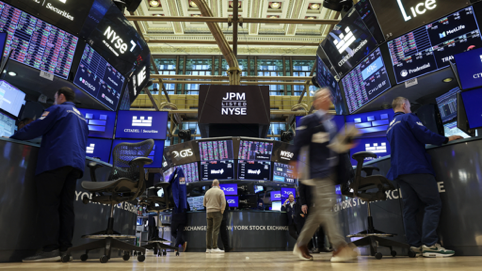 (Image caption ) Animoca chose the reverse merger route to enter Nasdaq. The public market not only tests the companies themselves, but also needs to provide a credible pricing mechanism for on-chain property rights, token incentives, and digital civilization.
Going public is not a coronation
The Web3 industry has become too accustomed to using valuations to prove its future.
Once a funding round is completed, a token is launched, and a project receives a fully diluted valuation of billions of dollars, the market easily takes the price as fact. After entering the public market, the price fluctuates daily, and whether a company can survive ultimately depends on the test of the system.
None of the problems Animoca faces can be solved by grand narratives alone.
Hundreds of investments need to be thoroughly examined, the $2.9 billion in off-balance-sheet token reserves need to be explained in terms of their rights and restrictions, and Bookings needs to distinguish between cash and tokens, operations and investments, and independent transactions and internal ecosystem transactions. Its past delisting in Australia also needs to be addressed with more mature governance and disclosure.
If Animoca completes the reverse merger, it could become a rare diversified digital asset group in the global public market. Currenc even described the proposed merger as creating the world's first diversified digital asset conglomerate listed on Nasdaq.
If this "first" can be achieved, it will bring with it greater responsibilities.
Later entrants will read its financial statements, auditors will study its valuation methods, and investors will reassess the entire industry based on its successes and failures. Every disclosure standard it establishes could become a stepping stone for digital assets to enter traditional capital markets.
For the first time, the capital market has offered a price for digital civilization.
The market may eventually give Animoca a valuation far higher than its book value, or it may, like many investment holding companies, trade at a discount to its net asset value for a long time.
The market may embrace crypto during a crypto cycle, then re-evaluate every asset during the next downturn. These outcomes are currently unpredictable.
What is certain is that Animoca's IPO process has gone beyond a company's financing options. It has brought a group of assets that have not yet been fully understood by traditional institutions to a market that demands continuous disclosure, independent auditing, and public pricing.
It needs to prove that digital assets can be verified, complex ecosystems can be governed, Web3 bookings and revenues can be traced, and hundreds of investments can be clearly presented.
Capital markets also need to rethink that future corporate value may not lie entirely in factories, land, and cash flow. It may also reside in agreements, communities, digital identities, and a whole set of unfinished network relationships.
This deal could still be delayed, modified, or even fail to be completed.
However, systemic issues have already been raised.
When a company's greatest wealth resides in wallet addresses, smart contracts, locked tokens, and unlisted projects, price is no longer the most difficult question to answer. The most difficult question is how much of that value these figures represent—value that can be owned by shareholders, verified by audits, realized by the market, and will continue to exist after the next storm.
The capital market is never short of people willing to pay for dreams.
What Animoca truly needs is a reliable system of measurement for digital civilizations.
Disclaimer:
The financial data of Animoca Brands cited in this article are primarily from the company's unaudited, non-IFRS investor updates. The figures for Bookings, off-balance-sheet token reserves, and fair value are not equivalent to revenue, assets, or realizable value in the audited financial statements. This article is for institutional, financial disclosure, and capital market research purposes only and does not constitute investment advice on any securities, digital assets, or other forms of investment.