

$28.13 million in tickets
JuNeng Digital Marketing Company in Chongqing, China, and the line it just crossed.
GFM.News | IPO System Breakdown
 (Image caption) New regulations require Chinese issuers to raise a minimum of US$25 million; JuNeng has adjusted its fundraising target to approximately US$28.13 million. The image shows a night view of Chongqing, representing the location of JuNeng's principal operating entity.
The document before the bell ringing
Before the Nasdaq bell rings, no one usually reads a record of revisions to a prospectus.
However, if you actually open JuNeng Technology Limited's F-1 document number 333-288370 , you will find a detail worth stopping to look at: the company originally intended to raise a different amount than it has now.
In June 2025, Renaissance Capital documented an earlier offering plan for the company. JuNeng Technology initially planned to issue 2 million shares at a price range of $4 to $5 per share, raising approximately $9 million. The plan was later revised. The number of shares issued increased to 6.25 million, while the price range remained unchanged. Using a median price of $4.50, the total funds raised became $28.125 million, which the market typically rounds to approximately $28.13 million.
A regulatory change occurred during this process. On May 14, 2026, the U.S. Securities and Exchange Commission approved Nasdaq's rule amendments. Nasdaq imposed stricter initial listing requirements on issuers whose principal business is located in mainland China, Hong Kong, or Macau. Such companies wishing to list on Nasdaq through an initial public offering (IPO) must offer securities to the U.S. public through a firm commitment offering, raising at least $25 million in total funds, while still meeting other applicable listing conditions.
The rule document clearly states that Nasdaq introduced this threshold because it observed that some Chinese-related IPOs with an offering size of less than $25 million were more prone to subsequent listing compliance, liquidity, and market quality issues. This rule has a 30-day implementation period after approval. Moving forward, this falls around mid-June 2026. This point is not far from when JuNeng Technology revised its offering plan.
A company's offering size increased from approximately $9 million to approximately $28.13 million. The new regulatory threshold is precisely $25 million. The timing and the amount match. These three events together don't constitute an accusation, but they raise a question the media cannot avoid: Is this expansion a natural result of business growth, or a restructuring of the offering process to cross a newly drawn line?
No responsible observer should equate a proximity in time with a certainty in motivation. However, investors have the right to know of this coincidence and the right to understand clearly what they are about to buy before the bell rings.
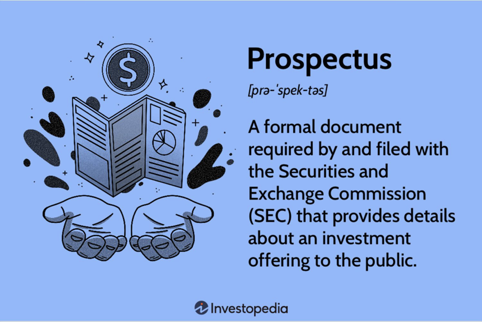 (Image caption) Conceptual diagram from the prospectus. JuNeng F-1/A has revised its fundraising plan, increasing it from approximately US$9 million to US$28.13 million. The description of the use of funds is rather vague and investors should pay attention.
A not-so-bad report card
Let me state the facts upfront. JuNeng Technology is not an empty shell company without revenue and profit to back it up.
According to its prospectus filed with the U.S. Securities and Exchange Commission, JuNeng Technology's revenue for the fiscal year ended March 31, 2025, was approximately $13.28 million, a 74.94% increase from approximately $7.59 million in the previous fiscal year. Net profit rose from approximately $140,000 to approximately $830,000, and gross margin increased from 3.85% to 10.03%. These figures are consistent with the company's consolidated financial statements filed with the SEC.
This report card isn't bad. What's even more noteworthy is the change in customer numbers. The company disclosed that it has served approximately 1,000 customers to date. In fiscal year 2024, it served 138 customers, and in fiscal year 2025, this number rose to 377, approximately 2.73 times that of the previous fiscal year, representing an increase of about 173%. These figures, more than the company's repeatedly emphasized "intelligent data analysis system," demonstrate one thing: it is at least being genuinely used by the market.
JuNeng Technology's core business revolves around short video advertising placement and performance optimization. Public information shows that it places ads for clients through authorized third-party agents of major media platforms such as Tencent and ByteDance. The company claims to possess a system called Lucky Short Video Intelligent Data Analysis System, used to analyze the impact of elements such as scripts, actors, and story style in short videos on ad placement performance.
The system's name sounds like a technological asset, but what investors should really look for is not the name, but the evidence. The prospectus currently lacks disclosures of patents, software copyrights, or third-party technical verification sufficient to support a high technological barrier. It's perfectly reasonable for an advertising company to improve its data analytics capabilities, and this can indeed bring efficiency advantages. The problem is that when this capability is included in the valuation narrative of the public market, investors shouldn't be asking whether the system exists, but rather whether it can be reflected in gross margins, customer loyalty, bargaining power, and sustainable growth.
Technology can be discussed, but once it enters the IPO narrative, it must be scrutinized by financial figures. An advertising company can be a good business, and a performance marketing company can generate cash flow. However, if it's placed in the context of a tech company and used to support a higher valuation, the market has the right to demand stronger evidence. Otherwise, technical language may become merely a guise for inflated valuations.
Size, Valuation and Use of Funds
As of March 31, 2025, JuNeng Technology had approximately US$1.55 million in cash and cash equivalents, approximately US$4.04 million in total assets, approximately US$810,000 in total liabilities, and approximately US$3.23 million in shareholders' equity.
Putting these figures side-by-side with the $28.13 million fundraising target immediately reveals the stark contrast. A company with total assets of just over four million dollars is preparing to raise more than seven times its own assets in a single IPO, pushing its valuation to approximately $163 million in this offering. This valuation is calculated based on a median price of $4.50 per share for the 36.25 million shares outstanding after the offering.
It's not inherently wrong for small companies to achieve rapid expansion through the public market. The capital market should provide a channel for growth companies. The real question is where the funds go.
The "Use of Proceeds" section of the prospectus is quite vague: working capital and general corporate purposes, R&D investment in proprietary technologies, and talent recruitment and training. These three descriptions can be applied to almost any small or medium-sized enterprise preparing for an IPO. They are not specific enough for investors to determine whether the money will substantially change the company's competitive position or merely maintain its current scale of operation.
If a company has only a few million dollars in existing assets but wants to raise nearly thirty million dollars from the public market, then investors deserve a clearer roadmap for how the funds will be used. This isn't being demanding; it's basic courtesy in the public market.
 (Image caption) Short video and social media advertising scenarios represent the company's core business. The company claims to have an intelligent analysis system, but its technological narrative must be tested by financial figures and gross profit margins.
The person who truly has the final say
If the previous section discussed money, this section will discuss power.
According to the prospectus, on September 13, 2024, Wang Yu, the company's largest shareholder with 63.82% of the shares, and Zhong Jia, the second largest shareholder with 18.00% of the shares, signed a concerted action agreement. The agreement stipulates that the two must reach a consensus on major decisions at the shareholders' meeting and the board of directors; if they cannot reach a consensus, Zhong Jia will vote according to Wang Yu's opinion.
Prior to the issuance, the two individuals collectively held 81.82% of the shares and voting rights. Even with the addition of new shareholders after the issuance, they will still collectively hold approximately 67.71%. This percentage is sufficient to classify the company as a controlled company under Nasdaq rules.
The prospectus also explicitly states that despite meeting this status, the company does not intend to invoke the corporate governance exemptions for controlled companies and will maintain the nomination and remuneration committee structure led by independent directors. This needs to be stated truthfully because it serves as an institutional buffer against minority shareholder risks. However, this does not change another fundamental fact: the company's actual voting power remains highly concentrated in the hands of two core shareholders.
This is a fact more noteworthy than simply stating that "the company only has a few dozen employees." A company is about to raise nearly $30 million in the public market, yet the true decision-making power remains concentrated in the hands of two individuals, locked in a concerted action agreement. This doesn't necessarily indicate a problem with corporate governance. Many successful startups retain control in their early stages after going public; this is an arrangement acceptable to the market.
However, market acceptance hinges on investors' clear understanding. When investors buy NENG shares, they need to know that they are buying ordinary shares of a Cayman holding company, representing a minority shareholder interest with virtually no real say in major decisions.
Trust should never be built on the premise that investors haven't read the entire prospectus.
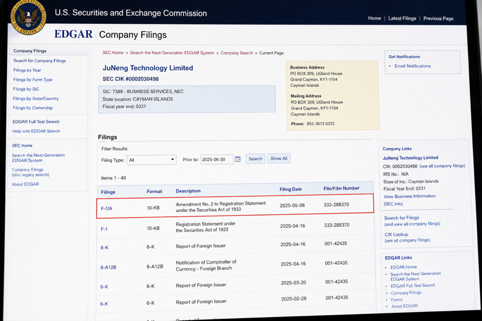 (Image caption ) The F-1/A prospectus records the offering size, equity structure, use of funds and risk disclosure, and is the first entry point for investors to understand a cross-border IPO company.
The listing chain across the Pacific Ocean
The listed entity of JuNeng Technology is a company registered in the Cayman Islands.
Through its wholly-owned Hong Kong subsidiary, JuNeng Information Limited, it indirectly holds all the equity of Beijing Haoyuqin Technology Co., Ltd., which is the wholly-owned enterprise (WFOE). The latter, in turn, wholly owns Chongqing Haoyuqin Culture Media Co., Ltd. This Chongqing company is the actual operating entity conducting business within China; its original name was Chongqing Haoxi Culture Media Co., Ltd.
Here, a detail needs correction. Some previous versions mentioned an entity called "Beijing Mingge Technology." However, in the F-1/A disclosure chain and the description of the listing structure verified in this article, Beijing Mingge Technology is not listed as a subsidiary. One of the responsibilities of institutional media is to prevent a company name that does not appear in the core structure of this prospectus from being included in the organizational chart that investors should clearly understand.
What should really be included in the framework of understanding are two other more specific details in the prospectus.
First, because the operating entity within China accounts for more than 50% of the company's consolidated revenue, profit, and assets, this issuance is considered an indirect overseas issuance under the rules of the China Securities Regulatory Commission (CSRC). In accordance with the "Trial Measures for the Administration of Overseas Issuance and Listing of Securities by Domestic Enterprises" which came into effect in 2023 and related filing requirements, the company needs to complete the filing process with the CSRC before the issuance is completed. The prospectus discloses that, as of the date of the document, the company has not received any regulatory inquiries, warnings, or objections, but the filing process itself remains an important step before the listing is completed.
Secondly, regarding the credibility of the auditors, a fairer assessment is warranted. JuNeng Technology's auditing firm, OneStop Assurance PAC, is not headquartered in mainland China or Hong Kong, and therefore was not on the PCAOB's 2021 list of firms unable to complete inspections. The PCAOB's inspection report on OneStop Assurance PAC, released on July 13, 2023, indicates that the inspection did not uncover any material weaknesses sufficient to suggest that its audit opinion lacked adequate appropriate audit evidence. This is a fact that relatively reduces the direct risk associated with the HFCA Act for investors.
However, this does not mean that audit risks have completely disappeared. The PCAOB inspection itself is a sampling and risk-oriented inspection, not a complete endorsement of all audit work by an accounting firm. The inspection report also disclosed several other compliance issues, including matters related to Form AP reporting. A fair approach would neither ignore this relatively positive fact nor interpret a single inspection as a permanent guarantee.
The sense of distance created by cross-border structures doesn't completely disappear just because auditors possess PCAOB inspectability. Investors ultimately hold ordinary shares of the Cayman company, not equity in the operating entity in Chongqing. There are three layers of structure in between—Hong Kong, Beijing, and the Cayman Islands—and an incomplete filing process with the China Securities Regulatory Commission. This distance is easily overlooked when stock prices are rising, but it becomes immediately apparent when risks arise.
 (Image caption ) Ringing the bell on Nasdaq symbolizes a company's entry into the public market, but what truly determines investment risk is often not the bell and applause, but the prospectus that has not been fully read before the bell is rung.
The real problems begin after you cross the threshold.
Nasdaq raised the minimum offering threshold to $25 million, and the official reason given was quite clear.
SEC approval documents show that Nasdaq analyzed 151 China-based issuers that went public on Nasdaq through IPOs between April 2022 and April 2025. Of these, 143 had offerings of less than $25 million, and nearly half of these 143 companies were later cited for failing to meet Nasdaq's continued listing standards. The documents also noted that illiquid securities may be more susceptible to price manipulation, especially when insiders still hold significant stakes.
This new rule is essentially the exchange addressing a series of market problems faced by small-cap Chinese companies listed in the US over the past few years. However, thresholds are never a panacea. A company that adjusted its offering size from approximately $9 million to approximately $28.13 million did indeed cross this line. But crossing the threshold itself does not prove that the company's quality has improved. Raising more than $25 million does not automatically prove that the valuation is reasonable, does not automatically prove that the liquidity is sufficient, and does not automatically prove that the risk to retail investors has been eliminated.
JuNeng Technology deserves to be included in this article, not because it has already been proven to have problems, but because it happens to stand on the edge of a new regulatory line. It has a revised offering plan, and a set of real but weak financial figures; it has a technological narrative that needs more evidence to support it, and a shareholding structure that leaves two-thirds of the decision-making power in the hands of two core shareholders; it also has an unfinished cross-border regulatory process and a Nasdaq market that has just raised its threshold.
These facts, taken individually, can all be explained and do not constitute accusations. However, when they appear together in a prospectus, ordinary investors should see the complete picture, not just the easily remembered words like "short video," "intelligent system," and "NASDAQ code."
That investor may not have a lawyer to read the prospectus for him, an analyst to verify every audited figure, or an investment banker to point out the power structure behind the valuation. What he might see is just a piece of code about to appear on his stock trading software. This is precisely why institutional media should expose the risks before prices are even formed.
Before the bell tolls, what should truly be heard is never the applause at the moment the bell is struck, but rather the questions left on the table that no one has yet answered.
Disclaimer:
The financial data, equity structure, regulatory rules, and company structure information cited in this article are primarily based on JuNeng Technology Limited's F-1/A registration statement filed with the U.S. Securities and Exchange Commission, the Renaissance Capital IPO database, the PCAOB public inspection report, and the SEC's Nasdaq rule change approval document Release No. 34-105494 issued on May 14, 2026. This information is not intended as investment advice.