

Freedom Metals' Mining Entry Ticket
Behind the $275 million SPAC IPO, how did a key mining platform secure its market entry ticket?
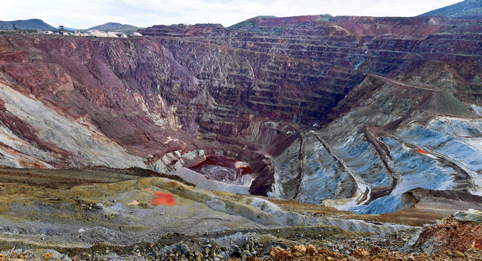 (Image caption ) Key Minerals: Large Open-Pit Mine – The Mining Asset Imagination and Reality Behind SPAC
The night before the market opened
On July 7, 2026, Freedom Metals Acquisition Corp.'s registration statement became effective with the U.S. Securities and Exchange Commission. The following day, the company, using the ticker symbol FDMMU, was expected to begin trading on Nasdaq.
The two dates were separated by only one night. To the average reader, it might simply be another new stock ticker appearing on the trading screen; for the US capital markets, this night signified the unveiling of a unique institutional container to the public market: 27.5 million units, each priced at $10, totaling $275 million; each unit included one Class A common stock and one-third of a redeemable warrant; each warrant could be used to purchase one Class A common stock at $11.50 per share in the future. The company also granted the underwriters a 45-day over-allotment option, allowing them to purchase up to an additional 4.125 million units.
These terms are not unfamiliar in the SPAC market. They have a standard format, legal language, underwriter arrangements, and procedures that investment banks and exchanges are already familiar with. However, what GFM is really concerned about is not these formats themselves, but the more important question behind them: what exactly are investors buying?
Freedom Metals has not yet completed any business consolidation, nor does it have any mines already incorporated into the publicly traded company. It also lacks existing operating statements that can be verified using production, costs, sales revenue, and cash flow. It is a blank-check company, commonly known as a SPAC. It raises capital first and then seeks targets to be incorporated into the publicly traded entity. The company discloses that while it may seek acquisition opportunities in any industry, sector, or region, it primarily focuses on the mining and critical minerals sectors.
Therefore, this IPO should never have been simplified to a mining company listing in the first place.
It's more like a pre-issued admission ticket. Funds, codes, trusts, warrants, redemption mechanisms, and management teams take the stage first; the actual mining assets are yet to come. As for which mine, which supply chain, or which country's licensing process this money will ultimately be channeled into, there are still no answers. This state of uncertainty is precisely the allure of the SPAC system, and also what makes it most deserving of scrutiny.
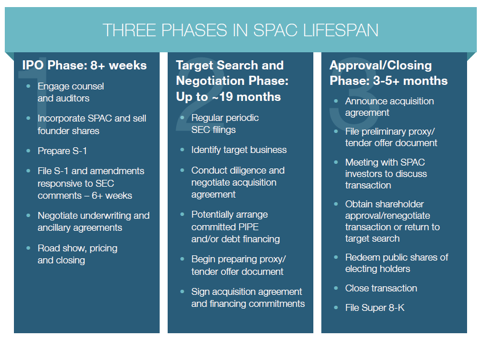 (Image caption) SPAC Lifecycle System Process—The Ticket Structure for Blank Check Companies from Fundraising to Mergers and Acquisitions
An admission ticket issued in advance
The common understanding of an IPO is that a company goes through the stages of startup, product development, market expansion, customer acquisition, and revenue building, finally standing at the exchange with its financial statements to be scrutinized by investors. Freedom Metals, however, did not follow this traditional path.
It first issues the admission tickets, and then looks for assets worth bringing into the market.
This system has been operating in the US capital market for many years. It's based on a set of practical logic: certain industries have long asset formation cycles, high capital demands, and are highly sensitive to policy changes. If companies are forced to wait until assets are fully mature, revenues are stable, and financial statements are fully developed, many may struggle to obtain public market funding in a timely manner. SPACs thus provide an institutionalized shortcut. They allow uncertainty to enter the market first, but it must come with rules; they allow trust accounts, redemption arrangements, liquidation clauses, and prospectuses to absorb this uncertainty, rather than exposing investors entirely to a shell company that hasn't yet established a complete business.
This shortcut itself is not inherently wrong. What we really need to be wary of is that the market easily mistake the management team's experience, the industry's popularity, and the policy's influence for pre-existing corporate value.
On the Freedom Metals board of directors, there are several names worth investors' time to verify. Quinton Hennigh is a geologist with a solid reputation in the North American mining industry, having long been involved in the technical evaluation of gold and precious metal exploration projects. Board Chairman Bronwyn Barnes, along with Dean Callas, Hugh Callaghan, Michael Porter, and other members, form the human resource base that the company can scrutinize when seeking mining assets. These resumes are more worthy of careful reading than any vision statement of "focusing on key minerals," because resumes are at least traceable, while a vision needs to be validated by future targets.
However, a resume is still just the beginning.
Whether a SPAC can ultimately be established does not depend on an impressive list of directors, nor on the market enthusiasm on its opening day. It depends on whether the management team can find a truly suitable target within the stipulated time, negotiate a reasonable valuation, complete due diligence, persuade shareholders to stay, and ensure that the post-merger company can withstand scrutiny from the public market for a longer period of time.
How Washington's anxieties can be transformed into a trading code.
The term "critical minerals" used to appear more often in geological reports, energy policy white papers, military supply chain documents, and public lists from government departments, far removed from the daily transactions of ordinary investors. Today, that has changed.
AI servers need materials, electric vehicle batteries need materials, semiconductor manufacturing equipment needs materials, and power grid upgrades, defense systems, and the clean energy transition also rely on materials. All the grand discussions about computing power, energy, the resurgence of manufacturing, and the defense industrial base ultimately boil down to a batch of minerals and metals that are mined, processed, transported, and priced.
In recent years, the United States has been continuously strengthening its critical mineral supply chain policies. The Department of Energy has proposed a funding support plan to promote the entire domestic supply chain of critical minerals, from mining and processing to manufacturing. The Department of the Interior and the USGS have also been continuously updating the critical mineral list and have clearly pointed out that supply disruptions of some minerals could affect U.S. economic security and defense capabilities.
These policy backgrounds will not automatically find a good target for Freedom Metals, nor will they instantly transform a SPAC into a high-quality mining company; but they will change what kind of stories the capital market is willing to hear, and will also give an ordinary blank check company a weight that transcends the industry itself.
Thus, a very interesting translation process began to emerge.
When Washington talks about supply chain security, the market starts looking for M&A targets. When Washington talks about national security, the market starts discussing trust accounts, warrants, and Nasdaq symbols. When Washington talks about critical minerals, the capital markets will soon ask: Who can turn these assets into a listed platform?
This is neither a conspiracy nor a myth. It's the consistent instinct of the capital market. It excels at turning anxieties from afar into tradable assets today, translating policy rhetoric into financial products, and compressing unfinished industrial restructuring into a market code in advance.
However, mining is ultimately an industry that is time-sensitive.
From exploration to production, a mine typically requires years of geological verification, environmental assessment, community communication, government permits, and capital expenditure. It also faces commodity price cycles, financing costs, processing capacity, transportation conditions, environmental lawsuits, and international political changes. While capital markets can provide liquidity, listing opportunities, and financing channels for mining projects, they cannot shorten the time they spend underground.
This is why GFM must remain calm when dissecting such IPOs.
No matter how grand a national security narrative may be, it does not automatically equate to investment value. No matter how important a critical mineral is, it cannot replace the grade, cost, permits, customers, processing capacity, and cash flow of a specific asset. What Freedom Metals truly needs to prove is not that it has chosen the right hot sector, but whether it can find a target that can withstand the scrutiny of the public market.
 (Image caption) AI, batteries, semiconductors, power grids, and the defense industry are reshaping the strategic value of critical minerals and driving capital to refocus on mining platforms.
The power hidden in $10
$10 per unit sounds like a very stable number. However, behind those $10 are several layers of power arrangements that need to be dissected and examined.
Common stock represents future participation in the company's equity. Warrants, on the other hand, are the option to buy shares at a fixed price in the future. If the company finds a good target, completes the acquisition, and the transaction is well-received by the market, warrants may generate additional returns; however, if the transaction fails, the target is undesirable, or the acquisition valuation is too high, warrants may depreciate rapidly or even lose their intrinsic value.
The more practical problem is dilution.
When these warrants are exercised in the future, the shareholding percentage of existing shareholders will be diluted. Prospectuses usually clearly state these risks, but ordinary investors are easily attracted by the $10 unit price and the "key mineral" narrative, ignoring the long-term impact of warrants, sponsor shares, redemption ratios, and subsequent financing arrangements on shareholder equity.
The protections provided by trust accounts also need to be explained honestly.
It protects the right of public shareholders to redeem their shares and receive their corresponding funds under specific conditions; it does not protect warrant prices, does not guarantee stock price performance after the merger, and does not guarantee that the management team will find a worthwhile investment target. If a large number of shareholders choose to redeem, the company may face insufficient cash after the merger; if the transaction valuation is too high, the remaining shareholders will have to bear the pressure of market repricing; if the company needs additional financing after the merger, the original shareholders may face further dilution.
These questions will not be answered when the market opens on July 8, nor will they necessarily be answered in the following months.
What makes the SPAC system unique is that it places the answers in the future, but the transaction takes place today. Investors first buy into a set of institutional arrangements, and then wait for the assets, valuation, redemption ratio, cash retention, and operational capabilities to gradually emerge.
Therefore, Freedom Metals' IPO cannot be simplified to a simple "bet on key minerals." What truly needs to be analyzed is: how investors participate in a strategic resource acquisition plan with an undetermined target through a standardized SPAC unit; which rights are protected in this plan, which risks are delayed in disclosure, which gains may come from future assets, and which losses may arise from failed transactions, valuation mismatches, warrant devaluation, and equity dilution.
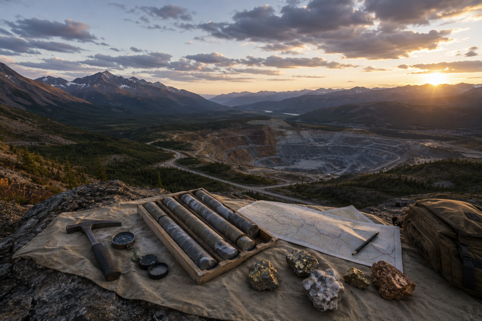 (Image caption) Mining is not an industry that can be accomplished through narratives; geological verification, permit approval, engineering construction, and capital investment all require a long time.
Mining cannot be discovered solely through stories.
Key minerals easily evoke a sense of the times. They are linked to AI, energy independence, national defense and security, the resurgence of American manufacturing, and the competition between the US and Chinese supply chains. These terms naturally attract capital markets.
However, the mining industry is never made simple by grand narratives.
A mine is not a software product that can be rapidly iterated upon. A refining line is not a piece of code that can be deployed in the cloud. Mining projects require geological data, engineering capabilities, environmental permits, acceptance from local communities, roads, electricity, water, equipment, and long-term funding. They must withstand commodity price fluctuations over a long period and face real-world policy, legal, environmental, and social resistance.
If Freedom Metals is to complete truly valuable acquisitions in the future, it cannot simply find a target that can tell a compelling story about a key mineral. It needs to find an asset that can withstand the scrutiny of the public market. Resource grade, location, permitting progress, mining costs, processing capacity, end customers, financing needs, environmental responsibility, and management execution capabilities are all more important than grandiose words in press releases.
Mature financial media should not provide background music for illusions.
We can understand the US's anxiety about supply chain security, and we can also understand the capital market's impulse to find new entry points; however, we cannot directly equate policy enthusiasm with investment value, nor can we portray a SPAC that has not yet completed a merger as a listed company that has already acquired mineral assets.
There are opportunities here, but also illusions.
Opportunities arise from the real demand for materials in AI, batteries, military, and clean energy; from the US's long-term investment in supply chain security; and from the renewed focus on strategic resource platforms in the public market. The illusion, however, comes from the other side: once a mineral is labeled as critical, the market sometimes temporarily forgets the lengthy, expensive, and arduous process of mining.
Mergers and acquisitions are the real test.
The listing of Freedom Metals is just the first page of the story.
The company must find a target within the specified period, complete due diligence, negotiate a valuation that can withstand market scrutiny, persuade shareholders not to redeem on a large scale, make up the cash required for the transaction, complete the regulatory procedures, and finally convince the market that the new company after the merger is not just bearing a name that conforms to the sentiment of the times, but truly possesses verifiable mineral resources, mining permits, processing routes, and the execution capabilities of the management team.
On this path, what Peter Finan and Martin Zinny need to prove is not that they understand the weight of the term "critical minerals," but whether they can negotiate a specific mineral asset into a deal that can withstand long-term validation in the real world.
This is a tedious, slow job that requires patience and the ability to sit on the sidelines. It's a completely different sound from the lively opening bell of Nasdaq.
When the bell rings, a new stock code appears on the trading screen, investors see the price fluctuate, and the media sees a brief news item about the new stock. But what truly determines the fate of this company happens in quieter places: due diligence in the conference room, geological verification at the mining site, licensing documents on the lawyer's desk, redemption options at the shareholders' meeting, and the market's final vote on the merger valuation.
These places may not have an opening bell, but they determine what remains after the bell rings.
 (Image caption) Listing is just the first page of the story. The real test lies in whether the management team can find a suitable target, complete due diligence, and persuade the market to stay.
Money goes in, but assets still need to come out.
GFM's coverage of Freedom Metals' IPO is neither an endorsement nor a premature denial of its potential.
We are concerned with a more specific institutional issue: how can a blank check company that has not yet found a target raise $275 million in 2026, a time when key minerals have become a national security jargon? How much of the options behind this money, including common stock, warrants, trust accounts, redemption mechanisms, and acquisition deadlines, actually give investors, and how much uncertainty is left for the future?
The capital market has already given Freedom Metals a ticket to enter the market.
The board's resume is worth verifying, and the future target still needs to be awaited; the real assets have not yet come to the market.
The next question is whether this company can find a mine worthy of this entry ticket within the stipulated time; whether it can transform the contemporary language of key minerals into verifiable assets, licenses, production capacity, and cash flow; and whether it can deliver an answer that is not just supported by narrative before the patience of the public market runs out.
Nasdaq can give it a ticker symbol first. Trust accounts can give it time first. Investors can give it funds first.
But in the end, the market will still come back to the most basic and unavoidable question: Where are the assets?
Disclaimer
This article provides news and institutional analysis based on company announcements, SEC documents, IPO market information, public policy documents, and third-party materials. It does not constitute investment advice, legal advice, tax advice, or any advice to buy or sell securities.