

Shein paid off $3.5 billion in old debts before its IPO.
—How to absorb the investor protection clauses left over from the $98.2 billion valuation era of a $27 billion IPO?
Shein plans to raise up to $1.77 billion in its Hong Kong IPO, but may have to bear up to $3.5 billion in costs for investor protection clauses left over from the era of high valuations. From $98.2 billion to $27 billion, this prospectus reveals a question rarely seen in the public market: when private valuations fall, who ultimately pays the price?
Bringing up old issues before listing
When a company goes public, it usually brings new capital into the company. Shein's situation this time is more complicated.
On August 24, 2026, this global fast fashion company officially launched its Hong Kong IPO. Based on the current offering price range, the company plans to sell approximately 280 million shares, raising up to approximately US$1.77 billion; if the final price is set at the upper end of the range, the overall valuation will be close to US$27 billion.
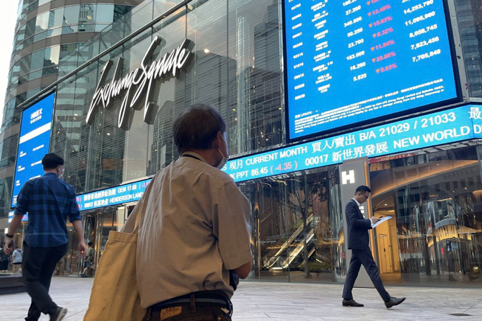 (Image caption) The exterior wall of Exchange Square and the real-time stock price display screen symbolize Shein's official launch of its Hong Kong IPO, marking a shift from high valuations in the private market to repricing in the public market.
Four years ago, the private capital market offered it a different price.
The Series D funding round in 2022 pushed Shein's valuation to $98.2 billion. That was an era when global e-commerce and consumer platforms were still highly valued, and investors were willing to pay high prices for growth rates and believe that a company built on algorithms, flexible supply chains, and cross-border small parcels could maintain a valuation far higher than that of traditional apparel companies for a long time.
Four years later, the prices offered by the public market have become much more subdued. The difference between $27 billion and $98.2 billion is more than $70 billion.
A simple valuation decline is not surprising. There are numerous precedents in global capital markets for private companies to lower their valuations before listing. What's truly worth looking at in Shein's case are a few more pages in the prospectus: some investors who entered the company in the Series pre-D, Series D, and Series D+ rounds received not only shares but also protective clauses that took effect at a lower IPO price.
According to current disclosures, if the final pricing falls within the relevant conditions, Shein's cash, additional share, and other payments for these arrangements could reach close to $3.5 billion. This is an upper limit, not the $3.5 billion cash payment that must be made on the listing day, but it is still close to twice the maximum amount raised in this IPO.
This number is exactly what I paused to read while reading this prospectus.
While preparing to raise up to $1.77 billion from new public market investors, Shein also had to use its own financial resources to deal with contractual obligations left over from the era of high valuations in the private market. This turned what could have been a news story about a "global fast fashion giant listing in Hong Kong" into a more valuable case study of the capital markets.
It brings to the forefront an issue that is often obscured by headline valuation: Is the valuation of a private company simply the price, or does it include the price along with a whole set of investor rights?
The price of $98.2 billion
Looking back to 2022, this situation becomes easier to understand.
During the pandemic, global consumption rapidly shifted online. Shein became one of the most dazzling consumer technology companies in the capital market during those years. Unlike Zara, which relied on a vast global store network, or Amazon, which built a platform covering almost all product categories, Shein combined algorithms, social media traffic, extremely short product cycles, and a Chinese manufacturing supply chain to form a highly data-driven global apparel retail model.
In a market environment with abundant capital and extremely low interest rates, growth itself has a high price.
In 2022, Shein's Series pre-D funding round valued the company at approximately $60.5 billion; later that year, Series D raised the valuation to $98.2 billion; and in 2023, Series D+ fell back to approximately $64 billion.
Rereading these three rounds of financing today, the most important thing is no longer the valuation rankings at the time, but the investment contracts themselves.
Some late-stage preferred shares come with conversion adjustments and other price protection arrangements. If the company ultimately goes public at a valuation significantly lower than the private financing price, the conversion price for the relevant investors can be adjusted, and the company may also need to provide cash or additional shares to mitigate the losses these investors suffer due to the IPO valuation decline.
Such arrangements are not new tools in late-stage private financing. Companies want to maintain a high headline valuation, while investors want protection in case the price falls short of expectations in the next round of financing or IPO. Both parties can re-separate price and risk through preferred stock terms.
What makes Shein special is the significant valuation discrepancy and the sheer size of the company. What were originally arrangements confined to private contracts became a multi-billion dollar public market event during the IPO.
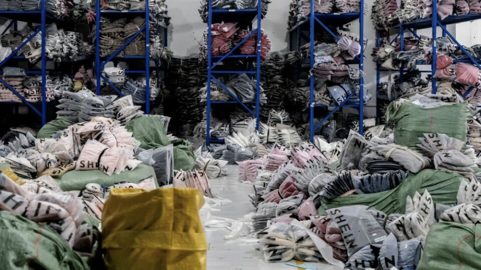 (Image caption) The piles of brand packaging bags and unshipped items in Shein's logistics warehouse reflect the company's core operational characteristics of relying on algorithm-driven, cross-border small parcel models to support its global fast fashion business.
How is $3.5 billion composed?
The currently disclosed arrangements can be roughly divided into two groups.
The first group involves conversion adjustment protection.
If the IPO is completed at the lower end of the current price range, Shein may need to pay up to approximately $2.2 billion in cash, while issuing approximately 19.6 million additional shares to eligible investors without receiving consideration. This is the highest-case scenario calculated based on the current offering price range; the final amount will depend on the final offering price and how the contractual mechanisms are triggered.
The second tranche consists of other payment arrangements previously reached by Shein with some Series pre-D, D, and D+ holders, amounting to approximately $1.33 billion, some of which are paid according to a set schedule and some are linked to the completion of the IPO.
Therefore, the "$3.5 billion" mentioned in the media should not be understood as a traditional debt, nor should it be interpreted as Shein taking out $3.5 billion in cash in one lump sum before the IPO.
A more accurate description would be: This is a set of cash, stock and other compensation obligations triggered by early equity agreements, amounting to nearly $3.5 billion.
This distinction is important.
The core of debt is borrowing and repayment; Shein, on the other hand, faces the risk allocation pre-agreed upon in the equity financing agreement. When the IPO price is lower than the entry price of some late investors, some of the risk returns to the company according to the contract.
Investors who receive the relevant protections include entities associated with Boyu Capital, Tiger Global, General Atlantic, Thrive Capital, Mubadala, and Brookfield; earlier Series A through C+ investors do not enjoy the same arrangements.
For ordinary IPO investors, the most important thing to understand here is not every English legal term, but how losses are redistributed after a price drop.
In 2022, a group of private investors bought Shein at a very high price.
In 2026, the open market will no longer accept that price.
If all investors hold identical common stock, the valuation decline is typically reflected primarily in the value of the shares. However, when preferred stock comes with IPO price protection, conversion adjustments, or other rights, some of the price risk can be transferred back to the company's balance sheet according to the contract.
This is precisely the layer of the Shein case that has the most institutional research value.
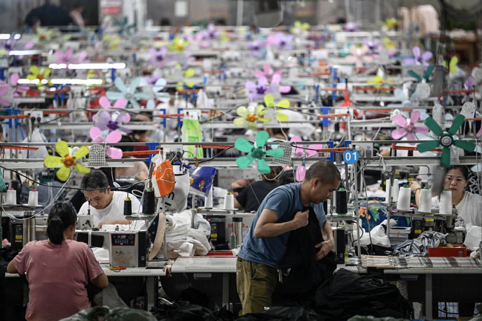 (Image caption) The dense sewing machine production lines and workers in a Chinese garment factory showcase the manufacturing foundation behind Shein's flexible supply chain and extremely short product cycles.
There is a second table for valuation.
Private market valuations can easily create an illusion.
Both companies could announce a "new round of financing valued at $10 billion," and the headlines would appear identical. However, if investors in the first company buy common stock, while investors in the second company simultaneously acquire liquidation preference, anti-dilution rights, IPO price protection, and specific conversion terms, then the economic implications of those two $10 billion figures are not entirely the same.
Headline valuation is the first table.
The investment agreement is the second form.
What professional investors truly buy is a combination of price and rights.
Shein made this distinction very clear today. The $98.2 billion valuation in 2022 once placed the company among the world's most valuable private companies, but that price wasn't isolated. Some of the capital that entered the company at a high valuation demanded additional protection if the IPO price were lower in the future.
When the public market was only willing to repric at about $27 billion four years later, the valuation label from that year had lost its validity, but the contract remained valid.
The market often uses the term "downside protection" to describe this type of arrangement. From an investor's perspective, it provides protection against downside risk; from the company's perspective, it represents the company accepting a portion of the responsibility for future price adjustments.
This is why, when studying the valuation of private companies, simply comparing the headline valuations of the previous and next rounds is far from sufficient.
Besides the price, you also need to read the terms and conditions.
What does the company have to give?
The arrangement of up to $3.5 billion does not mean that Shein "lost" $3.5 billion. It includes cash and share adjustments at different times and in different forms, and the final accounting treatment is subject to confirmation by formal pricing and subsequent financial disclosures.
But for those who are about to become shareholders in the public market, another more practical question is: where else can these financial resources be used?
Shein is still in a period of global business adjustment. Logistics, technology, branding, supply chain, data systems, and compliance all require continuous investment. Following the US's elimination of de minimis benefits for low-cost parcels, its cross-border model faces higher tariffs and fulfillment costs; Europe is also tightening regulations on low-cost cross-border parcels, platform responsibility, and supply chain transparency.
The company's financial performance is also significantly different from that of the period of rapid expansion a few years ago.
In the first quarter of 2026, Shein's revenue grew by approximately 1.1% year-over-year, a significant slowdown. The company recorded a net loss of approximately $99 million, compared to a profit of approximately $395 million in the same period a year earlier. This quarter was also affected by approximately $328 million in accounting adjustments, so the entire loss cannot be simply attributed to a deterioration in core operations; however, slower growth, pressure on profit margins, and rising trading costs are realities that the public market needs to recalculate.
Here's a basic reminder for new investors: just because the IPO price was much cheaper than it was at $98.2 billion doesn't mean the stock itself is cheap.
What you can buy on the open market today is Shein 2026.
It includes today's revenue growth, today's profit margins, today's tariffs and regulations, as well as capital contracts signed a few years ago that are still in effect today.
 (Image caption) Images of container yards, cranes, and aircraft taking off and landing at international ports, reflecting the real challenges faced by Shein's global logistics system after tariff adjustments, the cancellation of the de minimis policy, and rising costs of cross-border trade.
Existing shareholders buy again
There's another set of capital relationships in Shein's IPO that deserves further investigation.
Some existing shareholders, including Boyu Capital, General Atlantic, and Tiger Global, participated in the IPO as both late-stage investors and cornerstone investors. Along with Tencent, Greenwoods, Taikang Life Insurance, and UBS Asset Management, Cornerstone Capital had already secured a portion of the issued shares.
This overlap cannot be simplified to "the money went around in circles and came back."
Existing equity agreements and new share subscriptions are different legal transactions, and the actual investment entity, source of funds, price, lock-up period, and accounting treatment need to be read separately.
From an investment perspective, they are not contradictory.
For existing capital, existing contracts should be executed as agreed, which is a way to manage the risks and returns of previous investments; for new capital, the price of around $27 billion represents a new level, allowing for a recalculation of future returns.
The same investment firm could very well think that $98.2 billion is too expensive, while believing that $27 billion is worth reinvesting.
Institutional capital rarely needs to maintain emotional alignment with a company. It is more concerned with price, rights, risks, and expected returns at different points in time.
This is very evident in Shein.
How much power do new shareholders have?
Beyond price, Shein's IPO also requires reading another table: voting rights.
According to the listing documents and public disclosures, the four co-founders are expected to hold a combined 59.6% stake after the IPO, but control approximately 90% of the voting rights. Shares purchased by public market investors carry only one-tenth of the voting power of the founders' majority-voting shares.
Two concepts must be distinguished here.
59.6% is the percentage of shares held by the economy.
90% is controlled by voting.
For IPO investors, they acquire a portion of the company's future economic gains and also bear risks related to stock price, competition, and operations; however, their influence on the board of directors, major transactions, and other shareholder resolutions is far less than the intuitive impression that their economic interests may give.
The dual-class share structure was not invented by Shein. Large US technology companies such as Alphabet and Meta have long used different forms of super-voting shares, and Hong Kong has also established a WVR system.
What's more worthy of study in Shein is the simultaneous existence of several rights.
Some late-stage private investors obtained price protection.
The founding team retains highly centralized voting control.
New public market investors enter at new valuations, primarily acquiring ordinary economic rights.
The three types of shareholders pay different prices, hold different rights, and bear different risks.
More notably, publicly disclosed information indicates that the founding team's high voting rights arrangement does not have a simple, fixed expiration date. For long-term institutional investors, this extends corporate governance issues beyond the IPO: Under what conditions should control be adjusted if economic shareholding continues to be diluted? How can independent directors function within a highly concentrated voting rights structure? What mechanisms should minority shareholders rely on to protect their interests?
These problems will not disappear after the listing on September 1st.
 (Image caption) Details of Shein brand clothing racks and ready-to-wear displays, showcasing the product and brand image of this fast fashion company driven by data-driven selection and rapid new product launches.
Third listing market
It has been several years since Shein arrived in Hong Kong.
The company initially sought a US listing, then shifted its plans to London, and finally settled in Hong Kong. The three markets did not present the same set of questions for the same company.
In the United States, Shein has long faced political and regulatory scrutiny regarding supply chains, labor, cross-border trade, data, and business relationships with China.
London had hoped to revive its market appeal with a large IPO like Shein, but the listing plan never materialized.
Hong Kong offers a different institutional environment: it has a mature cornerstone investor system and allows for compliant weighted voting rights structures, and Asian capital is also more familiar with Chinese supply chain companies.
But Hong Kong is not an "easy market" without a price. Shein still needs to make much more detailed disclosures than in the era of private companies, and also has to let the public market price the risks of founder control, preferred shares, supply chain, regulation, ESG, and global business.
This is why the Shein case has global value.
It is a company with a supply chain deeply rooted in China, headquartered in Singapore, and serving approximately 160 countries and markets. Its main revenue comes from cross-border consumption, its investors are located around the world, and its regulatory risks span the United States, Europe, and Asia.
When choosing a listing location, these companies are no longer just considering "which exchange can give them a higher valuation".
Regulatory feasibility, political environment, equity structure, cornerstone investors, information disclosure requirements, and listing time all become part of the cost of capital.
Is $27 billion too expensive?
With its valuation dropping by about 70%, the most intuitive reaction is that "Shein has become cheaper."
Open markets typically do not work this way.
Today's investors need to view Shein alongside two types of companies: one is global apparel companies such as Inditex, H&M, and Fast Retailing; the other is e-commerce companies with platform and algorithm attributes such as PDD and Amazon.
Shein falls somewhere in between.
It has a more data-driven supply chain and consumer acquisition capabilities than traditional apparel retailers, but it lacks the diversified revenue structure of Amazon; it exhibits some characteristics of a platform company, with a significant portion of its revenue and profits ultimately still derived from apparel retail.
This makes the valuation method itself highly controversial.
A scenario analysis by Reuters Breakingviews estimated Shein's equity value at nearly $28 billion based on a projected net profit of approximately $1.4 billion in 2027 and a price-to-earnings ratio of 20. This result is quite close to the current IPO valuation, but it relies on two very critical premises: earnings must recover, and the market must be willing to give Shein a valuation multiple close to that of a mature, high-quality consumer company.
That's the problem.
In the first quarter of 2026, Shein's revenue growth was only about 1.1%. The US market was affected by the new tariff regime, competition continued to increase, and regulatory costs in Europe were also rising.
If profits recover, $27 billion could be an attractive repricing.
If growth remains low for an extended period, or if tariffs and compliance costs continue to erode profits, a 70% drop in valuation itself does not provide a margin of safety.
This is also a question that the open market needs to answer next.
Private financing prices may only be updated every few months or even years.
After the company goes public, this answer will change every day.
Contracts during the era of high valuations
If you place Shein's IPO within a longer capital cycle, you'll see a different story.
From 2020 to 2022, global interest rates were low and capital was abundant, allowing growth companies to quickly raise large sums of money. Investment institutions were willing to accept extremely high valuations to enter the most sought-after private companies; companies that wished to maintain their headline valuations could also provide investors with more protection through preferred stock arrangements.
Those contracts appeared to be just details in financing documents at the time.
Four years later, interest rates, trade policies, regulatory environment, and capital preferences have all changed, and the details are beginning to show in prices.
Shein's $3.5 billion protection arrangement deserves to be included in the case study library of IPO regime research. It tells the public market that high valuations for private companies never eliminate risk. The contract merely pre-arranges who bears the risk after a price drop, in what order, and who has the right to demand a readjustment of their investment cost.
I prefer to see this as the most valuable lesson in Shein's prospectus.
The listing bell tells the market that a company has finally become a public company.
The preferred stock terms in the prospectus, which are not easily noticed by ordinary readers, preserve another piece of history: what price the company used to raise funds, what protections investors demanded back then, and how much money is still needed to fulfill those commitments many years later.
The $98.2 billion valuation has been set for 2022.
The price written into the contract still followed Shein to the Hong Kong Stock Exchange.
Disclaimer
This article is based on financial research using publicly available documents and reliable information, and is for informational purposes only. It does not constitute investment, legal, or trading advice. The final pricing and related arrangements for the IPO are subject to the company's official disclosure.