

How OpenAI Changed SB Energy's IPO Pricing
—The tenant economics of $5.5 billion warrants, 20-year leases, and AI data centers
An unpublished IPO draft has brought to light a cost in the AI data center market that is rarely priced publicly: in addition to competing for land, power, and financing, large developers may also need to exchange equity for a few super customers who can commit to several GW of capacity at once.
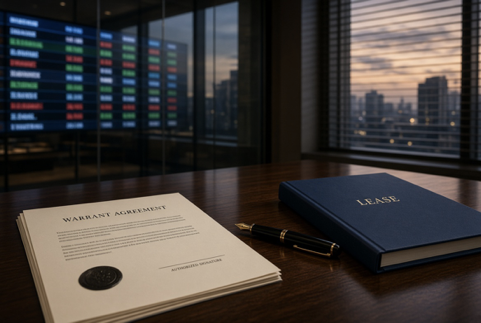 (Image caption) A title deed and a long-term lease are placed side by side on the conference table. What really needs to be repriced for SB Energy's upcoming IPO is how much future equity the company has paid to secure super-tenants capable of committing several GW of capacity at once.
A draft reveals the hidden pricing of super tenants.
SB Energy is preparing for a US IPO, but its official S-1 form has not yet been released. The Wall Street Journal reported on August 31 that its reviewed IPO drafts showed that a batch of warrants offered by SB Energy to OpenAI was valued at approximately $5.5 billion as of the end of June. This arrangement is related to vying for OpenAI to become a tenant of a large AI data center. Reuters subsequently relayed the report but stated that it could not independently verify it. Neither SB Energy nor OpenAI immediately responded to requests for comment.
Therefore, the $5.5 billion figure is still a media disclosure in the unpublished IPO draft and cannot be written into the official listing information confirmed by the U.S. Securities and Exchange Commission, nor can it be interpreted as SB Energy paying $5.5 billion in cash to OpenAI.
However, this figure, yet to be formally confirmed by S-1, is significant because it is not isolated. A network of publicly available capital and business relationships has already formed between OpenAI, SoftBank, Nvidia, and SB Energy, encompassing equity investments, long-term data center leases, AI equipment supply, and credit support. For investors considering purchasing SB Energy stock, these arrangements ultimately boil down to the same question: how much has the company paid to acquire these large clients, and how much sustainable cash flow can these clients generate in the future?
Land and electricity are scarce, and long-term tenants are equally scarce.
Over the past two years, the most common industry narrative surrounding AI data centers has focused on supply shortages. GPU supply is tight, delivery cycles for large transformers are lengthening, grid connection can take years, and regions capable of providing hundreds of MW or even several GW of power at once are even more limited. Following this logic, data center developers who control land, electricity, and grid access should seemingly have strong bargaining power.
Financing large-scale projects, however, offers another perspective.
A multi-GW AI data center campus often requires billions or even more in upfront investment. Before providing funding, banks, private lending funds, and infrastructure investors need to determine who will pay the future rent, the length of the contract, the tenant's creditworthiness, and whether the lease can support long-term debt.
Therefore, clients like OpenAI inherently possess financial value.
In January of this year, OpenAI and SoftBank Group each invested $500 million in SB Energy, totaling $1 billion. OpenAI also selected SB Energy to build and operate a 1.2GW data center in Milam County, Texas. These arrangements have been officially announced by the relevant companies.
OpenAI thus simultaneously holds the dual roles of investor and core tenant. If the $5.5 billion warrants ultimately appear in the public S-1 offering, it will further benefit from future equity appreciation of SB Energy.
This structure is not difficult to understand commercially. SB Energy gains a long-term customer who can help large data centers secure financing, OpenAI acquires computing power capacity, and retains the opportunity to share in some of the platform's appreciation. What IPO investors really need to recalculate is how much equity and other economic benefits are actually required to acquire one dollar of OpenAI rental income.
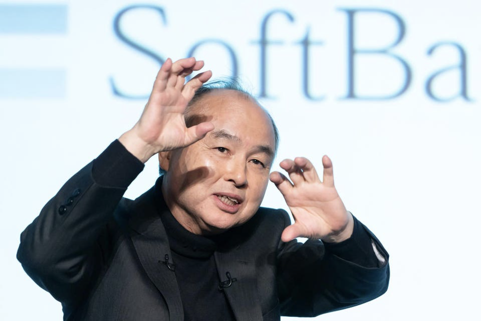 (Image caption) SoftBank Group founder Masayoshi Son delivers a speech in public; the SoftBank logo is visible in the background. SB Energy, SoftBank Group's energy and data center development platform, is preparing for a US IPO and has already secured capital and business partnerships with companies such as OpenAI and Nvidia.
The $5.5 billion in warrants cannot be interpreted as cash expenditures.
Warrants grant the holder the right to acquire shares under specific conditions, and their value depends on the exercise price, term, company valuation, vesting conditions, and other contractual arrangements.
According to a Wall Street Journal report on the IPO draft, OpenAI-related warrants were valued at approximately $3.6 billion when they were first granted in January of this year, and had increased to approximately $5.5 billion by the end of June. Some warrants will gradually vest as SB Energy reaches different market capitalization thresholds after its IPO.
The same draft also reportedly showed that SB Energy's revenue for the first half of 2026 was approximately $140 million, mainly from its existing renewable energy business; its net loss for the same period was approximately $3.2 billion, a significant increase compared to the same period last year, with some of the losses related to changes in the fair value of warrant liabilities.
These figures will remain source-controlled until the official SEC filings are released. However, they are sufficient to remind IPO investors that SB Energy's cost of acquiring large customers may not primarily manifest in cash outlays, but rather in future equity dilution and accounting fluctuations.
After the official S-1 disclosure, one of the most important things for the market to verify will be how many warrants OpenAI has acquired, how the exercise price is set, what the vesting conditions are, and how much the existing shareholders and new IPO shareholders will be diluted if all warrants are exercised.
If a long-term lease requires a large amount of equity in exchange, its economic value cannot be assessed solely based on future rental income.
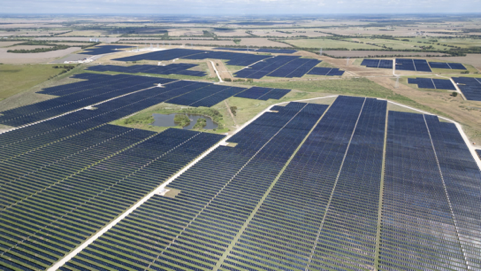 (Image caption) Aerial view of SB Energy's Orion Solar Belt solar farm in Milam County, Texas. This project is part of the company's existing renewable energy assets and is adjacent to a planned 1.2GW data center campus in the same county, demonstrating the asset base of energy developers shifting towards AI infrastructure.
OpenAI exists on both the investment and revenue sides.
The relationship between OpenAI and SB Energy goes beyond that of a typical landlord and tenant.
OpenAI is both a shareholder of SB Energy and a tenant of its large data center. According to a Wall Street Journal report on the IPO draft, SB Energy has also committed to purchasing at least $50 million worth of products and services from OpenAI by 2028, including ChatGPT Enterprise.
This purchase amount is not huge compared to the billions of dollars invested in data centers, but it still illustrates that funds do not flow in only one direction from tenants to data center companies.
For SB Energy, OpenAI brings rental income, project financing credit, and an IPO narrative; for OpenAI, SB Energy provides long-term computing capacity, and OpenAI may share in SB Energy's future equity value through warrants, while also selling some enterprise software services to it.
Such highly overlapping transaction arrangements may not be problematic, but they increase the difficulty of analyzing revenue quality. Investors need to break down market-generated rents, equity incentives, cross-purchasing, and credit support to understand how much independent business demand each dollar of revenue actually represents.
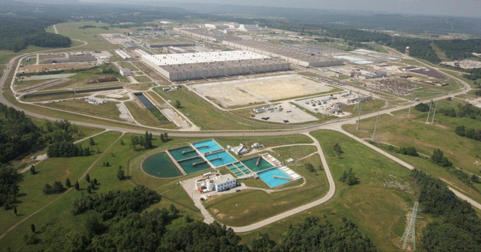 (Image caption) Aerial view of the former Portsmouth gas diffusion plant site of the U.S. Department of Energy in Pike County, Ohio. SB Energy is developing the PORTS-Pike Technology Campus on this site, with OpenAI as a long-term tenant and Nvidia providing equipment and credit support. It is a core site of a large AI data center financing structure.
Nvidia links device supply with credit support
Ohio's PORTS-Pike Technology Campus further complicates the entire capital relationship.
On August 17, Nvidia officially announced a $1.5 billion investment in SB Energy, becoming the primary AI computing infrastructure provider for the PORTS-Pike project. The OpenAI plan utilizes up to approximately 8 IT-GW of capacity, with approximately 4.25GW initially backed by Nvidia credit, and Nvidia having the option to support an additional approximately 3.8GW.
According to filings with the SEC, Nvidia's initial warranty payment obligations could be capped at $105 billion.
This figure is easily misinterpreted. It does not represent that Nvidia has already paid $105 billion, nor does it mean that the company expects to incur losses of the same scale. The relevant guarantee is linked to specific data center leases, and Nvidia may only assume corresponding payment responsibilities after the project meets contractual requirements, the lease obligations take effect, and a breach of contract occurs as stipulated. Moreover, as OpenAI fulfills its lease obligations normally, the guarantee risk will gradually decrease.
Even so, the $105 billion cap still demonstrates that funding for AI infrastructure is expanding rapidly.
In this structure, Nvidia acts as a chip and AI equipment supplier, an investor in SB Energy, and provides credit support for some large tenants. After the data center was built, OpenAI used a large number of Nvidia devices within it.
This arrangement can improve project financing capabilities and accelerate the construction of data centers, but it also makes capital relationships within the industry closer.
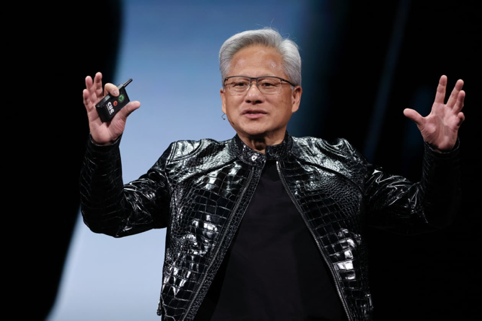 (Image caption) Nvidia CEO Jensen Huang speaks at a public event. In August 2026, Nvidia announced a $1.5 billion investment in SB Energy and provided lease-linked credit support for the PORTS-Pike project, while also becoming the primary AI computing infrastructure supplier for the campus.
"Revolving financing" needs to be assessed using cash flow.
Wall Street has recently begun using the term "circular financing" to describe the increasingly complex investment and procurement relationships within the AI industry.
Chip companies invest in data center developers, AI companies invest in data centers and become tenants, equipment suppliers then provide credit support, and long-term leases are subsequently used to obtain new project financing.
This arrangement itself does not prove that demand is distorted. Equipment supplier financing, customer advance payments, minimum purchase commitments, and credit enhancement arrangements have long existed in energy, aviation, and large industrial projects. Large infrastructure projects involve multiple parties sharing capital and risk, which is inherently part of project finance.
What we really need to be wary of is the lack of transparency.
After SB Energy goes public, the market needs to be able to distinguish between the actual rental payments made by end customers, the capital and credit support provided by shareholders and suppliers, and the warrants and other incentive costs incurred by the company to acquire these customers. Only by separating these three parts can investors determine how much of the demand for data centers comes from end users and how much relies on mutual capital support within the industry chain.
Ultimately, an IPO must address the quality of revenue.
SB Energy has publicly disclosed that it has accumulated more than $19 billion in project capital, with approximately 5GW of power assets already in operation or under construction, and several AI data centers under construction.
These figures can show the scale, but they cannot answer the question of how much a company is worth on their own.
Another set of figures that the public market needs is even more important: how much of SB Energy’s future data center revenue OpenAI will account for, whether the lease has a minimum payment obligation, how the early termination clause is set, how much capital is needed for land, power generation, transmission and data center construction, how much financing costs are reduced by Nvidia’s credit support, and how much common stock will be diluted when all OpenAI warrants vest.
These data collectively determine the quality of income.
If a 20-year lease provides a stable, financeable, and highly profitable cash flow, then the substantial equity stakes may ultimately prove to be a reasonable customer acquisition cost. Conversely, if AI computing efficiency improves rapidly in the future and actual capacity demand is lower than currently projected, the large amounts of equity paid out by data center companies could become extremely expensive.
Currently available information is insufficient to determine which scenario is closer to the future.
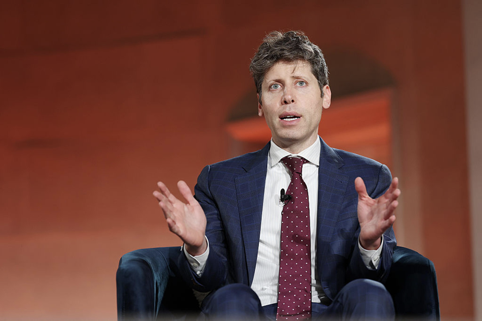 (Image caption) OpenAI CEO Sam Altman being interviewed in public. OpenAI is also an investor in SB Energy, a tenant of large data centers in Texas and Ohio, and reportedly holds substantial warrants related to attracting super-tenants, forming the core of cross-capital and tenant economics.
SB Energy is redefining the asset structure of energy companies.
SB Energy, which originally focused on large-scale solar and energy storage projects, is now rapidly adding data centers to its portfolio.
This transformation has a strong industrial logic.
The core assets of large-scale AI data centers are no longer just buildings. Land, grid connection, power generation, transmission, backup energy, cooling, and long-term project financing must be acquired simultaneously, and energy developers already have experience in many of these aspects.
SB Energy is now positioned between energy and computing power.
OpenAI provides long-term demand, Nvidia provides equipment and some credit support, SoftBank provides group capital, and SB Energy is responsible for organizing land, energy, engineering, and financing into an infrastructure that can operate long-term.
This makes its IPO more worthy of study than typical data center listings.
Once the S-1 is officially released, the market will have its first opportunity to see, relatively completely, how the capital structure of this AI infrastructure is reflected in the financial statements.
The $5.5 billion in warrants is just the first figure that needs to be broken down.
More importantly, how much return on capital can SB Energy actually generate after factoring in 20 years of rent, financing costs, power investment, and future equity dilution?
Over the past two years, the AI data center market has demonstrated that land, electricity, and chips are highly valuable.
SB Energy's IPO may give the public market a clearer view of the price of a fourth type of scarce asset for the first time:
A super tenant capable of committing several gigabytes of capacity at once, supporting project financing, and altering the company's IPO narrative.
Disclaimer
Some key information in this article comes from a Wall Street Journal report on SB Energy's yet-to-be-released IPO draft; the relevant content is still pending confirmation from official SEC filings. This article is for news research and IPO information reference only and does not constitute investment, legal, or tax advice.