

Oura IPO: $60.77 million in net profit, but why did common shareholders lose $924 million?
5 million members, 89% gross profit margin from membership, and $1.17 billion in share buybacks before the IPO.
Two profit and loss statements for a single ring: the company earned $60.77 million, but common shareholders reported a loss of $924 million. Each smart ring, priced at several hundred dollars, connects 5 million paying members, boasts an 89% gross margin in membership revenue, and, according to the company, generates nearly 42 billion hours of longitudinal biometric data. Now, Ora Inc. is preparing to bring this business model to Nasdaq.
Two sets of profit figures reveal the capital structure before the IPO.
When Oura prepared to list on the U.S. capital market, it presented investors with a seemingly impressive financial report: for the nine months ending June 30, 2026, the company's revenue was $1.2145 billion, a 74% increase year-over-year, and GAAP net income rose from $1.57 million to $60.768 million. However, in the same S-1 filing, another figure was equally striking—after including $985.023 million in "deemed dividends" paid to holders of redeemable convertible preferred stock, the net loss attributable to common shareholders reached $924.255 million, with a basic and diluted loss per share of $89.53.
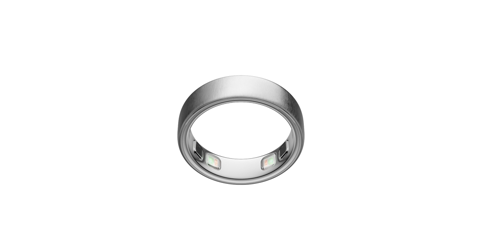 (Image caption) A close-up of the fifth-generation Ora smart ring, showing the sensing modules on the inside used for measuring heart rate, blood oxygen, and body temperature. The article points out that as of the end of June 2026, hardware still accounted for about 80% of the company's total revenue, and ring sales are the entry point for membership expansion, directly determining gross profit margin and supply chain costs.
These two sets of figures are not contradictory. The former reflects Ora's profitability at the level of daily operations, while the latter incorporates the accounting impact of pre-IPO share buybacks on the equity of different classes of shareholders. Therefore, Ora's IPO cannot be viewed from the outset simply as a consumer technology story of a "smart ring company going public." It also involves hardware, subscription revenue, health data, AI, and how a company that has undergone multiple rounds of private financing can restructure shareholder liquidity before entering the public market.
Oura Inc. filed Form S-1 with the U.S. Securities and Exchange Commission on September 3, 2026, planning to list on the Nasdaq Global Select Market under the ticker symbol "OURA". The company originated in Finland in 2013 and completed its relocation and restructuring to Delaware, USA, in March of this year, with Oura Inc. becoming the parent company. This marks the first time Oura has publicly examined its complete financial structure, membership economy, data assets, and pre-IPO equity arrangements.
Eighty percent of income still comes from rings
Oura's current revenue structure still has a very strong hardware component. In the nine months ending June 2026, the company sold 3.1 million rings, compared to 1.8 million in the same period last year, representing a 75% increase; hardware revenue was approximately $974 million, accounting for about 80% of total revenue, while membership revenue was $240.5 million, accounting for about 20%.
This structure means that Ora cannot be fully understood as a software or subscription company today. It still needs to procure titanium, chips, and sensors, bear the costs of manufacturing, assembly, logistics, retail, and warranty, and continuously launch new generations of products. On May 28th of this year, the company released the fifth-generation Ora Ring 5, further demonstrating that hardware updates remain a crucial entry point for acquiring new customers and maintaining brand competitiveness.
The impact of product upgrades on financial performance is already reflected in gross margin. For Ora's fiscal year ending September 30, the company's overall gross margin decreased from approximately 65% in fiscal year 2024 to approximately 52% in fiscal year 2025, primarily due to the higher unit manufacturing costs at the initial launch of the Ora Ring 4. In the nine months ending June 30, 2026, the overall gross margin rebounded to 55%, compared to 51% in the same period of the previous year. The company attributed this improvement mainly to lower unit manufacturing costs and lower warranty rates.
Therefore, Ora's valuation cannot be based solely on membership growth and its AI narrative. Before acquiring new members, the company typically still needs to manufacture and sell a batch of physical rings, and hardware costs, product upgrades, and supply chain management will still directly impact the company's profitability.
 (Image caption) Users wear the ring and view their Readiness and sleep scores in the Ora app. The prospectus reveals that membership revenue reached $240.5 million in nine months, with a gross margin of 89%, and approximately 63% of new members opting for annual subscription plans, indicating that the subscription business is changing the hardware company's economic structure.
Where does the $985 million in "deemed dividends" come from?
The part of this S-1 that needs the most careful reading is the capital structure adjustment after net profit.
For the nine months ended June 30, Ora recorded GAAP net income of $60.768 million. Full-year net income for fiscal year 2025 is only about $12,000, compared to $3.649 million in fiscal year 2024, indicating that the company's profitability is indeed improving from an operational perspective. However, S-1 also recognized a deemed dividend of $985.023 million.
This $985 million is not actual cash payment for preferred stock repurchases, but rather a "deemed dividend" arising from accounting treatment. Oura explained in the notes to the financial statements that the company treats the repurchase of redeemable convertible preferred stock in a manner similar to redemption; when the actual repurchase price paid exceeds the carrying amount of the relevant preferred stock, the excess is recognized as a deemed dividend when calculating profit or loss attributable to common shareholders.
Following this adjustment, Ora's net profit of $60.768 million turned into a net loss of $924.255 million on a common stockholder basis. This was not due to poor ring sales, a sudden out-of-control R&D expenditure, or the company burning through nearly $1 billion in nine months; in fact, operating activities generated a positive cash flow of $328 million during the same period, compared to $135.3 million in the same period last year.
What truly needs to be understood is that Ora conducted a substantial share buyback prior to its IPO. For the nine months ending June 30, the cash flow statement showed that the company used approximately $1.1729 billion in cash for buybacks of common stock and redeemable convertible preferred stock, while net cash outflows from financing activities were $741.8 million during the same period. The company also drew $375 million from its revolving credit facility, disclosing that the borrowings were primarily used for share buybacks and other general corporate purposes. As of the end of June 30, Ora held approximately $371.8 million in cash and cash equivalents, with total debt of approximately $380.1 million.
These figures demonstrate that Ora had already undertaken a substantial shareholder liquidity arrangement prior to its IPO. For prospective public market investors, this is just as noteworthy as revenue growth and member retention.
Some early shareholders had already secured liquidity before the IPO.
S-1 disclosed several identifiable share repurchases. From October 7, 2025 to March 5, 2026, the company repurchased common stock and redeemable convertible preferred stock from certain shareholders at prices ranging from $25.69 to $40.60 per share, for a total consideration of approximately $105.9 million. From March 23 to April 30 of this year, the company entered into deferred settlement repurchase agreements with certain investors, involving more than 1.17 million common shares and more than 6.93 million redeemable convertible preferred shares, at prices ranging from $53.57 to $56.25 per share, for a total consideration of approximately $437 million.
In February of this year, Ora's predecessor, Ora Health Oy, repurchased approximately 1.618 million Series B preferred shares from an entity affiliated with Forerunner Ventures for approximately $65 million. Prior to the IPO, the Forerunner-related entity remained a shareholder of Ora with more than 5% ownership, and Forerunner Managing Partner Eurie Kim also served on Ora's board of directors.
The timing, delivery method, and accounting standards of these transactions are not entirely consistent, so the total repurchase amount for the entire period cannot be simply summed up and taken as the total repurchase amount for the whole period; the $1.1729 billion listed in the nine-month cash flow statement is still the most reliable and consistent standard.
But at least one thing is very clear: some of Ora's early shareholders did not wait for the IPO to gain liquidity for the first time. This arrangement is not uncommon for established private companies before they go public, and it cannot be directly interpreted as early investors withdrawing. What is really important to new shareholders is how much capital has already flowed to existing shareholders before the IPO, how many existing shares will be sold in the IPO, and at what price public market investors will take them in.
 (Image caption) A typical scenario of wearing a smart ring continuously during sleep at night. Oura claims that the platform has accumulated nearly 42 billion hours of longitudinal biometric data and positions the ring as a record of a personal health system; this is the core scenario where the company binds hardware, membership, and AI health models together.
An 89% gross profit margin among members transformed the company's economic structure.
If hardware still determines Ora's current revenue scale, then its membership business will determine whether it can obtain a valuation higher than that of ordinary consumer electronics companies in the future.
For the nine months ending June 30, Ora's membership revenue reached $240.5 million, a 121% increase from $108.8 million in the same period last year, significantly higher than the company's overall revenue growth rate of 74%; the gross margin of the membership business reached 89%. In the US market, Ora Membership is priced at $5.99 per month or $69.99 per year, and the company disclosed that approximately 63% of new members directly choose the annual plan.
Hardware requires covering the costs of materials, manufacturing, transportation, retail, and warranty, while the cost of adding a new service for a member who has already purchased a ring to continue subscribing is much lower. Oura also clearly describes its business model in its prospectus: the company hopes to cover customer acquisition costs during the purchase phase with hardware sales, and then increase customer lifetime value through high-margin, recurring membership revenue.
As of the end of June, Ora had 5 million paid members, with a 12-month weighted average paid member retention rate of approximately 85%. By the end of fiscal year 2024, the number of paid members had dropped to only 1.3 million. This rapid increase in membership in less than two years has enabled Ora to develop a profit structure different from traditional hardware companies: the ring system is responsible for bringing in new users, while the membership system extends the time it takes for each user to generate revenue.
If membership growth, retention, and the 89% gross margin can be maintained, the subscription business, which currently accounts for only 20% of total revenue, is likely to contribute more to overall profitability and free cash flow in the future than its current revenue share. This is a key reason why Ora has the potential to achieve a higher valuation multiple.
42 billion hours of health data: value and limitations coexist.
Another long-term asset that Oura hopes the capital markets will see is data.
The company disclosed that as of June 30, 2026, the platform has accumulated nearly 42 billion hours of longitudinal biometric data, covering information such as heart rate, heart rate variability, respiratory rate, body temperature, sleep stages, menstrual cycle and activity, and tracking more than 50 health and wellness indicators.
This creates a key difference between Ora and ordinary consumer electronics. With ordinary hardware, most of the transaction value is realized after the product is sold; however, the Ora Ring continuously generates new time series as the user wears it daily. After one year of use, the system establishes a one-year personal physiological baseline; with continued use for several years, longer-term changes in sleep, recovery, activity, and other physiological parameters can be observed.
Oura therefore describes its platform as a personal health system of record and discloses that its self-developed health foundation models are trained using long-term biometric data. For AI, this long-term, continuous data with a personal baseline has potential value; however, the scale of 42 billion hours of data cannot be simplified to 42 billion hours of corporate assets that can be freely sold or monetized at will.
Oura's S-1 filing lists regulatory risks covering HIPAA, the California Consumer Privacy Act, the Washington My Health My Data Act, and other laws concerning health data, biometrics, and consumer privacy. HIPAA does not automatically apply to all consumer data collected by Oura; obligations arise only in specific scenarios where Oura handles protected health information in a regulated capacity, such as as a business associate. Newer state laws, such as the Washington My Health My Data Act, further extend the protection of some consumer health data that was not originally covered by traditional HIPAA.
Therefore, a more accurate statement is that Ora has established and controls a long-term health data infrastructure comprised of rings, apps, and collaborative systems, while users remain protected by rights regarding data access, deletion, consent, and usage restrictions under various legal frameworks. This data can enhance the value of products and AI models, but how the company can use it still depends on the law, contracts, and users' continued trust in the platform.
 (Image caption) Exterior wall of the Nasdaq MarketSite in Times Square, New York. Oura Inc. has filed Form S-1, planning to list on the Nasdaq Global Select Market under the ticker symbol ORA; the public market will determine whether it is considered a hardware company, a subscription company, or a personal health platform.
AI is pushing Ora into more sensitive areas of health decision-making.
Oura has clearly incorporated AI into its product development strategy. According to its S-1 filing, the company currently uses its own developed models, finely tuned open-source models, and large language models provided by OpenAI, Anthropic, and Google. Agreements with these three companies primarily involve usage-based or subscription-based pricing, with no significant revenue sharing, exclusivity arrangements, or purchase commitments.
Features like Oura Advisor and Ora Women's Health Expert are changing the relationship between users and data. Early wearable devices primarily answered measurement questions like "How long did you sleep last night?" and "How many steps did you take today?" New AI features are beginning to try to explain why recent sleep, recovery, stress, and other physiological states differ from an individual's usual levels.
If the product moves closer to questions like "whether a certain change requires medical intervention," Ora's responsibilities will increase significantly. There are different regulatory requirements for consumer health, health advice, and medical diagnosis, and Ora has already listed AI output errors, model bias, third-party models processing personal information, and data security as post-IPO operational risks.
This is also the biggest difference between health data and ordinary internet data. A wrong product recommendation usually only affects consumer choices, but a wrong health judgment can affect whether a person seeks medical help in a timely manner. If Oura wants to improve its position in health decision-making, it must simultaneously bear higher costs in terms of accuracy, privacy protection, and oversight.
IPOs simultaneously serve growth capital and equity liquidity
Oura has already started to make a profit and has positive operating cash flow, so this IPO is not a typical case of "insufficient cash and forced financing".
The company still needs capital to support R&D, AI, new products, inventory, retail network and international expansion, but the S-1 statement provides a more complete description of the purpose of the IPO: Ora wants to increase its capital size and financial flexibility, establish a public trading market for its common stock, and allow the company and its shareholders to access the public equity market.
The proceeds are expected to be used for technology development, working capital, operating expenses, capital expenditures, and withholding tax obligations arising from the net settlement of certain RSUs. The company also stated that no specific project use has been designated for most of the net proceeds, and management will retain considerable discretion in the use of the funds.
When these arrangements are considered together with the more than $1.1 billion share buyback prior to the IPO, the capital function of Ora's IPO becomes clearer: the company needs new growth capital, as well as to establish a public market price and continuous liquidity for a company that has already undergone multiple rounds of private financing and has a complex shareholder structure.
The final capital allocation table is still missing.
The preliminary S-1 filing has confirmed that both the company itself and selling stockholders will sell common stock, and Ora will not receive proceeds from the sale of shares by existing shareholders. However, as of now, the IPO price range, the number of newly issued shares, the number of existing shares sold, and the final amount of funds received by each type of shareholder have not been fully disclosed.
Therefore, the most crucial question regarding the IPO's capital allocation remains unanswered. How much of the raised capital will actually go to Ora? How much will flow to existing shareholders? How much will the founding team and management sell? How will the shareholdings of Fidelity, Forerunner, and other private market shareholders change? Will control be redistributed after the IPO? And what valuation will the public market ultimately assign to Ora?
Bloomberg News previously reported, citing sources familiar with the matter, that Ora and some existing shareholders sought to raise up to $3 billion through an IPO, with a potential valuation exceeding $16 billion. Some existing investors may have sold a significant number of shares. This is still market information prior to the official pricing and should not be considered finalized IPO terms.
A verifiable historical benchmark is that Ora's most recent large private funding round raised over $900 million, led by Fidelity Management & Research, valuing the company at approximately $11 billion. This $11 billion valuation is based on the established private market price, while the $16 billion and above valuation is currently only a pre-IPO estimate. The final valuation will only be calculated after the official price range, number of shares, and fully diluted equity are disclosed.
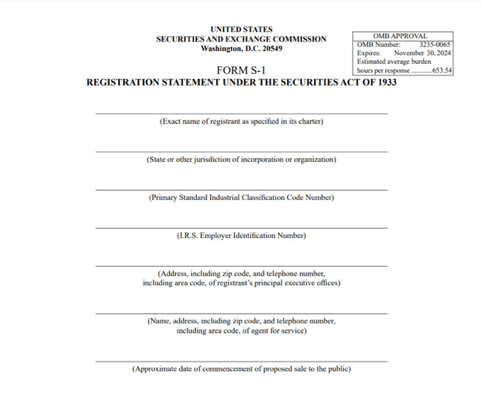 (Image caption) Cover format of the U.S. Securities and Exchange Commission Form S-1 registration statement. Oura's two sets of profit figures—net profit of approximately $60.77 million on a corporate basis and a loss of approximately $924 million on a common stockholder basis including deemed dividends—both come from this IPO prospectus and are the starting point for understanding pre-IPO share buybacks and capital allocation.
Ultimately, the market needs to determine what kind of company it is.
The reason Oura's IPO is worth dissecting is largely because it lacks a clean, comparable company classification.
It still possesses the financial characteristics of a consumer electronics company, as about 80% of its revenue comes from hardware, and product upgrades, manufacturing, supply chain, and warranty costs directly impact profits; it also exhibits the characteristics of a subscription company, as 5 million paid members, a 12-month weighted average retention rate of about 85%, and a membership gross margin of 89% are making recurring revenue increasingly important; and its nearly 42 billion hours of vertical biometric data, AI health models, and the potential for future connections with medical, pharmaceutical, insurance, and other health services are gradually bringing it closer to becoming a digital health platform.
Pre-IPO share buybacks add a governance and capital allocation issue to these three valuation models. The company recorded a net profit of $60.77 million over nine months, but the accounting treatment resulting from the buyback of redeemable convertible preferred stock generated $985 million in deemed dividends, turning the profit attributable to common shareholders into a loss of $924 million. This did not change Ora's operating profitability, but it made it necessary for new shareholders to understand how the company allocated capital before the IPO and what different classes of shareholders had already acquired.
To understand Ora in a way that gets closer to its essence, perhaps we can focus on the users. Today, 5 million people are willing to wear a sensor on their finger long-term, allowing the same system to continuously record their sleep, heart rate, activity, and other physiological changes, and are willing to continue paying for analysis and health insights. How long this relationship lasts will affect the value of membership revenue; whether users continue to trust Ora to properly handle this highly private data will determine how far data and AI can go.
Only after the price range and the number of new and existing shares are announced will the market answer this question for the first time with a real, publicly available price: does it see Ora as a hardware company, a subscription company, or an emerging personal health platform?
Disclaimer
This article is based on publicly available regulatory documents and reliable media materials as of September 6, 2026, and is for news research and informational purposes only. It does not constitute any securities investment, legal, tax, or medical advice. The Oura IPO price, share offering, and shareholder sale arrangements are subject to change and should be based on the final, effective prospectus filed with the SEC.