

After the bell tolls, who will enter the capital market?
FortuneX, Tiffany Xu, and key questions yet to be answered in public documents
FortuneX has completed an $86.25 million initial public offering, with approximately $87.39 million in trust accounts; however, it has not yet revealed in public filings which company it will merge with. On August 20, 2026, Tiffany Xu, in her capacity as "President," rang the Nasdaq closing bell for FortuneX; existing public filings have not specified the entity to which this title belongs, nor have they disclosed her position, equity, or transactional relationship with FortuneX.
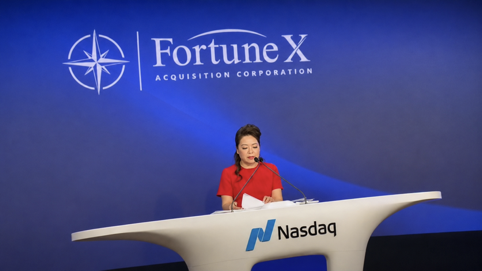 (Image caption) Tiffany Xu attended and addressed the closing bell-ringing ceremony of FortuneX Acquisition Corporation (Nasdaq: FXACU) at the Nasdaq MarketSite in New York on August 20, 2026.
The bell rang, but the answer remained elusive.
On August 20, 2026, the closing bell rang at the Nasdaq MarketSite in Times Square, New York. FortuneX Acquisition Corporation (Nasdaq: FXACU) held its post-IPO bell-ringing ceremony. The Nasdaq website states that Tiffany Xu rang the closing bell in her capacity as "President."
This was a real, open, and symbolic moment in the capital markets.
Meanwhile, FortuneX's filing with the U.S. Securities and Exchange Commission also reveals another equally important fact: this Cayman Islands-incorporated company has no operating history, no operating revenue, and has not disclosed any identified business merger targets. It is a Special Purpose Acquisition Company (SPAC).
Tiffany Xu's appearance on the clock tower creates a compelling intersection between this undisclosed SPAC transaction and the development narrative of the Chinese wealth management platform, drawing public attention. The nature of this intersection remains unclear in existing documents.
SPACs first go public, then seek mergers with other companies. Public investors buy units, and the funds go into a trust account; the management team then selects, negotiates, and completes a transaction within a limited period. What investors are buying at this point is not a mature company with existing revenue and cash flow, but a capital arrangement with redemption rights, warrants, and time restrictions.
FortuneX has completed its fundraising; the next steps have not yet been announced.
$86.25 million raised: What does FortuneX own now?
FortuneX was founded on February 16, 2026, and completed its initial public offering (IPO) on May 26. The company initially offered 7.5 million units at $10 each, raising $75 million. The underwriters subsequently exercised their over-allotment option of 1.125 million units, increasing the total offering to 8.625 million units and raising a total of $86.25 million.
Each unit consists of one common stock and half a redeemable warrant. After the unit split, the common stock will trade in FXAC and the warrants in FXACW. Two half warrants constitute one full warrant; each full warrant entitles the holder to purchase one common stock at US$11.50 per share, but is not exercisable until 30 days after the completion of the initial business combination.
As of June 30, 2026, FortuneX's quarterly report showed that its trust account held $87,399,637, with 8,625,000 publicly traded shares available for redemption. Net income for the quarter was $182,711, primarily from interest income generated from trust investments, rather than from operating revenue.
This sum of approximately $87.4 million has not yet been invested in any specific business ventures, nor has it been linked to any disclosed acquisition targets. It awaits a business merger.
FortuneX is required to complete the initial business merger by May 26, 2027. If this is not achieved, the company may seek shareholder approval for an extension; if such an extension is not granted, or if the transaction is ultimately not completed, the public shares will be redeemed, and the warrants may become worthless.
Therefore, FortuneX's future is not determined by the bell, but by a transaction document that has not yet been released: who the merger target is, what the valuation is, how much cash will be left after the redemption, whether additional financing is needed, and whether the merged company can withstand continued scrutiny from the public market.
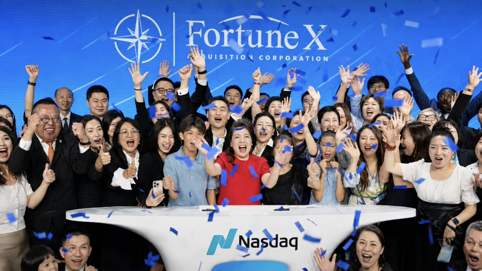 (Image caption) Tiffany Xu and the FortuneX Acquisition Corporation team pose for a photo to celebrate the closing bell ceremony at the Nasdaq MarketSite in New York on August 20, 2026.
$25,000 Founder Shares: How SPAC Incentives Work
FortuneX was founded by FortuneX Investment Partners Limited. The prospectus discloses that Daniel M. McCabe controls the founders and has voting and disposal rights over his shares. McCabe also serves as Chairman and CEO of FortuneX, and is responsible for key financial and accounting functions.
The sponsors acquired 3,694,429 founder shares for $25,000, at an average cost of approximately $0.0068 per share. The arrangement was designed to allow the sponsors to hold approximately 30% of the common stock interest after the public offering, excluding private placement units.
If we roughly compare it at $10 per share, the nominal value of these founders' shares is approximately $36.94 million, while the original cost was $25,000. The shares are subject to lock-up periods, transaction completion, and market price, and cannot be simply viewed as immediate gains; however, it clearly presents an economic reality: once a business merger is completed, the founders' equity can generate considerable value.
FortuneX also noted in its prospectus that the low-cost founder shares could significantly dilute public shareholders. Even if the combined company's share price is lower than the $10 initially paid by public investors, the founders may still receive a return from their founder shares.
This is not a moral judgment of any individual, but rather a publicly disclosed interest structure within the SPAC system.
Before a transaction occurs, who is taking the risk and who is waiting for the return?
FortuneX's prospectus cites McCabe and his board team's SPAC experience as a basis for seeking transaction opportunities. The document also discloses that McCabe and some of the directors hold director or executive positions in other SPACs; McCabe is listed as a director of several SPACs, and Robert Labbe also has SPAC management and board experience.
These experiences can constitute part of trading expertise, but they do not guarantee future trading quality. For investors, opportunity allocation and conflict of interest management are more important.
When the same executive or director is involved in multiple SPACs seeking targets, which company should potential transaction opportunities be submitted to first? How should time and attention be allocated? How should priorities and conflicts of interest between different companies be handled?
FortuneX has acknowledged in its prospectus that management may currently or in the future have fiduciary, contractual or other obligations to other entities, and may be required to offer some business combination opportunities to other entities first.
Upon completion of the IPO, the sponsors subscribed for an additional 297,500 private placement units for a consideration of US$2.975 million; upon completion of the over-allotment option, they will subscribe for an additional 15,000 private placement units for a consideration of US$150,000, totaling US$3.125 million. The company will also pay the sponsors a monthly administrative and office service fee of US$15,000. Working capital loans of up to US$1.5 million provided by the sponsors, management, or their affiliates may be converted into private placement units at US$10 per unit upon completion of the business combination.
Underwriter Polaris Advisory Partners also has a deferred underwriting fee related to the completion of the transaction: $3.75 million at the initial IPO size; up to $4.3125 million upon full exercise of the over-allotment option. This fee is, in principle, payable from the remaining funds in the post-redemption trust account upon completion of the business combination.
Public shareholders, promoters, and underwriters are not in the same position. Public shareholders can choose to redeem their shares during the merger vote; the founders' shares and private placement units are highly correlated with the completion of the transaction; and deferred underwriting fees are also contingent on the transaction being finalized.
If a merger target emerges in the future, the market should not only look at the most prominent "enterprise value" in the press release. What needs to be calculated is: how much cash will actually be left after the redemption, whether PIPE or debt financing will be introduced, how much dilution will be caused by the founders' shares and warrants, how deferred underwriting fees and advisory fees will be paid, and how much equity in the new company will the original shareholders of the target company acquire.
These figures will determine how much available cash the merged company will have, how much dilution it will suffer, and whether the transaction will create sustainable value for public shareholders.
 (Image caption) Exterior of the Nasdaq MarketSite in Times Square, New York. Fortune X will hold its closing bell ceremony here on August 20, 2026.
Tiffany Xu rings the bell: a public event, several questions yet to be answered.
Nasdaq's official website confirmed that Tiffany Xu rang the closing bell for FortuneX on August 20. The page refers to her as "President" but does not specify the legal entity to which this title belongs.
Meanwhile, Tiffany Xu's name is not listed among the directors and senior management in FortuneX's public prospectus, post-IPO 8-K, and quarterly reports. Daniel M. McCabe remains the chairman and CEO in the company's public filings.
The most accurate description at this stage is: Tiffany Xu attended and hosted FortuneX's Nasdaq closing bell-ringing ceremony; she has a publicly visible relationship with FortuneX.
The questions thus become more specific: To which legal entity does the "President" on the Nasdaq page belong? Does she have a disclosable position, shareholding, advisory, or contractual relationship with FortuneX or its founders? Have Sky Vision, WeTrust, Mutual Wealth Group, or their affiliates ever contacted FortuneX, signed letters of intent, or entered into formal business merger negotiations?
A photo of a bell-ringing ceremony cannot replace legally mandated disclosure; proximity in time cannot supersede a transaction agreement.
When a SPAC that is still looking for a merger target and a person who has long appeared in public events and brand narratives of Chinese wealth service platforms appear on the Nasdaq bell tower at the same time, the market will naturally expect clearer information rather than filling the gap with rumors.
The value of mutual wealth should not be understood solely by insurance companies.
The focus of this article remains FortuneX, not the American mutual wealth group.
However, Tiffany Xu's IPO provides an unavoidable backdrop for understanding this suspenseful aspect of the capital markets. Based on the direction presented in the company and event materials, the platform is attempting to integrate insurance, real estate, brokerage networks, family wealth services, training, technology tools, and branding activities into a unified development narrative.
The integration of WeTrust Realty, JC Pacific, Maxreal Realty, and BQ Realty, according to relevant activity materials, involves broker networks, platform support, marketing, training, technology tools, and legal support. Internal activity information also uses capital market terminology such as equity incentives, Nasdaq targets, and platform growth.
These documents can prove that the platform is describing itself in this direction, but they cannot automatically prove that the relevant assets, licenses, revenues, technology systems, legal services, or merger arrangements have been integrated under a unified holding structure.
For this reason, Mutual Wealth deserves to be examined independently, taking into account its corporate structure, licensing boundaries, revenue sources, and governance mechanisms.
The needs of Chinese immigrant families regarding insurance, housing, children's education, taxation, trusts, asset transfer, and investment often arise simultaneously in the same family decision-making process. A service platform that understands language, culture, and family realities could indeed establish a trust gateway that mainstream financial institutions find difficult to replicate.
The capital market will continue to ask: Who controls the access point? To which legal entity does the revenue belong? How are different licensed businesses separated? Are commissions, referral fees, and conflicts of interest fully disclosed? How many brokers are truly active and generating verifiable revenue? Does the platform have independent compliance, internal control, auditing, and board governance?
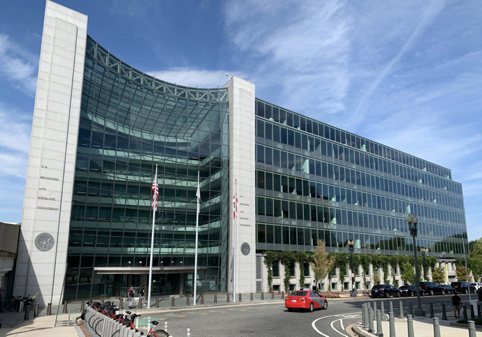 (Image caption) The U.S. Securities and Exchange Commission (SEC) headquarters in Washington, D.C. FortuneX’s fundraising size, trust accounts, founder shares, transaction terms, and conflicts of interest are all subject to market scrutiny through public filings with the SEC.
Trust reaches the doorstep of the capital market
The most difficult asset to quantify for Chinese wealth management platforms is community trust. It is not reflected in a single insurance policy, a single real estate project, or even just in the number of brokers.
This trust is very concrete. It comes from a phone call answered in Chinese, from introductions at a friend's dinner table, and from immigrant families finally finding someone who understands them in their unfamiliar circumstances. Mainstream financial institutions may have larger balance sheets, but they may not be able to access the everyday decision-making processes of these families.
The potential value of platforms like Sky Vision and Mutual Wealth lies precisely in this.
However, trust can be built up over years in a community; once it reaches the capital markets, it must leave its institutional mark. Do clients clearly understand whether they are receiving insurance sales, real estate services, investment advice, or referrals between different institutions? Can the number of brokers withstand scrutiny regarding activity rates, retention rates, licensing status, compliance training, and complaint records? When platforms use the term "family office," who clarifies the sources of commissions, fiduciary responsibilities, product recommendations, and conflicts of interest?
If a company wants to go public, it will eventually have to come back to a few simple but unavoidable documents: who is the listing entity, how is the equity structure arranged, where does the revenue come from, are the audited financial statements complete, how are related-party transactions handled, are lawsuits and complaints fully disclosed, and who supervises the board of directors.
These questions received no applause at the dinner party, nor did they appear in the center of the bell-ringing photo.
But these are exactly what the capital market ultimately looks at.
The trust within the Chinese community is not something that can be easily squandered. Behind it lies the savings of many families accumulated over years of work, the plans parents make for their children's future, and people's expectation of security within an unfamiliar system. Only if a platform can uphold this trust through clear disclosure, compliance boundaries, and governance arrangements can it have the opportunity to become a lasting commercial asset.
Who will be brought into the capital market?
Fortune X's closing bell has rung, but it has yet to tell the market who will be the next company to be brought to the public capital markets.
Tiffany Xu standing in the center of the clock tower at least indicates that she has a publicly visible relationship with this capital market. Whether this relationship is a collaboration, a management position, a project referral, or a prelude to a business merger remains unanswered by existing public documents.
GFM will not fill this gap with speculation, nor will it treat coincidences of photos, slogans, or timing as established facts.
GFM will continue to review subsequent regulatory documents, exchange disclosures, and company public information. The next report will return to Mutual Wealth itself: as a wealth service platform built on the trust of the Chinese community enters the capital market, what conditions does it already possess, and what institutional foundations still need to be established?
Disclaimer
This article is based on publicly available regulatory documents, exchange and company activity information as of September 4, 2026, and is intended for news research and informational purposes only. It does not constitute investment, legal, tax or accounting advice. Undisclosed transactions, positions, equity or mergers are not factual and should not be presumed to exist.