

GFM's "IPO" segment upgrade notice
In an era of information overload, IPO news is no longer a rarity.
Every trading day, exchanges around the world receive new filings; every quarter, financial media compile rankings of fundraising amounts, subscription multiples, and first-day price changes. Any algorithm can generate these figures faster and more accurately than a human.
But there's one thing algorithms can't replace: understanding why a company chooses to go public at this particular time, whether the story it tells the market holds true, and where that story might break down.
What is truly scarce is never IPO information, but the ability to penetrate the institutional logic behind IPOs. 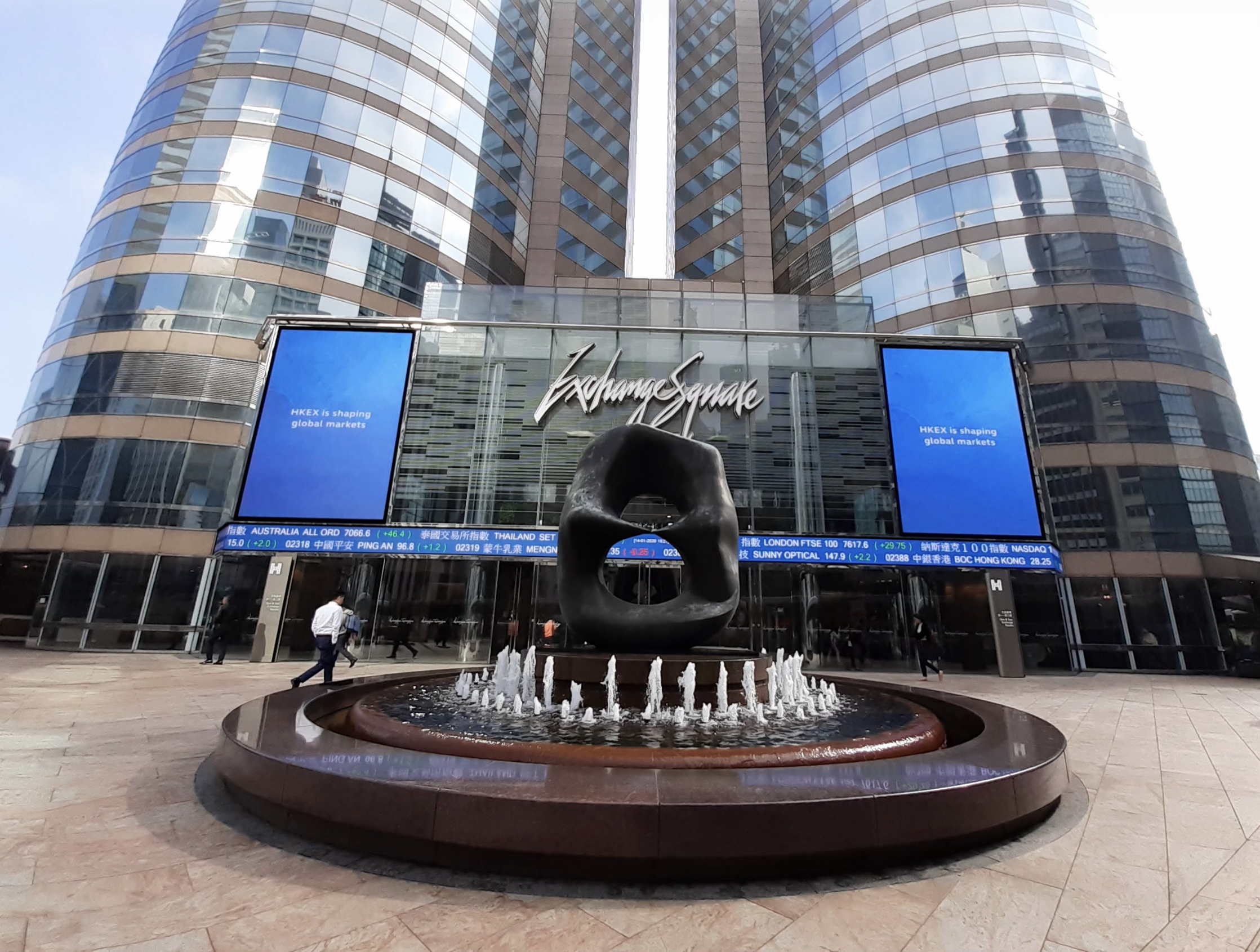 (Image caption) The Hong Kong Stock Exchange (HKEX) is a modern building located in Exchange Square in Central. Its exterior is mainly made of glass curtain walls. It is an important bridge connecting China and the international capital market, and it is also the main listing venue for many Chinese companies, new economy companies and companies going overseas.
I. We are not analyzing news, but rather valuation language.
When a company submits its prospectus, it is actually doing something more complex than fundraising: it is using financial data, industry narratives, and growth forecasts to tell the market a story about its future and trying to convince the market that this story is worth buying at a specific price.
This process involves more than just financial techniques; it involves the construction and decoding of a whole set of institutional languages: how companies repackage their narratives, how investment banks anchor these narratives, what gaps exist between regulatory and market languages, and what the capital market is most willing to believe at a particular moment.
This is exactly what GFM's "IPO" column is really about.
We don't intend to create a typical IPO news section, not just offering prospectus summaries, fundraising amounts, or market sentiment tracking. We're more interested in the often-overlooked institutional logic behind IPOs that truly determines a company's long-term value. In other words, we're not dissecting the news, but rather the language of valuation; we're not observing the hype, but the structure.
II. Why is this kind of penetrating power needed even more in the AI era? Before discussing the upgrade of the "IPO" column, it is necessary to clarify a larger background.
The AI era has led to a dramatic decrease in information production costs, almost to zero. This means that any piece of IPO news, the moment it occurs, is simultaneously processed, distributed, and pushed by countless algorithms. In such an environment, if the media is still pursuing "telling you that a company has gone public as soon as possible," it is actually competing with algorithms in a speed war that it can never win.
In the AI era, the scarcity of information has shifted from quantity to quality—more precisely, to credibility, verifiability, and institutional judgment.
As an AI-driven institutional media infrastructure, GFM's stance on IPO reporting is clear: it does not race against algorithms, but rather provides institutional insight that algorithms cannot replace. We do not pursue speed, but clarity; we do not advocate for companies, nor do we deliberately predict their downfall, but rather try our best to place a company back into its industry cycle, policy environment, capital narrative, and risk structure, allowing readers to see its true position as an institutional model.
This penetrating power is GFM's core capability and the institutional foundation for the upgrade of the "IPO" column.
Third, what we most want to analyze is that not all IPOs of these three types of companies deserve in-depth analysis. GFM's "IPO" column will focus its research resources on the types of companies with the greatest institutional analysis value in the future.
Category 1: Companies that have been repackaged with popular narratives.
AI, Web4, new energy, overseas expansion, defense technology—these terms have a strong valuation amplification effect in today's capital markets. The problem is that not every company using these terms in its prospectus truly possesses the technological barriers and commercial moats promised by these narratives. GFM's job is to peel back the layers of these narratives to see what the real business structure is.
The second category: companies that talk about growth on the surface but are actually making exit plans.
There is a type of IPO whose true motivation is not financing and expansion, but rather valuation repricing, early shareholder exit, or status upgrade in a specific market. This arrangement itself is not illegal, but if the market prices it based on the logic of a growth company, while the company's actual financial structure is closer to maturity or even decline, this discrepancy is where the risk lies.
The third category consists of samples that are at the forefront of an industry, but whose barriers to entry and valuations are significantly asymmetrical.
Some companies are indeed in the midst of genuine industry opportunities, but the market valuations they are given far exceed what their existing barriers to entry can support. For these companies, the question is not "Does this industry have a future?", but rather "Can this company truly occupy a sufficient position in this industry to deliver on current pricing expectations?"
For these three types of companies, GFM doesn't just ask "Is it worth subscribing?", but also: Why is the market willing to pay this price for this story? What are the conditions for this story to hold true? Under what circumstances will it break down?  (Image caption) The iconic Nasdaq building, located in Times Square, New York City, is known for its giant electronic screen and modern appearance. It is one of the most important listing platforms for technology and growth companies in the world, and a gathering place for many innovation stories and high valuation narratives.
IV. An IPO is a mirror, reflecting what the market is most willing to believe at present.
GFM believes that truly valuable IPO reporting should not just tell readers that a company has gone public, but should help readers understand: how the company was priced, how the narrative behind that price works, and where it might fail.
From an institutional perspective, an IPO is not just a capital event; it is also an informational event and a narrative competition event. It reflects what a market is most willing to believe at a particular moment, what kind of stories it is most likely to pay a premium for, and what kind of cognitive blind spots are hidden behind this collective belief.
Understanding this is more important than knowing the subscription multiple. Because the subscription multiple tells you how hot the market is, while GFM's analysis tells you: how much of this heat is based on genuine industry judgment, how much is narrative amplification, and how much is institutional arbitrage.
V. The upgrade of the "IPO" column is a concrete practice of GFM's mission as an institutional media outlet.
GFM's overall positioning is to build a trustworthy, verifiable, and sustainable media infrastructure that serves the public interest in the AI era. This is not just a slogan, but a methodology that needs to be implemented in every specific program.
The upgrade of the "IPO" column is a concrete example of this practical application. It represents GFM's shift from information distribution to institutional research and market analysis—upgrading IPO reporting from "what happened" to "why it happened and what it means."
This upgrade is not an adjustment to the column format, but a redefinition of the media's function. Within GFM's framework, a truly valuable IPO analysis should possess three levels:
At the factual level, the prospectus clearly presents verifiable financial data, equity structure, and business descriptions without exaggeration or concealment. At the narrative level, it analyzes how the company constructs its market story, what underlying assumptions this story relies on, and whether these assumptions are supported by financial and industry data. At the institutional level, it places the company back into the larger industry cycle, policy environment, and market valuation logic to judge its choice of listing timing and what this choice means for different types of investors.
These three layers combined constitute what GFM understands as "institutional IPO analysis".
IPO is the most concentrated narrative behavior in the capital market.
Every IPO filing is a company's attempt to convince the market of its story. Every pricing decision is a collective market assessment of that story at a particular moment. Every first-day price fluctuation is the market's first review of that story on settlement day.
The mission of GFM's "IPO" column is not to generate more voices in this process, but to become a clear-headed and insightful institutional observer—helping readers see the structure clearly amidst the noise of narratives; identify risks amidst market hype; and understand the true institutional logic in the language of valuation.
In the age of AI, information is no longer scarce; judgment is.
GFM's "IPO" column is an institutional commitment to this kind of judgment.
GFM's "IPO" column | Institutional Research × Decoding Valuation Language × Market Narrative Analysis
Global Finance Media Group — gfm.news