

GFM IPO System Analysis | Groupcore Technology
When a home improvement SaaS company starts defining itself as "spatial intelligence," is the Hong Kong stock market paying for real technological capabilities, or is it repricing a more expensive language?
If you only look at the prospectus narrative, Manycore Tech Inc. (HKEX: 0068.HK) has almost perfectly captured all the keywords most favored by the capital market in this era. Originating from Hangzhou, it is one of the "Six Little Dragons" in China, with its core business being space design and cloud rendering. However, what it presents to the outside world is not just home decoration design software, but "spatial intelligence".
This term carries significant weight. It signifies that a SaaS company that has already established a substantial market share in China's home design vertical market is attempting to leverage the language framework of the AI era to achieve a leap in valuation—from being priced as a "vertical software leader" by the capital market to being priced as a "spatial intelligence platform."
This is precisely the most noteworthy aspect of Qunhe Technology's IPO.
For GFM, this is not just an ordinary listing news, but a systemic example—a typical slice of how Hong Kong stocks will revalue Chinese technology companies in 2026. 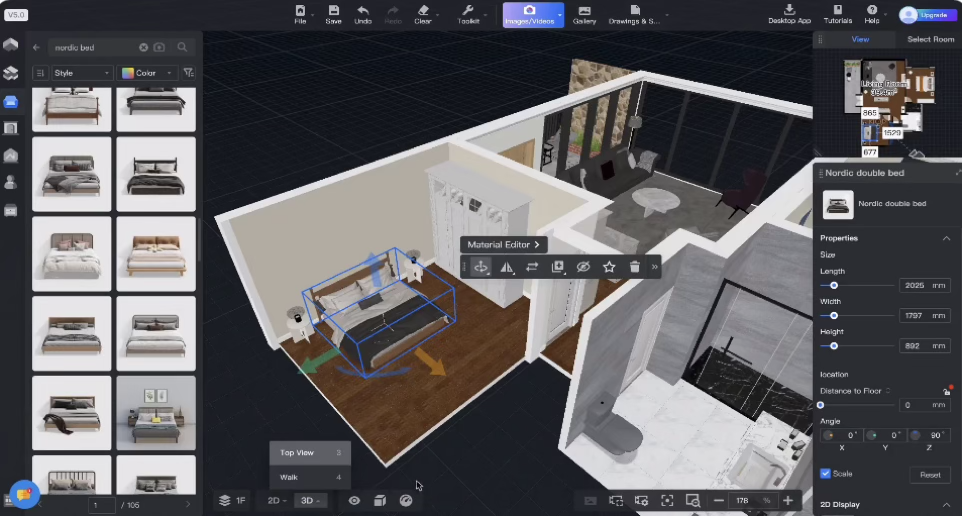 (Image caption) The product interface of Coohom, the international version of Kujiale, showcases 3D space design, furniture dragging, material editing, and real-time rendering functions. This is a direct representation of the core products of Qunhe Technology—starting from home decoration design tools, gradually integrating AI assistance and cloud rendering capabilities, supporting the technological foundation for its narrative upgrade from vertical SaaS to a "spatial intelligence platform."
I. Who is this company: Under the narrative of "spatial intelligence", stripping away all the market language, the true business essence of Qunhe Technology is not difficult to identify.
Its core products include Kujiale for the Chinese market and Coohom for overseas markets. Both are essentially space design and scene generation tools, serving primarily interior designers, renovation professionals, and home furnishing brands. What it truly masters is not just software functionality, but also the designer entry point, the home furnishing brand interface, scene rendering capabilities, and the massive amount of space design data accumulated over long-term service.
This makes it qualified to become a "vertical platform".
However, having a vertical platform does not automatically equate to "general AI infrastructure." This is the most important boundary to keep in mind when reading GroupCore Technology's prospectus.
According to currently available publicly available information, Quncore Technology holds approximately 23.2% of the market share in China's spatial design software market by revenue. This figure illustrates two things: First, this is a real business, not a concept company; second, the leading market share means that it has entered a stage of competition for existing market share, and high-speed growth requires new driving forces, and "spatial intelligence" is precisely the narrative engine it is preparing for the next stage.
II. What story does it want to tell: From home decoration SaaS to spatial intelligence, the core story of Qunhe Technology's IPO is not "one of the largest design SaaS companies in China", but "one of the Chinese companies with the best chance of becoming a spatial intelligence platform".
This story consists of three layers of packaging.
The first layer is from tools to infrastructure. The tool-like attributes of design software are packaged as an infrastructure entry point for "spatial intelligence capabilities." From a business perspective, this isn't entirely untenable—companies that control designer traffic and scene data do indeed have the potential to expand upwards. However, the transition from "tools" to "infrastructure" involves a commercial leap, not just a simple language upgrade.
The second layer extends from Chinese home decoration to global SaaS. It extends Kujiale's local advantages to Coohom's globalization narrative, using "going global" as an argument to unlock greater market potential. This direction is real, but the competitive landscape of the global SaaS market differs fundamentally from that of the Chinese market. Coohom's current depth of penetration overseas is the part of this narrative that most needs to be supported by financial data.
The third layer extends from software subscriptions to AI data assets. It reinterprets massive amounts of design scenarios, rendering behavior data, and design interaction records as core assets in the AI era. This is the layer with the strongest valuation amplification effect in the entire narrative—because "data flywheel" and "AI training barriers" are currently the terms the capital market is most willing to pay a premium for.
The three layers combined constitute the most attractive self-presentation of Qunhe Technology in the capital market: it is not looking for financing, but for a more expensive pricing identity. 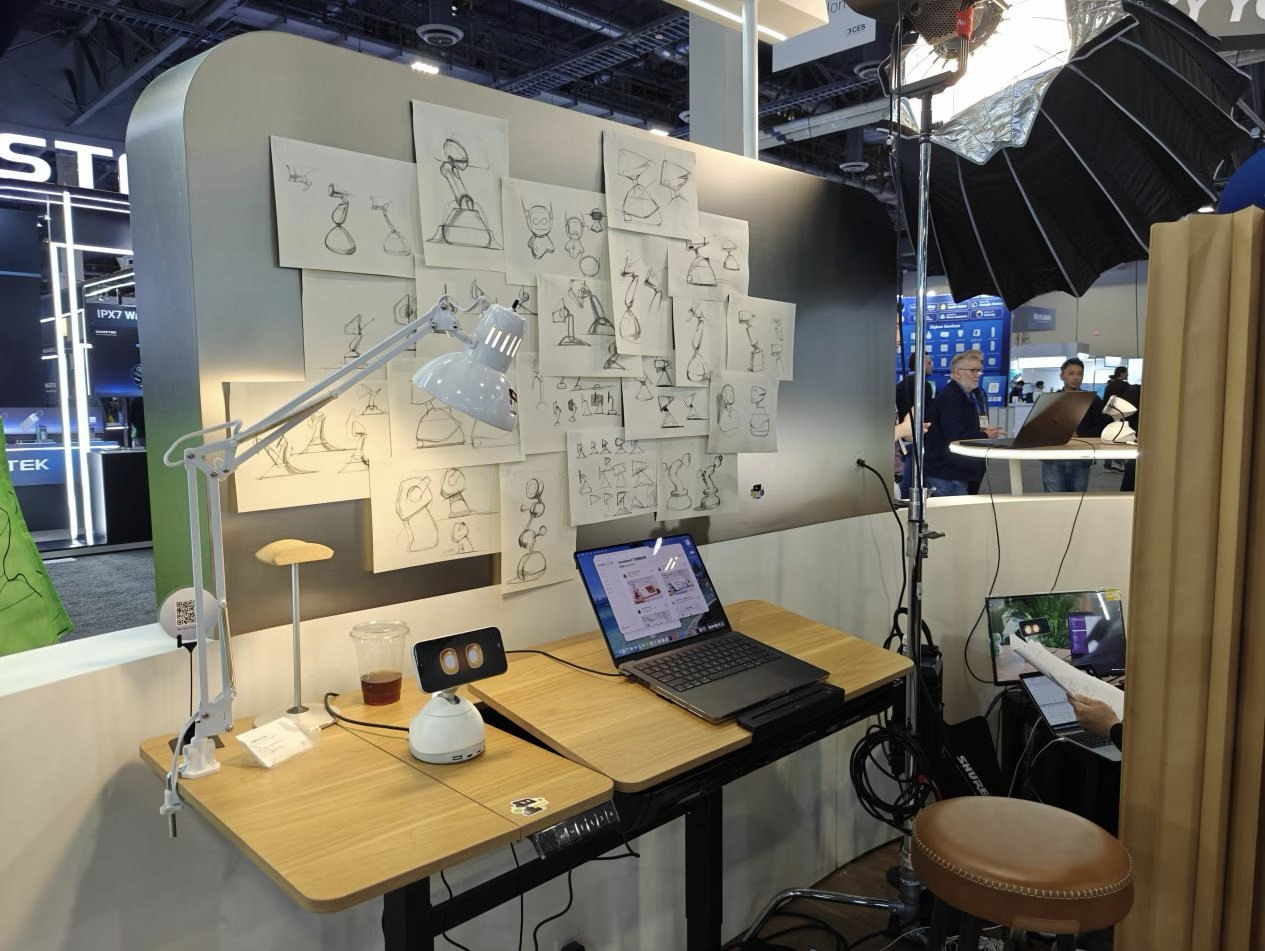 (Image caption) Professional designers use 3D spatial design software in their studios, manipulating home decoration models, rendering windows, and data panels through high-resolution screens, creating a blend of technological sophistication and professional atmosphere. This image symbolizes the user scenario of Qunhe Technology: the designer portal and the accumulation of scene data are the core of its platform value, but it remains deeply dependent on the home decoration and furniture industry chain, rather than general AI infrastructure.
III. Does the financials support this story: a robust vertical SaaS or an AI platform?
The financial figures presented in the prospectus provide a relatively clear anchor.
Based on currently available publicly available information:
• 2022 Revenue: Approximately RMB 601 million • 2023 Revenue: Approximately RMB 664 million • 2024 Revenue: Approximately RMB 754.8 million • Market Share in China: Approximately 23.2%
• IPO offering: Approximately 161 million shares • Price range: Approximately HK$6.72 to HK$7.62
• Expected fundraising: approximately HK$1.08 billion to HK$1.23 billion • Corresponding valuation: approximately HK$11.4 billion to HK$13 billion What do these figures indicate?
First, this isn't a company poised for explosive growth, but rather one of steady growth. Revenue has increased from 601 million yuan to 754.8 million yuan in three years, a stable but not aggressive growth rate. Second, the software model offers good operating leverage, and its gross margin structure is the most compelling aspect of the SaaS story for the market. Third, and most importantly, the market is currently valuing it not as a "steady-growth SaaS" company, but rather as an "AI platform."
With a valuation range of HK$11.4 billion to HK$13 billion, the market is actually paying for the future potential of "spatial intelligence," rather than just for the already realized annual revenue of RMB 750 million.
The tension here is precisely the most crucial institutional issue at the heart of the entire analysis:
Its finances can support the "vertical software leader" story, but may not fully support the "spatial intelligent infrastructure" story.
When narrative valuation precedes financial valuation, going public becomes more than just a fundraising event; it becomes a process of inflating the value of a concept—both an opportunity and a risk.  (Image caption) A modern technology company office environment, bright and open designer workspaces, with a strong technological and creative atmosphere. This represents the Hangzhou Ecosystem, where Quncore Technology's headquarters are located—a vertical software company with real revenue (approximately RMB 754.8 million in 2024) and a 23.2% market share, conducts product development and data accumulation here, yet attempts to tell a higher valuation story of "spatial intelligence" on the Hong Kong Stock Exchange.
IV. Where are the real risks hidden: Four structural issues that need to be addressed. Risk 1: Narrative upgrades may outpace the evolution of the business itself.
What Qunhe Technology is doing is upgrading the marketing language of home decoration SaaS to that of AI and spatial intelligence. This packaging is not deceptive, but once the capital market accepts a valuation of "spatial intelligence platform," the company must then provide commercial proof that goes beyond the original home decoration design scenario. This is the most important performance test after listing, and also the most vulnerable point to fulfilling its promises.
Risk 2: The risks of the post-cycle phase of China's real estate market have not yet been fully cleared.
Regardless of how it's packaged as "spatial intelligence," the core business of Quncore remains deeply intertwined with the needs of home decoration, building materials, designers, and space renovation. The post-cycle adjustment of China's real estate market will not be severed by an AI concept. This is the most difficult macroeconomic risk to hedge on the revenue side.
Risk 3: Technological barriers may not be as thick as the narrative suggests.
Quncore's core competitive advantage is more likely to stem from its designer ecosystem, accumulated scenario data, and deep interfaces with home furnishing brands and supply chains, rather than some unreplicable underlying AI barrier. This means it's more like a "platform-based vertical SaaS" than a company with pure technological barriers. Platform companies can build ecosystems, but once those ecosystems falter, their valuations often adjust faster than expected.
Risk 4: Valuation may precede fundamentals.
Based on the current offering price range, the market has already set rather high future expectations. If revenue growth slows down, or the commercialization of "spatial intelligence" falls short of market expectations, the valuation adjustment may be significantly faster than the improvement in operations. This is a structural risk faced by any "narrative-driven, financially-followed" IPO.
V. Use of Funds and Motivation for Listing: What it really lacks is not just cash. Public information shows that Qunhe Technology's use of funds raised mainly includes international market expansion, product research and development, brand building, technology investment, and general working capital.
This purpose seems reasonable on the surface. But translated into institutional language, it means something else entirely: what it truly lacks is not just cash, but a higher level of market identity.
The private equity market may consider it a unicorn, but a Hong Kong listing signifies its desire for a formal repricing in the public market: upgrading from "one of China's largest home decoration design SaaS providers" to a "spatial intelligence platform." This upgrade, once completed, will, in turn, provide stronger capital market backing for its global expansion, partnership negotiations, and brand building.
Manycore's motives for going public are at least threefold: to provide early investors with a valuation benchmark, to use the Hong Kong stock market to complete the narrative repricing, and to provide institutional support for its global expansion through a public market. It's not simply a matter of needing money; rather, it's seeking a more formal and referable valuation platform than the private market.  (Image caption) The night view of the Hong Kong Stock Exchange (HKEX) and its trading building is the key stage for Groupcore Technology's Hong Kong IPO. This image symbolizes the core institutional observation of this article: how a real vertical SaaS company can leverage AI and platform narratives to achieve valuation repricing in the Hong Kong stock market in 2026, while bearing the risk that narrative upgrades outpace the business itself.
VI. GFM Institutional Observation Group Core Technology represents a very typical phenomenon of Chinese technology IPOs in 2026.
It's not a concept stock that tells a story from scratch, nor is it a traditional manufacturing company. It's a valuation sample that lies between industry and narrative: it has real revenue, market share, and software platform attributes; at the same time, it's clearly using the term AI to drive the capital market to rethink its valuation boundaries.
This exposes a larger systemic phenomenon: as the growth curve of vertical software businesses flattens out, companies tend to use AI, platform, and data asset rhetoric to unlock higher valuations. This approach may not be deceptive, but it certainly brings higher performance obligations.
For GFM, GroupCore Technology is not just a news story about going public, but a systemic example worth tracking continuously.
The real issue worth observing is not whether it can successfully go public, but rather:
After going public, can it prove that it is not just "a more sophisticated version of Chinese home decoration SaaS", but truly has the commercial capability to move from design scenarios to a wider range of intelligent spatial applications?
The answer to this question will determine its long-term position in the capital market and will also be an important footnote to understanding how Hong Kong stocks will revalue Chinese technology companies in 2026.
IPO Basic Information
| project | data |
| Company Name | Manycore Tech Inc. |
| Hong Kong Stock Exchange code | 0068.HK |
| Core Products | Coohom (China) / Coohom (Overseas) |
| Business positioning | Space Design SaaS → Space Intelligence Platform (Narrative Upgrade) |
| 2024 Revenue | Approximately RMB 754.8 million |
| China market share | Approximately 23.2% (by revenue) |
| IPO range | HK$6.72 – HK$7.62 |
| Expected fundraising | Approximately HK$1.08 billion – HK$1.23 billion |
| Corresponding valuation | Approximately HK$11.4 billion – HK$13 billion |
| Organizing Date | April 14, 2026 |
The above data is from publicly available information and is for research reference only. It does not constitute investment advice.
GFM's "IPO" Column | Institutional Research × Valuation Language Decoding × Market Narrative Analysis. This article is GFM's institutional observation and does not constitute any investment advice. GFM focuses on the institutional logic, narrative structure, and valuation language behind IPOs, recording market judgment samples that can be cited and tracked over the long term.
Global Finance Media Group — gfm.news