

GFM IPO System Breakdown | Sigenergy
New energy hardware or AI energy platform? As energy storage companies start using AI to tell their stories, what is Hong Kong stocks revaluing?
Sigenergy's Hong Kong listing, placed in the market context of 2026, is almost a standard example of a hot stock.
It stands at the intersection of four of the most popular narratives in the capital market: new energy, energy storage, globalization, and AI. It can be categorized within the energy transition framework, and it can also be told as a technology platform story. Such companies are most likely to be sought after in the current market because they simultaneously meet the triple demands of industry trends, policy directions, and capital preferences.
But for GFM, what's really worth analyzing isn't how popular it is, but rather what exactly supports that popularity.
In the energy storage industry, industry dividends and company barriers to entry are two different things. Rising demand for energy storage does not automatically mean that Sigenergy possesses long-term competitive advantages. This is the most important boundary to keep in mind when reading this prospectus.  (Image caption) Sigenergy's integrated home energy storage system is installed on the exterior wall of a modern residence, its clean and minimalist appearance blending seamlessly with the surrounding living environment. This is Sigenergy's core hardware product for distributed energy storage, symbolizing the company's physical foundation for its transformation from a traditional new energy hardware supplier to an "AI-driven energy management platform."
I. What exactly is it selling: Beneath the narrative of "AI energy platform", the true product structure, stripped of market language, requires a clearer explanation of Sigenergy's business essence.
It is a distributed energy storage system company (DESS) with a product line spanning several levels: residential energy storage systems for home use, commercial and industrial energy storage solutions for businesses and industries, inverter hardware, energy management systems (EMS), and integrated energy storage solutions that combine the above components.
In other words, it's not just about "selling batteries," but about providing an integrated energy storage delivery capability that combines batteries, inverters, management systems, and scenario integration. This gives it the attributes of a "system integrator," rather than just a single hardware supplier.
But a crucial question needs to be asked: What role does AI actually play in this system?
Is it the underlying scheduling and optimization capability that truly differentiates products? Is it the software intelligence of energy management? Or does it mainly exist as a valuation amplifier in the prospectus? These three scenarios correspond to completely different technological barriers and long-term valuation logics.
Sigenergy's official narrative emphasizes an "AI-native energy management platform," but the specific commercialization path of its AI capabilities, its revenue contribution ratio, and its quantifiable differences relative to its competitors, as outlined in the prospectus, are the core factors that truly determine whether this narrative holds true.
II. What story does it want to tell: A three-tiered leap from energy storage hardware to AI-powered energy infrastructure?
Sigenergy's message to the market is not "selling energy storage equipment," but rather "building a new generation of AI-native energy management platform."
This story consists of three layers, with the valuation ceiling increasing sequentially.
The first tier consists of new energy hardware companies. These are the true pillars of their revenue. Batteries, inverters, and integrated energy storage systems—these are the products they actually deliver and the core drivers of their financial growth. The capital market values them based on manufacturing logic, with a cap on the multiple.
The second layer consists of AI-powered energy optimization companies. These companies deliver hardware, then add EMS software and AI scheduling capabilities, presenting the market with "software-based energy management services." This layer can achieve a valuation logic somewhere between manufacturing and SaaS, representing the transitional form for which the market is currently most willing to pay a premium.
The third tier consists of global energy transition infrastructure companies. This involves packaging a Chinese energy storage system provider as an indispensable infrastructure node in the global energy transition. This tier has the highest valuation ceiling but also requires the most commercial validation.
The capital market favors the third tier because it offers the greatest potential for growth. However, what truly supports a company's revenue is often the first and second tiers—hardware delivery, system integration, and energy management services.
When the narrative is on the third level, while finance is still primarily on the first level, the tension in between represents the core institutional issue of the entire IPO process. 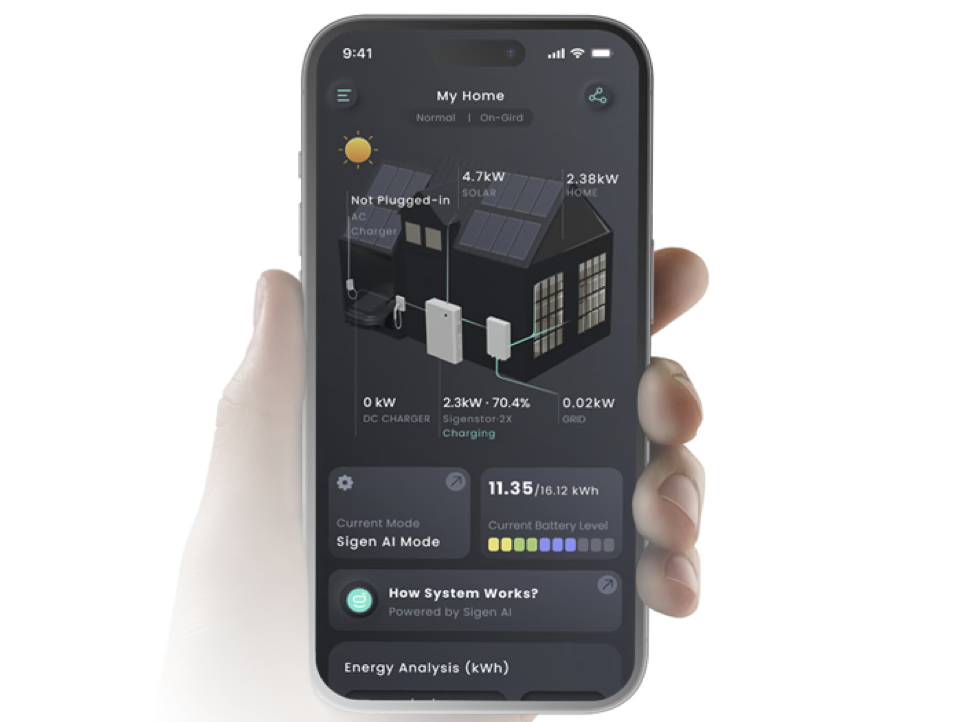 (Image caption) The Sigenergy MySigen App interface displays real-time solar power generation, energy storage charging and discharging status, and energy flow analysis, labeled "Powered by Sigen AI." This image visually presents the company's narrative of an "AI-native energy platform" that it most hopes the market will accept, highlighting its intelligent scheduling and energy management capabilities.
III. What do the financial figures tell us? The market buys the theme first, then looks at the financial statements. Based on currently available public information:
| project | Data and Details |
| Planned fundraising scale | Approximately HK$4.4 billion (approximately US$560 million) |
| Launch date | Mid-April 2026 |
| Market Narrative Core | AI (Artificial Intelligence) + Energy Storage + Internationalization |
| Cornerstone Investors | It covers large international capital and sovereign wealth funds (including Temasek, etc.) |
From a market structure perspective, the combination of "new energy + AI + luxury cornerstone" already constitutes a sufficiently complete offering story, and this combination is extremely attractive in the current Hong Kong stock market environment.
However, there is an institutional observation that needs to be raised positively: when the most prominent information in the market is not the complete financial structure, but the fundraising scale, the cornerstone investor lineup, and the AI energy storage concept, it often means one thing—the market is buying the theme first and then looking at the financial statements later.
For GFM, the more important question is: Does Sigenergy's high growth stem from genuine product penetration, industry policy subsidies, rapid channel expansion, or short-term rush to install? The answer to this question will determine whether it becomes a long-term platform after its IPO or a hot stock amidst the resonance of policy and economic cycles.
This question cannot be fully answered before the prospectus is released. However, it should be the core indicator that is most worth tracking continuously after the listing.
IV. Where is AI? The Core Valuation That Needs to Be Analyzed: In Sigenergy's IPO narrative, AI is a very important term. However, this term can mean completely different things in different contexts.
Scenario 1: AI is the true underlying capability for product differentiation. If AI scheduling algorithms can truly improve the charging and discharging efficiency of energy storage systems, extend battery life, optimize electricity costs, and form quantifiable performance advantages, then AI is a real technological barrier and deserves to be recognized in valuations.
Scenario 2: AI is the software management layer above the hardware. If AI is mainly manifested in the intelligent decision-making function of energy management software (EMS), then it is a valuable product feature, but it may not constitute an unreplicable competitive moat—because competitors are also building the same software layer.
Scenario 3: AI is primarily an amplifier in the prospectus language. If AI is more about making an "energy storage hardware company" sound like a "technology platform company," then its actual commercial contribution may be far less significant than its narrative weight in the prospectus.
These three scenarios correspond to three valuation logics and three post-IPO validation paths. The real core task of this institutional analysis is to determine which scenario Sigenergy's AI falls into.
Based on currently available information, the conclusion is that AI does exist in Sigenergy's business, but its actual weight in the revenue structure and competitive advantages still requires more financial and technical details to support. 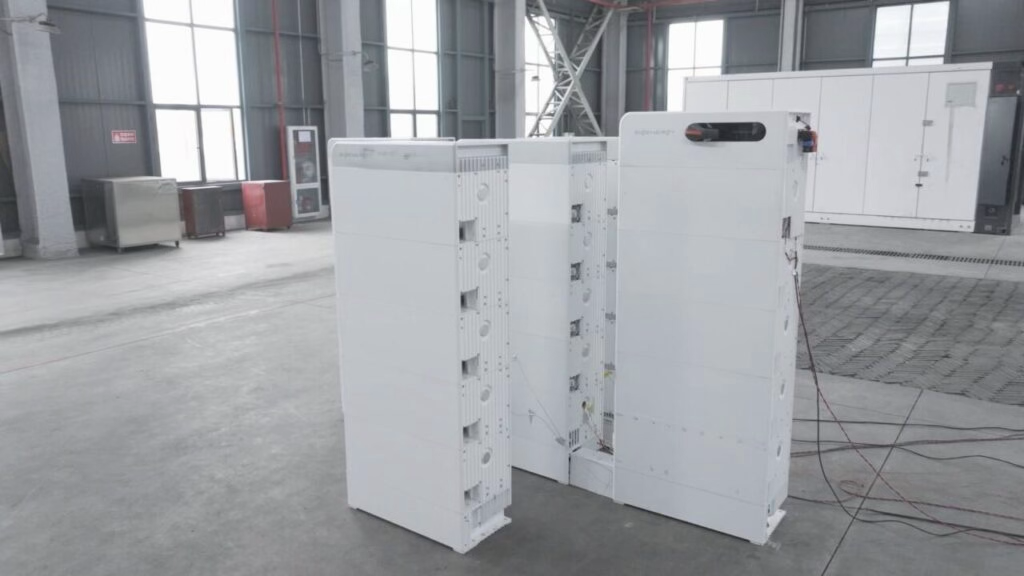 (Image caption) The modular assembly of Sigenergy energy storage cabinets inside the factory showcases its supply chain and manufacturing capabilities. Ultimately, the energy storage industry is competing on hardware reliability, cost control, and production capacity, not just on AI packaging. This is precisely the "hard power" foundation emphasized in the article.
V. Where are the real risks hidden: Four structural problems Risk 1: Competition in the energy storage industry is not a competition of stories, but a competition of supply chains.
In this industry, what truly determines success or failure is often production capacity, cost control capabilities, progress in overseas certifications and compliance, depth of channel development, and long-term supply chain stability. If these dimensions are not established simultaneously, relying solely on AI narratives is insufficient to support a long-term premium. Ultimately, competition in energy hardware boils down to who has a more robust supply chain, not who uses the most compelling marketing rhetoric.
Risk 2: Mistaking industry dividends for company barriers to entry.
Industry trends and company barriers to entry are not the same thing. Global demand for energy storage is indeed growing rapidly, providing growth opportunities for all players in the industry. However, if Sigenergy's growth primarily stems from overall industry expansion rather than from its own defensible competitive advantages, then whether it can maintain its profitability and market position as industry competition intensifies is a question that must be answered.
Risk 3: Cornerstone investor endorsements may mask long-term valuation risks.
A prestigious cornerstone investor list is very helpful for IPOs, boosting market confidence and reducing issuance risks. However, from an institutional perspective, cornerstone endorsement is more like a "market entry ticket" than a business moat. For long-term investment decisions, its help is quite limited—what truly determines post-IPO performance is the company's ability to consistently deliver better-than-expected results.
Risk 4: After the narrative is upgraded, the pressure to verify it increases exponentially.
Once the market accepts the valuation of an "AI energy platform," the company must continuously prove itself as more than just an excellent energy storage hardware company after its IPO. This pressure to prove itself will quickly materialize in the form of valuation adjustments when growth slows or industry policies change. 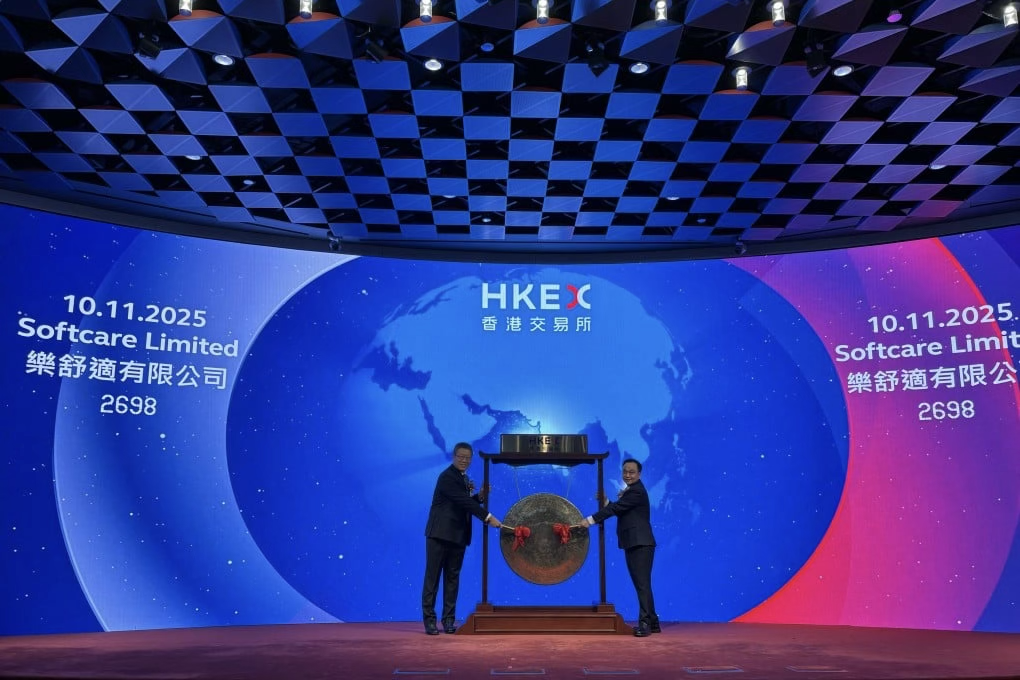 (Image caption) The listing ceremony at the Hong Kong Stock Exchange (HKEX). This is the stage for Sigenergy's IPO in Hong Kong in 2026, symbolizing the company's upgrade from "new energy hardware to AI energy platform" through the Hong Kong stock market, and a model of how the market can revalue "AI + Energy".
VI. Use of Funds and Motivation for Listing: It lacks not just funds, but also market identity. According to external reports, Sigenergy's fundraising will mainly be used for R&D investment, expansion of the global sales network, improvement of manufacturing capabilities and capacity building.
This is fairly standard practice for new energy companies. But in institutional terms, it's a different story: what they lack isn't just cash, but "capital market qualifications" in the global energy narrative.
Sigenergy's decision to list at this time coincides with three key factors: a resurgence in the Hong Kong stock market's hard technology and new energy IPO environment; rising global energy demand driven by AI and data centers boosting the overall energy storage sector; and investors reopening valuation opportunities for themes related to Chinese manufacturing going global and energy transition.
Choosing to go public when all three windows are open is a rational decision for any new energy company. The problem is that the existence of these windows does not mean that the company's valuation basis will still hold true after the windows close.
Sigenergy's true motivation for going public encompasses at least three levels: providing early investors with a valuation benchmark, using the Hong Kong stock market to re-evaluate its identity from an "energy storage hardware provider" to an "AI energy platform," and providing public market capital backing for its global expansion. It's not simply lacking funds; rather, it's seeking a formal stage where the market can understand it with a higher valuation logic.
VII. Institutional Observations on GFM
Sigenergy is a very typical example of a composite stock in Hong Kong in 2026 that combines "industry trend + technology packaging + capital price inflating".
This represents a clear trend in the current Hong Kong stock market: new energy companies are no longer listing solely based on manufacturing logic, but are attempting to leverage AI and system platform language to obtain a higher level of technological valuation.
This may not be a fabricated story. Sigenergy's product capabilities are real, the demand in the energy storage market is real, and the logic behind its global expansion is real. However, once market language evolves, the company bears a greater responsibility for validation. If investors have accepted the valuation framework of an "AI energy platform" during the IPO stage, the company must continue to deliver commercial performance sufficient to support this framework after listing.
What truly needs to be clarified here are two different things: which part represents Sigenergy's solid hardware capabilities and system integration advantages, and which part represents the narrative premium that the capital market is willing to temporarily pay for during a specific window of opportunity.
For GFM, Sigenergy is not just an energy IPO, but a typical test of how the capital market reinterprets the identity of hard technology companies.
There is only one question that truly deserves continued attention: as competition in the energy storage industry intensifies and policy windows narrow, can Sigenergy prove that its competitive advantage comes from genuine technological and supply chain capabilities, rather than just the rhetoric it uses in its prospectus?  (Image caption) A modern residential rooftop features solar panels paired with a Sigenergy-style home energy storage system, presenting a complete home energy solution. The clean and professional visuals showcase the application of Sigenergy's "AI-driven distributed energy management" in real-life scenarios, while also reminding readers that even the most comprehensive story requires robust hardware and global capabilities.
IPO Basic Information
| project | data |
| Company Name | Sigenergy Technology Co., Ltd. |
| Hong Kong Stock Exchange code | 6656.HK |
| Core Business | Distributed Energy Storage System (DESS), Inverter, EMS |
| Business positioning | Energy storage hardware + AI energy management platform (narrative upgrade) |
| Planned fundraising scale | Approximately HK$4.4 billion (approximately US$560 million) |
| Launch date | Mid-April 2026 |
| Main cornerstone | Covering large international and sovereign funds such as Temasek |
| Organizing Date | April 14, 2026 |
The above data is from publicly available information and is for research reference only. It does not constitute investment advice.
This article is a GFM institutional observation and does not constitute any investment advice. GFM focuses on the institutional logic, narrative structure, and valuation language behind IPOs, recording market judgment samples that can be cited and tracked over the long term.
GFM's "IPO" column | Institutional Research × Decoding Valuation Language × Market Narrative Analysis
Global Finance Media Group — gfm.news