

GFM IPO System Analysis | Research on US Listing Path
IPO is no longer the starting point: How the OTC market will reshape the path for SMEs to list in the US in 2026 (Listing path research × Valuation language reconstruction × Redefinition of capital entry)
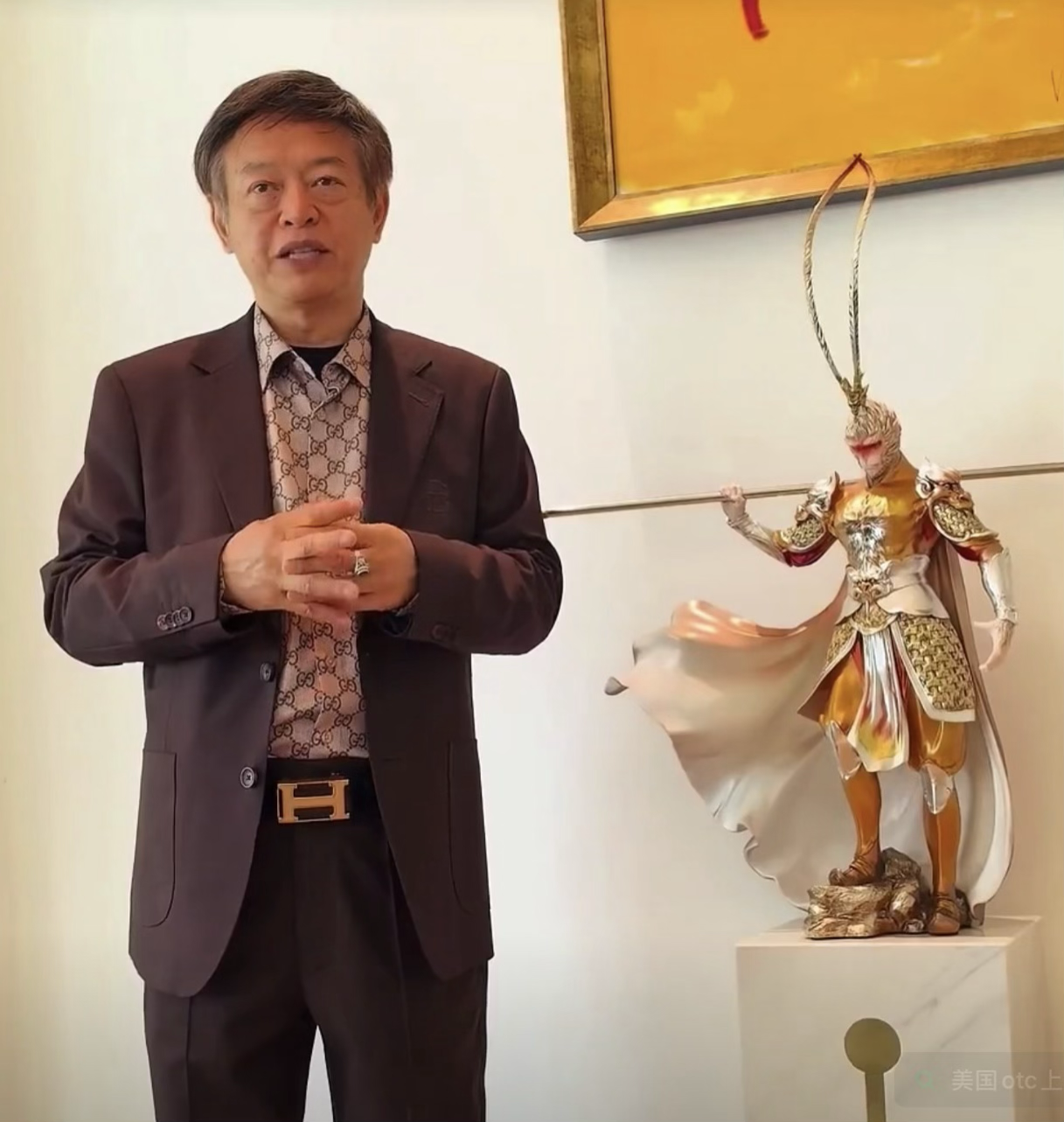 Author Profile: Dr. George Yang is a Chinese-American financial advisor and cross-border capital markets professional with a background in international trade, finance, and business administration. He has worked in government research institutions, banks, and investment management. He has long been deeply involved in the listing of Chinese companies in the United States, the OTC system, SPAC structure, Nasdaq transfer planning, cross-border mergers and acquisitions, and capital path design. He is an important practitioner observing the overseas listing path of Chinese concept stocks and the connection mechanism of the US dollar capital market.
Introduction: As that door narrows, in the minds of many entrepreneurs, going public is a clear and ceremonial final destination—landing on Nasdaq, ringing the opening bell of the NYSE, and pressing that symbolic button in front of the camera.
That image was once the clearest visual definition of success.
However, in the US capital markets of 2026, the underlying logic of this narrative is being systematically rewritten.
The direction of this rewriting is not a single policy shift, but a restructuring of the entire capital market entry structure: the barriers to entry for exchanges continue to narrow, compliance requirements continue to tighten, and at the same time, the institutional stratification of OTC Markets is deepening, trading activity is rising, and the upgrade path is becoming more traceable.
For a large number of small and medium-sized enterprises, cross-border enterprises, and companies that are temporarily unable to list on the main board, the answer is becoming increasingly clear:
An IPO is not the starting point of a capitalization journey, but rather the distant destination that can only be reached after a long institutional path has been completed.
This is not a cyclical fluctuation of market activity, but a structural restructuring of "how companies enter the dollar capital system." Only companies that can clearly see the direction of this restructuring and plan their path in advance will have the opportunity to find their place in the new institutional order.
I. The End of the Old Logic: From "Direct IPO" to "Tiered Entry"
To understand the present, we must first understand the past.
The narrative for listing in the US in the past was quite simple: well-prepared companies completed audits, roadshows, and pricing, then directly targeted the main board. This logic did hold true during a specific historical window. At the height of the wave of Chinese concept stocks, growth stories, capital backing, and market sentiment could work together, and many companies, thanks to the relatively relaxed market environment, smoothly completed the entire process of listing on the main board.
But today, this door is narrowing in multiple dimensions simultaneously.
The rule adjustments that Nasdaq will gradually implement around 2025 involve several key areas: raising the minimum public float market capitalization requirement under certain conditions; imposing higher public offering fundraising thresholds for newly listed companies that mainly operate in China; accelerating the suspension and delisting process for some non-compliant companies; and implementing stricter ongoing listing reviews for low-priced stocks, reverse stock splits, and companies with low liquidity.
The institutional logic behind this series of adjustments is that the exchanges hope to maintain investor trust by improving market quality—especially after a number of companies with compliance issues were exposed, the market's requirements for the overall quality of listed companies have increased significantly.
The consequence of this structural tightening is a systemic reduction in realistically viable options.
For many small and medium-sized enterprises (SMEs), the question is no longer "whether they can directly IPO," but a more fundamental strategic issue:
Is there an institutional path that allows a company to first enter the capital system, establish trading records in the market, and then gradually improve disclosure standards, liquidity performance, and valuation persuasiveness, ultimately meeting the conditions for transferring to a higher board?
This is precisely the fundamental reason why OTC is being seriously re-examined in 2026. It's not because OTC has suddenly become better, but because the logic of the entire market entry point has undergone a structural shift.  (Image caption) With the entry point for motherboards narrowing, companies are looking for new paths.
II. Structural Signals Behind the Numbers: Is the market really undergoing such a shift? The numbers provide evidence.
According to publicly available data from OTC Markets, in the first quarter of 2026, the total trading volume of OTC Markets reached approximately US$225.98 billion, a 30.3% increase compared to the fourth quarter of 2025; during the same period, there were more than 12,400 active trading securities and approximately 27 million transactions completed.
In the same quarter, international securities trading volume reached approximately US$210.1 billion, a 36.8% increase compared to the previous quarter—of which European securities trading volume was approximately US$118.63 billion and Asian securities trading volume was approximately US$64.67 billion.
This set of numbers has several structural implications worth examining closely.
First, its internationalization level far exceeds common perception. International securities trading volume accounts for approximately 93% of the total OTC trading volume, indicating that OTC Markets are no longer marginal circulation venues for small and medium-sized enterprises in the United States, but rather an important trading interface that carries a large amount of cross-border securities, ADRs, international companies, and global capital flows.
Secondly, the scale of Asian capital in this market cannot be ignored. The transaction volume of US$64.67 billion in Asia, although lower than that in Europe, is enough to demonstrate that Asian companies and Asian capital have established a considerable presence in the OTC market.
Third, the market's capacity is increasing, but capacity does not equal the probability of success. This is the most crucial distinction—
An increase in trading volume does not mean that all companies listed on the OTC market are worth investing in.
An active market as a whole does not necessarily mean that the listing of individual companies will create effective liquidity.
The figures illustrate that the OTC market's capacity as a capital access interface is increasing; rather than implying that any company entering this market automatically gains the qualification to be seen by capital.
The gap between these two things is precisely the core risk that most companies are most likely to overlook.  (Image caption) Enterprises upgrade step by step along the OTC ladder.
III. OTCID Reform: How Institutional Stratification Reshapes Market Logic
The OTC market has historically been perceived as having unclear hierarchies, inconsistent disclosure quality, and difficulty in identifying investors. This impression is not unfounded—the early Pink Sheet market did indeed suffer from structural problems such as severe information asymmetry, extremely low liquidity, and a high risk of market manipulation.
However, the launch of OTCID in 2025 is substantially changing part of the market structure.
OTC Markets has explicitly stated that, effective July 1, 2025, the OTCID Basic Market will officially replace the Pink Current Market, which will cease to exist. The OTCID Basic Market was designed for companies providing basic information, requiring management to complete basic certification, but not requiring compliance with the higher standards of OTCQX or OTCQB.
This change makes the tiered structure of the OTC market clearer and more operational:
| hierarchy | position | Core Requirements |
| OTCQX | High-quality market | High financial standards, strong compliance foundation, suitable for mature enterprises |
| OTCQB | Entrepreneurship and growth markets | Minimum net asset requirements, audit requirements, and suitability for growth-stage companies. |
| OTCID | Basic Disclosure Market | Management certification, basic information disclosure, replacing Pink Current |
| Pink Limited / Expert Market | Lowest barrier to entry market | Companies with insufficient disclosure or that do not meet higher-level requirements |
However, the deeper value of this tiered system lies not in simply comparing which tier is "better," but in a more important institutional significance:
For the first time, OTC has clearly presented a capital upgrade ladder that can be planned by enterprises, tracked by investors, and evaluated by the market.
Companies are no longer simply "listed" statically, but can dynamically "upgrade"—from OTCID to OTCQB, from OTCQB to OTCQX, and then from OTCQX to prepare for a listing on Nasdaq or other higher-level markets.
However, it needs to be made clear immediately that whether this path is viable depends on the company itself, not on the goodwill of the market.  (Image caption) The choice of capital path determines the success or failure of an IPO.
IV. Three Hidden Thresholds: What Truly Determines Fate Isn't in the Rules and Regulations. When researching OTC pathways, many companies are most interested in studying the surface-level thresholds—how much net assets are needed to enter OTCQB, what the minimum share price requirement is, and how many shareholders are required. These figures are public, and they offer a sense of security when checked.
But what truly determines whether a company can survive, upgrade, and eventually reach a higher level in the OTC market are three invisible thresholds that are never fully written in any rule documents.
Threshold 1: Without real liquidity and transactions, there is no market. This is not a metaphor, but a literal fact.
Even if a company completes its listing, if there are no trading records, no continuous quotes from market makers, and no genuine buying and selling demand, the stock becomes stagnant. The capital market has no interest in stagnant water—institutional investors won't price illiquid assets, market makers won't continuously provide quotes for companies without capital backing, and analysts won't write research reports for companies no one is paying attention to.
Market makers play an irreplaceable role in this process. In the OTC market, market makers continuously quote prices for both buyers and sellers, forming the most fundamental infrastructure for liquidity. Without the active participation of market makers, even if a company fulfills all disclosure requirements, it remains virtually invisible in the market.
Liquidity is not a fruit that grows naturally after listing. It is a market infrastructure jointly built by the company, investor relations, market makers, disclosure systems, and strategic capital—it requires continuous investment, long-term maintenance, and must be incorporated into the systematic planning of capital paths from day one.
Threshold Two: A Consistent Valuation Language. The capital market never looks at just financial figures; it looks at whether the story is plausible, whether the narrative is self-consistent, and whether growth can be priced.
There is a key concept here that deserves separate explanation—valuation language.
Valuation language is not financial reports, roadshow presentations, or product descriptions on a company's website. It is a systematic narrative that enables institutional investors and analysts to understand "why a company is worth this price."
This narrative needs to answer several core questions:
What real market problems did this company solve?
• How large is its market space, and what is its growth logic?
Where does its moat relative to its competitors come from?
How does its business model translate into sustainable cash flow?
Why should it be priced in US dollar capital at a specific valuation multiple?
If these questions cannot be clearly answered, the valuation loses its support. Without support, the valuation will only continue to decline under market pressure; and a continuously declining stock price will not only make subsequent financing difficult, but also make the conditions for transferring to a higher listing date increasingly distant.
The development of valuation language needs to begin before entering the OTC market, rather than realizing after listing that one lacks the ability to communicate with the dollar market.
Threshold Three: A Sustainable Capital Ecosystem
Every step in the OTC upgrade path requires the coordinated support of capital.
This is not a matter of initial financing, but a matter of a complete capital ecosystem:
• Market makers: provide continuous two-way quotes and market liquidity;
• Strategic Capital: Provides endorsement and institutional credibility for upgrade nodes;
• PIPE financing (Private Investment in Public Equity): Provides structured funding support at specific upgrade milestones;
• Investor Relations Services: Maintaining ongoing communication channels with institutional investors, analysts, and the media;
• Continuous disclosure: Regularly submit verifiable, high-quality financial and operational information.
Without the continued support of this capital ecosystem, it is difficult for companies to complete the institutional leap from listing to liquidity accumulation, and then to higher-level markets.
These three invisible barriers are the structural variables that truly differentiate companies' fates. The thresholds in the rules and regulations are merely entry requirements; these three barriers are the core capabilities that determine whether a company can survive and go further in the market.  (Image caption) Global capital flows are reshaping market entry points.
V. System Comparison: OTC Route vs Other Pathways to the US Understanding the value of the OTC route requires positioning it within a comprehensive map of system options.
Currently, the main channels for SMEs to capitalize in the US include the following:
Direct IPO (Form S-1 / F-1): This involves applying for an IPO through the main board and is suitable for companies with a solid compliance foundation, a strong profitability record or a high-growth narrative, and institutional backing. It has the highest entry barrier, but offers the strongest liquidity and institutional recognition upon success.
SPAC mergers: These are mergers with listed special purpose acquisition companies that bypass the traditional IPO process to enter the stock exchange market. Following the boom of 2020-2021, increased SEC regulation has significantly cooled the SPAC market, with both the overall number of transactions and valuations shrinking substantially.
Reg A+ (Small Public Offering): Allows companies to raise funds from the public. The maximum limit for Tier 2 is $75 million per year. The review requirements are lower than for a full IPO, but the amount of funds raised is limited, and the liquidity after listing is often weak.
OTC Tiered Entry: Establish market presence gradually through OTCID/OTCQB/OTCQX, and proceed with listing on the main board when conditions are ripe. Suitable for smaller companies with a strong business foundation but still developing compliance capabilities.
In the institutional environment of 2026, the practical feasibility of the OTC tiered path is relatively increasing for a large number of SMEs—not because it has become easier, but because the barriers to other entry points are systematically rising.
VI. The True Relationship Between OTC and IPO: A Pre-Market, Not a Substitute Market. To understand the relationship between OTC and IPO, two common misconceptions need to be avoided.
The first misconception is viewing the OTC market as a substitute for an IPO, believing that listing on the OTC market is equivalent to completing a public listing and fulfilling the capitalization mission. This is a fundamental confusion between the two market levels. The OTC market is an over-the-counter market, not a national stock exchange; listing on the OTC market is not equivalent to an IPO, nor does it equate to a "public listing" in the sense of the US capital market.
The second misconception is viewing OTC as the opposite of IPO, believing that taking the OTC route means giving up the opportunity to list on the main board, a failed and inferior choice. This also misjudges the institutional function of OTC in the current market structure.
A more accurate understanding of the framework is:
OTC is a prerequisite for some companies to enter the US capital market.
For companies with a genuine business foundation but that have not yet met the listing standards for the main board, a feasible path may be:
OTCID / OTCQB Listing
Establish a transaction record and information disclosure system.
↓ Enhance compliance standards and financial transparency
↓ Introducing market makers, strategic capital, and PIPE support
↓ Constructing a valuation narrative that can be priced by institutional investors
↓ Meets the standards for board transfer
↓
Nasdaq/NYSE transfer listing
The essence of this path is: first enter the capital system, and then gradually accept the full test of the market.
It is more pragmatic than a direct IPO, but by no means easier. It places more comprehensive demands on companies over a longer period: continuous operational capabilities, strict compliance and disclosure discipline, systematic investor relations management, and the ability to continuously iterate and construct a capital market narrative.
This is not an easier path, but rather a more realistic one for some companies under the current institutional environment.
VII. Institutional Implications for Chinese Enterprises: For Chinese enterprises, the OTC path has a specific structural appeal in the institutional environment of 2026—but this appeal should not be over-interpreted.
The structural appeal lies in:
• The barriers to entry into the US capital market are relatively accessible, and the upfront compliance costs are lower than those for a main board IPO;
• Opportunity to establish an early trading track record and market presence in the US dollar market;
• Information disclosure systems and compliance infrastructure can be gradually improved in a relatively low-intensity stress environment;
• There is an opportunity to gradually build investor relations capabilities and market maker relationships;
• It can create institutional preparation conditions for future transfer to a higher board or further capital operations (such as PIPE, strategic mergers and acquisitions);
• For companies that are still small in size and do not yet meet the requirements for listing on the main board, it is more realistic and feasible than a direct IPO.
However, the risks should not be underestimated, and many of these risks were systematically overlooked by Chinese companies when they first entered the US market:
• Liquidity may not be formed for a long time: if a company is in a shell state of "listed but not traded", it will not only be unable to raise funds, but may also waste resources and management efforts;
• Cross-cultural barriers to valuation language: There is a significant gap between the business narrative logic that Chinese companies are accustomed to and the pricing language of dollar institutional investors. Failure to communicate effectively will lead to persistent undervaluation.
• Compliance costs may far exceed expectations: Even at the OTC level, the ongoing costs of auditing, legal, SEC reporting, and investor relations pose a substantial burden for many small and medium-sized enterprises.
• Additional geopolitical scrutiny: Companies from China face higher disclosure and compliance scrutiny in the U.S. capital markets than typical foreign companies;
• The adverse effects of over-packaging: If a company over-constructs a business narrative and packages its growth story when its fundamentals are insufficient, it will be easily seen through by institutional analysts in the US dollar market. Once trust is lost, the path to a new listing will become even more difficult.
Therefore, when facing OTC opportunities, the most important question Chinese companies should ask is not:
"Can I list my property?"
Instead:
"Do I possess the genuine foundation to survive in the OTC market and gradually upgrade myself?"
The answer to this question is the real starting point for determining whether or not to take the OTC route.  (Image caption) An IPO is the end, not the beginning.
8. GFM Risk Warning: OTC is an entry point, not a guarantee that there will be a voice saying the opposite when the market is hot.
Investor.gov defines OTC securities as securities that are not listed on a national stock exchange and are typically traded on alternative trading systems (ATS) or quotation platforms. This means that the OTC market operates under a different regulatory framework than national exchanges such as Nasdaq and the NYSE.
SEC documents also indicate that a company's securities may choose to be traded on an OTC market because it is unable or unwilling to meet the continuing listing requirements of a national exchange—such as minimum number of shares in circulation or minimum share price thresholds.
These two points illustrate the same thing: OTC is a market space provided for companies that are temporarily unable or do not need to enter the main board. Institutionally, it is a prerequisite for the main board, not an equivalent replacement for it.
For investors, whether an OTC company possesses genuine fundamentals, the ability to consistently disclose information, verifiable financial data, and a reasonable valuation logic is far more important than whether it is listed. Listing is merely a ticket, not an endorsement.
For businesses, OTC is not a shortcut to financing, but a longer-term, more costly market credit test. Every company that enters the market unprepared is paying the price for future capital operations with its credit history.
IX. GFM's Viewpoint: IPO is the end point of the system; the pathway is the entry point for capital.
The analysis of GFM's IPO process goes far beyond simply studying what happened on the day of the listing.
What it cares about more is the complete path a company takes to enter the capital market step by step—what institutional hurdles it has overcome, what market foundation it has established, and what decisions it has made at each stage that can be tracked over the long term.
From this perspective, an IPO is not just a financial event, but a complete pathway comprised of multiple institutional components:
• The establishment and continuous maintenance of a disclosure system – the infrastructure for investor trust;
• The establishment of liquidity infrastructure – the material prerequisite for market presence;
• Access to and maintenance of the market-making mechanism – continuous operation of the two-sided pricing system;
• Long-term management of investor relations – ongoing management of institutional capital perception;
• The construction and iteration of valuation language – the core capability priced in by the dollar market;
• Systematic preparation for the transition rules – the preliminary design required for each level of upgrade;
• Long-term management of compliance costs – a fundamental guarantee of financial sustainability;
• A forward-looking exit mechanism – responsible planning for all participating capital.
The value of OTC in this path lies not in its guarantee of success for any company, but in providing a system entry point for some companies to enter this path.
What truly matters is never the act of listing itself, but rather a company's ability to establish credible liquidity, maintain sustainable investor trust, build a valuation basis that can be priced by institutions, and continuously upgrade itself at this entry point.
Ask about the path, not the barriers. As the doors to the main board become increasingly closed, truly path-conscious entrepreneurs should not be asking:
"Can I directly attempt to list on Nasdaq?"
Instead, it should be:
"Do I have a path through the capital market that I can navigate step by step and achieve long-term success?"
OTC is not the end.
OTC is not a guarantee of success.
It is just a starting point—an institutional entry point for companies to enter the dollar capital system and be subject to continuous market scrutiny.
Companies that can establish a real foundation at this entry point, continuously upgrade, and eventually move to higher-level markets do not rely on the act of listing, but on a clear understanding of the entire path and long-term execution.
Going public is not a single event, but an institutionalized path.
An IPO is not a ticket, but a long test of creditworthiness in the capital market.
For every company considering a US IPO, the first question in this exam isn't "how to list," but rather:
Am I really ready to walk this whole road?
Disclaimer: This article is an institutional research piece from GFM's "IPO System Deconstruction" column. It aims to analyze the path of the US capital market, the logic of the OTC tiered system, and the structural changes in SMEs listing in the US. It does not constitute any advice on securities trading, investment recommendations, financing commitments, or invitations to provide listing services.
The views expressed in this article by Dr. Yang Chongyi have been compiled by the GFM editorial team and supplemented with institutional commentary. Relevant market data is based on OTC Markets, Nasdaq, SEC, Investor.gov, and other publicly available sources. Readers should verify the original sources and consult qualified professional advisors before citing, investing in, or making any business decisions based on this article. GFM assumes no responsibility for any decisions made based on this article.