

GFM IPO System Breakdown | Huaqin Technology
Is the market buying into intelligent hardware manufacturing capabilities, or the physical delivery credit that has been repriced in the AI terminal era?
This is not an ordinary manufacturing company listing in Hong Kong, but a public test of whether the Hong Kong stock market is willing to rebuild the valuation language for China's smart hardware delivery capabilities. When Huaqin Technology submitted its Hong Kong IPO documents, it was not just submitting a financial disclosure, but a question that the Hong Kong capital market must answer directly: As the AI narrative fully penetrates from cloud computing power and model competition to terminal hardware, is the public market willing to re-examine that layer of manufacturing capabilities that it has long dismissed at low multipliers but is truly unavoidable, and establish a new valuation language for it? 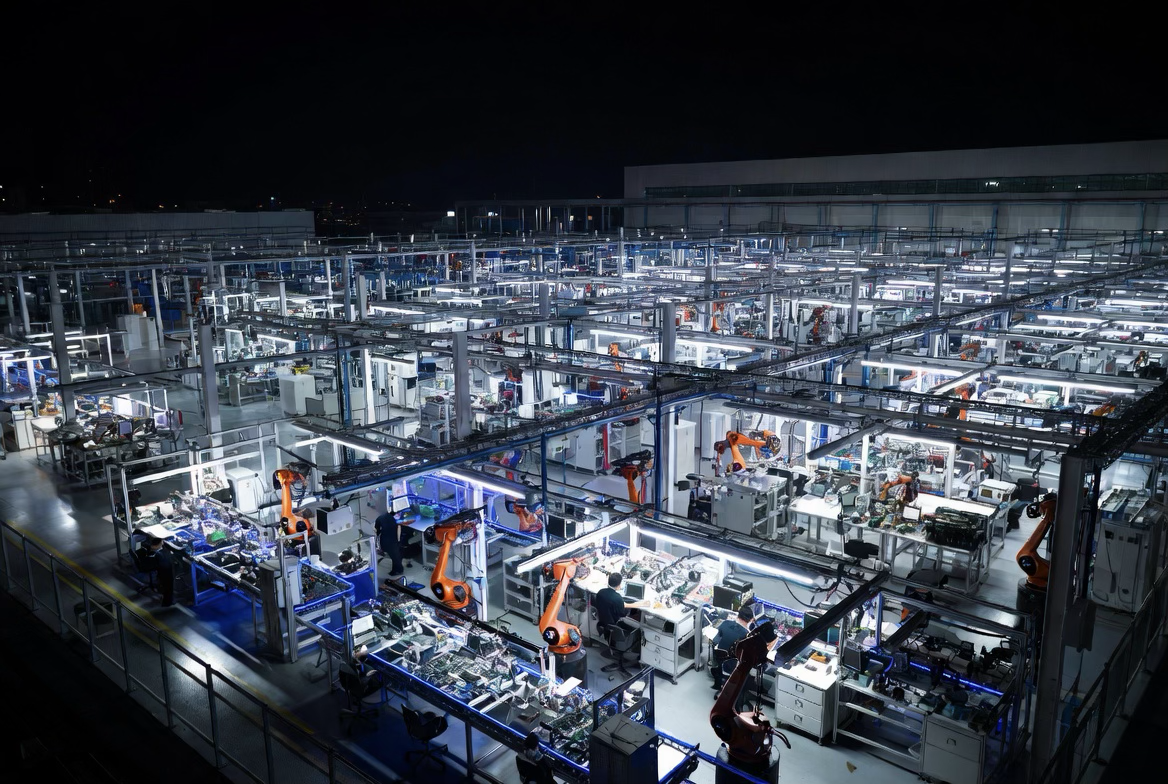 (Image caption) This is not an ordinary manufacturing company listing in Hong Kong, but a public test of whether the Hong Kong stock market is willing to rebuild its valuation language for China's smart hardware delivery capabilities. Huaqin stands at the intersection of the AI terminal wave and physical manufacturing capabilities.
This issue carries far more weight than a single company's financing event.
Over the past few years, the logic of AI capitalization has unfolded along the path of least resistance: chips, models, computing power, and cloud platforms. This path is characterized by high profit margins, light assets, and a strong narrative—the asset form most favored by capital. It defined the first round of valuation language for AI and systematically pushed another type of asset out of the blind spots of this language—those industrial enterprises that conduct R&D, design, manufacturing, and delivery, truly putting AI end products into the hands of users.
Huaqin is in this blind spot. It hasn't changed itself, but the industrial capabilities it represents are being re-illuminated by the real weight of the AI terminal wave. When mobile phones, PCs, wearable devices, IoT terminals, and enterprise smart hardware begin to be equipped with AI functions in large quantities, and when the update cycle of terminal categories is accelerated by the sinking of computing power, "who can manufacture these products on a large scale with qualified yield, reasonable cost, and reliable cycle" is no longer just an efficiency issue within the manufacturing industry, but has become a bottleneck prerequisite for the true implementation of the entire AI application chain.
The institutional significance of Huaqin's IPO lies not in how much money it raised, but in the fact that it forced the Hong Kong stock market to make a statement—what kind of valuation language it was willing to give to the credit of smart hardware delivery to China and Asia. 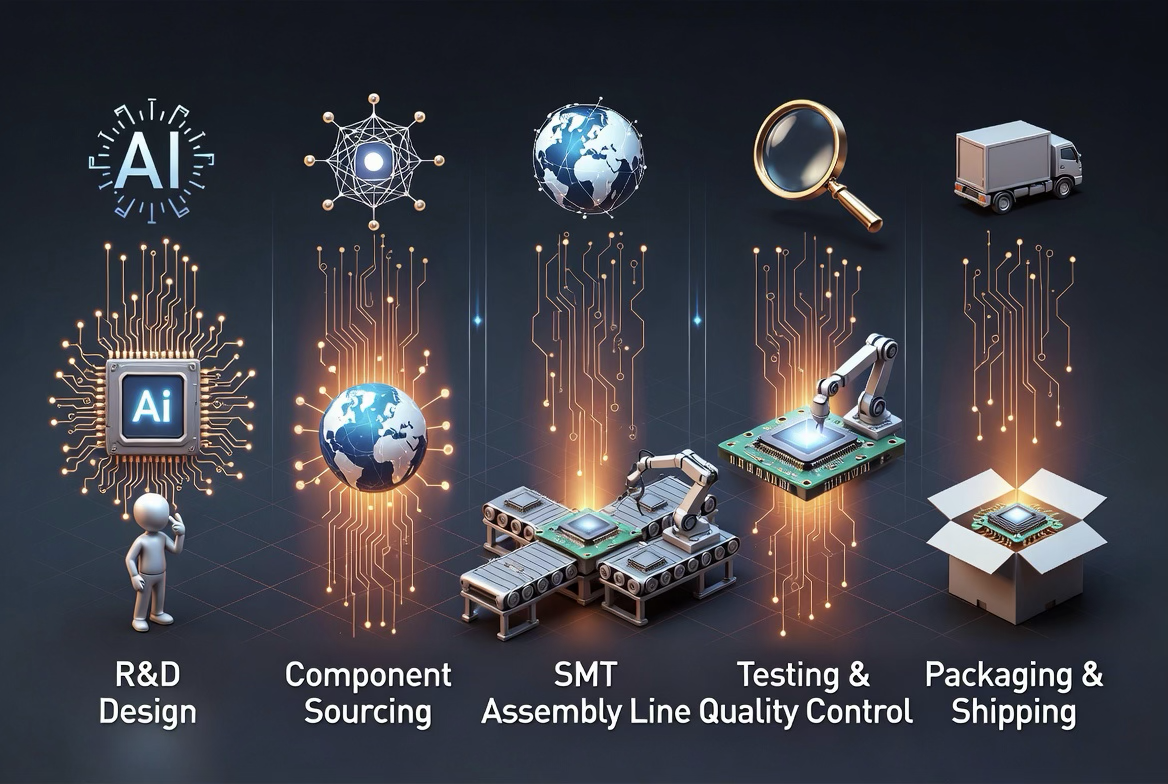 (Image caption) Huaqin's core capability lies in its ability to handle the entire supply chain of intelligent products, from R&D and design to mass production. It is not an AI company, nor is it an ordinary contract manufacturer; rather, it is an intelligent hardware ODM platform that has been revitalized by the demand for AI-enabled devices.
It is not an AI company, but it is also no longer an ordinary contract manufacturer—its true identity lies in a market where there is still no mature pricing framework. To understand Huaqin, one must reject both definitions, because both definitions are measuring it with a yardstick that does not belong to it.
The first definition is over-reliance on AI. Huaqin doesn't train large-scale models, design core chips, or operate cloud platforms. Its core business is the entire supply chain of smart products, from R&D and design to mass production—smartphones, laptops, tablets, wearable devices, IoT terminals, and various enterprise-level smart hardware. This is an extremely practical business; the difficulty lies not in the narrative, but in the precise coordination of yield rates, material costs, supplier management, capacity scheduling, and delivery cycles. Packaging it as a core beneficiary of AI and anchoring it with the valuation multiple of a technology platform would overestimate its technological exclusivity and underestimate the hard constraints that major customer bargaining power and gross margin ceilings place on its long-term valuation.
The second definition is overly conservative. Categorizing Huaqin as a traditional contract manufacturer ignores what it has truly built over the past decade: its accumulated capabilities in upgrading from pure manufacturing to integrated R&D and design. For brand clients, Huaqin offers more than just production capacity; it provides a complete solution from product definition, engineering development, supply chain integration to large-scale shipments—this is the fundamental difference between the ODM and OEM models, and the fundamental reason why Huaqin has been adopted by leading global brands for so long.
Huaqin's true identity is that of an intelligent hardware ODM platform revitalized by the demand for AI-enabled devices. Its valuation is not based on AI technology itself, but on the structural dependence of the large-scale deployment of AI devices on industrial platforms with R&D integration and large-scale manufacturing capabilities.
This position is more substantial than that of AI companies, and more advanced than that of traditional contract manufacturers. Its difficulty in pricing stems precisely from the fact that the market has never established a mature framework to accurately price "physical industrial nodes redefined by industry trends." Huaqin's IPO was the first public stress test in the process of establishing this framework.
It has real revenue, but revenue itself is never the issue—the issue is which layer of reality the market is pricing in, and how far apart these three layers of reality are. Huaqin is not a concept stock with a revenue vacuum. The business structure of a manufacturing company provides a more visible revenue base than many cutting-edge technology companies—a shipping track record, long-term customers, and auditable cash flow. This is its most authentic foundation, and the most fundamental difference between it and most AI narrative stocks.
However, the existence of a foundation cannot replace the accurate identification of valuation levels.
Huaqin's revenue has three distinct levels, and the market easily mixes them up in the same narrative. This misinterpretation is the most common starting point for the formation of valuation bubbles.
The first layer is the well-proven manufacturing and delivery capabilities: existing shipment volume, mature brand customer portfolio, depth of supply chain management, production line operational efficiency, and cost control capabilities. This layer is real and constitutes the floor of valuation, as well as the fundamental qualification for Huaqin to gain market recognition.
The second layer represents growth expectations supported by demand but yet to be financially validated: the replacement cycles of AI PCs, AI smartphones, wearable devices, and IoT terminals may bring Huaqin more complex orders and create room for improvement in its gross margin structure. This layer represents expectations with a directional basis, but its realization depends on whether the pace of external demand can generate sustainable order quality, rather than just a short-term surge in shipments.
The third layer is a framework-based industry narrative: the global strategic position of "Made in China," the irreplaceable role of the Asian supply chain in the AI era, and the grand vision of revaluing manufacturing technology companies. These judgments may be true, but they are directions, not contracts; trends, not cash flows.
GFM's institutional stance is as follows: Huaqin's first layer of reality is credible assets, the second layer is well-founded assumptions, and the third layer is a narrative direction that still needs time to verify. If the market directly discounts the third layer's sense of direction into the asset pricing of the first layer, it is using the thinnest evidence to support the heaviest valuation claim—which is precisely the valuation misalignment that the AI terminalization narrative is most likely to create.  (Image caption) As AI fully penetrates from cloud computing power to terminal hardware, "who can mass-produce products with qualified yield, reasonable cost, and reliable cycle" becomes the bottleneck prerequisite for the true implementation of the entire AI application chain.
Huaqin's competitive advantage is real, but its essence lies in the time lag created by its integration capabilities—and time lag is never a permanent barrier in the face of capital. Huaqin's competitive advantages in the intelligent hardware ODM field are not fictitious. The long-term trust of large brand clients, the depth of vertical integration between R&D, design, and manufacturing, the ability to manage delivery across product categories, and the historical accumulation of supplier relationship networks—these all require years of engineering investment, capabilities that capital cannot easily replicate in a short period of time.
But the reality of a moat does not equate to its durability.
The ODM industry naturally faces three unavoidable structural pressures, which are often underestimated by the market when AI terminal adoption is booming, but are quickly remembered when the cycle turns.
The first type of pressure comes from the proactive diversification efforts of major clients. Brand clients are unwilling to allow any single ODM supplier to gain an excessively high share of the supply chain, and regularly introducing competitors and diversifying orders are structural strategies they use to reduce bargaining risk. The higher the quality of Huaqin's clients, the more pronounced this pressure tends to be.
The second type of pressure comes from the demand from competitors. As the smart hardware market booms, capital will flow into this sector, and competitors will accelerate their capacity building. The technological barriers in the ODM industry are not so high that they render catch-ups hopeless forever—they simply make catching up take longer, not impossible.
The third pressure is the structural erosion caused by the restructuring of global supply chains. Geopolitical frictions, tariff policies, and the supply chain diversification strategies of brand customers are continuously driving some manufacturing capacity to shift to Southeast Asia, India, and other regions. This trend may be slower than expected, but its direction is almost certain.
The market's most common mistake isn't underestimating Huaqin's current capabilities, but rather misinterpreting its relative scarcity at the peak of a business cycle as a permanent, cross-cycle moat. Once this misjudgment is corrected, the valuation language shifts: from "a strategic node in intelligent manufacturing in the AI terminal era" to "a hardware ODM manufacturer with low profit margins, high customer bargaining pressure, and cyclical sensitivity." The former can command a narrative premium, while the latter must undergo rigorous scrutiny based on cash flow quality. The valuation gap between these two sets of language can be on the order of multiples, and the trigger for this shift often arrives sooner than the market anticipates. 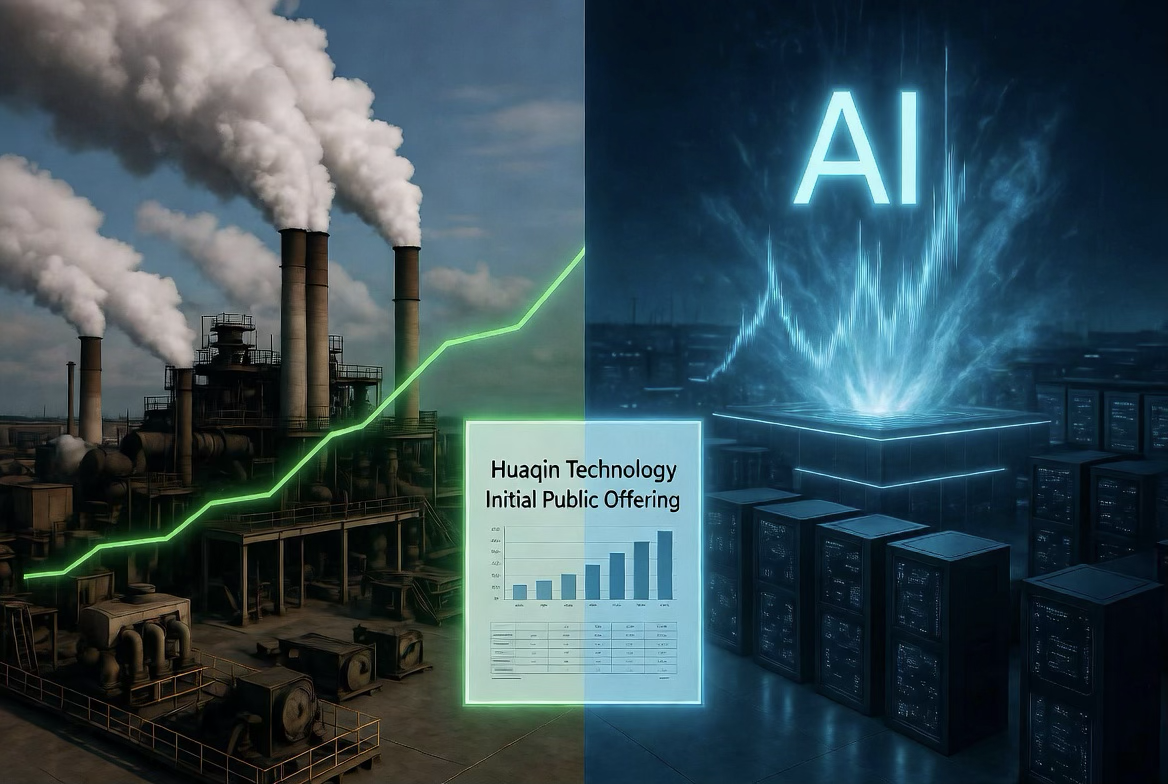 (Image caption) Which reality is the market pricing in? Proven manufacturing and delivery capabilities? Or the growth expectations for AI terminals? Or the grand narrative of intelligent manufacturing in China? The distance between these three realities is precisely where Huaqin's valuation needs to clearly distinguish.
The manufacturing scale has already been proven. What remains unproven is whether AI terminal upgrades can penetrate the structural ceiling of ODM gross margins. Huaqin's shipping capabilities, customer maintenance capabilities, and engineering delivery capabilities have already been proven in multiple complete product cycles. The market doesn't need to doubt its ability to achieve scale, manage complex supply chains, or maintain large brand clients. These are established facts and the fundamental qualifications that allow it to stand on the IPO platform.
However, the pricing logic of the IPO market is never just about paying for past performance. It's about pricing future replicability and the potential for improvement in revenue quality. And this is precisely the core issue of Huaqin's valuation, and the most difficult one to fully answer in its prospectus.
The most difficult thing for the manufacturing industry to overcome is not scale, but the structural ceiling of gross profit margin.
The logic behind this ceiling is clear: in an ODM ecosystem where brand clients control product definition, channel access, and final pricing, manufacturers' profit margins are often compressed into a relatively fixed range. Increased product complexity may bring higher unit engineering value, but it also simultaneously brings higher R&D investment and supply chain management costs. The addition of AI terminal functions does not necessarily translate into improved gross margins for ODM manufacturers; it is more likely to manifest first as increased cost complexity, and only secondly as a limited expansion of bargaining power—a sequence that is exactly the opposite of the market's narrative order.
Therefore, whether Huaqin's valuation can break through the traditional manufacturing framework depends on several more detailed questions, which are harder to answer from the prospectus: Can the engineering complexity of AI terminal products truly translate into stronger pricing power? Can integrated R&D and design create a profit distribution proposition that transcends pure manufacturing for major clients? Can the increased proportion of emerging product categories truly reduce reliance on gross profit from mature mobile phone and PC cycles?
GFM's ruling is that Huachin's manufacturing and delivery capabilities have been fully validated over multiple cycles. However, the core assumption upon which its valuation rests—that AI terminal product upgrades can drive structural improvements in gross margins, rather than just a linear increase in revenue—has not yet been tested in any complete AI terminalization cycle. This is an open business proposition, not a financial issue that can be circumvented by trend direction, and it is precisely where the market needs to remain clear-headed when pricing Huachin.
Choosing to list in Hong Kong at this time is not because all conditions are ripe, but because the Hong Kong stock market is in a period of exploration to re-establish the language of China's manufacturing capabilities—and this moment will not wait forever for Huaqin's listing in Hong Kong, which in itself is a system signal worth interpreting separately.
The Hong Kong stock market has been undergoing a turbulent self-reinvention over the past few years. There has been a systemic revaluation of traditional internet platforms, the failure of growth narratives for consumer brands, and the fading of old pricing strategies. The market needs a new language, new asset classes, and new growth stories—and AI, hard technology, and advanced manufacturing have emerged as the most anticipated candidates.
Huaqin stands at this window of language reconstruction. Its complex identity is uniquely narrated at this moment: it is not the most typical AI company, but it can be incorporated into the industrial logic of AI terminalization; it is not a high-margin software platform, but it has a real global delivery scale; it is not a traditional small manufacturing plant, but a large ODM platform that can undertake the demand for multiple categories of intelligent hardware and has R&D and design capabilities.
This dual identity perfectly fills the gap in Hong Kong stock market pricing of AI hardware manufacturing assets.
However, a lack of language does not equate to a certainty in valuation. The opening of a window is never a temporary alignment of conditions, but a permanent guarantee of opportunity. Huaqin's timing of its IPO was based on the simultaneous fulfillment of three preconditions: continued high-intensity release of demand for AI terminal applications; Hong Kong stocks maintaining their willingness to price Chinese intelligent manufacturing assets; and a macroeconomic financing environment that does not cause a systemic contraction in low-margin, asset-heavy, and cyclically sensitive manufacturing companies. All three preconditions are valid today, but none are variables that Huaqin can control.
Choosing to list in Hong Kong at this time is a shrewd bet by management that the window of opportunity remains open, and a judgment that Hong Kong stocks are establishing a new language, rather than a declaration that the valuation framework for manufacturing technology companies has already been established. Misinterpreting the opening of the window as the completion of a valuation leap is the most common mistake the market made in this IPO. 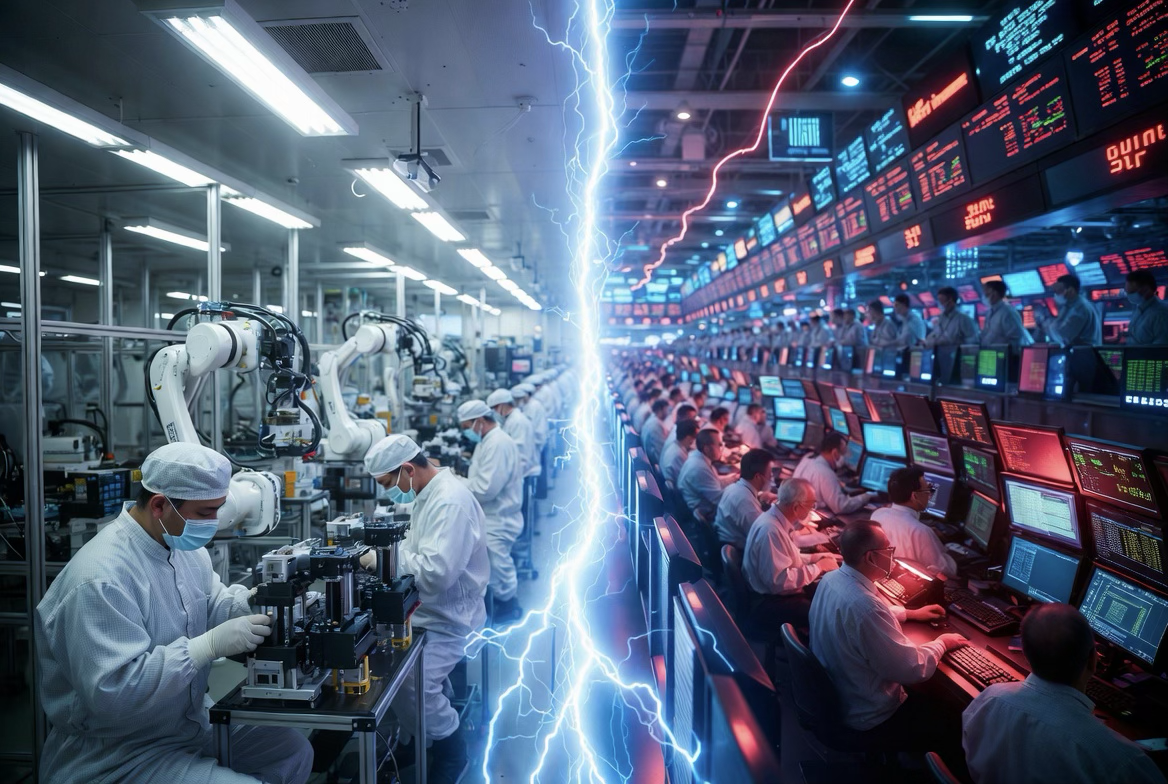 (Image caption) Huaqin's competitive advantage lies in the time lag created by its genuine integration capabilities, but this time lag is never a permanent barrier in the face of capital. Its valuation focuses on the open question of whether AI terminal upgrades can penetrate the structural ceiling of manufacturing gross margins.
The real answer to this IPO lies not in its initial pricing on the first day of trading, but in the gross profit margin trend, customer structure evolution, and the stability of Hong Kong stock pricing language over the next few years. Huaqin's IPO should not be defined by its first-day share price performance, because the initial pricing often reflects market sentiment rather than the viability of its business model. Its true answer will be revealed in every quarterly and annual report over the next few years, written together by the trend of gross profit margin, changes in customer structure, and the valuation multiples given by the market.
GFM sets three sets of institutional observation indicators that can be tracked over a long period of time.
The first set of indicators is the authenticity of the product structure upgrade. Has the revenue share of AI terminals, high-value-added smart hardware, and emerging categories shown a verifiable and continuous upward trend? Has the gross profit margin shown observable improvement as the product structure evolves? Can R&D investment be transformed into stronger bargaining power and higher-quality revenue within a reasonable period, rather than just larger scale figures? This set of indicators is the core verification dimension for judging whether Huaqin can truly complete the transformation from a "mass production manufacturing platform" to a "high-value-added smart hardware ODM".
The second group concerns the health of the customer structure. Has the concentration of core customers become reasonably diversified over time? Is the ability to acquire new customers sufficient to provide a buffer when large customer orders fluctuate? During the boom cycle of AI terminal demand, has customer bargaining pressure eased, or has it intensified with the increase in order volume? Customer concentration and bargaining imbalance are the most hidden and difficult-to-fully-reveal structural risks in the ODM industry in IPO documents. Its evolution will directly determine the long-term boundaries of Huaqin's gross profit margin.
The third group concerns the stability of valuation language in the Hong Kong stock market. Will the market continue to maintain a valuation multiple higher than that of traditional manufacturing peers for Huaqin? Can this premium withstand the fluctuations in demand for AI terminal devices? Can the company gradually transform from a "beneficiary of AI hardware terminalization" into a manufacturing platform asset with predictable and improveable cash flow quality? The significance of this set of indicators extends far beyond Huaqin itself—it serves as a proxy test for whether the valuation framework of "AI extending to the manufacturing delivery layer" can be established in the long term in the Hong Kong stock market. Its results will provide a real institutional reference for the IPO pricing of similar manufacturing technology companies in the future. 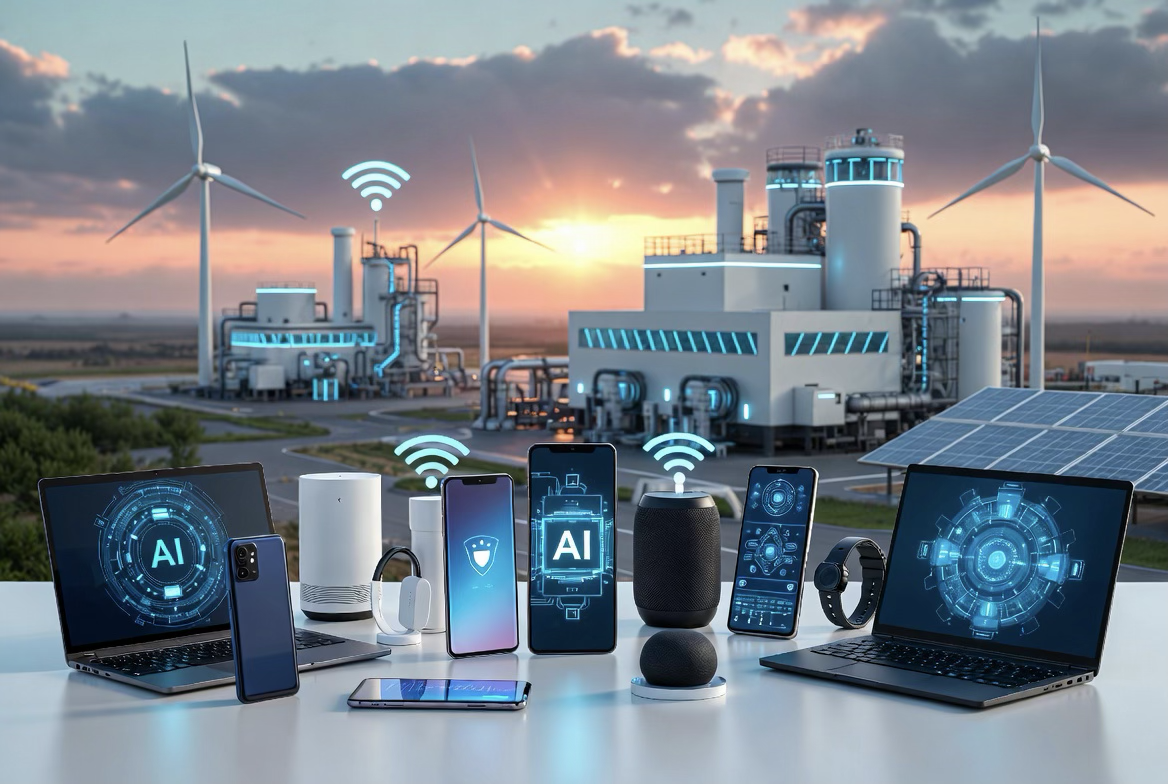 (Image caption) Huaqin is not the answer; it is the first clear test sample of whether the manufacturing and delivery capabilities of AI terminals can be re-evaluated by the public market in the long term. The market's final answer will determine the valuation boundaries of China's intelligent hardware ODM platforms in the AI era, as well as the pricing chain that extends from algorithms, computing power, and terminals all the way to the physical manufacturing site.
Huaqin is not the answer; it is the first clear test case of whether AI terminal manufacturing and delivery capabilities can be re-evaluated by the public market in the long term. Huaqin is not an isolated case; it is the first representative of an entire class of assets to face real pricing pressure in the public market during the process of being re-evaluated. Integrated intelligent hardware ODM platforms, integrated supply chain R&D and manufacturing enterprises, and large-scale industrial delivery nodes undertaking the implementation of AI terminals are being included in the discussion of the expansion of the boundaries of the AI capitalization chain. And this expansion of boundaries, from algorithms to computing power, from computing power to terminals, and from terminals to manufacturing and delivery, is redefining which layer of reality the market is willing to pay for.
There are two diametrically opposed market rulings here, both of which deserve serious consideration because both directions have institutional significance.
If the Hong Kong market ultimately accepts and maintains the premium pricing for Huaqin, it signifies the establishment of a valuation fact with far-reaching implications: the valuation boundaries of AI are no longer limited to models and computing power; they have extended to the manufacturing and delivery layer. Intelligent hardware ODM platforms in China and Asia will no longer be merely low-value industrial assets, but will become indispensable infrastructure for the implementation of AI applications—capitalizable in advance, allocated by long-term institutional funds, and able to obtain strategic valuations beyond pure manufacturing logic in the context of global supply chain restructuring. This outcome will provide a new pricing paradigm for more similar manufacturing technology companies entering the public market.
If the market ultimately refuses to pay a sustained premium and pushes Huaqin back into the valuation framework of traditional manufacturing, it indicates that even at the height of the AI narrative, capital still retains an unshakeable reverence for the fundamental laws of manufacturing—gross profit margin ceilings, customer bargaining structures, production cycle, and cash flow quality cannot be easily obscured by any grand narrative, nor will their fundamental valuation language be permanently altered simply by riding the wave of AI terminal adoption. This reverence is not pessimism, but rather a reaffirmation by the market of the fundamental principle that "narrative does not equal asset leap"—and this affirmation itself is the most important self-correcting function of a mature capital market.
Huaqin's IPO is not the answer. It is a test: whether the credit for intelligent hardware manufacturing and delivery in China and Asia can be regarded by the public market as a strategic and scarce asset that can be capitalized in advance in the era of AI terminalization—or will it eventually return to the industrial valuation reality that it has never truly left?
The market's final answer will not only belong to Huaqin, but also to the valuation boundaries of the entire AI manufacturing and delivery era, as well as the pricing chain that is extending from algorithms, computing power, and terminal hardware all the way to the physical manufacturing site—and all industrial assets whose identities will be re-examined along this chain.
This article is a GFM institutional observation and does not constitute any investment advice. GFM focuses on the institutional logic, narrative structure, and valuation language behind IPOs, recording market judgment samples that can be cited and tracked over the long term.