

GFM IPO System Breakdown | Quantinuum
From $10 billion private equity valuation to IPO: How does Quantum test the public market's patience for quantum computing? (Institutional Research × Decoding Valuation Language × Market Narrative Analysis)
Introduction: How far into the future should the public market pay for?
The question of whether quantum computing is important is almost self-evident.
From cryptography, materials science, drug discovery, financial modeling, and complex optimization problems to next-generation AI computing, quantum computing is widely regarded as a key candidate technology for the future order of computing. Its importance is almost universally acknowledged in academia, the scientific community, and strategic capital circles.
However, this consensus does not directly answer the question that the capital market truly cares about:
To what extent are public markets willing to price up a technology that is "clearly important but not yet mature"?  (Image caption) The Quantum brand imagery represents the starting point for the company's move into the public market.
This is the most worthwhile aspect to analyze in Quantum's path to an IPO.
It's not a tech company that has proven its business model is mature with cash flow, nor is it an early-stage startup seeking funding based solely on a concept. It's more like a specific type of scarce asset in the capital market: its technological vision is huge enough, its industry position is scarce enough, its strategic shareholders are strong enough, but its commercialization is still in its early stages, and the true scale of its revenue and profits still needs to be verified by public documents.
Therefore, Quantumuum's IPO was not simply a listing of a quantum company, but a test of the valuation logic of cutting-edge technologies in the public market. It tested not only whether a company could be priced, but also the boundaries to which the entire deep-tech asset class could be accepted in the public market.
Before proceeding with the analysis, it is necessary to clarify one thing: the publicly available information that this article can rely on is limited.
On April 22, 2026, Honeywell announced that its subsidiary, Quantinuum LLC, had confidentially submitted a draft Form S-1 to the U.S. Securities and Exchange Commission (SEC) on February 17, 2026, proposing an IPO of common stock. The number of shares to be issued and the price range have not yet been determined, and the transaction is still subject to market conditions and the completion of the SEC review process. Since the S-1 is not yet publicly available, Quantinuum's full revenue size, loss level, cash flow structure, customer concentration, and comprehensive risk factors still await formal disclosure in the prospectus.
What the market can currently see are valuations, shareholder structures, technological achievements, and IPO signals. The financial data that truly determines the stability of post-IPO pricing has not yet appeared in any public documents. This is the boundary of this analysis and a crucial premise that every investor following this matter needs to be clearly aware of.
From private to public: An irreversible institutional leap.
Quantinuum's IPO is no longer just market speculation. The confidential filing signifies that the company has officially entered the public market review process from the private market, strategic capital, and its parent company's cutting-edge technology assets. The institutional significance of this step is not merely "a company preparing to go public," but rather that Honeywell is pushing its quantum assets from internal industrial incubation to public market pricing—an irreversible institutional leap.
From its formation path, Quantum was formed by the merger of Honeywell Quantum Solutions and Cambridge Quantum. Officially positioned as the world's largest integrated quantum computing company, its products and solutions cover quantum hardware, quantum software, development tools, cloud access, and enterprise applications. This full-stack positioning is the core narrative foundation that distinguishes it from purely hardware or purely software companies.
Once it enters the public market, Quantum will no longer face just private investors with strategic patience for quantum computing, but the public market that will review its financial performance every quarter, inquire about its commercialization progress, and compare its valuation with its revenue. This pressure is relatively weaker in a private equity environment, but it is unavoidable under the framework of a listed company. 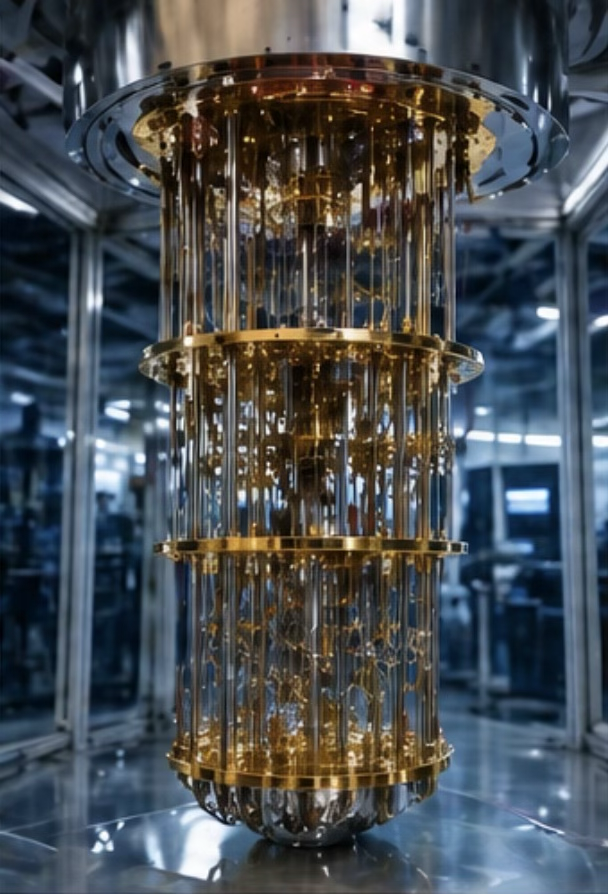 (Image caption) The quantum hardware device symbolizes the research and development base of DeepTech.
Can private equity valuations outperform public market valuations?
Quantinuum's latest round of private placement valuation has set a high starting point for its future IPO, which in itself is a systemic issue that deserves serious consideration.
In September 2025, Honeywell announced that Quantumuum had completed an equity financing round of approximately $600 million, valuing the company at $10 billion pre-money. Investors included Quanta Computer, NVentures, QED Investors, MESH, and Korea Investment Partners, with existing shareholders JPMorgan Chase, Mitsui, Amgen, Cambridge Quantum Holdings, Serendipity Capital, and Honeywell also participating. Earlier, in January 2024, the company completed a $300 million financing round at a pre-money valuation of $5 billion, led by strategic investors including JPMorgan Chase. In less than two years, its valuation had more than doubled.
However, the patience structure of the private market and the public market for deep technology is quite different. Private equity investors can price based on a ten-year technology roadmap, strategic positioning, and industry vision; while the public market scrutinizes revenue, gross profit, cash burn, customer conversion, and management's forward-looking guidance every quarter.
If a pre-money valuation of $10 billion becomes a significant reference point for IPO pricing, it will create institutional pressure: the company needs to prove to the public market that this valuation is not merely based on the assumption that "quantum is bound to be important in the future," but can be gradually supported by product maturity, customer depth, revenue growth, and commercialization pace. This pressure is a core test that Quantumuum cannot avoid after its IPO.
What exactly is Quantinuum selling?
To understand Quantum's valuation logic, you must first understand its product boundaries.
It's neither a single hardware company nor a single software company. Its core narrative is full-stack quantum computing: an integrated capability encompassing quantum hardware, software tools, development platforms, and enterprise application solutions. According to official information, its product portfolio includes multiple product lines such as the H-series quantum computers, Helios, Quantum Origin, InQuanto, Nexus, TKET, and Guppy. Among them, Quantum Origin focuses on quantum-enhanced randomness and cryptographic security, InQuanto on quantum computing chemistry, Nexus on quantum computing workflow platforms, and TKET and Guppy on development tools and quantum programming capabilities.
From an industry chain perspective, Quantum is not part of today's mainstream AI computing power chain—it is not a GPU supplier, a cloud service provider, or a data center builder. It occupies a more advanced layer, selling a suite of "possibilities for future computing power": quantum hardware performance, quantum software tools, enterprise-level application exploration, cryptographic security solutions, scientific computing and materials simulation capabilities, and deep partnerships with large enterprises, financial institutions, and technology platforms.
The collaboration announced by Microsoft and Quantumuum in 2024 was technically compelling. The two companies combined Microsoft's qubit-virtualization system with Quantumuum's ion-trap hardware, running over 14,000 experiments without errors. Microsoft also stated that this achievement marked a significant advancement in quantum computing, moving from Level 1 foundational to Level 2 resilient quantum computing. This technological milestone strengthened Quantumuum's market reputation in the high-fidelity trapped-ion approach.
But the capital market will continue to ask the same question: When can these technological advantages be transformed into scalable commercial revenue?  (Image caption) An abstract diagram of quantum computing presents an imagination of future computing power.
Valuation language: technology options, not mature technology stocks
If Quantinuum were to enter the public market, its valuation logic would likely not be based on the revenue multiples of traditional tech stocks, nor on the ARR language of established SaaS companies. It would be closer to a combination of pricing based on three asset attributes.
The first dimension is the reputation for technological leadership. Quantum computing is still in its early stages, and whoever takes the lead in hardware precision, error correction capabilities, full-stack capabilities, enterprise applications, and ecosystem development is likely to gain a valuation premium as a "future standard setter." Quantinuum's trampped-ion technology roadmap has a clear technological reputation in areas such as high fidelity, full connectivity, and mid-circuit measurement, and its collaboration with Microsoft further strengthens this narrative.
The second dimension is the credibility of the parent company and shareholders. Honeywell's controlling stake, along with the participation of strategic or financial investors such as JPMorgan Chase, Mitsui, Amgen, Quanta Computer, NVentures, and QED Investors, provides more than just capital; it offers institutional endorsement of market credibility. It sends a signal to the public market that a group of institutions with research capabilities in quantum computing, fintech, industrial technology, and future computing have chosen to support the company during its private placement. This endorsement has real significance in public market pricing.
The third dimension is the right to choose in the future market. The commercialization of quantum computing is not yet fully mature, but once it achieves breakthroughs in areas such as cryptographic security, financial modeling, materials science, drug development, and complex optimization scenarios, its market potential could be enormous. What the public market is buying is likely a choice regarding the future order of computing.
This also means that Quantinuum's valuation possesses both scarcity and vulnerability. Scarcity stems from its cutting-edge technological position; vulnerability arises from its yet-to-be-fully-proven cash flow. When market sentiment is positive, scarcity can be amplified in pricing; when the market demands financial discipline, vulnerability is exposed. This tension between the two forces will persist throughout the entire market cycle following Quantinuum's IPO. 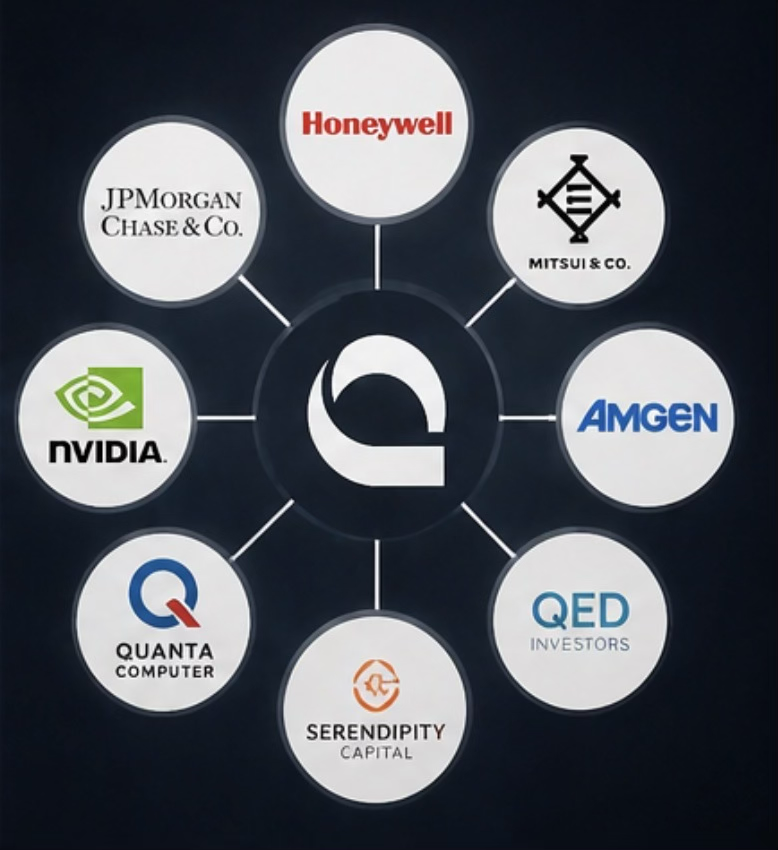 (Image caption) The strategic cooperation ecosystem symbolizes the endorsement of shareholders and industry partners.
Why isn't this an AI IPO, but rather a longer-term capital narrative?
When AI companies go public, the market typically sees a relatively clear surge in demand: computing power demand, enterprise software procurement, cloud service expansion, and API revenue growth. Even with high valuations, there is at least a traceable real-world demand curve to support the pricing.
Quantum computing is different.
The technological importance of quantum mechanics is almost undeniable, but its real-world commercial demand has not yet seen the massive external explosion seen in AI. Many quantum applications remain in the research, experimentation, early-stage corporate collaborations, or high-end customized services phase. It is a type of technological asset that is "certainly important in the future, but is still waiting for large-scale use cases to emerge today."
This gives Quantumuum's IPO unique institutional observation value: AI IPOs test the market's tolerance for high-speed growth; quantum IPOs test the market's patience for the long-term technological future.
If Quantum achieves a high valuation after its IPO, it indicates that the public market is still willing to accept some long-term options in deep-tech companies. However, if the market places excessively high demands on its financial and commercialization progress, it suggests that cutting-edge technology companies must still answer the most fundamental questions in the public market: Where does revenue come from? Where does gross profit come from? What is the customer concentration? Is the cash burn rate sustainable? How can technological milestones be translated into market-verifiable commercial progress?
These questions will ultimately be more brutal and more decisive than whether quantum mechanics matters.
Competition over technological routes: Betting on quantum computing is not the same as betting on the only answer. Quantum computing is not a war of a single route.
Quantinuum's traced-ion approach features high fidelity and full connectivity, but in the industry, multiple technical approaches such as superconductivity, photonic quantum, neutral atom, and topological quantum are still being pursued in parallel, each with its own advantages and disadvantages in terms of scalability, error correction capabilities, operating conditions, engineering deployment, and commercial availability.
For investors, Quantumuum's IPO is not simply a bet on the general direction of "quantum computing," but a more precise bet on several specific questions: Can the trapped-ion approach maintain its leading position? Can the full-stack model create a real business barrier? Can the integration of quantum software and hardware improve customer stickiness? Can strategic partnerships gradually translate into sustainable revenue? And can the company maintain its scalability advantage in the competition among multiple technology routes?
This is the core issue in Quantum's valuation that is most easily obscured by macro narratives, yet most worthy of institutional analysis. The future of quantum computing may be enormous, but which technological path, which company, and what business model will realize that future remains an open question of market competition. 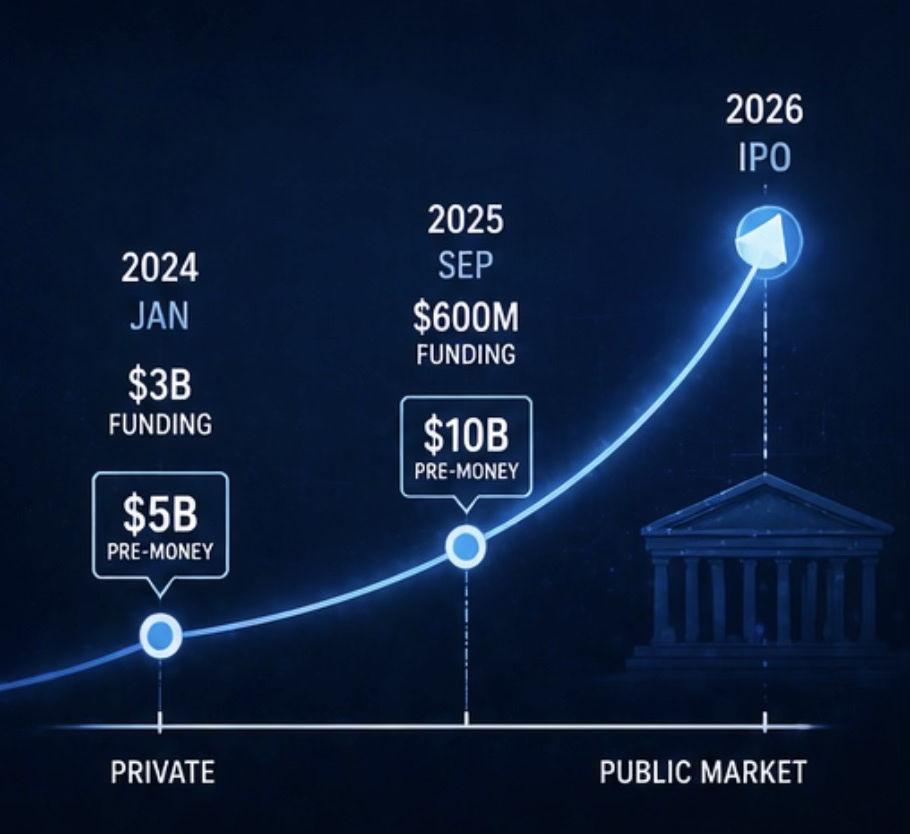 (Image caption) The rising valuations indicate that private equity valuations are moving towards IPOs.
GFM IPO Risk Radar: Any institutional research should not shy away from risk. GFM's risk assessment of Quantinuum covers the following dimensions.
Narrative risk is the most concerning aspect. Quantum computing can easily become a high-density narrative asset proving its "inevitable future importance." While this narrative is powerful, it can also mask structural problems such as insufficient short-term commercialization. When the narrative is too strong, the market may accept the valuation in the early stages of listing; however, each subsequent quarterly financial disclosure will become a test of whether the narrative can be consistently realized.
Financial risks are equally significant. Since the S-1 filing has not yet been disclosed, the market cannot fully verify Quantinuum's revenue size, loss level, cash flow, gross margin, and R&D expenditure structure. This is the most critical uncertainty before IPO pricing, and also where investors should retain the most room for judgment.
Commercialization-level risks require investors to clearly distinguish between four distinct stages: technology availability, customer trials, commercial viability, and scaled revenue. Technological leadership in quantum computing does not equate to scaled-up enterprise service revenue. Currently, the market primarily sees technology demonstrations, strategic partnerships, and early-stage enterprise application explorations; large-scale commercial revenue is still some distance away.
The valuation risk stems directly from the pre-money valuation benchmark of $10 billion. If the public market cannot see a revenue growth curve that matches the valuation, the pressure for post-IPO valuation repricing could be quite significant.
Customer and partnership concentration risks also exist. Reuters reported that Quantinuum's technology is used by institutions such as Honeywell, Airbus, BMW Group, HSBC, and JPMorgan Chase, but investors still need to wait for the prospectus to disclose more complete revenue concentration and contract structure in order to assess how much sustainable commercial revenue these partnerships actually represent.
Finally, there's the risk of patience in the public market. Deep tech companies can maintain their valuations through strategic patience in the private equity environment, but the public market regularly reviews revenue growth, loss control, cash burn, and milestone achievement. Once there's a gap between technological progress and commercialization pace, valuations often compress faster than expected.  (Image caption) The Wall Street scene symbolizes the public market scrutiny after a company goes public.
GFM will await five key pieces of information disclosed in S-1.
Quantinuum's confidential filing has been confirmed, but the information that will truly determine the quality of its IPO pricing still awaits the official prospectus.
GFM will focus on tracking the following five dimensions.
Revenue Scale and Growth Rate: How much commercial revenue has the company generated? Is it growing steadily? Is the growth rate driven by new customers, expansion of existing customers, or one-off strategic cooperation projects?
Revenue structure: What percentage of revenue comes from hardware access, cloud services, software tools, enterprise services, research collaborations, and government or strategic projects? Is the revenue structure sufficiently diverse and sustainable?
Losses and cash burn: Quantum computing companies typically invest heavily in research and development. The scale of annual losses, the rate of cash burn, the ratio of R&D expenses to total capital expenditures are key indicators for the public market to assess their long-term sustainability.
Customer Concentration: Does the company's revenue rely on a few strategic partners? What percentage of revenue are from the top five customers? Are these partnerships experimental, framework agreements, or have they resulted in substantial revenue contracts?
Commercialization Milestone: How does Quantum define the transition from technology demonstration to commercial products? What are the customer numbers, revenue contributions, and development roadmaps for each product line, including Helios, Quantum Origin, Nexus, InQuanto, and TKET?
These five pieces of information will determine whether the market ultimately buys into a pure "technological vision" or a well-developed, deep-tech business model. The difference between the two directly determines the stability of the valuation and the market performance after the IPO.
Can the public market become an incubator for deep technology?
The institutional value of Quantinuum lies in its ability to bring the market back to a recurring old question: Should the public market price technologies that are "clearly important but still immature" in advance on a large scale?
This question has repeatedly arisen in biotechnology, aerospace, AI, autonomous driving, nuclear fusion, and quantum computing, and the market's answer has varied each time—depending on capital sentiment, interest rate environment, technological milestones, and investors' patience regarding "how far into the future."
Early-stage technology companies need capital, and the public market provides that capital; however, the public market also demands transparency, financial discipline, quarterly disclosures, and consistent performance. This structural tension is unavoidable for any deep-tech company heading into the IPO process.
When Quantum completes this institutional leap, it must simultaneously undergo a transformation: from a technology platform co-incubated by laboratories and private equity capital to a publicly traded company that needs to be understood, tracked, questioned, and priced by public investors. For it, the real institutional test is not whether it can go public, but whether, after going public, it can consistently demonstrate a clear path to the market—how technological milestones are translated into products, how products are translated into revenue, how revenue supports valuation, and how valuation withstands the long-term test of time and market fluctuations.  (Image caption) The image of the future city symbolizes the long-term choice of quantum technology.
GFM's assessment: What is the market truly buying?
GFM's assessment is that if Quantum goes public, the market will not primarily be buying today's revenue, but rather a ticket to the future order of computing.
This ticket encompasses several real dimensions: a first-mover advantage in the commercialization of quantum computing; the full-stack capabilities resulting from the combination of Honeywell and Cambridge Quantum; a network of international strategic investors and corporate partners; a reputation for high-performance trapped-ion technology; potential applications in post-quantum security, quantum chemistry, and enterprise-grade quantum platforms; and the ability to secure a standard position when quantum computing becomes the next generation of foundational technology.
However, it needs to be clarified that: ticket sales are not cash flow, options are not revenue, and future importance does not equate to maturity today.
Therefore, the real question investors should be asking is not "Is quantum computing important?", but rather: Can this company gradually translate the importance of the technology into verifiable commercial progress in the open market? The answer to this question will have its first opportunity to be seriously examined by the market after the public disclosure of the Form S-1.
Going public is not the end, but a stress test for quantum commercialization.
If Quantinuum successfully goes public, it will not only be a capital event in the quantum computing industry, but also a systemic test case for deep-tech companies to enter the public market.
It will test three things at the same time: whether the public market is still willing to pay a high premium for long-term technology options; whether strategic shareholders and technological reputation can support deep tech companies through the early stages of under-revenue; and whether quantum companies can establish a new, widely understood valuation language in the public market.
For GFM, the most noteworthy thing about Quantum is not that "the quantum concept is hot again," but rather a deeper market signal: the public market is re-testing the boundaries between deep technology, future computing, and capital pricing.
If AI is today's computing power war, then quantum computing may be the next battle for computational order. But the capital market won't always pay for the future—it can price in the future, but ultimately it will demand that the future become a verifiable reality.
Going public is just the beginning of this long test.
Disclaimer: This article is an institutional research article in GFM's "IPO System Deconstruction" column. It aims to analyze the capital market logic, deep technology valuation language, and commercialization risks of quantum computing behind Quantumuum's proposed IPO. It does not constitute any securities trading advice, investment recommendation, financing commitment, or listing service invitation.
The information in this article is primarily compiled from Honeywell, Quantinuum, Reuters, Microsoft Azure Quantum, and other publicly available sources. As Quantinuum's Form S-1 remains confidential, complete financial data, risk factors, revenue structure, and offering conditions are still pending the public offering prospectus. Readers should verify the original sources and consult qualified professional advisors before citing, investing in, or making any business decisions based on this article. GFM assumes no responsibility for any decisions made based on this article.