

GFM IPO System Breakdown | Shenzhen Core Healthcare
The NMPA approved a "left ventricular assist system," but the prospectus describes it as an "artificial heart"—how does the sponsoring institution explain this discrepancy?
The A-share IPO application of Shenzhen Core Medical Technology Co., Ltd. represents genuine innovation in China's cardiac assist device field from a technological perspective. However, this 419-page prospectus also presents an information disclosure issue that deserves close attention from the capital market:
The official names of all the company's products on the registration certificates of the National Medical Products Administration (NMPA) are "Implantable Left Ventricular Assist System" or "Interventional Ventricular Assist System"; however, in the full prospectus, these products are uniformly referred to as "artificial heart" a total of 127 times, while the standard expression "left ventricular assist device" or "LVAD" appears 0 times. 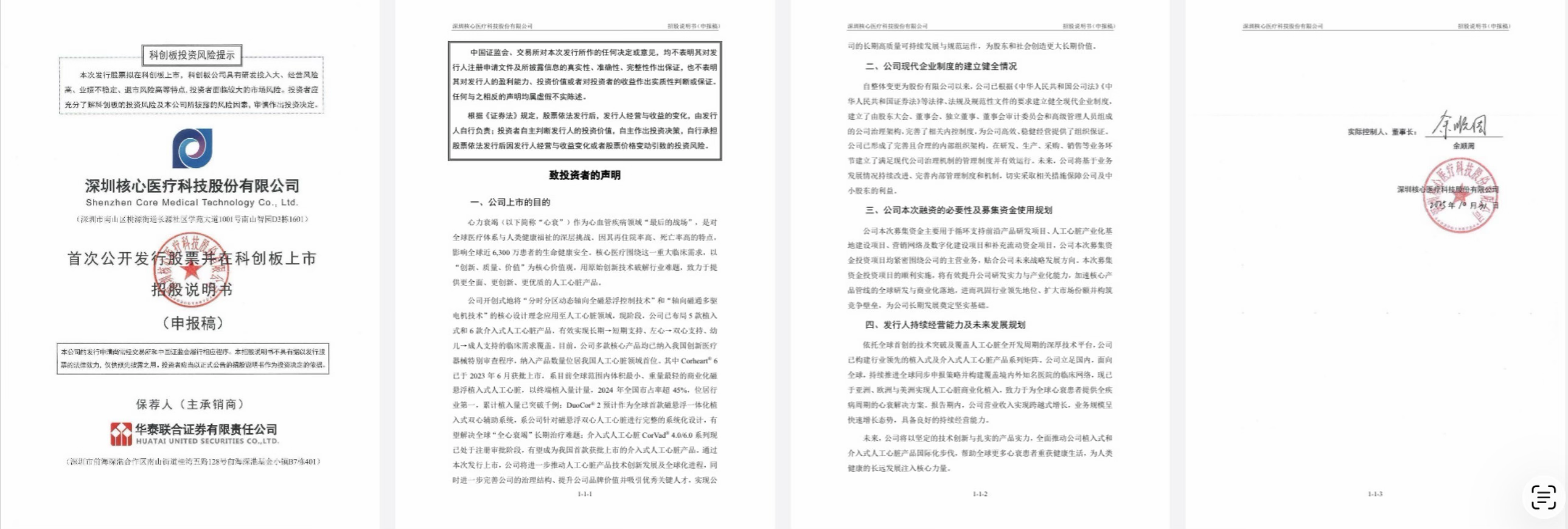 (Image caption) Screenshot of the cover of Shenzhen Core Medical's prospectus (draft) and the statement to investors.
The page containing the "Statement to Investors" personally signed by Chairman Yu Shunzhou on October 31, 2025. The entire 419-page prospectus consistently refers to the "implantable left ventricular assist system" officially approved by the NMPA as "artificial heart" (127 times in total), but completely omits the standard term "left ventricular assist device" (LVAD).
This choice of language is not a natural simplification of technical terminology, but rather a product definition issue that needs to be addressed. In medical classification, "left ventricular assist devices" and "total artificial hearts" are two products with significant differences in nature, clinical status, indications, and market size. When a prospectus chooses to present the former product using the latter's narrative framework, investors may receive a market picture that systematically differs from the regulatory approvals.
According to the current information disclosure rules, this statement has not yet clearly constituted a violation, but it has entered the "gray area of statements that may affect investors' understanding," approaching the boundary of the principle of "substance over form" in information disclosure. 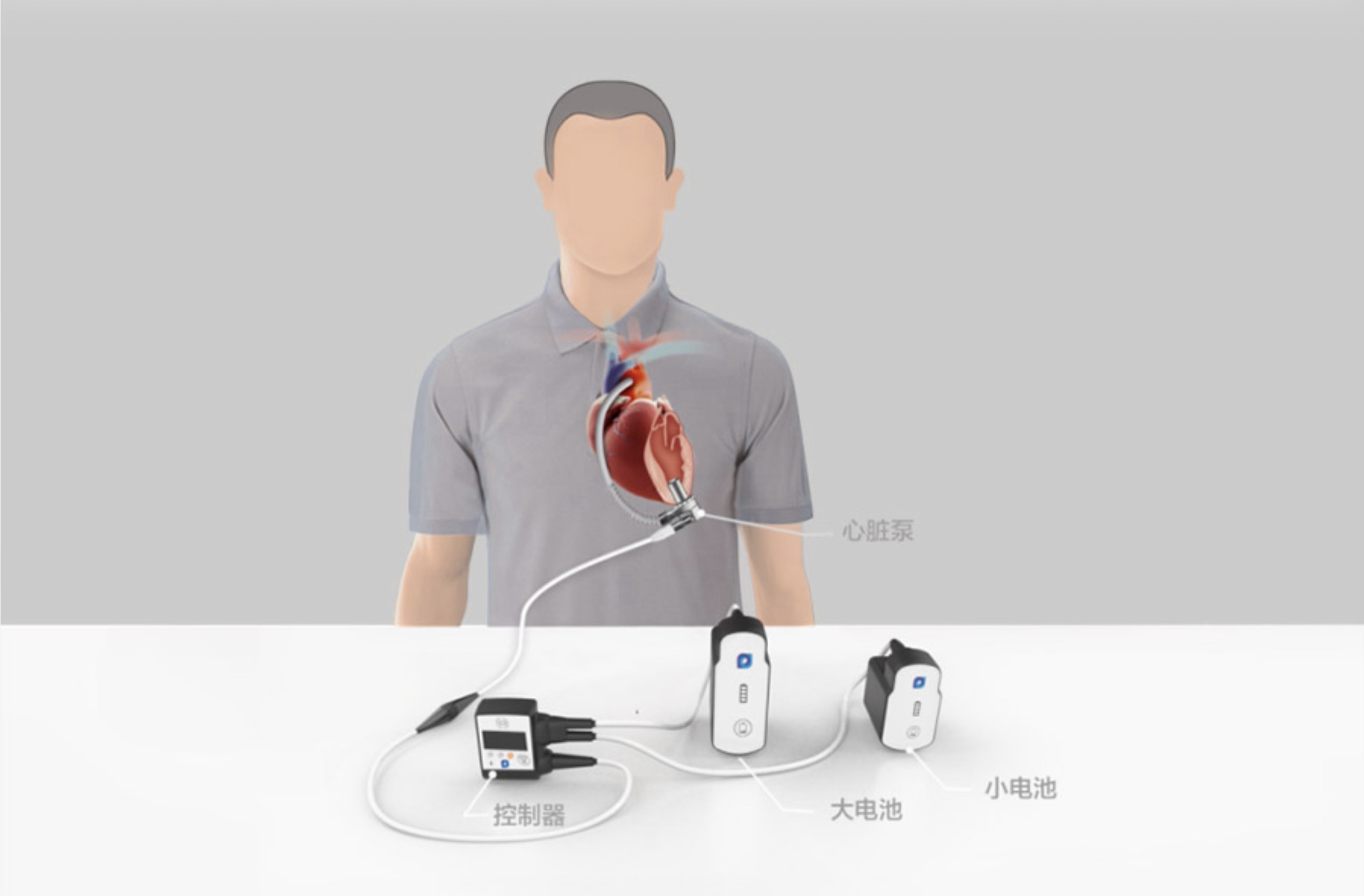 (Image caption) Showing accessories such as blood pump, controller, large/small batteries, etc. The NMPA's official name is "Implantable Left Ventricular Assist System," but the prospectus refers to it as "artificial heart" 127 times, highlighting the discrepancy between the product definition and the capital narrative.
[Core Issue]
This is not a matter of terminology choice, but rather a question of whether product definitions are being rewritten in the capital narrative.
I. IPO Stage and Document Background Shenzhen Core Medical Technology Co., Ltd. is one of the few developers of ventricular assist devices in China with clinical implantation records. The company's core product line includes three series: Corheart 6, DuoCor 2, and CorVad 4.0/6.0.
The company has submitted its A-share listing application, with a total prospectus of 419 pages. The sponsoring institution is Huatai United Securities Co., Ltd., and the legal opinion was issued by Beijing Guofeng Law Firm. Chairman Yu Shunzhou personally signed the "Statement to Investors" on October 31, 2025.
According to the NMPA's publicly available approval records, the regulatory status of each product is as follows:
Corheart 6 has been approved by the NMPA, with registration certificate number 20233031289, approval date June 2023, and its official name is "Implantable Left Ventricular Assist System".
DuoCor 2 has entered the special review procedure for innovative medical devices and is listed as No. 10 of 2024 (public notice period from November 14 to 28, 2024). It is currently still in the clinical trial stage and has not yet obtained a formal registration certificate. The official name in the review documents is "Implantable Biventricular Assist System".
CorVad 4.0/6.0 is in the registration approval stage. The application was submitted in January 2025, and multi-center clinical trials are underway. It is expected to be approved in the first quarter of 2026, and its official name will be "Interventional Ventricular Assist System".
The specific focus of the exchange's first round of inquiries is yet to be publicly disclosed, but based on the prospectus, it can be inferred that its core areas should include: product commercialization progress, completeness of clinical data, basis for market size calculation, and consistency between product definition and regulatory approval criteria. 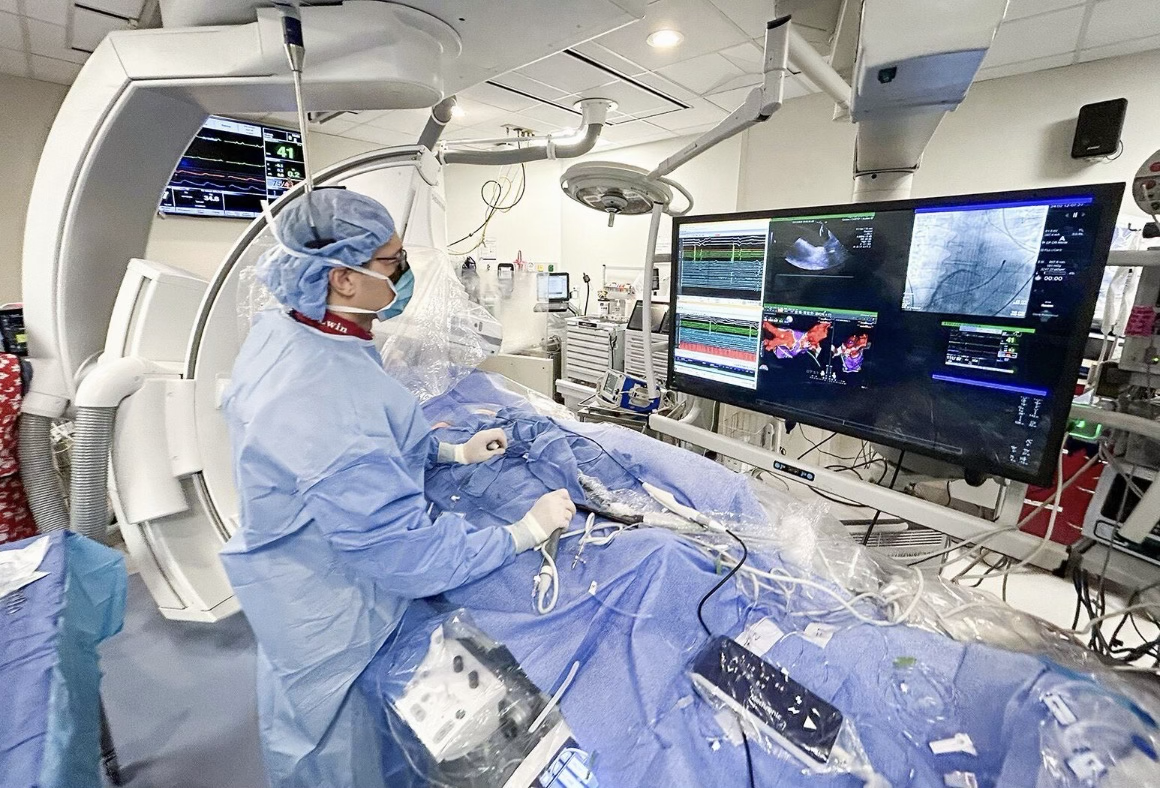 (Image caption) The image shows a real-life scene in the operating room for an implantable left ventricular assist system (LVAD). The doctor is performing the LVAD implantation procedure, and the monitor displays real-time blood flow data. In the prospectus, the product is referred to as an "artificial heart," while the NMPA officially approves it as an "implantable left ventricular assist system."
II. Language Selection: 127 times vs 0 times This is the part of the entire analysis that needs to be presented carefully.
In this 419-page prospectus, "artificial heart" appears 127 times throughout the document as a general term for the company's products. From the first two pages of the chairman's address to product introductions, market analysis, competitive landscape, and risk disclosures, "artificial heart" almost replaces all other technical terms, becoming the sole linguistic framework for describing the company's core business.
Meanwhile, the term "left ventricular assist device" (LVAD) appears 0 times in the entire text.
This "127 times vs 0 times" linguistic structure is not a random lexical preference, but a systematic narrative choice. It's not just a matter of word usage habits, but a unified framework throughout the prospectus for how the product is understood and imagined—a market perception foundation built from language.
III. Regulatory Scope and Medical Classification
According to the NMPA's official approval and review documents, the official name of Corheart 6 is "Implantable Left Ventricular Assist System," DuoCor 2 is "Implantable Biventricular Assist System," and the expected approved name for the CorVad series is "Interventional Ventricular Assist System." In all of the NMPA's approval and review documents, no product's official name contains the words "artificial heart."
In current mainstream medical literature and clinical guidelines—including the American College of Cardiology/American Heart Association guidelines for heart failure management and the International Society for Heart and Lung Transplantation's guidelines for mechanical circulatory support—"Left Ventricular Assist Device" (LVAD) and "Total Artificial Heart" (TAH) are two clearly distinguished categories of medical devices.
• LVAD: Assists in pumping blood for failing left ventricles, while the heart itself continues to function in its original location. • TAH: Requires removal of both ventricles to completely replace heart function with an artificial device. The two differ fundamentally in surgical procedures, indications, implantation complexity, postoperative management requirements, and patient clinical usage scenarios. The most widely used total artificial heart globally, SynCardia TAH, has been implanted approximately 2,000 times to date, with extremely limited new implantations each year; while the annual implantation volume of LVADs globally (including major models such as HeartMate 3) is far greater. This difference in scale directly determines the potential market size for these two types of products. 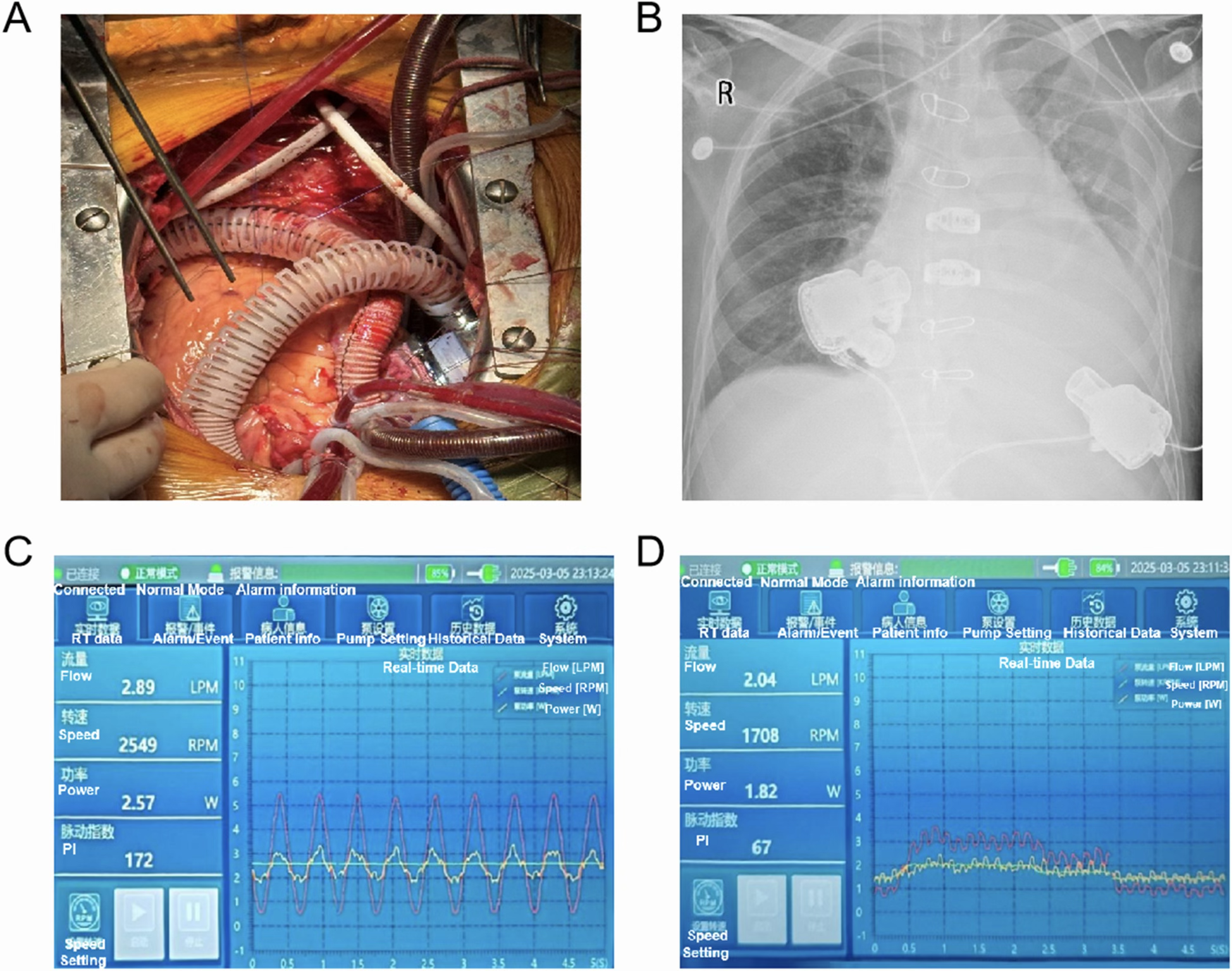 (Image captions) Intraoperative photograph (A), postoperative X-ray (B), and console interface (C/D). The article mentions that DuoCor 2 is still under review and reminds readers of the risks of right heart failure after LVAD implantation.
IV. What does the language difference mean? The prospectus chose to use "artificial heart" instead of "left ventricular assist system," merging the product concepts of two different medical categories into one at the level of description. This merger has its popular basis in the everyday Chinese context—"artificial heart" is indeed sometimes used as an informal synonym for LVAD.
However, in a prospectus that is a legal document, this choice of colloquial language means:
👉 The regulatory language system has been systematically replaced by the market narrative language system.
This substitution does not directly constitute a violation, but it does represent a structural shift in the way information is presented—there is an identifiable cognitive gap between the medical context of "implantable left ventricular assist system" and the market imagination evoked by "artificial heart." In a legal document upon which investors will base their decisions, this gap is not neutral.
Fifth, what IPO risks does this discrepancy in terminology bring? The term "artificial heart" is more easily understood by non-professional investors as a device that completely replaces heart function, rather than a support system that assists left ventricular function. These two understandings correspond to drastically different market size expectations, technological barrier assessments, and long-term commercialization prospects.
This risk can be specifically quantified as a language distance:
The distance between 127 "artificial hearts" and 0 "LVADs".
If investors overestimate the true clinical positioning of a product due to the language in the prospectus, this cognitive gap may lead to asymmetrical valuation expectations when pricing the product in the market.
The issue of patient and public perception risk transcends the scope of the capital market, but it is directly related to the information quality of the prospectus. External reports have indicated that some patient crowdfunding platforms use descriptive language inconsistent with the nature of LVADs (Large-Scale Individualized Medical Applications), potentially including conceptual confusion influenced by the language used in the prospectus. From a medical information ethics perspective, the impact of a language deviation in product definition in a publicly released IPO document should not be viewed solely as an informational issue within the capital market, but should also be assessed within the framework of medical information responsibility.
The sponsoring institution for the IPO prospectus, Huatai United Securities, and the legal opinion provider, Beijing Guofeng Law Firm, bear the responsibility for verifying the consistency between the product descriptions in the prospectus and the NMPA's approved terms during the due diligence process. Currently, no explicit explanation or clarification regarding this linguistic difference has been found in publicly available documents from either the sponsoring institution or the law firm in their legal opinions. If the 127 uses of the "artificial heart" were never systematically compared and verified against the official NMPA terms, then this lack of due diligence constitutes a procedural issue that needs to be rectified.
From the perspective of the principle of consistency in information disclosure, the definition of core products in the prospectus should maintain traceable consistency with the regulatory approval documents. When the prospectus uses the term "artificial heart" 127 times throughout, while the official name in the NMPA approval documents never uses this term, this linguistic difference should be clearly explained in the prospectus. Whether the current version of the prospectus clearly explains that "artificial heart" is merely a common abbreviation in the text and that its legal meaning is subject to the NMPA approval name is a core issue that deserves explicit clarification in the response to inquiries. 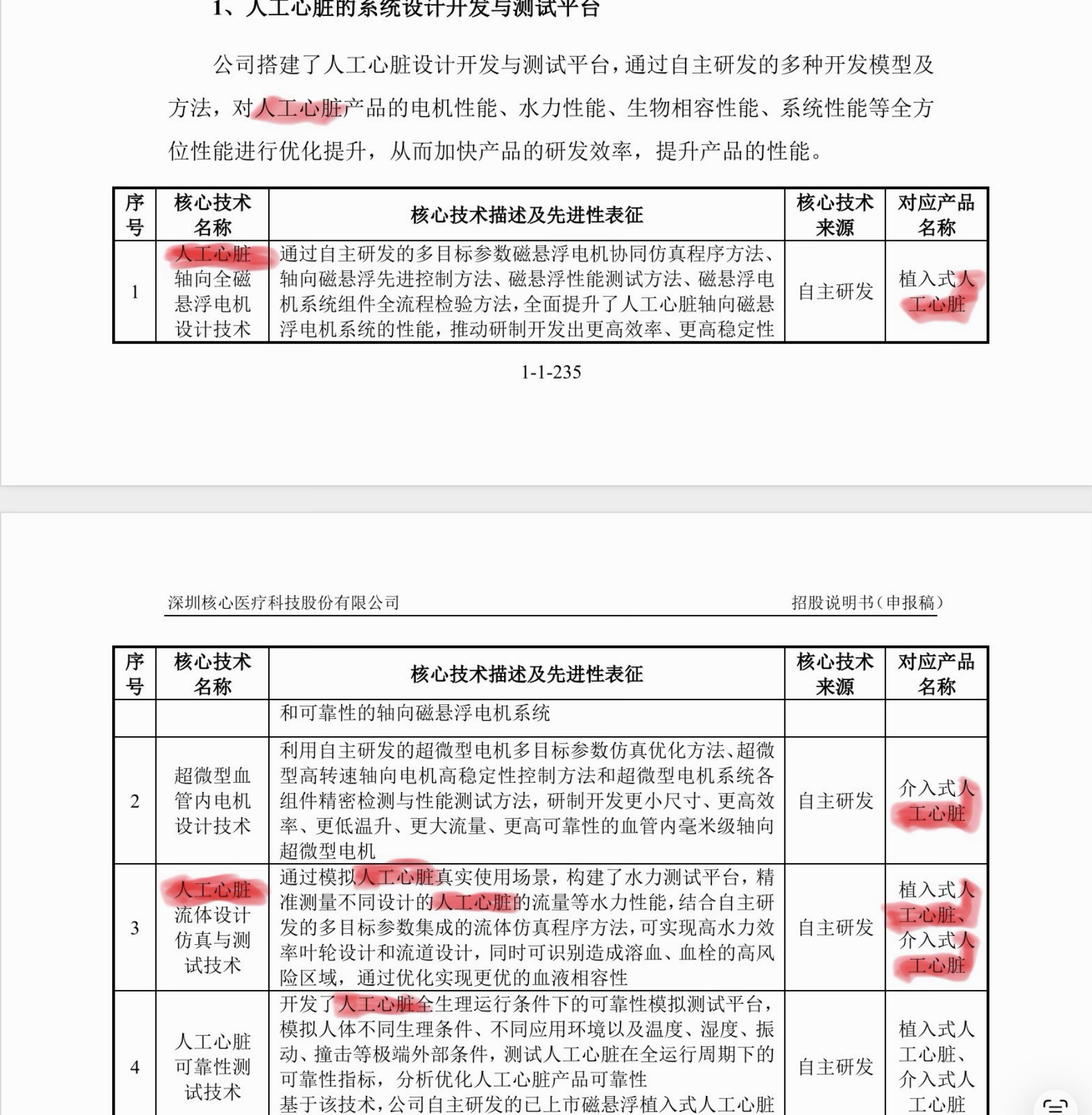 (Image caption) Core technology table for "artificial heart" in Shenzhen Core Medical's prospectus (red section). The company systematically describes the "implantable left ventricular assist system" approved by the NMPA as "artificial heart" in the prospectus, and it appears multiple times in the technology table, reinforcing the cognitive gap between the capital market narrative and the official regulatory stance.
VI. Did the Inquiry Letter Address the Core Issues? Based on currently available publicly available information, GFM is unable to fully assess all the focuses of the exchange's first round of inquiries. However, based on the prospectus, the following questions should be pursued by any rigorous review process:
The issue of product medical definition. Are LVAD and TAH different categories in medicine? Should the prospectus clearly distinguish this in the product introduction section and explain which category the company's product belongs to?
The issue of the basis for market size calculation. Is the market size figure cited in the prospectus based on the LVAD market, the TAH market, or some combination of the two? If the basis is different, the calculation method for market size should be clarified.
Issues with the completeness of clinical data. The overall number of LVAD implantation cases in the Chinese market is relatively limited (external reports indicate that the total number of LVAD implantations in the Chinese market from 2017 to 2023 is approximately 908). Is the clinical data cited in the prospectus sufficient to support its narrative of commercial maturity?
Disclosure of the risk of right heart failure. Right heart failure (RVF) following LVAD implantation is a known significant clinical risk, and relevant medical literature indicates a relatively high incidence. Does the prospectus provide sufficiently clear risk disclosure?
Issues with long-term survival data. Is there sufficient publicly available clinical data on the two-year (or longer) long-term survival rates of Chinese LVAD patients to support the commercialization narrative presented in the prospectus?
If the inquiry does not address the issue of "consistency between product definition language and regulatory standards," then the problem has not been addressed systematically, and the potential risks to the completeness of information disclosure remain unresolved.
VII. What exactly are these companies selling in their IPOs? Shenzhen Core Medical undoubtedly represents the true technological accumulation in China's cardiac assist device field. Corheart 6 has received NMPA approval and has clinical implantation records, a fact worthy of serious evaluation by the capital market. The company has completed multiple rounds of financing totaling over 1.8 billion yuan, with endorsements from top institutions such as Hillhouse Capital, Zhenxin Valley Capital, and Lilly Asia Ventures, demonstrating that its technological path has gained recognition from serious investors in the industry.
However, these facts do not exclude the information disclosure issues arising from the choice of language in the prospectus.
A truly innovative medical device company can present its product definition in precise medical language in its prospectus and build a convincing capital market narrative based on that. Choosing to use "artificial heart" instead of "left ventricular assist system" is not a matter of technological approach, but rather a choice of how to present information.
👉 The prospectus uses a narrative language system that prioritizes market acceptance, rather than a direct presentation of regulatory language.
When an IPO filing chooses a particular way of presenting information, it simultaneously chooses the responsibility that corresponds to that way of presentation.
VIII. GFM's institutional observation of the Shenzhen core healthcare case reveals an institutional issue in China's medical technology IPOs that deserves systematic attention:
When a medical device company enters the capital market, the language of its prospectus should be a clear bridge between regulatory approval criteria, medical standard classifications, and market narratives, rather than a one-way language replacement that prioritizes market acceptance.
This is not just a question about core medical care in Shenzhen, but a systemic issue about information disclosure standards for medical technology IPOs. When "implantable left ventricular assist system" is systematically presented as "artificial heart," it changes not only the language, but also investors' overall cognitive framework regarding market size, technological maturity, and competitive landscape.
From an institutional design perspective, the following mechanisms should be established:
A clear and traceable bridge should be established between regulatory language and market language. Verification of language consistency between NMPA approval documents and IPO prospectuses should be a standard procedure in the listing review of medical device companies.
The due diligence conducted by the sponsoring institution should include a systematic verification of the consistency of the product definition. Whether the 127 uses of the "artificial heart" were compared with the official NMPA statements—this question should not have been raised only after the inquiry letter was issued.
Exchanges should make explicit inquiries regarding language discrepancies. For any product description that identifiable differs from the regulatory approval, written clarification should be requested, rather than assuming that such language differences are not a problem.
Currently, there is still room for improvement in the implementation of these mechanisms under the existing system. 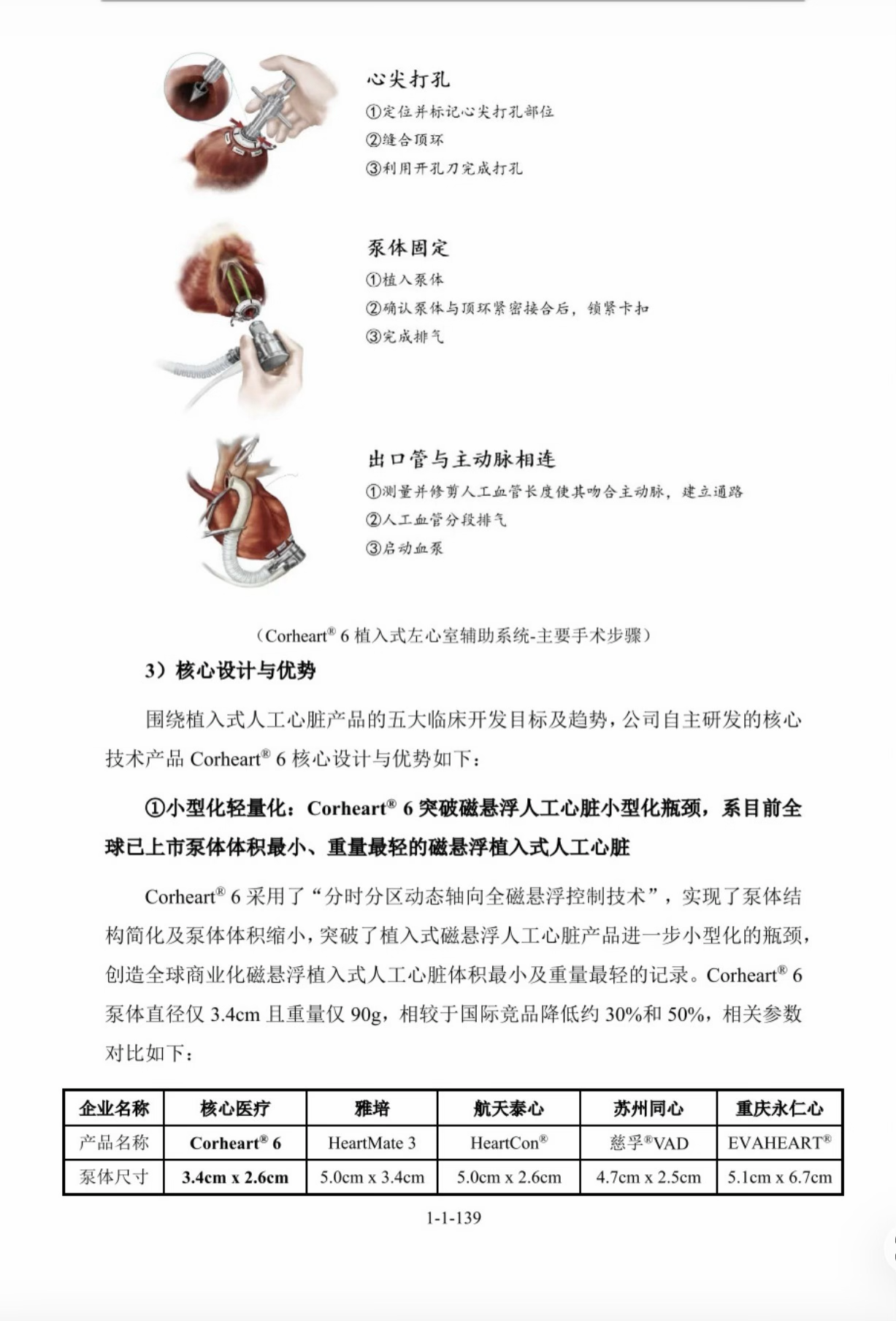 (Image caption) Screenshot from Shenzhen Core Medical's prospectus: Main surgical steps and core design advantages of the Corheart® 6 implantable left ventricular assist system. The company describes the product as an "implantable artificial heart" in its prospectus, while the NMPA officially approves it as an "implantable left ventricular assist system".
IX. Conclusion This analysis is not intended to assess the technological value of Shenzhen's core medical technology, nor is it a final judgment on its commercial prospects.
What it attempts to present is a more fundamental institutional issue:
In a legally binding prospectus, the language used to define a product is the information itself, rather than a flexible market communication tool.
When professional medical terminology is rewritten by capital narratives, investors sometimes receive the true value of the technology, sometimes an amplified version of that value, and sometimes a hybrid that is difficult to identify clearly. Identifying this hybrid is the responsibility of institutional media. Enabling investors to have a clear understanding of this hybrid is a necessary condition for the healthy operation of the capital market's information ecosystem.
The prospectus of Shenzhen Core Medical is worth rereading by every investor considering participating in its IPO, with this question in mind:
Is the product I see in this document the same product that was approved by the NMPA?
The difference between 127 and 0 is not just a difference in terminology, but a difference in market understanding.
Three points and one-sentence conclusions: First, the systematic discrepancy in the language used in Shenzhen Core Medical's prospectus regarding "artificial heart" and "left ventricular assist system" raises significant concerns that require regulatory attention, based on the principle of consistency in information disclosure.
Second, the sponsoring institution and the party issuing the legal opinion should provide a clear written verification explanation regarding the differences between the product definition in the prospectus and the NMPA approval, rather than assuming that such language differences do not constitute a problem.
Third, the information disclosure issues revealed in this case regarding medical device IPOs have institutional significance that transcends a single company—it points to the systemic challenge of establishing a credible bridge between regulatory language, medical standards, and market narratives in the entire medical technology IPO information chain.
This article is a GFM institutional observation and does not constitute any investment advice or legal characterization of any entity. The cited materials are from company prospectus drafts, publicly available documents from the National Medical Products Administration, and authoritative medical literature, and are for research reference only. The final determination of relevant matters is subject to the official conclusions of regulatory agencies.
GFM's IPO Column | Institutional Research × Information Disclosure Decoding × Healthcare Technology Valuation Analysis
Global Finance Media Group — gfm.news