

(General Overview) When technology is renamed by capital
Why GFM is a group-based IPO system: a breakdown
Introduction: There is a kind of loss that occurs before the numbers change.
It happened the moment the name was changed.
When a prospectus rewrites "implantable left ventricular assist system" as "artificial heart," and when a capital market amplifies "the world's only FDA-approved fully artificial heart" into a boundless market legend, what investors lose is not a particular number, but the very benchmark for judgment.
Without a benchmark, there is no reference for overvaluation or undervaluation; without a reference, there is no distinction between risk and value; without distinction, capital ultimately prices based only on narrative.  (Image caption) The product name in regulatory approval documents is a systemic confirmation of technological boundaries, not a communication label that can be flexibly replaced. Once the name deviates, the benchmark for judgment has been lost.
In this series of "Artificial Heart IPO Breakdowns," GFM juxtaposes two cases: Shenzhen Core Medical's A-share IPO application and Picard Medical's (NYSE: PMI) US stock listing story.
The two companies operate in different markets, under different regulatory environments, and even in different medical categories—Shenzhen Core Medical's core product is LVAD (left ventricular assist device), while Picard Medical's core product is TAH (total artificial heart). They are not in direct competition, nor is there any simple horizontal comparability between them.
But that's precisely why GFM juxtaposes them:
It's not because they are similar, but because they go to two completely different ends on the same problem—allowing us to see the outline of that problem from both sides at the same time.
The question is:
Once technology enters the capital market, does it still exist under its original name?
This isn't a matter of rhetoric or branding. It concerns what investors are actually pricing: are they pricing a product that's been approved by regulators, clinically validated, and defined by a specific technological path, or are they pricing a concept that's been amplified, drifted, and renamed by the market?
If the answer is the latter, then it's not just language that's distorted, but the entire market's understanding of technology.
I. Names are never neutral. In general understanding, product names are often regarded as descriptive language, external labels of technology, and a kind of expression tool that can be flexibly adjusted according to the communication scenario.
But in the capital market, names are never neutral.
It performs at least three functions simultaneously:
First, there's the classification function. The name determines which technological category a product belongs to, and therefore, which competitors it's compared to within the same framework. If a device is classified as a "left ventricular assist system," it enters the comparative framework of mechanical circulatory support devices; if classified as an "artificial heart," it might be subject to the imaginative framework of organ replacement, ultimate treatment, or disruptive medical technology. Once the classification changes, the competitive boundary changes accordingly—and the competitive boundary is precisely the starting point of the valuation model.
Secondly, there's the cognitive function. Names directly influence how investors understand a product's risks and value. The same device, called an "auxiliary pump" versus an "artificial heart," evokes more than just a difference in terminology in the minds of most non-professional investors; it conjures up entirely different images of market size, technological barriers, patient base, and future growth potential. Cognition begins working even before pricing.
Thirdly, there's the valuation function. A name almost directly corresponds to market potential, growth expectations, and price ceiling. The scope of indications covered by a name, to some extent, is the linguistic prototype of the company's valuation ceiling. The boundaries of a name determine how much of a story the market can imagine.
This is why, when a name shifts, it's not just the language that changes, but the entire market's understanding of the technology—including its competitive boundaries, its patient base, its commercialization timeline, and its inherent risk premium. 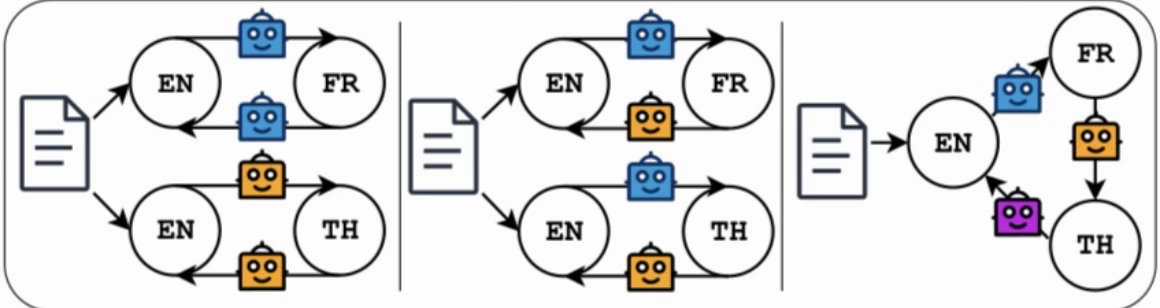 (Image caption) In IPO prospectus documents, the shift from regulatory language to capital language is often not a one-time distortion, but rather a gradual loosening at each level—until investors find themselves in a place completely different from the original technical definition.
In the case of Shenzhen Core Medical, "artificial heart" was transformed from a concept with strict boundaries in medical and regulatory documents into a narrative center that could encompass multiple product paths. The official name in the NMPA approval document is "implantable left ventricular assist system"; however, this name did not become the main language of the prospectus. Instead, it was replaced by the more market-imagining term "artificial heart," which appeared 127 times in the text.
In Picard Medical's case, the situation is exactly the opposite. "Total artificial heart" is a classification result that is valid both medically and regulatoryly, backed by FDA approval, thirty years of clinical experience, clear indications, and real implantation records. But it is precisely this real, clear, and well-defined name that was hijacked by external forces after the IPO and turned into market myth material that could be infinitely amplified.
The difference between the two reveals two sides of the same fact:
A name can be actively rewritten or passively amplified; in either case, once the name deviates from its verified facts, investors lose the benchmark for judgment.
II. From Technology to Valuation: What Exactly Happened in Between? This comparison reveals more than just a difference in naming; it shows a complete transformation chain:
Technology → Regulatory Language → Capital Language → Market Perception → Media Narrative. In this chain, technology itself is usually the most stable part; while the deviation—sometimes ablation, sometimes amplification, and sometimes both—occurs in almost every subsequent layer of translation.
The first layer: Technology – the initial facts, with the clearest boundaries. Technology itself has structure, indications, and limitations. LVAD is LVAD; it assists the left ventricle in pumping blood, and the heart still exists. TAH is TAH; it removes both ventricles, with the device taking complete control. This isn't a difference in linguistic feel, but rather two different types of products with different surgical methods, patient populations, risk structures, and market sizes. At the original technological level, the boundaries are clear.
The second layer: Regulatory language – institutional confirmation of technological boundaries. After entering the regulatory language, the technological boundaries are formally named for the first time. The NMPA approves "implantable left ventricular assist system," not "artificial heart"; the FDA approves "total artificial heart," not "general solution for severe heart failure." These names are not rhetorical choices, but institutional confirmation. Each word corresponds to the scope of indications, clinical use conditions, risk-bearing methods, and patient scale. The essence of regulatory language is not dissemination, but boundaries.
The third layer: the language of capital – the boundaries begin to loosen. The real shift often begins with the language of capital. Prospectuses, roadshow materials, investor briefings, and analyst research reports constitute the first layer of the field of capital language. In these documents, precise technical terminology begins to give way to more communicative and market-stimulating expressions.
This step doesn't necessarily manifest as an outright mistake; more often, it involves loosening the boundaries slightly at each level. From "left ventricular assist systems" to the "artificial heart race," from specific devices to broad concepts, from precise products to entry points into larger markets, each level deviates only slightly, but ultimately may lead investors to a place completely different from the original technological definition.
The fourth layer: Market perception – the amplified concept is treated as reality. When a concept enters the market perception level, the boundaries of technology are often no longer the main focus. Ordinary investors, short-term traders, and non-professional participants in financial communities rarely go back to check the NMPA or FDA approval documents first. What they usually receive is a simplified version that has already undergone one or more rounds of translation.
An LVAD (Endovascular Atrial Assisted Transplant) device, often referred to as an "artificial heart," is more easily understood as having a larger market, greater substitutability, greater disruptive potential, and a higher valuation ceiling. Conversely, a device repeatedly touted as the "world's only FDA-approved fully artificial heart" is more easily understood as having unlimited scarcity, vast market potential, a unique target, and the ability to capture the future simply by buying in.
At this stage, what investors are facing is no longer the product itself, but a "simplified version of the concept" that has been translated through multiple layers—it is separated from the original regulatory language by a semantic distance that is invisible to the naked eye.
The fifth layer: Media narrative – the shift solidifies into consensus. Media narrative is the final layer of this chain, and also the layer where the shift is most easily stabilized. Once a concept is easily disseminated, dramatic enough, and meets the market's emotional needs, it will be repeatedly replicated in headlines, short comments, social media reposts, research summaries, and investment groups. Even if this consensus is wrong, as long as it is said enough, quickly enough, and in a coordinated manner, it can appear true in the short term.
Naming is the earliest node in this chain to be rewritten and has the most profound impact on subsequent translations.
The most dangerous thing is often not a one-time distortion, but rather that each layer deviates slightly, ultimately leading investors to a place completely different from the original technical definition without warning.
This is why a product that was originally defined by regulators with precise terminology can become something else entirely in the market. What capital ultimately prices may no longer be the original technology, but rather a conceptual version that has been translated multiple times.
III. Systemic Gaps: Who Will Calibrate the Names? In an ideal system design, the division of labor among the three roles should be clear: regulatory agencies are responsible for defining product categories and risk boundaries; capital markets are responsible for forming prices and allocating resources; and the media are responsible for disseminating information and interpreting events.
However, in this set of cases, what we see is not a smooth connection between the three, but rather the gaps between them.
Regulatory agencies approve the use of specific products for clearly defined indications; their language usually stops at the approval document itself. What the capital market prices, however, is the product in the narrative—a version of language that may have been amplified, blurred, or hijacked. The media, situated in the middle, often relies solely on company documents, public materials, and market discourse to relay this information, easily becoming a distorted secondary dissemination channel without the media's awareness.
The biggest problem here is not "who bears no responsibility at all," but rather:
Every character is exposed to this problem, but no prior mechanism takes the ultimate responsibility for calibrating whether the name still corresponds to the fact that it was verified.
This is a typical problem of fragmented responsibility:
Regulatory agencies are responsible for approving names, but not for how the market translates them; sponsoring institutions and legal firms are responsible for the compliance of prospectuses, but may not establish mandatory verification of the consistency of product language; exchanges are responsible for market monitoring, but may not be able to handle situations where narrative precedes stock price movement in a timely manner; traditional media are responsible for reporting, but their information sources often come from company narratives that have already deviated.
Every link in the chain has its responsibilities, and the boundaries of each link's responsibilities end "within its own scope of duties." It is precisely at the seams of these boundaries that the drift of names can occur and propagate along the chain.
This gap manifests itself in different ways depending on the context.
In the case of Shenzhen Core Healthcare, the gap lies between the language system of the prospectus and the NMPA approval documents—the sponsoring institution has a responsibility, the inquiry mechanism has a responsibility, but under the current standards, the consistency verification of product definition language has not yet become a mandatory pre-designed procedure.
In the case of Picard Medical, the gap lies between genuine regulatory approval and the amplified narrative on social media—the company may not be able to control the language of the external market, and the exchange's real-time monitoring mechanism failed to intervene effectively during the abnormal rise in stock price, and could only rely on class-action lawsuits as a post-hoc remedy after the crash.
Thus, a core systemic problem emerges:
When a name starts to deviate from its original category, who is responsible for bringing it back?
If this problem lacks a systemic answer, the deviation will propagate along the transformation chain. Investors make judgments based on amplified concepts, the public forms understandings based on simplified language, and the media inadvertently replicates this narrative structure. Ultimately, a technology that originally had clear boundaries exists stably in the market in another form—until the stock price collapses, or until regulatory inquiries occur.
These two cases tell us that the end of this road is never silence.  (Image caption) In a fragmented structure of responsibility, each link stops within its own boundary. And it is precisely at the seams of these boundaries that the drift of names occurs and propagates along the chain.
Fourth, why is it necessary to break down individual cases "in groups"? Often, only the problem itself can be presented; only through comparison can the problem be transformed into a structure.
If we only mention Shenzhen's core medical care, it might be understood as an isolated disclosure issue: a company's deviation in terminology could be explained as "industry practice," "market communication needs," or "a popular expression in the Chinese context." This explanation isn't entirely without merit, but it's insufficient—because it narrows a systemic issue down to an isolated phenomenon.
If we only write about Picard Medical, it might be understood as a typical story of a small-cap medical technology company being manipulated in the stock price—the judgment of "genuine technology, malicious market" is accurate, but it is insufficient to reveal the deeper systemic problems: Why this type of company? Why this structure? Why can't this kind of damage be prevented in advance under the current mechanism?
But when both are placed within the same structure, a clearer outline emerges:
Shenzhen Core Medical explained that even in scenarios with a listing review process and clear regulatory guidelines, deliberate deviations in language can still occur within documents and may not be immediately detected by existing mechanisms.
Picard Medical explains that even if the technical definition itself is accurate and the regulatory name itself is clear, in a market environment with insufficient upfront protection, the name can still be hijacked by external forces and cause damage equal to or even greater than that caused by proactive rewriting in a short period of time.
Two cases, two directions, but both point to the same institutional gap: the lack of an effective calibration mechanism between regulatory language and market narrative.
This is also the institutional rationale behind GFM's "group decomposition" approach. It's not about creating a dramatic contrast, but because:
Contrast with itself is a necessary condition for the structure to become apparent.
A single case reveals the cracks; a group of samples shows that these cracks are not accidental, but rather a reflection of the direction of the system.
V. GFM's Position: A Fourth Path Forced Out by Institutional Gaps At the intersection of medical technology and capital markets, there are currently roughly three narratives.
The first type is the company narrative. It's conveyed through prospectuses, roadshow materials, and investor relations documents, emphasizing technological prospects, market potential, and growth logic. Its language prioritizes persuasiveness over precise boundaries. This isn't criticism, but rather a statement: company narratives have their functions, and persuasion is one of them.
The second type is regulatory documents. These take the form of approval notices, inquiry letters, legal opinions, and verification reports, emphasizing compliance, classification, and risk boundaries. Accuracy is the priority in their language, but their circulation is limited; ordinary investors rarely read them in their entirety, and their influence often ends after the first approval.
The third type is traditional financial media. It relays, comments on, and processes information between companies and the market. However, the primary sources of information for most financial media are still company documents, press releases, and publicly available capital market materials. In other words, when the company narrative has shifted, or when a flawed consensus has formed in the market narrative, traditional media often inadvertently become a secondary channel for disseminating this shift—not because it is irresponsible, but because the information sources it relies on have already shifted.
The problem isn't that each of these three methods is ineffective. The problem is:
None of them are sufficient to address the question of "how names drift along institutional chains" on their own.
Company narratives cannot correct themselves; regulatory documents cannot proactively penetrate market perceptions; and traditional media often lack sufficient sample comparison and system deconstruction capabilities to identify the systemic drift accumulated by each layer of "biasedness." 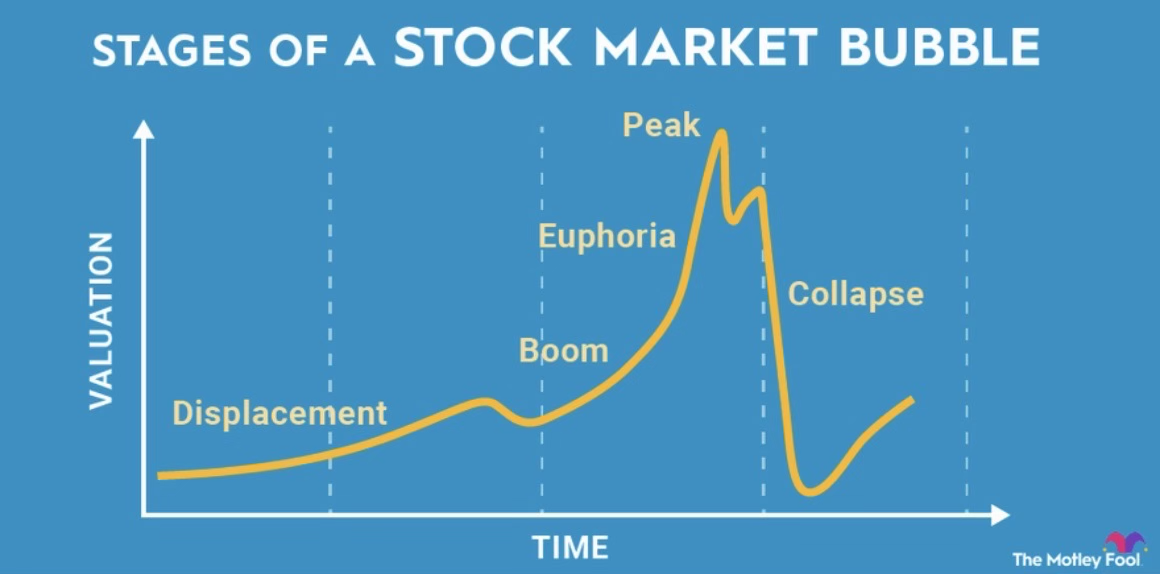 (Image caption) A single case reveals the cracks; a group of samples shows that these cracks are not accidental, but rather a reflection of the system's trajectory. Comparison is a necessary condition for making the structure visible.
That's why a new way of working is needed—not to replace the first three, but to fill the gaps between them.
This is the fourth path that GFM is trying to establish:
A media structure based on samples, using comparison as a method, and focusing on systems.
In this approach, technology is not described in isolation, but rather placed within a comparative context—because isolated descriptions easily become extensions of a single narrative, while comparison allows the structure to speak for itself. Names are not directly accepted, but rather their origins, conditions, and usage scenarios are dissected—what does the term "artificial heart" mean in the NMPA's approval documents? What does it mean in the 127 uses in the prospectus? What does it mean in the cognitive framework of retail investors? The different answers to these three questions illustrate the semantic distance. Individual cases are not treated as company stories, but rather incorporated into institutional samples—to see what kind of biases they repeatedly create in what kind of environment.
GFM's goal is not to draw conclusions for the market, nor to make judgments for regulators. It seeks to build a different kind of capability:
Redefine the boundaries between narrative and fact; restore alignment between name and technology.
This isn't because GFM claims a special position, but because there is indeed an unaddressed institutional gap between the three existing paths. Where there's a gap, someone needs to try and fill it. This is the starting point, not the end of the declaration.
A name should correspond to the facts it has been verified. The capital market can amplify the price of a technology, but it cannot amplify the definition of a technology.
The deepest respect for technology is not to exaggerate its importance, but to allow it to be understood in its true sense.
For the engineers at Shenzhen Core Healthcare, the left ventricular assist device they've spent years developing is a real, clinically valuable technological innovation. It doesn't need to be called an "artificial heart" to deserve serious evaluation from the capital market; it simply needs an accurate name to allow those willing to seriously assess it to find the right place.
For Picard Medical's clinical team, the SynCardia TAH they maintain has allowed patients to survive the long wait for transplants, with some living for up to eight years with this artificial heart. This technology doesn't need to be amplified by social media hype from market manipulators; it simply needs a sound market environment where real clinical records form the basis for pricing, rather than artificially created buying frenzies becoming short-lived valuation bubbles.  (Image caption) Compass and direction calibration. The name should correspond to the verified facts. Redefining the boundaries between narrative and fact—this is the reason GFM continues its institutional deconstruction.
When names lose their boundaries, the first to suffer are not just valuation models, but everyone who relies on accurate information to make judgments: investors, patients, doctors, researchers, and even those who actually develop the technology.
When a technology can have different names in different documents, what the market often sees is not just the technology itself, but the distance between the names.
This series of "IPO Deconstruction" deals precisely with this kind of distance.
It doesn't attempt to eliminate narratives, nor does it deny the amplifying effect of capital on technology, nor does it advocate that regulation should replace the market's pricing function. It only raises one more fundamental requirement:
A name should correspond to the facts that have been verified.
When this correspondence is broken—whether because the prospectus deliberately chose a different language or because the market environment is unable to resist external narrative hijacking—the problem lies not only with the company, nor only with the market, but with whether there is still a force in the entire institutional chain that can realign the name with its proper boundaries.
Making this power visible is the reason GFM continues its institutional dismantling. Enabling investors to ask the right questions is the purpose of this work.
And perhaps the only question this general overview will ultimately leave us with is this:
If a technology, once it enters the market, cannot even maintain its own name, then is the market pricing the technology itself or the drift of its name?
This article is the general overview of the "Artificial Heart IPO Breakdown" series. Together with the Shenzhen Core Medical Chapter (II) and the Picard Medical Chapter (III), it forms the first group sample of institutional research in the GFM "IPO" column.
GFM's IPO Column | Institutional Research × Information Disclosure Decoding × Healthcare Technology Valuation Analysis
Global Finance Media Group — gfm.news