

AI Capital Expenditure Restructuring: A Panoramic View of IPOs in Chips, Energy, and Manufacturing
— When algorithms begin to intervene in resource allocation, what exactly is the public market paying for?
Algorithms are beginning to intervene: an institutional shift in resource allocation.
A few years ago, when Yuval Noah Harari made a near-radical prediction in "Homo Deus: A Brief History of Tomorrow," many people may not have realized that it would not just be an idea in a book, but would gradually become a real-world institutional problem.
He cautioned that the most profound changes of the future may not necessarily stem from war, climate change, or geopolitical conflicts, but rather from a quieter and more imperceptible force—algorithms are gradually infiltrating the core systems by which humans allocate resources, distribute opportunities, and understand value. As data processing and model-based judgments become increasingly integrated into industries, capital, and infrastructure, the question of "how resources flow" will no longer be solely the result of human decisions, but will begin to be a product of the combined decisions of machine capabilities, institutional arrangements, and market prices.
This is not a distant prophecy. It has already happened.
How we deal with this fact largely determines whether we can truly understand what is happening before our eyes.  (Image caption) This image captures Yuval Noah Harari's prediction of the "silent forces"—the technological nature of when machine capabilities begin to work with institutional arrangements and market prices to determine the flow of resources.
Signals from the public market: Physical reality is being repriced in the age of AI.
Public markets are among the most complex collective pricing mechanisms ever established by human society. They are cumbersome, emotional, prone to malfunction, and frequently manipulated—yet they remain the closest tool we possess to "collective judgment." When, at some point, they begin to intensively focus their attention on a particular asset class, we have reason to ask: What is it seeing? What is it realizing? What future, still not fully formed, is it prepaying for?
This time, it is seeing the physical reality of the AI era.
Over the past two years, the public market has been almost entirely dominated by the same rhetoric. Chips, energy, equipment, manufacturing, healthcare, platforms—anything that can establish a narrative connection with AI has the potential to enter the spotlight of valuation repair and capital pursuit. The market seems to be embracing growth again, but what truly deserves scrutiny is not the overly simplistic description of "AI is hot," but rather:
When the market is all talking about AI, what exactly is it repricing?
This question is far more important than "which company is worth investing in." Because the significance of this round of AI is not just about the commercialization of a new technology, nor just about the restart of an industry cycle, but about how humanity will embrace technology, understand risk, anticipate the future, and pay for scarcity—this entire logic is being reordered.
The public market is simply the first place to give the signal.  (Image caption) The massive energy demand and power infrastructure behind the chips. This is precisely the scarcity that the market is truly repricing in the AI boom—stable energy and power distribution capabilities, rather than just remaining at the narrative level.
IPO as a window into the system: the contemporary language in prospectuses
It is precisely at moments like these that the reason for the existence of institutionalized media becomes clear.
News can track events, but it can't track structure. Data can describe phenomena, but it can't explain logic. Analysts can give ratings, but if the framework upon which those ratings are based is outdated, even the most accurate rating is just a new mark on an old map.
GFM considers "IPO" as an independent institutional observation window not because the new stock market is more important than other markets, but because the prospectus, as a document, has a unique and almost irreplaceable analytical value within the existing institutional toolbox of humankind.
A prospectus is a highly institutionalized statement a company makes before entering the public market. It must simultaneously convince lawyers, accountants, regulators, underwriters, institutional investors, and future public shareholders. Every sentence is a linguistic balance found after much negotiation among these parties. It presents not only how the company describes itself, but also what kind of self-description a market era is willing to accept.
Therefore, reading a prospectus is essentially reading the institutional preferences of an era. It tells you: what kind of risk is the market willing to price at this moment? What kind of scarcity is it willing to price at? What kind of future vision is it willing to price at? And which narratives does it remain skeptical, distant, or even refuse to buy into?
Every prospectus is a fossil specimen of contemporary institutional language. Once placed within a sufficiently long timeframe, its significance extends far beyond the listing itself. 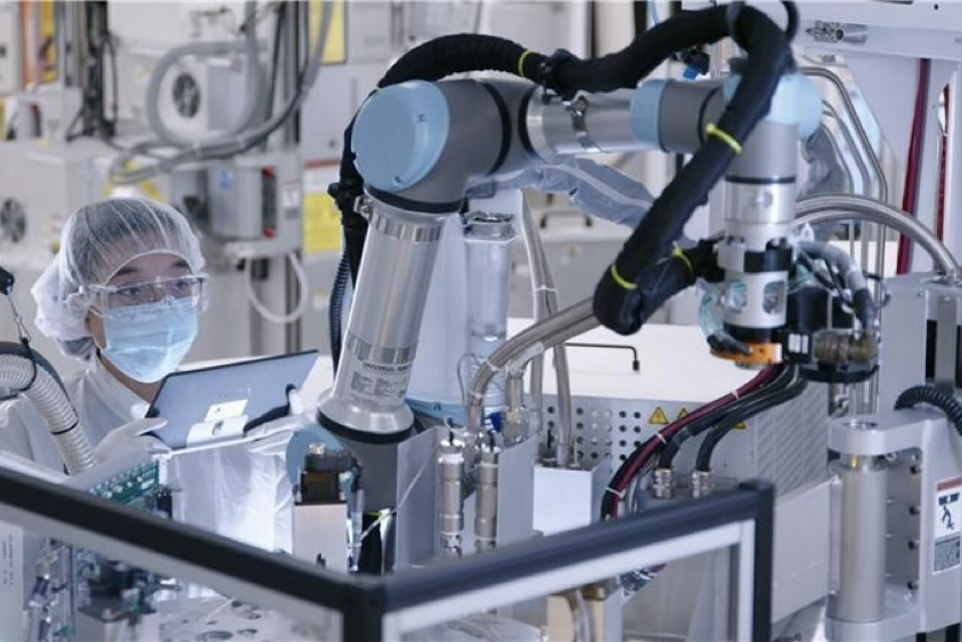 (Image caption) A semiconductor manufacturing scenario where robotic arms and professionals work together in a cleanroom represents the upstream toolchain and physical capabilities of Asian manufacturing in the AI era. These infrastructure and manufacturing capabilities "capable of supporting the algorithm era" outlined in the prospectus are key entry points through which the public market is willing to pay upfront.
A cross-section of ten samples: What exactly is the market paying for?
GFM selected ten of the most representative companies in this wave as samples—from AI chips, power distribution equipment, and stable energy, to Asian manufacturing, upstream toolchains, quantum frontiers, and space infrastructure, to platform repair, medical platforms, and the refinancing of popular sectors.
These ten companies are not ten parallel listing paths, but rather ten cuts on the same cross-section of the capital market.
What we really need to ask isn't which story is the biggest, which industry is the hottest, or which term is most likely to command a valuation premium. What we need to ask is:
In the AI era, what exactly is the market paying for?
What kind of capabilities did it buy, what kind of risks did it accept, what kind of scarcity did it acknowledge, and what kind of imagination that remained at the narrative level did it reject?
Only by putting the sample back into the structure can the IPO become more than just a market spectacle; it can become a systemic profile that can be preserved, reviewed, and repeatedly verified.  (Image caption) The public market is pricing in the "capabilities, infrastructure, and credit structures that can support the algorithm era," which is the core observation of this series of IPO system analysis.
We live in an era of ever-accelerating technological advancements, but a general lag in our understanding of institutional mechanisms. Many people use yesterday's language to discuss today's facts, and use today's emotions to predict tomorrow's structure. The clamor of the public market is often nothing more than a concentrated expression of this misalignment.
The responsibility of institutional media is not to be louder amidst the noise, but to remain clear-headed amidst the noise—to leave behind texts that can be reviewed for those structural changes that are truly worth recording, analyzing, and verifying over the long term.
The public market may not have completely handed over resource allocation to algorithms yet, but it has already begun to pre-price the capabilities, infrastructure, and credit structures that can support the algorithmic era.
This is the reason why this series of features exists.
⸻
GFM Global Financial Media Group
IPO System Deconstruction: 2026 Flagship Special Report