

GFM IPO System Analysis | Hangzhou Diyingjia Technology
When a large-scale AI model for medical imaging is listed on an international exchange for the first time, what will be the pricing in Hong Kong?
Abstract: If Hangzhou Diagens Biotechnology's listing is ultimately finalized, what's worth noting is not just its medical technology itself, but whether the Hong Kong market is once again becoming a capital translator for Chinese medical technology companies. This is not merely a company listing, but a re-validation of the institutional window.
On March 31, 2026, Hangzhou Diyingjia Technology Co., Ltd. was officially listed on the Main Board of the Hong Kong Stock Exchange, with the stock code 02526.
The closing price on its first day of trading was HK$202.60 per share, an increase of over 104% from the issue price of HK$99, giving it a market capitalization of approximately HK$18 billion (approximately US$2.3 billion). The public offering was oversubscribed by 1073 times. This is one of the strongest first-day performances in the Hong Kong biotech sector so far in 2026, making DeEnAI the third large-scale AI company to list on the Hong Kong Stock Exchange in 2026, following Zhipu AI (2513.HK) and MiniMax (0100.HK).
But for GFM, the most noteworthy aspect of this IPO is not how astonishing the first-day increase was, but rather the deeper institutional phenomenon it reveals: when a Chinese company whose core business is medical imaging AI big data models chooses Hong Kong as its first stop in entering the international capital market, what exactly is the pricing of Hong Kong stocks? 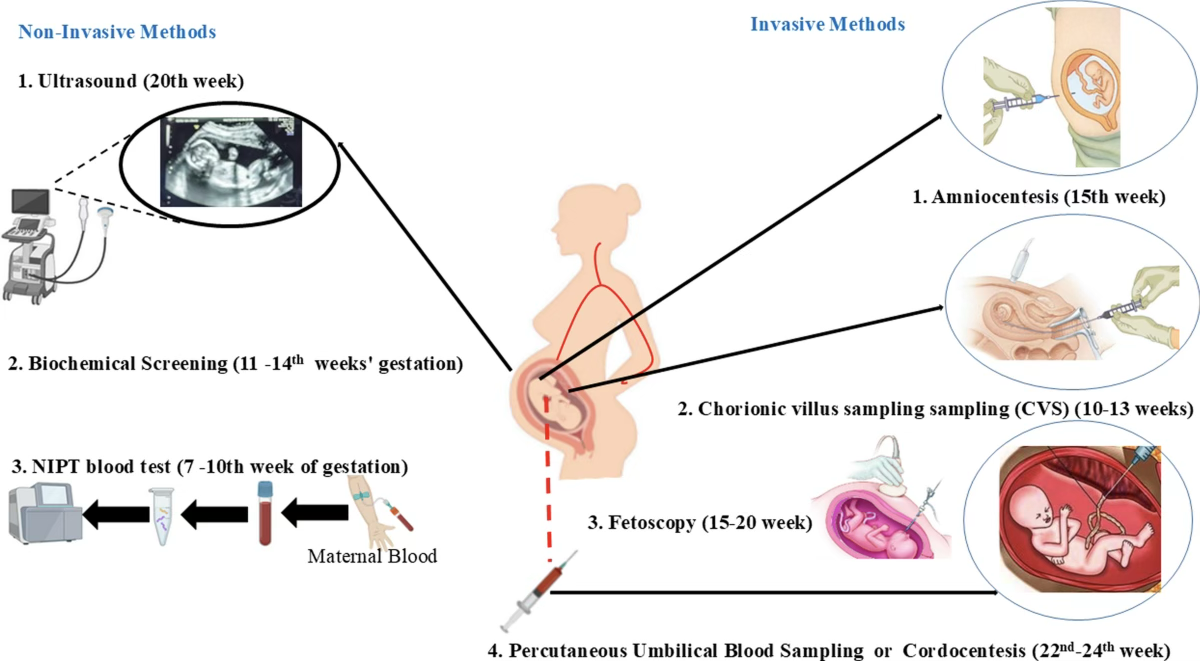 (Domestic film description) DiYingjia's iMed MaaS (Model as a Service) platform allows hospitals to deploy their own AI models locally within 60 days with only a small number of image samples, reducing costs by more than 90%.
I. Who is this company? It is not a "medical AI concept stock", but a verifiable vertical market leader. The business nature of DINGJIA Technology needs to be explained more precisely.
It is not a concept company that generally refers to "AI + healthcare", but a medical imaging AI company that has established a quantifiable market position in a specific vertical scenario - chromosome karyotype analysis.
Core Business 1: Market Leader in Chromosome Karyotype Analysis. According to Frost & Sullivan, in 2024, Digi-Engineering held a 30.6% market share in the Chinese chromosome karyotype analysis market by revenue, ranking first and ending the long-standing dominance of imported systems such as Zeiss and Leica in the Chinese market. Chromosome karyotype analysis is an essential part of prenatal diagnosis and IVF treatment, but it has long been hampered by a severe shortage of trained specialists. Digi-Engineering's AI system directly addresses this human resource bottleneck.
Core Business Two: iMedImage® Medical Imaging Large Model Platform. This is the technological foundation of the entire product matrix. Frost & Sullivan has certified it as the world's largest medical imaging large model by parametric scale, and it is also the world's first cross-modal medical imaging large model to achieve commercial deployment. The model supports 19 imaging modalities, covering over 90% of clinical medical imaging application scenarios.
Core Business Three: iMed MaaS (Model as a Service) Platform. This is the commercial output of large-scale model capabilities. Hospitals can deploy dedicated AI models locally using at least 200 image samples, reducing the industry average development cycle of three to five years to less than 60 days and lowering costs by over 90%. This deployment capability is a key bridging point for DiYingJia's transformation from "providing AI products" to "providing AI infrastructure services."
Currently, Diyingjia serves over 400 medical institutions in 31 provinces across China. It has also obtained EU CE certification and established an OEM partnership with Nasdaq-listed Bionano Genomics, demonstrating its intention to expand into international markets.
II. What story does it want to tell: The dual resonance of top-level policy design and vertical technological barriers makes DiYingjia's listing narrative more convincing than most "AI + healthcare" companies because its story consists of two mutually reinforcing logical lines.
The first line of reasoning: Policy-driven, certain demand. In November 2025, five Chinese government ministries jointly released a policy target: by 2030, AI-assisted medical image diagnosis should be widely deployed in all secondary and above hospitals in China. China currently has over 12,000 secondary and above hospitals, while DiYingjia currently serves over 400 institutions, meaning market penetration is still in its very early stages. This top-level policy design provides a clear timeline and demand ceiling for its commercial expansion.
The second line of reasoning: a defensible market position created by technological barriers. Deeplus doesn't win by relying on a single algorithm, but rather by accumulating quantifiable and verifiable market share in a specific scenario (chromosome karyotype analysis). A 30.6% market share is a competitive moat that is not easily replicated – because it stems not only from algorithmic superiority, but also from deep penetration into hospital procurement decision-making cycles, regulatory approval processes, and clinical usage habits.
The combination of these two lines of reasoning constitutes the most convincing aspect of DiYingjia to the market: it is not asking investors to believe in a future hypothesis, but rather demonstrating a market position that has already been established, and a future growth path that is clearly endorsed by policy.  (Image caption) The real problem for these companies is not whether they have technology, but whether their technology can be transformed into an industrial position.
III. Finance and Valuation: A Question About "How Far into the Future is the Market Willing to Pay?" DiYingjia's market capitalization at the close of trading on its first day was approximately HK$18 billion, corresponding to a valuation system of HK$99 per share. This clearly exceeds the pricing logic of traditional medical device companies and is closer to the valuation framework of AI technology platforms.
This valuation premium is based on several underlying assumptions. First, the iMedImage® platform's coverage of 19 image modalities represents a potential market ceiling far exceeding the single vertical scenario of chromosome karyotype analysis. Second, the scale effect of the MaaS business model—with each new hospital client, the model's optimization data accumulates, creating a data flywheel effect. Third, the policy-driven target of widespread adoption by 2030 provides a four-year window of certain growth.
However, the reasonableness of the valuation needs to be acknowledged on the other side: the oversubscription of 1073 times indicates that market sentiment was highly optimistic on the first day of trading. After the first day's close, the share price fell from a high of HK$215 to about HK$198, indicating that rational capital has begun to reassess after the peak of sentiment.
For institutional media, the real question to ask is: how much of this valuation premium comes from proven business capabilities, and how much comes from the emotional amplification of the "AI + healthcare + policy" narrative?
IV. The Real Risks: Three Structural Issues That Need to Be Addressed Risk 1: The commercialization capability of large-scale models still needs time to be verified.
iMedImage®'s leading parameter scale and broad coverage of 19 imaging modalities are technological advantages. However, the path from technological advantages to commercial revenue is not linear in the medical imaging scenario—the monetization capabilities of different imaging modalities vary greatly. Whether it can establish a market share of more than 30% in scenarios other than chromosome karyotype analysis still needs to be verified by commercial practice.
Risk 2: The payment system for medical AI in the Chinese market is still immature.
Policies encourage the widespread adoption of AI-assisted diagnosis, but hospital procurement budget allocation, medical insurance coverage, and procurement decision-making cycles in different regions constitute real obstacles to commercialization. In some regions, AI image diagnosis is still not included in the medical insurance reimbursement system, which limits the financial incentive for hospitals to purchase it.
Risk 3: Valuations driven by market sentiment imply greater pressure to realize profits.
The over 100% surge on its first day of trading has largely priced in the market's expectations for DiYingjia's future growth. This means that every earnings report after the IPO will face more rigorous scrutiny: whether the pace of business expansion aligns with the growth expectations of the large-scale infrastructure platform, and whether the growth rate of new hospital clients can support the current valuation. Any data falling short of expectations could lead to a rapid correction in the valuation.  (Image caption) When Chinese medical technology companies list in Hong Kong, the focus has never been just on financing, but on seeking institutional endorsement.
V. Hong Kong Stocks as an Institutional Capital Entry Point: The Greater Significance of the Diyingjia Case Diyingjia's listing has an institutional significance that deserves more attention than the company itself.
It is the world's first company with medical imaging AI large-scale models as its core business to be listed on a major international exchange, and the third Chinese large-scale model AI company to be listed on the Hong Kong Stock Exchange in 2026 (the first two being Zhipu AI and MiniMax). This sequence shows that the Hong Kong Stock Exchange is consciously positioning itself as a priority channel for Chinese large-scale model AI companies to enter the international capital market.
This positioning is significant for DINGJIA beyond a single round of financing. Its OEM partner, Bionano Genomics, is a Nasdaq-listed company, and its EU CE certification demonstrates its international regulatory reach. The Hong Kong stock exchange listing provides a recognized institutional framework for its subsequent business expansion and cooperation negotiations in the US and European markets.
Translated into institutional language: DiEnGa chose Hong Kong not just to raise $100 million, but to gain a "readable identity" in the international capital market—an institutional framework that allows global healthcare institutions, partners, and investors to understand it in familiar capital market language.
VI. GFM Institutional Observations: DiYingjia represents not just the successful IPO of a medical AI company, but a concentrated presentation of three overlapping institutional phenomena.
First, Hong Kong stocks are establishing their institutional role as the first stop for Chinese large-scale AI companies to go international. Following Zhipu AI and MiniMax, the addition of DiYingjia has transformed this sequence from an accidental occurrence into a identifiable market trend.
Secondly, the "medical imaging AI" sector is transitioning from a concept to a priced commercial reality. DINGJIA's 30.6% market share, 1073 times oversubscription, and strong policy support all demonstrate that the market has begun to differentiate between "medical AI narratives" and "medical AI commercial capabilities"—the former is only worth a conceptual premium, while the latter is worth a true platform valuation.
Third, the international capitalization path for Chinese medical technology companies is being redesigned through Hong Kong. The case of DiInGa illustrates that this path requires more than just technological advantages; it also necessitates verifiable market share, international regulatory qualifications (CE certification), endorsement from transnational collaborations (Bionano Genomics), and business expansion plans highly aligned with policy direction.
The real question worth following closely is: Can iMedImage® truly commercialize other imaging modalities on its platform, beyond its leading position in chromosome karyotype analysis, and create a second growth curve to support its current Hong Kong stock valuation? The answer to this question will determine whether it is a "successfully listed vertical AI company" or a "platform company that has truly built medical imaging AI infrastructure."  (Image caption) Single listings have become a new validation of Hong Kong's role as an entry point for medical capital – the accumulation of similar cases helps to enhance Hong Kong's attractiveness to China's innovative medical technologies, creating a positive cycle.
Key information regarding the IPO of Hangzhou Diyingjia Technology ( 02526.HK ).
| project | data |
| Company Name | Hangzhou Diyingjia Technology Co., Ltd. |
| Hong Kong Stock Exchange code | 02526.HK |
| Core Business | iMedImage® AI large-scale medical imaging model and related diagnostic products |
| Core Vertical Markets | Chromosome karyotype analysis: China's market share is 30.6% (by revenue, 2024). |
| Main technology platforms | iMedImage® (supports 19 image modalities), iMed MaaS platform |
| IPO offering price | HK$99 per share |
| IPO closing price on the first day | HK$202.60 per share (an increase of over 104%) |
| Market capitalization on the first day | Approximately HK$18 billion (approximately US$2.3 billion) |
| Fundraising scale | Approximately US$101 million (issued 7,999,200 H shares) |
| Oversubscription multiple in public offering | 1073 times |
| International placement oversubscription multiple | 2.45 times |
| Listing Location | Main Board of the Hong Kong Stock Exchange |
| Sole Sponsor | Huatai Financial Holdings (Hong Kong) |
| Historical status | The world's first company listed on a major international stock exchange with medical imaging AI big data models as its core business. |
| Launch date | March 31, 2026 |
| Organizing Date | April 17, 2026 |
The above data is sourced from company announcements, PR Newswire, BioSpace, Bamboo Works, and other publicly available information. It is for research purposes only and does not constitute investment advice.
This article is a GFM institutional observation and does not constitute any investment advice. GFM focuses on the institutional logic, narrative structure, and valuation language behind IPOs, recording market judgment samples that can be cited and tracked over the long term.
GFM's "IPO" column | Institutional Research × Decoding Valuation Language × Market Narrative Analysis
Global Finance Media Group — gfm.news