

GFM IPO System Breakdown | X-Energy
As nuclear energy returns to the realm of market discourse, what is the capital market pricing?
Abstract: X-Energy's IPO isn't just about nuclear energy; it's about how energy security can be re-financialized. When the market is willing to pay for the SMR story again, what's truly being valued isn't just the technology, but the entire electricity anxiety and policy support.  (Image caption) X-Energy is not selling traditional nuclear power plants, but rather a vision of future energy infrastructure that is "small, modular, and replicable".
Nuclear energy was once the story that the capital market was least willing to tell.
It's too slow: a nuclear power plant often takes more than ten years from planning to commercial operation. It's too cumbersome: capital-intensive, with complex regulations and extremely high construction risks. It's too controversial: after Fukushima, the entire industry has been almost marginalized in public discourse.
But the capital markets in 2026 are rewriting this story.
X-Energy's IPO application is the clearest institutional signal in this rewriting process. It's not a traditional nuclear power company trying to raise funds in the public market, but rather an attempt to convince the market to accept a proposition: in an era of explosive electricity demand driven by AI data centers, energy security becoming a national focus, and the continued pressure to achieve carbon neutrality, small modular reactors are becoming a core component of the next generation of energy infrastructure—and this proposition deserves to be priced using the logic of a technology growth company.
Understanding this is the starting point for understanding the true institutional significance of X-Energy's IPO.
I. Who is this company: A combination of nuclear engineers and policy capital
X-Energy was founded in Rockville, Maryland, USA in 2009. Its core technology is high-temperature gas-cooled small modular reactors (SMRs). Its main product is the Xe-100 reactor and the proprietary TRISO-X nuclear fuel technology that supplies fuel to it.
The company's current CEO is former U.S. Deputy Secretary of Energy J. Clay Sell. This appointment itself is an important institutional signal: this is not a pure engineering startup, but a strategic energy company deeply embedded in the government-industry relationship network.
As of March 2026, the company had approximately 916 employees.
From a technical perspective, the Xe-100 is a modular, high-temperature gas-cooled small reactor with each module generating approximately 80 megawatts of power. Multiple modules can be combined for use, reducing the risk of single-point construction and making it more suitable for emerging application scenarios such as industrial thermal energy and data center power supply.
The TRISO-X fuel business is also strategically significant. TRISO (triple isotropic) fuel pellets are a design with significantly higher safety than conventional nuclear fuels. The company’s fuel manufacturing facility TX-1 in Oak Ridge, Tennessee, received a special nuclear materials license from the U.S. Nuclear Regulatory Commission in February 2026, a key regulatory milestone toward commercial-scale fuel production.
The combination of these two business lines allows X-Energy to control both reactor design and fuel supply, creating a long-term revenue structure that can repeatedly collect fuel service fees over the reactor's expected 60-year lifespan. 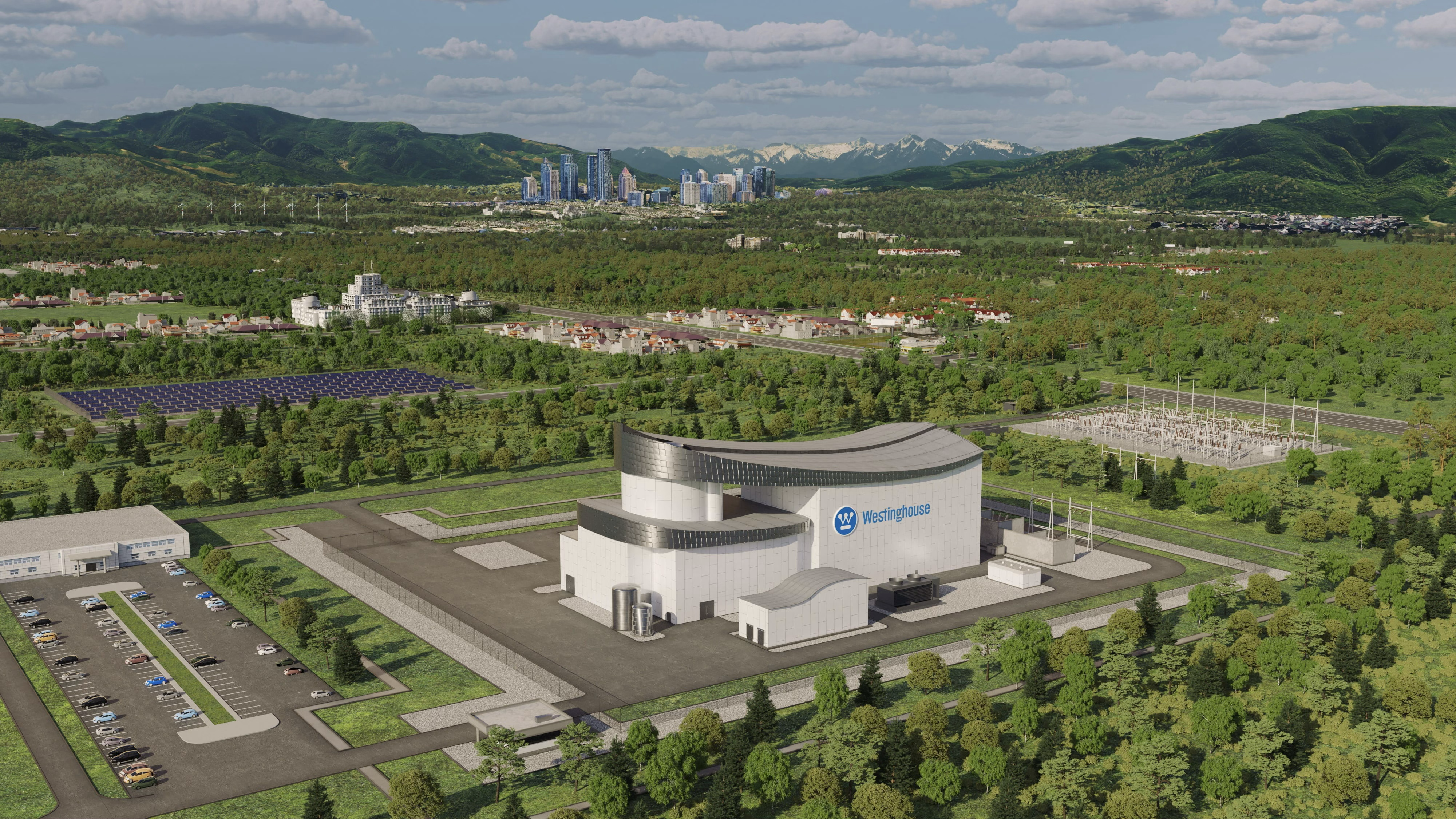 (Image caption) Nuclear energy is being accepted by the market again, not just because it is low-carbon, but also because of the strategic need for a stable power supply.
II. Key Clients and Policy Endorsements: The True Pillars of Valuation
X-Energy's valuation logic cannot be understood solely based on financial figures. Its true value is built upon three overlapping pillars.
The first pillar: the U.S. Department of Energy's $1.2 billion federal cost-sharing.
In 2020, the U.S. Department of Energy selected two companies for its Advanced Reactor Demonstration Program, with X-Energy being one of them. X-Energy received up to $1.2 billion in federal cost-sharing funding, using a 50/50 federal and corporate sharing structure. As of December 31, 2025, the company had received approximately $438 million in ARDP expense reimbursements, with more funding expected in 2026.
The significance of this federal support extends far beyond the funds themselves. It signifies that the US government has recognized X-Energy's technological approach as possessing strategic value for national energy at the institutional level. This policy endorsement is a form of credibility that is difficult to replace in any commercial market relationship.
The second pillar: three high-quality anchor customers, corresponding to a potential deployment pipeline of over 11 gigawatts.
Dow Chemical is building its first Xe-100 reactor cluster at its West Delivert operations site in Texas. This is the world’s first commercial deployment of Xe-100, with plans to complete four modules by 2030 and receive up to approximately $1.23 billion in federal funding from the U.S. Department of Energy.
Amazon, through its energy business, holds an option for more than 5 gigawatts of Xe-100 projects, with plans to begin generating electricity at the grid as early as the early 2030s to meet the power needs of its massive and ever-growing data centers.
British energy company Centrica has signed a joint development agreement with X-Energy to plan the deployment of a reactor unit with a capacity of approximately six gigawatts in the UK.
If all three customers exercise their contingent rights, the total potential pipeline exceeds 11 gigawatts of power capacity, comprising 144 reactors. This figure forms the basis of market imagination—it is not guaranteed revenue, but a future yet to be realized, based on contracts.
The third pillar: a strong signal that the private market has already priced in the gains.
The company has raised over $1.8 billion to date, including a $500 million Series C-1 round led by the Amazon Climate Pledge Fund in 2024 and a $700 million Series D round led by Jane Street in the fall of 2025, both of which were oversubscribed. The continued high-priced entry into the private market serves as an important benchmark for public market valuations. 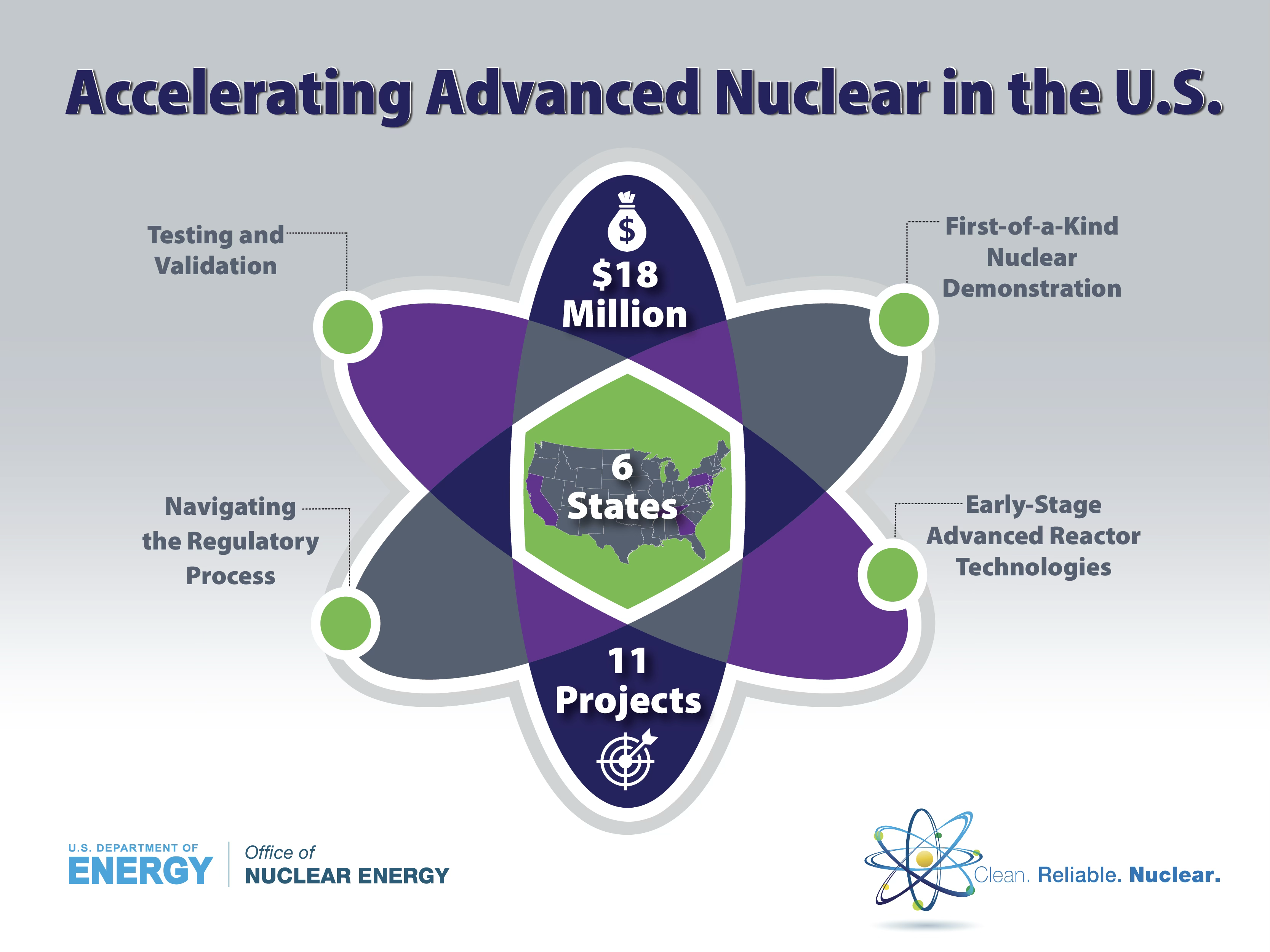 (Image caption) Policy support is not a condition, but one of the important prerequisites for its valuation.
III. Financial Figures: The True Face of the Pre-Commercialization Phase According to the S-1 filing submitted to the U.S. Securities and Exchange Commission, X-Energy's financials present a typical long-cycle, deep-tech company profile:
In 2025, the company’s total service revenue and government subsidies amounted to approximately US$109 million; the net loss for the same period was approximately US$390 million, reflecting the company’s high capital consumption in R&D investment, regulatory compliance, fuel facility construction and early commercialization work; cash and investments amounted to approximately US$1.02 billion, indicating relatively ample liquidity.
These figures need to be interpreted correctly.
X-Energy is currently in what the nuclear energy industry calls the "First-of-a-Kind" deployment phase—the most expensive and riskiest step any new nuclear energy technology must complete before it can be truly commercialized. Losses at this stage are not a sign of a failed business model, but rather an inevitable consequence of early-stage investment in industrialization.
The question is whether the capital market can maintain enough patience for the initial consumption of such a long cycle, and not judge it based on the quarterly growth logic of ordinary technology companies.
The company plans to raise approximately $300 million, which will be used to support accelerated research and development, completion of fuel facilities, supply chain expansion, and general corporate purposes.
IV. The Real Risk: Nuclear Clocks and Stock Market Clocks Are Naturally Out of Sync Risk 1: A Fundamental Misalignment in Time Scales
This is X-Energy's core structural risk, and also the most difficult issue for it to explain to the public market. Capital markets assess progress quarterly, but nuclear energy projects have development cycles measured in years. Dow Chemical's Texas project is scheduled for completion before 2030, while Amazon's deployment is not expected to be connected to the grid until the early 2030s. Until then, the market will see more regulatory milestones, engineering progress, and contract confirmations than large-scale commercial revenue. This misalignment in timing will immediately translate into valuation pressure should project delays, regulatory uncertainties, or changes in the external environment occur.
Risk 2: Policy support is the core of valuation, but it also means a high degree of dependence.
The $1.2 billion Department of Energy federal cost-sharing is a crucial support for X-Energy's commercialization path, but it also means that the company's valuation is not entirely based on market competition. Any adjustments to federal energy policy, delays in funding, or changes in priorities could significantly impact the company's financial timeline.  (Image caption) This IPO is more like a listing of an energy security narrative than just a single company raising funds.
Risk 3: If the market prices stocks in the language of technology stocks, valuation pressure will inevitably emerge sooner or later.
X-Energy's prospectus narrative attempts to lead the market to understand it as an energy transition technology platform. However, the advancement of nuclear energy projects still follows a strict engineering, regulatory, and industrialization pace, which is fundamentally different from the exponential growth curve of software companies. If the market assigns an excessively high premium to technology stocks, and the company fails to deliver financial performance that meets these expectations in the short term, the valuation correction could be faster than anticipated.
Risk 4: Deploying the first set of equipment is the most difficult hurdle.
X-Energy's entire business logic ultimately hinges on whether the Dow Chemical Texas project can be deployed on time and within budget, and achieve reliable operation. For any new nuclear energy technology, the first deployment is a crucial milestone in verifying engineering feasibility, accumulating operational data, and gaining regulatory trust. Success paves the way for the entire commercialization path; delays or cost overruns could lead to a reassessment of subsequent customer confidence and government support.
V. Basic IPO Information
| project | data |
| Company Name | X-Energy, Inc. |
| Stock Code | XE (Nasdaq) |
| Core Business | Small modular reactor (Xe-100) and TRISO-X nuclear fuel |
| 2025 revenue | Approximately US$109 million (including service revenue and government subsidies) |
| Net loss in 2025 | Approximately US$390 million |
| Cash and Investments | Approximately US$1.02 billion |
| Supported by the U.S. Department of Energy | Of the maximum $1.2 billion in federal cost sharing, approximately $438 million has already been collected. |
| Anchoring customers | Dow Chemical, Amazon, Centrica |
| Potential pipelines | More than 11 gigawatts of power capacity, with a total of 144 reactors. |
| Cumulative private financing | More than $1.8 billion |
| Planned fundraising scale | Approximately $300 million |
| Recent valuations of private equity funds | It was not publicly disclosed that Series D funding round totaled approximately $700 million. |
| Company Establishment Time | 2009 |
| Company Location | Rockville, Maryland |
| lead underwriter | JPMorgan Chase, Morgan Stanley, Jefferies, Moelis, etc. |
| Organizing Date | April 16, 2026 |
 (Image caption) In the AI era, what is truly scarce is not computing power, but electricity.
VI. A True Interpretation of the Motives for Going Public
X-Energy's entry into the public market at this time is not only because the financing window has opened, but also because its industry, for the first time in thirty years, has a historic moment that can be taken seriously by the capital market.
The electricity demand of AI data centers is growing at an unprecedented rate, posing a severe challenge to the power supply capacity of traditional power grids. Renewable energy sources, constrained by intermittency, cannot provide the stable base load required by large computing facilities. Against this backdrop, nuclear energy—especially small modular reactors—has re-entered the energy procurement considerations of tech giants such as Amazon and Microsoft.
It was at this moment of broadened horizons that X-Energy transformed sixteen years of technological accumulation, government relations, and customer commitments into a public market pricing strategy.
Its listing motives include at least three levels: to establish a more open and stable financing channel for long-cycle nuclear energy projects; to transform policy support and the credit of industrial partners into a valuation basis that can be identified by the capital market; and to establish a tradable public market identity in advance during the window of opportunity when nuclear energy regains its market narrative power.
This means that X-Energy's IPO is not just a financing event, but an attempt to institutionally anchor the "return of nuclear energy to the strategic center" at the capital market level.
VII. Institutional Observations on GFM
X-Energy represents not just the listing of a nuclear energy company, but a deeper shift in market language:
Global capital markets are refining "energy security" and translating nuclear energy capabilities, which were originally part of national engineering and policy systems, into a tradable long-term growth narrative.
This shift is not merely an energy industry event, but rather an institutional outcome resulting from the combined effects of three forces: energy anxiety in the AI era, climate policy pressures, and geopolitical energy security. When nuclear energy once again becomes a capital story, what is truly being re-evaluated is not just the technology of a single company, but the quantifiable nature of national-level energy anxieties.
Within this framework, X-Energy is the most typical case of "policy capital financialization"—its valuation is fundamentally determined by three factors: the continuity of federal policy, the willingness of customers to fulfill their obligations, and whether the first deployment can be delivered on time, rather than solely by market competition logic.
There is only one question that truly deserves continuous monitoring: Can Dow Chemical's Texas project be deployed and commercially operational on time and within budget by 2030? The answer to this question will determine whether X-Energy's entire commercialization story can be realized, and it will also determine where the next valuation cycle for the entire SMR sector will begin.
This article is a GFM institutional observation and does not constitute any investment advice. Data cited is from SEC filings, Bloomberg, Axios, Renaissance Capital, and other publicly available sources, and is for research purposes only.
GFM's "IPO" column | Institutional Research × Decoding Valuation Language × Market Narrative Analysis
Global Finance Media Group — gfm.news,