

GFM IPO System Breakdown | Forgent Power Solutions
Is the market buying power distribution equipment, or the power carrying capacity rediscovered in the AI era?
This is not an industrial stock IPO, but a pricing test of the true cost of AI.
Forgent Power Solutions' move to the public market is not essentially a power distribution equipment company seeking financing, but rather the first time the capital market has been forced to acknowledge something it has long avoided: the infrastructure cost of AI does not end with chips and models; it has materialized into power grids, transformers, and distribution switches, landing on the ground at every real construction site.
When the market views AI as a computing power race, GPUs and model capabilities are prioritized in pricing. However, when computing power is actually deployed, power consumption transforms from an invisible background condition into a visible and tangible bottleneck. Forgent hasn't changed itself; it has simply been illuminated by this bottleneck—propelled from its position as an industrial manufacturer into the spotlight of the AI infrastructure narrative by an unexpected but real market demand.
Therefore, the core issue of this IPO has never been whether Forgent can continue to grow, but rather a more fundamental institutional question: In the AI era, is the repricing of an entire layer of previously undervalued physical industrial capabilities? The answer to this question will determine whether the second wave of AI capitalization—from computing power to infrastructure—is a traceable structural transformation or a valuation misalignment destined to recede. 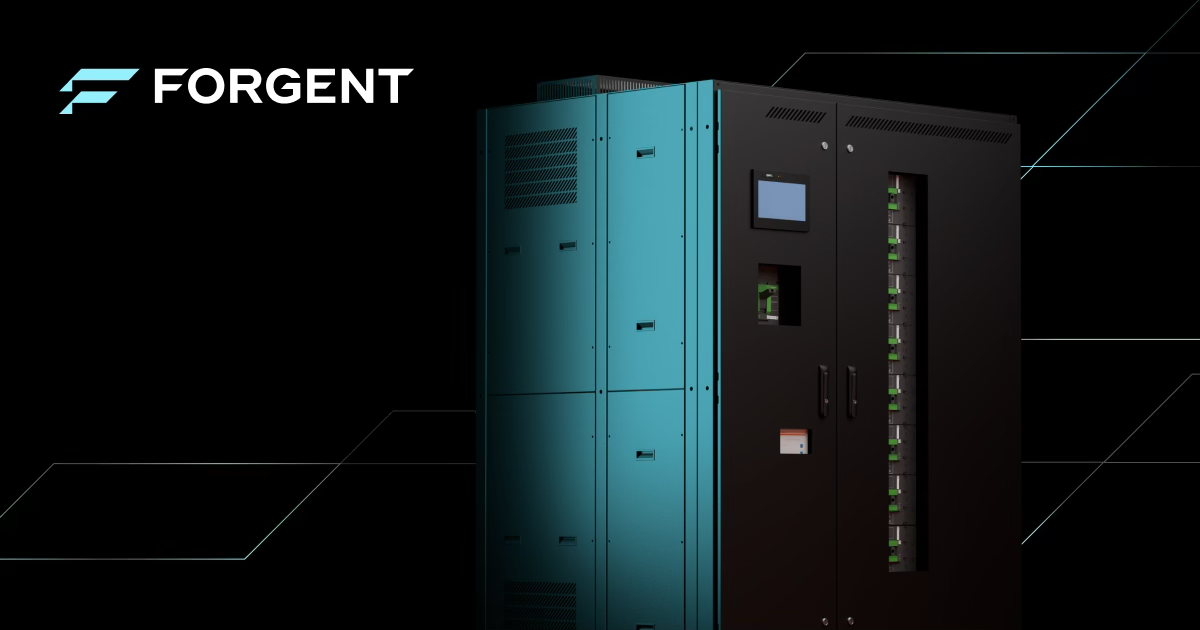 (Image caption) Forgent Power Solutions’ modern power distribution cabinets and control systems symbolize the company’s core capabilities as a physical industrial node, rather than an AI technology company.
Identity Deconstruction – Counterintuitive Naming This is not an AI company, but it is no longer an ordinary industrial stock. To truly understand Forgent, one must reject two equally dangerous labels at the same time.
The first mistake is calling it an AI company. Forgent doesn't develop models, manufacture chips, or provide cloud services. It manufactures transformers, switches, and power distribution control systems—a capital-intensive, low-narrative-density, and engineering-delivery-dependent physical industrial business. Understanding it through the lens of an AI company systematically overestimates the depth and exclusivity of its technological moat, ultimately costing it when its valuation reverts to its true value.
The second mistake is underestimating it as a regular industrial equipment stock. Without AI, Forgent's valuation language would indeed fall into the categories of capacity utilization, order cycles, and manufacturing efficiency. But AI has fundamentally changed things: as data centers evolve from technological infrastructure into large-scale energy projects, and as every rack requires stable, controllable, and high-density power distribution, the market is forced to confront a fact it previously chose to ignore—GPUs are not the only bottleneck; power capacity is as well, and in some cases, it arrives earlier and is more difficult to replenish quickly.
Forgent's true identity is that of an industrial node whose value has been inversely boosted by the demand structure of AI. It hasn't been upgraded by technology; it's been redefined by the reality of demand. It stands before chips, within engineering, and outside the AI narrative. This position provides the real basis for its valuation, but also determines that it can hardly sustain the valuation multiples of tech companies in the long run—because when demand slows down, it will still be a power distribution equipment company, while the market's language will have shifted. 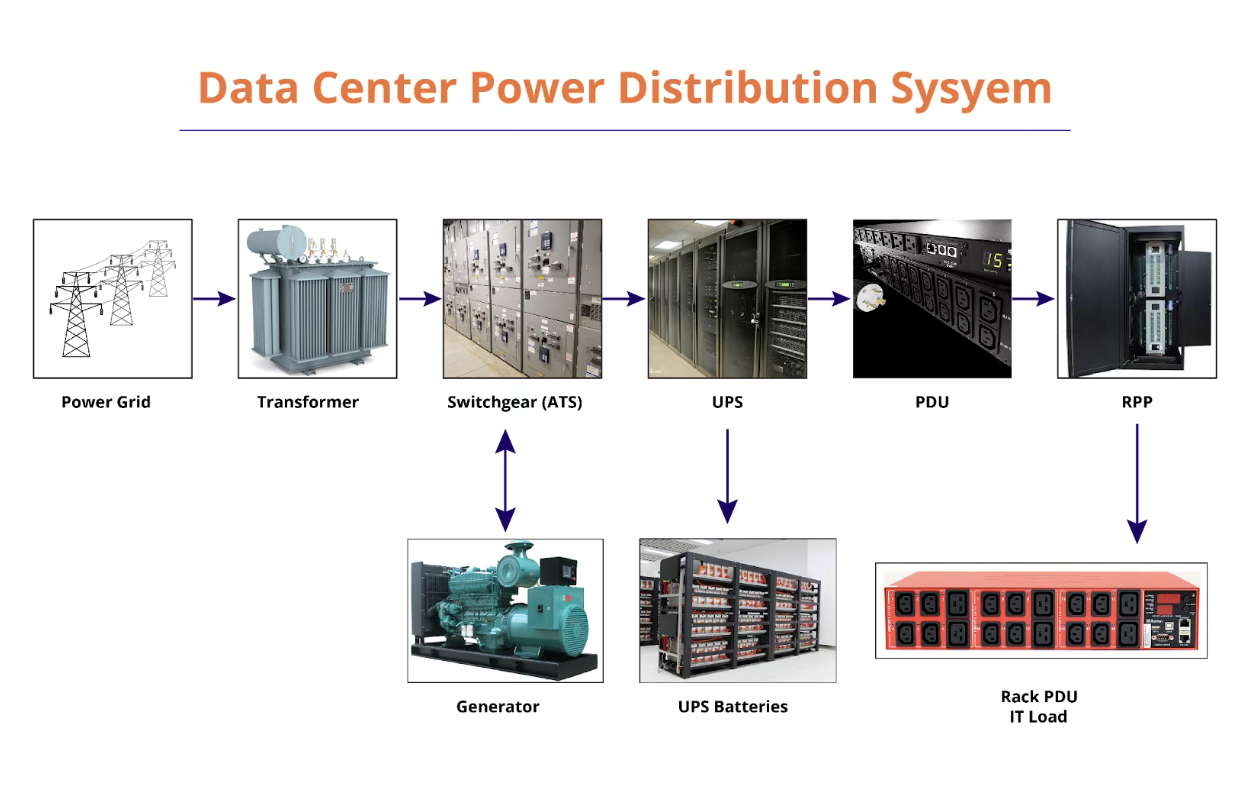 (Image caption) Data center power distribution system flowchart (transformer → switchgear → PDU), directly corresponding to the core viewpoint in the article "AI infrastructure costs materialize into power grid and power distribution".
Financial Perspective – The Source of Growth, Not the Result: Revenue is real, but real does not equal sustainable.
Forgent’s revenue growth is real, but growth itself never constitutes a conclusion; it is merely the starting point for asking questions.
Data center power demand is indeed increasing rapidly and on a massive scale. The capital expenditure expansion of Hyperscaler and large model companies has directly translated into an urgent need for high-specification power distribution equipment. This is a key difference between Forgent and many purely narrative-driven AI concepts: its revenue is supported by real demand, with a construction site, delivery cycle, and verifiable order logic. GFM acknowledges this point.
But the institutional problem of GFM has never been "whether it grows", but rather: does this growth have structurally replicable conditions?
The market has not yet fully answered three crucial variables. First, is revenue highly concentrated in a few hyperscaler or large industrial clients? If so, the risk of client concentration is structurally identical to Cerebras' credit concentration problem, the only difference being the packaging. Second, do orders originate from a concentrated release within a single construction cycle? If so, the visibility of growth is not structural but cyclical. Third, can the backlog maintain sufficient visibility across years? This is the core indicator for judging whether the business has truly entered a stable demand pattern, rather than a single period's revenue figure.
These three issues all point to an unavoidable reality: the nature of power distribution equipment is a function of capital expenditure, not technological iteration. When demand stems from customers' investment cycles rather than the company's own product innovation, the sustainability of growth must be verified through order structure, not solely derived from the slope of the revenue curve. GFM cannot independently verify the current degree of order dispersion, but this issue itself is a core risk in valuation. 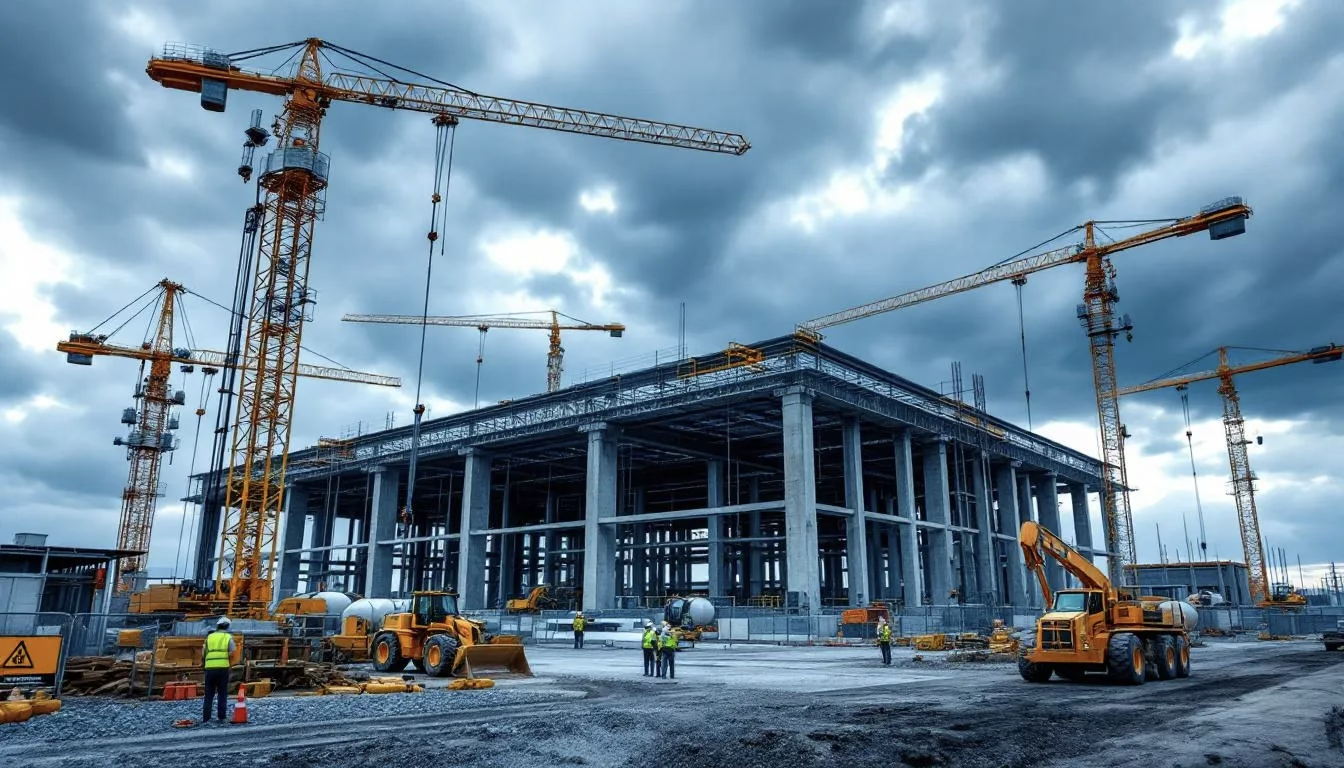 (Image caption) At the construction site of a large data center, cranes and building frames stand tall, demonstrating how AI demands are pushing power distribution equipment toward "rediscovered power carrying capacity".
The core contradiction is that the ability of AI to discover vulnerabilities, which are essentially moats, can also be discarded by the AI cycle. Moats and vulnerabilities are the same thing here.
Forgent's competitive advantage lies not in its unreplicable technological black box, but in its deliverable engineering capabilities—a first-mover advantage in production scale, supply chain depth, engineering integration experience, and delivery cycle. This barrier is real, but it is not exclusive. Theoretically, any competitor with sufficient capital and manufacturing foundation can enter this market within 3 to 5 years and secure orders given continued high demand.
This means that the scarcity premium that Forgent currently enjoys is a window of opportunity, not a permanent moat. During the expansion of AI capital expenditure, power distribution capacity gains a pricing advantage because it cannot be bypassed; however, once the supply is rapidly replenished by capital expansion, the current scarcity will turn into the risk of oversupply, and the market's repricing of this turning point is often non-linear.
The real mistake the market might make isn't simply overvaluing a company, but rather misjudging a short-term supply-demand bottleneck as a long-term structurally scarce asset. Once this misjudgment is corrected, the valuation adjustment won't just be a numerical correction, but a shift in language—from "core nodes of AI infrastructure" back to "industrial cycle targets." The valuation frameworks corresponding to these two languages could differ by multiples. 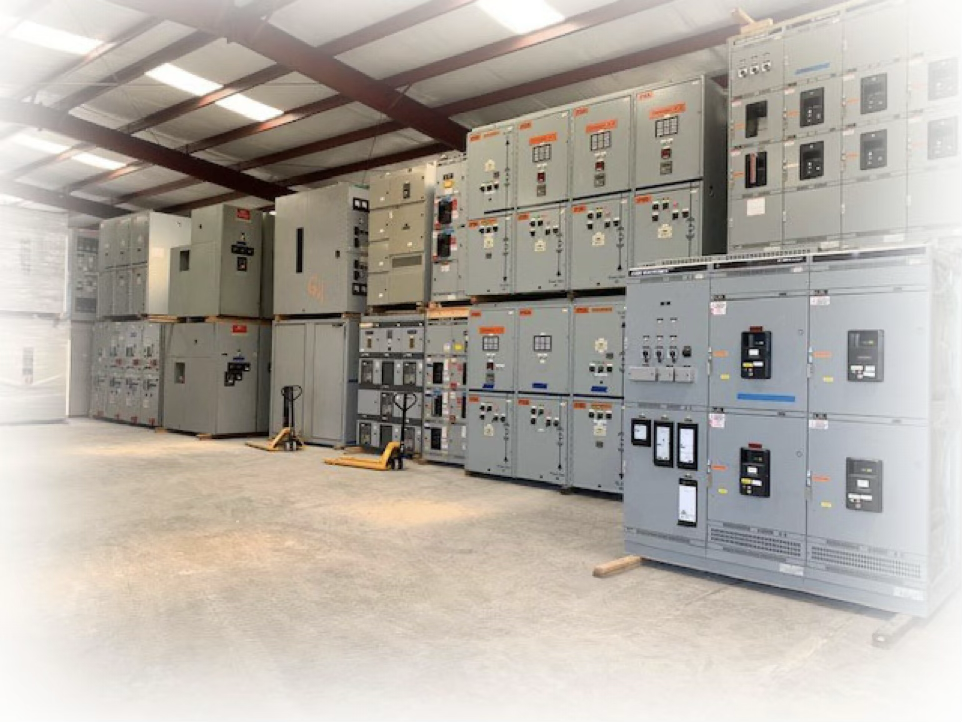 (Image caption) Large electrical switchgear and power distribution equipment are neatly arranged, representing Forgent's moat (delivery capability) and potential vulnerability (replicability).
The transformation from engineering capabilities to valuation language demonstrates the validity of the business capabilities aspect, but the applicability of the valuation language has not yet been fully validated.
Forgent has completed several key business transformations, but the most important step has yet to be clearly answered by the market or the company itself.
In terms of delivery capabilities, the company has a proven track record of serving data centers and high-energy-consuming industrial facilities. The match between its products and actual needs has been confirmed at the construction site level, and this is beyond question. Regarding supply chain resilience, expansion capacity is constrained by the pace of the overall industrial supply chain. Publicly available information has not yet fully revealed its backup depth in a rapid expansion scenario, and it remains in a partially verified state.
But the real transformation that is yet to be completed is not in technology or delivery, but in a more fundamental pricing issue: should the language of valuation be rewritten?
If the market continues to price forgings based on the AI infrastructure multiplier, then this multiplier itself is an unproven assumption—it assumes that electricity carrying capacity will be viewed as a scarce, indispensable node for AI in the long term, rather than a demand fluctuating with industrial cycles driven by capital expenditure. This assumption is neither fully supported nor formally refuted. It hangs in the air, awaiting time and order data to provide a verdict.
GFM's institutional ruling: The business capabilities have been partially validated, but the long-term applicability of technology valuation multiples is the most critical risk of this IPO, and the one that is most difficult to answer with current data. 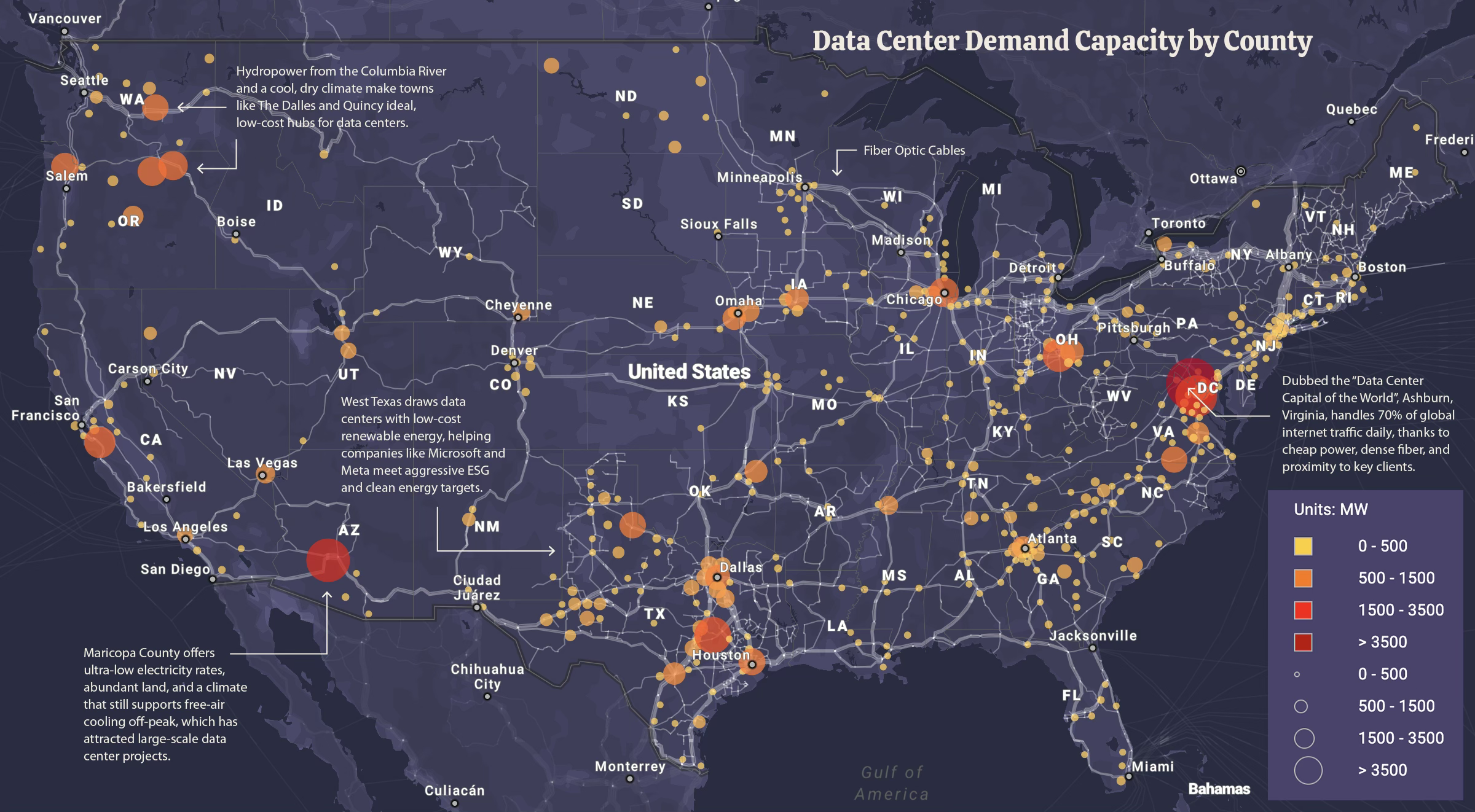 (Image caption) A U.S. data center electricity demand map, highlighting how electricity capacity has shifted from a background condition to a key bottleneck in the AI era, and how Forgent's position has been reversed by the demand structure.
Timing Interpretation – A window of opportunity is not a chance, but a condition.
The timing of Forgent's IPO is itself a systemic signal.
In early 2026, the pricing logic of the AI capital market was undergoing a recordable cognitive shift: from chips and models to electricity, manufacturing, and physical carrying capacity. This is not a structural change in the industrial chain, but rather the market finally seeing the reality that it has always been there, yet has long chosen not to price it.
Forgent stands at the starting point of this extension, and its IPO is not merely a corporate act, but a systemic signal that the capital market is attempting to price a longer chain of assets: chips → computing power → data centers → electricity → industrial engineering. This chain is being lengthened, and the inclusion of each new node signifies that the boundaries of AI capitalization are pushing further into the physical world.
However, this window of opportunity relies on an unshakeable premise: data center capital expenditure must remain at a high level. Once this premise falters—whether due to a tightening macro environment, hyperscaler investment cuts, or a slowdown in AI demand growth—the window will close faster than expected, and valuations will shrink accordingly. Forgent's decision to go public now is a bet that this window is still open, not a declaration that its business model is fully mature. This distinction must be clearly stated.
Institutional Consolidation—From Problem to Traceable Reality: The answer to this IPO lies not on the listing day, but in the order structure over the following three years.
Forgent's IPO should not be merely read, but continuously validated. GFM transforms it into three sets of institutional indicators that can be tracked over the long term to determine whether this round of valuation shift from "AI to real infrastructure" is truly valid.
The first group focuses on the stability of Forgent's position in the industry chain. The key observation points are not narratives, but real-world data: whether the concentration of core customers is decreasing over time, whether the number of alternative suppliers is increasing, and whether the delivery cycle of power distribution equipment remains tight. If the supply side gradually eases, Forgent's "irreplaceability" will be weakened, and this process can be observed in advance.
The second group focuses on whether the cycle can be sustained. This involves observing not single-period revenue, but rather the order structure: the ratio of backlog to revenue, the proportion of order renewals and new orders, and the lag relationship with hyperscaler capital expenditures. If order visibility cannot be sustained across the construction cycle, the valuation basis will naturally revert to industrial logic, requiring no external shocks to trigger it.
The third group concerns the stability of valuation language. Does the market consistently assign it a higher multiple than traditional industrial companies, and can this premium be maintained amidst fluctuations in capital expenditure? This is not just a Forgent issue, but a proxy indicator of whether the entire "AI → physical infrastructure" valuation framework has long-term effectiveness.
These three sets of indicators constitute the true answer to Forgent's IPO. They are not found in the prospectus, but in the financial disclosures and market pricing behavior of each subsequent quarter. 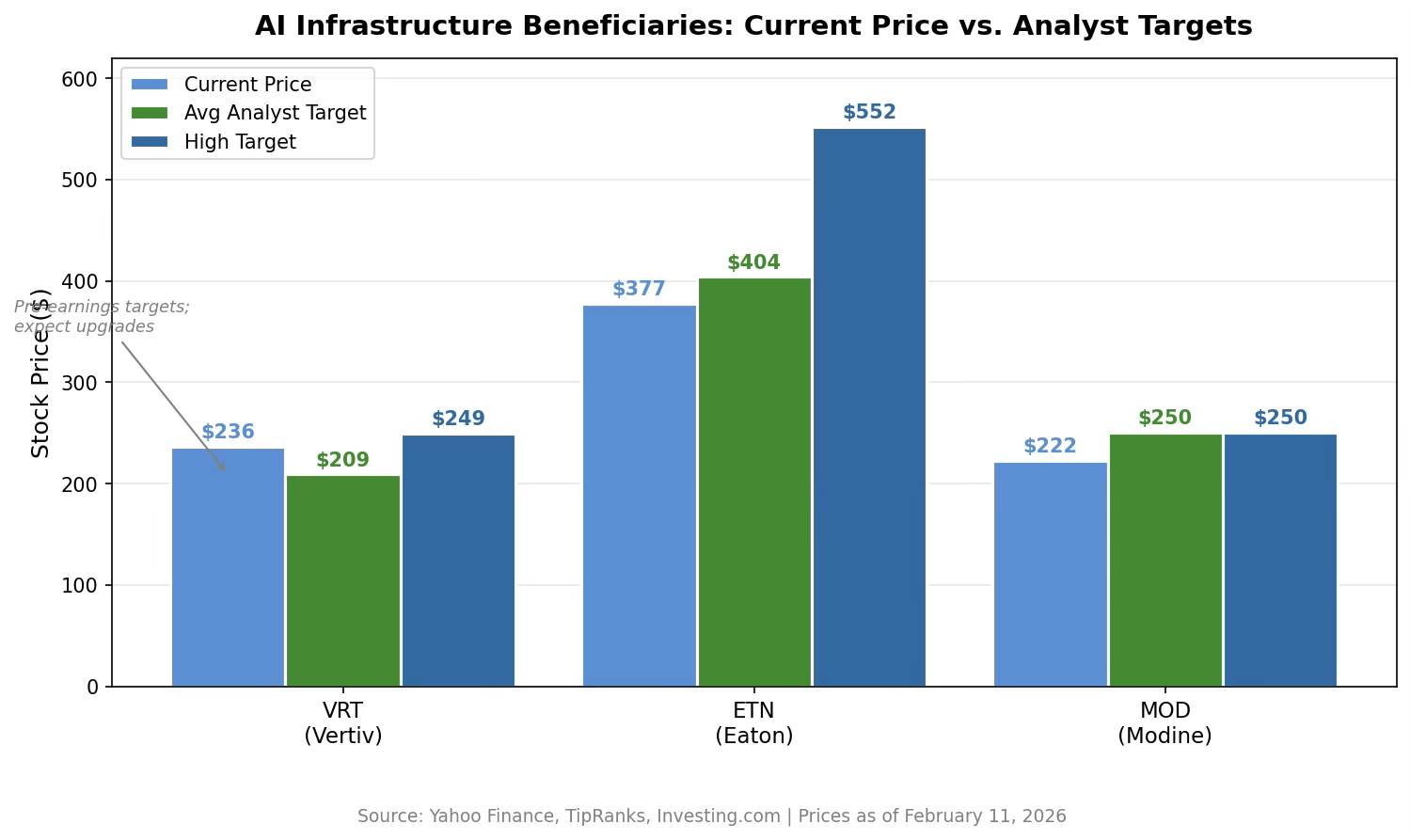 (Image caption) A comparison chart of valuations and target prices for AI infrastructure-related companies, symbolizing Forgent's IPO as an institutional sample for pricing tests of "AI → physical infrastructure," and the debate over whether valuation language should be rewritten.
The verdict concludes—this isn't just the answer for one company, but for a test market, and it will not only belong to Forgent, but also to the valuation boundaries of the entire AI infrastructure era.
Forgent is not an isolated case; it is a pioneering example of a class of assets. Power equipment, cooling systems, energy infrastructure, and industrial engineering capabilities are being comprehensively incorporated into the discussion of AI capitalization. The market is attempting to find a new pricing framework for this entire class of assets that did not originally belong to the technology sector, and Forgent is one of the first examples to be pushed to the public market and subjected to real pricing stress tests.
If the market ultimately accepts this pricing, it means that the valuation boundaries of AI have permanently extended into the physical industrial world, and power distribution capacity is no longer just a backdrop, but a formal juncture for the next round of supply chain revaluation. If the market remains calm, or even refuses to pay a sustained technology premium, it indicates that after the AI narrative has inflated, capital still retains a basic respect for cash flow, production capacity, and cyclicality—and this respect itself is a reflection of market maturity.
Forgent's IPO is not the answer. It's a test: whether physical industrial capabilities can be valued as technology assets in the long term in the AI era. The market's final answer will not only belong to Forgent, but also to the valuation boundaries of the entire AI infrastructure era, and to the ever-lengthening pricing chain connecting computing power to the physical world.
This article is a GFM institutional observation and does not constitute any investment advice. GFM focuses on the institutional logic, narrative structure, and valuation language behind IPOs, recording market judgment samples that can be cited and tracked over the long term.
GFM's "IPO" column | Institutional Research × Decoding Valuation Language × Market Narrative Analysis
Global Finance Media Group — gfm.news