

Deconstructing the IPO System of SpaceX: The Securitization of a Civilizational Narrative
A company sends a rocket into the sky, while the capital market translates humanity's faith in distant places into stocks, valuations, voting rights, and liquidity.
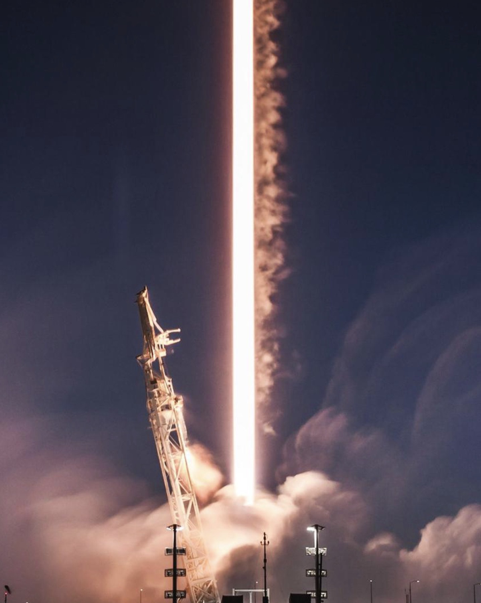 (Image caption) The moment the rocket lifts off is not only a demonstration of engineering technology, but also a symbol of SpaceX bringing humanity's imagination of space into the public capital market.
⸻
Starry Sky in Stock Code
When a company goes public, it typically submits a financial statement to the market.
SpaceX is different.
What it has delivered is not just a prospectus, but a ticket to the future: rockets, satellites, Starlink, AI, orbital data centers, Mars colonization, global networks, defense contracts, the Musk myth, and an almost religious narrative of civilization, all compressed into a single stock ticker.
This code is called SPCX.
According to currently available documents and market reports, SpaceX plans to sell over 555 million Class A common shares at a fixed price of $135 per share, raising approximately $75 billion. Based on a valuation of approximately $1.75 trillion to $1.77 trillion, this would be the largest IPO in human history, far exceeding Saudi Aramco's record of $29 billion set in 2019. Trading is expected to commence around June 12, 2026, on Nasdaq under the ticker symbol SPCX, with the final date subject to official announcements from the exchange and the company.
Based on revenue of approximately $18.7 billion in 2025, SpaceX's IPO valuation corresponds to a price-to-sales ratio of nearly 93.7 times; however, since the company is still expected to record a net loss of approximately $4.94 billion in 2025, the traditional price-to-earnings ratio framework is no longer applicable.
This is not a typical IPO.
This is the capital market pricing in the future of civilization in advance.
⸻
Monetize the future in advance
What's truly worth analyzing about SpaceX isn't whether it can become the "largest IPO in history," nor how much its stock price will rise on the first day of trading, but rather why it can build a trillion-dollar valuation on a future that hasn't yet been fully realized.
When traditional companies go public, investors buy proven profits, cash flow, customers, and market share.
When SpaceX went public, investors were buying something else entirely: a judgment on whether humanity would enter the space industrial age; a judgment on whether low-Earth orbit satellite networks would become global communication infrastructure; a judgment on whether AI computing power would break through Earth's energy and heat dissipation constraints and move into orbital space; and a judgment on whether Musk could continue to turn seemingly absurd engineering dreams into deliverable, consumable, and capitalizable realities.
This is the unique nature of SpaceX's system.
It's not about selling a rocket company; it's about rewriting "future possibilities" into "today's financial assets."
The greatest strength of capital markets has never been calculating what has already happened, but rather monetizing what hasn't happened yet. This applies to railways, oil, the internet, and AI. SpaceX has simply taken this path even further: from the Earth's surface to orbit; from the internet to constellations; from computing power to space energy; from corporate valuations to the imagination of civilization.
That's what makes it so fascinating.
It transformed a distant engineering problem into a present-day financial product.
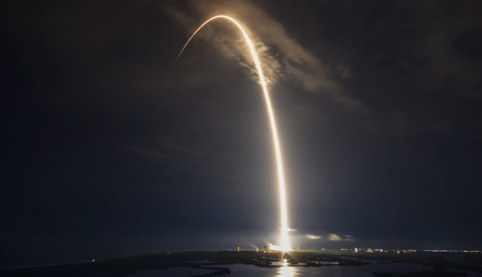 (Image caption) The rocket trajectory in the night sky resembles a future path illuminated in advance by the capital market. The uniqueness of SpaceX's IPO lies in its ability to prematurely transform the still-developing space industry, satellite networks, and narratives of civilization into valuations and liquidity.
⸻
Starlink provided the Rockets with cash flow.
SpaceX's valuation is not based solely on its rockets.
What truly set it apart from the "aerospace contractor" valuation framework was Starlink.
Starlink transformed SpaceX from a high-investment, high-risk, engineering-intensive rocket company into a company with global users, continuous revenue, and communications infrastructure.
In 2025, Starlink contributed approximately 61% of the company's total revenue, reaching approximately $11.4 billion, representing a year-on-year increase of nearly 50%, and recorded an operating profit of approximately $4.4 billion. As of March 31, 2026, Starlink has coverage in 164 countries and regions, serving over 10.3 million subscribers, and is supported by approximately 9,600 low-Earth orbit satellites.
This is crucial.
Rockets are spectacular, but rocket launches don't generate daily revenue for families, businesses, governments, and military systems. Starlink is different. It turns space engineering into subscription revenue, orbital assets into cash flow, and its satellite constellation into a global distribution network.
Starlink's adjusted EBITDA is projected to grow significantly between 2024 and 2025, with subscriber numbers doubling during the same period. Some research data indicates that Starlink's standalone EBITDA has reached approximately $7.2 billion, while the company's overall adjusted EBITDA is estimated to be between $6.58 billion and $6.6 billion. This means that within SpaceX's grand narrative, Starlink is the closest to reality and financial validation.
Without Starlink, SpaceX might still be a great aerospace company; but with Starlink, it can be reinterpreted as a "space-based telecommunications company," a "global network infrastructure company," or even a future AI distribution and computing node company.
This is the first change in the valuation system:
The market is not simply pricing rockets, but pricing "ownership of the orbital infrastructure".
⸻
AI pushes dreams to higher levels, but also to deeper risks.
But SpaceX’s most radical and dangerous part is not Starlink, but AI.
In February 2026, SpaceX and xAI completed their merger, with the new entity valued at approximately $1.25 trillion. Following the merger, xAI purchased Tesla's supermassive battery, and Tesla also disclosed that it had previously sold giant backup batteries to xAI, thus revealing the capital transactions between various nodes of Musk's empire.
The AI segment, including X platform advertising revenue, xAI computing infrastructure and related businesses, contributed approximately $3.2 billion in revenue in 2025, but still recorded a large operating loss during the same period, mainly used for building the COLOSSUS data center cluster and Grok large model training.
The narrative is grand and very compelling.
Data centers on Earth are facing limitations in energy, land, water cooling, power grids, and regulation. SpaceX, therefore, presents the market with a larger narrative: if future AI requires inexhaustible computing power, and Earth is no longer sufficient, could space become the next generation of data centers?
This is the most imaginative part of SpaceX's IPO narrative, and also the part that investors should remain most calm about.
At this stage, AI and space data centers are closer to a long-term market hypothesis than a mature business validated by financial statements. The company's long-term debt has reached a considerable scale, Starship R&D continues to consume huge amounts of funds, and the orbital data center still faces significant technical challenges in the short term, including maintenance, radiation, latency, heat dissipation, reliability, and replacement cycles.
This is the real place to look at when dissecting the GFM IPO system.
SpaceX's IPO is not just about listing mature businesses, but about putting mature businesses, growth businesses, imaginative businesses, and future markets that do not yet exist into the same valuation container.
Starlink represents cash flow, AI represents multipliers, and the space data center represents the ultimate vision.
The real risk lies in the fact that when all three are placed in the same valuation container, investors can easily treat existing revenue, growing business, and future market as the same certainty.
This is not the logic of financial statements.
This is the logic of narrative finance.
 (Image caption) Starlink makes space no longer just a distant national project, but a network service usable by homes, businesses, remote areas, and mobile scenarios. It is the part of SpaceX's valuation system that is closest to cash flow and the real world.
⸻
The Founder Empire Enters the Public Market
When a company's story is big enough, its governance structure becomes even more important.
Because investors are not just buying a company, they are also giving some of their decision-making power to the founders.
SpaceX disclosed in its S-1 filing with the SEC that Musk holds some Class A stock and the vast majority of Class B stock. Each Class A share has one vote, and each Class B share has ten votes, giving him approximately 85.1% of the total voting power. He also serves as the company's CEO, CTO, and Chairman of the Board.
The company has relocated from Delaware to Texas and obtained "controlled corporation" status under applicable laws, thus exempting it from the governance requirement of maintaining a majority of independent directors. Documents also indicate that investors will face mandatory arbitration and limited class-action lawsuit rights when purchasing shares. Some public pension funds have publicly opposed the governance arrangement and advocated for a return to a "one share, one vote" structure and stronger independent board oversight.
what does that mean?
This means that ordinary investors can share in SpaceX's economic success, but it is difficult for them to change SpaceX's institutional direction.
What they bought was the right to participate, not the right to control; the right to follow, not the right to govern; the potential financialization of Musk's vision, not a substantive constraint on Musk's vision.
This structure is not unfamiliar in Silicon Valley. Companies like Google, Meta, Snap, and Airbnb have all used different methods to retain founder control. The rationale behind this system is that great founders need long-term vision and should not be held hostage by quarterly performance and short-term shareholders.
But its opposite is equally clear.
SpaceX is particularly unique because it is more than just SpaceX. Musk has long built a complex network of enterprises, capital relationships, and technological narratives between Tesla, X, xAI, Neuralink, and The Boring Company. When these nodes are placed within the same public market narrative, governance issues are no longer just about board seat arrangements, but rather the institutional question of how the founder's empire is absorbed by the public capital markets.
When xAI is included in SpaceX's valuation system, the question is not just "can AI make money", but "who decides which assets, which losses, and which future prospects are put into the same listed company".
The real governance issue surrounding SpaceX's IPO is not whether Musk is great, but whether the public capital market should accept a founder's empire structure that is almost unchecked at extremely high valuations.
 (Image caption) Starlink terminal devices bring low-Earth orbit satellite networks into the lives of ordinary users. This transformation means that SpaceX is no longer just a company that launches rockets, but is also beginning to become a provider of global communications infrastructure.
⸻
Retail investors are invited to take on an expensive faith.
Another noteworthy institutional signal from the SpaceX IPO is the unprecedented inclusion of retail investors in this mega-IPO.
According to current market reports, SpaceX plans to allocate up to 30% of its IPO shares to retail investors. This percentage is highly unusual for such a large IPO. Individual investors can participate in the subscription directly on the first day of listing through platforms such as Schwab, Fidelity, Robinhood, SoFi, and E*Trade, but whether they will be allocated shares depends on the rules of each platform and market demand.
This may seem like democratization, but it is actually more like a new form of financial mobilization.
In the traditional IPO system, top-tier projects are typically allocated preferentially to large institutions, sovereign wealth funds, long-term funds, and core clients. Retail investors can only chase after the stock price in the secondary market after its listing. SpaceX breaks this order, responding to Musk's enormous public influence on the one hand, and further merging the "fans-consumers-investors" group on the other.
This is a very important change.
In the past, investors researched companies; now, fans buy companies too.
In the past, IPOs were financial products; now, IPOs may also become identity products.
For some, buying SPCX is not just about acquiring financial rights, but about buying an identity: believing in Musk, believing in Mars, believing in AI, and believing that humanity should not be trapped on Earth forever.
There is light here, but there is also risk.
The advantage is that the capital market allows ordinary people to participate in the growth of great technology companies. The risk is that when investment behavior is driven by faith, social media, personality cults, and FOMO, prices may deviate too far from fundamentals, and ordinary investors are most likely to buy the most expensive dreams at the worst prices when the narrative is at its hottest.
When retail investors enter the market not because of financial models, but because of identity, belief in technology, and community sentiment, IPO pricing is no longer just a matter of financial allocation, but also becomes a transfer of public risk.
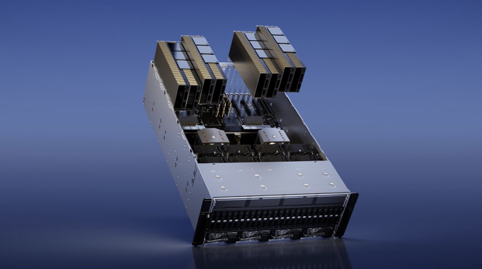 (Image caption) AI computing power is becoming the most radical layer in SpaceX's IPO narrative. GPUs, data centers, energy, and model training together constitute a new valuation expectation, but this part is still accompanied by high costs, high depreciation, and high uncertainty.
⸻
The index system refuses to make exceptions for imagination.
SpaceX's index system also served as a stress test.
Following a public consultation, S&P Dow Jones Indices announced in early June that it would maintain its current inclusion criteria and refuse to provide a fast track for mega-IPOs. This means that even if SpaceX goes public with an astonishing valuation, it cannot be directly included in the S&P 500 based solely on its market capitalization.
The S&P 500 requires companies to have traded on the public market for a certain period and meet profitability, liquidity requirements, and other financial viability criteria. SpaceX did not meet several requirements initially: the company was projected to record a net loss in 2025, and its publicly traded shares were limited. Therefore, it is likely that SpaceX will only be included in the S&P 500 after it gradually meets the requirements for trading duration, profitability, and liquidity.
This is a very meaningful institutional fork.
Some market mechanisms are inclined to favor mega-IPOs, hoping to quickly accommodate new giants; the S&P 500, on the other hand, maintains a more conservative threshold, requiring companies to first pass the practical tests of time, profitability, and liquidity. If SpaceX is included in major indices in the future, it could trigger large-scale allocations by passive funds, and this huge liquidity incentive is precisely the fundamental driving force behind this debate over institutional mechanisms.
Behind this are two different philosophies of the capital market.
One market believes in the future and is willing to let narratives take center stage; another market believes in systems and requires companies to pass the tests of reality first.
SpaceX stands at the intersection of these two philosophies.
It requires the market to believe in it in advance, but the system still requires it to prove itself.
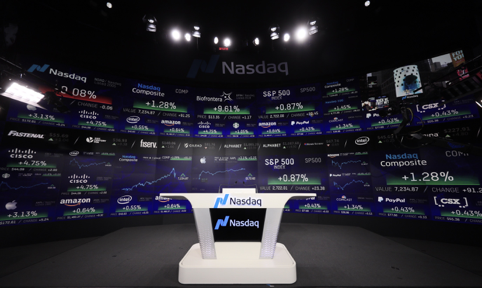 (Image caption) When SpaceX entered Nasdaq, it faced not only investor enthusiasm, but also the governance, liquidity, distribution to retail investors, and regulatory scrutiny of the public market. An IPO is not merely a fundraising event, but also a regulatory test for the founder's empire as it enters the public capital market.
⸻
The most expensive thing is not valuation, but consensus.
SpaceX is not the first company to have its valuation inflated by imagination, nor will it be the last.
Tesla did this before. Amazon did this before. Nvidia also embodies a new infrastructure vision in the AI era.
But SpaceX goes even further.
Tesla at least sells cars, Amazon at least sells goods and cloud services, and Nvidia at least sells chips. SpaceX sells rocket launches, satellite networks, AI computing power, orbital infrastructure, and a future yet to be reached.
That's what makes it so fascinating, and that's what makes it so dangerous.
It's important to note that this was a completely new offering. All shares sold were newly issued, and all proceeds went directly to the SpaceX treasury; no founders or early investors exited through this method. This structure means that Musk and early employees' interests remain locked into the secondary market after the IPO, and they believe the post-IPO value will be far higher than the offering price of $135.
Its greatness lies not in its perfect financial statements today, but in its potential to usher in a new industrial era. Its risk lies not in the lack of a compelling narrative, but in the sheer size of the narrative, making any skepticism appear shortsighted and any prudence seem like missing the mark.
A truly mature institutional media should not only praise rocket launches, nor should it only ridicule valuation bubbles.
The question we need to ask is: when a company that is still losing money, has a limited free float, highly centralized governance, and whose future revenue is heavily reliant on immature technology enters the public market with a top global market capitalization, what exactly is the market buying?
Is it about buying financial statements? No.
Is it the cash flow from buying Starlink? Only a portion.
Is it about buying AI computing power and a space data center? Or is it just a hypothetical scenario?
The deeper answer is: the market is buying a possibility. Buying humanity's continued willingness to believe in the future. Buying whether a person, after repeatedly turning the absurd into reality, can once again navigate the fog of technology, regulation, capital, and time.
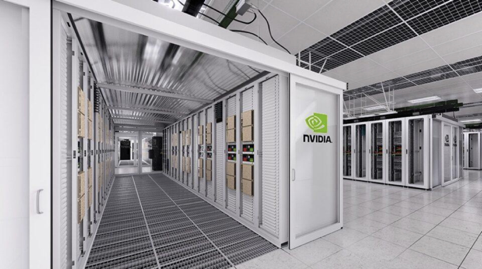 (Image caption) Behind the AI data center lies a massive hardware, energy, cooling, and supply chain system. SpaceX's inclusion of AI computing power in its IPO narrative has given the market a glimpse of new growth potential and forced investors to ask: When will these long-term businesses truly translate into stable cash flow?
⸻
The market can believe in dreams, but it cannot give up asking questions.
Therefore, the most worthwhile aspect for GFM to analyze regarding SpaceX's IPO is not "whether its stock price will rise".
The rise and fall are just the market's expression on the first day.
What truly deserves analysis are: how human imagination is designed into financial products; how founder myths are incorporated into governance structures; how cash flow operations provide credibility for future narratives; how retail investors transform from bystanders into participants; how index systems maintain boundaries in the face of frenzy; and whether public capital markets are capable of simultaneously accommodating grand dreams and rigorous scrutiny.
SpaceX is not a publicly traded rocket company.
It is a launch of a civilizational narrative.
It translates the awe, loneliness, fear, ambition, and hope that humans feel when they look up at the stars into stocks, valuations, multiples, voting rights, and liquidity.
That is its power.
This is precisely why it needs to be dismantled by the GFM system.
Because the market can believe in dreams, but it cannot give up asking questions.
Because capital can embrace the future, but it cannot forget governance.
Because a ticket to Mars must ultimately be tested by the financial, legal, risk, and responsibility aspects of Earth.
Disclaimer:
This article is compiled based on research and reports from SpaceX S-1 filings, Reuters, Morningstar, Via Satellite, CNBC, Barron's, and JP Morgan. Relevant financial, valuation, issuance, governance, and index system information is based on public documents, exchange announcements, and reports from mainstream institutions. GFM will continue to update this information based on official listing documents and subsequent disclosures.