

The cost of life: After 1.2 million, how much is left?
Financial Investigation | Season 2, Part 4
1.2 million yuan.
This figure has appeared in countless media reports about CAR-T therapy over the past two years, usually followed by terms like "zeroing out" or "rebirth." It represents the pricing of Yikeda® and the overall cost image of this treatment in the public's perception.
It is not.
The 1.2 million yuan is the cost of the cell therapy itself. It does not include anything that happened before or after the treatment. When a family decides, "We can afford 1.2 million yuan," they usually don't know where the boundaries of that number lie.
This report attempts to draw the boundaries. 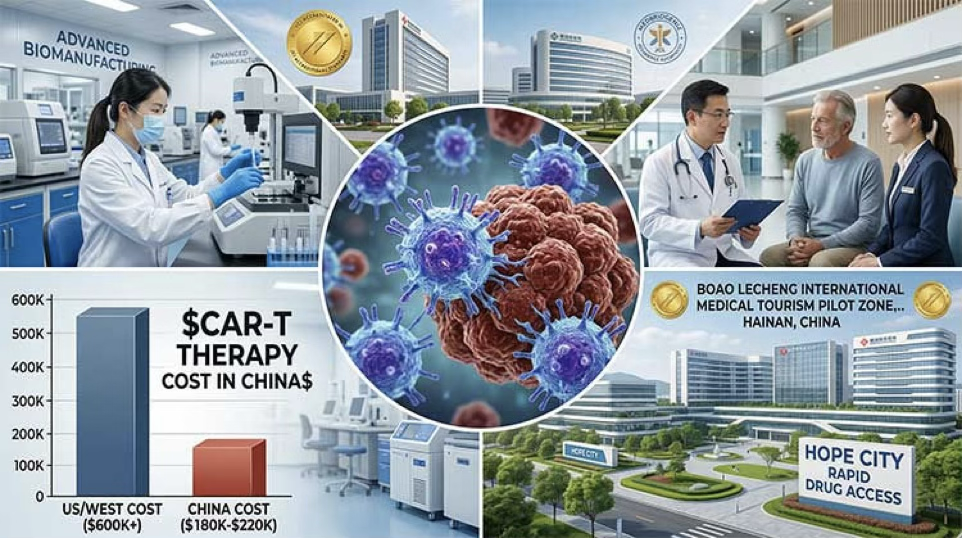 (Image caption) A cost diagram of CAR-T therapy in China, including the cost of the treatment itself, the manufacturing process, and the hospital setting. This illustrates the core issue of the article—the public's perception of "1.2 million yuan per injection" is not the complete cost. It actually includes hidden costs such as preliminary assessment, bridging therapy, and hospitalization during the waiting period, potentially reaching 1.4 million to 2 million yuan in total. Media narratives often omit these boundaries.
First level: Before 1.2 million
CAR-T therapy is not an option that can be started immediately. There is a preparation period between the decision and the infusion, and this period itself has costs.
Screening and Assessment: Before starting the CAR-T process, patients need to complete a series of assessments—bone marrow aspiration, PET-CT, cardiopulmonary function assessment, and infection screening. The cost of these examinations varies from several thousand to tens of thousands of yuan at different hospitals, and is not included in the treatment cost, and is usually not covered by medical insurance for CAR-T.
Bridging therapy: From CAR-T cell collection to final reinfusion, there is a preparation cycle. The preparation time for Yikeda® is approximately four weeks, and for Benoda®, it is approximately six weeks. During this period, the patient's disease cannot be left untreated; bridging chemotherapy is usually required to control tumor progression. The cost of bridging chemotherapy varies depending on the regimen, but it is a separate treatment cost and is not included in the 1.2 million.
Hospitalization costs during the waiting period: Some patients need to be hospitalized for observation during the waiting period. The bed fee, nursing fee, and supportive treatment cost during hospitalization are calculated separately.
These three expenses combined mean that a family may have already paid tens of thousands to hundreds of thousands of yuan in upfront costs before the actual CAR-T infusion. These costs are not visible in the media's narrative of "1.2 million yuan per injection". 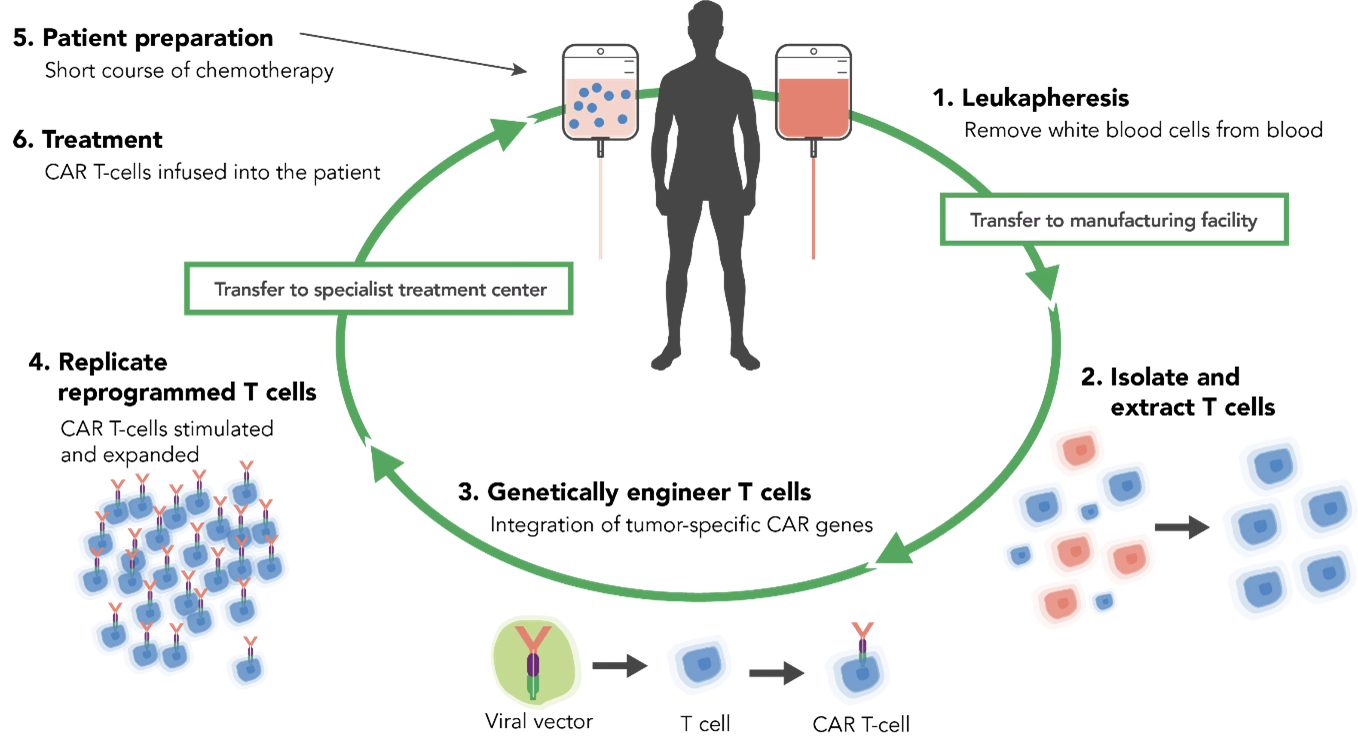 (Image caption) Schematic diagram of the complete process of CAR-T therapy from cell collection to reinfusion, showing the transfer to the manufacturing facility and specialist treatment center. This symbolizes the upfront costs during the preparation cycle (approximately four weeks for Ekada® and approximately six weeks for Benoda®) mentioned in the article, such as bridging chemotherapy, infection screening, and PET-CT scans. These expenses, ranging from tens of thousands to hundreds of thousands of yuan, are usually not seen in the narrative of "1.2 million yuan per injection".
Second layer: 72 hours after infusion
The acute phase after CAR-T infusion is the stage where medical resources are most intensively consumed in the entire treatment process.
Cytokine release syndrome (CRS) is the most common acute side effect of CAR-T therapy. According to data from the ZUMA-1 trial (a pivotal registration trial of CAR-T®) published in the New England Journal of Medicine, 93% of the 101 patients treated experienced CRS of varying degrees, with 13% experiencing severe CRS of grade 3 or higher.
Severe CRS requires ICU intervention and treatment with tocilizumab or corticosteroids. Tocilizumab itself costs several thousand to over ten thousand yuan per treatment, and severe CRS may require multiple doses. ICU bed fees are calculated daily, and severe cases may require ICU stays ranging from several days to several weeks.
Neurotoxicity (ICANS) is another side effect that requires monitoring. Data from the ZUMA-1 trial showed that 64% of patients experienced neurological events, with 28% being grade 3 or higher. Severe neurotoxicity may also require ICU monitoring and specific pharmacological interventions.
The cost of these acute treatments can range from tens of thousands to hundreds of thousands of yuan, depending on the severity. They are usually covered by hospitalization fees, but any amount exceeding the medical insurance limit is borne by the patient out of pocket. This cost range is almost never seen within the narrative framework of "1.2 million yuan per injection."
The third layer: The distance between clinical data and media narrative. Now we enter the core part of this report.
"Zeroing out," "rebirth," "predictable cure"—these terms describe an outcome. Clinical trial data also describe an outcome, but it uses different language.
Key data for Yikeda® (Akirunsai):
The ZUMA-1 trial, a pivotal registration trial for Yikada®, was published in the New England Journal of Medicine. Among 101 evaluable patients, the objective response rate (ORR) was 72%, and the complete response rate (CR) was 51%.
This means that about half of the patients who received treatment achieved complete remission. The other half did not.
Long-term follow-up data (5 years) of ZUMA-1 showed that approximately 40% of patients who achieved complete remission maintained a durable response. Extrapolating this to all treated patients, the proportion of long-term durable responses was approximately 20% to 25%.
Key data for Benoda® (Rigiolunsai):
The JULIET trial, a pivotal registration trial for Benote®, also had its results published in the New England Journal of Medicine. Among 93 evaluable patients, the objective response rate was 52%, and the complete response rate was 40%.
At 12 months, approximately 65% of patients who achieved complete remission maintained a durable remission.
What do these numbers mean?
These are data obtained from strictly selected patient populations in clinical trials; real-world data are typically lower than clinical trial data.
More importantly, these figures show that for a significant proportion of patients, after spending 1.2 million yuan plus all the initial and subsequent costs, the treatment did not produce the expected results, or the results were only temporary.
This is not a denial of CAR-T therapy—for those patients who respond well, it truly changes the course of their lives. However, the term "zeroing out," in a statistical sense, is not an accurate description of the therapy. It's a description of the best possible outcome, used to represent all possible results. 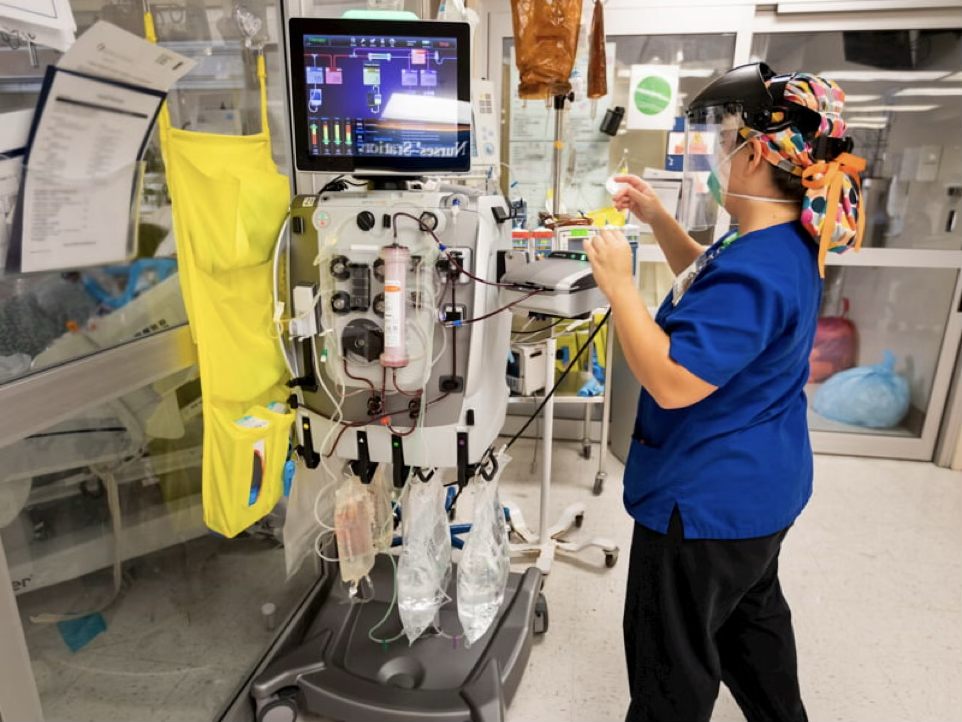 (Image caption) A scene in a hospital ICU, with medical staff operating advanced equipment. This represents the most common complications after CAR-T infusion described in the article: cytokine release syndrome (CRS, 93% incidence) and neurotoxicity (ICANS, 64% incidence). Severe cases require tocilizumab and ICU hospitalization, with costs ranging from tens of thousands to hundreds of thousands of yuan, often exceeding medical insurance limits.
Fourth layer: The true boundaries of medical insurance coverage
In 2023, Yikeda® and Beinuoda® were successively included in the medical insurance coverage of some provinces and cities. This was an important policy development and received widespread attention in media reports.
However, what "inclusion in medical insurance" means in the actual experience of patients needs to be described more precisely.
The medical insurance coverage schemes vary from province to province and city to city, but they usually include the following restrictions: indication restrictions (must meet the indications specified in the approval document; bridging treatment and preliminary assessment are usually not covered), deductible setting (reimbursement only begins after a certain amount of out-of-pocket expenses are reached), ceiling setting (there is an upper limit to the amount of reimbursement), and reimbursement ratio (usually 60% to 80%, with the out-of-pocket expenses still considerable).
To illustrate with a simplified calculation: if the reimbursement rate in a certain province or city is 70% and the maximum reimbursement is 800,000 yuan, then the patient's out-of-pocket expenses would still be 240,000 yuan plus any uncovered upfront and subsequent costs. For most Chinese families, this is still an amount that would require using all their savings or taking out debt.
"Included in health insurance" is a hopeful signal in patients' narratives. In policy documents, however, it's a coverage scheme with strictly defined conditions. The gap between these two interpretations can be very costly at the moment a patient makes a treatment decision. 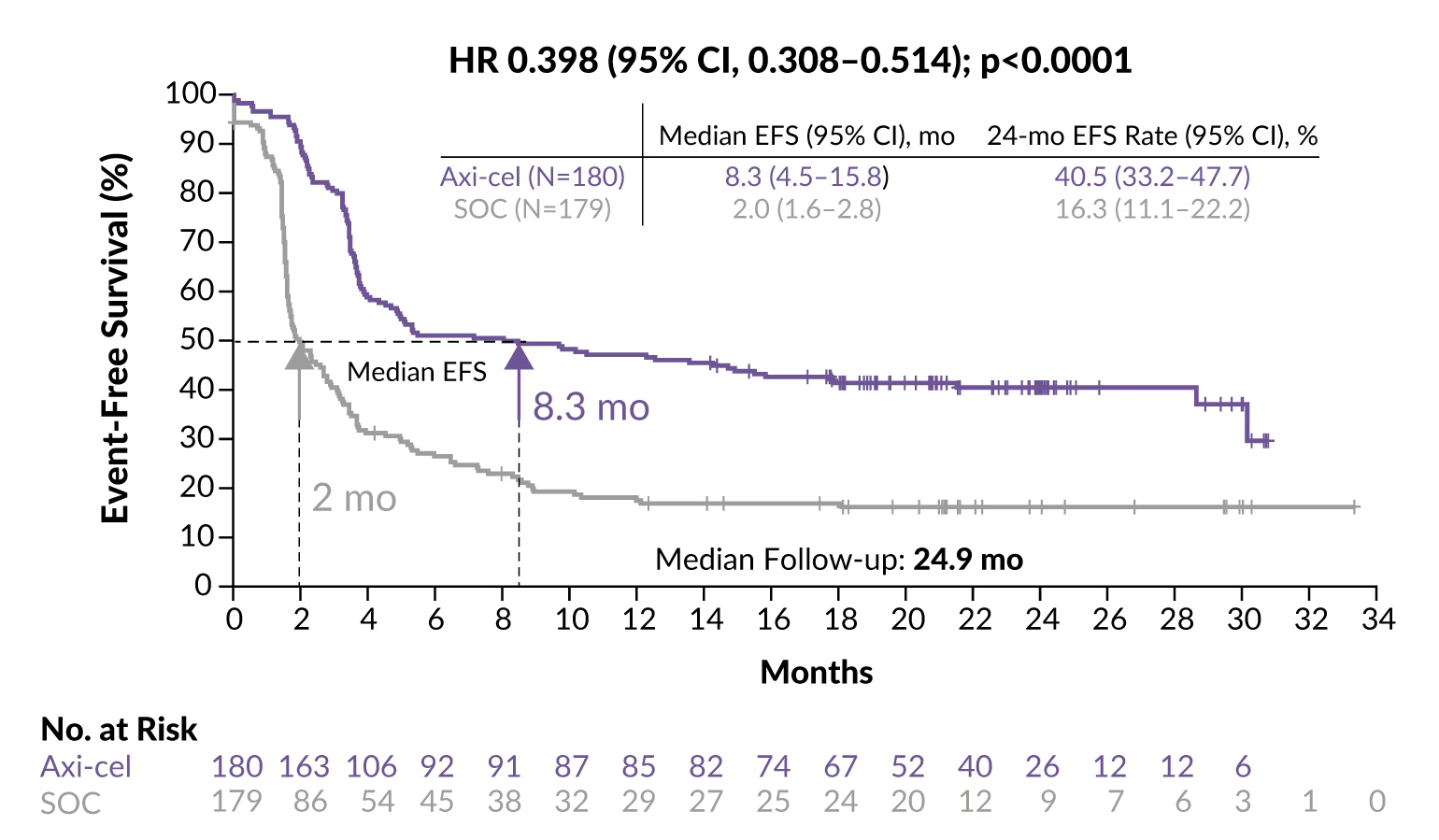 (Image caption) A table comparing the efficacy and safety data of CAR-T therapies (such as ZUMA-1 and the JULIET trial), showing the objective response rate (ORR), complete response rate (CR), and the proportion of long-term durable responses. This directly corresponds to the core data in the article: Yikeda® has a complete response rate of approximately 51% and a long-term durable response rate of approximately 20-25%; Beinuoda® has a complete response rate of 40%. This illustrates that "zeroing out" and "rebirth" are idealized representations of the best possible outcome, not average results.
By adding all the layers back, we try to reconstruct the complete cost structure for a hypothetical patient.
Initial assessment and screening: approximately 20,000 to 50,000 yuan. Bridging chemotherapy: approximately 50,000 to 200,000 yuan (depending on the regimen and cycle). Cell therapy itself: 1,200,000 to 1,290,000 yuan. Acute ICU care and side effect management: approximately 50,000 to 300,000 yuan (depending on severity). Post-discharge follow-up and supportive care: approximately 50,000 to 150,000 yuan (first year). Relapse and retreatment: uncertain, but relapsed patients typically face fewer options and higher costs.
Without considering medical insurance coverage, the actual cost of a complete treatment cycle may range from 1.4 million to 2 million yuan, depending on individual differences.
Health insurance coverage can reduce this number, but it cannot change its magnitude.
At the other end of this cost range lies a statistical fact: a significant proportion of patients do not achieve durable remission after completing all of this.
This is no one's fault. This is the reality of the disease and the treatment at their current stage of development.
It should be made clear.  (Image caption) A scene of doctors discussing medical plans or costs with elderly patients' families. This symbolizes the actual limitations of medical insurance coverage mentioned in the article (limited indications, deductible, coverage cap, out-of-pocket expenses). Even with medical insurance coverage, out-of-pocket expenses plus uncovered pre- and post-treatment costs can still reach hundreds of thousands of yuan. This highlights that the "cost of life" is not only monetary, but also includes the heavy decisions made with incomplete information and the psychological gap.
Another dimension of cost is that expenses can be calculated. There is another dimension that is more difficult to calculate, but equally real.
When a family makes a treatment decision within the framework of a "zeroing out" narrative, their expectations of that decision are shaped by that narrative. When the outcome does not match their expectations—not because they have been deceived, but because the information they received represented the true best outcome, not the true average outcome—this discrepancy itself becomes a cost.
It doesn't appear on any bill. But it exists in every household that has spent everything but never got to "reset" their expenses.
The cost of life is not just 1.2 million yuan.
It is all the omitted numbers, plus all the embellished probabilities, multiplied by all the decisions made under conditions of incomplete information.
In the next article, we'll return to the initial question: If all this remains unchanged, where will the next crisis of trust occur?
Part Five: When Medicine Becomes a Narrative Project
The clinical data cited in this report are from: Neelapu SS et al., 5-year long-term follow-up data of the ZUMA-1 trial, published in *Nature Medicine* (2021); and Schuster SJ et al., data from the JULIET trial, published in *The New England Journal of Medicine* (2019). Descriptions regarding health insurance coverage are based on publicly available policy documents from various provinces and cities. Cost structure estimates are based on publicly available medical literature and industry reports; significant individual differences exist, and this does not constitute any medical or financial advice.