

If healthcare becomes a narrative project: The next crisis of trust is already on its way.
Financial Investigation | Season 2, Part 5
We started this series with one question, and we'll end it with the same question.
Why does medical innovation in China always start with telling a story?
After four reports, we have a more complete answer—but this answer is more unsettling than the problem itself because it shows that this is not a problem that can be solved by punishing a bad person. 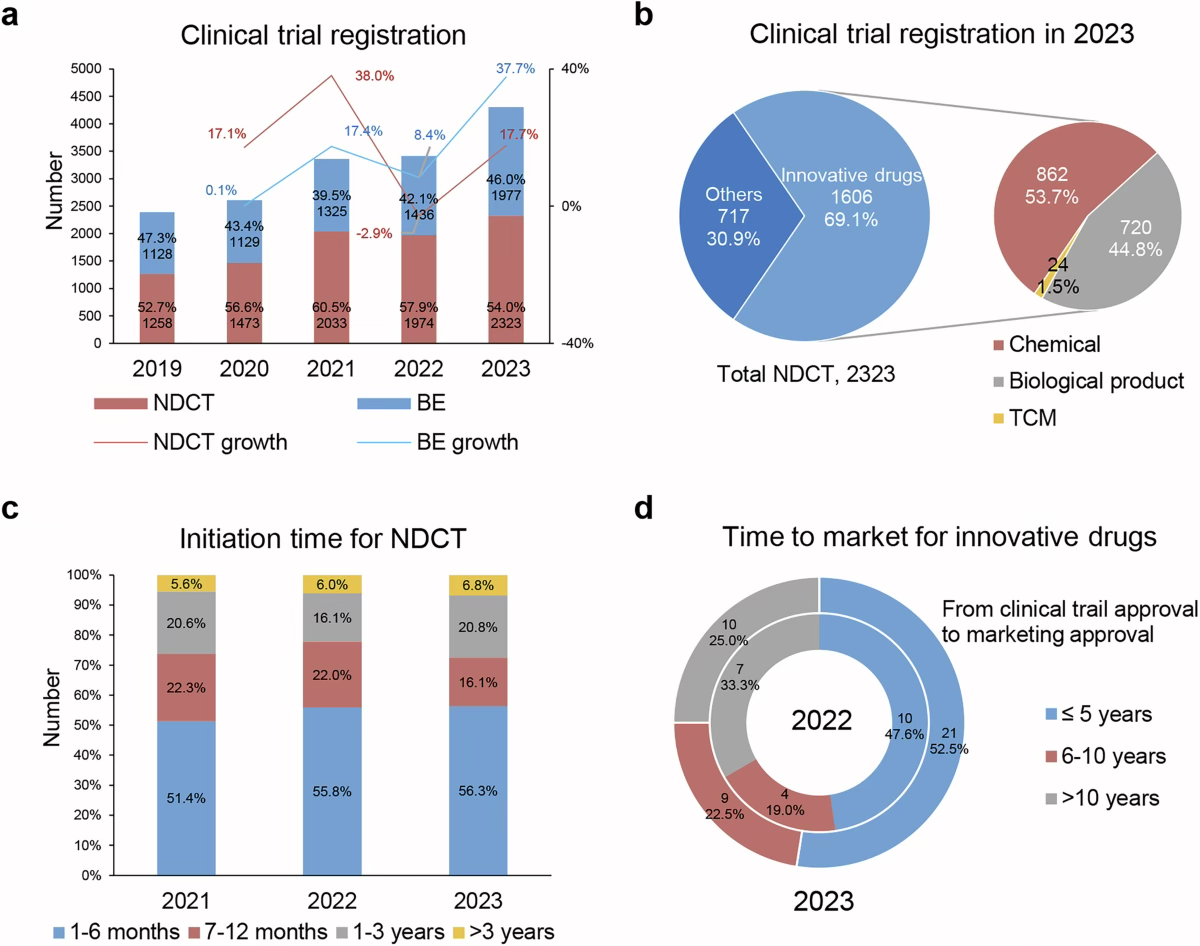 (Image caption) Data chart on clinical trial registration and development of innovative drugs in China. This represents a review of the entire series—from artificial hearts to high-value medical innovations such as CAR-T—with a highly consistent narrative structure (crisis, turning point, miracle, hope), forming a systematic "narrative industry" assembly line. The chart shows the rapid growth of innovative drugs, while also suggesting that linguistic stratification and market narratives are driving this growth.
What we saw was a review of the findings from this series of investigations.
The first article confirms a pattern: from artificial hearts to CAR-T to proton and heavy ion therapy, the narrative structure of China's medical innovation is highly consistent—crisis, turning point, miracle, hope. This pattern is not an isolated case; it is an assembly line.
The second article dissects the production mechanism of this assembly line: businesses need patient stories to build their brands, media outlets need emotional resonance to gain traffic, crowdfunding platforms need tragic narratives to improve conversion rates, and investors need growth stories to support valuations. No one dominates this system, but every participant rationally maintains it.
The third article reveals the hierarchical structure of language: within the same prospectus, regulatory and capital language are carefully placed in different chapters to cater to different readers and generate different understandings. Approvals define the boundaries, the media erases them, and patients never see the boundaries.
The fourth article restores the facts: 1.2 million is not the whole story, the clinical response rate is not "zeroed out," and health insurance coverage is not free. Decisions made with incomplete information have real costs.
These four findings point to the same conclusion: the narrative industry of Chinese healthcare is not an exception, but a system.
How Trust is Consumed: Trust has a peculiar characteristic: its consumption is slow, but its collapse is sudden.
As the narrative industry operates smoothly, trust is gradually eroded with each shift in language. Patients hear "zeroing out," accept treatment, and find the result is "objective remission"; family members are told it's "much milder than chemotherapy," and witness the handling of acute side effects in the ICU; crowdfunding donors believe tragic stories, only to later discover that the fundraiser concealed real estate.
Each time, trust is eroded a little. Each time, the eroded trust accumulates within a specific group—family members of patients who have received CAR-T therapy, people who have donated money but were reported as scammers, and retail investors who bought stock in a medical device company.
These erosions of trust are scattered, without forming public events, triggering regulatory responses, or attracting media attention. They accumulate quietly.
Then, at some point, some event will become the tipping point.  (Image caption) A scene of open and smiling communication between a doctor and a patient (or family member). This represents the solution proposed in the article—establishing a coordination mechanism at the information architecture level so that patients have access to complete information at the moment of decision-making: not only emotional warmth (hope), but also accurate data (such as "approximately 20%-25% long-term durable remission"). Honestly convey hope, rather than packaging it as "zeroing out".
We don't predict specific events where the next tipping point will occur, but we can describe the conditions that trigger it.
A crisis of trust requires three elements to occur simultaneously: a sufficiently large group of victims, a sufficiently clear attribution of responsibility, and a triggering event that transforms scattered losses into collective consciousness.
These three elements are slowly maturing within the narrative industry of Chinese healthcare.
The size of the victim group: As high-value medical treatments such as CAR-T, proton and heavy ion therapy, and gene therapy gradually reach a wider patient population, the number of patients and their families who have received these treatments and whose outcomes do not meet expectations is increasing. Each such family is a potential contributor to the erosion of trust.
Clarity of responsibility attribution: Currently, every link in this narrative industry chain can reasonably shift responsibility to the next link—companies say they only provided patient education, the media says they only reprinted true stories, platforms say they only provided fundraising tools, and regulators say their approval language was accurate. This diffusion of responsibility is the system's strongest protective mechanism.
However, the protection provided by diffusion of responsibility has its limits. When a specific, identifiable, and sufficiently large incident of harm occurs, the public will demand a specific person to be held accountable. At that point, diffusion of responsibility ceases to be a form of protection; it becomes an argument for the larger accusation that "the entire system is flawed."
The most likely form of triggering the event is not a single scandal revelation, but rather a collective revelation at the data level—for example, the discrepancy between a product's real-world survival rate data and clinical trial data and media coverage, which is systematically presented at a certain point in time. With China's medical big data infrastructure under construction, such systematic presentation is becoming increasingly technically feasible.
Artificial heart is just the first sample in this series, but it's not about artificial hearts.
The term LVAD (Large-Level Amplifier) being called an "artificial heart" reveals a linguistic problem through this conceptual substitution. CAR-T being described as "zeroing out" reveals the same issue. Proton and heavy ion therapy being called "a national strategic asset illuminating the light of life" again reveals the same problem.
The problem is not with the product itself, but with the systemic gap between language and reality, and the mechanisms by which this gap is allowed to exist at the institutional level.
The next prototype is already on its way. It could be tumor immunotherapy, gene editing therapy, next-generation medical robots, or a high-value medical device touted as a "domestic alternative." Its technological principles will differ, its pricing logic will differ, but its narrative structure will be highly similar: crisis, turning point, miracle, hope, then a number, then a promise.
This promise isn't necessarily a lie, but it's almost certainly incomplete.
The question of how to rebuild trust is more difficult to answer than the question of how trust breaks down, but it is a question that must be asked.
We do not believe that simply tightening regulations is the answer. Increasing disclosure requirements for the language used in official approvals cannot change the fact that patients are actually exposed to media language, not the language of the official documents. Raising the vetting thresholds for crowdfunding platforms cannot change the genuine need for hope among families facing serious illnesses.
We also do not believe that simple media self-regulation is the answer. In an environment where attention is scarce and competition for traffic is fierce, it is unrealistic to expect the media to voluntarily abandon emotional resonance and switch to statistical language to report on medical innovations.
Real change needs to happen at the information architecture level—whether the information available to patients at the moment of decision-making includes all the dimensions necessary for informed decision-making.
This is not a technical issue; it is a matter of system design. It requires establishing a coordination mechanism that currently does not exist among the regulatory framework, doctor-patient communication norms, media reporting standards, and platform information presentation mechanisms.
The establishment of this coordination mechanism requires someone to first clarify the issues.
This is what we're trying to do in this series. 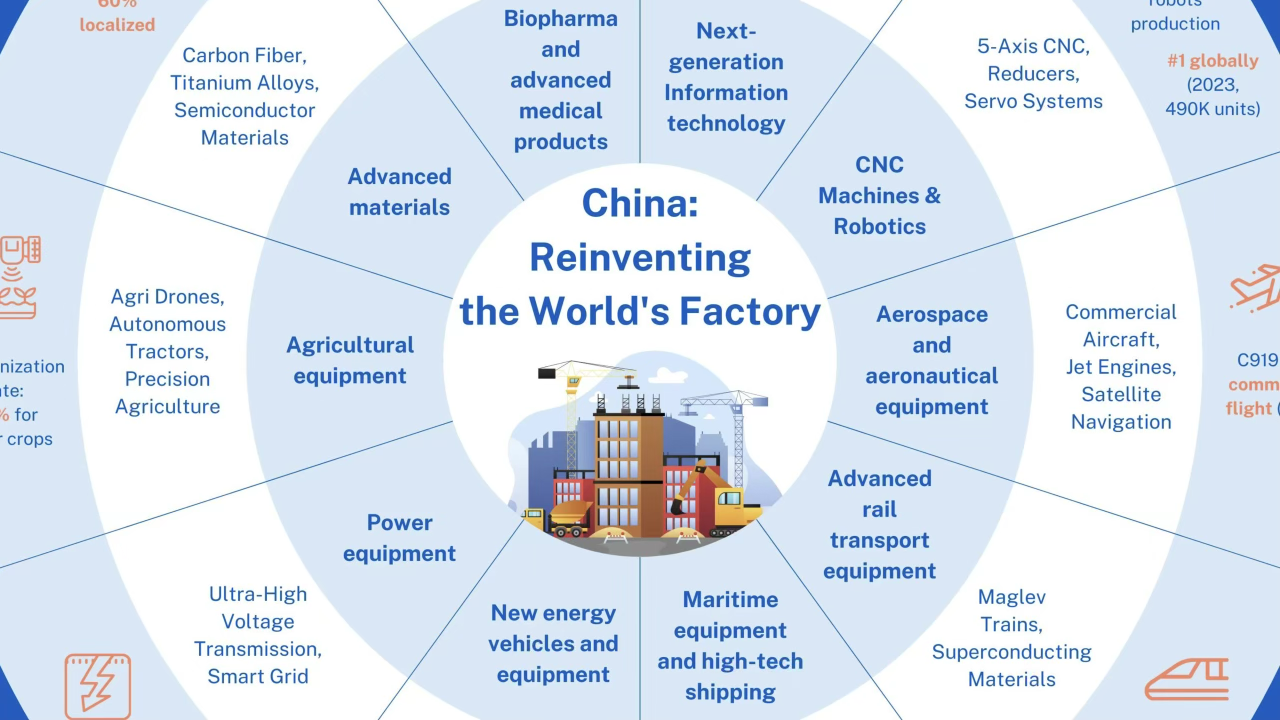 (Image caption) Conceptual diagram of China's innovation ecosystem (including fields such as biopharmaceuticals and advanced medical products). This symbolizes the article's vision for the future—the narrative industry is far broader than the five reports; the next example may appear in the fields of tumor immunotherapy, gene editing, or domestically produced high-value medical devices. The problem is not with individual products, but with the systemic gap between language and reality, requiring continuous questioning and institutional coordination to rebuild trust.
Finally, at the very end of this series, we would like to pose a question that we are not fully capable of answering.
Patients and their families have a perfectly legitimate need for hope when facing serious illness. This need itself is not the problem. The problem is: can hope be conveyed honestly? Can the accuracy of the information be maintained without sacrificing emotional warmth?
We've seen examples in this series of reports demonstrating that this is possible. The data from the ZUMA-1 trial is encouraging—CAR-T truly brings survival possibilities that didn't exist before for certain patient populations. This fact deserves to be spoken aloud. At the same time, the figure of "approximately 20% to 25% of treated patients achieving long-term durable remission" also deserves to be spoken aloud just as loudly.
These two facts are not contradictory. Together they constitute a real hope—not the hope of "resetting to zero," but the hope of a "meaningful probability."
For a patient facing relapsed or refractory lymphoma, a long-term durable response rate of 20% to 25% was previously zero. This leap from zero to 20% represents real medical progress and deserves to be taken seriously and communicated honestly.
It doesn't need to be packaged as "zeroing out" to become hope.
It is hope in itself. Just a more honest hope.
This series is not the end of the five articles in the second season of "How Life Is Priced," but a beginning, not a conclusion.
We've developed an analytical framework—dissecting the language, identifying gaps, and tracing the chain of responsibility—but this framework only covers a few tracks we've already investigated. The narrative industry of medical innovation in China is far broader than this series presents, and its impact is far more profound than five reports can capture.
We will continue to do so.
If you are a patient or a patient's family member and have encountered this kind of language gap in a medical decision-making process, we want to hear your story. If you are someone working in this narrative chain—a corporation, media outlet, platform, or regulatory body—we also want to hear your perspective.
This is a very big question that no single media organization can answer alone.
But it's worth asking this question repeatedly.
All five reports in this series are based on publicly available documents, academic literature, and media reports, and do not constitute any medical or investment advice. Please inform us of any factual errors so we can correct them. GFM Financial Investigations is committed to maintaining the confidentiality of all readers who provide information.
Season 2 has ended. Topics for Season 3 are being solicited.