

One Approval Document, Two Worlds: When Regulatory Language and Capital Language Coexist in the Same Document
Financial Investigation | Season 2, Part 3
WuXi AppTec's 2020 Hong Kong Stock Exchange prospectus was a 287-page document.
In Chapter Six, "Business," it describes its core product, relma-cel, as follows:
"Relma-cel (JWCAR029) is used to treat adult patients with relapsed or refractory large B-cell lymphoma who have received two or more lines of systemic therapy."
This is regulatory language. Precise, defined, and with boundaries. "Second-line or above" means the patient has tried at least two treatment options and failed. "Relapsed or refractory" means the disease has become resistant to standard treatment. This is a very specific group of patients—with severe disease, limited options, and complex prognoses.
Now turn to Chapter 3, "Industry Overview," of the same prospectus.
The language here is from another world:
"China's huge cancer patient base and the clinical efficacy of CAR-T therapy constitute a huge market opportunity... The size of China's hematologic oncology market is expected to grow from X billion yuan in 2020 to X billion yuan in 2025, with a compound annual growth rate of XX%."
The same document. No more than fifty pages apart.
Chapter Six tells you that this product is suitable for a strictly limited patient population. Chapter Three tells you how big this market is and how fast it is growing.
These two chapters have never appeared in the same sentence.  (Image caption) Scenes from the listing ceremony and prospectus of a biotechnology company on the Hong Kong Stock Exchange (HKEX). This represents a phenomenon of "chapter segregation" in the core document of the article—WuXi AppTec's 287-page prospectus, where precise regulatory language in Chapter 6 "Business" ("Adult patients with relapsed or refractory large B-cell lymphoma after second-line or higher systemic therapy") and capital language in Chapter 3 "Industry Overview" ("Large patient base," "Market opportunities," "CAGR") coexist in the same document.
We call this phenomenon of structural gaps "chapter segregation"—regulatory language and capital language coexist in the same document, but are carefully placed in different chapters to serve different readers and generate different understandings.
This is not fraud. Every statement is accurate within its context. The description of the indication corresponds to the NMPA's approval requirements, while the description of the market size corresponds to investors' valuation needs. Both have passed regulatory review.
But when put together, they create an overall impression that no single chapter explicitly states: this is a proven, huge market opportunity.
The problem is that "definite efficacy" corresponds to a strictly defined patient group, while "huge market" corresponds to a broad category of diseases. The discrepancy between these two descriptions is the most important information in this document—but it's not in any chapter; it's in the blank spaces between chapters. 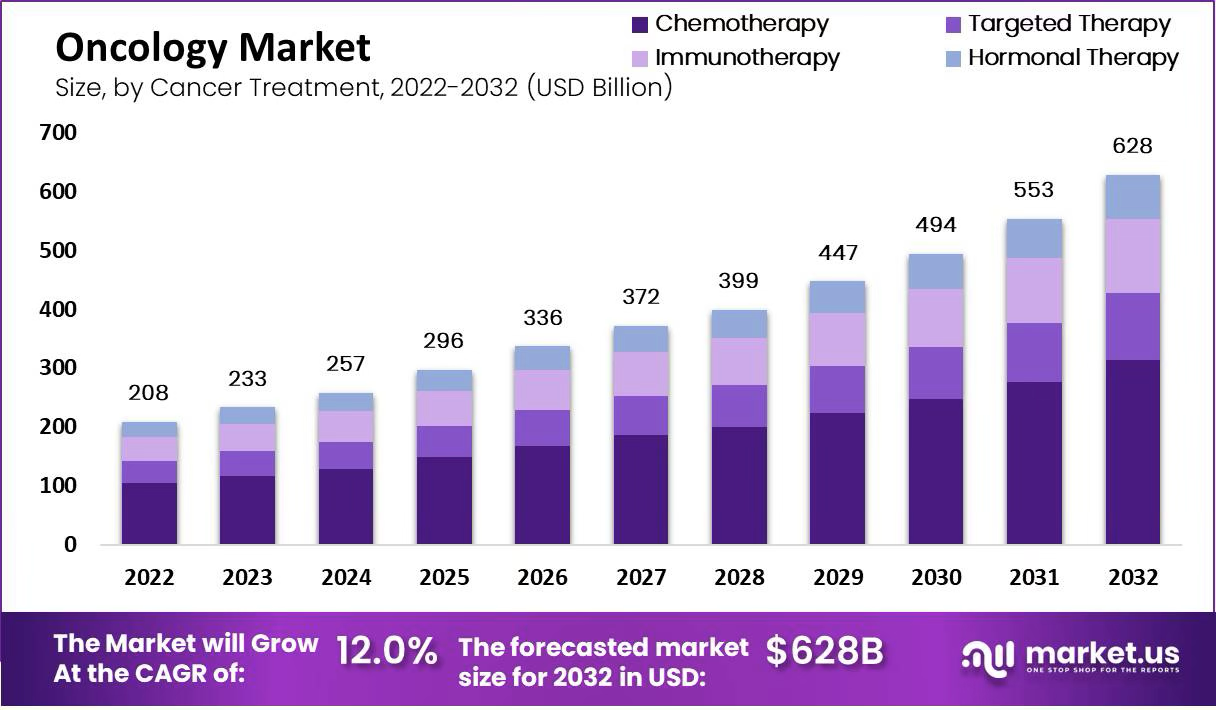 (Image caption) A chart forecasting the global/China oncology market size, showing growth from tens of billions to hundreds of billions of dollars and the CAGR. This symbolizes the capital language used in the "Industry Overview" section of the prospectus—the blurring of boundaries and emphasis on a "large patient base" and "huge market opportunities"—which contrasts sharply with the strictly defined indications in Chapter Six, creating an overall impression of "definite efficacy and a huge market."
For the same product in three languages, we have compiled the publicly available descriptions of Yikada® and relma-cel into a comparative framework according to language level.
First layer: NMPA approval language. The core description of Fosun Kite Yikeda®'s official approval document is: "For the treatment of adult patients with relapsed or refractory large B-cell lymphoma who have received two or more lines of prior systemic therapy."
Key features: limitations on the number of treatment lines, disease status, and patient age. The function of this language is to define boundaries.
The second layer: Language of the prospectus. WuXi AppTec's prospectus uses a different vocabulary system to describe the market for similar products: "market opportunities", "large patient base", "compound annual growth rate", and "potential for penetration improvement".
Key features: Boundaries disappear, qualifiers disappear, replaced by growth curves and market size. The function of this language is to create imaginary space.
The third layer: Media language in public media reports describing similar products: "zeroing out", "rebirth", "predictable cure", "three years of continuous complete remission".
Key features: statistical concepts are case-specific, probability is transformed into commitment, and time constraints are omitted. The function of this language is to create emotional resonance.
These three layers of language describe the same product, but they leave readers with completely different understandings. Readers of the approval document see a treatment option with a limited scope of application, readers of the prospectus see a high-growth industry, and readers of the media see a life-changing medical breakthrough. 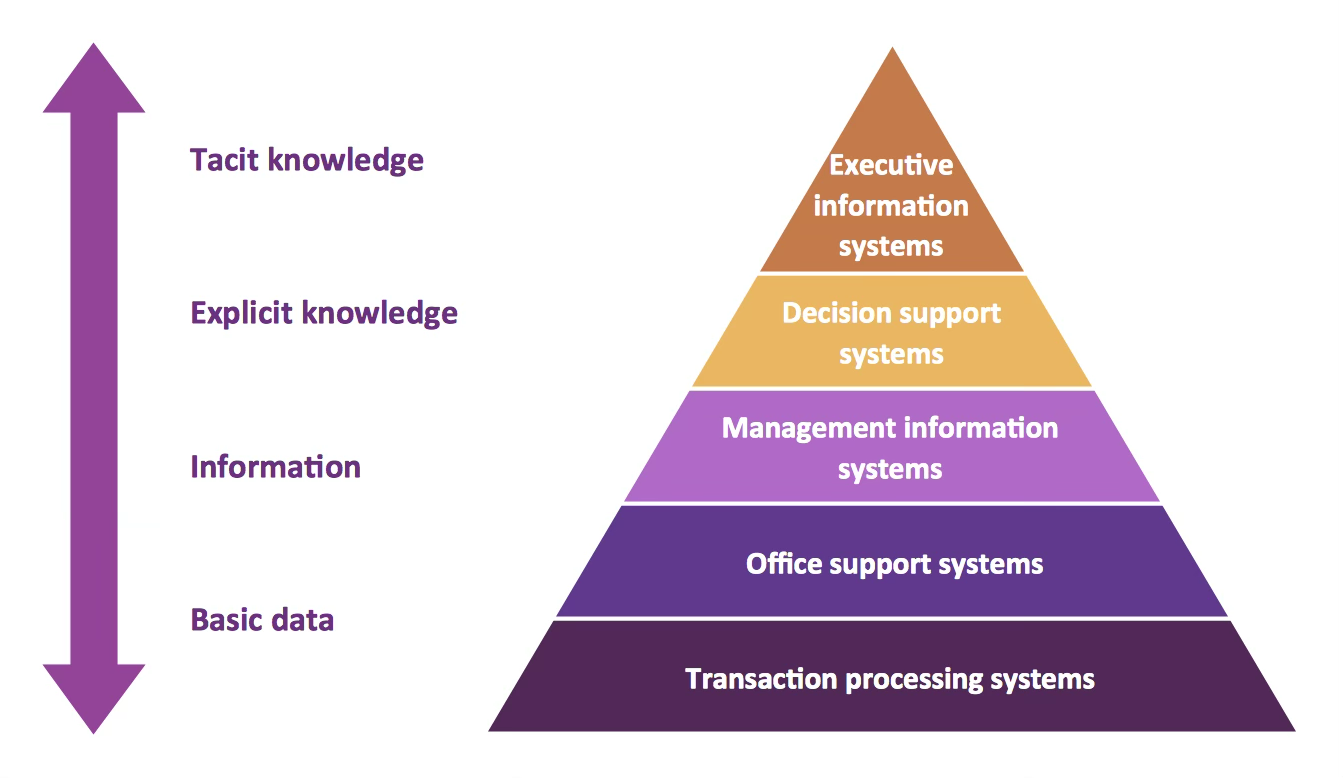 (Image caption) Diagram of a pyramid-shaped information/language hierarchy (similar to a hierarchical model of knowledge or systems). This visualization article proposes a "three-language" framework: the most basic level is the precise language of regulatory approvals (requires a medical background), the middle level is the capital language of prospectuses (requires a financial background), and the top level is the simplified language of media (no professional background required), forming an information hierarchy system where those who need the most precise information are exposed to the most ambiguous language.
Who has the ability to understand these three layers? This is the core of the question.
There are virtually no people who can read and understand all three languages simultaneously.
The language used in the approval document requires a medical background to understand the clinical meaning of the qualifiers. "After second-line or higher treatment" means a very specific patient condition to an oncologist, but to a patient's family it means "many methods have been tried but none have worked"—there is a big difference between these two interpretations.
Understanding the estimation logic in a prospectus requires a financial background. Understanding the assumptions underlying the projected "compound annual growth rate of XX%" requires reading the risk disclosure section of the prospectus—a section that most retail investors read the least.
Media language requires no specialized background, which is precisely why it is most effective. It provides readers from diverse backgrounds with a unified and emotionally acceptable framework for understanding.
This three-tiered language design objectively creates an information hierarchy system: those with the most background knowledge are exposed to the most precise language; those with the least specialized knowledge are exposed to the most ambiguous language. Information asymmetry is not an accidental byproduct; it is a structural feature of this system.
The mechanism that allows such gaps to exist necessitates asking an unavoidable question: Is there any way to prevent this kind of chapter separation and language layering?
From a regulatory perspective, the current framework regulates the language at each level, but it lacks direct oversight of discrepancies between languages. The NMPA regulates the accuracy of the language used in approval documents, the Hong Kong Stock Exchange and the STAR Market regulate the completeness of prospectus disclosures, and the State Administration of Radio, Film and Television and the Cyberspace Administration of China regulate the compliance of media content. These three regulatory systems operate independently, without a mechanism requiring language consistency between them.
This is not a regulatory loophole; it is a natural consequence of regulatory boundaries. Each regulatory body governs its own language domain, and no single body is responsible for ensuring consistency across language levels.
From an industry perspective, this linguistic stratification also has its inherent logic. Healthcare companies use different languages when facing different audiences in different situations; this is a basic communication strategy. Speaking to regulators in regulatory language, to investors in capital language, and to patients in patient language—this is standard practice in any mature industry.
The problem is not the stratification itself, but the result of it: those who need the most precise information to make decisions are exposed to the least precise language.
One document, two functions: the prospectus best embodies this problem.
It serves two functions simultaneously: demonstrating the completeness of information disclosure to regulators and providing investors with a basis for investment decisions. These two functions are usually compatible, but in the fields of medical devices and innovative drugs, they sometimes create inherent tension.
Full disclosure requires clearly explaining all risks—the boundaries of indications, limitations of clinical data, and the assumptions underlying market forecasts. Attracting investment requires articulating sufficiently large opportunities—market size, growth potential, and competitive advantages.
The standard approach to managing this tension is to focus risks in specific sections (risk factors, business disclosures) and opportunities in other sections (industry overview, business highlights). In this way, every statement in the document is accurate, but the overall impression the reader gets depends on which sections they choose to read.
Most retail investors don't read the risk factors section. Most patients' families don't read the prospectus. Both of these facts are known, but there's no mechanism required that the presentation of information must take them into account.  (Image caption) Scene from a large-scale listing event at the Hong Kong Stock Exchange (HKEX). This represents the regulatory framework discussed in the article—HKEX is responsible for the completeness of prospectus disclosures, and the NMPA is responsible for the accuracy of approvals. However, the three regulatory systems (NMPA, HKEX/STAR Market, and media authorities) operate independently, without a mechanism to ensure cross-level language consistency, thus tacitly allowing for "chapter segregation" and a vacuum in language translation.
Beyond the responsibilities outlined in the approval documents, this report did not accuse any company of publishing false information. Fosun Kite's announcement was accurate, WuXi AppTec's prospectus passed the Hong Kong Stock Exchange's review, and the patient stories cited in the media reports were real cases.
We are pointing to an issue that is more difficult to capture within the legal framework: accurate information, through systematic translation across different linguistic layers, can produce understandings entirely different from the original information. This gap in understanding does not require anyone to lie; it only requires the natural wear and tear of language in its flow—each wear and tear moving in the same direction, towards hope and away from risk.
A license defines the boundaries of what a product can and cannot do.
The world where this approval exists is separated from the world where most patients live by two layers of language conversion, three regulatory jurisdiction boundaries, and an information vacuum where no one is responsible for bridging the gap.
The cost of this vacuum will be presented in numbers in the next article.
Part Four: The Cost of Life
The prospectus cited in this report is the Hong Kong Stock Exchange IPO prospectus of WuXi AppTec (HKEX: 2126) issued in October 2020. The relevant descriptions of Fosun Kite are from Fosun Pharma's public annual reports and NMPA approval announcements, all of which are publicly available regulatory documents. Please inform us if there are any factual errors so we can correct them.