

Who is selling hope? The patient narrative industry in Chinese healthcare.
Financial Investigation | Season 2, Part 2
Let's start with a sentence.
This quote appeared in a widely circulated patient story in September 2021, originally from cn-healthcare.com, titled "A Predictable Cure—CAR-T and My Rebirth Diary." In the article, Aunt Qin described her experience as follows:
"Just as Fosun Kite's CAR-T clinical trial had just started, I became the first patient to be enrolled and receive treatment. I was the first to try it... and for the past three years, I have maintained complete remission and returned to a normal life."
This is a complete narrative of hope: it has characters, a turning point, and a result; it is emotionally rich and can be forwarded. It can inspire another patient's family member to read it at 3 a.m. and decide to make an appointment for the next day.
Now let's put another sentence next to it.
This statement comes from Fosun Kite's official announcement and describes the legal indications for the same product—Yikeda®:
"For the treatment of adult patients with relapsed or refractory large B-cell lymphoma who have received two or more lines of prior systemic therapy."
Same product. Two languages. Two interpretations.
This is the core question we're investigating this season: How is the distance between these two languages created? Who creates it? Who benefits from it? Who pays the price? 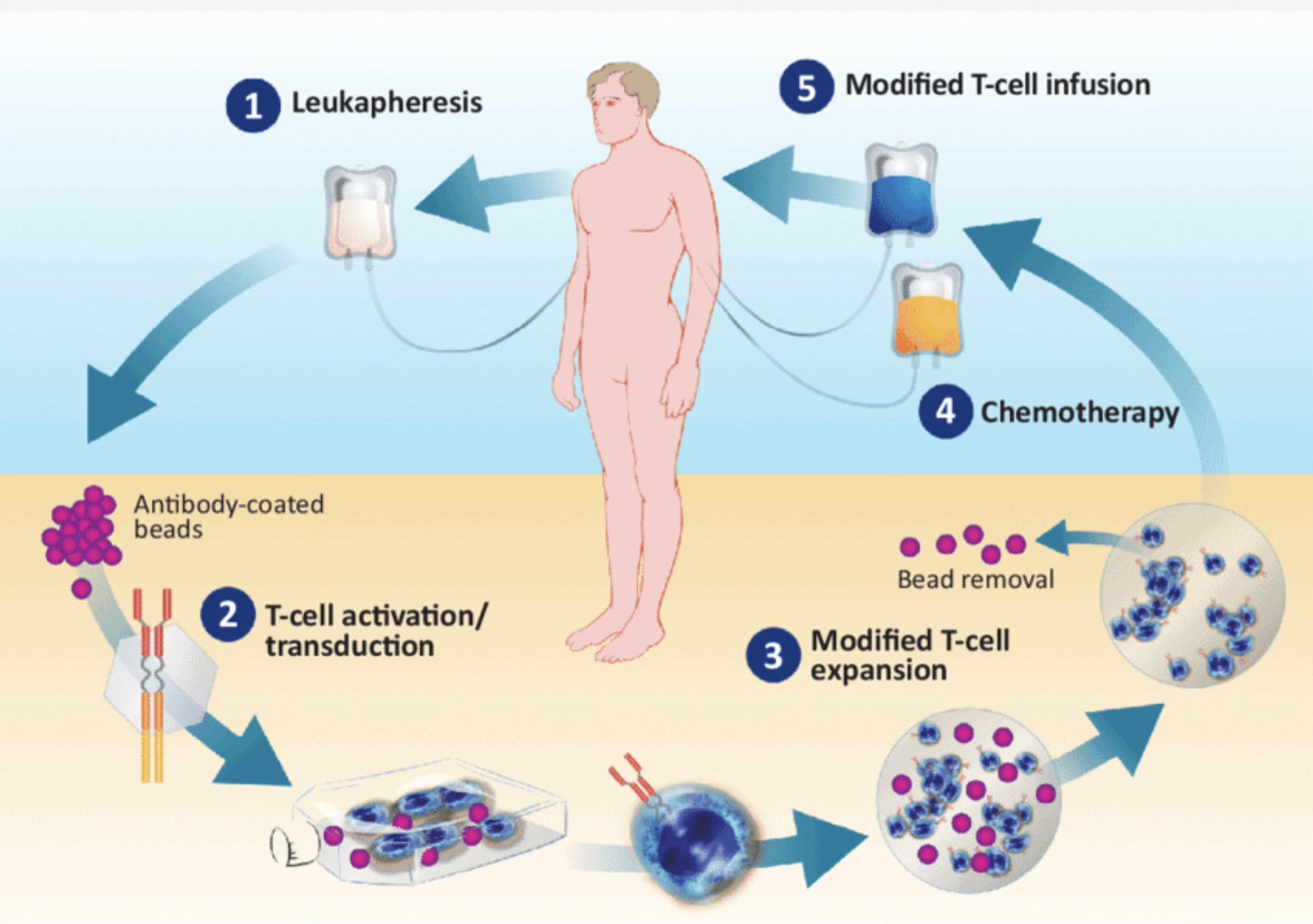 (Image caption) A schematic diagram of the complete CAR-T cell therapy process, showing the process from drawing blood from the patient (white blood cell separation), T cell gene modification and amplification, to reinfusion into the body to attack cancer cells. This represents the precise scientific basis of the NMPA approval and prospectus in the article, filled with qualifying terms such as "relapse or refractory" and "second-line or above," which contrasts sharply with the subsequent media reports of "zeroing out" and "rebirth."
After analyzing publicly available narratives about CAR-T therapy, we discovered a stable production model for its rhetoric.
Its inputs are legal documents: NMPA approvals, prospectus descriptions of indications, and clinical trial data. These documents are written in precise language, filled with qualifiers—"relapsed or refractory," "after second-line or later systemic therapy," "adult patients." Each qualifier narrows the scope of application and also reduces the risk.
Its output consists of patient narratives: "reset," "rebirth," "predictable cure," and "the first person to try something new." Every word in these languages amplifies the possibility and narrows the limitations, making a statistical probability sound like a personal promise.
What happens between input and output?
We have identified three language conversion nodes.
Node 1: From Approval to Promotion The NMPA approval for Fosun Kite Yikeda® described strict indication boundaries. However, in public media reports, these boundaries disappeared. "Relapsed or refractory large B-cell lymphoma" became "blood cancer," "after second-line or higher treatment" became "after all treatments have failed," and the time-limited statistic of "complete response rate" became "zero."
Every shift is not a lie—they can literally be justified as "popularization." But popularization is unidirectional: always towards hope, never towards risk.  (Image caption) Artistic imagery symbolizing rebirth and hope for cancer patients (light, healing energy, the transition from darkness to light). A representative example is the shift in language from corporate propaganda to media: the strict "complete remission rate" is replaced by emotionally resonant terms like "healing," "rebirth," and "being the first to try something new," making it easier for patients' families to be moved and decide to seek treatment late at night.
Node Two: From Publicity to Media - Patient Stories Flow from Corporate Promotional Materials to the Media Through a Almost Frictionless Channel. "Complete Remission" has a strict timeframe defined in corporate announcements, but becomes "Cure" in media headlines. The description of side effects changes from "cytokine release syndrome incidence X%" to "Much milder than chemotherapy, just a few days of fever."
In its 2020 Hong Kong Stock Exchange prospectus, WuXi AppTec described its product relma-cel as "for the treatment of adult patients with relapsed or refractory large B-cell lymphoma who have received second-line or higher systemic therapy." In the public media, the same product was described as "benefiting 200 Chinese patients"—a heartwarming number, but it did not explain the subsequent status of these 200 patients.
Node Three: From Media to Crowdfunding. The patient narrative undergoes its final and most thorough transformation on the crowdfunding platform. Here, the language no longer needs any technical precision; it only needs to accomplish one thing: get strangers to spend money.
According to reports from Red Star News and other media outlets, 29-year-old Lan Moufei's 900,000 yuan fundraising campaign on Waterdrop Crowdfunding used a standard family tragedy narrative structure: cancer recurrence, father's death, and heavy debt. This case was later reported for concealing property ownership, leading to the fundraiser being closed and the platform intervening to issue refunds—the original fundraising page has been taken down, so we cannot directly quote the original text.
However, the value of this case lies not in its fraud, but in the way it collapsed, revealing the fragility of this assembly line: the credibility of the entire narrative is built on unverifiable self-reports, and the platform's review mechanism is not designed to verify medical facts, but to lower the threshold for initiating fundraising and increase the conversion rate of funds raised. 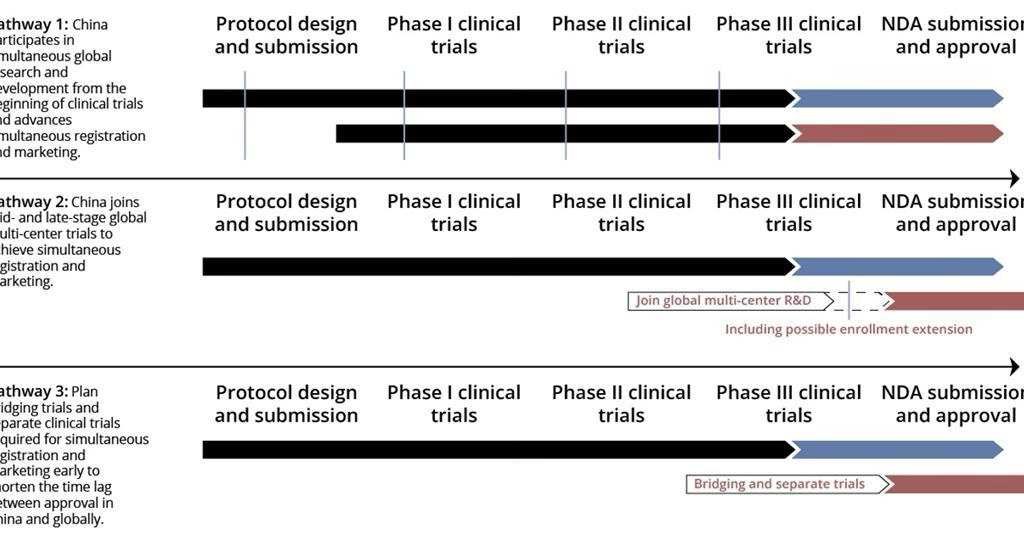 (Image caption) A diagram illustrating the drug approval process of China's NMPA (National Medical Products Administration), including the clinical trial stage and NDA submission for approval. This symbolizes the precise language at the "input end" of the article—strict indication boundaries, qualifiers, and risk warnings, which are clearly present in formal regulatory documents but rarely directly conveyed to patients, creating institutional space for language translation.
For everyone on this chain, we need to answer one question: Who designed this assembly line?
The answer is that no one designed it, but every participant maintains it reasonably.
Companies need patient stories. A patient with a name, a face, and a story makes it much easier for investors and potential patients to build an emotional connection than any clinical trial data. Patient stories are a legitimate marketing tool, widely used in the healthcare industry both in China and globally. Fosun Kite is not an exception; it's the rule.
The media needs traffic. "CAR-T complete remission rate 67%" is a figure that needs explanation, while "28-year-old girl clears cancer cells in half a month" is a headline that needs no explanation. In an environment where attention is scarce, choosing the latter is a rational business decision.
Crowdfunding platforms need success stories. Successful fundraising stories are proactively promoted by the platform as social proof of its effectiveness. The platform's business model relies on transaction volume, not the accuracy of medical outcomes.
Patients and their families need hope. This is the hardest link in the chain to be criticized. The need for hope is a perfectly legitimate human response when facing serious illness. The issue isn't why they believe these narratives, but whether these narratives provide them with the information they need to make informed decisions.
Each node operates on its own logic. No single node is purely malicious. However, the overall effect of this chain is to systematically force patients to make life- and financially impactful decisions under conditions of information asymmetry.
There's one unspoken layer in this chain of responsibility that we need to discuss separately: the coexistence of regulatory language and market language.
The language used in NMPA approvals is precise. The language of prospectuses—at least under the regulatory requirements of the Hong Kong Stock Exchange and the STAR Market—must also include risk warnings. These two layers of language, if seen by patients, provide a considerable level of information protection.
The problem is that patients almost never look at these two layers of language.
Approval documents are regulatory documents, not patient manuals. Prospectuses are investor documents, not tools for doctor-patient communication. There is no institutional bridge between these two layers of precise language and the media language patients actually encounter, requiring the latter to be faithful to the former.
This gap is not a regulatory oversight failure, but rather a boundary in the regulatory design—the approval document governs listing qualifications, not media expression. However, the existence of this boundary objectively provides institutional space for language substitution.
Who is condoning this shift? A more accurate question is: Who has the power to stop it, but has chosen to remain silent? 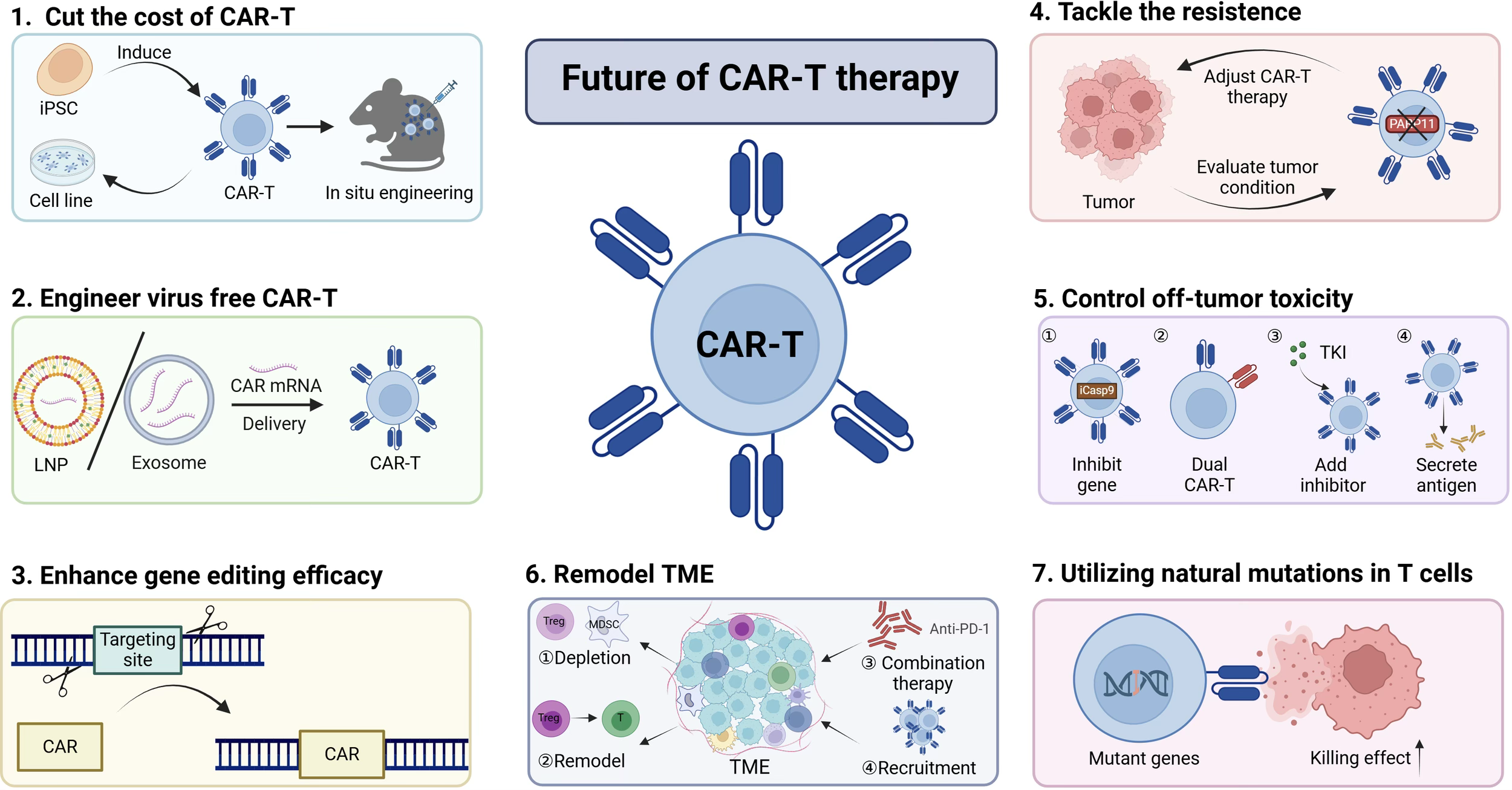 (Image caption) Schematic diagram of cost considerations and future challenges related to CAR-T therapy (including a discussion of cost reduction). It presents the pricing of CAR-T therapies such as Yikeda® at approximately RMB 1.2 million, exploring how families might spend their entire savings on this decision, packaged with the hope of "zeroing out" and "rebirth." Using precise risk language would lead to a more rational financial and psychological discussion.
In the final part of this discussion on the cost of hope, we return to a specific number.
In China, CAR-T therapy is priced at approximately RMB 1.2 million per treatment for Yikeda® and approximately RMB 1.29 million for Beinuoda®. These prices are already covered by medical insurance in some provinces and cities, and the out-of-pocket expenses are still considerable.
1.2 million yuan. This figure, packaged under the narrative of "zeroing out," can lead some families to make the decision to exhaust their savings. Within the precise framework of "relapse or refractory disease, after second-line or higher treatment, and time-limited complete remission rate data," the same 1.2 million yuan requires more complex family discussions.
These two decision-making processes start from different points and may end at the same point, but the paths they take to reach that point have completely different impacts on the family's financial and psychological well-being.
Hope itself has no cost. Hope that is created has a cost.
In the next article, we will delve into one of the least discussed aspects of this chain: how are regulatory language and capital language separated when they coexist in the same document?
Part Three: One Approval Document, Two Worlds
All company announcements, prospectuses, and NMPA approvals cited in this report are publicly available regulatory documents. In the patient cases, Aunt Qin's case is from a public report published by cn-healthcare.com in September 2021; Lan Moufei's case is based on reports from Red Star News and other media outlets, but the original fundraising page has been taken down, so the original text cannot be directly quoted. Please inform us of any factual errors so we can correct them.