

Forty million tourists have returned. What can Macau do to keep them coming back?
The Intangible Cultural Heritage Forum Unveils the Diversification of Macao's Culture, Tourism, and Industries
In 2025, Macao is expected to receive 40.069 million visitors, returning to the 40 million mark; among them, more than 23.52 million are same-day visitors, exceeding overnight visitors. While visitor traffic has returned, the time available for tourists to establish a connection with the city remains limited. The inaugural Macao Intangible Cultural Heritage Forum raised not merely a question of cultural preservation, but a crucial issue directly related to the moderate diversification of Macao's economy: Beyond gaming, hotels, and large-scale resort facilities, can Macao establish a value chain that benefits culture, community, inheritors, and tourism consumption?
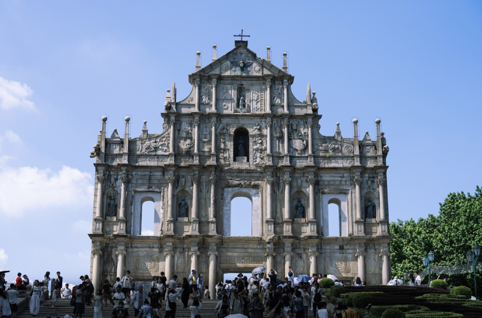 (Image caption) Large numbers of tourists gather to take photos on the steps of the Ruins of St. Paul's. As the most recognizable tourist symbol in Macau, this place attracts a large influx of people and immediate photo consumption; however, simply checking in and passing by does not automatically translate into a deeper immersion in local crafts, community life, and non-gambling cultural consumption.
Customer traffic may return, but value may not remain.
In 2025, Macao recorded 40.069 million inbound visitors, representing a year-on-year increase of 14.7%. The tourist market has basically recovered after the pandemic, with hotels, retail, catering, convention and exhibition facilities, and integrated resorts regaining support from visitor flow.
However, passenger flow does not equal city value.
The number of day-trip visitors exceeded 23.52 million throughout the year, surpassing the number of overnight visitors. These visitors spend money, take photos, and pass through the city, but may not have enough time to explore Macau's neighborhoods, communities, arts, and history. The real question is not whether visitors return, but how long each visitor stays in Macau, how much culture they experience, how much non-gaming spending they make, and how much of that revenue actually returns to the local community and cultural workers.
On September 13, 2026, the first Macao Intangible Cultural Heritage Forum was held at the Venetian Macao Cotai Expo. According to information provided by the organizers, researchers, inheritors, cultural organizations, and business representatives from Beijing, Hong Kong, Taiwan, Singapore, and various provinces and regions in China gathered to exchange ideas on intangible cultural heritage protection, living heritage, cultural and creative transformation, and international dissemination. Cooperation agreements were also signed.
The forum itself is not the answer, but it provides a starting point: can Macao reorganize tourists, population flow, culture, capital, community, and public policy into a sustainable urban ledger?
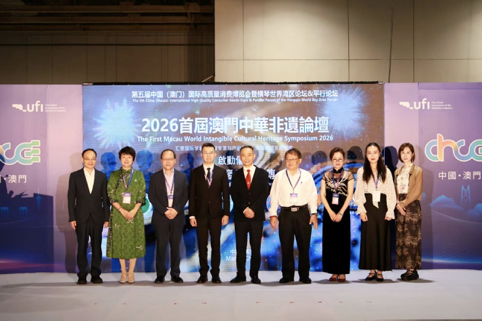 (Image caption ) The inaugural Macao Intangible Cultural Heritage Forum was held on September 13, 2026, at the Venetian Macao Cotai Expo. The forum brought together intangible cultural heritage experts, scholars, inheritors, cultural organizations, and business representatives from Beijing, Hong Kong, Taiwan, Singapore, and various provinces and regions in mainland China, as well as Macao, to exchange views on the protection, living transmission, and industrialization of intangible cultural heritage.
The asset list is available, but the transaction system still needs to be established.
Macau is not lacking in cultural resources.
In 2005, the Historic Centre of Macao was inscribed on the UNESCO World Heritage List. Its value lies not only in its architecture, but also in the urban texture formed by the long-term exchange of commerce, religion, lifestyle, and technology between China and the West. Since joining the UNESCO Creative Cities Network in 2017 and being named a "City of Gastronomy," Macao's cuisine has long been the most easily perceived cultural language for tourists.
The system for the protection of intangible cultural heritage has gradually taken shape in recent years. Law No. 11/2013, the "Cultural Heritage Protection Law," provides a legal basis for the investigation, identification, protection, transmission, and management of intangible cultural heritage. The Cultural Affairs Bureau first established the "List of Intangible Cultural Heritage" in 2017, including 15 items; 55 new items were added in 2020; and another 28 items will be added in August 2026, bringing the total number of items on the list to 98.
Currently, Macao has 24 items listed in the Representative List of Intangible Cultural Heritage, 11 of which are included in the National Representative List of Intangible Cultural Heritage. The Cultural Affairs Bureau will also announce the first batch of 19 intangible cultural heritage protection units in 2025.
These institutional arrangements have completed the initial stage of identifying and protecting cultural resources; the next challenge is how to transform the skills, festivals, beliefs, and life knowledge listed in the catalog into an economic environment that allows inheritors to make a living, young people to participate, and communities to maintain together.
A directory can confirm value, but it cannot automatically generate orders, apprenticeships, and reasonable income.
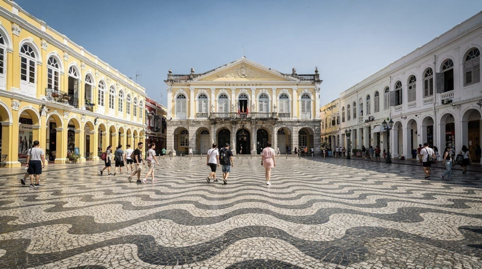 (Image caption) Senado Square in the Historic Centre of Macao, where tourists walk between the Portuguese-style cobblestone streets and the Senado Square building. Tourists have returned to this World Heritage area, but most stays are still limited to short visits and taking photos. The city's cultural heritage is easily passed by without being truly understood.
Intangible cultural heritage has an unseen cost.
An intangible cultural heritage skill may appear to be an almond cookie, a piece of gold or silver jewelry, a floral plaque, a bowl of bamboo-pressed noodles, or a piece of Nanyin music; but behind it are the costs of years of learning, manual processes, materials, shop rent, maintenance of traditional tools, master-apprentice relationships, and market development.
For those who make floral arrangements, gold and silver ornaments, roast meats, traditional pastries, or wedding attire, the biggest problem may not be whether they can be included on the list, but whether their skills can provide enough income to support themselves and raise the next generation.
If culture is only displayed during festivals, its inheritors typically only receive brief exposure on the event days; if it's only used as tourist souvenirs, it easily falls into price competition and copying of styles. A sustainable model requires integrating skills into a more complete industrial chain.
Culinary skills can be connected to dining experiences, city tours, cooking classes, food stories, brand licensing, and cross-border promotion; craft skills can be connected to design collaborations, hotel furnishings, gift markets, exhibitions, collections, and digital content; and festival and performance projects can be integrated into community calendars, study tours, the nighttime economy, and international exchanges.
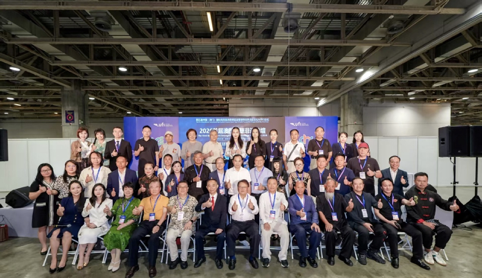 (Image Caption 4 ) The inaugural Macao Forum on Chinese Intangible Cultural Heritage uses Macao as a window for cultural exchange between China and the world, building a cross-regional and cross-sectoral platform for intangible cultural heritage exchange. The organizers stated that they will continue to work with cultural institutions, inheritors, and associations to carry out performances, seminars, and exhibitions, promoting the revitalization and international dissemination of outstanding traditional Chinese culture.
The key lies in the trading rules.
Who owns the right to attribution for a work? Who can use traditional patterns? How is revenue split when brands collaborate with inheritors? Can rituals maintained by the community be exclusively packaged by commercial organizations? The overall data regarding the sales of intangible cultural heritage products, the income of inheritors, licensing transactions, cultural and creative investments, and the return of profits in Macau still awaits further disclosure from official sources and the industry.
Without this data, it is difficult for outsiders to determine whether the industrialization of culture is supporting the preservation of cultural heritage or simply consuming cultural symbols.
Where did the traveler's money end up?
Macau's tourism economy is quite mature, but the position of cultural consumption in tourists' non-gaming spending, and the flow of these expenditures within the city, still deserve more detailed research.
Every expenditure a traveler makes—checking into a hotel, entering a shopping mall, watching a performance, dining, shopping, taking a ride, and filming a short video—enters different commercial systems. Large integrated resorts, international brands, chain retailers, restaurant groups, and platform companies typically have more mature channels and traffic entry points; while small community shops, independent artisans, traditional industries, and cultural groups may not have the same ability to reach travelers.
This is not about pitting large-scale tourist facilities against cultural communities, but about establishing an institutional interface that can connect the two.
Can hotels establish a regular mechanism for sourcing local cultural products? Can convention and exhibition events incorporate intangible cultural heritage experiences into their official itineraries? Can large commercial spaces provide long-term display and sales locations at reasonable costs, rather than just for short-term decoration? Can travel platforms allow travelers to book workshops genuinely led by inheritors of Macao's cultural heritage? When cultural and creative brands use Macao's cultural elements, can a transparent attribution and revenue-sharing system be established?
Forty million travelers constitute a massive distribution network. If even a small fraction of these travelers were to add a cultural experience, a local craft purchase, or an evening of community cultural activities, the cumulative effect could support a large number of small businesses, heritage workers, and young entrepreneurs.
The problem is not whether culture can enter the market, but whether market rules benefit those who truly create culture.
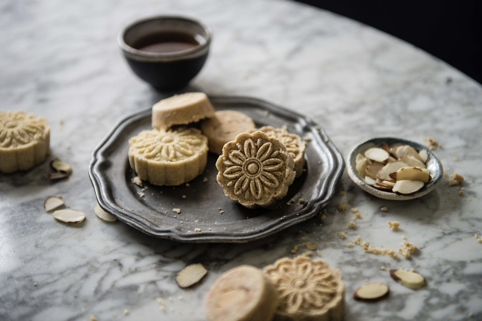 (Image caption) Finished Macau almond cookies pressed using a wooden mold. The almond cookie making technique has been listed in Macau's "Intangible Cultural Heritage List." What is visible is the pastry itself, but behind it lies the manual process, materials, shop costs, and the passing down of knowledge from master to apprentice. Listing confirms its cultural value, but it does not automatically bring stable orders and reasonable income.
Large venues cannot replace the cultural capillaries of a city.
The Macao government has solicited opinions on the planning of the Macao International Integrated Tourism and Culture Zone, envisioning facilities including the Macao National Museum Cultural Centre, the Macao International Performing Arts Centre, and the Macao Museum of Contemporary Art. This demonstrates that Macao is attempting to improve its capacity for large-scale cultural exhibitions, research exchanges, and international performing arts.
However, planning and architecture themselves do not automatically generate cultural content.
A museum that only displays artifacts and lacks research, education, community participation, and international exchange is likely to become a tourist attraction; a performance center that mainly relies on foreign programs but lacks local creations, young talent, and regular audiences will also find it difficult to form a complete cultural ecosystem.
Macau's future cultural facilities should answer four questions: Can Macau establish its own curatorial and research narrative? Can local intangible cultural heritage be integrated into exhibitions, education, and research, rather than just appearing in opening events? Can stable cooperation be formed between large venues and old urban areas, communities, schools, and inheritors? Can public investment cultivate local jobs and talent, rather than just increasing construction and operating costs?
The value of cultural infrastructure lies not in the size of the venue, but in whether it enhances a city's ability to produce, understand, trade, and disseminate culture.
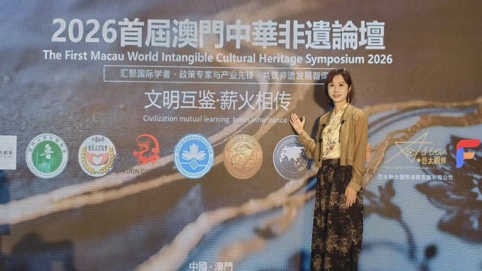 GFM.News's Asia Pacific United International Media Group and its "Asia Pacific Vision" Douyin account were listed as media co-organizers of this forum. Ms. Lin Xinze, CEO of Asia Pacific Media, stated at the forum that Macao can combine its intangible cultural heritage resources with modern tourism experiences, and expand the dissemination of intangible cultural heritage through cooperation between Macao and Macau and international exchanges.
Three ledgers should be submitted after the forum.
Following the inaugural Macao Forum on Chinese Intangible Cultural Heritage, the attendance of guests, on-site demonstrations, and cooperation agreements were just the beginning. More worthy of investigation are the three ledgers.
First, there is the issue of cooperation fulfillment : can the cooperation agreement be transformed into joint exhibitions, mentorship programs, study tours, cultural and creative development, and cross-regional exchanges, rather than just remaining a signed photo?
Second, there is the accounting for the succession of life : whether the successors obtain more stable orders, display channels, reasonable remuneration and young apprentices; whether the related projects can generate sustainable rather than one-off activity income.
Third, there is the issue of urban revenue return : whether intangible cultural heritage products and cultural experiences have established mechanisms for quality assurance, attribution, authorization, and revenue return; and whether a larger proportion of tourist cultural consumption can reach local communities, cultural practitioners, and young entrepreneurs.
These concrete developments are the basis for verifying the forum's commitments.
GFM.News's Asia-Pacific United International Media Group and its "Asia-Pacific Vision" Douyin account were listed as media co-organizers of this forum. Based on this partnership, this article analyzes information using verifiable public policy documents and event information provided by the organizers; the cooperative arrangements and development visions proposed by the forum are not considered as achieved results. GFM.News maintains independent interviewing, verification, and editorial judgment; the partnership does not affect the conclusions of this article.
Ms. Lin Xinze, CEO of Asia Pacific United International Media Group, stated at the forum that Macao can combine its intangible cultural heritage resources with modern tourism experiences and expand the dissemination of intangible cultural heritage through cooperation between Macao and Xiamen and international exchanges. Whether this vision can be realized depends on whether the aforementioned three sets of accounts can be continuously made public, verified, and improved.
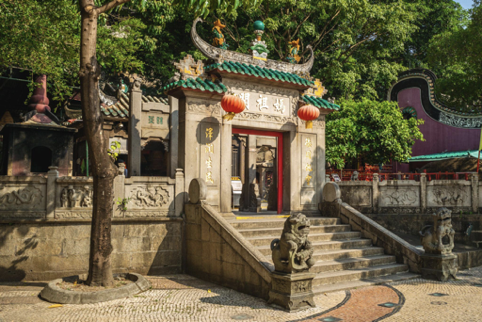 (Image caption) The main gate of the A-Ma Temple in Macau, with stone lions, lanterns, and traditional Chinese roof ridges arranged side by side. The Mazu belief is a national intangible cultural heritage representative project and an integral part of daily religious life in the historic city center. If related rituals and memories remain primarily confined to festival displays, it will be difficult for inheritors and the community to form a sustainable economic environment in the long term.
Macau needs a cultural value chain
Macau's advantage lies not in replicating the cultural brand of another city, but in reorganizing its own existing culture.
This place boasts an urban lifestyle shaped by a long-standing blend of Chinese and Western influences, connections with Portuguese-speaking countries, the Greater Bay Area market, and a base of international tourists. It also possesses a rich tapestry of cuisine, festivals, crafts, folk beliefs, and neighborhood memories. If these resources exist in isolation, they will merely serve as a backdrop for tourists passing through; however, if they can be effectively connected, they could become a crucial element of Macau's next phase of economic diversification.
A mature cultural value chain includes at least six links: identifying cultural resources, establishing legal protection, supporting inheritors, integrating into education and product design, connecting with the tourism market, and forming international dissemination and reasonable revenue return.
The most easily overlooked aspect is revenue repatriation.
Once culture generates revenue, does that revenue flow back to the inheritors, the community, apprentices, and long-term research? Can young people entering this industry see a sustainable career prospect? When tourists are willing to pay for culture, can they buy products and experiences that are authentically sourced, of reliable quality, and with clear narratives?
The success of cultural assetization should not be measured solely by sales figures. It should also be reflected in more people being willing to learn a skill, more communities being willing to maintain a tradition, and more young people believing that culture can be a profession.
Forty million tourists bring in traffic. The next step for Macau is to channel some of that traffic into the city's cultural capillaries, transforming it into income that can be passed down to future generations, the ability for communities to sustain themselves, and a future that young people are willing to take over.
What travelers remember after they leave determines a city's distinctiveness; who benefits from that memory in the long term and fairly determines whether a culture can truly survive.
Disclaimer
This article is based on publicly available documents from the Macao SAR Government, Macao cultural heritage data, UNESCO information, and information provided by the forum organizers. Some cultural industry data, cooperation progress, and revenue distribution details are still pending further disclosure by official or relevant institutions. This article is for news research and informational reference only and does not constitute investment, legal, or policy advice.