

The $10 billion problem of YZi Labs
How should the boundaries of assets, information, and listing decisions be drawn between the founders' capital and the trading platform?
In January 2025, Binance Labs changed its name to YZi Labs, expanding its investment scope to include artificial intelligence and biotechnology, and continuing to describe its size as managing over $10 billion in assets. The brand has changed, and the organization has publicly stated that it operates independently; however, some questions remain unanswered from public documents regarding how historical capital was inherited, who made the investment decisions, and how conflicts of interest were handled when invested projects entered the Binance and BNB ecosystems. This article examines, using company announcements, listing records, and US securities filings, to see how far this boundary can currently be confirmed.
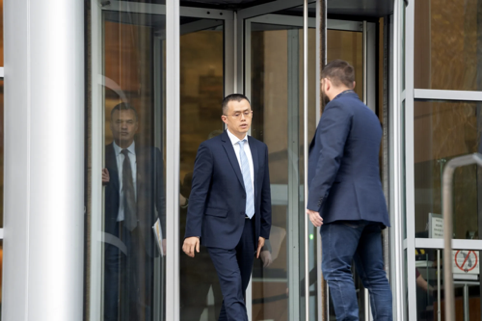 (Image caption) Zhao Changpeng, who walked out of the U.S. federal court in 2024, is a key figure in the founder capital relationship of YZi Labs.
The brands have been divided, but the boundaries are unclear.
On January 23, 2025, Binance Labs changed its name to YZi Labs, expanding its investment scope from Web3 to artificial intelligence and biotechnology. Ella Zhang, who co-founded Binance Labs, returned to lead the company, while Changpeng Zhao actively participated in investment activities and mentored founders. YZi subsequently announced that it manages over $10 billion in assets, with a portfolio of over 300 projects in more than 25 countries across six continents.
Documents filed with the U.S. Securities and Exchange Commission have revealed to the market at least one legal entity behind this brand. YZILabs Management Ltd. is a British Virgin Islands company, with Changpeng Zhao as its sole director. In September 2026, the company filed a report stating that its beneficial ownership of Nasdaq-listed CEA Industries had increased to approximately 19.99%; Changpeng Zhao, due to his directorship, may be considered to beneficially own the same group of shares.
This publicly traded company changed its name to BNB Standard Corporation on September 29, 2026, while retaining the stock ticker BNC. It will be referred to as BNC below.
The founders' relationship between the two platforms did not disappear with the brand name change. In a 2025 interview with WIRED, Richard Teng confirmed that Changpeng Zhao remained Binance's largest shareholder and retained shareholder rights; He Yi became Binance's co-CEO in December of the same year. The Financial Times reported that the capital managed by YZi included the wealth of Changpeng Zhao, He Yi, and a few early Binance executives.
These relationships do not prove that Binance can direct YZi, nor do they prove that YZi interferes with Binance's listing decisions. They raise more specific governance issues: which legal entities hold the assets, who approves the investments, who can obtain project and holding information, how to avoid conflicts of interest when invested projects are included in Binance products, and whether related decisions can be reconstructed afterward.
The publicly available information can only answer part of the question at present.
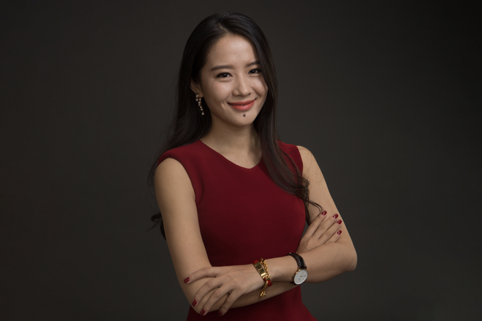 (Image caption) He Yi took over Binance Labs in 2022 and became co-CEO of Binance in December 2025.
The split occurred before the name change.
Founded in 2018, Binance Labs was initially positioned by Binance as its venture capital and incubation arm. In addition to capital, it also provides projects with mentors, talent, industry networks, and ecosystem collaboration opportunities. Within the system where the trading platform provides users and liquidity, Launchpad and Launchpool provide token distribution, and BNB Chain provides the technological scenarios, Labs often intervenes in projects at an early stage.
In August 2022, when Binance appointed He Yi to lead Binance Labs, it still referred to it as its venture capital and incubation division, and announced that it managed $7.5 billion in assets and had a portfolio of over 200 projects. In June of the same year, Binance Labs announced the completion of a $500 million fund, with participants including external investors such as DST Global Partners and Breyer Capital.
The declaration of independence predates the name change. In February 2024, Binance Labs added a statement to its website stating that it is an independent entity, not part of the Binance Group, and does not participate in the Group's business, only authorized to use the Binance trademark. Media reports in March of that year quoted a spokesperson as saying that Labs employee contracts had been separated from the exchange, and that there would be no major changes to day-to-day operations. These documents confirm the independence declaration and some organizational arrangements, but do not provide complete spin-off transaction documents.
The capital history is not explained in the same way. The Block reported in 2024 that Binance Labs was mainly funded by the profits of the exchange; Ella Zhang said in an interview with WIRED in 2025 that YZi was mainly funded by the personal assets of Binance's founders and insisted that the team has maintained operational independence since its establishment in 2018.
The aforementioned statements pertain to funding sources, organizational affiliation, and daily operations, and should not be confused with the same issue. In the publicly available materials reviewed in this article, no documents have been found sufficient to fully reconstruct historical investments, how unexited tokens, private company equity, and fund interests were incorporated into existing investment vehicles.
Therefore, it cannot be concluded that the exchange's assets have been transferred to the founder's private investment platform, nor can this history be directly characterized as improper related-party transactions. What is certain is that Binance publicly listed Labs as its corporate venture capital arm; the renamed YZi, however, was described by its management as primarily using the founder's personal assets. The asset transfer, valuation, approval procedures, and beneficial rights between these two states need to be verified item by item.
Who controls YZi?
The YZI website and public announcements reviewed in this article do not yet contain a complete structure covering all investment vehicles, ultimate beneficial ownership, and the powers of the investment committee. The SEC filings confirm that Changpeng Zhao serves as the sole director of YZILabs Management Ltd., which participated in the BNC investment; however, this does not prove that all of YZI's assets are held by the same company, nor is it sufficient to presume that the entire investment system has only one decision-maker.
Different legal entities, shared economic interests, and independent operations can coexist. Even if Binance's management cannot issue instructions to YZi, the founders can still influence different entities through shareholding, board positions, investment arrangements, and access to information. Determining these influences requires specific rights and transaction documents.
The role of external funding should also be considered separately. Binance's $500 million fund announced in 2022 proves that external investors were involved at that time; the Financial Times reported in September 2025 that the institution had received approximately $300 million in external funding, of which it later returned a portion. The total fund size, external contributions, and returned funds are not the same thing.
Changpeng Zhao and Ella Zhang later denied that YZi was raising external funds or had any related plans. This denial was in response to fundraising reports at the time and cannot be used to infer that all previous external funds had withdrawn.
If external investors remain, their rights depend on the fund vehicle, applicable laws, and contractual arrangements. Valuation, fees, custody, related-party transactions, and fair treatment must be examined against these documents. Even if the founders use their own funds, conflicts of interest still exist for platform users when investment and trading platform product decisions intersect.
 (Image caption) Binance holds a public event outside the Coca-Cola Stadium in Dubai.
BNC's governance model
BNC, formerly known as CEA Industries, originally operated in controlled environment agriculture equipment and e-cigarette retail. In 2025, the company shifted to a digital asset reserve strategy centered on BNB, and supported the transformation through private equity financing. 10X Capital's asset management entity participated in the BNB asset management arrangements, while YZi served as both an investor and a strategy advisor.
Subsequently, YZi criticized the company's governance, disclosure and asset management arrangements, launched a written consent solicitation from shareholders, and demanded a reorganization of the board of directors.
On June 23, 2026, both parties signed a cooperation agreement. The board of directors was expanded to six seats, with Ella Zhang, Alex Odagiu, and Bloq co-founder Matthew Roszak appointed as directors. The company's filing at the time still listed Odagiu as a YZi investment partner; he was also appointed as the interim president of BNC, reporting directly to the board of directors. YZi terminated the consent solicitation and accepted voting, restricted actions, and non-disparaging agreements.
The agreement also enshrines some of its influence as specific rights, including the right to replace designated directors under certain conditions such as shareholding, and an arrangement that the appointment of a new CEO must be supported by at least one YZ-designated director and one existing director. These provisions, more than simply knowing how many shares a company holds, reveal its governance role.
On September 11, BNC disclosed that the appointment of another mutually agreed independent director was still pending, and the selection of a CEO was also underway. The same announcement also disclosed that the company had filed a lawsuit regarding the asset management agreement, seeking to have the agreement declared invalid from the outset, or to have its stipulated compensation clauses unenforceable; at that time, the agreement had not yet been terminated, and the litigation was still ongoing. The board reorganization has not resolved all governance disputes.
On September 17, YZi exercised some of its prepaid and strategic advisory warrants. The subsequent Schedule 13D amended filing showed that the beneficial ownership increased to 9,749,745 shares, representing approximately 19.99% of the shares calculated on a reported basis; other warrants remained subject to the shareholding cap and were not fully included in this beneficial ownership figure.
As of July 31, BNC held 515,544 BNB, with digital assets accounting for 93.1% of total assets. For common shareholders, the right to nominate directors, asset management contracts, advisory fees, and warrants collectively influence the company's strategy, risk dilution, and profit distribution.
BNC provides a governance model that can be rebuilt through securities filings: YZi's role encompasses investment, strategic advisory, board nomination, and management arrangements. While these documents do not prove that YZi influenced Binance listings, they demonstrate what information is needed for external verification—rights must be written into contracts for influence to be concretely identifiable.
How to calculate 10 billion
"Managing over $10 billion in assets" has become a recurring description of YZi's scale. In 2022, Binance announced that Labs managed $7.5 billion; reports in 2024 stated that its asset size exceeded $10 billion; and YZi's announcements from 2025 to 2026 continued to use this figure.
A long-term used valuation range does not necessarily mean that the valuation should be recalculated based on the latest market price each time it is released. The materials reviewed in this article have not yet provided sufficient data on the valuation benchmark date, asset details, and a unified calculation method to recalculate this $10 billion valuation.
The first thing to clarify is the scope of management: which legal entities and funds are covered by the figures, whether it includes committed capital that has not yet been invested, whether realized profits are still within the scope of management, and whether there is double counting between different entities.
Secondly, there's the valuation method. The market and point-in-time price used for liquid tokens, how liquidity constraints are handled for locked tokens, whether cost or fair value is used for unlisted equity, and how exercise conditions are reflected in warrants—all these factors change the meaning of the figure.
A token that can be sold instantly, a private equity stake that can only be exited after many years, and a warrant subject to a shareholding cap—even with the same book value, their risks and liquidity differ. Current disclosures are sufficient to confirm YZi's description of its size, but not enough for external independent reassessment of its asset value and liquidity.
The number of projects also needs to be standardized. YZi's announcements often use more than 300 projects to describe its investment portfolio; He Yi's public statement in February 2025 mentioned "thousands" of investment projects, and stated that only a very small percentage were listed on Binance. The two may involve different periods or statistical scopes, but before the definition is standardized, they cannot be directly divided or used to calculate the listing ratio.
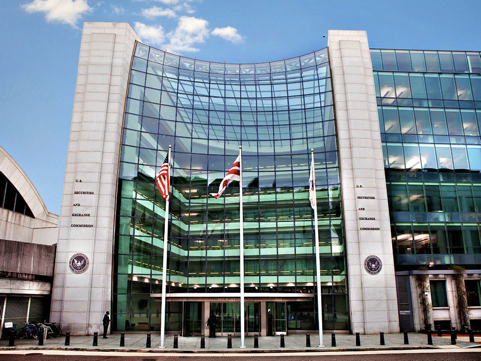 (Image caption) The U.S. Securities and Exchange Commission headquarters in Washington, D.C., through which beneficial ownership of BNC was publicly filed.
Investment and Coin Listing
A number of projects invested in or incubated by Binance Labs did indeed later become part of Binance's product portfolio.
In 2020, Injective became the first Binance Labs-incubated project to be publicly sold on Binance Launchpad. In 2022, when Binance listed Biswap, the announcement explicitly disclosed that Labs held an investment interest; in 2023, Space ID conducted a Launchpad token sale and listed it on the spot market, with the same type of disclosure in the announcement.
These records demonstrate an overlap between historical investment portfolios and trading platform access points, and also indicate that Binance disclosed relevant interests to users in at least some cases. However, all three cases predate the 2024 independent statement and the 2025 name change, and cannot be directly used to determine the effectiveness of the segregation mechanism after the name change.
Overlapping does not necessarily equate to improper transfer of benefits. Projects with technological capabilities, a user base, and market demand may simultaneously receive investor support and adoption by major trading platforms. Determining whether undisclosed preferential treatment exists requires a complete timeline: investment date, acquisition cost, token unlocking, market-making arrangements, listing decisions, product resources, and subsequent selling by investors.
In February 2025, He Yi stated that YZi was headed by Ella Zhang and directly managed by Zhao Changpeng. She said that Labs and Binance have been independently decided by different teams since their inception, and the listing process has multiple layers of information isolation. She also mentioned that providing token airdrops to users would be a reference for evaluation.
This is the management's public explanation of the system. Further verification of the "very small percentage" requires a clearer definition of the statistical period, the denominator for investment projects, and the classification of different product entry points. Spot listings, Launchpool, wallet integration, and research reports are not treated the same and cannot all be lumped together into a single, vague "entering Binance."
When investors' token rights may overlap with platform product arrangements, the key to testing the current system lies in how relevant personnel can avoid conflict, how information can be segregated, and who approves exceptions.
BNB Ecosystem
YZi's partnership with BNB Chain is part of its open strategy. BNB Chain describes its Most Valuable Builder (MVB) program as a collaboration with YZi and CoinMarketCap's CMC Labs, providing selected teams with investment, business, and technical mentorship.
On October 8, 2025, YZi announced a $1 billion Builder Fund to support BNB ecosystem projects and incorporated MVB into its EASY Residency program, making it a BNB-exclusive route. The announcement outlined the scale and investment direction, but did not provide details on the full legal structure, the percentage of funds actually paid up, or the joint investment arrangements. Announcing an investment amount and disclosing paid-up capital and actual deployment are different levels of information.
On March 25, 2026, YZi launched the Atlas Scout Program, aiming to recruit 5 to 10 college students to form an investment team, providing an indicative allocation of up to $1 million and giving participants access to its network of over 300 portfolio companies. Capital, incubation, talent, and market connections are services that YZi has always offered to founders.
For startups, this collaboration can reduce the costs of finding funding, technology partners, and users. For market governance, it also intertwines multiple economic objectives: investment platforms want projects to appreciate in value, the blockchain ecosystem wants to increase applications and transactions, trading platforms want to attract users, and data platforms provide exposure and market information.
Participating in the same ecosystem does not mean that all parties are controlled by the same entity, nor does it necessarily mean that conflicts of interest are out of control. What needs to be examined is whether the terms of cooperation are clear, whether significant interests are disclosed, and whether commercial dealings have altered decisions that should have been made independently.
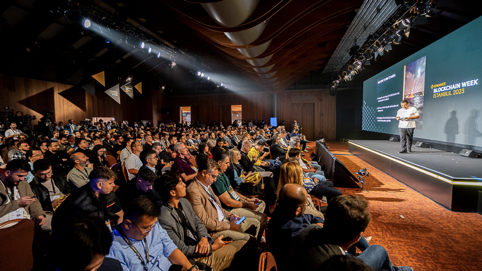 (Image caption) The Binance Blockchain Week in Istanbul 2023, showcasing users and project teams gathered at the trading platform.
Counterexamples and blanks
YZi's investments cannot all be attributed to BNB Chain. Binance Labs previously invested in Aptos Labs, which runs its own Layer 1 blockchain. This case illustrates that investments span different chains, but one cannot conclude from cross-chain investments alone that there is no conflict of interest between them and Binance's product decisions.
Investments in non-crypto technology and publicly traded stocks offer another perspective. In March 2026, YZi led a $52 million funding round for RoboForce, a physical artificial intelligence company; in January of the same year, YZi announced its participation in the initial public offering of digital asset custodian BitGo on the New York Stock Exchange. These investments suggest that interpreting the entire portfolio as token projects awaiting listing on Binance does not align with its actual investment scope.
Therefore, data classification must distinguish between tokens, equity, publicly traded stocks, warrants, board seats, and strategic advisory arrangements. Different investment forms involve different rights, exit strategies, and potential conflicts of interest.
Trust Wallet and CoinMarketCap cautioned researchers that brand history, operational independence, and legal ownership are not interchangeable. Binance had previously announced the acquisition of both companies. Its current public statements state that, effective May 15, 2025, Trust Wallet will no longer be owned or controlled by Binance Exchange Group; however, this statement itself does not fully disclose the acquiring party, the transaction price, or the transfer of rights.
In its 2020 acquisition announcement, CoinMarketCap pledged to maintain independent operations. This demonstrates that operational independence can coexist with equity relationships; to include a company in YZi's existing holdings, there must still be corresponding holding or management basis, and it cannot rely solely on historical brand relationships, lists of partners, or display logos.
The historical investments in Terra and FTX should also be handled in this way. Binance has stated that its $3 million investment in Terra in 2018 had a book value of approximately $1.6 billion at its peak in 2021, before falling to near zero; the company has also stated that it invested in FTX in its early years and exited before its collapse. These historical statements do not directly prove that the relevant assets or exit proceeds were later attributed to YZi.
Documents involving FTX also show that the ownership and recovery of the 2021 share repurchase proceeds have become a litigation issue. On July 24, 2026, the Delaware Bankruptcy Court dismissed some of the defendants' and state law's requests, but allowed the proceedings to continue against the core fraudulent transfer claims against Binance-related entities and Changpeng Zhao. This is a procedural ruling, not a final determination of the allegations, nor a ruling on YZi's existing assets.
The common lesson from these cases is that research data must allow for different states such as "historical investments," "current holdings not confirmed," and "management relationships not disclosed." Brand continuity cannot replace proof of ownership.
He Yi's position
He Yi took over Binance Labs in August 2022, responsible for global strategy and daily operations; after the name change in 2025, YZi publicly stated that Ella Zhang would lead the company, with Changpeng Zhao actively participating in investments; in December of the same year, He Yi officially became the co-CEO of Binance. This resume connects different stages of the investment department and the trading platform.
The Financial Times reported that YZi manages capital including He Yi's wealth, but this economic relationship does not mean that she approves every investment of YZi, nor does it prove that she intervenes in the listing decisions of individual projects on Binance.
The publicly available information reviewed in this article has not yet yielded any documents that fully explain her current voting, veto, or information access rights at YZi. Furthermore, there is a lack of publicly available records sufficient to reconstruct the individual processes for identifying, reporting, and recusing herself from Binance product decisions involving her economic interests.
For a co-CEO of a trading platform, the title is just the beginning. What truly influences external judgment is the information she has access to, the decisions she participates in, and who takes over when there is a conflict of interest.
Five-layer inspection
In 2023, the International Organization of Securities Commissions (IOSCO) released policy recommendations for the crypto and digital asset markets, listing conflicts of interest arising from vertical integration as one of six key areas. The recommendations suggested that regulators should consider arrangements such as legal separation when conflicts are difficult to manage. These recommendations are aimed at regulatory frameworks and crypto asset service providers, not a specific ruling on YZi, and cannot directly replace local laws and specific contracts.
Using conflict of interest management as a reference, GFM divides the independence of YZi and Binance into five levels.
The legal team will examine the legal entities, boards of directors, employee contracts, and liability systems of both parties, and will also identify the different investment vehicles under the "YZi Labs" brand.
The capital layer examines whether there are any funding sources, guarantees, revenue sharing, or loss assumptions, who holds historical assets, and whether external investors are still involved.
The personnel level should examine whether directors, partners, employees, and consultants hold concurrent positions, how reporting lines and compensation are arranged, and what formal authority each key figure possesses.
The information layer checks whether both parties can obtain each other's undisclosed listing plans, holdings, token unlocking and exit arrangements, and whether there are records of access permissions.
The decision-making level examines who approved the listing of related-party investments and other product arrangements, whether relevant personnel recused themselves, and whether auditable records were left for exception handling and disclosure of interests.
These five layers form the analytical framework proposed in this article, and do not imply a legal obligation to disclose every piece of information. Both parties have made principled statements regarding the independence of the team and decision-making; outsiders cannot fully verify the actual operation of the five layers based solely on these statements.
 (Image caption) BNC is listed on the Nasdaq Market website in Times Square, New York.
Make relationships visible
Corporate venture capital firms leveraging the technology, customers, and distribution capabilities of their portfolio companies to support them is not uncommon in the tech industry. YZi's collaboration with Binance and the BNB ecosystem is not in itself a negative judgment. The value of transparency lies in allowing the market to understand how the collaborations are conducted and who benefits from them.
The most basic improvement is to explain the legal structure, source of funds, and historical asset transfer methods, and to provide valuation dates, asset classifications, and management standards for a $10 billion scale. This information can help external parties distinguish between company capital, founder capital, and external funds.
In terms of decision-making, the basic framework for investment committee authority, related-party transaction rules, information segregation, and conflict of interest avoidance procedures can be made public; individual transactions involving trade secrets can be reviewed by appropriate independent bodies. The standards for public disclosure and disclosure of all transaction details need not be exactly the same.
A continuously updated investment database also has public value. Each project can record the investment date, holding entity, investment vehicle, board seat, and exit status, and then separately indicate the date it entered different Binance products. Acquisition cost, holding percentage, and unlocking information that are not publicly available should be marked blank to avoid filling in speculation.
Binance could consistently disclose the interests of major shareholders, management, and related investment platforms in its product announcements, and explain its review procedures in case of conflicts of interest. These are transparency measures to consider; their purpose is to make it easier to distinguish between normal business cooperation and special treatment requiring further investigation.
Trust requires evidence
Before its name change, Binance Labs had publicly stated that it would operate independently. YZi subsequently expanded its investment scope and acquired rights verifiable through securities filings in investments such as BNC. There is also publicly available information regarding the economic ties between the founders, the overlap in historical investments, and the platform's entry point.
The existing evidence is insufficient to prove that YZi interfered with Binance's listing process, and it is also insufficient for external parties to fully verify the boundaries between the two parties regarding capital, personnel, information, and conflict of interest management. Historical cooperation, current rights, and undisclosed arrangements need to be examined separately.
The core of the $10 billion issue lies in who holds the assets, who makes the decisions at this scale, and how the system operates when investment interests clash with platform power. The brand renaming is clearly documented; deeper levels of independence require clarification through specific permissions, information access, and conflict-of-interest records.
Disclaimer and Information
This article is based on publicly available announcements, securities filings, court documents, and published interviews reviewed up to October 5, 2026. All company and management statements cited are from publicly available sources. No internal investment, listing review, or complete asset transfer documents were obtained. The phrase "not found" in this article is limited to the scope of this review and does not imply the absence of relevant policies or documents.
This article is for news research and informational purposes only and does not constitute investment, trading, legal, or tax advice. Digital assets and related securities prices are highly volatile; readers should consult the full disclosure and make independent judgments based on their own risk tolerance.