

Once the gold is put on the blockchain, which gold bar does the investor actually own?
British regulators are bringing the issue back to vaults, ledgers, and bankruptcy proceedings: a token that cannot be linked to clear property rights is unlikely to be a reliable financial asset.
The UK Financial Conduct Authority (FCA) recently sought market feedback on the tokenization of gold. While the document ostensibly discusses fintech and market efficiency, it actually addresses a question predating blockchain: does a token in an investor's mobile wallet correspond to a pre-assigned right to physical gold, a contractual right to demand delivery of gold from the issuer, or an undefined commitment? The answer will determine its true value in redemption, custody, mortgage, and bankruptcy proceedings.
 (Image caption) Rows of gold bars stored on shelves in a London vault. The article points out that whether a token can point to configured, identifiable physical gold ultimately depends on the records of such vaults, rather than remaining at the level of promotional language about "physical backing."
The rights of the holder of gold stored in a vault should be written into the terms and books.
On September 14, 2026, the UK Financial Conduct Authority (FCA) released a consultation paper entitled "Tokenized Gold — Opportunities and Risks for UK Wholesale Markets," soliciting opinions until October 23. This 15-page document, however, brings to the forefront one of the most unavoidable issues in the tokenization of real-world assets: when an investor holds a token backed by physical gold, what does he legally own?
The answers are not necessarily the same. Some arrangements give holders identifiable rights to gold bars stored in London vaults, bearing serial numbers, weight, and purity records; others only grant holders a right to demand delivery of the gold from the account provider or issuer; still others package gold as fund interests or simply provide financial exposure that moves in tandem with gold prices. They may all be labeled "1 oz gold," and their trading prices may closely track spot gold; but if the issuer goes bankrupt, the trustee fails, discrepancies arise in the books, or the holder demands redemption, these products will enter very different legal orders.
The FCA did not consider "physical gold backing" a sufficient answer. Its research was limited to products that grant holders ownership rights to the underlying physical gold, have transparent and sustainable proof of backing, and possess clear and reliable redemption arrangements. What regulators need to confirm is precisely which property right this token ultimately points to that can be claimed, verified, and enforced.
The London gold market has long distinguished between gold bars and claims.
To understand gold tokens, we must first return to the London gold market itself. The London over-the-counter spot gold market is one of the world's most important spot gold trading centers. Underpinning the market is not blockchain, but a network of trust comprised of vaults, clearinghouses, dealers, custodian arrangements, ledger records, and the London Good Delivery standard.
One key and long-standing distinction is between allocated gold and unallocated gold.
Allocated gold refers to gold that has already been allocated. The custodian's records document the specific, identifiable assets and link them to a particular account holder. This arrangement typically provides a high degree of ownership certainty; however, asset transfers are slower, and operational and custody costs are higher.
 (Image caption) Exterior view of the Bank of England building in central London. The foundation of trust in London's over-the-counter spot gold market still rests on vaults, clearing, custody, and ledgers; blockchain changes the way rights are represented and transferred, but it cannot replace this system.
Unallocated gold is different. Investors typically hold a claim to the gold provided by the account provider, rather than a separately allocated gold bar that can be identified as their own. This model facilitates transfers between accounts and improves liquidity, at the cost of counterparty risk. When the account provider encounters financial difficulties, investors not only face gold price fluctuations but also the question of whether they can assert their priority rights to specific gold items.
Blockchain does not automatically eliminate this difference. If a token merely digitizes a claim to unallocated gold, the technology can make transfers faster and transactions more convenient, but it cannot transform a claim into property ownership. If a token represents a portion of the rights to allocated gold, the focus shifts to: how do on-chain tokens remain synchronized with gold bars in the vault that have serial numbers, weights, and purity records? And if the on-chain records differ from the escrow ledger, which record has ultimate legal validity?
The FCA's list of future market standard issues includes ownership records, token issuance and redemption, asset segregation, independent auditing, cybersecurity, operational resilience, and on-chain and vault record verification. The gold bars remain in the vault; blockchain changes the way rights are represented, transferred, pledged, and verified, but it cannot replace custodians, legal documents, and court-recognized property rights.
Tokens can be cut into very small pieces, but the legal differences cannot be eliminated.
The regulatory challenges of gold tokens lie in the boundaries between the UK Collective Investment Scheme (CIS) and Alternative Investment Funds (AIF).
The FCA points out that the existing definition of CIS has a broad scope and is not limited to traditional securities or financial instruments. An arrangement may fall under the scope of CIS when multiple participants share in the returns of an asset, the participants do not have day-to-day management control, and the assets or returns are pooled or managed as a whole. The definition of AIF is similarly broad and overlaps with CIS analysis.
Imagine an institution dividing a single London Good Delivery gold bar into numerous tokens. Each investor could claim their tokens are backed by physical gold, but the legal analysis goes beyond that: Do holders directly own specific rights to the gold bar? Or are they entrusting their funds to an operator who centrally purchases, stores, allocates, sells, and manages the gold? Can holders dispose of their rights independently? Is the asset actually treated as a whole in practice?
FCA has proposed an important but incomplete analytical direction: if a product directly represents ownership of a commercially tradable allocated gold bar, with each investor having a direct and allocated ownership interest in the gold, and there is no asset pooling or overall management, the product is more likely to fall outside the existing CIS and AIF definitions.
The conclusions may change if the structure changes. If multiple clients hold partial rights to the same gold bar, and the bar is managed or disposed of by the operator, it may exhibit the asset pooling characteristics that CIS and AIF systems focus on. In this case, the arrangements in the fund system regarding asset custody, manager responsibilities, and investor rights may be closer to the actual risks of the product.
The market has also proposed an alternative design: multiple individuals directly and indivisibly share ownership of the same configured gold bar, with each individual's rights represented by a token. The FCA has neither pre-approved nor rejected this arrangement, but rather requested the industry to explain why such a structure does not comply with the legal requirements of CIS or AIF.
This approach is noteworthy. It doesn't make "RWA" a label that can encompass everything, but rather breaks it down into verifiable rights: who owns the assets, who is responsible for their safekeeping, who has the right to change the allocation, who can demand redemption, and who bears the ultimate risk in the event of business failure.
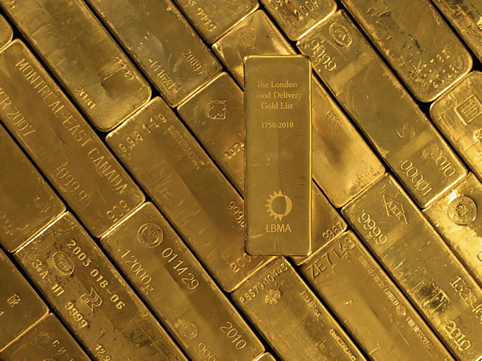 (Image caption) London Good Delivery gold bars with serial numbers, purity, and refiner markings. The FCA's core focus is on whether a token corresponds to a specific, verifiable, claimable, and enforceable property right in bankruptcy proceedings.
The UK has not yet opened the door to regulatory exemptions for gold tokens.
There is a misleading claim circulating in the market that the UK is "exempting gold tokens from fund regulation." Current policy discussions have not yet resulted in such an arrangement.
The FCA has made it clear that none of the paths listed in the document are formal proposals. Options it is considering include: observing market developments and issuing guidelines to clarify existing rules and regulatory expectations; establishing an objective classification of "eligible gold tokens"; studying whether targeted rule or legislative adjustments are needed; and assessing whether a dedicated regime is necessary for gold tokens, and even more broadly, for tokenized commodities.
Regarding the CIS and AIF issues, the FCA did mention that it could work with the UK Treasury to explore targeted exclusions or exemptions for specific gold token products or related market infrastructure. However, this remains a policy possibility awaiting market feedback before a decision is made, and is not yet a regulatory arrangement in effect.
The FCA also draws a clear line: any broader exclusion cannot allow products that are essentially fund-like to evade fund regulation simply by using tokens. Even if a type of token ultimately does not fall under CIS or AIF, the issuer must still assess the applicability of other regulatory regimes on a case-by-case basis, including the definition of qualifying cryptoasset in the UK Regulated Activities Rules.
For large financial institutions, clear regulation never equates to fewer restrictions. It means being able to determine whether assets can be included on the balance sheet, who is responsible for custody, how collateral rights are enforced, whether assets can be recovered in the event of bankruptcy, and how regulatory capital should be calculated. Only when these questions have actionable answers can tokens have a chance to enter truly large financial markets.
PAXG has shown the market that physical support does not equate to all problems being solved.
Products that digitize gold bars already exist in the market. Paxos' current official documents and product terms state that each PAXG is equivalent to one troy ounce of London Good Delivery gold, representing partial ownership of the associated gold bar held in segregated custody for the benefit of the PAXG holder. These products present the appeal of gold tokens: investors do not need to buy a complete gold bar, but can still hold a smaller unit linked to physical gold; tokens can also circulate more efficiently in digital networks.
However, "physical backing" in the product name never replaces the terms and conditions themselves. Investors must still read the gold allocation arrangements, vault and custody arrangements, redemption conditions, fees, minimum investment threshold, applicable law, and dispute resolution mechanisms. The above reflects Paxos' product terms and company statements and does not constitute a separate legal determination of the rights of holders or the outcome of bankruptcy in any jurisdiction.
In December 2025, the U.S. Office of the Comptroller of the Currency conditionally approved Paxos' transformation from a state trust company to a national trust bank. This regulatory development helps the market understand its institutional status, but it does not change a fundamental principle: the rights that token holders ultimately possess still depend on the product's legal documents, asset arrangements, and applicable jurisdiction, not on the name of the token itself.
When the market is calm, prices are rising, and redemptions are going smoothly, the difference between ownership and claim may not be obvious. The real test of a product's structure is whether, after one of the issuer, custodian, treasury, or technology provider fails, the seemingly clear rights can still be confirmed and realized.
 (Image caption) Street scene and traditional market buildings in the City of London. Discussions about gold tokens in the UK wholesale market aim to integrate existing gold infrastructure with more efficient collateral, buyback, and simultaneous delivery arrangements, provided that ownership precedes transaction speed.
Bankruptcy immediately reveals the difference between "owning" and "being promised".
In a normal market, as the price of gold rises, the price of tokens fluctuates accordingly, and buying and selling can be completed; investors easily feel as if they are holding gold. However, when the issuer, custodian, vault, technology provider, or liquidity provider encounters problems, structural differences can be rapidly magnified.
If the gold legally belongs to the token holder and is effectively segregated from the issuer's own assets, it should theoretically not become a pool of assets for the issuer's general creditors. If the token is merely a payment or delivery commitment made by the issuer, the holder faces the issuer's credit risk. If the custodian or vault encounters problems, even if the on-chain tokens still exist, physical redemption, confirmation of rights, and asset disposal may be hindered.
The FCA therefore requires the market to handle orderly liquidation and holder protection in the event of potential bankruptcy. The matters listed in the document include the legal nature of holder rights, gold quality, custody, vault and asset segregation, issuance and redemption, physical and on-chain record verification, independent auditing, valuation, liquidity, operational resilience, cybersecurity, financial crime control, and information disclosure.
These issues lack dazzling technological narratives, yet they form the most basic foundation of the financial system. Whether an asset can be accepted by banks, insurance companies, funds, and pension institutions ultimately depends on who can control the asset, dispose of the asset, and bear the losses when a crisis occurs, rather than how fast smart contracts run in normal times.
If gold is used as collateral, the title must precede the speed of the transaction.
The FCA's discussion of gold tokens at this time is also related to the broader context of the UK's push for tokenization of wholesale financial markets. Gold is an asset widely accepted in existing financial markets and can also be used as collateral; however, physical transfers, reconciliation between different ledgers, and separate settlements of the metal and cash can still introduce time, operational, and reconciliation risks.
The FCA believes that, provided there is legal certainty and risk control in place, gold tokens can help institutions more efficiently utilize gold assets that were previously difficult to access in securities lending, repurchase transactions, and derivatives trading. The document also mentions that gold tokens and dollar tokens could explore simultaneous delivery versus payment arrangements.
However, collateral is not a typical commodity. The party accepting gold tokens as collateral must be able to legally gain control and realize the assets in the event of a counterparty's default. Therefore, it must confirm whether the holder's rights are enforceable, how the tokens are handled in bankruptcy proceedings, when on-chain transfers are final, and how on-chain records are consistent with vault records.
Financial institutions value speed, but speed only truly has financial significance when property rights are clear. Transactions can be completed in seconds; if it is legally impossible to confirm what was delivered or who truly gained control, so-called efficiency merely accumulates future disputes within the system.
 (Image caption) A diagram showing a single gold bar in the vault alongside a weighted list and escrow ledger. The article emphasizes that if the on-chain record differs from the vault ledger, the final legal validity of that record determines whether the investor holds a gold right or an undefined commitment.
For ordinary investors, the questions can actually be asked very directly.
When comparing gold ETFs and gold tokens, the FCA pointed out that gold ETFs have relatively mature disclosure and regulatory arrangements, while the practices in the gold token market are still inconsistent. If the product is aimed at consumers, holders should at least understand: how the underlying gold is stored, whether it is insured, whether it can be redeemed, what kind of regulation it is subject to, what the fees and minimum thresholds are, and what the consequences might be if the issuer, custodian, vault, technology provider, or intermediary fails.
For ordinary investors, due diligence can be summarized into five questions:
1. Does my token represent gold, or is someone promising to deliver gold in the future?
2. Does the gold actually exist? Who is holding it? And is it separate from the company's own assets?
3. Can I redeem my funds? What are the redemption conditions, minimum requirements, and fees?
4. If the issuer goes bankrupt, do I have an enforceable right to the underlying gold?
5. If there is a conflict between the on-chain ledger and the vault ledger, which record will be legally recognized?
If these questions are not clearly answered, investors may not be buying a digital version of gold, but rather a layer of credit risk packaged with new technology and whose rights boundaries remain unclear.
Gold being put on the blockchain ultimately returns to property rights.
Gold is one of the most suitable assets for observing RWA (Revenue Investing). It doesn't require corporate earnings forecasts, growth stories that management must deliver, or complex cash flow models. The weight, purity, and serial number of a gold bar can be verified, its storage location can be recorded, and its custody arrangements can be audited.
Even so, when a gold bar is divided into tokens, the issues quickly become complex: Who owns it? Who holds it in custody? Who has the right to change its configuration? Who is responsible for the on-chain and off-chain records? Who can demand redemption? Who bears the risk in the event of system failure? If the company enters bankruptcy proceedings, who has priority in recovering the assets?
The most noteworthy aspect of the FCA's consultation is not its eagerness to create a lenient new name for the token, but rather its demand that the market first answer: what legal rights does this token actually represent?
This is an unavoidable hurdle for RWA as it transitions from a crypto narrative to a financial institution. Future investors may not need to know which shelf a gold bar is located on in a London vault, but the financial institution must know; regardless of whether the market is functioning normally, the issuer has failed, investors are demanding redemptions, or the courts need to make a ruling, the institution must be able to answer the same question: Who owns the gold behind that token?
Disclaimer
This article is for news research and informational purposes only and does not constitute investment, legal, or trading advice. The UK regulatory arrangements mentioned in this article are still in the consultation and research stage. Readers should refer to the official documents subsequently issued by the FCA, the UK Treasury, and other competent authorities, as well as the latest terms of the relevant products.