

Changpeng Zhao and He Yi: How was Binance created?
Let's go back to 2017 and see how a trading system, BNB, and the first batch of users formed Binance's initial market.
Binance launched in July 2017, and within 45 days, it reported over 120,000 registered users. This growth was fueled by over a decade of experience in trading systems, the capital and users accumulated through BNB and ICOs, and the rapid expansion of the crypto market at a time when international regulations had not yet reached a consensus. Nine years later, revisiting the white paper, concurrent announcements, on-chain investigations, and legal documents, it's not just about how Binance quickly became the world's largest trading platform, but also about what a company initially relied on to build trust, and how that trust was gradually transferred to institutional mechanisms after achieving scale.
 (Image caption) Zhao Changpeng and He Yi pose for a photo. In its early stages, Binance was driven by multiple functions, including engineering, product, marketing, operations, and community, which formed its early transaction platform and user system.
In 45 days, a new exchange has already gained 120,000 registered users.
On July 14, 2017, Binance officially opened for trading.
Forty-five days later, the company announced that it had reached 122,729 registered users and its team had grown to 78 people, with approximately 4,000 to 6,000 new accounts still joining daily. Binance also stated at the time that over 60,000 users had at least one traceable transaction per day, including logins, deposits, withdrawals, order placements, and trades; according to CoinMarketCap data cited by the company, on August 27, its 24-hour trading volume ranked 12th globally.
These are Binance's own statistics from the same period, not third-party audited data, but they preserve a rare snapshot of a company's early days. June 14th, project launched; June 26th, ICO began; July 3rd, ICO ended; July 14th, exchange officially opened. From the team's decision to create Binance to the first transactions actually occurring, only one month passed.
Looking back today, the number 120,000 itself isn't that important. What's more important is answering the question: why would anyone be willing to transfer Bitcoin, Ethereum, and other potentially lost assets to a platform with only 45 days of trading history?
Back then, Binance didn't have over 300 million registered users as it does today, nor did it have separate legal entities under the Abu Dhabi Global Markets' oversight, handling trading, clearing, custody, and brokerage responsibilities. It hadn't even completed a full quarter of operation.
In hindsight, this history can easily be pieced together into a smooth entrepreneurial story: Zhao Changpeng understands technology, He Yi understands the market, the two encountered the Crypto bull market in 2017, and created the world's largest exchange in half a year.
The original data from 2017 shows a more complex formation process.
A team that has experience with financial trading systems already exists; BNB entered the fundraising and user structure before the exchange officially opened; ICOs bring not only funds, but also the first batch of accounts and assets waiting to be traded; new tokens are emerging in large numbers, while regulators around the world are still figuring out how to understand a new market that operates 24/7, cross-border, and is primarily settled in crypto assets.
The importance of Zhao Changpeng and He Yi needs to be understood within this framework.
Binance was pieced together piece by piece during this time window.
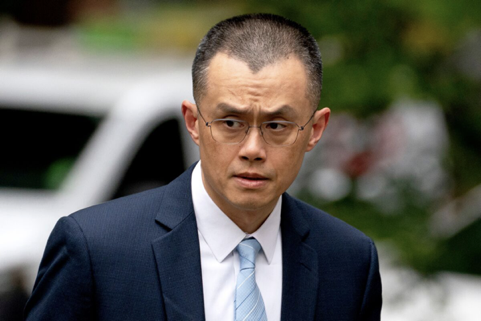 (Image caption) Changpeng Zhao, one of the main founders of Binance, previously worked extensively in financial trading systems and crypto asset infrastructure. While speed helped a startup survive, it couldn't automatically address the anti-money laundering, custody, and accountability needs of hundreds of millions of accounts.
The team had been developing trading systems for many years before the exchange opened.
Changpeng Zhao (CZ)'s early life is often portrayed as a personal rags-to-riches story: born in China, raised in Canada, studying computer science, getting involved with Bitcoin, and finally founding Binance. However, a more valuable perspective for understanding an exchange is another career path—what trading systems he worked on before 2017.
Zhao Changpeng previously worked in Tokyo on securities trading software. From 2001 to 2005, he worked at Bloomberg Tradebook. Afterward, he founded Fusion Systems in Shanghai, developing high-frequency and low-latency trading systems. After entering the crypto industry, he participated in Blockchain.info and OKCoin, and later founded BijieTech, providing systems to other trading platforms.
The team list left in Binance's early white paper makes this experience even more concrete.
Roger Wang is in charge of technology; James Hofbauer is in charge of system architecture; Paul Jankunas is involved in the matching engine engineering; Allan Yan is in charge of product; and Sunny Li is in charge of operations. Many core members have previously worked in traditional finance, Fusion Systems, or BijieTech.
Therefore, Binance in June 2017 didn't start with an exchange concept and then hire a group of engineers to study how matching, accounts, APIs, and wallets should work. It entered the market with a team that already had shared work experience and was familiar with financial trading systems.
The white paper claimed at the time that Binance's matching engine could process 1.4 million orders per second. However, no independent stress tests from 2017 were publicly available to verify this performance, making it more suitable as a technical claim made by the startup team at the time than as a figure that has been verified by a third party.
In contrast, the product launch schedule was more specific. The exchange opened on July 14, the API was launched on July 19, KYC identity verification was added at the end of July, the mobile version was launched on August 11, and language interfaces and new trading assets were subsequently added.
The fact that a new exchange can complete such intensive product iterations within a few weeks is hard to completely separate from the team's previous engineering experience.
To this day, there remains an interesting unanswered question about the company's history: how much of Binance's first version of the system continued BijieTech's existing technology and architecture, and how much was redeveloped after June 2017?
This question requires answers from Zhao Changpeng and the earliest engineers.
What can be confirmed at present is that when Binance started operating, the people behind it were not a group of people who were new to financial trading systems.
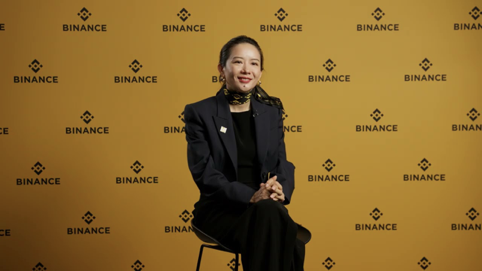 (Image caption) He Yi sits in front of the yellow Binance logo backdrop. In the early white paper, she was listed in the investor and advisor section, and later became a co-founder and co-CEO; marketing, customer service, branding, and community are the other half of the system that makes it marketable, in addition to the matching engine.
He Yi was already mentioned in earlier documents, but her position back then was different from today.
Yi He's place in Binance's corporate history requires a separation of her current title from the original documents from 2017.
Today, Binance officially listed He Yi as a co-founder. In December 2025, she will further assume the role of co-CEO, leading the company alongside Richard Teng. Over the years, her involvement has spanned business, brand, customer service, talent, product, and user community.
Before joining Binance, He Yi had already been involved in the cryptocurrency trading and Chinese internet industry. She had participated in the early development of OKCoin, and it was during OKCoin that she began working with Zhao Changpeng. After leaving OKCoin, she joined Yixia Technology, where she was responsible for branding and marketing. A few years later, their career paths intersected again at Binance.
The existing Whitepaper V1.1 leaves a detail that is rarely mentioned today. He Yi is not listed in the core executive team list that includes Zhao Changpeng, Roger Wang, James Hofbauer, etc., but is listed in the "Investors & Advisors" section, with her identity listed as CMO of Yixia Technology and former co-founder of OKCoin.
This document at least shows that when this version of the white paper was created, He Yi was already in Binance's earliest network of relationships, but the role presented in the document at that time was different from that of the co-founder and co-CEO today.
When He Yi herself later talked about 2017, she also left a timeline that needs to be carefully understood. She referred to September 2017 as her first month joining Binance, and recalled that the founding team, including herself, had been in Shanghai that summer.
There is no need to fabricate a "controversy over the co-founder's identity" with these materials.
Starting a company is not necessarily an event that can be pinpointed to a specific day. Someone writes the initial code, someone participates in the first round of capital and relationships, and someone joins later to undertake core work that can change the shape of the company; formal positions, equity, management rights, and external titles may also gradually take shape at different points in time.
Publicly available information is insufficient to accurately answer the questions of when He Yi officially joined the company, how many shares she initially held, what her first position was, and how much the user growth, trading depth, and listing pace changed before and after her joining.
These questions should be answered by earlier company documents, interviews with early employees and those involved.
However, the capabilities required for an exchange to transform from a system into a marketplace go far beyond simply writing a matching engine. The initial buyers, sellers, projects, customer service, communities, and brands must all be brought together in one place; someone must be there to answer user withdrawal questions, project teams must be willing to put their assets on the platform, and communities must be willing to stay even when the system malfunctions—all of these directly impact liquidity and trust.
He Yi's long-term responsibilities at Binance have focused precisely on these areas.
If more original records from 2017 can be obtained in the future, what she truly deserves to be restored is not just a later-formed position, but how she actually participated in the earliest formation of a trading market.
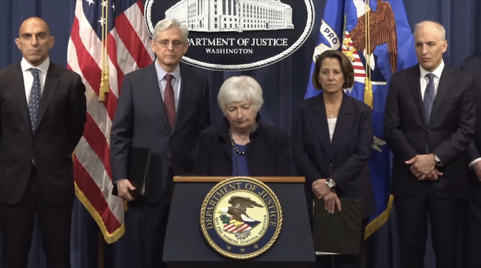 (Image caption) According to the file description, this is a press conference held by the U.S. government in November 2023 regarding Binance and Changpeng Zhao's plea of guilty. Binance pleaded guilty to conspiracy to violate the Bank Secrecy Act and to operating as an unregistered money transfer business, as well as to violating the International Emergency Economic Powers Act, agreeing to pay more than $4.3 billion and hire an independent compliance monitor.
BNB entered the market first, and the exchange opened later.
Binance differs significantly from many internet companies: it didn't run its product for years before seeking a business model. From its inception, BNB integrated financing, user incentives, and platform usage into the same structure.
The initial white paper set the total supply of BNB at 200 million, of which 100 million (50%) were allocated to the ICO; 80 million (40%) to the founding team; and 20 million (10%) to angel investors. The team's share was originally planned to be allocated in installments.
Another set of figures left in the white paper is even more noteworthy. 35% of the funds raised are planned for platform construction, system upgrades, recruitment, and development; 50% for branding, marketing, promotion, education, and advertising; and the remaining 15% is reserved as an emergency reserve.
A company that later became known for its technological speed and liquidity initially planned to invest half of its raised funds in marketing and branding. This figure itself illustrates how the founding team understood the exchange business: once the matching system is completed, the market will not automatically appear.
A transaction requires both buyers and sellers; it needs projects, assets, orders, customer service and brand, as well as the first batch of people willing to transfer their money.
In an article published on July 3, 2017, right after the ICO ended, Zhao Changpeng put this idea more directly. He stated that the ICO brought Binance not only funds, but also about 20,000 registered "seed users," some of whom had deposited their assets into the website before the exchange officially opened, awaiting trading.
For a new market that has not yet established normal trading volume, these early entrants and their assets already possess market value. They are likely to be among the first buy and sell orders, and they also reduce the risk of having almost no liquidity when the exchange opens.
Therefore, Binance's ICO played two roles in the company formation stage: it provided start-up capital for the company and also gathered people and assets in advance for a market that had not yet started normal trading.
BNB extends this relationship further into the product itself.
It was originally an ERC-20 token on Ethereum. As initially designed, users would pay Binance transaction fees in BNB, enjoying a 50% discount in the first year, with the discount gradually decreasing thereafter. The white paper also outlined a quarterly buyback and burn program, aiming to gradually reduce the initial supply of 200 million tokens to 100 million.
In October 2017, Binance completed its first quarterly BNB burn, totaling 986,000 BNB. The BNB mechanism has been modified several times since then, and the 80 million BNB initially allocated by the team were abandoned by the company in 2019 and included in the burn plan. Subsequent quarterly burns have switched to a new Auto-Burn formula.
Those changes that occurred later should not be brought back to 2017 to replace the original design.
The 2017 arrangement was clear enough: the company issued BNB to raise funds, users could reduce transaction fees by holding or using BNB, BNB was traded on Binance's own market, and the founding team received 40% of the initial supply according to the white paper.
Financing, product usage, user benefits, and the economic interests of the founding team thus became intertwined at the company's inception.
For the startup team at the time, this was a cold start mechanism with strong commercial appeal.
For the later large-scale financial platforms, it left another long-term question: When a company participates in the creation of a token and operates the most important trading venue for that token, what distance should be maintained between the interests of the platform itself, the interests of token holders, and market governance?
In 2017, Binance's first priority is to get the market moving.
This systemic problem only gradually became unavoidable later on.
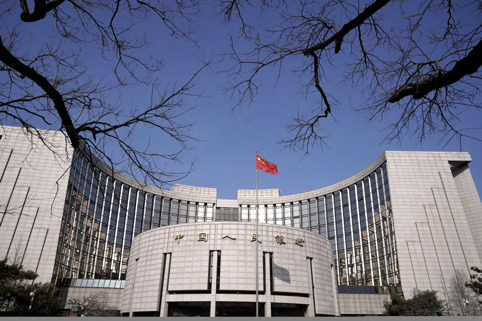 (Image caption) On September 4, 2017, the People's Bank of China and seven other departments issued the "Announcement on Preventing Risks of Token Issuance Financing", requiring the cessation of related token financing activities and imposing restrictions on the exchange, trading and information intermediary business of trading platforms.
Fifteen million US dollars is a sum of money that still doesn't quite add up in this entrepreneurial history.
The BNB ICO also left behind a set of figures that deserve the most restraint in Binance's history.
In an article published on July 3, 2017, Changpeng Zhao stated that the team took only 16 days from deciding to conduct the ICO to completing preparations and fundraising, acquiring approximately $15 million worth of crypto assets. Binance has used this figure for many years since.
A few days later, the company announced that the 100 million BNB from the ICO had been issued, with 20 million processed through btc9.com , 20 million through RenRenICO, and the remaining 60 million through Binance.com .
However, "issuing 100 million tokens" and "all 100 million tokens were actually subscribed to by unrelated public investors" are not exactly the same concept.
In 2023, Forbes, along with Gray Wolf Analytics and Inca Digital, reanalyzed early on-chain wallet flows and presented alternative results. The investigation concluded that at most approximately 10.78 million BNB could be identified through their flow to publicly disclosed ICO participants, raising questions about whether the actual amount raised reached $15 million. The study also questioned the number of tokens received by addresses associated with angel investors.
Binance did not provide a substantive response to the detailed verification questions raised by Forbes.
On-chain analytics is not a naturally complete register of shareholders. If some ICO participants' BNB is centrally held by the platform, and their individual beneficial interests are only recorded in the exchange's internal ledger and not immediately distributed to their respective on-chain addresses, the true number of subscriptions may be underestimated based solely on the public blockchain.
Therefore, the currently available public information is insufficient to complete the final reconciliation for either party.
What is certain is that Changpeng Zhao and Binance publicly stated in 2017 that the ICO raised approximately $15 million worth of assets; however, on-chain investigations years later raised significant questions about the public sales scale and the actual amount raised, and the market still lacks a complete set of original records that can fully reconcile the two accounts.
This disagreement did not diminish Binance's entrepreneurial history; on the contrary, it made the funding environment in 2017 clearer.
A global ICO back then could be completed in weeks, without the underwriting ledgers, investor allocation lists, audited financial statements, and legal holder registrations of today's public securities offerings. Years later, people still need to rely on early wallets, on-chain forensics, and corporate memoirs to try to reconstruct how the money actually flowed.
That was part of the Crypto Market Speed in 2017.
This was also a part that the system had to fill later.
The market only truly began to take shape after the first group of people transferred their assets in.
Binance stated that it had 9,000 registered accounts on the first day of its website launch on June 24, 2017; when the ICO ended on July 3, Changpeng Zhao said it had about 20,000 seed users; and by August 27, the company announced that it had more than 120,000 registered accounts.
The numbers remain.
Those people's voices are rarely preserved.
The platform did offer some very specific attractions at the time. The API was open early, the company offered a month of zero transaction fees, BNB could reduce fees, and new tokens were added to the platform quickly. For traders in 2017, lower fees, more trading pairs, an easier-to-access API, and the constant emergence of new assets during the bull market could all be reasons to move funds to Binance.
The founder's industry experience can also influence judgment. Some people know Changpeng Zhao, some know He Yi; some are recommended by friends, and some are simply willing to take on the additional platform risk of a new exchange in that year of highly euphoric market sentiment.
Public documents can document what Binance has done, but they cannot explain its decisions for its users.
If this study ultimately manages to identify the earliest group of ordinary users and market makers from 2017, the most worthwhile question to ask might only be one:
When you first transferred Bitcoin or Ether to Binance, why were you willing to trust it?
The answer may not be grand.
It might just be that the API is easier to use, withdrawals are faster, a certain token is unavailable elsewhere, or a friend has already started using it.
But it is precisely these specific and ordinary reasons that ultimately constitute the earliest trust in a financial market.
Exchanges also need to address another issue: a large number of accounts does not equate to sufficient market depth.
If there are too few buy and sell orders, the 120,000 registered users could also face huge spreads and slippage. Binance's intensive expansion of trading assets, opening of its API, and reduction of fees during those months likely drove more orders into the market; with improved liquidity, project teams and new traders were more willing to join the same platform.
Later, people often used the term "liquidity flywheel" to explain this growth.
The business logic is sound, but historical research still lacks a stronger set of evidence: order book depth, bid-ask spreads, daily trading volume of major trading pairs, the first batch of market makers in the second half of 2017, and comparisons with competing platforms such as Bitfinex, Bittrex, Poloniex, and Huobi during the same period.
Only if these materials can be rediscovered will the process of Binance transforming from a product into a market be truly complete.
 (Image caption) Binance's quarterly burn records for BNB, with the first burn involving 986,000 BNB. BNB's early supply, buyback, and burn mechanisms have been adjusted several times since then.
On September 4th, the exchange had only been online for fifty-two days.
On September 4, 2017, the People's Bank of China, the Cyberspace Administration of China, the Ministry of Industry and Information Technology, the State Administration for Industry and Commerce, the China Banking Regulatory Commission, the China Securities Regulatory Commission, and the China Insurance Regulatory Commission jointly issued the "Announcement on Preventing Risks of Token Issuance Financing".
The announcement defined token issuance financing as an unapproved and illegal public financing activity, demanding that all types of ICOs immediately cease and be liquidated. It also stipulated that so-called token financing trading platforms are prohibited from engaging in the exchange of legal tender and tokens or "virtual currencies," from buying or selling related assets as a central counterparty, and from providing pricing, information intermediary, or other services. In mid-September, local authorities further implemented measures to halt trading on domestic trading platforms.
For Binance, this policy change occurred almost simultaneously with the company's founding.
On September 4th, Binance publicly stated that it was studying how to comply with new Chinese regulations, and claimed that its so-called "western community" already accounted for over 81% of its user base. While this classification lacks a publicly available methodology and third-party verification, it at least leaves an important record of the time: prior to the dramatic changes in Chinese regulatory policies, Binance already envisioned itself as a platform targeting multiple countries and language markets.
Subsequently, the company announced that it would cease providing related services to users in China, while its international business would continue to operate.
Therefore, regulatory changes in China did not lead to Binance's internationalization. An English interface, multilingual products, pure cryptocurrency trading, and a global ICO were already part of the early design.
The policy changes the company's options and also changes the time frame.
Binance has lost its path to continue developing with China as one of its main markets, and the team has had to shift its focus more quickly to other jurisdictions, other user groups, and new operating locations.
The long company history that followed, involving Tokyo, Hong Kong, Malta, and the question of "where exactly the headquarters is," gradually unfolded from there.
But in September 2017, the problems the team faced were not as abstract as they would later become.
A company that has only been officially trading for 52 days needs to survive first and foremost.
The $6 million refund left behind a legacy of corporate culture, but also a history that has yet to be fully reconciled.
Binance later recounted an incident that occurred in September 2017 on several occasions.
According to Zhao Changpeng's recollection years later, after the policy changes in China, several ICO projects involving Binance experienced refund shortfalls. The relevant project teams were unable to compensate investors at the original prices, and the company ultimately decided to bear approximately $6 million itself. He later stated that this expenditure represented a significant proportion of Binance's funds at the time.
Concurrent information confirms part of the story. On September 4, 2017, Binance announced that, at the request of the Super Skynet project team, the platform would return the corresponding ETH to investors at the original ICO exchange rate.
However, there are no complete accounting books available in the public documents to independently verify all the items mentioned later and the total amount of $6 million. Therefore, this figure should still be retained as the historical account of Changpeng Zhao and Binance.
This does not prevent us from understanding the decisions made at the time.
If a company established less than two months ago faces losses in a market where there are no mature rules for handling such situations, the founders and core management can quickly decide to use company funds to compensate users.
Such decisions can help a young company build credibility and gradually form the "Users First" principle that Binance has repeatedly emphasized since then.
However, the same decision-making approach will not be applicable forever as the company grows larger.
A temporary refund of a few million dollars can be quickly processed based on the founder's judgment; when a decision involves assets in tens or even hundreds of millions of accounts, what a company needs are policies, authorizations, asset boundaries, approval procedures, and a chain of responsibility that can be traced back afterward.
This is not applying today's system to the trial of a 2017 startup.
It simply illustrates that the size of a company can change the form of trust required.
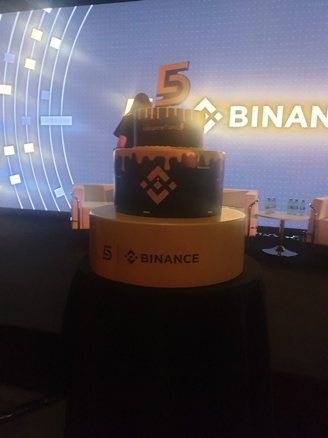 (Image caption) According to the archive, this is a celebratory cake made in Paris, France on July 8, 2022, to mark Binance's fifth anniversary. Binance launched on July 14, 2017, and has since expanded its business and community activities to Europe and other regions; the company claims that its global registered users will surpass 300 million by 2025, but a registered account does not equate to an active trader.
"180 days" is easy to remember; the market record that can be confirmed is less than a year.
Binance still summarizes its early history as follows: launched in July 2017, and became the world's largest digital asset exchange within 180 days.
This sentence is easy to remember and captures the company's growth rate.
If you were to ask exactly which day the first ascent took place, the records wouldn't be so neat.
On August 27, 2017, the company's own data still ranked Binance 12th in global trading volume. Zhao Changpeng recalled years later that he first learned on December 18, 2017, that Binance had become the world's largest exchange in terms of trading volume, but there was a lack of sufficient third-party rankings in the existing public data to confirm this date without dispute.
International financial media outlets provide a more reliable timeframe. By early 2018, Binance had been described as the world's largest cryptocurrency exchange; in March of the same year, Bloomberg again reported that it had become the world's largest digital asset trading platform by transaction value in less than eight months.
Therefore, for company history, there is no need to impose a precise date on certainty beyond the evidence itself.
The confirmed results are already astonishing enough:
Binance has entered the heart of the global crypto market in less than a year since it officially began trading.
This makes the real questions that need to be answered clearer. Such rapid market formation is not the result of any single factor, such as the 1.4 million transaction matching capacity, BNB fee discounts, the market power of any one individual, the 2017 bull market, or regulatory time lag.
The accumulation of trading systems, the funds and seed users brought by ICOs, BNB's design of linking transaction fees with platform usage, the rapid increase in assets and APIs, strong trading demand, and the global regulatory market that has not yet formed common boundaries all played a role within a few months.
This is a product of a special era.
It is also the result of a team's execution.
If either one were missing, history might have been different.
Six years later, the early adopters began to confront the responsibilities of financial institutions.
On November 21, 2023, Changpeng Zhao pleaded guilty in a U.S. federal court to violating the Bank Secrecy Act, specifically concerning Binance's failure to establish and maintain an effective anti-money laundering program, and resigned as CEO. Binance's plea was broader, including charges under the Bank Secrecy Act, unregistered money transfer operations, and the International Emergency Economic Powers Act, and the company agreed to pay over $4.3 billion.
These legal facts cannot be reversed to prove that the rapid product iteration, cross-border operations, pure Crypto transaction structure, or centralized decision-making by the founders in 2017 necessarily led to criminal liability six years later.
To establish such a causal relationship, complete internal compliance records, management instructions, personnel decisions, and regulatory communications are required.
Company history can raise more limited questions, but it is also more worthwhile to leave behind: At what scale does the most effective way of working in a startup need to be changed?
A team of dozens of people can modify a product in a single day, quickly decide on refunds when the market suddenly changes, or shift business focus to other regions after policies tighten in one country. These capabilities helped Binance survive in 2017 and rapidly gain market share.
When a platform begins to process assets from millions, tens of millions, or even hundreds of millions of accounts, speed comes alongside another set of requirements—identity verification, anti-money laundering, sanctions, custody, conflicts of interest, regulatory capital, and clear legal liability.
Speed still has value.
However, at this stage, the financial market's requirements for trust have changed.
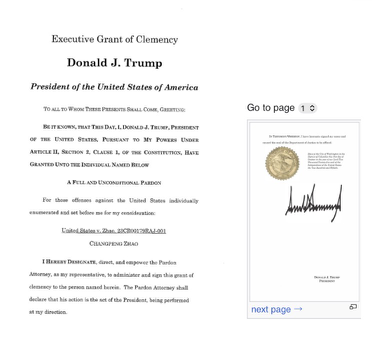 (Image caption) The first page of the pardon order issued by US President Trump for Changpeng Zhao. According to the document, the document was signed on October 21, 2025, and the White House announced the pardon on October 23. The pardon is for Changpeng Zhao personally.
Nine years later, three licensed entities have emerged behind the same Binance brand.
By the end of 2025, Binance announced that it had surpassed 300 million registered users worldwide. This 300 million refers to the company's registered users and does not equate to 300 million daily or monthly active traders.
On January 5, 2026, Binance's global platform officially switched to the Abu Dhabi Global Markets regulatory framework.
Nest Exchange Limited handles exchange-traded transactions; Nest Clearing and Custody Limited handles clearing, settlement, central counterparty, and primary digital asset custody; and Nest Trading Limited handles some over-the-counter, proprietary, and brokerage services. Users continue to log into the same Binance account, and balances, orders, and most daily operations are designed to remain continuous, but the contractual relationships and regulatory responsibilities for related services are now assumed by different legal entities.
For ordinary users, the brand on the screen remains unchanged.
The change is happening behind the screen.
The questions of who enters into contracts with users, who safeguards assets, who clears transactions, and which legal entity is responsible for which regulatory obligation are becoming clearer.
Putting this image side-by-side with one from 2017 reveals two very different stages in the life cycle of a financial platform.
The earliest teams worked hard to put matching, wallets, tokens, APIs, customer service, branding, users, and liquidity into the same system as quickly as possible, because the formation of a market depends on whether these links operate simultaneously.
Nine years later, the company began to separate some of these functions again because a platform that had reached a global scale needed to have clear legal entities and boundaries of responsibility for trading, custody, clearing, and brokerage.
The question that needs to be answered in 2017 is whether we can create a market.
The question that needs to be answered in 2026 is: what kind of system should support an already large market?
This part will be explored in later articles in this series.
 (Image caption) Traders track the crypto asset market from their New York office. The story of Changpeng Zhao and Binance is far more than just the growth of a single platform; it has also influenced the global crypto market, stablecoins, and the readjustment of regulatory order.
Who created Binance?
If we must answer the question posed by the title of this article, the most distorted approach would be to attribute all the credit solely to Zhao Changpeng and He Yi.
Binance's own company documents today list Heina Chen as a co-founder in addition to the two founders; the team list left in early 2017 documents also includes Roger Wang, James Hofbauer, Paul Jankunas, Allan Yan, Sunny Li, and other engineering, product, and operations personnel.
On the next layer out, there are the initial angel investors, project teams, market makers, and the first batch of users who were willing to transfer their assets to the platform even though the company had no years of operating record or today's licensing structure.
Zhao Changpeng brought with him years of experience in trading systems and cryptocurrency infrastructure to Binance, as well as a technical team with whom he already had a working history. He Yi's subsequent long-term involvement spanned branding, users, customer service, business, talent, and product development; her previous experience at OKCoin and Yixia Technology was interconnected with these roles. As for the specific decisions she made in the company's initial months, when she acquired what equity and formal management control, the publicly available company history still has gaps that need to be filled in by original documents and the individuals involved.
BNB provides another layer of structure for capital and user incentives. ICOs raise funds for the company and also bring in a group of potential traders in advance; the Crypto bull market in 2017 provided huge trading demand; China's September policy changed the company's geographical choices; and the period when global regulations had not yet formed common boundaries left a window of opportunity for cross-border trading platforms that has become increasingly difficult to replicate since then.
Therefore, Binance is more like a combination than a single invention by one person.
In 2017, the team had to accomplish two difficult things simultaneously: a trading system had to be truly operational, and enough people had to be willing to join the system and put their assets into it.
The former relies on code, servers, matchmaking, and years of engineering experience; the latter relies on products, liquidity, services, brand, and trust that is difficult to quantify in financial statements.
Two things happened simultaneously over a few months.
Nine years later, studying Zhao Changpeng and He Yi is no longer just about redistributing who contributed more to their success. More importantly, it reveals what a global financial platform initially relied on to gain people's trust, and how, as the company grew to hundreds of millions of registered users, that trust began to move beyond personal reputation and the founder's speed, and entered into licensing, legal entity, trusteeship, liquidation, governance, and accountability.
In 2017, Binance first answered a startup question: Is it possible to create a market in a very short time?
Today, it needs to answer a different question.
What does Binance want to become after reaching 300 million users?
This is also the topic of the next article in this series.
The formation of Binance cannot be explained by a single founder, a single technology, or a single bull market. Years of accumulated experience in the trading system, the early design of BNB, the capital and seed users brought by the ICO, the rapidly increasing demand for trading, He Yi and the early team's ability to build the market, and the still highly fragmented global regulatory environment in 2017, together constituted a brief but unique window of opportunity.
Revisiting this history today is valuable not only for explaining why a single cryptocurrency company could succeed so quickly, but also for providing a more enduring financial model: how quickly markets can form before regulations catch up; and how, once this market eventually supports the transactions and assets of hundreds of millions of registered users, the tasks that initially relied on human judgment, speed, and trust must be gradually handed over to rules.
Disclaimer
This article is for news research, institutional analysis, and informational reference only, and does not constitute investment, securities, legal, tax, or trading advice. Some historical data comes from company documents, party reviews, and third-party on-chain analysis; where there are discrepancies in the data or where independent verification has not been performed, all statements are made based on the actual scope of publicly available evidence.