

Windward Bio files for US IPO: What will its publicly traded shareholders buy?
Both drug candidates are licensed from China and have not yet generated product revenue; clinical progress, licensing payments, and subsequent financing will determine how much value shareholders can retain.
Swiss biotech company Windward Bio has filed for a US IPO. Both of its clinical drug candidates are licensed from Chinese pharmaceutical companies, and the company currently has no product revenue. Investors will acquire shares in the holding company, and their returns will depend on the successful development of the drugs, as well as milestone payments, royalties, and subsequent financing. Key data is expected to be released in 2027 and 2029, while the offering price and the duration of funding after the IPO are yet to be disclosed. The valuation of this IPO will need to balance clinical prospects with the potential returns for ordinary shareholders.
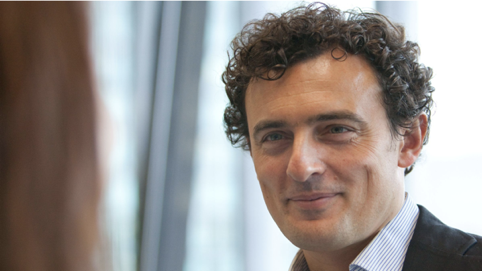 (Image caption) Luca Santarelli, founder and CEO of Windward Bio, was a former executive at Roche and later founded Therachon and VectivBio, which were acquired by Pfizer and Ironwood, respectively.
The application has been submitted; the offering price and funding period are yet to be disclosed.
On October 23, 2026, Windward Bio Group AG filed an F-1 registration statement with the U.S. Securities and Exchange Commission, applying to list on the Nasdaq Global Market under the ticker symbol "WWB". The Basel, Switzerland-based company is advancing two drug candidates that have already obtained overseas licenses, but the initial filing has not yet included the number of shares to be offered, the price range, the net proceeds, or the funding period after the offering. Its assets and contracts are already available for public market research; a complete equity pricing assessment awaits further disclosure.
The company was registered in July 2024 and commenced operations in January 2025. The underwriters for this offering are Jefferies, TD Cowen, Piper Sandler, and UBS Investment Bank. The filing of the registration statement initiated the public offering process. Whether the listing application will be approved, whether the offering will be completed, and at what price investors will subscribe remain uncertain.
By subscribing to Windward shares, one acquires a shareholder interest in a Swiss holding company. The rights to develop and commercialize the drug candidates are held by companies within the group under licensing agreements; publicly traded shareholders do not directly become patent holders, nor do they directly receive a share of drug sales revenue. If the drugs ultimately generate revenue, the company must still bear the costs of research and development, regulatory oversight, manufacturing, and commercialization, and fulfill its payment obligations to the licensors in order to achieve sustainable economic returns.
This application provides a concrete example of cross-border biotechnology division of labor: an antibody developed by a Chinese pharmaceutical company is licensed overseas by a European company, which then raises subsequent development funds in the US open market. The licensing agreement defines the markets each party can operate in, clinical trials test the drug's actual performance, while financing terms and contract payments influence the distribution of profits upon success.
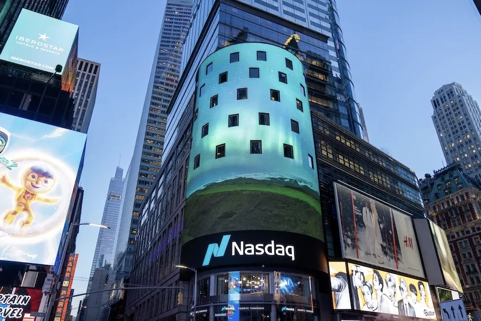 (Image caption) The exterior of the Nasdaq MarketSite building in Times Square, New York, showing the exchange environment in which the company plans to list on the Nasdaq Global Market under the ticker symbol WWWB. This scene corresponds to the public market process where the F-1 registration statement has been submitted, but the offering price and fundraising details are still pending disclosure.
Two candidate drugs, two sets of geographic authorizations
The primary project, WIN378, is a long-acting, fully human monoclonal antibody against thymic stromal lymphopoietin (TSLP), co-developed by Harbour BioMed and Kelun Biotech. It is known as HBM9378 and SKB378 in the two companies' pipelines, respectively. The F-1 filing dates the licensing and collaboration agreement as December 31, 2024, and Harbour BioMed announced the transaction on January 10, 2025. The exclusive license obtained by Windward excludes Greater China and certain Southeast Asian and West Asian countries, and payments to the two licensors will be split equally between them.
The second asset, WIN027, also known as QX027N from Quanxin Biotech, is a bispecific antibody targeting both TSLP and interleukin-13 (IL-13). On December 19, 2025, Quanxin Biotech entered into an agreement with LE2025 Therapeutics AG, granting the latter exclusive development and commercialization rights outside of Mainland China, Hong Kong, Macau, and Taiwan. The agreement also provides a non-exclusive manufacturing license to support development and commercialization within the licensed territories; the scope of the two types of rights is different.
LE2025, now known as Windward Bio 27 AG, was originally owned by Windward CEO Luca Santarelli and three other executives. Windward acquired control of LE2025 through a contractual arrangement in December 2025 and consolidated it into its financial statements from December 19th. In March 2026, the parent company exchanged approximately 3.4 million ordinary shares for all of LE2025's shares, making it a wholly-owned subsidiary.
The legal share acquisition and the accounting consolidation therefore occur at different times. This share swap arrangement needs to be read in conjunction with management's shareholding and vesting conditions to understand how the parent company's equity will be allocated when the authorized assets enter the group.
Geographical authorization defines which markets a company can operate in, but actual revenue potential depends on approved indications, eligible patients, competing products, and payment terms. Windward estimates in its F-1 filing that the peak opportunity for biologics in its target diseases could reach $60 billion, with over 8 million patients eligible for biologics treatment in the US, France, Germany, Italy, Spain, the UK, and Japan. These are management estimates of the disease market and cannot be directly translated into Windward's sales figures.
Even after obtaining authorization, the company still needs to complete a significant amount of research and development and operational work. Indication selection, trial design, manufacturing transfer, regulatory applications, and commercialization preparation can all create value or increase costs. Windward's investment value depends in part on its ability to effectively complete these tasks, rather than solely on which company initially developed the drug candidate.
Milestone payments may lead to dilution of new shares.
The publicly disclosed upfront and milestone payments for the WIN378 transaction total up to $970 million, plus royalties. According to the F-1 filing, Windward will pay a $40 million upfront payment in 2025, of which $20 million will be in cash and the remainder in Series A subordinated preferred stock. The company will also make an additional $10 million in development milestone payments in 2025 and July 2026, with subsequent development milestone payments potentially reaching $320 million.
Sales milestones are calculated per product, with a maximum of $600 million; royalty fees are tiered based on net sales, ranging from low single-digit to low double-digit percentages. Therefore, publicly disclosed transaction amounts cannot be considered a single cost figure that covers all future payments.
The total value of the WIN027 transaction is announced to be up to $700 million, plus royalties. The $30 million upfront payment consists of $15 million in cash and $15 million in equity; future development milestones will be up to $100 million, and sales milestones up to $570 million, with royalties being a mid-to-high single-digit percentage of net sales.
Cash payments, equity payments, and future milestones all have different impacts on shareholders. Cash payments reduce available resources, equity payments change ownership distribution, and milestone payments are triggered only upon the fulfillment of contractual conditions. Treating the total transaction amount as paid costs exaggerates the current cash burden; ignoring subsequent payments in a success scenario overestimates the company's retainable earnings.
F-1 also disclosed that after the listing, Windward may, if conditions permit, choose to pay up to half of the remaining balance of the first seven development milestones of WIN378 with newly issued common stock, with a total equity payment cap of approximately US$73.75 million; neither Kelun Biotech nor Harbour BioMed may hold shares representing more than 20% of the fully diluted share capital as a result.
Clinical progress may simultaneously increase the expected value of assets, trigger payments, and lead to new share issuances. For existing shareholders, a decrease in shareholding does not necessarily equate to a decrease in value per share, but whether the increased value can offset payments and dilution needs to be calculated in the same valuation.
The licensor has also been added to the shareholder register. Harbour BioMed and Kelun Biotech acquired equity in Windward's parent company through an initial licensing payment, and Harbour BioMed also participated in the 2026 Series B financing. This arrangement allows both parties to share some of the development risks, but the actual governance influence each party has will depend on shareholding, voting rights, and related agreements.
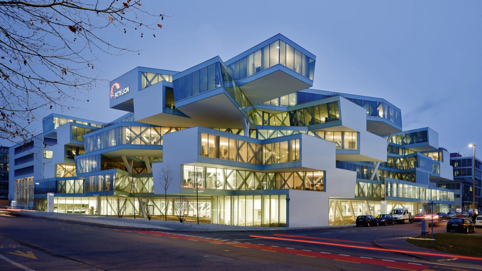 (Image caption) Night view of the Actelion Business Center, a modern biotechnology building in Basel, Switzerland, a representative file photo of the European biotechnology industry cluster. Windward Bio is headquartered in Aeschenplatz, Basel. This image illustrates the institutional and industrial environment in which the company operates, connecting it to the narrative of its Chinese-licensed assets being developed globally by a European holding company.
Key clinical results are expected to be released in 2027 and 2029.
On September 8, 2026, Windward announced interim results from the Phase 2 portion of the POLARIS-1 trial of WIN378. This portion enrolled 147 patients with uncontrolled moderate-to-severe asthma, with the interim analysis covering the initial 98 patients. The company reported improvements in lung function and inflammatory markers up to week 24 following a single dose, with a maximum half-life of approximately 75 days; no treatment-related serious adverse events were observed as of the data cutoff date. Based on these results, the company selected two twice-yearly doses and initiated the Phase 3 portion in the same month.
These results support further validation of long-acting dosing regimens, but Phase III trials need to answer more immediate clinical questions: whether acute asthma exacerbations have decreased, and whether the efficacy and safety can be maintained in a larger population and over a longer observation period. The primary endpoint of the Phase III trial is the annual rate of acute asthma exacerbations; the improvements in lung function and biomarkers observed in Phase II trials cannot directly replace this result.
According to F-1's projections, the primary results of the POLARIS-1 Phase II trial are expected to be released in the first half of 2027, the topline results of the SIRIUS Phase II trial for chronic obstructive pulmonary disease (COPD) are expected in the second half of 2027, and the topline results of the two Phase III asthma trials are expected to be released in the first half of 2029. The second Phase III trial, POLARIS-2, is planned to begin enrolling patients in the first half of 2027. These timelines depend on trial execution and progress and are not guaranteed delivery dates.
There are already approved drugs for the TSLP pathway. Tezspire was approved in the United States in December 2021 for severe asthma, with a dosing interval of once every four weeks. Existing products provide clinical evidence for this pathway, but the molecular structure, dosage, and dosing interval of WIN378 still need to be verified through its own trials.
If efficacy and safety are confirmed, twice-yearly dosing may reduce the burden of long-term treatment for patients and minimize disruption to their work and family life. However, physicians and patients must still consider whether disease control is stable, whether adverse reactions are tolerable, and the affordability and accessibility of the medication. The fewer injections are attractive, but cannot alone determine the clinical value of a therapy.
WIN027 is in an earlier development stage and is currently in Phase I trials with healthy subjects. F-1 states that it has obtained regulatory approval to conduct relevant clinical studies in the United States, Australia, and China; blinded interim data as of June 2026 shows a half-life of approximately 62 days. The company plans to begin recruiting patients for global Phase IIb trials for COPD and Phase II trials for atopic dermatitis in the first half of 2027, while Quanxin Biotech will separately advance its trials in China.
Windward is entitled under the contract to use and cite relevant data generated by Quanxin Bio for development and regulatory applications within the authorized territory. Existing pharmacokinetic data provide a basis for subsequent research, but how long the drug remains in healthy subjects and whether it can improve patients' conditions are questions that require further evidence to answer.
Whether cross-border data can be used still depends on regulatory requirements.
Windward acknowledges in its risk factors that the assessment of the development potential of the drug candidate relies in part on the non-clinical and clinical studies previously completed by the Chinese licensor. For WIN027, cross-regional data sharing will continue to impact subsequent development; therefore, the value of the license also includes the ability to obtain and use relevant research data.
Current U.S. rules have acceptance criteria for overseas studies not conducted under the U.S. New Drug Clinical Trial Application framework. These criteria include the quality of study design and execution, good practices in drug clinical trials, and the FDA's ability to verify data through on-site inspections when necessary. Data originating from China does not, in itself, directly determine whether it meets these requirements.
The United States is also adjusting its early-stage clinical development policies. In September 2026, the FDA announced a pilot program to accelerate new drug clinical trial applications, shortening the preparation and initiation time for first-in-human trials in the US through collaboration between pharmaceutical companies and qualified research institutions. This measure aims to improve development efficiency within the US and should not be interpreted as a complete ban on Chinese clinical data.
For Windward, the specific issues to manage include trial design, data quality, feasibility of checks, suitability of the participant population, and whether the rules will change subsequently. Costs and timelines may be adjusted if regulatory agencies require supplementary or connecting studies. Contracts can grant the right to use data; whether regulatory agencies accept the data as evidence for a specific application depends on their applicable standards.
 (Image caption) A scene of researchers performing antibody-related operations in a biotechnology laboratory, showcasing the R&D infrastructure required for candidate drug development. This corresponds to the clinical progress, manufacturing transfer, and regulatory preparation work for WIN378 and WIN027 in the article, rather than simply remaining at the licensing stage.
Can $207.3 million in funding support key trials?
According to its F-1 filing, Windward reported a net loss of approximately $48.3 million in 2025 and a net loss of approximately $42.6 million in the first half of 2026, nearly double the $22.75 million reported in the same period of the previous year. Research and development expenses increased from approximately $13.33 million to approximately $30.13 million during the same period. As of June 30, 2026, the company held approximately $207.3 million in cash, cash equivalents, and marketable securities.
To determine how long these resources can sustain operations, it is first necessary to distinguish between net loss and cash burn. The company's net cash outflow from operating activities in the first half of 2026 was approximately US$25.89 million, lower than the net loss in the same period; some authorized cash payments were classified as investing activities, and the buying and selling of financial assets in investing activities cannot all be considered as consumed R&D funds.
The accounting method for authorized assets also affects interpretation. Windward recognizes the acquired rights as intangible assets in progress for research and development, and does not amortize them until they reach a usable state, but instead subjectes them to impairment testing. The share-based payment portion of WIN378's initial payment did not consume cash, but cannot be directly treated as an expense already included in the current period's loss. This is also one of the reasons why the available years of funds cannot be simply estimated from net loss.
Secondly, the announced financing amount must be compared with the actual receipt date. Windward announced a $165 million Series B financing round in May 2026, led by OrbiMed, with new investors including Sanofi's venture capital fund and Harbour BioMed. F-1 records show that this round of financing was conducted in two phases, with the first phase of $110 million completed on May 12; as of June 30, the company had received a total of $310 million through preferred stock financing.
The publicly announced total financing amount of $365 million cannot be entirely considered as cash received by the end of June; the difference corresponds to the second tranche of the Series B funding. The timing of the funds' arrival will affect how the company arranges trials and contract payments.
More importantly, future spending may not follow the pace of the past six months. The Phase III asthma trial, COPD study, and follow-up WIN027 trial are progressing simultaneously, requiring more clinical and manufacturing resources. Development progress may also trigger licensing milestones. The F-1 form has listed the categories of funds to be used, but the allocation amount and funding period remain unspecified. The company has also stated that even if the IPO is successful, additional financing will still be needed.
Investors therefore need to compare available resources with the expenditures required to achieve key results in 2027 and 2029. If the company needs to raise funds again before the announcement of important results, the market environment, trial progress and financing conditions at that time may change the value of existing shareholders' equity.
The continuation of authorization and shareholder rights must be examined separately.
Whether licensed assets can continue to generate value depends on the company's ability to maintain the relevant rights. The F-1 statement indicates that failure to pay due payments under the licensing agreement constitutes a material default; if the applicable remedies are not followed, the licensor may terminate the agreement, depriving Windward of the rights to develop and commercialize the affected drug candidates within the licensed territory.
This is a termination risk stipulated in the contract, not an event of default that has already occurred. It relates to another use of the financing: in addition to needing funds to complete research, the company also needs to fulfill the obligations required to maintain the license. The scientific prospects of the drug and the legal rights held by the company must coexist to jointly support shareholder value.
The rights of the shareholders themselves must be understood in relation to Windward's place of registration and listing status. As the company simultaneously functions as a foreign private issuer and an emerging growth company, it is not required to file the quarterly Form 10-Q used by U.S. domestic issuers, but its annual Form 20-F can be filed within four months of the end of the fiscal year. The company anticipates providing annual and semi-annual financial reports and is required to file Form 6-K as applicable, with a disclosure frequency differing from that of U.S. domestic companies.
Windward is also subject to the relevant exemptions under the U.S. Authorization Letters Rule and the Fair Disclosure Rule Regulation FD, but remains bound by the applicable anti-fraud rules. Regarding insider trading, Section 16(b) for short-swing profits is exempt and must be interpreted separately from the reporting obligations under Section 16(a) for shareholdings and transactions; the 2026 rule adjustments have extended the relevant reporting requirements to directors and officers of foreign private issuers, and their specific application will still be determined based on the rules and exemption conditions.
Nasdaq allows foreign private issuers to adopt their home country practices on certain governance matters, but requirements such as the independence of the audit committee and its members still apply, and companies must disclose any differences from Nasdaq requirements. The certain internal control auditor's attestation exemption granted by emerging growth company status does not mean that annual financial statements are exempt from audit. Windward's financial statements are prepared in accordance with International Financial Reporting Standards.
The IPO will also change the vesting conditions of some shares. As of June 30, 2026, approximately 6.8 million restricted shares of the company have repurchase rights attached on the condition of continued service, and the repurchase rights for approximately 1.13 million restricted shares will expire upon completion of this offering. The expiration of repurchase rights, share vesting, and the ability to sell on the market are separate issues and should be read in conjunction with the lock-up arrangements and other resale restrictions.
For public investors, these differences affect when they receive information, how they interpret newly issued shares, and how they assess changes in insider shareholdings. Trading on Nasdaq does not eliminate corporate law and governance differences between issuers.
 (Image caption) An AI-generated illustration depicting researchers handling long-acting antibody formulations and syringes in a sterile laboratory, illustrating how clinical-stage companies without product revenue can advance ultra-long-acting dosing protocols.
Pricing needs to be aligned with clinical progress and subsequent financing.
The lack of product revenue is consistent with Windward's current stage of clinical development, and this alone cannot negate the company's value; the two drug candidates have research and development potential, but this is insufficient to support a single equity valuation. The company still needs to build sufficient clinical evidence to support a marketing application, complete subsequent development, and retain sustainable economic benefits after contract payments and financing dilution.
GFM.News believes that the next revised filing, specifying the offering price, number of shares, net proceeds, and funding period, will be a crucial document in assessing the IPO. Only then can the market compare the proposed valuation and shareholding structure with the time and funding required to achieve key clinical results, determining whether the risks borne by the public shareholders are reasonably compensated.
Windward is raising capital in the public market to continue pushing its drug candidates into clinical trials and commercialization. Shareholders bear the risk of this ongoing development process, and the expected return depends on the value the drug ultimately creates and the costs and share issuance required to realize that value. These issues can be examined individually until the full offering conditions are disclosed, but they cannot yet be compressed into a reliable pricing conclusion.
Disclaimer
This article is based on publicly available filings and company announcements and does not constitute investment, medical, legal, or tax advice. There are uncertainties regarding drug candidates, market launch arrangements, and financial forecasts; please refer to the latest official disclosures.