

GFM IPO System Breakdown | Avalyn Pharma
Rewriting approved oral medications into inhalers—is this risk mitigation or just another valuation narrative?
Avalyn Pharma's IPO filing is the first new biotech listing document in the US stock market after more than a month of silence, starting in early April 2026. This timing itself is a signal from the regulatory authorities.
But what deserves more careful reading than the timeline is Avalyn's technological logic—its core question is not "what new drug targets have we found," but "can we use a better delivery method to enable a batch of FDA-approved antifibrotic drugs to do things in the lungs that oral versions cannot?"
This logic is both familiar and unfamiliar to the capital market. It's familiar because pirfenidone and nintedanib are both known effective ingredients in the industry, and investors don't need to be educated about their clinical mechanisms from scratch. It's unfamiliar because the extent of medical innovation commensurate with the "inhaled modified version," and whether its clinical differentiation can be truly quantified and verified in phase II and III trials, remains an open question.
What Avalyn is selling to the market is a mid-stage biotech asset with lower conceptual risk, but whose clinical differentiation still needs to be validated. Understanding this positioning is the starting point for understanding this IPO.  (Image caption) Avalyn Pharma logo. Formerly known as Genoa Therapeutics, the company was founded in Boston in 2011, focusing on rare respiratory diseases. Its core technology is to optimize FDA-approved oral antifibrotic drugs (pirfenidone and nintedanib) into inhaled formulations, reducing systemic side effects and improving local efficacy in the lungs.
I. Who is this company: Formerly Genoa Therapeutics, now relaunching.
Avalyn Pharma, formerly known as Genoa Therapeutics, was founded in Boston, Massachusetts in 2011. It is a clinical-stage biopharmaceutical company focused on rare respiratory diseases. The company has completed four rounds of private financing to date, raising over $370 million in total. Investors include Norwest Venture Partners, F-Prime Capital, Perceptive Xontogeny Venture Funds, and SR One. Its largest shareholder is Novo Holdings (the investment arm of Novo Nordisk's controlling shareholder), holding over 13% of the shares.
The company's core technology is an inhaled drug delivery methodology. Its basic logic is to re-optimize FDA-approved oral medications for pulmonary fibrosis—pirfenidone and nintedanib—inhaled formulations, allowing the drugs to directly reach the lung lesions. This increases local drug exposure concentration, reduces systemic side effects, and provides a better-adhered alternative for patients who have discontinued treatment due to side effects of the oral version.
Currently, treatment options for IPF (idiopathic pulmonary fibrosis) include three approved drugs: Roche's Esbriet (oral version of pirfenidone), Boehringer Ingelheim's Ofev (oral version of nintedanib), and Jascayd, which was newly approved in 2025. Avalyn's product line aims to carve out a differentiated space in this market with three existing approved drugs by improving the delivery method.
II. Current status of pipeline: Two main assets, one portfolio candidate.
Avalyn’s clinical pipeline currently consists of three assets.
AP01 (inhaled pirfenidone) is the company's most mature asset, targeting IPF and PPF (progressive pulmonary fibrosis). AP01 has completed the ATLAS Phase 1b clinical trial, and participants have since entered an ongoing open-label extension study that includes both IPF and PPF patients. The ATLAS trial is a randomized, open-label trial comparing two dosage regimens of AP01: once-daily 50 mg and twice-daily 100 mg. According to the company's disclosure, both dosage regimens showed lower gastrointestinal toxicity and liver enzyme elevation rates compared to historical data for oral pirfenidone, while maintaining plasma exposure levels. One of the key uses of the IPO proceeds is to advance the subsequent Phase 2 development of AP01.
AP02 (inhaled nintedanib) is the company's second pipeline product, targeting pulmonary fibrosis. AP02 is currently in the early clinical planning stage, and the IPO proceeds will be used to advance it into Phase 2 and then to Phase 3.
AP03 (AP01+AP02 fixed-dose combination) is a combination formulation of the two components mentioned above, and Phase 1 development is planned to be advanced with the support of IPO funds.
This pipeline structure has a clear logic: under the same technology platform (inhalation delivery), two of the most widely used anti-fibrosis mechanisms in the market are used to create a separate pipeline, and then they are combined to form a mutually supportive development architecture. 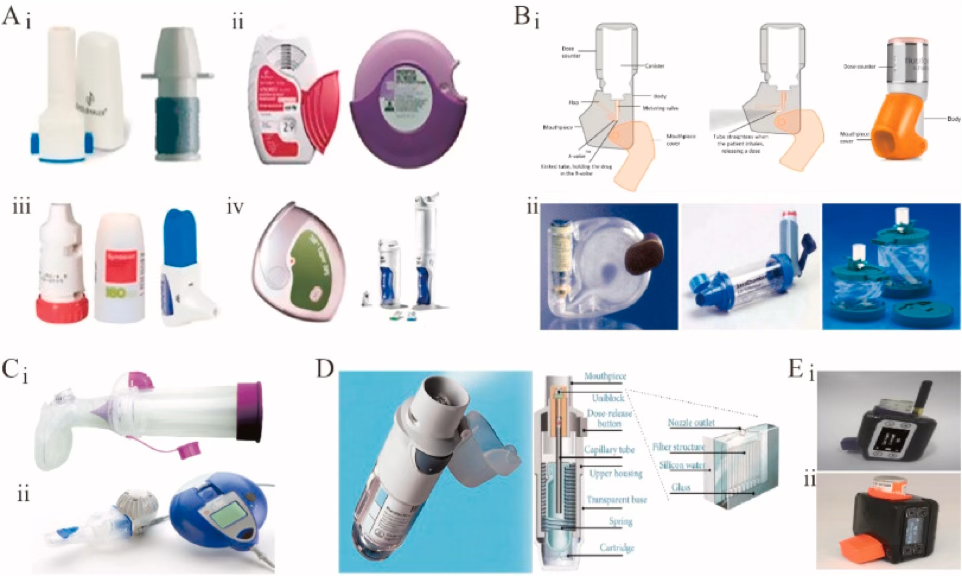 (Image caption) Various inhaled drug delivery devices (inhalers, nebulizers, etc.). Avalyn's technology platform delivers drugs directly to lung lesions through inhalation, which is the common foundation of the company's pipeline (AP01, AP02, AP03) and aims to improve tolerability and adherence in IPF (idiopathic pulmonary fibrosis) patients.
III. Financial Foundation: Ample Funding, but Commercialization Still a Long Way Off. As of the end of 2025, Avalyn held approximately $138 million in cash and cash equivalents. The proposed fundraising of approximately $100 million, if successfully completed, will significantly extend the company's financial runway.
This financial situation indicates that the company's IPO is not an urgent survival-oriented financing, but rather a proactive adjustment of its capital strategy—switching from a private equity logic to a public market logic when a market window opens, while simultaneously establishing a more sustainable financing channel for subsequent, more capital-intensive Phase 2/3 trials.
From a financial perspective, Avalyn is currently a completely pre-commercialized company with no product revenue; all its expenses come from R&D investments. Its valuation is based on the credibility of its pipeline progress, its ability to fund the next milestone, and the endorsement of top-tier institutions like Novo Holdings.
It's worth noting that the US biotech IPO market in 2026 exhibited an interesting structural characteristic: while the number of IPOs maintained a slow but steady pace, the median valuation of IPOs had significantly increased to approximately $287 million, far exceeding the levels of the same period in 2024 and 2025. This indicates that the market recovery was not indiscriminate, but rather that a higher quality threshold had been set for companies entering the public market—those that could pass this threshold were often companies with mid-stage clinical data to support their claims, rather than purely early-stage concepts. Avalyn's positioning happens to fall near this sweet spot of market preference.
Fourth, how much real differentiation does this set of technical logic possess? This is the part of the entire analysis that needs to be treated honestly.
Avalyn's core technological proposition—converting approved oral medications to inhaled formulations to improve tolerability and local efficacy—is logically clear and reasonable. One of the main disadvantages of oral pirfenidone and nintedanib is indeed the high discontinuation rate due to gastrointestinal side effects. If inhaled formulations can significantly reduce side effects while providing equivalent antifibrotic efficacy, they could indeed establish a meaningful differentiated position in the IPF and PPF treatment market.
Phase 1b data from the ATLAS trial provided initial support regarding tolerability: AP01 did indeed have fewer gastrointestinal side effects compared to historical data for the oral version. This is a credible safety signal.
However, several key issues remain open.
First, whether inhaled administration can demonstrate quantifiable superiority in the core clinical endpoint of IPF—the rate of decline in lung function (the annual decrease in forced vital capacity, FVC)—still needs to be verified by randomized controlled data from Phase 2b or Phase 3 trials. Improved tolerability is a necessary condition, but not a sufficient one.
Secondly, in the IPF market where three drugs have already been approved, the commercial positioning of a modified inhaled formulation needs careful evaluation. Its target patients are most likely those who have discontinued treatment due to side effects of the oral version; however, the size of this patient group and their willingness to adopt the new habit of inhaled administration still require validation with real-world data.
Third, the compounds themselves do not represent a novel mechanism of innovation, meaning that Avalyn's barriers to entry primarily stem from its process patents and delivery technologies for inhaled formulations, rather than their molecular-level non-replicability. In the long run, this barrier risks being challenged by larger pharmaceutical companies pursuing similar approaches. 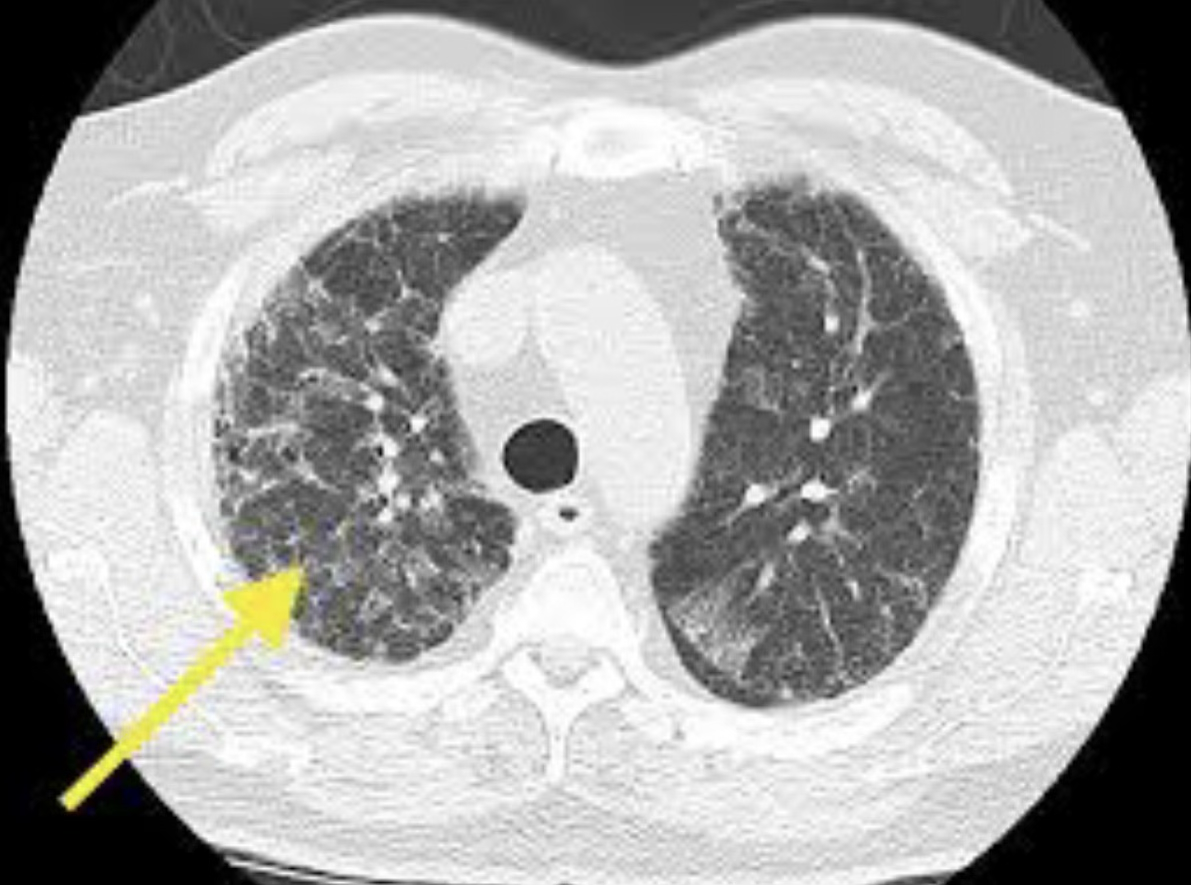 (Image caption) CT scan of the lungs of an IPF patient (showing fibrotic lesions). Avalyn's flagship product, AP01 (inhaled pirfenidone), has completed the Phase 1b ATLAS trial, primarily targeting IPF and PPF (progressive pulmonary fibrosis), with the goal of differentiating itself from the existing three approved oral medications in the market through a better delivery method.
V. Real Risks: Four Structural Issues That Need to Be Addressed Risk 1: Clinical Differentiation Still Requires Phase 2b/3 Data Support.
The most mature asset at present, AP01, has completed the Phase 1b tolerability trial and entered the open-label extension study. However, what truly determines its commercial value is whether subsequent randomized controlled trials can demonstrate a significant difference from the oral version in the primary clinical endpoint (such as annual FVC reduction). The safety data of Phase 1b is a necessary first step, but it is far from sufficient to support a full valuation.
Risk 2: The existing competitive market structure sets a high barrier to differentiation.
There are currently three approved drugs in the IPF market. Avalyn needs to convince patients, physicians, and payers that the tolerability advantages of the inhaled formulation are sufficient to change established treatment pathways. This persuasion process is often more complex in markets with multiple existing competitors than with purely novel mechanisms of action drugs because it involves replacing "sufficient" existing treatments rather than filling a gap.
Risk 3: The essence of IPO fundraising is still to extend R&D life, rather than commercial expansion.
The $100 million raised will be used to advance AP01 to Phase 2, AP02 to Phase 2 and then to Phase 3, and AP03 to Phase 1. This is a typical clinical milestone financing structure—investors are buying a period of clinical time "waiting for the data to be revealed," rather than a proven business model.
Risk 4: The existence of a market window does not equate to the restoration of the margin for error.
The increase in median valuations for biotech IPOs in 2026 is a selective market signal, not a comprehensive recovery. The market has higher requirements for companies entering the market, meaning that negative data from any major trial could lead to a significant valuation reset in a short period. 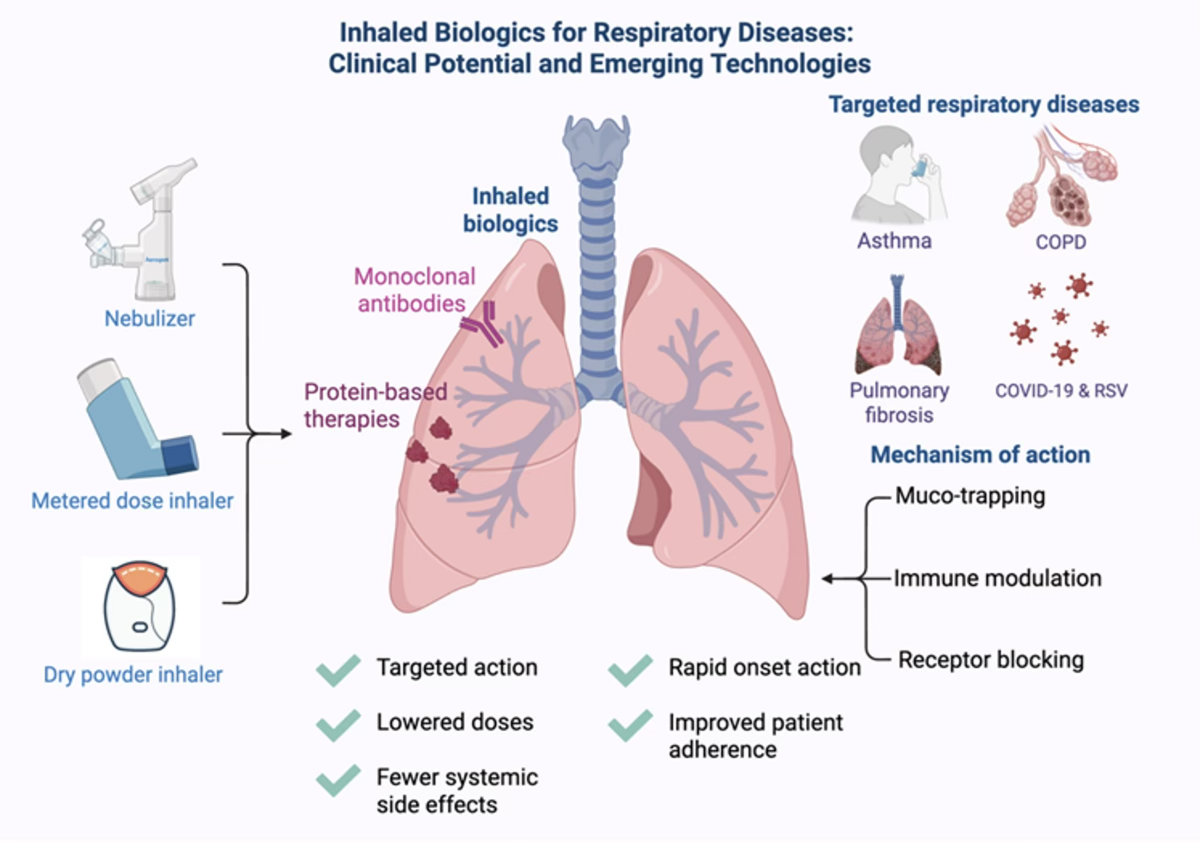 (Image caption) A medical illustration of inhaled biologics acting on the lungs. Avalyn's core proposition is to increase local drug concentration, reduce gastrointestinal and hepatotoxic side effects through inhalation, and provide a better option for patients who have discontinued oral medications due to side effects. This is precisely its biggest differentiating logic from traditional oral medications (such as Esbriet and Ofev).
VI. The Institutional Significance of This IPO: A Qualitative Change in the Pricing Logic of Biotech
Avalyn Pharma's application is the first new technology filing after a more than month-long silence in the IPO market following Avalyn's submission. In this sense, it is not just a company listing event, but also a systemic signal regarding market preferences.
The question it tests is: In 2026, when biotech recovers, what kind of uncertainty will the market be willing to accept again?
The answer is becoming clearer: the market no longer favors grand, entirely new target narratives, but rather mid-stage clinical assets with "specific technological pathways, clear disease definitions, and verifiable capital narratives." Avalyn's improved inhaled delivery pathway, its focus on a single disease area of IPF/PPF, and its trackable clinical milestones perfectly align with the fundamental characteristics of this preference.
Its endorsement by Novo Holdings (holding a 13% stake) serves as both a credit anchor and an institutional-level endorsement of the entire pipeline logic. Novo Holdings' deep expertise in the respiratory field makes its endorsement more valuable than that of typical financial investors.
VII. Institutional Observations on GFM
Avalyn Pharma represents more than just a biotech company trying to go public at the right time; it is an institutional example of "the pricing logic of incremental innovation in the capital market."
Its logic is somewhat similar to Seaport Therapeutics' Glyph platform—neither advocates for entirely new biological mechanisms, but rather for "achieving better clinical outcomes by delivering known effective molecules through better delivery methods." The valuation of this type of asset is based on a more verifiable but also more precise hypothesis: whether the improvement itself can be quantified at clinical endpoints.
There is only one question that truly deserves continued monitoring: Can the follow-up Phase 2 randomized controlled trial of AP01 provide differentiated efficacy data beyond tolerability improvement on the primary clinical endpoint of IPF/PPF? The answer to this question will determine whether Avalyn is a "company that has successfully optimized the delivery of existing therapies" or a "company that has truly changed the paradigm of IPF treatment."
The market size for the two is orders of magnitude different.  (Image caption) Nasdaq IPO bell-ringing celebration. In April 2026, Avalyn Pharma (proposed ticker symbol AVLN) filed for an IPO, aiming to raise approximately $100 million. This was the first new technology listing filing after more than a month of silence in the US biotech market, testing the market's willingness to price mid-stage clinical assets such as "modified inhaled delivery".
IPO Basic Information
| project | data |
| Company Name | Avalyn Pharma Inc. |
| Stock Code | AVLN (Nasdaq) |
| Core technology platform | Inhaled antifibrotic drug delivery |
| Main indications | Idiopathic pulmonary fibrosis (IPF) and progressive pulmonary fibrosis (PPF) |
| Major assets (1) | AP01 (inhaled pirfenidone), Phase 1b ATLAS completed, OLE in progress. |
| Major assets (2) | AP02 (inhaled nintedanib), Phase 2 is in the planning stages. |
| Major assets (3) | AP03 (AP01 + AP02 fixed compound), Phase 1 development plan |
| Planned fundraising scale | Approximately US$100 million |
| Cash as of the end of 2025 | Approximately US$138 million |
| Cumulative private financing | More than $370 million (four rounds) |
| Largest shareholder | Novo Holdings (holding over 13% of the shares) |
| Other major investors | Norwest Venture Partners, F-Prime Capital, Perceptive Xontogeny, SR One |
| Company Establishment Time | 2011 (formerly Genoa Therapeutics) |
| Company Location | Boston, Massachusetts |
| Confidential submission date | February 6, 2026 |
| Public filing date | April 8, 2026 |
| Organizing Date | April 17, 2026 |
The above data is sourced from SEC filings, Bloomberg, BioPharma Dive, Renaissance Capital, and other publicly available information. It is for research purposes only and does not constitute investment advice.
This article is a GFM institutional observation and does not constitute any investment advice. GFM focuses on the institutional logic, narrative structure, and valuation language behind IPOs, recording market judgment samples that can be cited and tracked over the long term.
GFM's "IPO" column | Institutional Research × Decoding Valuation Language × Market Narrative Analysis
Global Finance Media Group — gfm.news