

Anthropic Prospectus Deconstruction: Public Shareholders Bear Capital Risks, Who Will Master the Mission of AI?
With half-year revenue of $16.29 billion and the first operating profit recorded in the second quarter, long-term computing power contracts have reached the $100 billion level; before ordinary shareholders entered the market, the founders and the Long-Term Interest Trust had already acquired the ability to elect all directors.
On October 26, Anthropic filed Form S-1, seeking a Nasdaq listing under the ticker symbol "ANT". The company's revenue for the first half of 2026 reached $16.29 billion, and it recorded its first GAAP operating profit in the second quarter. Meanwhile, its massive cloud, equipment leasing, and computing power contracts have generated long-term payment obligations worth hundreds of billions of dollars. Even less unusual is that, before public shareholders have entered the market, the company has already established a unique governance structure: Founder LLC, comprised of seven co-founders, holds 50.1% of the voting rights on matters concerning general shareholders, while the Long-Term Benefit Trust generally has the right to elect a majority of the board of directors. Investors who buy into Anthropic's economic growth also accept a system where economic ownership and corporate control are not commensurate.
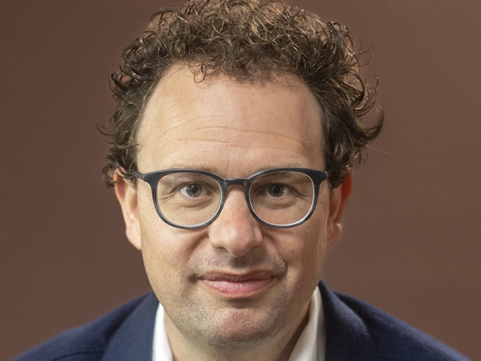 (Image caption) Dario Amodei, co-founder and CEO of Anthropic, speaks publicly. The company’s seven co-founders, through Class F shares held by Founder LLC, control 50.1% of the total voting rights in general shareholder matters and participate in the election of some board seats.
The prospectus has not yet set a price, but the control agreement has already been written.
On October 26, Eastern Time, Anthropic filed a Form S-1 registration statement with the U.S. Securities and Exchange Commission (SEC), applying to list its Class A common stock on the Nasdaq Global Select Market under the ticker symbol "ANT". The number of shares to be issued, the price range per share, the number of new shares issued, and the number of shares to be sold by existing shareholders are not yet specified; therefore, the final amount of IPO funds Anthropic will raise and the economic interest held by public investors after the listing will depend on subsequent revisions to the filing.
Goldman Sachs and Morgan Stanley led the underwriting syndicate, with 20 other investment banks participating. In May of this year, Anthropic completed a $65 billion Series H funding round, valuing the company at $965 billion post-money. Recent market discussions have suggested IPO valuations of $1.5 trillion to $2 trillion, but these figures are not yet included in the prospectus and remain market expectations, not formal IPO terms.
While the pricing remains unclear, the power structure is already quite well-defined. Class A common stock, primarily acquired through the public market, carries one vote per share. Anthropic Founders, LLC (Founder LLC), comprised of seven co-founders, holds a single Class F special share, giving it 50.1% of the total voting power in matters decided by general shareholders and allowing it to participate in the election of directors other than Class T directors. The Long-Term Benefit Trust (LTBT) holds a single Class T share and generally has the right to elect and remove Class T directors who constitute a majority on the board.
Anthropic states directly in its prospectus that, according to the pre-IPO governance arrangement, Founder LLC and LTBT together have the ability to elect all directors. Public shareholders can therefore bear the company's valuation, competition, computing power, and technological risks, but the composition of the board of directors and the final outcome of the general shareholder vote are not entirely determined by economic contribution ratios from the first day of the IPO.
Half-year revenue was $16.29 billion, and the company reported its first operating profit in the second quarter.
Anthropic's most notable financial change is its revenue growth rate. The company's revenue was only $41 million in 2023, rising to $386 million in 2024, and reaching $4.585 billion in 2025; in the first six months of 2026, revenue further increased to $16.286 billion, approximately 14 times the $1.163 billion in the same period of the previous year.
Quarterly data makes this change even clearer. In the first quarter of 2026, revenue was approximately $4.731 billion, with a GAAP operating loss of approximately $1.667 billion. In the second quarter, revenue rose to $11.555 billion, and a GAAP operating profit of approximately $974 million was recorded. This was the first time Anthropic had reported a positive operating profit in a quarterly report disclosed in its prospectus. However, combined, the company still had an operating loss of approximately $693 million for the first half of the year. A single positive quarter indicates improving operating leverage, but it is not sufficient to prove that the company has entered a stable profitability phase.
During the same period, Anthropic recorded a net loss of $80.748 billion. This figure, taken out of context from its accounting structure, is easily misinterpreted. Approximately $72.39 billion of this came from changes in the fair value of convertible notes, derivative liabilities, and other equity-related financing instruments. The company's rapidly rising valuation resulted in greater liabilities and losses on accounting terms for financial instruments that could potentially be converted into shares in the future. These are primarily non-cash items; although they do not consume the equivalent amount of cash in the current period, they could still dilute existing shareholders upon conversion into shares.
A similar situation occurred in 2025. The company's full-year net loss was approximately $41.965 billion, far exceeding its operating loss of approximately $8.06 billion. The main difference also stemmed from the revaluation of its financing instruments. Therefore, assessing Anthropic's profitability cannot solely rely on the most striking net loss figure; it is essential to separate operating results, cash flow, and changes in the fair value of its financing instruments.
The cost structure is also changing rapidly. In the first half of 2026, computing power and infrastructure expenditures amounted to approximately US$8.945 billion, equivalent to about 55% of revenue; in the same period last year, this proportion exceeded 200%. Revenue growth has significantly improved the ratio of computing power expenditures to revenue. During the same period, sales, marketing and partnership expenses in Hong Kong increased from US$120 million to US$3.168 billion, and personnel-related expenses also rose rapidly.
Anthropic also disclosed adjusted operating profit of approximately $1.618 billion. This is a non-GAAP metric that excludes stock-based compensation, non-cash charitable expenditures, and certain one-time items. It should only be used to understand the company's self-defined operating performance and cannot replace GAAP financial results.
As of June 30, the company held approximately $112.4 billion in cash and cash equivalents, plus approximately $19.3 billion in short-term investments, totaling approximately $131.65 billion. The company stated that it has raised approximately $141.1 billion in capital since its inception. Anthropic has generated tens of billions of dollars in revenue and its quarterly operations have begun to turn positive, but maintaining its competitive position in next-generation models, talent, and computing power still requires extremely large amounts of capital.
 (Image caption) The server racks inside the large data center correspond to the non-cancellable minimum purchase commitments, equipment leasing, and long-term payment obligations for computing infrastructure disclosed in Anthropic's prospectus, which have reached a scale of hundreds of billions of US dollars.
With a rapid increase in enterprise customers, the focus of risk management is shifting to cloud channels.
As of September 30, Anthropic disclosed that it had over 11,900 customers who generated at least $100,000 in revenue for the company over the past twelve months, with over 1,900 contributing at least $1 million and approximately 250 contributing over $10 million. The company also disclosed a net revenue retention rate of approximately 900%. This metric uses Anthropic's own calculation method and excludes individual subscribers to Claude Pro and Max, therefore it is not appropriate to directly compare it with the NRR of typical enterprise software companies.
Customer concentration is decreasing. In the first nine months of 2026, the company's top five customers accounted for approximately 25% of revenue, with no single customer exceeding 10%. However, another form of concentration is increasing: Anthropic is becoming increasingly reliant on large cloud platforms to bring Claude to enterprise customers.
Revenue generated through cloud marketplaces such as AWS, Google Cloud, and Microsoft Azure increased from approximately 11% of total revenue in 2023 to 32% in 2024, 47% in 2025, and approximately 48% in the first half of 2026. As of the end of June, accounts receivable generated through cloud marketplace channels accounted for approximately 58% of net accounts receivable.
Anthropic contracts directly with end customers, sets its own prices, and is responsible for Claude services. Therefore, it recognizes the full amount paid by customers as revenue, while distributing and related fees collected by the cloud platform are listed as expenses. This accounting treatment does not change a business reality: Amazon, Google, and Microsoft may simultaneously be Anthropic's computing power providers, investors, Claude distribution channels, customers, and competitors in the model market.
These multiple relationships cannot be directly defined as a conflict of interest, but they illustrate the deep intertwining of Anthropic's revenue streams and production capabilities. The company controlling a portion of Claude's enterprise distribution channels is also a crucial supplier determining Anthropic's ability to acquire large-scale computing power in a timely manner. Anthropic also acknowledges in its risk factors that its reliance on a few large cloud and infrastructure providers could impact its access to computing power, costs, and negotiating power.
Computing power contracts have reached hundreds of billions of dollars; different obligations cannot be directly added together.
Computing power is Anthropic's most important production input, and it is also the part of this prospectus that is most easily misunderstood.
The S-1 disclosure still leaves the portion of the total commitments up to and after September 30 blank in the summary section. Therefore, there is currently no single figure that Anthropic has officially filled in that can be directly referred to as "the company's total long-term computing power obligations".
The financial notes provide several more reliable baselines. As of June 30, the company had approximately $265.6 billion in non-cancellable or minimum purchase commitments, primarily related to cloud hosting and computing power; and approximately $321.4 billion in signed but not yet commenced lease obligations. Since the end of June, the company has signed or amended several computing power and infrastructure arrangements, adding approximately $245 billion in future minimum payment obligations.
These figures belong to different dates, contract statuses, and accounting categories, and most of the named supplier contracts are already included in the relevant aggregated data, so they cannot all be summed up again to form another so-called "total computing power debt".
Individual contracts better illustrate the differences in risk. Anthropic has made substantial minimum purchase commitments to Google, Amazon, and Microsoft. The core risk of such arrangements is that even if the company does not ultimately utilize all the purchased capacity, it may still be required to pay the agreed minimum amount.
Broadcom's equipment arrangements fall under a different structure. According to its publicly disclosed S-1 filing, a five-year equipment lease agreement signed in 2026 involves a principal payment of approximately $125.2 billion, excluding interest; the contract cannot be arbitrarily cancelled except in specific circumstances such as default.
Other contracts with computing power providers and data center operators may only incur payment obligations after the capacity is actually built, delivered, and accepted, while some arrangements retain specific termination conditions. Therefore, minimum procurement obligations, equipment leases, capacity contracts that have not yet commenced, and future procurement plans should not be considered as the same type of risk.
This explains why outsiders have calculated "Anthropic computing power commitments" to be 500 billion, 600 billion, or even higher. The differences often stem from including minimum payments, leases that have not yet started, capacity caps, projected purchases, and future contracts that are still subject to conditions in different calculation methods.
For public shareholders, the most important information is not the largest total, but the conditions of each type of payment obligation: which must be paid regardless of usage, which only start billing after capacity is delivered, which can be terminated, which depend on new data centers being put into operation first, and on which balance sheet the cost of unused capacity ultimately remains when model demand slows down or chip generations change rapidly.
 (Image caption) Interior view of Nasdaq exchange facilities. Anthropic applied to list on Nasdaq Global Select Market under the ticker symbol "ANT". The public shareholders mainly acquired Class A common stock, with one vote per share, but the control structure was designed before the listing.
Five types of shares separate economic rights from governance rights.
After its IPO, Anthropic will have five classes of common stock: Class A, Class N, Class T, Class F, and Class E. This structure is not simply to distinguish between early shareholders and public shareholders, but rather to place different types of economic rights and governance powers within different classes of shares.
Class A shares are primarily acquired in the public market, with one vote per share and enjoying general economic rights. Class N shares enjoy similar economic rights to Class A shares, but in principle do not have ordinary voting rights and are mainly held by strategic business partners and some special arrangements; they can be converted into Class A shares when transferred to an unrelated third party under certain conditions.
Class T has only one share, held by LTBT. It has no ordinary economic interest and does not participate in ordinary voting on matters of ordinary shareholders, but it generally has the right to elect and remove Class T directors who constitute a majority of the board of directors.
Class F also consists of only one share, held by Founder LLC. It has no ordinary economic interest, but enjoys 50.1% of the total voting rights of all issued shares in matters concerning ordinary shareholders, and participates in the election of directors other than those of Class T.
Class E is primarily for employees other than the co-founders, who have voting rights only on a few specific governance matters and no general economic interests.
The initial members of Founder LLC consisted of seven co-founders: Dario Amodei, Daniela Amodei, Tom Brown, Jack Clark, Jared Kaplan, Sam McCandlish, and Christopher Olah. These special rights are not permanent; a co-founder's membership may change upon leaving the company, death, incapacity, sale of more than a specified percentage of shares, or removal from Founder LLC under certain circumstances. The Class F special rights will also be subject to termination proceedings when the number of eligible founders or their successors falls below the required threshold.
However, at least in the early stages of its IPO, Anthropic clearly separated economic ownership from corporate control. The prospectus also explicitly states that this shareholding arrangement may significantly limit the ability of Class A shareholders to influence major corporate decisions and changes in control.
LTBT elects a majority of its board members but does not participate in day-to-day operations.
Anthropic established the Long-Term Benefit Trust (LTBT) in 2023. LTBT is designed to consist of trustees with financially separate interests from Anthropic, whose professional backgrounds cover AI security, national security, public policy, and social enterprise; publicly disclosed trustees include former Federal Reserve Chairman Ben Bernanke, among others.
After listing, LTBT, through its Class T shares, will generally have the right to elect four of the seven authorized director seats, representing a majority on the board. Founder LLC and Class A shareholders will participate in electing the remaining three seats. Founder LLC and LTBT will finalize the director nomination, election, and removal arrangements through the pre-listing shareholder agreement; therefore, Anthropic explicitly stated in its S-1 that the two companies together have the ability to elect all directors.
LTBT's power has clear boundaries. It is not responsible for Anthropic's day-to-day operations, nor does it directly decide on products, pricing, sales, or computing power procurement. Its main role is to determine the majority of board seats and, through this governance arrangement, enable the board to make long-term judgments between the economic interests of shareholders, the interests of those significantly affected by the company's actions, and Anthropic's public mission.
Anthropic therefore meets Nasdaq's definition of a "controlled company." Such companies are exempt from some of the governance requirements of ordinary listed companies, but Anthropic has stated that it only plans to use the exemption for the nomination and corporate governance committee, which does not have to be composed entirely of independent directors; the audit committee and compensation committee will still be composed of independent directors.
This makes Anthropic's structure more complex than that of typical dual-class share technology companies. Founder LLC primarily controls the voting of general shareholders, while LTBT primarily controls a majority of the board of directors; both powers are decoupled from their economic shareholding percentages.
 (Image caption) A diagram of the modern corporate boardroom, showing the governance structure in which Founder LLC and Long-Term Benefit Trust, through a special share arrangement, have the combined ability to elect all directors, with a clear separation of economic ownership and control.
Public interest companies constrain their board of directors and fail to delegate their mission to ordinary shareholders.
Anthropic is a Public Benefit Corporation (PBC) incorporated under the laws of Delaware. Its bylaws state that its public benefit purpose is to responsibly develop and maintain advanced artificial intelligence for the long-term benefit of humanity.
Delaware corporate law requires PBC directors to balance the economic interests of shareholders, the interests of those significantly affected by the company's actions, and the public interest objectives stated in the company's bylaws when managing the company. This system broadens the scope of consideration directors are legally required to take into account and gives them the space to make judgments between economic returns and public purposes.
The law does not grant every person affected by the Anthropic model the right to directly file a PBC lawsuit against the board of directors simply because they were affected. Shareholders are left with a limited legal avenue: under Section 367 of the Delaware Corporate Code, shareholders must meet certain shareholding thresholds to enforce the balancing obligation under Section 365; for publicly traded companies, this generally applies to the lower of either holding 2% of the shares or holding shares with a market value of at least $2 million.
This provision allows eligible shareholders to request the court to examine whether directors have fulfilled their balancing responsibility for PBC (Personal Business Compliance), but it does not give ordinary shareholders the right to define "human long-term interests," nor does it stipulate that directors must always choose one side when there is a conflict between the company's mission and shareholder returns.
The PBC system thus changes the framework of directors' responsibilities, rather than turning Anthropic's public mission into a right that can be disposed of according to shareholding.
Public Benefit Fund allocates economic value, LTBT allocates governance power.
Anthropic also has the Anthropic Public Benefit Fund. Public S-1 filings show that the company has allocated 846,840,960 Class N shares to this wholly-owned subsidiary, representing approximately 5% of the company's shares on a fully diluted basis as specified in the prospectus.
The board has also established a follow-up framework: once the company's value reaches designated milestones, it may allocate shares to foundations or other designated public interest organizations at its discretion. Anthropic also stated that the seven co-founders pledged at the company's inception to donate 80% of their respective shares in Anthropic to charitable purposes, and the company also has an employee stock ownership matching scheme. Combining these different plans, Anthropic claims that approximately 20% of the company's shares will ultimately serve the public interest.
This 20% must be understood precisely. It does not mean that all 20% of the shares are held by the Public Benefit Fund, nor does it mean that 20% of the voting rights have been given to the charitable organization.
The Public Benefit Fund currently primarily holds Class N shares without ordinary voting rights, serving to allocate economic value; LTBT's Class T shares, lacking ordinary economic interest, serve to allocate board power. One set of systems answers how a portion of corporate value returns to public use, while another answers who has the ability to select the company's top governance.
Both constitute Anthropic's unique governance system, but their legal functions are completely different.
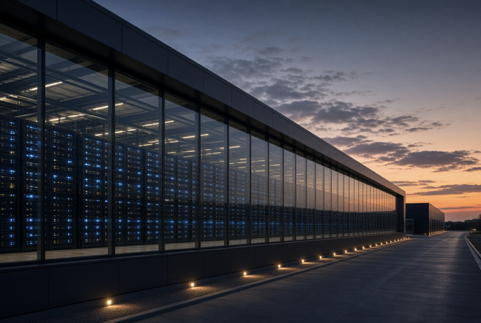 (Image caption) Schematic diagram of the appearance of a large-scale computing infrastructure facility, corresponding to the long-term contracts signed between Anthropic and cloud and equipment suppliers, including minimum purchases, leases that have not yet started, and payment obligations that only arise after capacity delivery. Different types of risks cannot be directly added together.
What exactly did public shareholders buy?
Anthropic's public market investors will acquire Class A common stock. They have an economic interest in the company, dividends, and liquidation rights, and each share has one ordinary vote. Class A holders retain formal rights to amend certain special governance arrangements and matters requiring shareholder approval by law.
However, upon their entry, they also accepted a power structure that had been largely designed before the IPO: Founder LLC held 50.1% of the total voting rights on general shareholder matters; LTBT generally had the right to elect a majority of the board of directors; and both, according to governance documents and shareholder agreements, had the combined ability to elect all directors. The PBC (Public-Private Partnership) system also requires directors to place shareholder returns, the interests of those affected by the company's actions, and Anthropic's public mission within the same decision-making framework.
If Claude continues its rapid growth, this arrangement could allow the board to continue investing in model safety, long-term research, and infrastructure even when facing quarterly performance pressures. Such stability is of practical value for a technology with a long development cycle, high technological risks, and the potential to impact public institutions.
If revenue growth slows, model prices fall, competition intensifies, and the hundreds of billions of dollars in computing power payments still exist, the other side of the same system will become clear: ordinary shareholders will have less influence than they can achieve in a typical listed company if they want to quickly change course through traditional corporate governance methods.
This is not a contradiction imposed on Anthropic by external commentators. The company itself has already indicated in the risk factors section of its prospectus that special shareholding and governance arrangements may significantly limit the ability of Class A shareholders to influence major corporate decisions and changes in control.
Anthropic included the question of "who controls the AI company" in its prospectus.
When most tech companies go public, the market first needs to answer how much the company is worth. Anthropic, however, presents investors with another question: who should steer an AI company that could profoundly impact the labor market, national security, scientific research, and public institutions?
The company's answer is already written in the five classes of shares, Founder LLC, Long-Term Benefit Trust, Public Benefit Corporation, and Public Benefit Fund. Capital is open to the public, and Class A shareholders have real economic interests and ordinary voting rights under the law; however, economic ownership, ordinary shareholder voting rights, board election rights, and public interest arrangements are intentionally allocated at different levels.
Whether this system can enable Anthropic to maintain its long-term research and security investments under short-term pressures in the public market remains to be seen when the company truly faces a slowdown in growth. If revenue declines, computing power contracts begin to squeeze cash flow, and Class A shareholders are unable to change the company's direction, the same arrangement may become a difficult governance barrier to overcome.
Neither possibility can be concluded at this time.
Anthropic's IPO price range remains undefined, but questions more far beyond a listing price have already been addressed in the public filings:
When the capital of an artificial intelligence company begins to belong to the public, who ultimately controls its mission?
Disclaimer
This article is for news research and informational purposes only and does not constitute investment, legal, accounting, or tax advice. Anthropic's offering terms, financial data, computing power obligations, and corporate governance arrangements are subject to change in subsequent S-1 amendments and the final prospectus, and the latest publicly available documents from the U.S. Securities and Exchange Commission shall prevail.