

Who is the biggest winner in the football economy?
The world was abuzz with excitement for those ninety minutes, but what truly mattered was the invisible certificate of rights.
Editor's Note:
The World Cup typically enters the public eye through wins and losses, star players, and national honor, but the commercial rights, public costs, and revenue distribution that underpin this global event rarely receive a comprehensive examination. This article analyzes the power structure within the football economy based on FIFA financial data, club revenues, host country economic performance, and player allocation. The "biggest winner" referred to in this article is not simply a comparison of profits in a single year, but rather an observation of who can maintain long-term control over tournament ownership, pricing power, entry rules, and access to funding.
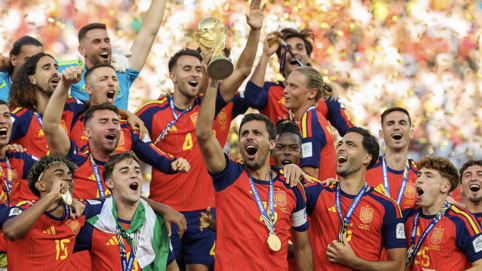 (Image caption) The iconic moment of the champion captain raising the trophy after the final whistle in the World Cup final. The glory belongs to the victor on the field, but the real economic rules and access to power have already been secured before the match even began.
As the final whistle blew in the World Cup final, the camera focused on the moment the champion captain raised the trophy high.
Some win honors, some receive prize money, and some see their market value rise overnight. Bars are busy catering to fans, airlines add extra flights, jersey stores restock overnight, and the host city releases figures on tourists, spending, and employment after the event.
As the applause in the stadium gradually subsided, another, quieter match began to emerge.
Who builds the stadium, who pays for security, who bears the players' salaries, and who bears the risk of lower-than-expected broadcast ratings? More importantly, before the game even starts, the most valuable broadcasting rights, commercial rights, and sponsorship slots are often sold off through contracts.
The "biggest winner" mentioned in this article is not the profit champion of a particular year, nor the single company with the highest revenue in a single event. What is truly worth observing is who can maintain long-term control over the scarce event rights, lock in the main revenue in advance, and leave a significant portion of the heavy asset costs and business risks in other parts of the system.
By this standard, the most advantageous institutional position in the football economy belongs to the holders of top-level competition rights. If only one most representative organization could be chosen, the answer is FIFA (Internationale de Football Association).
A global rights business that almost eliminates the need to build stadiums independently
What makes FIFA special is that it doesn't have to support dozens of players every year like clubs, nor does it have to invest huge sums of money like host countries to improve transportation, renovate stadiums, expand airports, and maintain city operations.
It controls the name "World Cup," the entire competition system, the brand, commercial licensing, and global media broadcasting rights.
According to FIFA's financial data, its total revenue reached US$7.568 billion during the full cycle from 2019 to 2022, of which approximately US$6.314 billion was related to the Qatar World Cup, accounting for 83% of the total revenue. Major revenue sources included television broadcasting rights, marketing rights, licensed merchandise, hospitality services, and ticket sales.
Entering the 2023-2026 cycle, FIFA has raised its revenue target to $13 billion, an increase of approximately 72% over the previous full cycle. The 2025 Club World Cup, which will expand to 32 teams, is also included in a revenue forecast of approximately $2 billion.
These figures refer to revenue, not profit. FIFA is not a publicly traded company that distributes profits to shareholders in the traditional sense. These revenues are needed to support tournament operations, grants to member associations, team bonuses, and global football development initiatives.
However, whether all revenue is retained by the organization itself is not the sole criterion for judging the position of an institution. FIFA's truly significant advantage lies in its control over the entry of funds into the global football system and, to a large extent, its determination of how revenue is distributed.
Data released by Deloitte shows that the world's 20 highest-grossing football clubs will collectively generate approximately €12.4 billion in revenue in the 2024-2025 season. FIFA's four-year target of $13 billion is roughly equivalent to the revenue of these 20 clubs in a single season. While the two sets of data differ in timeframe and currency, making a direct comparison of operational efficiency impossible, they are sufficient to demonstrate the degree to which top-tier football revenue is concentrated on event platforms.
When a club signs a superstar, their salary, transfer fee, and agent commission often increase simultaneously. When rights holders expand into new broadcasting markets, add sponsorship categories, or increase the scale of competitions, the resulting revenue may exceed the corresponding increase in organizational costs.
This is precisely the most powerful institutional position in the football economy. It doesn't sell a team's performance in a single year, but rather a competitive order that brings together the world's best players, the strongest national sentiments, and billions of viewers.
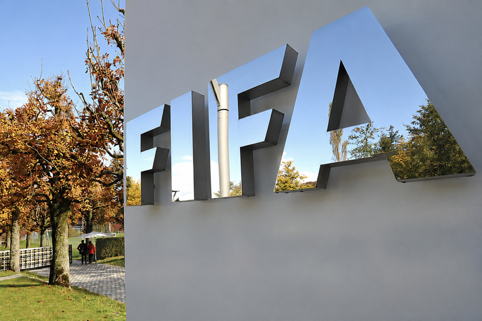 (Image caption) The metal logo outside FIFA headquarters in Zurich, Switzerland. This organization does not need to support star players every year, nor does it need to build its own stadiums, yet it has long controlled the core entry points for the World Cup name, competition system, brand licensing, and global broadcasting rights.
What the competition is really selling is attention that cannot be easily replicated.
Football matches may appear to sell tickets, but what they're really selling is global attention.
The World Cup, held every four years, can bring together national identity, star players, historical memories, commercial brands, and the emotions of a global audience on a single stage in a short period of time. This kind of attention requires a long-standing competitive tradition, national participation, and the accumulation of fan culture, which is difficult for another entertainment product to replicate in the short term.
According to data released by FIFA, during a random draw ticketing phase for the 2026 World Cup, more than 500 million ticket applications were received within 33 days, covering all 211 member associations of FIFA.
This figure refers to the total number of ticket applications, not the 500 million individual ticket buyers. A single applicant can apply for multiple matches or multiple tickets. Even so, it still reflects the high level of attention surrounding the World Cup.
The more concentrated the demand, the stronger the pricing power of the rights holders. Broadcasting platforms pay fees to gain access to a particular market's audience; sponsoring companies buy the opportunity to connect their brand with the global sentiment surrounding the event; host countries hope to enhance their city and national image through the World Cup; and fans pay for attending the games, watching the matches, and purchasing merchandise.
These deals all ultimately revolve around the same core set of assets: the tournament rights controlled by FIFA.
Whether media companies can recoup their costs through advertising and subscriptions after acquiring broadcasting rights at high prices, whether sponsors' brand budgets can be converted into actual sales, and how much of the hotel and retail revenue in the host city is truly new consumption can usually only be determined after the event ends.
The rights seller can lock in a significant portion of the revenue through long-term contracts before the outcome is announced.
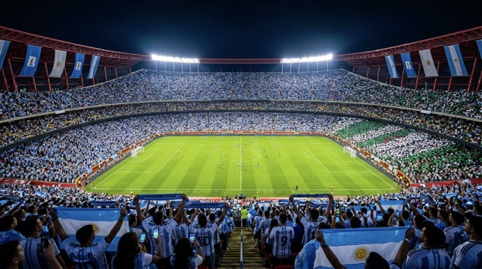 (Image caption) A packed World Cup stadium at night. Global attention is focused here, giving broadcasting rights, sponsorship slots, and ticket demand strong pricing power, while the heavy asset costs of stadium renovation, security, and city operations are mainly borne by the host country.
Host Country: Fixed Bills and Incalculable Returns
The World Cup is always accompanied by a whole set of compelling economic projections, including tourist spending, temporary employment, hotel revenue, city exposure, and future tourism value.
When calculating the true net benefit, it is also necessary to deduct public security, traffic management, venue renovation, tax arrangements, and the crowding-out effect caused by ordinary tourists canceling their trips due to housing prices, congestion, and security measures.
Economist Victor Matheson's research on past World Cups shows that when Brazil and Russia hosted the World Cup, the related investments were around $12 billion each. Furthermore, the economic benefit forecasts published before the hosting of major sporting events are often higher than the actual results that can be observed after the event.
Post-event studies of the 1994 FIFA World Cup in the United States also found that the actual economic performance was far below pre-event predictions. This does not necessarily mean that the event did not generate consumption, but rather that much of the seemingly additional revenue may simply be residents shifting their spending from other activities to football.
The latest data from the 2026 World Cup once again reflects this complexity.
A Reuters survey of Mexico's economic performance has revised its estimate of the World Cup's economic contribution down to 0.4% to 0.5% of GDP; Citi Mexico's estimate is even more conservative, estimating an overall economic impact of approximately $2 billion, roughly 0.1% of Mexico's GDP.
Temporary employment is estimated at around 100,000, about 10% less than previously predicted. During the Games, entertainment spending saw a significant increase, while hotel and catering spending did not rise in tandem. Specifically, hotel spending in June decreased by 10.5% month-on-month, catering spending decreased by 4.9%, while entertainment spending increased by 16.5%.
These data suggest that the World Cup did not benefit all related industries simultaneously. Some consumption was redistributed, with some cities and industries experiencing increased growth, while others may have been affected by congestion, price increases, or a decrease in ordinary travelers.
A city's image, improved transportation, public sentiment, and international visibility are all difficult to incorporate into a single short-term financial statement. Therefore, one cannot judge whether hosting the World Cup is worthwhile solely based on hotel occupancy rates or retail revenue.
The problem is that the host country bears the costs in black and white, but in return, a significant portion of the returns are long-term benefits that take many years to verify and are even difficult to quantify accurately.
FIFA's revenue structure is relatively clear. It sells pre-contracted media and commercial rights, assumes the risks of event organization, legal matters, compliance, and branding, and the substantial asset costs of stadium and city operations are mainly borne by the host city.
One side sells globally scarce event assets, while the other side bears a large amount of local costs, thus creating a power imbalance in the football economy.
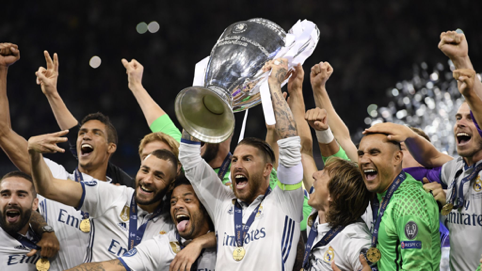 (Image caption) Real Madrid players celebrate by raising the Champions League trophy. Top clubs generate staggering revenues, yet must invest year after year in transfer fees and salaries to maintain their competitive edge; the truly stable value of rights still belongs to the organizers who control the stage of the competition.
Clubs: The competitive costs behind high revenues
Real Madrid became the world's first football club to surpass €1 billion in annual revenue in the 2023-2024 season. Following the renovation of the Bernabéu Stadium, matchday revenue increased significantly, reaching €482 million in commercial income.
This is a remarkable business achievement, but having the highest revenue does not necessarily mean being in the most advantageous structural position.
Top clubs have long maintained a balance between competitive performance and financial discipline. Losing qualification for the UEFA Champions League can impact broadcasting, ticket sales, and sponsorship revenue; in order to regain qualification, management may then increase transfer and salary expenditures.
In 2024, global clubs spent approximately €10.96 billion on transfers. Men's professional football clubs paid $709.6 million in agent fees for international transfers, a figure that reached $889.5 million in 2023.
Clubs need to continuously invest money to acquire competitive ability. What FIFA and UEFA sell is the top competitive arena that clubs aspire to enter.
A single powerhouse club may experience a decline in revenue due to mismanagement, aging star players, or missing out on major tournaments. However, the value of the World Cup and Champions League rights is built upon the competition maintained by numerous teams, players, and nations. Individual clubs may decline, but as long as the competitive system remains attractive enough, the overall tournament rights can continue to be sold.
Players: The Most Conspicuous Wealth and the Most Direct Risk
The income of top modern football stars surpasses that of many publicly traded company executives. Salaries, signing bonuses, bonuses, image rights, and brand endorsements make them the most prominent beneficiaries of the football economy.
They simultaneously bear the most direct physical and professional risks. A player's prime professional career may only last a little over a decade, and a single serious injury can alter all expected income. Furthermore, the vast majority of professional players do not live in a world of superstars; the income of players in lower leagues, developing countries, and women's football is vastly different from that of the top stars.
The total resources allocated to the 48 participating teams for the 2026 World Cup have been increased to $871 million, covering preparation, participation, and prize money, the highest allocation in World Cup history.
This amount of money is considerable, but compared to FIFA's revenue target of $13 billion for this cycle, it is still only a part of the entire football business system.
Players provide the content of the competition, fans give the games emotional weight, and media and commercial entities push them into the global market. The rights holders combine these forces to create a global product that can be sold periodically.
UEFA: The system and organization that controls the entry of annual football funds
If we shift our focus from the World Cup, which is held every four years, to professional football, which is run annually, UEFA is also in a very advantageous position.
The UEFA Champions League organizes Europe's most commercially valuable clubs into an annual competition. Participating clubs need Champions League revenue, broadcasting platforms rely on the Champions League to attract subscribers, sponsoring companies use the Champions League to enter the global market, and players also build their professional reputation through this competition.
UEFA sells media and commercial rights in a unified manner, and after deducting event expenses, distributes most of the revenue to participating clubs, member associations, non-participating clubs, and football development projects.
Therefore, UEFA does not simply keep all the tournament revenue for itself. Its institutional advantage lies in becoming the necessary gateway for funds and wielding primary power over rules, admissions, and distribution.
In the football economy, the most valuable position is not necessarily the one that permanently retains the highest revenue. Whoever can establish entry conditions, standardize the sale of rights, and determine the distribution rules has already secured the most important institutional resource in the entire system.
Why aren't the biggest winners the sponsors, platforms, or betting companies?
Sports brands like Nike and Adidas can reap long-term returns through team, star player, and merchandise sales, without incurring venue costs. Broadcasting and streaming platforms can leverage major sporting events to increase subscriptions, advertising revenue, and user data, while betting companies can potentially generate massive transaction volumes from each game.
These organizations are all major beneficiaries of the football economy, and some companies may even earn more in a particular year than FIFA retains its own surplus.
However, they all need to compete again in each business cycle.
Sponsors need to purchase brand seats, media outlets need to pay broadcasting fees, betting companies need to bear regulatory and market risks, and sporting goods companies also need to face consumer trends, inventory, and brand competition.
They are competing for access to the World Cup economy, and what FIFA is selling is that entry point.
FIFA's institutional position is not due to a lack of value. Global competitions require unified rules, member coordination, refereeing systems, cross-border commercial integration, legal management, and long-term brand maintenance. The World Cup's status as a global product is also inseparable from FIFA's accumulated organizational capabilities over many years.
The real issue to discuss is not whether FIFA should receive revenue, but whether its institutional power is transparent enough, how costs and benefits are distributed, and whether players, clubs, host cities, and fans receive commensurate rewards for their contributions.
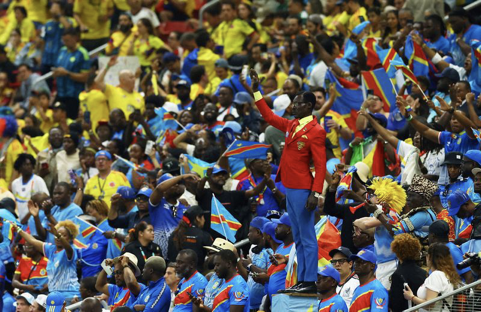 (Image caption) Passionate fans in the stadium stands. They provide the ultimate purchasing power for the entire football economy with tickets, subscriptions, jerseys, travel, and time, yet they often have no say in the sport's pricing and distribution rules.
Fans: The final payers in the football economy
At the very bottom of this long revenue chain, there always stand the fans.
They provide the ultimate financial means for football through tickets, platform subscriptions, jerseys, travel, accommodation, and time. Even an ordinary citizen who never steps into a stadium may contribute to the costs of the event through advertising prices, public funds, and media subscriptions.
The 2026 World Cup is considered one of the most expensive World Cups in history. Tickets for some popular matches and the final are in the extremely high price range, and accommodation, transportation, and related expenses are pushing the on-site experience towards a wider range of people with greater purchasing power.
The emotions associated with football are created by the fans, but the price of a football is not necessarily determined by them.
With the continued increase in tournament revenue, football governing bodies need to answer not only how to maximize commercial value, but also whether ordinary fans can still access the sport and whether public resources are being used rationally.
So, who is the biggest winner in the football economy?
If measured by a single match, the winners might be the team that lifts the trophy, the hotel that sells out its rooms, or the brand that successfully bets on advertising slots.
If we look at a World Cup, players, national associations, broadcasting platforms, sponsors, and some of the host cities could all potentially reap substantial profits.
When the observation period is extended to decades and factors such as income, risk, asset burden, pricing power, and distribution power are taken into account, organizers who control the intellectual property rights and rule-making power of top-level events still possess the most stable institutional advantages.
This is especially true for FIFA.
It possesses the world's rarest football event brand, allowing different countries to compete for hosting rights, media to compete for broadcasting rights, and companies to compete for sponsorship slots, while also ensuring that the world's best players take to the field under the same set of rules.
The host city needs to invest real money time and time again, the club needs to maintain the team year after year, the players exchange their bodies and limited professional lives for success, and the broadcasters need to renegotiate the contract in each round.
Assuming the existing international football governance structure remains fundamentally unchanged, the World Cup, controlled by FIFA, can still be monetized globally every four years.
While trophies on the pitch must be fought for again, the most coveted power in the football economy has a relatively stable owner. This owner doesn't personally score a single goal, yet controls the name of the competition, sets the rules for participation and allocation, sells global attention, and controls the main entry points for revenue into the system.
Its name is FIFA.
Football reveals more than just a distribution method within the sports industry. Digital platforms, film and entertainment, artificial intelligence, and the news industry all exhibit similar structures: some produce content, some provide attention, and others control standards, access, and distribution.
What really needs to be discussed is not just how much revenue FIFA has generated, but rather, what rules should ultimately govern the distribution of the value created by players, fans, cities, and businesses worldwide.
Disclaimer
This article, compiled and analyzed based on publicly available information, official financial documents, research reports, and authoritative media reports, aims to explore the business models, institutional structures, and value distribution within the football economy. The "biggest winner" is an analysis and judgment based on institutional factors such as event ownership, pricing power, risk-taking, and revenue distribution, and is not a ranking of any organization's annual revenue, profit, or business performance. The views expressed in this article are for public discussion and research reference only and do not constitute investment, legal, or business decision advice.