

Jensen Huang and Nvidia: The Governance Challenges Behind the Founder Premium
Whether the succession plan is clear, whether the whereabouts of the chips can be traced, and how major risks are disclosed will affect shareholders' trust in Nvidia and the price they are willing to pay for future profits.
Following Jensen Huang's public admission of an extramarital affair and Nvidia's board announcement of an independent investigation, the company's stock price fell by approximately 9.51% over two trading days. Beyond the decline, a longer-term question emerges: if investor confidence in the founder wavers, can Nvidia's management team make key decisions, maintain delivery commitments, and manage cross-border chip transactions? How much of these capabilities the company has mastered, and how much still relies on Huang, will influence how much the market is willing to pay for Nvidia's future profitability.
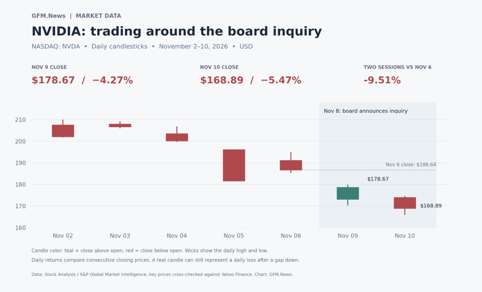 (Image caption) Nvidia's daily candlestick chart from November 2nd to 10th, 2026. Following the board's announcement of an investigation into reports involving Jensen Huang, the stock price fell 4.27% on November 9th, closing at $178.67; it then fell another 5.47% on November 10th, closing at $168.89, a cumulative drop of 9.51% over the two trading days.
What does a two-day drop in stocks indicate?
On November 9th, NVIDIA (NASDAQ: NVDA) shares fell 4.27% to $178.67 from $186.64 in the previous trading day. On the same day, the Philadelphia Semiconductor Index rose 6.85%, a difference of approximately 11.1 percentage points. While the semiconductor sector rebounded after a sharp decline the previous week, NVIDIA bucked the trend and fell.
On November 10, Nvidia shares fell another 5.47%, closing at $168.89. From the closing price on November 6, the cumulative decline over two trading days was approximately 9.51%.
The market landscape had shifted by the second day. US inflation data pushed up interest rate expectations, major stock indices closed lower, and AI-related companies were also affected by concerns about valuations and the prospects for data center construction. Therefore, the two-day decline cannot be entirely attributed to Huang Renxun's personal incident; the gap between the first day's performance and the semiconductor index cannot be directly attributed to losses caused by this controversy.
The "founder premium" discussed in this article refers to the higher price investors may be willing to pay for the same expected profits due to their trust in the founder's leadership. This premium needs to be analyzed through market data and company performance and cannot be directly obtained from two days of stock price fluctuations.
To examine whether this premium is narrowing, one can compare analysts' earnings forecasts with Nvidia's expected price-to-earnings ratio relative to its peers. If earnings forecasts remain largely stable, but the price-to-earnings ratio continues to decline relative to peers, there is reason to question whether investors have changed their views on management and operational execution.
However, earnings forecasts may be updated slowly, and changes in interest rates, product cycles, competition, and regulations can also affect valuations. Making a judgment requires a period of data collection and subsequent company disclosures; conclusions cannot be drawn solely based on short-term price movements.
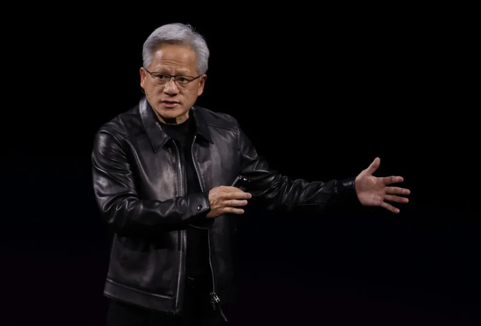 (Image caption) Jensen Huang delivers a speech at a public event, spreading his hands to explain his views. As the founder and long-time CEO of Nvidia, his personal judgment, customer relationships, and market trust constitute important assets of the company and are also the core objects for the market to assess whether the "founder premium" has narrowed.
How a board of directors investigates its own CEO
On November 8, Jensen Huang admitted to marital infidelity in a letter released by Nvidia, apologized to his family and colleagues, and promised to cooperate with the investigation. The letter did not identify the other party.
On the same day, the board stated that, in response to media reports that Jensen Huang might be a target of foreign intelligence activities, a committee of independent directors would oversee the investigation, assisted by external independent lawyers. The board stated at the time that there was no reason to believe that U.S. national security or Nvidia's secrets had been compromised, while expressing confidence in Huang and the management team. The Chinese Foreign Ministry denied the espionage allegations.
On November 10, the independent directors further announced that they had hired former Acting U.S. Attorney for the Southern District of New York, Joon H. Kim, and his law firm, Wachtell, Lipton, Rosen & Katz, to conduct an investigation. As of the time of this report, the company has not yet released any official findings from the investigation.
The appointment of external lawyers makes the execution of the investigation clearer. For shareholders, the next key concerns are: whether the investigation can obtain the necessary records of correspondence and decision-making documents, how personnel with potential conflicts of interest will recuse themselves, and how significant findings will be disclosed to shareholders.
A board statement expressing confidence in the CEO helps maintain operational stability; an investigation, on the other hand, requires evidence to allow shareholders to determine the validity of the company's existing procedures and where corrections are needed. Both serve their purposes and cannot replace each other.
Who can make key decisions?
Management transition has long been a risk disclosed by Nvidia. In its fiscal year 2026 annual report, the company stated that Nvidia is highly dependent on its long-serving senior management team, and problems with succession planning, knowledge transfer, or personnel transition could affect strategy, execution, and long-term development.
This disclosure reminds shareholders that the ability of key personnel to be carried on by the team is itself part of the company's value. Whether the company's current succession plan is adequate requires further information to determine.
If the CEO is temporarily unable to assume some responsibilities, who has the authority to approve product roadmaps and supply commitments? Who can represent the company in negotiations with key customers? If the compliance team identifies risks involving senior management, through what procedures can they report directly to the board of directors?
Whether these responsibilities can be handed over in an orderly manner is related to whether customers can rely on existing commitments and how investors assess the company's operational risks.
Even if Jensen Huang continues as CEO, the problems remain. While the founder's judgment and connections can help the company expand its market, customer vetting, transaction approval, and risk reporting also need to operate independently, outside of his personal influence.
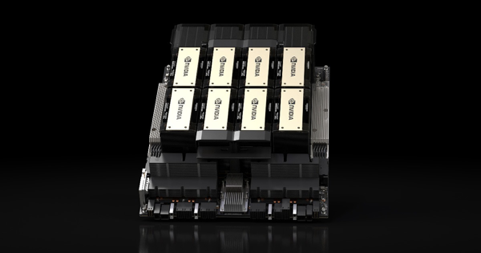 (Image caption) Product showcase of NVIDIA H200 GPU module. Exports of compliant H200 and equivalent chips to China and Macau must be reviewed on a case-by-case basis. The traceability of end-users, applications, and resale paths is a key technical aspect of the article's focus on regarding chip destinations and compliance.
Who bought the chips and where did they end up?
The final rule issued by the U.S. Department of Commerce's Bureau of Industry and Security will take effect on January 15, 2026. License applications for export to China and Macau for eligible Nvidia H200 and equivalent chips will be reviewed on a case-by-case basis. This arrangement includes supply, security, and testing requirements and does not guarantee approval for all buyers, uses, and resale channels.
To determine whether a shipment of chips is compliant, it is necessary to verify the applicable rules, product model, destination, end user, intended use, and licensing conditions at the time. The distributor's registered address can only answer part of this question.
Nvidia's regional revenue also has similar identification limitations. For the second quarter of fiscal year 2027, ending July 26, 2026, the company's revenue was $96.221 billion, of which data center revenue was approximately $89 billion. Direct customers headquartered in China and Hong Kong contributed $7.88 billion, representing approximately 8.2% of total revenue.
Nvidia categorizes its revenue by the location of its direct customers' headquarters, but the delivery locations and end customers may be elsewhere. The company also disclosed that H200 shipments under the U.S. licensing program accounted for less than 1% of its data center revenue in the quarter. These two percentages cover different transactions and have different denominators, and neither can individually indicate where the chips are ultimately deployed.
The Information reported on November 10 that a business network linked to Alice Huang, involving Chinese and Singaporean companies, facilitated at least $7.5 billion in Nvidia chip shipments. Reuters quoted the report, stating that it could not independently verify it.
To assess the financial impact of this interim shipment amount on Nvidia, it is still necessary to clarify which transactions involved regulated products, when the shipments occurred, whether licenses were obtained, and how much revenue Nvidia actually recognized. Currently available public information is insufficient to translate the $7.5 billion into a revenue shortfall, fine, or cash loss for the company.
On the evening of November 10, Pacific Time, Reuters reported, citing procurement records, that Northwestern Polytechnical University, which is on the U.S. Entity List, purchased two H200 chips in October through a Chinese supplier, not directly from Nvidia.
This report provides specific examples of tracing the flow of terminals, but it cannot prove that Nvidia was aware of or directly involved in the violation, nor can it automatically be linked to the aforementioned business network or Jensen Huang's personal relationships to form the same transaction chain.
The investigation must continue to trace the transactions: how the original buyer conducted due diligence, how resale and transshipment were recorded, whether any unusual signals were investigated, and when management and the board of directors became aware of the transactions. Only by filling in these gaps can it be determined whether the problem lies in a particular channel, procedure, or broader oversight arrangements.
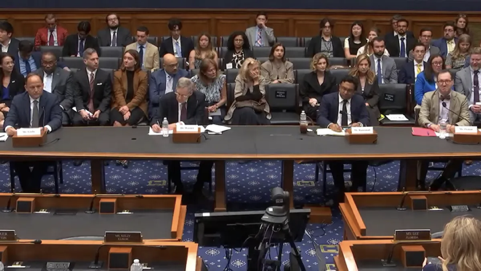 (Image caption) A U.S. congressional committee hearing on the semiconductor industry, with committee members and witnesses seated at the conference table. The chairpersons of three House committees have requested that Jensen Huang provide closed-door briefings on related communications and procedures for preventing foreign intelligence activities, reflecting pressure for political oversight and information disclosure.
Congress demands explanation, shareholders press for disclosure
On November 4, the chairpersons of three committees of the U.S. House of Representatives jointly sent a letter requesting that Jensen Huang attend a closed-door briefing on November 18 and accept that date or propose an alternative date by November 11. The letter focused on Huang's interactions with relevant individuals and Nvidia's procedures for preventing foreign intelligence activities.
November 11th was the deadline for responding, and November 18th was the briefing date requested in the letter. The letter itself does not prove that Huang Renxun has confirmed his attendance, nor is it equivalent to a summons.
Political pressure subsequently increased. According to a Reuters report on November 10, Republican Senator Kevin Cramer publicly demanded that Jensen Huang resign as CEO. This is the senator's call, and Nvidia's board of directors has not yet announced a personnel decision based on it.
Shareholders raised questions about the information disclosure. On November 9, Mark Kistenmacher filed a proposed securities class-action lawsuit in the U.S. District Court for the Northern District of California, alleging that Nvidia and Jensen Huang failed to adequately disclose the relevant relationship and risks, making previous public statements regarding Megaspeed misleading.
These are the allegations made by the plaintiff. Whether the case can proceed as a class-action lawsuit, and whether the defendants bear legal responsibility, remains to be determined by the court proceedings.
Congress focuses on national security and policy oversight; boards of directors need to investigate the relationship between events and the company's operations and management responsibilities; and shareholder lawsuits focus on whether investors obtained sufficient and accurate information. While these three types of lawsuits may involve the same documents and records, their procedures and the matters to be proven differ, and they cannot be substituted for each other's conclusions.
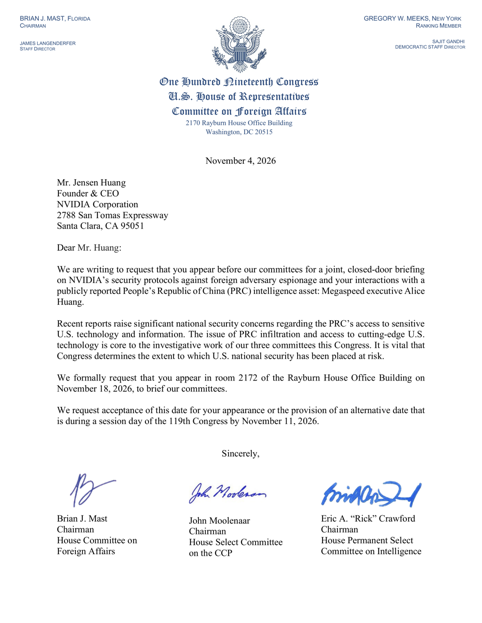 (Image caption) On November 4, 2026, the chairpersons of three committees of the U.S. House of Representatives jointly wrote to Jensen Huang, requesting that he attend a closed-door briefing on issues such as Nvidia's security procedures for preventing foreign intelligence activities. The image shows the original page of the publicly released letter.
What will the next financial report answer?
Nvidia is scheduled to release its fiscal 2027 third-quarter results on November 17. The company gave revenue guidance of $108 billion for the quarter in August, with a fluctuation of 2%, excluding data center computing revenue from China.
When reading this financial report, the first thing to note is the timeline: the third quarter ended on October 25, earlier than the employee letter and board investigation announcement dated November 8.
Third-quarter results can test a company's previous demand, delivery, and profit performance, but they cannot directly answer how much the November incident affected subsequent orders. Even strong results cannot be used to conclude that the incident had no impact on future business; similarly, if results fall short of expectations, the cause cannot be directly attributed to the incident that was only made public in November.
More forward-looking information will come from next quarter’s guidance, financial statement notes and management’s explanation: whether customers have postponed orders, whether there have been changes to delivery arrangements, whether the company has increased compliance spending, or adjusted its estimates of inventory and purchasing commitments.
There are existing precedents for how export restrictions can impact finances. In 2025, after the US imposed new export licensing requirements on H20 companies, Nvidia recognized $4.5 billion in charges related to excess inventory and purchase commitments in the quarter ending April 27 of that year. The company subsequently disclosed that it would recognize $400 million in charges related to excess inventory and purchase commitments in the first half of fiscal year 2027.
The aforementioned expenses predate this incident and cannot be included in the losses incurred. They illustrate that policy and market access changes can simultaneously impact fulfillable orders, existing inventory, and committed purchases. Assessing the subsequent impact requires considering revenue, gross margin, cash flow, and purchase commitments together.
 (Image caption) The exterior of Nvidia's headquarters in Santa Clara, California, features a unique geometric shape and campus layout. It serves as the primary base for the company's research, management, and operational decisions, and is also the institutional setting for the board of directors to conduct independent investigations and governance procedures.
How to retain trust in a company
Nvidia's stock price decline reflects market judgments made before information was fully available. Whether the company's long-term profitability has been affected remains to be seen, pending further operating data and investigation results.
Next, we need to track two things separately: first, whether there have been any verifiable changes in export licenses, customer orders, delivery arrangements, and costs; and second, whether the board of directors and management team can provide sufficient information to reassure shareholders that major decisions, transaction reviews, and daily operations will not be disrupted due to personal events.
If earnings expectations remain stable, but valuation multiples continue to lag behind peers, it's reasonable to question whether the market has lowered its willingness to pay for the same earnings. If orders, licenses, or procurement commitments change, the analysis will focus on revenue, costs, and cash flow. These two lines may change simultaneously and need to be identified separately.
The product judgment, customer relationships, and market trust that Jensen Huang has built over many years are important assets for Nvidia. The board's long-term responsibility is to ensure that these assets are continuously controlled by the entire organization.
When key decisions are made by designated personnel, customer commitments are fulfilled, transactions are traceable, and significant risks are disclosed, shareholders have the basis to assess the company's capabilities. Whether the founder's premium can be sustained ultimately depends on Nvidia's ability to translate trust in one person into consistently deliverable results.
Disclaimer
This article is for news research and informational purposes only and does not constitute investment, securities trading, legal, or tax advice. Market conditions, company guidelines, and case statuses are all current as of the date listed in the article. Media allegations, plaintiff claims, and political opinions mentioned in the article do not equate to facts confirmed by investigative authorities or courts.