

The three hurdles in the AI power race: grid connection, computing costs, and who will pay for them.
Global data center electricity consumption is expected to nearly double within five years; grid connection time for new power sources in the US is lengthening; Ohio is incorporating demand commitments into its power supply rules.
AI companies can invest heavily in ordering chips, but reliable power requires waiting for grid research, permits, and engineering implementation. Global data center electricity consumption is projected to nearly double between 2025 and 2030, with return on investment still depending on connection timing, computing efficiency, and paying customers. Ordinary households are concerned: who will pay the bills if facilities requested by businesses are left idle? Ohio's minimum payment and guarantee arrangement is transforming demand declarations into financially binding power commitments.
Editor's Note
This article continues the discussion from the author's and GFM.News research team's article published on January 16, 2026, titled "Power Shortages Are Becoming a Hidden Constraint on U.S. National Security," and is included in the "AI x Energy" research series. The previous article discussed how power supply affects national capabilities; this article further explores how AI investment bridges the gap between the power grid, hardware, and commercial needs, and how the responsibilities and risks of new infrastructure are allocated among businesses, investors, and ordinary users.
Editorial Department
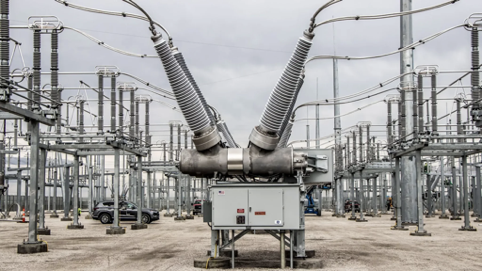 (Image caption) A high-voltage substation and transmission equipment site, showcasing the large-scale power infrastructure required for grid connection in the United States. The expansion and grid connection approval of such equipment often takes several years, directly corresponding to the data center power connection delays and power generation project queues discussed in this article.
With electricity demand nearly doubling, can power supply and revenue be generated simultaneously?
A 2026 update to the International Energy Agency's (IEA) research estimates that global data center electricity consumption will reach approximately 485 terawatt-hours (TWh) in 2025, a 17% increase from the previous year; by 2030, this is projected to reach approximately 950 TWh, accounting for about 3% of global electricity consumption. Of this, AI-driven data centers are expected to see a roughly 50% increase in electricity consumption by 2025. While the overall figures encompass all data center operations and cannot be entirely attributed to AI, they raise a crucial question: can the increased computing demands be reliably powered at the required locations, times, and prices?
Chip procurement and power grid expansion follow different timelines. Computing equipment can be ordered, but connecting it to the grid may involve system research, licensing, equipment procurement, and transmission and distribution engineering; even with funding, there's no guarantee that each stage will be completed simultaneously. While the capital markets discuss trillions of dollars in demand for smart services, local residents face more immediate questions: Who pays for the new infrastructure, and who bears the losses if projects fail?
When evaluating this round of investment, I first ask three questions: Can the electricity be delivered on time? Can the service price cover computing and capital expenditures? Are customers willing to continue paying? If any of these three are lacking, the computing power on paper will be difficult to reliably translate into asset value.
Electricity consumption growth is supported by research and is projected to remain within a broad range.
In the United States, a 2024 report by Lawrence Berkeley National Laboratory estimated that data center electricity consumption in 2023 was approximately 176 terawatt-hours, accounting for about 4.4% of total U.S. electricity consumption, with a scenario range of 325 to 580 terawatt-hours for 2028. An updated study released by the laboratory in June 2026 estimated the 2030 reference scenario at 649 terawatt-hours; after incorporating various uncertainties, the range was 521 to 843 terawatt-hours.
These figures are model estimates and should not be considered as signed orders. Changes in any of the following—chip shipments, equipment power, utilization rate, lifespan, and cooling efficiency—can alter the results. Furthermore, US research and IEA global research use different models and assumptions, and therefore cannot be directly combined to create a completely consistent demand table.
For investors, rising industry demand and profitability of individual data centers are two separate issues. A region may simultaneously experience power shortages and a surplus of data centers: sites with limited power cannot go online, and existing data centers may not meet customer requirements for equipment, location, or price. Even with increased orders, a company may still incur losses due to declining service prices, insufficient equipment utilization, or excessive financing burdens.
Macroeconomic growth can support investment research, but cash flow depends on specific clients, executable contracts, and competitive delivery capabilities. The gap between these two is precisely what project evaluation needs to address.
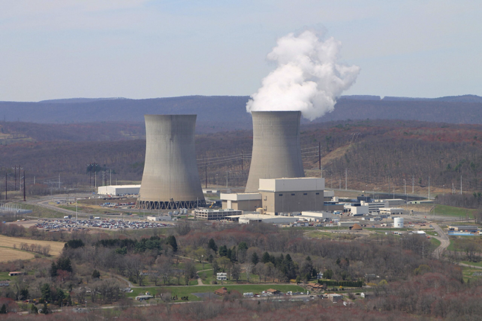 (Image caption) A panoramic view of the cooling towers and grounds of the Susquehanna Nuclear Power Plant in Pennsylvania. The plant was involved in revisions to its grid connection agreement to share a data center, but the Federal Energy Regulatory Commission (FERC) rejected the proposed changes in 2024, highlighting controversies surrounding backup, reliability, and cost responsibility when nuclear power plants are located near large loads.
The new power supply took more than five years to connect to the grid, which cannot be equated with the time it took to connect the data center to power.
Data centers require reliable power supply at specific connection points. While there may be ample installed capacity nationwide, this does not mean that a data center in a particular region can be immediately connected to power; transmission line capacity, transformer equipment, protection systems, and local reliability requirements all influence the connection process.
According to Berkeley Lab's 2026 edition of "Queued Up," as of the end of 2025, approximately 8,200 power generation and storage projects in the United States will be applying for grid connection, involving about 1,312 gigawatts of generating capacity and 749 gigawatts of storage capacity. In regions with available data, the median time from submitting a grid connection application to commercial operation for projects scheduled to be operational in 2025 is over five years. The study also indicates that most of the projects that submit applications will eventually be withdrawn.
This data represents statistics for power generation and energy storage projects and cannot be directly used as the waiting time for data centers to connect to power. However, it illustrates that adding power requires financing, equipment procurement, engineering, and system integration, a lengthy process with uncertain outcomes.
For data center sites, cheaper land and tax incentives may not be enough to offset power connection delays. Equipment arrives but the power supply date continues to be postponed, financing costs continue to accumulate, and the hardware may face competition from next-generation products while waiting. Therefore, the power connection schedule will affect the project's revenue start-up, equipment competitiveness, and overall return.
The difference between the average load and peak capacity of the power grid cannot all be considered as idle resources available for AI. The power system must reserve capacity for equipment failures, extreme weather, and seasonal peaks, and how much of this can be converted into new long-term load needs to be assessed on a region-by-region basis.
Whether a power connection arrangement constitutes a preliminary intention, research result, conditional commitment, or a delivery obligation with a clear responsibility and date should be a core issue in AI infrastructure due diligence. Investors must also identify which delays are borne by the developer, which are subject to power companies or regional grid projects, and whether the parties have corresponding remedial arrangements.
Ohio links demand declarations to payment obligations
The most direct public consequence of AI-driven energy issues is how to distribute the expansion costs. If power companies install additional facilities for large customers, and those customers cancel projects, postpone commissioning, or their actual usage is far lower than the declared demand, the unrecovered investment may create pressure that is passed on to other users.
On July 9, 2025, the Ohio Public Utilities Commission (PUCO) adopted a data center rate settlement agreement reached by AEP Ohio, regulatory officials, consumer representatives, and others. The relevant rates took effect on July 23. One of the purposes of the agreement was to reduce the risk of other users bearing the cost of idle facilities.
The new arrangement sets specific obligations for eligible data center loads with a total demand exceeding 25 MW. Minimum monthly billable demand is calculated based on capacity tiers and historical billable demand, with the minimum demand calculated based on contract capacity capped at 85% of the contract capacity. This is a capacity-related billing rule and cannot be simplified to all customers having to purchase 85% of their actual unused electricity.
The initial contract term is the extension period plus eight years, with a maximum extension period of four years, thus reaching a total term of 12 years. Clients who do not simultaneously meet the specified credit rating and cash requirements must provide a guarantee or collateral equivalent to 50% of the minimum fee for the entire contract period. Early termination is also subject to time and payment terms and should not be interpreted as the client being released from all liability by paying three years' worth of fees at any time.
This arrangement requires companies to provide financial commitments for the capacity they declare. When capacity declarations are accompanied by payment and guarantee obligations, companies have a stronger incentive to differentiate between actual needs, backup options, and long-term plans, and power companies can plan and construct accordingly.
Since the implementation of the new rate arrangement, some trackable contract data has emerged. AEP Ohio disclosed in February 2026 that, as of February 12, it had signed binding contracts for 5,642 MW of data center capacity under the new rate arrangement. This is the contracted capacity disclosed by the company and does not yet represent actual operational load, but it provides a more concrete basis for investment planning compared to demand applications without financial commitments.
For residents, the important questions are whether new infrastructure will affect reliability and who will pay the long-term bills; businesses, on the other hand, need predictable prices and service terms. Clear cost-sharing rules help both parties make decisions under the same framework, but this does not mean all electricity price and reliability risks have been eliminated.
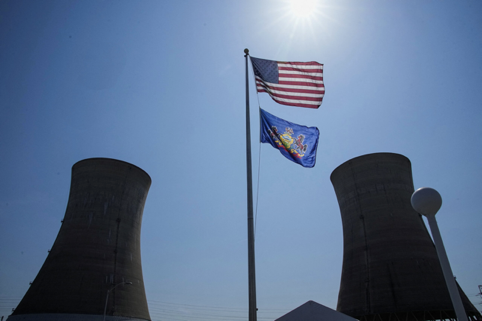 (Image caption) Cooling towers at the Three Mile Island nuclear power plant with the U.S. and Pennsylvania state flags. Constellation signed a 20-year power purchase agreement with Microsoft to support the Unit 1 restart plan, demonstrating how technology companies are using long-term procurement commitments to drive the resumption of nuclear power and seek stable, low-carbon power for data centers.
The collaboration between nuclear power and data centers, as well as the responsibilities of backup and power grids, still need to be clarified.
Nuclear energy can provide relatively stable electricity, which is why it is valued by large technology companies. However, the proximity of power plants to data centers does not automatically resolve issues of reliability, backup power, and cost responsibility.
In November 2024, the Federal Energy Regulatory Commission (FERC) rejected an amendment to the grid connection agreement involving the Susquehanna nuclear power plant, which had proposed increasing the co-located load from 300 MW to 480 MW. This decision was a specific amendment to the agreement and cannot be generalized as a complete ban on co-location of nuclear power plants and data centers.
This historical case raises universal questions: When generating units are shut down, does the data center rely on the public power grid? If backup power is needed, who pays for the related costs? What impact do other market participants have when existing power generation is diverted to large customers?
Long-term power purchase agreements offer an alternative arrangement. In September 2024, Constellation announced a 20-year power purchase agreement with Microsoft to support the restart plan for Three Mile Island Unit 1, which at the time disclosed a capacity of approximately 835 megawatts and a target of coming online in 2028. This announcement demonstrates the existence of a long-term purchase commitment, but the contract alone cannot prove that the unit has resumed operation.
Long-term revenue commitments can help support energy investment, but permitting, engineering, and commissioning risks still need to be managed separately. Sufficiently long contract terms and a creditworthy purchaser can improve financing conditions; ultimately, on-time power supply depends on project progress and regulatory procedures.
The trillion-dollar inference market still needs to be proven by paid demand.
In an interview published on October 24, 2026, in 20VC, Naveen Rao, co-founder and CEO of Unconventional AI, placed energy and hardware efficiency at the heart of the AI competition and predicted that the inference market could reach $10 trillion within a decade. This assessment was presented on the public program page, but no full calculations were provided to reconstruct that figure.
Rao previously founded Nervana Systems, which was acquired by Intel, and was also a co-founder of MosaicML. Databricks announced its acquisition of MosaicML in 2023, disclosing a valuation of approximately $1.3 billion, including retention arrangements. This experience gives him hands-on exposure to model training and computational architecture; in addition, he currently runs an AI hardware company, giving him a business-driven perspective on hardware opportunities.
Reasoning is the process of processing user requests, generating answers, or performing tasks after the model has been trained. As AI enters more workflows, it can increase the demand for continuous computation. However, model services, cloud computing, application subscriptions, and the labor cost savings for enterprises are calculated using different statistical methods; directly adding them together can easily lead to double-counting the same economic value.
A trillion dollars is a promising prospect for research, but it cannot guarantee a return on investment for expanding data centers or purchasing equipment today. To determine how far the market can go, it is necessary to continuously observe paying customers, service prices, usage frequency, and delivery costs, rather than simply extrapolating revenue based on the number of users or the amount of text generated.
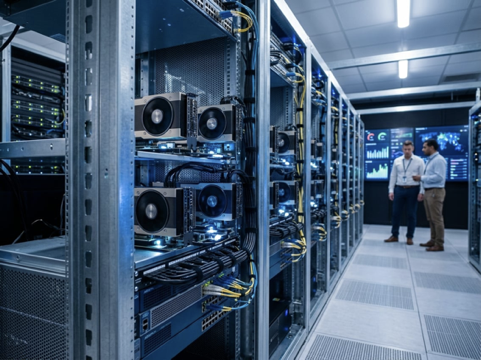 (Image caption) Server racks and GPU computing equipment inside the data center. The image showcases the high-density hardware environment required for AI inference and training, echoing the article's discussion on computing costs, efficiency, price reductions, and actual delivery capabilities.
$50 billion per gigawatt – we must first clarify what we are buying.
Another figure that needs clarification during the interview is that building one gigawatt of capacity requires approximately $50 billion. This statement is recorded in a readable third-party transcript, but it doesn't specify which facilities are included, what type of energy is used, or whether data centers and computing hardware are included. Therefore, it cannot be considered a standard cost for new power generation capacity, nor can it be directly concluded that it represents the entire investment in the AI park.
According to the EIA's 2026 report on commissioning data from 2024, the weighted average construction cost per kilowatt for natural gas power generation is approximately $1,004, for solar power approximately $1,865, and for wind power approximately $1,882. Using the natural gas sample as a simple conversion, one gigawatt would cost approximately $1.004 billion, a significant difference from the $50 billion figure.
This conversion can only be used to clarify the scope, not as a basis for project pricing. Historical equipment samples differ from the prices of large power plants built today, and are insufficient to represent a complete energy supply system including fuel security, transmission, backup, and energy storage. Furthermore, one gigawatt of installed capacity from different energy sources does not equate to the same one gigawatt of reliable power supply capability.
Capital expenditures for an AI park may include GPUs, memory, networking, buildings, cooling, and power facilities. Before comparing prices and risks in the market, it is essential to determine whether the investment is for power generation equipment, electricity connection, or a complete system capable of delivering computing services. Different asset categories will result in different construction periods, depreciation rates, revenue streams, and risk exposure.
Power and electricity consumption also need to be separated. A gigawatt (GW) measures power, while a terawatt-hour (TWh) measures electricity consumption; a facility operating continuously at one GW throughout the year would consume 8.76 TWh of electricity annually. Whether a one GW power generation facility can supply this load also depends on availability, maintenance, fuel, weather, and backup arrangements.
Increased efficiency can lower prices, but it doesn't necessarily guarantee supplier profits.
When power supply is limited, completing more qualified tasks with the same amount of power can increase the amount of services available for sale, which is why AI hardware is worth long-term research. However, peak computing power is not enough to measure efficiency; actual expenditures are also affected by memory capacity and bandwidth, inter-chip communication, software support, cooling, utilization rate, and task type.
A meaningful metric for customers is the total cost of completing a satisfactory task under specified quality, latency, and reliability requirements. While text can be generated quickly, if answers require repeated revisions, businesses still incur the costs of verification and rework; a system's excellent performance in testing does not guarantee its economic viability under a customer's daily workload.
Stanford University's "2025 AI Index" shows that, based on models achieving a specific GPT-3.5 level MMLU test performance, the query price per million tokens decreased from approximately $20 in November 2022 to approximately $0.07 in October 2024, a drop of over 280 times. This comparison is based on a specific test threshold and cannot be extrapolated to all models and tasks.
Lower prices can open up new markets, but they may also compress revenue from existing services. The benefits of improved efficiency will be distributed among chip suppliers, cloud platforms, application companies, and customers. How much a supplier can retain depends on supply scarcity, the intensity of competition, the software ecosystem, and customer switching costs.
Cheaper computing does not necessarily reduce overall power consumption. If usage increases even faster, the saved resources will be consumed by the new demand. This demand response needs to be continuously observed, but it cannot be used as a reason for unlimited expansion in advance; companies still need to demonstrate that the increased usage will generate sufficient revenue.
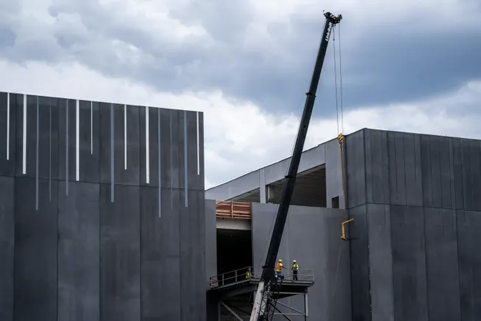 (Image caption) Construction site of a large data center and crane operations. The construction of new facilities is accompanied by huge investments in the power grid and infrastructure. Regions such as Ohio have linked demand reporting with minimum payments and guarantee obligations in order to prevent idle costs from being passed on to ordinary users.
The net income generated by the application determines how long the investment can continue.
All computational investments ultimately require revenue to support them. A company does not automatically gain productivity simply because its model outputs more text.
Legal services provide an example. When Allen & Overy announced its partnership with Harvey in February 2023, it disclosed that during the trial period, approximately 3,500 lawyers made about 40,000 inquiries related to contract analysis, due diligence, and other tasks. The firm also noted that the outputs required careful review by lawyers. This is the user's disclosed adoption data, not an independently audited return on investment.
For legal clients, what they are buying is reliable professional services. If a system saves time on initial drafts but increases the amount of proofreading and rework, apparent efficiency may not translate into net benefit. Data confidentiality, applicable law, professional responsibility, and review arrangements all constitute service expenses and influence whether clients are willing to continue using the service.
There is already concrete empirical evidence in the customer service field. A 2023 study by Brynjolfsson, Li, and Raymond analyzed the use of generative AI-assisted tools by 5,179 customer service personnel and found that the average number of problems solved per hour increased by about 14%, with more significant improvements for novice and less skilled employees, and less benefit for experienced employees. This result applies to the work scenarios studied and cannot be directly extrapolated to mean that all companies can reduce labor costs by 14%.
These cases support a limited but important judgment: AI can generate value in parts of the workflow, the extent of which depends on the task, the user's capabilities, and the review process. For employees, AI can also help gain experience and reduce repetitive work; companies that only calculate how many positions can be reduced may easily overlook the benefits in knowledge transfer, training, and service quality.
For SMEs, selecting appropriate services, compiling data, and establishing acceptance processes are often more relevant to their actual needs than training large-scale models themselves. If products are further priced based on tasks or results, companies that promise results must also bear the cost of unsatisfactory results. Manual review, insurance, data management, and service guarantees will all impact profits.
Engineering, operations, and public responsibility need to be considered together in investment decisions.
Returning to the three questions at the beginning, we can put them into three accounts: engineering, business operations, and public responsibility.
The engineering account needs to confirm when the site will be connected to electricity, whether the power supply can be sustained, and whether the transmission, distribution, cooling, and backup systems are ready for delivery. The operating account needs to assess whether the customer's ability to pay, equipment utilization, and service prices are sufficient to cover depreciation, financing, and replacement expenses. The public account needs to measure whether the increased tax revenue and employment are commensurate with the power grid, water, land, and environmental resources used by the project, and who will bear the unrecovered investment after demand declines.
The three accounts have different time scales. Chips may soon face competition from next-generation products, while power grid infrastructure will operate for decades. Supporting long-term construction commitments with short-term high-price demand must be accompanied by corresponding contractual guarantees and risk capital; scarce resources can bring first-mover advantage, but building too expensively, delivering too late, or lacking stable customers can also lead to losses.
The expanding demand for AI, limited grid access, and improved efficiency in some workflows are all supported by research and case studies. The trillion-dollar inference market, the success of specific hardware approaches, and the return on each energy investment still need to be validated over time and through cash flow. The industry outlook is noteworthy, but the prices and risks of individual assets still require individual assessment.
In our January report, "Power Shortages Are Becoming a Hidden Constraint on U.S. National Security," I discussed with the GFM research team how electricity impacts the operational capabilities of technology, industry, and public systems. Continuing along the lines of our research in "AI and Energy," this capability also requires clear rules of pricing, responsibility, and allocation. Reliable electricity must translate into efficient computing, and efficient computing must generate services worth paying for; businesses should also bear corresponding obligations for the facilities they require to be built, ensuring that ordinary households don't have to pay for unconstrained expansion commitments. Only when return on investment, power reliability, and public burden are mutually supportive can AI infrastructure have the conditions to create long-term value.
Disclaimer
This article is for news research and informational purposes only and does not constitute investment, legal, or tax advice. Data and forecasts in this article are subject to changes in statistical methods, technology, and policies; specific projects should be subject to separate engineering, financial, and legal due diligence.