

Can AI Predict Academic Admissions? Linger's Archive of 10,000 Papers Used for Prediction
The unblinding in December will test the ability to evaluate the texts and also affect the boundaries of judgment in research selection, resource allocation, and technology investment.
Before academic conferences release review comments, can AI identify which research will be accepted? Linger announced it is shelving its predictions for 10,368 ICLR submissions, planning to release the documents in December and verify them one by one. The significance of this experiment extends to who will receive priority access to expert attention, research funding, and corporate contacts. However, predicting human choices and identifying scientific breakthroughs is still far from being the same; when evaluation scores become the goal, tools may also change the behavior they originally intended to measure.
 (Image caption) As a top-tier academic conference on machine learning, the International Conference on Learning Representations (ICLR) has seen a surge in submissions in recent years, putting reviewers under immense pressure to read and examine papers, making it an important testing ground for AI-assisted text analysis and prediction research.
Tens of thousands of predictions await unraveling.
The LingEQ text evaluation project announced that it archived its predictions for acceptance of 10,368 papers for the 2027 International Conference on Learning Representations (ICLR) on November 3, 2026. Its public GitHub repository lists digital fingerprints and timestamps of the prediction files, promising to release the original files after the official acceptance results are announced. According to the ICLR schedule, the initial evaluation will be released on November 5, and the final decision is scheduled for December 16; until the results are available for comparison, there are no confirmed prediction scores for this experiment.
Linger chose to leave a public record before the results were announced, allowing outsiders to later check whether the prediction documents were consistent with the prior commitments. This arrangement provides a traceable starting point, and whether the model has captured a valid signal must be answered by the results, methods, and data records.
This issue holds appeal beyond academic publishing. Corporate R&D departments, research funding agencies, and technology investors also need to decide from a large volume of documents which to read first, who to discuss with, and where to allocate their limited expert time. If AI can provide reliable clues before formal review, it could change the order in which research is seen; however, whether a paper will be accepted, whether the arguments are sound, and whether the research has long-term value still need to be verified individually.
Reviewers under pressure
ICLR is a major international conference in the field of machine learning. Its official data shows that the number of submissions increased from 11,603 in 2025 to 19,525 in 2026, an increase of approximately 68%. In 2027, the conference introduced a submission limit: all authors are subject to a cap of 20 submissions, while new authors who have never published in a major AI or related conference are subject to an even stricter cap of 1 submission.
In its policy statement in September 2026, the program chair described these measures as arrangements to control submission flow, noting that rapidly growing research fields may not have enough qualified experts to read all the results that wish to be published. Generative AI lowers the barrier to producing academic papers, but verifying the soundness of derivations, experiments, and conclusions still requires specialized time.
This pressure falls on both authors and reviewers. Authors need specific feedback to know what additional evidence their research needs; reviewers, on the other hand, must understand unfamiliar methodologies, verify relevant research, and explain their reasons for acceptance or rejection. Tools are useful if they help them identify priority areas for review; however, if they simply add a large number of seemingly complete but unsubstantiated comments, they may only increase the burden on both parties.
Linger's experiment falls on this very need: Does the paper text contain enough signals for the system to estimate the choice of the human review system before the initial review is published?
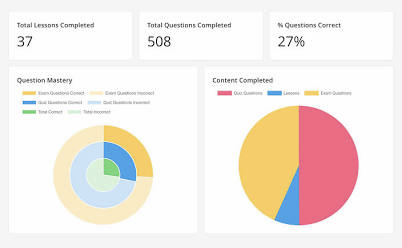 (Image caption) The evaluation data and indicator analysis charts in the peer review system demonstrate how the academic publishing system manages the initial review and screening process of tens of thousands of submitted papers through quantitative indicators and data statistics.
What does "entropy" measure?
According to the project team, Lingoes uses multiple AI models to analyze the conceptual relationships, reasoning structure, and level of evidence in the papers, and then refers to the preferences of previous reviewers to estimate the probability of acceptance. The project refers to the text evaluation as "Language Entropy," abbreviated as LEQ.
This terminology needs to be distinguished from existing technical concepts. In information theory, entropy describes the uncertainty of a probability distribution; the cross-entropy and perplexity used in language models, on the other hand, reflect the model's predictive ability regarding text. These require explicit probabilistic models and calculation methods and cannot be directly translated into intellectual depth, argumentative rigor, or scientific originality.
A piece of text that is difficult for a model to predict may contain rare terms or new expressions, or it may simply be a jumble of sentences; easily predictable text may be clear and fluent, or it may be highly formulaic. Therefore, "high entropy" does not necessarily represent a breakthrough, and "low entropy" does not necessarily represent a lack of value.
The Lingoes Open Repository states that the archived data covers 31 research categories, with each paper including its admission probability, LingEQ score, and ranking within the category. The LingEQ score is capped at 200, indicating that a higher score represents a greater likelihood of admission. This definition links the index to admission results, but does not establish a mathematical relationship between the index and standard information entropy solely based on the name.
To understand what the system prefers, we need to know how scores are formed and what factors drive score increases. For example, how much would the score change if we rewrote the sentences while retaining the research content? Can the system distinguish the different values of adding key experiments versus adding technical terms? Such comparisons help to determine whether the model is capturing evidence or rewarding familiar writing styles.
The consensus reached by multiple models does not automatically equate to independent validation. Models may share preferences from their training data or collectively ignore the same type of problem; the credibility of an evaluation method needs to be gradually established through external testing.
Sealing and Information Isolation
The SHA-256 fingerprint published by Lingoes is a checksum calculated based on the document content, which can be used to verify whether the subsequently released document matches the previously promised version. The project also provides OpenTimestamps proof files, indicating that this commitment has been anchored to the Bitcoin blockchain.
Timestamps can provide evidence that data existed before a certain point in time, but complete verification requires linking the file content, hash value, computational path of the proof file, and blockchain records. This proof primarily deals with version and chronological order; what inputs the system used, when it ran, and whether it accessed review information still need to be explained by other records.
The ICLR review guidelines stipulate that the initial review writing must be completed before the deadline of November 3rd. Therefore, being published before the initial review is different from being written before the review process, and this cannot be used to infer that all reviews have been completed on time. Linger stated that his predictions are separate from the current reviewers' comments and authors' responses, and this claim should be supported by traceable operational records.
More compelling documentation includes the input paper version and fingerprint, model identification and setup, complete prompts and tool calls, execution time, and how each output is aggregated into the final probability. This data helps reconstruct the experiment, but self-generated logs may still be incomplete. Combined with prior evidence preservation or independent auditing, the evidence will be more substantial.
Public disclosure also has boundaries of confidentiality. Content involving restricted information or third-party rights can be examined by independent researchers through controlled access; the key is whether external parties can verify important claims, rather than indiscriminately putting all information online.
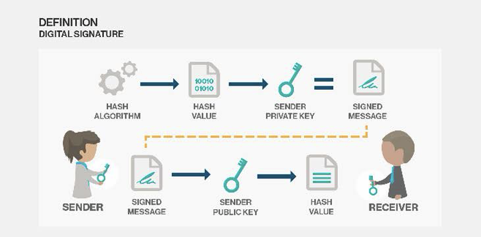 (Image caption) A diagram illustrating the digital signature and cryptographic hash timestamp verification mechanism, showing how LingEQ uses SHA-256 and blockchain technology to store and archive evidence to prove that the predicted content existed before a specific point in time.
Sample determines scope of application
10,368 papers is a sufficient number for analysis; whether the research can be extended to a wider scope depends on how these papers are generated.
If manuscripts that fail full-text analysis are excluded, the model may encounter fewer studies with dense formulas, unusual layouts, or lengthy appendices; if certain fields have a high inclusion rate, the overall performance will also be affected by the field composition. Therefore, sample selection, exclusion criteria, and classification rules should be disclosed along with the results.
The denominator of the acceptance rate can also alter a reader's understanding. The official ICLR 2026 review lists 19,525 valid submissions, 13,763 papers that received acceptance or rejection decisions, and 5,355 accepted papers. Based on these figures, the number of accepted papers represents approximately 27.4% of valid submissions, and approximately 38.9% of those that received decisions.
The two ratios answer different questions. The former describes the acceptance rate among all valid submissions, while the latter focuses on the manuscripts that ultimately receive an acceptance or rejection decision. If one set of predictions treats retractions as non-acceptance and the other excludes retractions, their accuracy cannot be directly compared.
The handling of retractions, procedural rejections, missing results, and changes to paper versions should be finalized before unblinding. Otherwise, researchers may choose a more favorable calculation method after seeing the results.
The meaning of 26 choices
Lingoes materials cite a study by Gary King and Steven Worthington of Harvard University to illustrate the potential of AI review. The researchers' published working paper used 124 draft papers from RapidPeer and 134 human reviews, generating AI opinions using Claude Opus 4.8 and employing GPT-5.5 as the AI judge. The authors also disclosed a conflict of interest in designing and operating RapidPeer.
The most frequently cited result is that three former journal editors favored the AI's opinions in 26 out of 30 anonymous comparisons. However, the three editors compared the same set of ten pairs of opinions, and the study did not require them to read the corresponding original manuscripts; therefore, this is not a test of the accuracy of 30 independent papers.
The study supports the ability of AI to provide constructive feedback, but it doesn't directly test admission decisions or measure the actual improvement in papers after authors adopted the feedback. This finding may explain the external focus on AI review, but it doesn't provide pre-existing guarantees of effectiveness for Linger's other approach.
 (Image caption) Researchers are checking the probability calibration and boundary prediction performance of the statistical model in different sample domains, reflecting the core steps of testing the internal validity and external realism of the model when it is unblinded in December.
The meeting reserves the right of judgment.
Academic conferences have begun to incorporate AI into their processes, while imposing various limitations on what it can do.
ICLR 2027 allows for limited, responsible AI-assisted review writing, but requires disclosure. Users must provide their original assessments and related model interaction logs; AI-generated erroneous statements or significant inconsistencies between the original assessment and the final opinion may be subject to disciplinary action.
AISTATS 2027 will provide each submission with an AI opinion focusing on factual accuracy. This opinion will not assess novelty or importance, will not be scored, and will not offer any admission recommendations. This opinion will not be shown to human reviewers during the initial review process. It will be provided to the authors along with the human opinions on November 16th, and then submitted to reviewers and area chairs for consideration during the discussion phase. The final decision will be made by the area chair, senior area chairs, and program chairs based on human review and discussion.
These arrangements link the use of the tools with the responsible parties. Linger's current publications are external predictive studies, and their results should not be mistaken for official ICLR scores or admission opinions.
After the score becomes the goal
If an indicator proves to predict admissions, authors may begin to adjust their writing accordingly. Improving structure, supplementing evidence, and clarifying methodology are all beneficial revisions; the question is whether an increase in scores still corresponds to an improvement in research quality.
This involves a risk often summarized by Goodhart's Law: when a proxy metric becomes the object of pursuit, people's behavior may cause it to gradually deviate from the value originally intended to be measured. A study at ICML 2023 demonstrated in synthetic experiments that over-optimizing an imperfect reward model can lead to a decline in the performance measured by another reference model. This provides a relevant mechanism, but does not prove that LEQ suffers from the same problem.
In paper evaluation, two different scenarios can be envisioned. One is that authors repeatedly rewrite the abstract, add specific terms, or apply structures preferred by the model to improve their scores while the research content remains largely unchanged; the other is that they hide manipulative instructions in the document, attempting to directly influence the AI review.
The latter risk has been specifically studied. Researchers have tested embedding subtle hints into paper PDFs that are difficult for humans to detect, and observed that the AI grading output was affected under their experimental conditions. AISTATS 2027 also explicitly prohibits the use of hidden hints to influence large model grading and classifies such behavior as academic misconduct.
Therefore, an evaluation system needs to be tested in two ways: whether it can identify substantial improvements, and whether it can resist changes made solely to boost scores. If a metric becomes widely used, scores on the original test set may not be sustainable in the long run, because the authors have had the opportunity to learn its preferences.
This is a potential future institutional feedback mechanism and should not be interpreted as Lingoes being manipulated. However, for any tool hoping to enter the research screening process, this test is just as important as accuracy.
Beyond accuracy
When the system was unblinded in December, the overall accuracy rate was insufficient to demonstrate its usefulness.
Suppose only a quarter of the papers in a sample are accepted; classifying all papers as rejected would still yield a 75% classification accuracy. The system needs to be compared to a simple benchmark to see how much additional information it has added.
Lingoes provides probabilistic predictions, and verification should also include probability calibration: whether a paper estimated to have a 70% chance of acceptance actually has about a 70% chance; whether certain research areas are consistently overestimated; and whether papers ranked higher within a category are more frequently accepted. Beyond overall performance, marginal cases and performance in different fields often better demonstrate the limitations of tool usage.
Initial scores, once obtained, can serve as a strong benchmark, but they represent a different point in time than prior text predictions. Comparing the two helps in understanding the relationship between textual signals and human evaluation signals. The usefulness of prior predictions should not be negated simply because a model with more information performs better later. Similarly, prior predictions should not be declared successful based solely on scale if they do not surpass simple benchmarks.
Papers where the model and human reviewers disagree are particularly worth reading carefully. The disagreement may stem from model errors, insufficient data, reviewer biases, or it may involve a new method that is not yet fully understood; the final acceptance label alone cannot completely separate these causes.
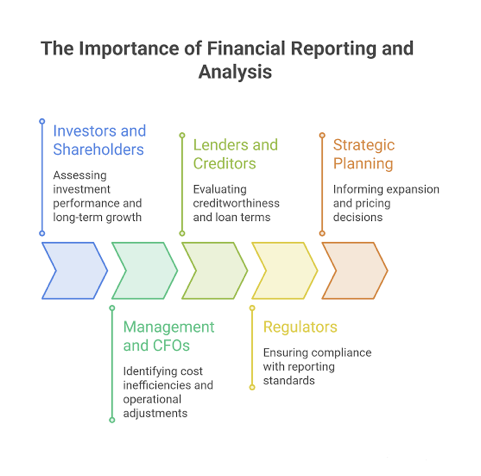 (Image caption) A decision-making framework diagram for industry investors and institutional analysts to assess technology trends and R&D assets. It shows that if AI paper prediction tools are to be truly applied to commercial investment, they still need to be combined with patents, data, and actual deployment conditions.
How to use investment screening
For more specific business applications, such tools can be used to start by arranging the reading order, without having to directly intervene in investment decisions.
For example, a venture capital firm focusing on robotics could design a pilot process: first, compile a candidate list of papers published on arXiv, categorized by technology field, evidence completeness, and application relevance; then, experts would read the original papers, examine the code, and contact the research teams. Admission prediction is merely a supplementary signal; it must be verified whether it is more effective than keyword searches or manual screening. The distribution of arXiv papers also differs from conference submissions, and performance on ICLR samples cannot be directly applied.
Corporate R&D departments can also use similar methods to find research worth reproducing. Suppose a chip company is evaluating technologies to reduce the cost of model inference; the system can help compile candidate papers and their performance claims, and engineers can then check hardware requirements, test setups, and actual costs. Whether a paper is accepted or not cannot replace this verification process.
Universities or research institutions can consider using the tool for the initial sorting of internal seed grants to help reviewers identify gaps in evidence and opportunities for cross-disciplinary collaboration. However, they must also check confidentiality, bias and appeal arrangements to avoid prematurely excluding immature but worthwhile directions with an opaque score.
The above are all possible application designs, and existing materials cannot prove that Linger has completed the relevant deployments. As for patent layout, published papers can provide technical clues, but whether there is an inapplicable invention, ownership of rights, and commercial potential still requires independent technical and legal evaluation and cannot be inferred from the probability of acceptance.
Who gets attention first
Peer review influences a research's chances of gaining attention and is linked to talent recruitment, research funding, and the allocation of computing resources. If AI evaluation becomes the entry point into these processes, the training data, scoring dimensions, and ranking methods chosen by the tool developers will also contribute to determining which research is seen first.
This impact may not be directly manifested as acceptance or rejection. A paper that remains late to the candidate list for an extended period may miss out on expert review, business contact, or collaboration opportunities. Therefore, institutions using the scores need to understand the rationale behind them, their scope of application, and where objections can be raised.
Linger's experiment provides a traceable starting point for testing: making predictive commitments before official results are published, and then allowing external researchers to compare them one by one. Whether it can further become a useful research tool depends on whether the method is reproducible, whether errors are fully presented, and whether the system can retain its discriminative power even after being deliberately optimized.
For authors awaiting review results, experts bearing the responsibility of reading the data, and those making decisions based on research, AI's most valuable contribution is bringing limited attention closer to verifiable evidence. The December results will answer how accurate this method's predictions are; whether it can help people make better research and resource decisions remains to be seen in practice.
Disclaimer
This article is based on publicly available information and project documents as of November 6, 2026, and is intended for news research and informational reference only. It does not constitute tool performance certification, investment or legal advice; the conference schedule and research results may be updated.