

US Customs has changed its rules: Cross-border sellers must have a responsible person who can be found, can afford to compensate, and whose identity can be clearly verified.
文/GFM 研究組
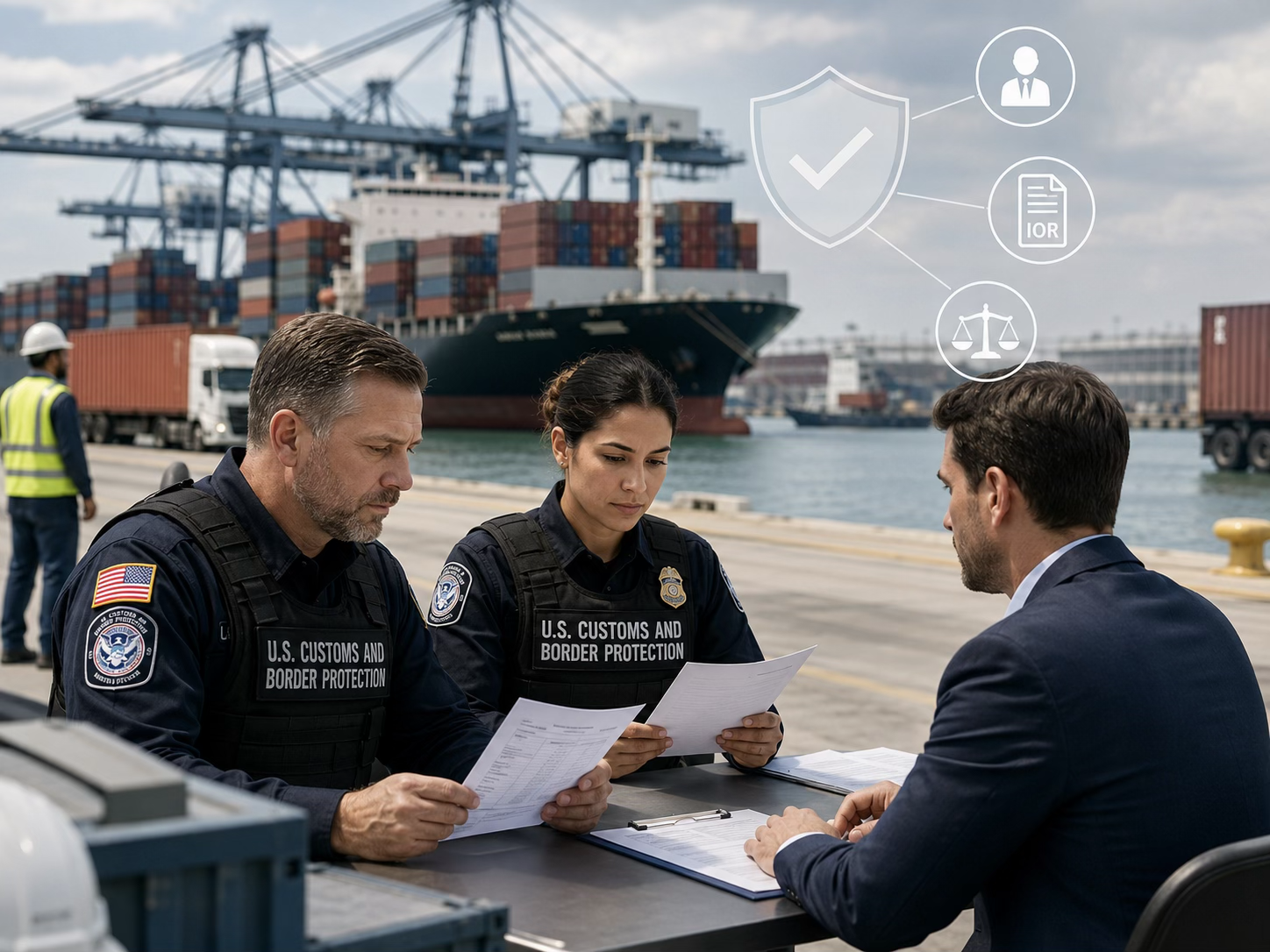
A batch of goods departs from China, travels across the ocean to the United States, clears customs, goes into storage, is put on shelves, and is sold. Chinese sellers have been doing this for twenty years, so much so that they know it like the back of their hand.
But there's one thing many people have never seriously considered: who exactly imported this batch of goods?
U.S. Customs and Border Protection is now going to ask about this issue.
On June 3, 2026, the White House issued an executive order entitled "Strengthening Customs Enforcement," requiring a comprehensive reform of the Importer of Record (IOR) system. While ostensibly a technical adjustment to customs regulations, it is fundamentally a rewriting of the system: the United States is no longer simply asking whether goods can enter, but is beginning to demand whether the responsible parties truly exist, can be located, can afford compensation, and can be clearly investigated.
This is a logical shift, not a rule fix.
The core of the old US import system was the commodity logic: What is the goods? How are taxes calculated? Is the declaration compliant? The IOR is just a name that must be filled in a column on the customs declaration documents. Many cross-border sellers borrow a shell company or a nominal entity and almost never need to ask who it is.
The new executive order aims to rebuild the logic of accountability: an Importer of Goods (IOR) must be a real entity with a genuine business presence in the United States, tangible assets, sufficient security deposits, and the ability to bear taxes, penalties, recalls, and investigations. Those importing entities that can only be found on paper and cannot be traced in reality are being systematically weeded out.
The executive order establishes a stricter distinction between U.S. and foreign IORs. A U.S. IOR cannot simply be a shell company with a U.S. address; it must have a principal place of business, actual business activities, and identifiable local assets. Foreign IORs face more restrictions: they are generally prohibited from using continuous margin deposits, and the scope for informal entry declarations will be significantly narrowed—unless certified through CBP's CTPAT program or using a CTPAT-verified U.S. licensed customs broker.
This directly impacts the operational methods that many Chinese cross-border sellers have long relied on.
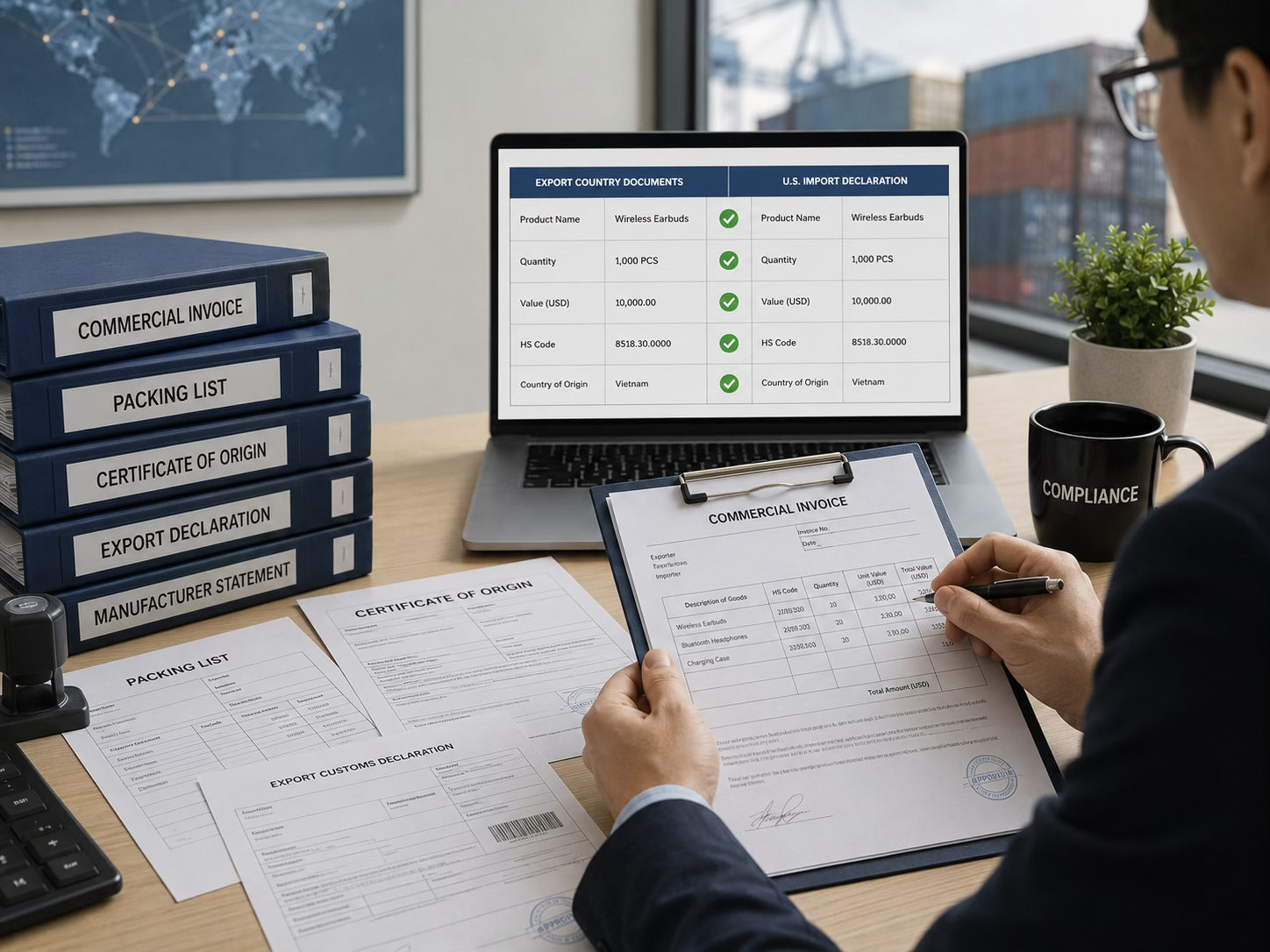
The deeper changes lie at the supply chain documentation level. The new regulations require importers to provide customs documents from the exporting country and cross-check them with U.S. import declarations. Commercial invoices, packing lists, certificates of origin, export declarations, and manufacturer declarations must all be consistent. Product name, quantity, value, HS code, and country of origin—each field can become a point of comparison.
The old practice of declaring one set of documents in the exporting country and another set in the United States is losing its place.
According to the timetable set by the executive order, IOR qualification reviews, margin requirements, and good credit standards will be implemented in the coming months. Many existing IORs will face re-verification, those with incomplete information will be required to supplement it, and those with poor compliance history will be classified into higher risk levels. Empty shells and nominal import structures will become increasingly difficult to maintain.
This is certainly putting pressure on Chinese sellers. The era of low-cost access to the US market is indeed coming to an end.
But the other side is equally worth seeing clearly.
As gray-market sellers, those underreporting goods value, and those with disorganized documentation are systematically weeded out of the market, those companies that have completed compliance first have gained a clearer competitive position. The US market won't close, but it's replacing price barriers with institutional barriers, redefining who can survive.
In the future, competition in the US market will no longer be about who has the lowest price, but about who has a clearer responsibility structure, more complete supply chain documentation, and more authentic local compliance capabilities.
Who is responsible for importing this batch of goods?
The answer to this question is shifting from a customs declaration document to a real market ticket.
GFM Observation
The Executive Order on Strengthening Customs Enforcement marks a substantial shift in the logic of U.S. import regulation. The core of the system is singular: the responsible party for imports must be a real, existing entity, not a nominal arrangement that can be readily borrowed and replaced. For Chinese cross-border sellers, this is not a partial adjustment to the rules of a single platform, but a systemic rewriting of the U.S. market access structure. Compliance capability is transforming from an additional cost into a market qualification.
Disclaimer: This article is for informational research and institutional observation purposes only and does not constitute legal, tax, customs, or business advice. Companies should consult with U.S. Customs attorneys, licensed customs brokers, and compliance professionals before making any adjustments to their U.S. import, IOR (Information on Order) settings, or supply chain compliance.
Comments
Please login to post a comment
No comments yet, be the first to comment!