

Love will be there
Kevin Guo
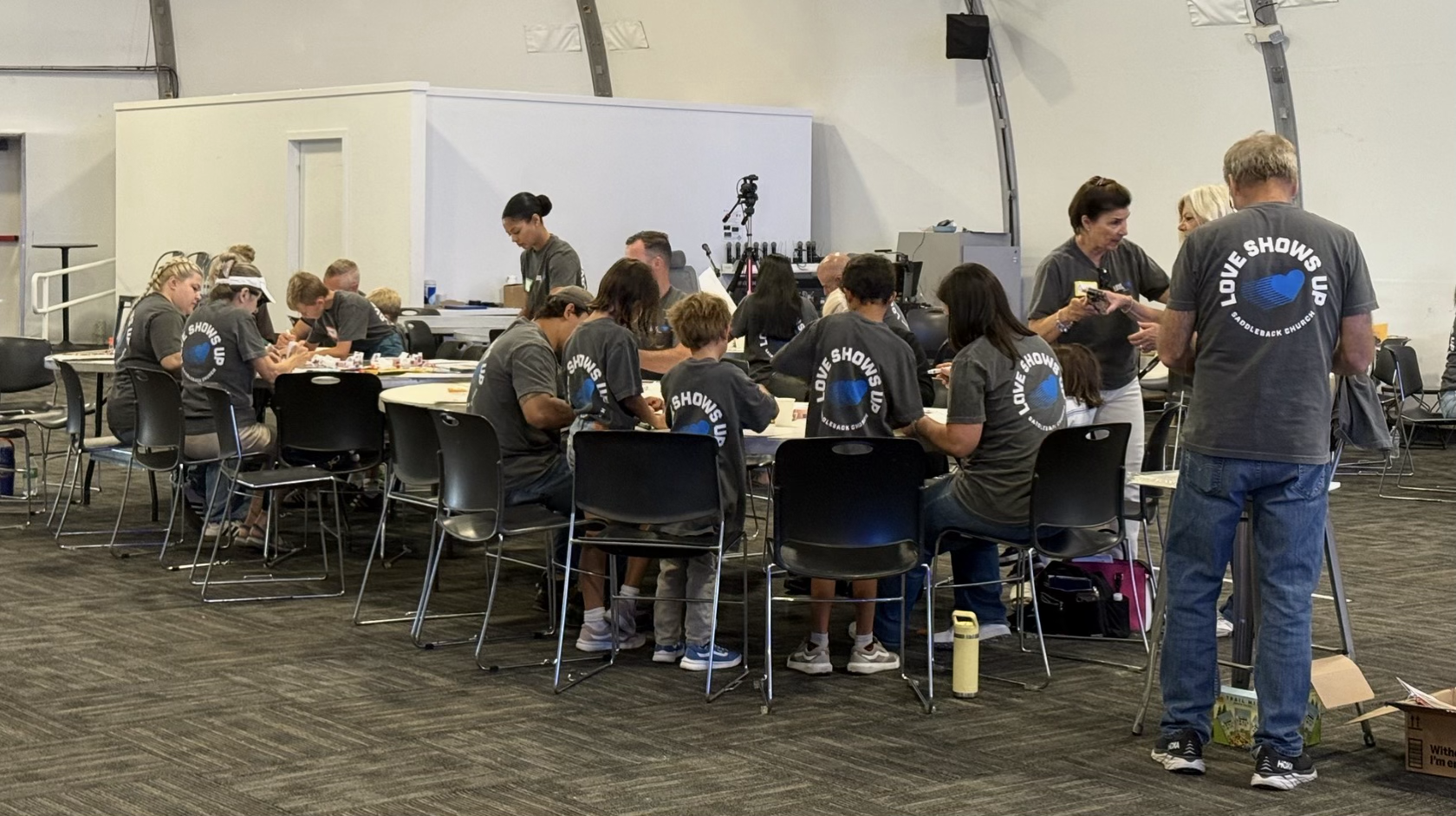
A grey T-shirt
Last Sunday, Saddleback Church gave each volunteer who signed up for Community Service Day a grey T-shirt with a blue heart printed on the back, surrounded by the three English words: Love Shows Up.
When I put it away in my closet, I only saw it as an event slogan. The church was about to hold a Love Local Serve Day, and having volunteers wear matching clothes for easier assembly, grouping, and identification seemed to be all there was to it. I didn't stop to think about what those three seemingly simple words actually meant.Until July 11, 2026, a Saturday morning at 8:30, I stood on the lawn outside the tent at Saddleback Church in Lake Forest, California, watching people gradually arrive from different directions of the parking lot, gathering about 1,000 volunteers. It was then that I first felt the weight of that phrase printed on the clothes.
A line had already formed at the registration area. Staff checked names one by one, distributed materials, and told each group of volunteers their destination and tasks. Children held their parents' hands, elderly people walked alone, and couples walked side by side. People of different skin colors, speaking different languages, living different lives, yet all wearing the same gray T-shirts. The procession moved slowly forward, the blue heart repeatedly coming into my view. When one person stands still, it's just a pattern printed on clothing; only when hundreds of people wear it out of the church and disperse to nearby cities and communities does it truly become a word that can be understood.
(Image caption: Volunteers successively completed registration and grouping, and a community service activity thus entered into concrete action. For love to reach the scene, someone first needs to organize goodwill.)
Those Seemingly Small Things
That day, the service teams split up.
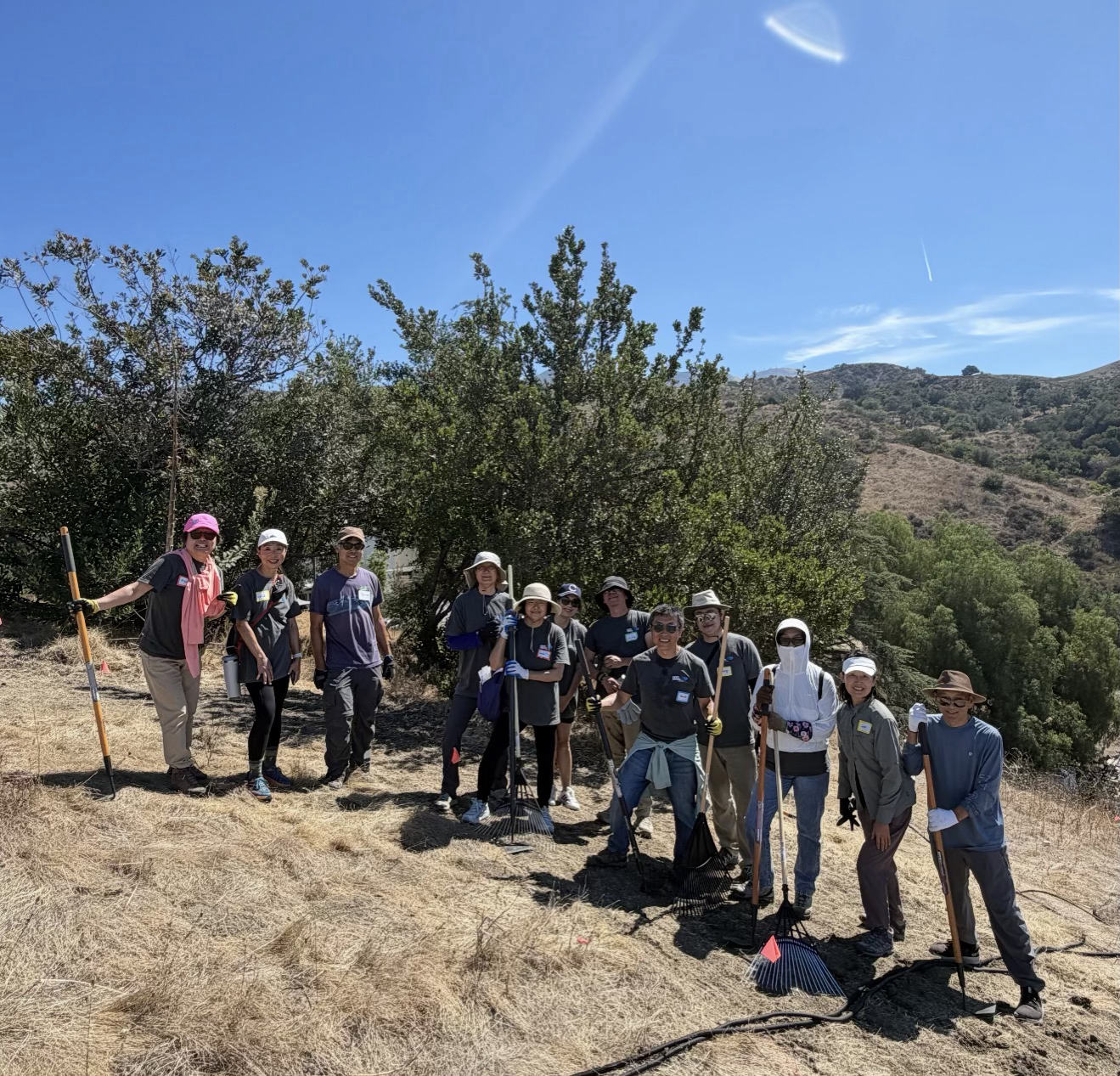
One group went to Irvine to assemble patio chairs and clear a weed-infested garden for a family facing hardship; another group went to Rancho Mission Viejo to help a family tidy their cluttered garage and wash their long-dusty car; other teams went to Lake Forest, San Juan Capistrano, and Cypress to complete their assigned service tasks.
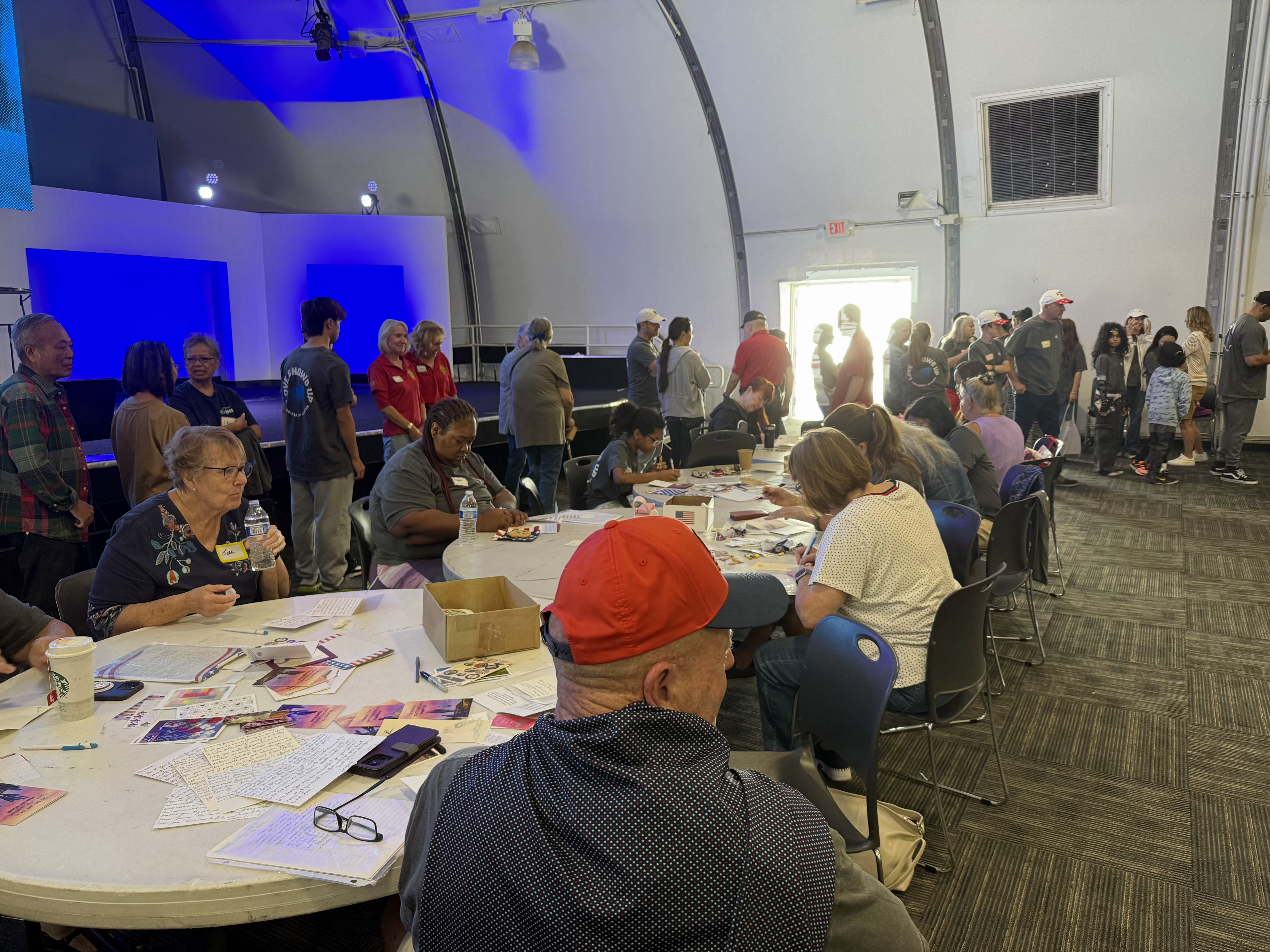
The volunteers who stayed in the tents weren't idle either. They packed comfort packages for active-duty and veteran soldiers, filling bags with items; parents and children sat around long tables, drawing national flags, writing cards, and leaving "Thank You" and "You Are Our Hero" in slightly childish handwriting.
And I—one of the volunteers—stayed here to sort the relief packages, and as the founder of GFM.News, documented the scene.These things, taken individually, seem insignificant.
Washing a car won't make news, tidying a garage won't change a city's finances, and clearing weeds from a yard won't solve structural problems like housing, healthcare, poverty, or ethnic divisions. However, community life isn't solely supported by grand policies and resounding slogans. More often, it's built up little by little, through acts like washing cars, weeding, tidying garages, moving supplies, and spending time with children.
A single mother might not have time to tidy her garage; a foster family might be exhausted just caring for their child; an elderly person might still live in their own house but no longer have the strength to clean their yard. Governments can formulate policies, charities can allocate resources, and professional organizations can provide services, but no system can completely cover every crevice of life. Some gaps ultimately require someone to go there, bend down, and fill them with their own hands.
Love Local Serve Day addresses these seemingly small but real gaps in the lives of ordinary people.
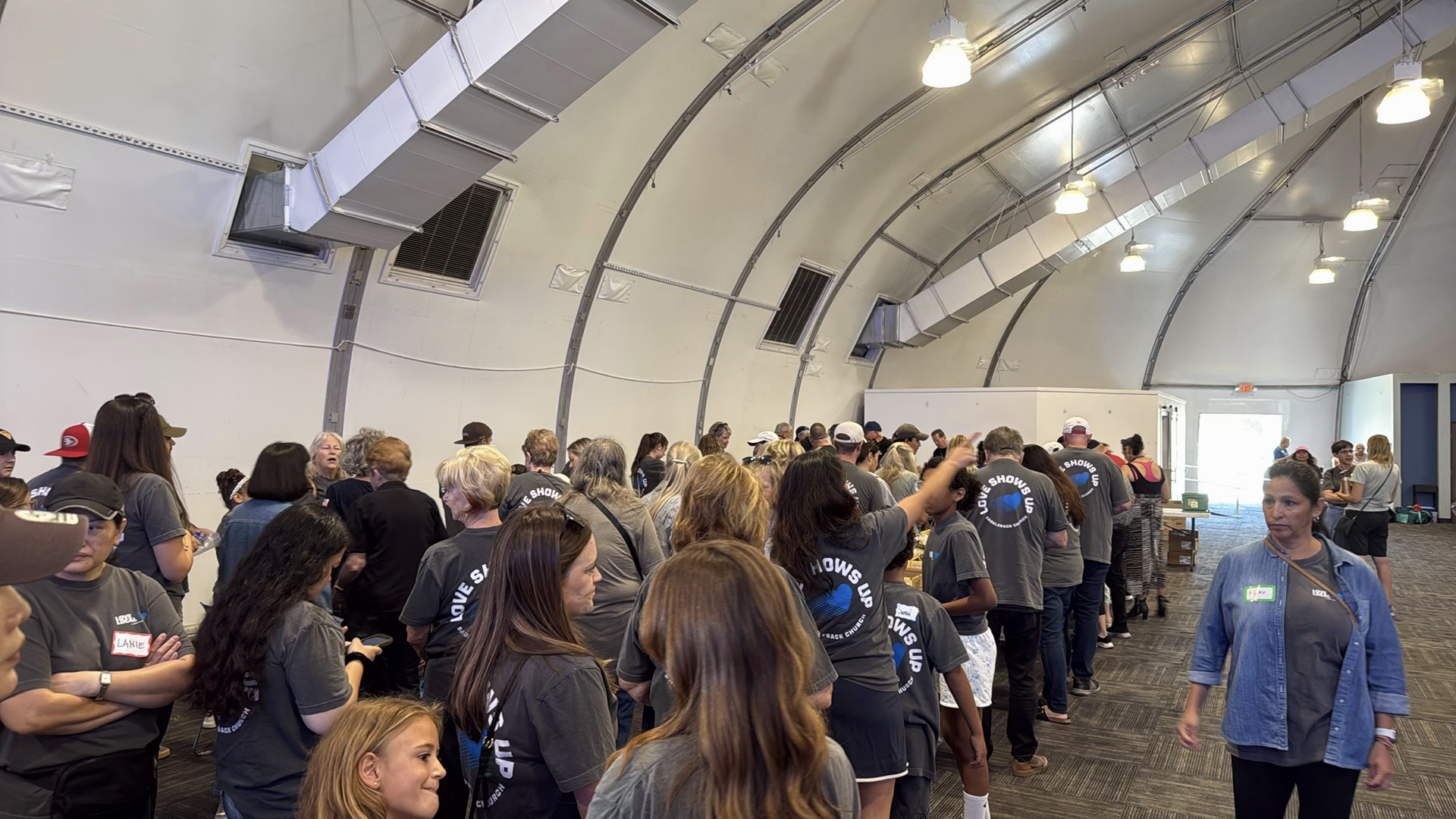
"Love Shows Up" is difficult to translate perfectly into a single Chinese sentence.
"Love will appear" seems too simplistic, while "Love will come" carries a sense of passive waiting. After much thought, I still believe the closest translation to its original meaning is: "Love will be there."
"Being there" doesn't mean standing at a distance expressing sympathy, nor is it merely experiencing a fleeting moment of emotion. Being there means that a person is willing to set aside their own planned Saturday, appearing at the time and place where someone needs them.
It requires time and effort; it requires a person to temporarily set aside matters directly related to themselves to undertake work that was originally unrelated to their own interests.
Here, love is no longer just a word with lyrical connotations. It had a schedule, a house number, and clearly defined tasks: what time to assemble in the morning, which family to visit, which yard to clean, how many chairs to assemble, how many cars to wash, or how many boxes of supplies to pack.
These actions were so simple they were almost mundane, but it was precisely this simplicity that allowed "love" to transcend rhetoric and enter into everyday life.
American society is not lacking in resounding words. Freedom, equality, rights, and responsibility frequently appear in political speeches, legal documents, and news headlines. However, standing under the church tent, I saw another way of expressing these abstract values.
There were no prepared speeches, no debates. Hundreds of ordinary people, in just one morning, transformed responsibility, care, and community into visible and tangible actions. They didn't wait for an order, nor did they first question what this would bring them; they simply chose to be there after the community voiced its need.
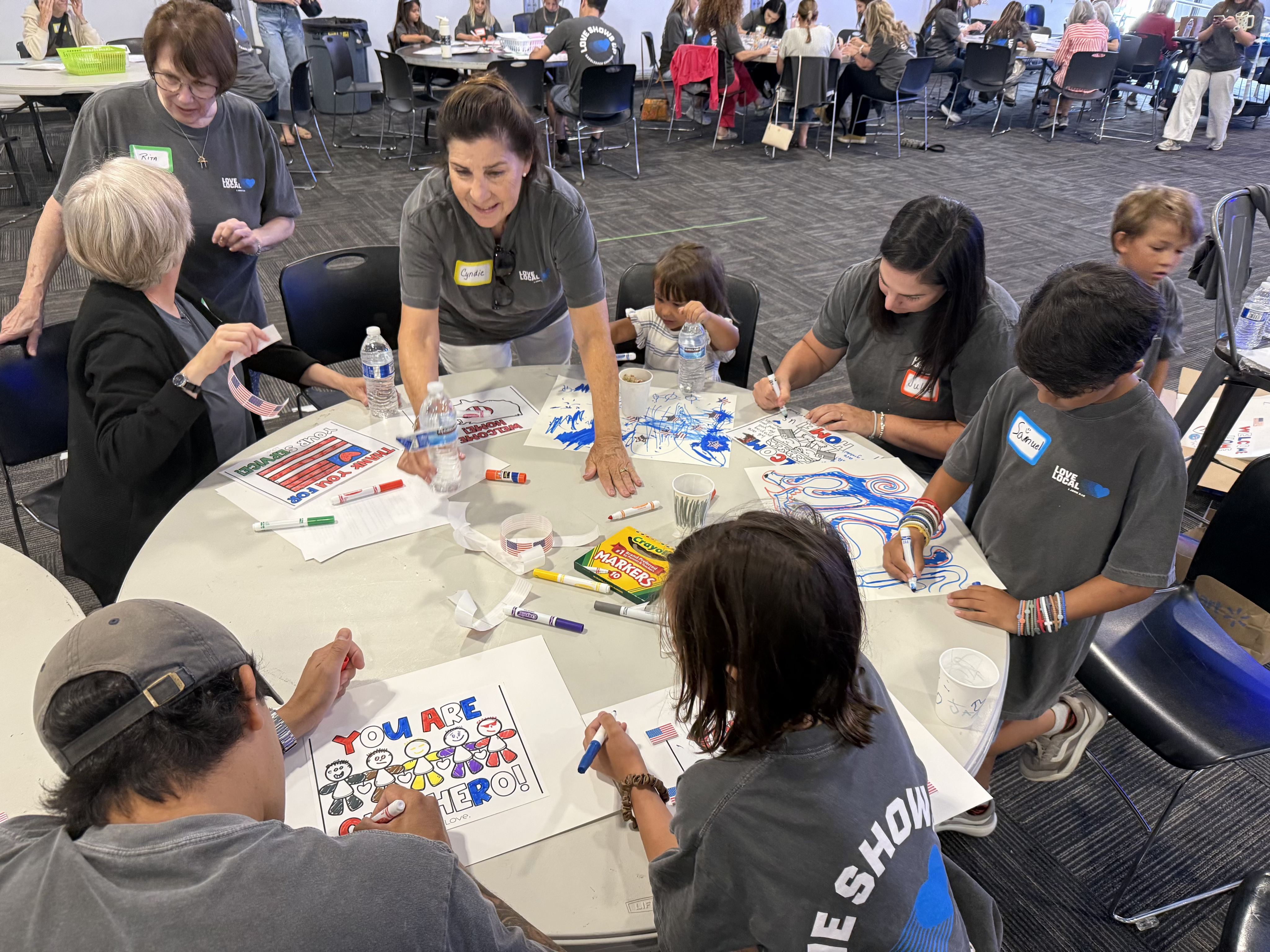
Saturday as seen by the children
The children around the long table are the most worthwhile scene to stop and observe that day.
They may not understand the weight of military service, nor can they readily utter terms like "public responsibility," "civil society," or "social capital," but they witness firsthand how their parents entrust a Saturday morning—a time for rest, shopping, or entertainment—to strangers with no direct connection to their family.This is an education without textbooks or exams.
Children sit beside their parents, watching strangers cooperate, watching the elderly and young organize supplies together, witnessing how a difficulty that originally belonged to others becomes something a group is willing to share. This is perhaps how public spirit enters a child's life: not through adult preaching, but through concrete life experiences, seeing how parents treat neighbors, strangers, and public affairs unrelated to their own interests. When volunteering becomes part of family life, the next generation inherits not just a set of verbally stated values, but also a habit of action—knowing that they can step in when others are in trouble; knowing that public responsibility doesn't always belong to "others" when the community calls for help.
This habit often outlasts slogans.
The Church Beyond the Church
For many people with Asian backgrounds, the church is first and foremost a place of faith. However, in local American communities, the church's function often extends far beyond Sunday services and worship.
In this service activity, Saddleback Church provided the venue, information, organization, personnel, and coordination capabilities. The needs of families in difficulty were collected and identified in advance, then broken down into specific, actionable tasks; volunteers registered, were divided into teams, and received tools and supplies; team leaders were responsible for transporting everyone to the locations where services were needed. The entire process was orderly, yet lacked the distance often found in administrative systems.
The church occupies a unique position in the community. It maintains long-term connections with many families, is aware of life's difficulties not yet reflected in government data and public reports, and can organize goodwill, previously scattered in individuals, into tangible public services.
A person's good intentions, without information, coordination, and organization, easily remain mere wishes; only when they enter a relatively stable social mechanism can they become sustained action.
This is also a structure I gradually came to understand in local communities after coming to the United States.
The government is responsible for laws, policies, and basic public services; the market provides goods, capital, and professional skills; churches, charities, non-profit organizations, and volunteers...These networks maintain another layer of social connections that are closer to daily life. They are not substitutes for one another. Government cannot replace family, market cannot replace trust, and charity cannot replace public policy. Different forces, within their respective boundaries, assume responsibility, thus collectively constituting a relatively complete daily functioning of society.
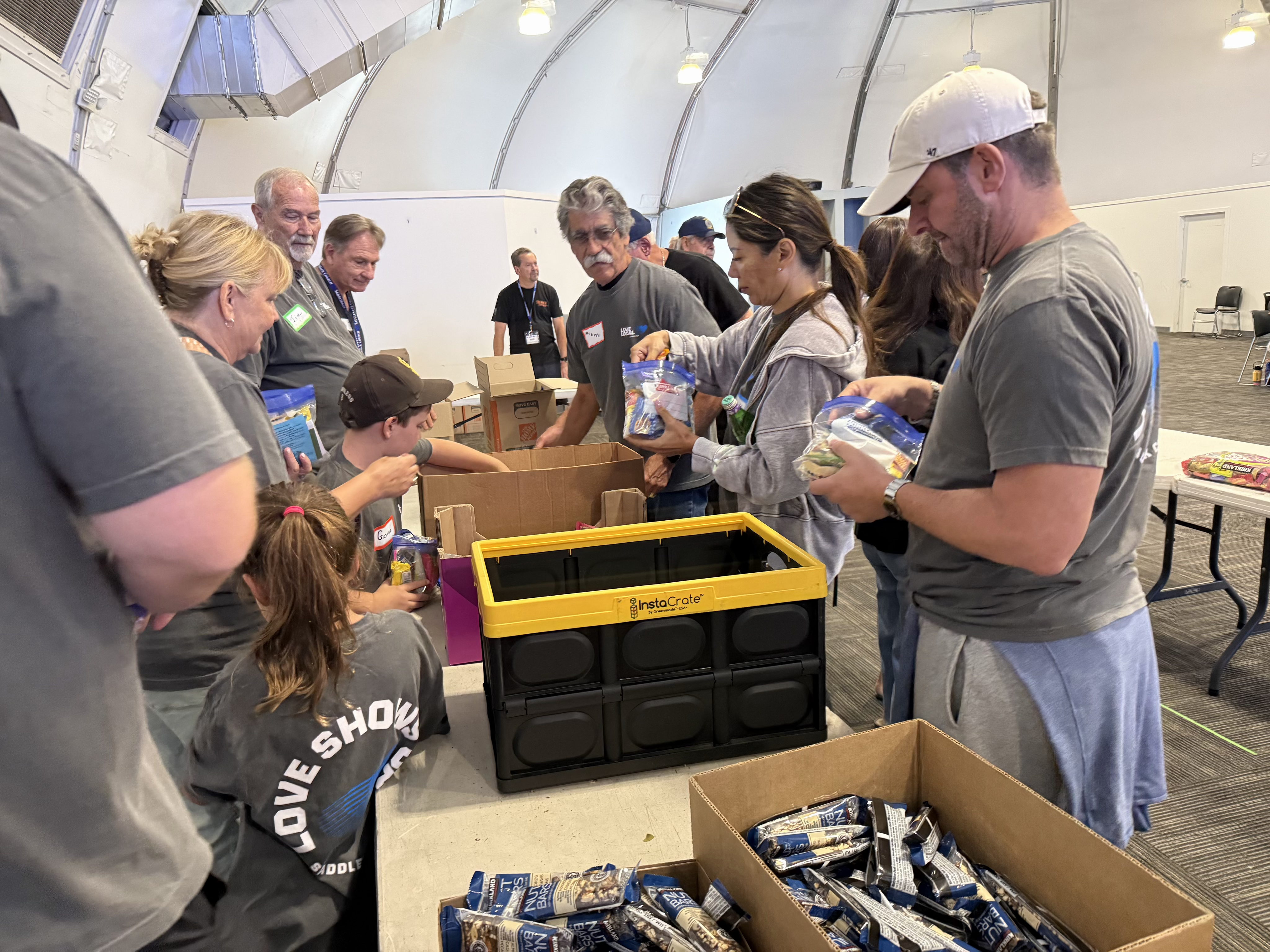
Society Under the System
When discussing the American system, people usually think of the Constitution, Congress, courts, elections, and political parties. These form the formal framework of the nation, determining how public power arises, is constrained, and operates within the legal framework.
However, a nation's system doesn't exist solely in Washington, nor is it merely written in legal texts.
Below the formal system lies a more practical public foundation: whether residents are willing to participate in community affairs, whether local communities retain the capacity for self-organization, and whether people can establish a minimum level of cooperation and trust when facing common problems.
This capacity rarely manifests in grand, sweeping ways. It might be a food distribution, a parent organization, a community cleanup, a veterans' visit program, or simply a few people entering a stranger's home to clear out a space in a garage that hasn't been cleaned in years.
These things may not seem to constitute part of the national system, but in reality, they are the social soil that sustains the normal functioning of the system.
If a society entrusts all public responsibilities to the government, the government will inevitably become overwhelmed; if all problems are left to the market, many people without purchasing power will be left outside of services. The self-organization of local communities precisely fills the gap that still exists between the state and the market.Of course, volunteer service cannot eliminate social conflicts, nor can it replace public policy. The United States still faces structural problems such as poverty, housing pressure, healthcare burdens, ethnic divisions, and family breakdown. Tidying up a yard cannot solve all of a family's plight; a day of service cannot change the deep-seated resource allocation of a city.
But it can at least maintain connections between people, letting families in distress know that they have not been completely forgotten by the community; and allowing the community to retain a space for mutual assistance where policies have not yet arrived and professional institutions have not yet intervened.
A sustainable society needs both a government capable of handling major issues and citizens willing to care for minor ones. Those seemingly trivial little things accumulate to form what is ultimately a community's most incalculable asset: trust.
The Cost of Trust
"Social capital" is a rather academic concept. Unlike roads, houses, or funds, it cannot be directly calculated, yet it profoundly impacts the operating costs of a society.
When basic trust is lacking between people, every collaboration requires more rules, oversight, and precautions; trust can only slowly grow when residents meet over many years in churches, schools, communities, and non-profit organizations, and work together on concrete tasks.
The people who help organize supplies today may meet again at another event tomorrow; a child remembers the elderly person who sat beside him while he drew cards, and a volunteer meets a neighbor living nearby but never spoke to before. These relationships may not yield immediate returns, but they weave an invisible network imperceptibly. A city's true sense of security cannot be maintained solely by police numbers and surveillance equipment; a community's resilience cannot be determined solely by its fiscal budget. Whether residents know each other, whether they have someone to contact when facing difficulties, and whether basic trust can be maintained between strangers—these factors often determine how much impact a place can withstand during a crisis.
In this sense, washing a car, tidying a garage, or cleaning a yard are also depositing a not-so-visible asset into the account of social capital.
Families receiving help receive tangible support, while those who participate in the service reaffirm their relationship with the community. There is no inherent hierarchy between giving and receiving; both parties affirm the same thing: even in temporary hardship, one still belongs to this community.
How to Leave Goodwill
I later reflected repeatedly on why so many people were willing to get up early on a Saturday morning, go to church, and then rush to a family they had no relation to.
The power of faith certainly exists. Christianity requires believers to love their neighbors and reminds people that faith cannot remain merely lip service but must be applied to daily life. However, for a public service to be sustained in the long term, a momentary impulse is insufficient. It also requires a stable organization, clear processes, credible information, and generations of people willing to take up the mantle.Love is able to be present because, before volunteers arrive, someone has already collected family needs, completed confirmations, arranged registration, prepared tools and supplies, planned routes, and is willing to stay and clean up after the event.
Goodwill does not automatically become a public force.
Only when individual acts of goodwill are placed within a sustainable mechanism will it not quickly dissipate with a momentary impulse. This is precisely the significance of institutions: institutions are not the opposite of goodwill, nor are they merely cold, impersonal rules that constrain people; good institutions are a way to preserve goodwill, organize goodwill, and enable goodwill to transcend time. One person's enthusiasm may only last a day, but a mature public mechanism allows different people to continue doing the same thing at different times. After the previous generation leaves, those who come after still know where the needs are, how resources are allocated, and who bears the responsibility.
The system thus makes people's goodwill no longer entirely dependent on the enthusiasm, ability, or existence of any one individual.
Goodwill without organization is easily lost, and an organization with only procedures but lacking goodwill will also lose its vitality. That day's event just happened to bring both together in the same space: the church extended the invitation, volunteers responded, families raised real needs, and the community provided time and labor. No one party could accomplish everything alone, but when they were connected by a credible mechanism, something that would otherwise have been difficult to promote naturally happened.
"Love Shows Up" is therefore not just an individual moral choice, but also a public capacity cultivated by a community over a long period of time. The Measure of Civilization
What's truly worth studying in a society isn't just how it makes laws, elects a government, or even its economic scale and technological level, but how it gets a group of strangers together to accomplish something, without administrative orders or exchanges of benefits.
The maturity of an institution isn't just about how power is constrained, but also about how goodwill is preserved; the height of civilization isn't just reflected in skyscrapers, wealth, and technology, but also in whether an ordinary person, when faced with the difficulties of others, is still willing to step out of their own life and appear where they are needed.
True civilization is not a society without problems. There has never been such a place in the world.
An even more important measure of civilization is whether a society still retains the ability to respond when problems arise; whether ordinary people are willing to shoulder some public responsibility when formal institutions haven't fully arrived; and whether there's still a safety net around to catch a family when they temporarily fall.
Another America
When I received that T-shirt last Sunday, all I saw was a simple English design.
On that day, seeing that blue heart again, a vivid image came to mind: crowds heading towards the tents in the early morning, parents holding their children's hands, children drawing cards at a long table, elderly people organizing supplies, and teams of volunteers preparing to depart for different families.These people didn't share the same skin color, the same mother tongue, or need to confirm their political stances beforehand. They were simply doing something meaningful for their communities on the same morning.
Since coming to America, I've tried to understand how this country's system actually works.
What's most easily seen in the news is the squabbles in Washington, the divisions in elections, and the antagonism between political parties. However, living in a local community reveals another side of America. It rarely makes headlines or always appears in political narratives, but it truly exists among churches, schools, families, charities, and volunteers, sustained by the time, trust, and sense of responsibility of ordinary people.
American society is far from perfect, and love won't always arrive on time when it's needed. But on the morning of July 11, 2026, I personally witnessed many people choose to attend.
What should institutional media record?
They used several hours of work to give a credible message printed on a T-shirt, and it made me rethink what institutional media should record.
What we need to record is not just how many people gathered on a particular day, or how many services were completed, nor is it simply packaging a community event as a short, heartwarming story. What deserves to be seen more is the social mechanism behind these actions—how to collect needs, organize goodwill, build trust, and ensure the continuation of public responsibility.
If the media only records the event, the news ends when the event is over; institutional media should ask why an event could happen, what organizational capabilities it relied on, and how it became a public experience that society can repeatedly use and inherit.
I also understand that if love is to become a public force, it cannot ultimately exist only in people's hearts. It requires someone willing to put on that garment and step out of their home; it also requires a society that builds pathways that allow people to reach the scene again and again.
Love Shows Up.
Love will be there.
Comments
Please login to post a comment
No comments yet, be the first to comment!