

Two Disruptions by Tech Geeks
Palmer Luckey's science fiction life and the Anduril era
He's a nerdy guy who used to take screws out of his garage and burn his own skin, yet he's grown up to be someone who single-handedly rewrote the history of global VR and twice revolutionized the US defense industry. This article can be seen as a "character-focused companion" to your in-depth article on Anduril, presenting a complete and three-dimensional portrait of Palmer Luckey, this "sci-fi kid," from his personality, technology, politics to defense strategy. 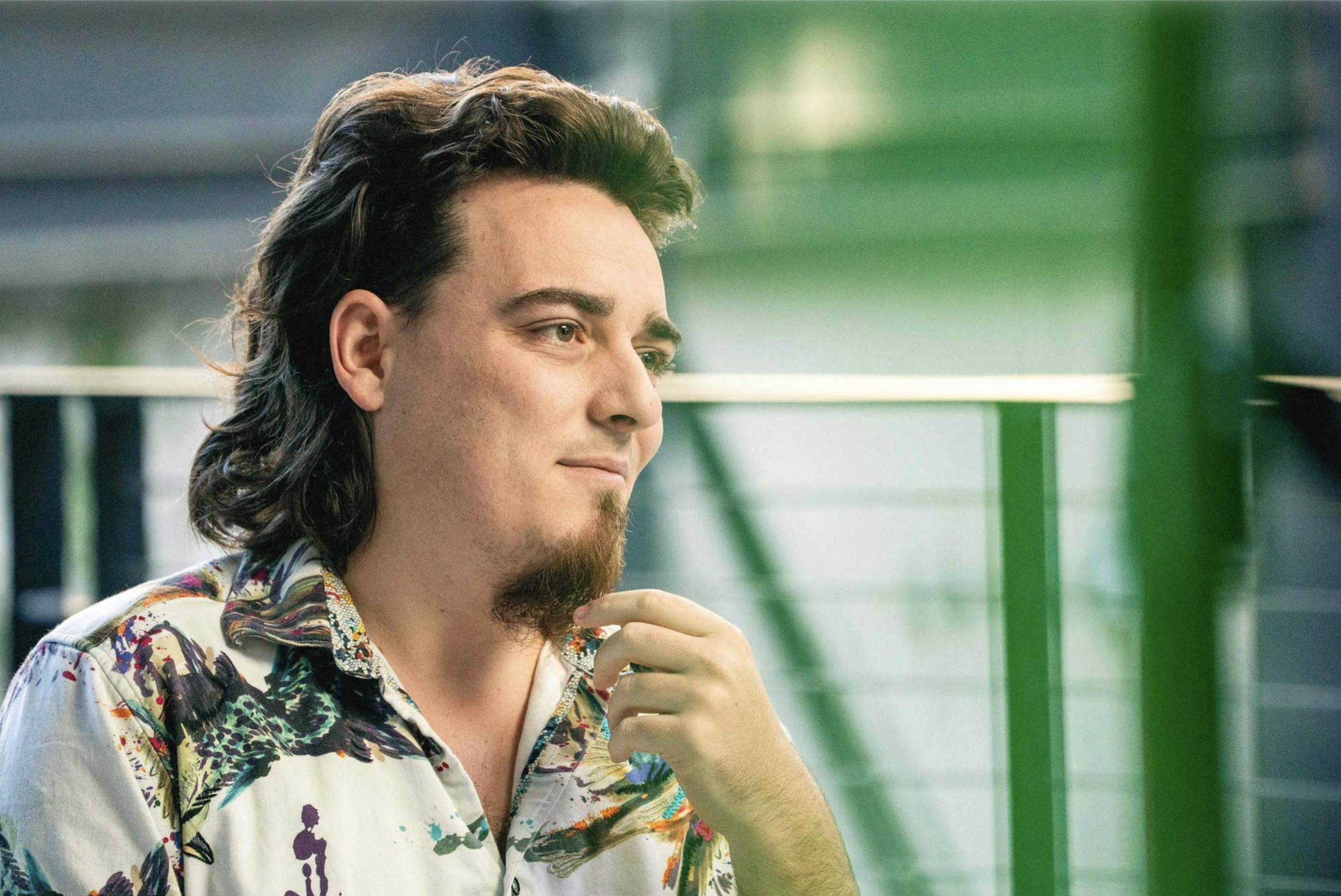 (Image caption) Palmer Luckey after founding Anduril Industries. The company, headquartered in Costa Mesa, Southern California, focuses on integrating AI, sensors, and autonomous systems into a next-generation defense technology platform.
I. From Long Beach Geek to Garage Prodigy
Palmer Freeman Luckey was born in Long Beach, California in 1992. His father, Donald, was a car salesman, and his mother, Julie, homeschooled him and his three sisters. He was a typical "garage-grown American boy," but a geek-enhanced version. At 14, he began taking classes at Golden West College and Long Beach City College, and later briefly attended CSU Long Beach to major in journalism, working as an online editor for the school newspaper. He eventually dropped out to focus on hardware, taking a more "hands-on" approach than an academic one. The most crucial part of his childhood wasn't diplomas, but rather his self-taught electronics, soldering, and optics in his garage and campervan. He played with railguns, Tesla coils, and high-power lasers, burning himself at one point, but this experience honed his intuition for risk and materials. Over the years, he earned pocket money by repairing iPhones, boats, and teaching sailing lessons, investing almost all his income in collecting and modifying head-mounted displays (HMDs). By his teens, he owned one of the world's largest private VR headset collections, laying the foundation for his later Rift. He looks like a "beachhead geek"—long hair, goatee, Hawaiian shirt, shorts, flip-flops, or even barefoot—but he has an almost obsessive confidence in engineering and a belief in science fiction. He would throw a midnight party for Windows 7 and seriously discuss the kind of future that blurs the lines between reality and fantasy, like Star Trek and The Matrix. 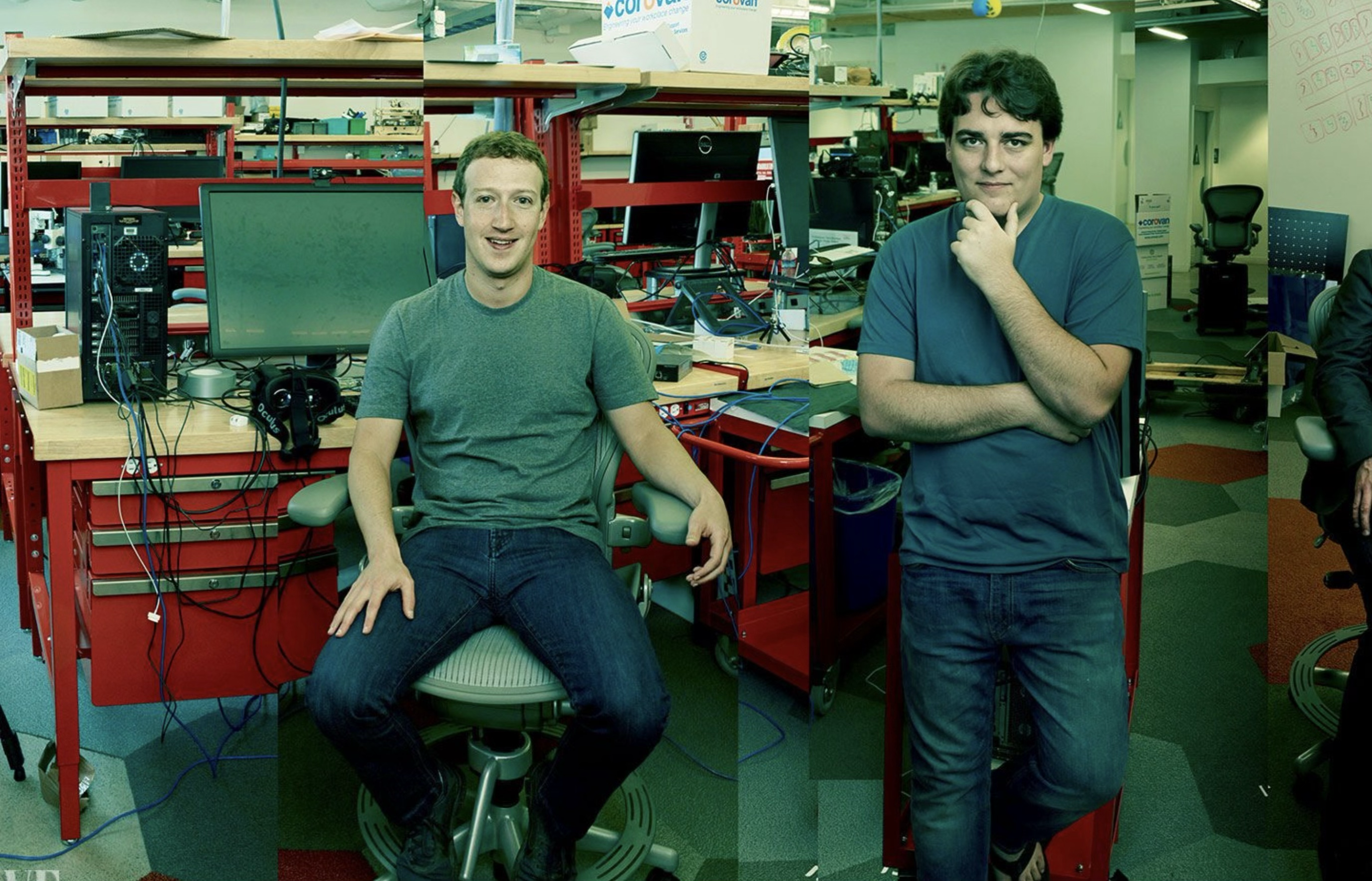 (Image caption) Palmer Luckey building VR prototypes in his garage as a teenager. From disassembling displays and soldering circuits to modifying optical lenses, he began teaching himself virtual reality hardware design in his teens. This period as a "garage engineer" laid the technological foundation for the later creation of the Oculus Rift.
II. Oculus: One person pulled VR from a laughing stock back into the future
At 16, he began designing his own VR headset. The pain points of existing HMDs were narrow field of view, high latency, heavy weight, and exorbitant prices. He prototyped them one by one in his parents' garage. The PR1 achieved a 90-degree field of view, low latency, and haptic feedback—features almost unheard of in the consumer market at the time. In 2012, he launched the Oculus Rift development kit on Kickstarter, initially aiming to raise only $250,000, but ultimately raising approximately $2.4 million, nearly ten times the target. He instantly transformed from a forum "prodigy" into a leading figure in the VR revival movement. More importantly, he secured endorsements from heavyweights in the gaming industry: John Carmack demoed Doom 3 on the Rift, and Valve's Gabe Newell and Epic's Cliff Bleszinski publicly supported him, causing the entire industry to suddenly take this "garage kid" seriously. In 2014, Facebook acquired Oculus for approximately $2-2.3 billion in cash and stock. At the age of 21, he completed a textbook "from development board to exit" journey. Forbes subsequently valued his net worth in the billions of dollars, making him one of the youngest tech billionaires at the time. His more far-reaching impact was that he propelled VR from academia and military laboratories into the consumer mainstream, giving the subsequent Meta Quest series, SteamVR ecosystem, and the entire immersive industry chain a clear "Luckey slope."
III. Exile to Silicon Valley: Political Storm and Leaving Meta
After the Oculus deal, he became Meta's "star talent," but in 2016-2017, he encountered a political storm that could change the course of his life. During the 2016 US election, he donated money in his personal capacity to a pro-Trump, anti-Hillary group, which triggered a backlash from some developers and employees. Social media quickly amplified this political donation of less than $20,000. As internal pressure increased, reports indicated that Meta executives wanted him to publicly endorse a third-party candidate to downplay the controversy, but he refused. Ultimately, he was "severed" by the company in the spring of 2017, which was widely seen as a reckoning involving politics and corporate brand management. At the same time, ZeniMax filed a lawsuit against him and Meta, accusing them of leaking VR technology. The jury found him guilty of violating some confidentiality obligations, but ruled that the damages were minor, with Meta bearing most of the damages. This had limited impact on his personal finances but further cemented his image as a "problematic figure." In a later interview, he downplayed the cost of the political turmoil, saying that he had only paid a few thousand to ten thousand US dollars in cash, but had paid the price in terms of his career and reputation. This also foreshadowed his dissatisfaction with the mainstream political culture of Silicon Valley and his shift towards defense technology. 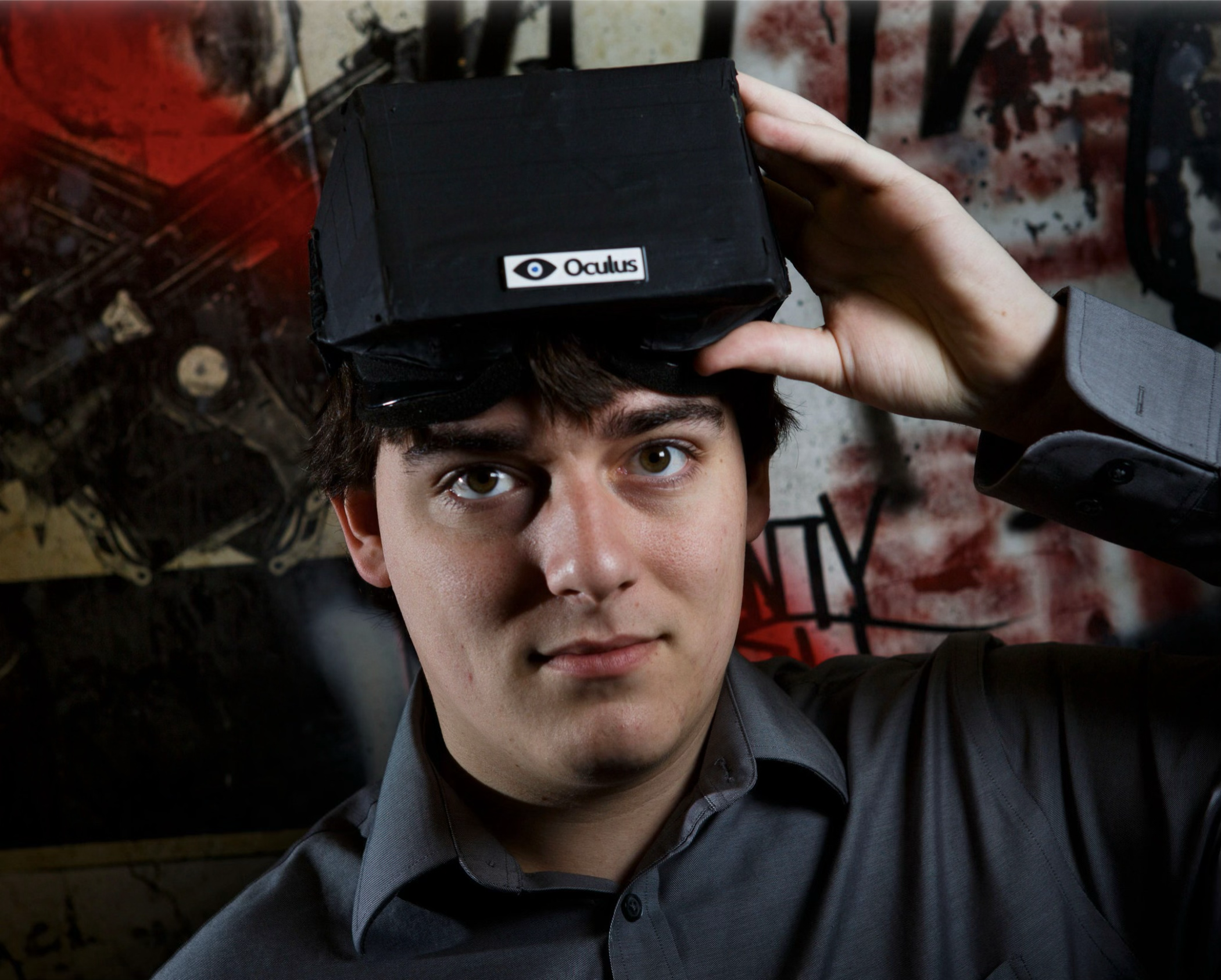 (Image caption) Oculus Rift prototype in 2012. Palmer Luckey launched the Rift development kit on Kickstarter, originally planning to raise only $250,000, but eventually attracted about $2.4 million, becoming an important starting point for the VR revival movement.
IV. Anduril: From Retaliation to Rewriting the Rules of the Military Industry
In 2017, he co-founded Anduril Industries in Southern California with several former Palantir executives and early Oculus engineers. Headquartered in Costa Mesa, less than a 15-minute drive from Irvine, Anduril positions itself as a "software-first defense contractor," directly challenging traditional giants like Lockheed Martin and Boeing. Anduril's core isn't a single drone, but an AI command and control platform called Lattice. This platform integrates data from radar, electro-optical sensors, drones, ground vehicles, and even satellites, allowing operators to make reconnaissance, command, and strike decisions on a single interface. Its design philosophy clearly reflects his extreme sensitivity to "human-computer interaction load" when creating VR UIs. On the hardware side, Anduril has launched the Barracuda cruise missile, the Roadrunner reusable high-speed interceptor, the Ghost drone, the Sentry Towers border surveillance tower, and various underwater and land-based vehicles, all integrated into Lattice, forming a family of "software-defined weapons," resulting in a gross profit margin far exceeding the traditional military industry average. In 2025–2026, with the Arsenal-1 gigafactory starting mass production in Ohio, Anduril began delivering defense orders at “Silicon Valley speed,” rapidly expanding from border surveillance to counter-drone, air defense, battlefield C2, and frontline strike. Multiple $1 billion framework contracts boosted the company’s revenue from approximately $1 billion to several billion dollars.
V. Bolt-M: Deploying precision firepower to infantry squads
The Bolt-M contract is a key milestone in observing Anduril's trajectory. On January 15, 2026, the U.S. Marine Corps awarded Anduril a $23.9 million fixed-price contract for the Organic Precision Fires-Light (OPF-L) program, requiring the delivery of over 600 Bolt-M loitering munitions systems and ground control stations, to be delivered in installments from February 2026 to April 2027. Prior to this, the Bolt-M had undergone approximately 13 months and hundreds of flight tests. Anduril first delivered over 250 kits to the Marine Corps, and only after meeting safety, environmental adaptability, and performance standards was it selected for initial deployment. For a company less than ten years old, this represents an extremely high level of tactical confidence. The Bolt-M is essentially a manned vertical takeoff and landing (VTOL) loitering munition, weighing just over ten pounds, with a range exceeding 20 kilometers and an endurance of over 40 minutes. It can be fitted with approximately 3-pound warheads and utilizes onboard Lattice AI for path planning and target tracking. Operators only need to make a few key selections on the interface to achieve beyond-visual-range precision strikes. For the USMC's Force Design 2030, this means that platoon and squad units will no longer passively wait for distant artillery or expensive missile support, but can instead use relatively low-cost, expendable unmanned systems to perform anti-armor, anti-trench, and rapid strike operations. This perfectly echoes Luckey's own vision of "rebuilding the American arsenal" and "making weapons mass-producible and inexpensive." 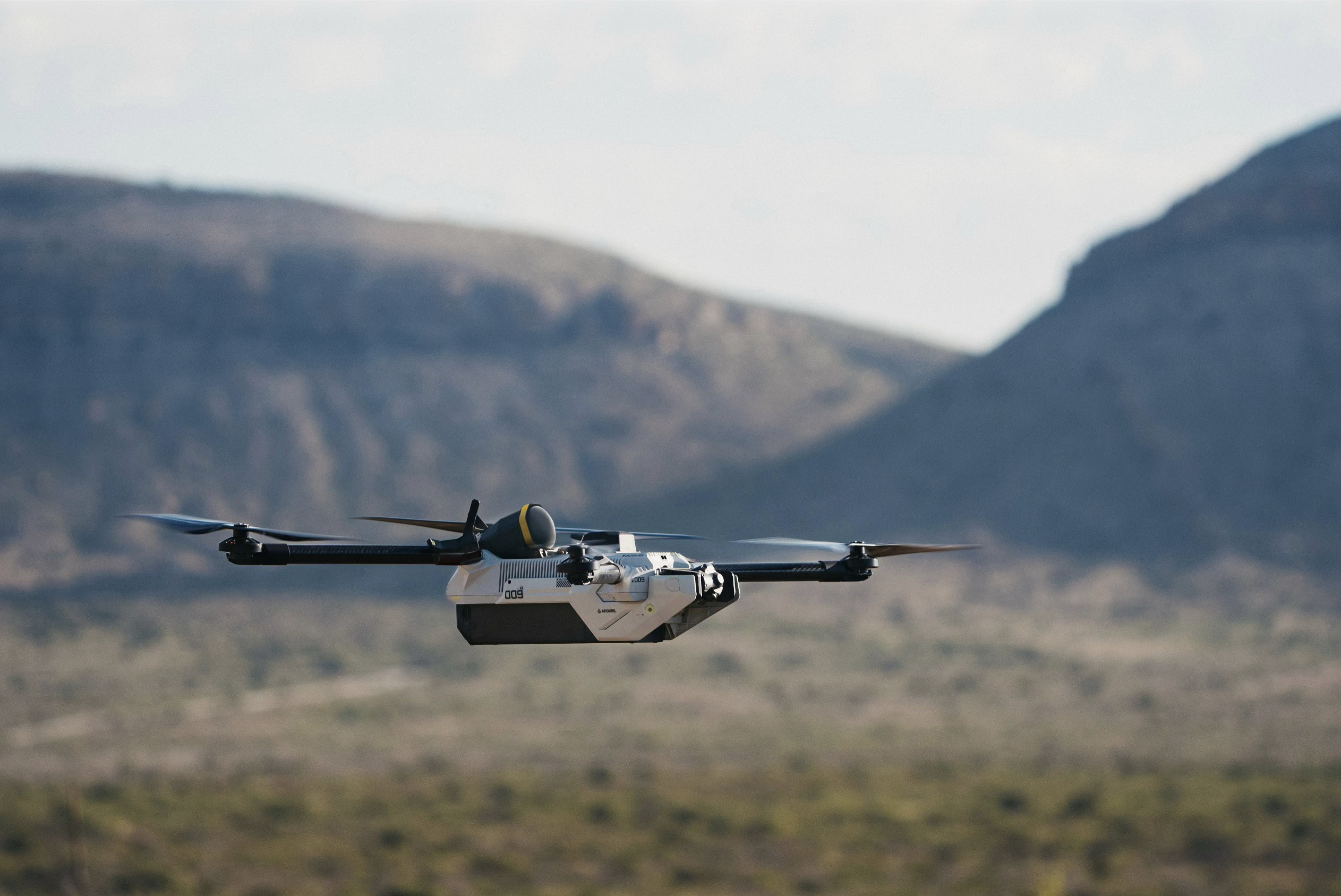 (Image caption) Anduril's AI-powered defense system. The company's core platform, Lattice , integrates radar, drone, and various sensor data into a single interface, forming a so-called "software-defined weapon system," reshaping the way modern battlefields are perceived and commanded.
VI. Financial size, valuation, and his personal wealth and vision
From a capital market perspective, Anduril's several rounds of financing have propelled the company's valuation to the billions and then to the tens of billions of dollars. A $2.5 billion financing round in mid-2025 brought the valuation to approximately $30.5 billion, and a supplementary round of funding in early 2026 further increased the valuation, setting the stage for an even larger new round of financing. Market rumors suggest that the valuation could approach the $60 billion range. Anduril's revenue in 2024 was estimated by various parties to be around $1 billion, and it continued to double in 2025. With long-term contracts such as Bolt-M, I-CsUAS, and NGC2 being finalized, a further doubling of revenue in 2026 is a reasonable expectation. However, high R&D and capacity expansion expenditures mean that the company is still willing to bear short-term accounting losses in exchange for long-term economies of scale. For Luckey personally, his double-digit percentage stake in Anduril, combined with the cash and Meta stock he received from the sale of Oculus, kept his net worth stable at several billion dollars by the mid-2020s, estimated at around $3.5 billion and fluctuating in tandem with Anduril's valuation. A striking feature of his wealth allocation is his extreme collecting obsession: from a massive collection of games housed in decommissioned nuclear missile silos to military vehicles such as special operations boats, helicopters, and military vehicles, and even buying houses simply to satisfy his insatiable desire for toys. These actions have been ridiculed as ostentatious displays, but they also reflect that he truly sees himself as a "gamer and engineer" rather than a purely financial CEO.
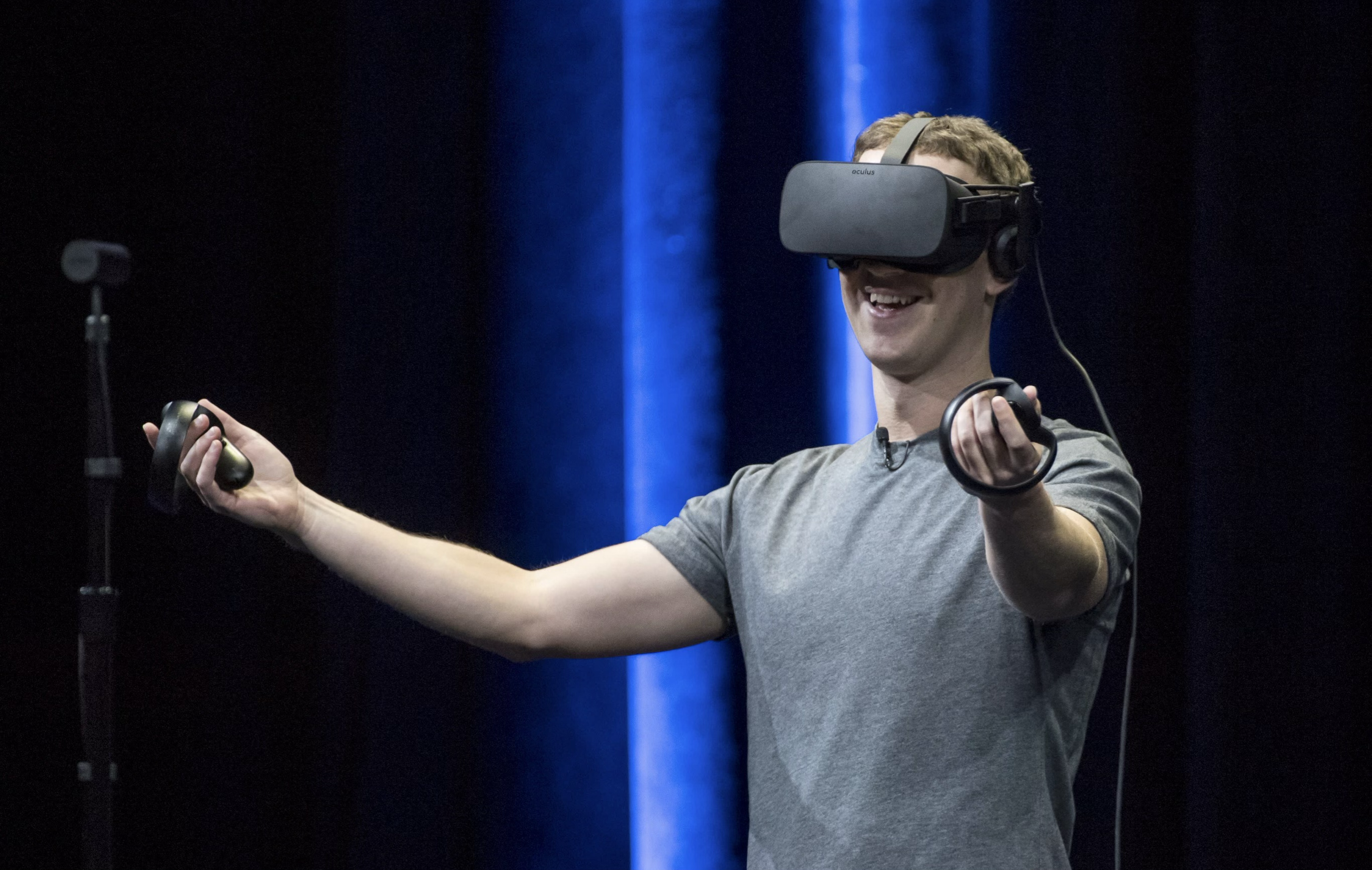 (Image caption) In 2014, Oculus was acquired by Meta (then Facebook). This deal, worth approximately $2 billion, made Palmer Luckey one of the youngest tech billionaires at the time and marked the official entry of VR into the mainstream of the global technology industry.
Based on his numerous interviews and public statements, his personal vision can be simplified into three layers:
- Technical layer: Make virtual reality and AI the next generation of human-computer interface and combat hub, compressing battlefield information into a form that "human brain can really understand".
- Defense level: Rebuild the U.S. arsenal with software-defined weapons and large-scale automated production, allowing democratic countries to counter the expensive and slow traditional military industry with "cheap, easy-to-use, and high-volume" systems.
- Civilization level: He believes that AI will drive hardware costs to extremely low levels, like "a Ford F-150 for only a few thousand dollars," which will completely rewrite the economics of war and deterrence, and he hopes to stand at the leading end of this curve.
VII. Political Stance: Silicon Valley outsider, Washington D.C. celebrity
What sets Luckey apart from most Silicon Valley entrepreneurs is his open embrace of a highly polarized political identity. Since the donation controversy in 2016, he has been considered a public Trump supporter. His subsequent fundraising dinners at his Southern California mansions gradually warmed his ties with Republican circles, leading to higher levels of trust within Washington's national security and defense circles compared to his Bay Area peers. He has repeatedly criticized Silicon Valley's "anti-defense culture" and ESG-style moral fastidiousness, directly naming AI companies unwilling to cooperate with the Pentagon as engaging in dangerous activities. He argues that if tech companies enjoy the benefits of the American system, they have an obligation to strengthen America's military superiority—a viewpoint highly popular with defense contractors and hawkish think tanks. Simultaneously, his self-proclaimed strong pro-Israel stance, support for border security, and hardline position towards China have resulted in public sanctions from countries like China. While these sanctions are mostly symbolic, they indirectly demonstrate that Anduril's products have already penetrated Taiwan and the Indo-Pacific security architecture. This contrast between being "exiled from Silicon Valley but hailed as a hero in the defense industry" is probably the most dramatic part of his personal brand, making him a new type of "Iron Man" prototype in the minds of young engineers: not in the Silicon Valley campus, but writing the future history in the defense production line.
8. Personal Life: Gaming Bunkers, Submarines, and Retro Handhelds 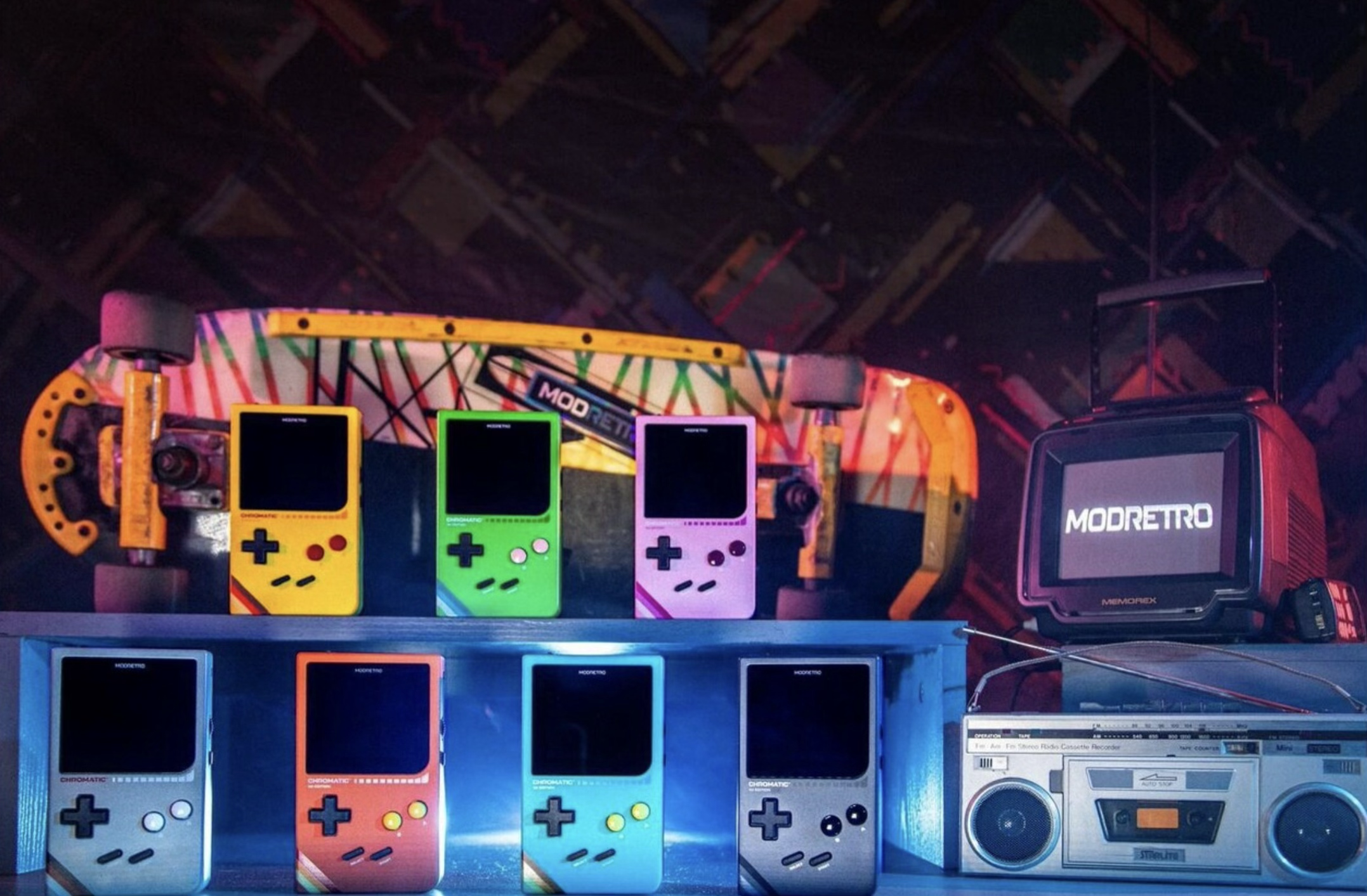 (Image caption) Palmer Luckey's personal world of interests. In addition to being a defense technology entrepreneur, he is also a seasoned game collector, having purchased decommissioned nuclear missile silos as storage for his collection, and founded ModRetro to launch the retro handheld console Chromatic.
In his private life, Luckey publicly stated in the 2010s that he was a seasoned gamer and collector. He purchased a decommissioned nuclear missile silo and converted it into an underground gaming warehouse, storing tens of thousands of physical games and hardware, making it a world-class private collection. This gave him an additional "faith bonus" in the gaming community. He also owns multiple boats and helicopters, including military-grade or quasi-military-grade vehicles, which he personally drives or modifies. This is both an expensive hobby and a source of inspiration for testing sensors and autonomous control systems, turning his life into an engineering testing ground in a way. In 2024, he relaunched his early ModRetro brand, releasing the Chromatic retro handheld console, which can legally read original Game Boy cartridges. Priced at around $200, its design language blends nostalgia with modern materials, allowing him to briefly "return to his roots" in the consumer electronics world. This once again proved that his sensitivity to hardware design and gaming culture has not been swallowed up by defense issues. This contrast between selling handheld game consoles and suicide drones represents the most complex aspect of his personality: he is both a teenager who wants to make toys and spaceships and an arms dealer determined to evolve the kill chain to the next generation.
Palmer Luckey Profile
I. Basic Information
| project | content |
| Name | Palmer Freeman Luckey |
| Chinese name | Palmer Lucky |
| born | September 19, 1992 |
| place of birth | Long Beach, California, USA |
| age | 33 years old (2026) |
| identity | Oculus VR Founder | Anduril Industries Founder and CEO |
| External title | The father of Oculus Rift | The real-life "Iron Man" |
| Main areas | VR technology, AI defense technology, and autonomous weapon systems |
⸻
II. Early Life Background
| project | content |
| family | Father worked at a car dealership; Mother homeschooled her four children. |
| Brothers and sisters | Three younger sisters |
| Family relationships | Ginger, the younger sister, is the wife of former U.S. Congressman Matt Gaetz. |
| Educational methods | Homeschooling |
| University | Department of Journalism, California State University, Long Beach (CSULB) |
| Educational experience | Simultaneously enrolled in courses at Golden West College and Long Beach City College |
| Academic Results | Dropping out of school to start a business |
⸻
III. Early Technological Background
| age | Technical activities |
| 13 years old | Start programming |
| 16 years old | Homemade VR Headset |
| teenager | Collected 43 VR headsets (at the time, the world's largest private collection). |
| Technical Experiment | Railgun, Tesla coil, laser experiment |
| Prototype Development | Developing VR in parents' garages and campervans |
⸻
IV. Oculus VR ( 2012–2014 )
| project | content |
| Startup time | 2012 |
| Core Products | Oculus Rift VR Headset |
| Kickstarter | The target was $250,000, with a fundraising goal of $2.4 million. |
| Technological impact | Reviving the global VR industry |
| Acquisition | Facebook acquired Oculus in 2014. |
| Acquisition price | Approximately US$2-3 billion |
| Luckey's personal wealth | Approximately $700 million (Forbes 2015) |
⸻
V. Leaving the Meta Event
| time | event |
| 2016 | Donate to support the pro-Trump organization Nimble America |
| as a result of | Oculus developers boycott |
| 2017 | Fired by Meta |
| reconciliation | Approximately US$100 million |
| Legal Cases | ZeniMax lawsuit (with Meta paying part of the final settlement). |
⸻
6. Anduril Industries ( 2017– present)
| project | content |
| Established | 2017 |
| Headquarters | Costa Mesa, California |
| Founding Team | Former Palantir executive |
| CEO | Palmer Luckey |
| Main technologies | AI military platform Lattice |
| Core Products | Barracuda, Roadrunner, Ghost drones |
| Border System | Sentry Towers AI Monitoring Tower |
⸻
VII. Company Development Data
| index | data |
| staff | Approximately 7,000 people (2026) |
| Valuation | $30.5 billion (2025 Series G) |
| Financing | $2.5 billion |
| New financing | 2026 funding target: $4 billion |
| Target valuation | Approximately $60 billion |
| Defense orders | billions of dollars |
⸻
VIII. Important Military Products
| product | Function |
| Lattice AI | Battlefield command and control platform |
| Barracuda | Low-cost cruise missile |
| Roadrunner | Reusable interceptor drones |
| Ghost | Military drones |
| Sentry Towers | AI-powered border surveillance |
⸻
IX. Political Stance
| content | illustrate |
| Political stance | Support Donald Trump |
| fundraising campaign | Trump fundraising dinners to be held in 2020 and 2024 |
| Israel's position | Self-proclaimed "radical Zionist" |
| China sanctions | Taiwan faces Chinese sanctions in 2025 due to arms sales. |
⸻
10. Personal Life
| project | content |
| spouse | Nicole Edelmann |
| Profession | Cosplayer, gamer |
| child | A son |
| Residential | Newport Beach Lido Isle |
⸻
XI. Wealth
| project | data |
| Net assets | Approximately US$3.6 billion (2026) |
| Main source | Anduril holding shares |
| Early wealth | Oculus Shares for Sale |
⸻
XII. Collections and Interests
| collect | illustrate |
| Game Collection | The world's largest private game collection |
| Collection Location | Decommissioned nuclear missile silos |
| Military equipment | Mark V special operations boats, submarines, and Black Hawk helicopters. |
| vehicle | Military Hummer |
| Other businesses | ModRetro handheld console |
⸻
Thirteen, Famous Quotes
| saying | meaning |
| "VR may be the most important technology of this century." | VR is the most important technology of this century. |
| "I'm back, and I'm just getting started." | I'm back, and it's only just begun. |
| "I didn't want to build Anduril, but it's important." | Building Anduril is a mission |
Overall evaluation
| evaluate | illustrate |
| Technical identity | VR Revolutionary |
| Business Identity | AI defense technology entrepreneurs |
| Silicon Valley status | One of the most controversial entrepreneurs |
| Industry impact | Reshaping global military technology |
⸻
Palmer Luckey's Tech Empire Structure Diagram
| Key figures | First Domain | Second Field | Third Field |
| Palmer Luckey (Core of Technology Entrepreneurs) | VR Revolution | AI-powered defense technology | Venture Capital Network |
| Representative projects | Oculus Rift | Anduril Industries | Silicon Valley Startup Network |
| Industry impact | Reviving the global VR industry | Promoting AI-driven autonomous weapons and defense technology | Connecting Silicon Valley venture capital with the defense technology industry |
| Technical direction | Virtual Reality (VR) | AI + Autonomous Systems | Entrepreneurship and Capital Operation |