

The 15th China International Fair for Investment and Trade (CIFTIS) will be held in Beijing: How to fulfill the contract after signing an overseas investment agreement?
Kevin Guo

According to the organizers, the opening ceremony and plenary session will be held in the morning, followed by thematic activities in the afternoon, covering areas such as industry-education integration, petrochemicals, smart healthcare, and regional cooperation. Legal services and industrial investment are on the same agenda, allowing companies to discuss funding, delivery, and dispute resolution arrangements simultaneously when contacting potential partners. For a cross-border transaction, the signing authority, payment terms, and allocation of responsibilities of the partner directly affect the costs that the company needs to bear. The meeting provides opportunities for contact, while the contract determines what each party must do after the cooperation begins.

Cross-border legal service cooperation was already established at the previous conference
During the 14th China International Fair for Investment and Trade (CIFIT) held in May 2024, legal service institutions participated in exchanges between enterprises and overseas partners.
On May 27, 2024, the Astana International Financial Centre (IFFC) announced the opening of service facilities at its court and international arbitration center in the China World Trade Center in Beijing, providing meeting, hearing, administrative support, and digital technology facilities to facilitate Chinese investors with business in Kazakhstan to use relevant dispute resolution services. The announcement also recorded that the head of the institution attended a meeting of the China Overseas Development Association and reached a cooperation agreement with the association.
The activity record released by Huashang Law Firm on May 31 of that year also recorded the participation of the Shenzhen Qianhai Belt and Road Legal Service Federation in legal service exchanges at the CIFIT, and the signing of an agreement between Gao Shu, in his capacity as executive chairman of the federation, and the heads of the Astana International Financial Centre court and international arbitration center.
Such collaborations provide businesses with access to overseas legal services, but cooperation between institutions and the fulfillment of a specific investment contract remain separate issues. Service venues can reduce inconvenience in communication and procedural participation, but the admissibility of a specific dispute depends on applicable jurisdiction and procedural conditions.The Astana International Financial Centre stated in the aforementioned announcement that its courts are separate from the general court system in Kazakhstan; for other disputes, the parties can grant jurisdiction through written consent. Therefore, when choosing a dispute resolution mechanism, businesses need to carefully review whether the contract stipulates court proceedings or arbitration, and how the relevant judgment or award will be enforced in the location of the assets.

Product export, technology licensing, and joint factory construction: responsibilities differ
Manufacturing companies participating in overseas trade fairs often simultaneously seek customers, distributors, technology partners, and overseas investment partners, but the corresponding capital investment and legal responsibilities differ for each type of cooperation.
A notice released by Huaihai Holding Group on May 28, 2024, indicates that the company showcased its sodium-ion new energy products at the previous trade fair, and its overseas business team conducted business negotiations with potential partners. For such companies, after product demonstrations and initial contact, it is still necessary to determine how the transaction will proceed.
If it is product export, the contract focuses on order quantity, payment, delivery, acceptance, and after-sales responsibility; if it is technology licensing, it involves the scope of authorization, fees, intellectual property rights, and termination conditions; if it is jointly establishing an overseas factory, it is also necessary to handle shareholder contributions, land use, construction permits, equipment investment, and management rights.
A document also referred to as a "cooperation agreement" may only record the intention to continue negotiations, or it may already include specific obligations such as procurement, investment, or other concrete commitments. The document name alone cannot indicate its binding force; companies need to confirm the content of the terms, the conditions for effectiveness, and the applicable law to determine what commitments they have made.These differences also affect the interpretation of post-meeting outcomes. Establishing contact, reaching an agreement, signing a formal contract, and completing the investment represent different stages and cannot be summarized by a single signing figure.
The $213.58 billion investment flow cannot replace the cash calculation of a single project.
The "Statistical Bulletin on China's Outward Direct Investment in 2025," released on September 23, 2026, by the Ministry of Commerce, the National Bureau of Statistics, and the State Administration of Foreign Exchange, shows that China's outward direct investment flow in 2025 was $213.58 billion, an increase of 11.1% year-on-year; the stock of outward direct investment was $3.4 trillion. This data reflects the overall scale of outward direct investment and is not based on the same statistical standards as export orders, technology licensing, or cooperation intentions at trade shows, nor can it indicate the return on investment for a particular company's projects.
The operational pressure on individual projects often manifests first in the time lag between cash inflows and outflows. Overseas factories may need to pay for land, construction, and equipment upfront, while sales revenue is only generated after obtaining permits, commencing production, and customer acceptance. If the partner's investment is delayed, or the loan is not secured as expected, the party that has invested earlier may need to raise additional funds.
For companies with limited funds, this time lag can impact existing business operations. The continuous tying up of cash by overseas projects can also put pressure on domestic suppliers' payments, employee salaries, and other order fulfillment. Therefore, investment calculations need to present the sources of funding and payment terms at each stage, rather than simply listing the total investment and projected revenue.
The authority of government departments, industrial parks, partner companies, and financial institutions also differs. Whether land, tax incentives, or financing support can be secured depends on the commitments of the authorized entities, the required approvals, and the accompanying conditions. Presentations given at promotional events must be formalized into verifiable documents and arrangements before they can serve as the basis for investment decisions.
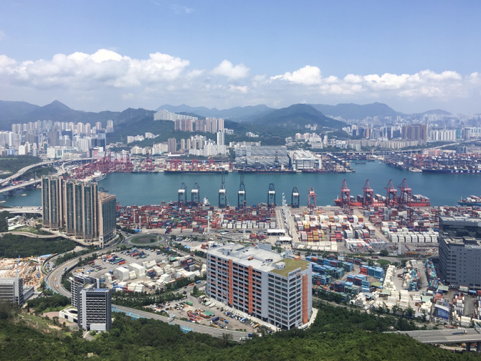
This year's Overseas Investment and Trade Fair includes a roundtable discussion on legal cooperation for overseas markets, continuing the trend of joint participation in investment negotiations and professional services.
Matters that legal services can handle in the early stages of a transaction include verifying the identity and contractual authority of the partner, reviewing payment and acceptance conditions, and arranging guarantees, liability for breach of contract, exit, and dispute resolution clauses. These aspects affect when a company makes payments, when it has the right to stop payments, and against whom it can assert its rights after the cooperation is interrupted.
Among these, the procedural chances of winning a lawsuit and the actual ability to recover funds must be considered separately. Even if the contract contains a dispute resolution clause, whether the other party possesses enforceable assets, where those assets are located, and how much time and cost the subsequent procedures will require can all affect the outcome of the recovery.
Therefore, the dispute resolution mechanism needs to be evaluated together with the partner's credit, payment guarantees, and asset situation. For businesses, clarifying responsibilities before making large payments is crucial for controlling subsequent investments.
Post-meeting progress determines the actual weight of cooperation.
The impact of overseas cooperation conferences will also be reflected in post-conference contracts and project progress: whether cooperation intentions have resulted in formal transactions, whether committed funds have been到位 (到位 means "in place" or "到位 means "in place"), whether equipment has been delivered, and whether overseas factories have obtained permits and commenced operations. Whether legal service cooperation has been used by existing businesses is a better indicator of service effectiveness than the agency's contract itself.
Project delays, scale adjustments, or terminations also have informational value. These changes can help later investors understand the market.Market demand, financing conditions, and implementation costs provide more concrete metrics for measuring the outcomes of collaborative platforms.
The overseas business fair on November 3rd will offer companies a new round of opportunities for contact and negotiation. How far cooperation can progress depends on the ability of all parties to contribute capital, deliver goods, and operate according to the contract; agreements brought back by companies will only translate into orders, revenue, and sustainable business operations after these responsibilities are gradually fulfilled.
Disclaimer
This article is based on documents from the organizer and publicly available information obtained as of October 25, 2026, and is intended for news and informational purposes only. It does not constitute investment, legal, or tax advice; specific transactions must be evaluated in accordance with contracts and applicable laws.
Comments
Please login to post a comment
No comments yet, be the first to comment!