

Science is not confined to the laboratory: Cold Spring Harbor, New York to host its second annual Science and Arts Festival.
Sun Xiaoming
Scientific discoveries are often born in laboratories, but people's understanding of science doesn't necessarily come solely from papers, data, and instruments. Painting, photography, music, and poetry can also be another path for humanity to understand the world of life, nature, and technology.
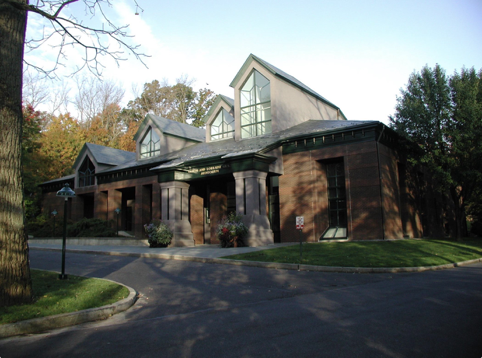
Cold Spring Harbor Laboratory (CSHL) in New York City will hold its second annual "Science Meets Art Festival" on Sunday, July 26, 2026, from 2:00 PM to 5:00 PM at the Grace Auditorium on campus. Hosted by the Center for Humanities and History of Modern Biology at Cold Spring Harbor Laboratory, this biennial public cultural event showcases the creative output of the "Celia & Wally Gilbert Artist-in-Residence Program."
This year's festival consists of two parts: an art exhibition and a panel discussion. The art exhibition, held from 2:00 PM to 3:00 PM, will feature works by past Gilbert Artist-in-Residence, Cold Spring Harbor Laboratory staff, and invited artists, encompassing visual arts, cross-media creations, and photography.
The art panel discussion will be held from 3:00 PM to 5:00 PM.
The project's co-initiator, Nobel laureate Walter (Wally) Gilbert, will deliver a welcome address; internationally renowned landscape painter April Gornik will give a special lecture, and American film composer Carter Burwell will serve as the introductory speaker.Following this, five creators who have participated in Gilbert's residency program will share their works and creative experiences, including visual artist Rebecca Kamen, macro photographer Christine Lorenz, writer and poet Liza Duncan, composer Nicholas Edwards, and book artist Annabel Romero Hernandez. Liza Duncan will read a poem, and Peter Westcott will perform Nicholas Edwards' music.
A silent auction will also be held concurrently from 2 pm to 4 pm on the day of the event, allowing the public to bid on curated original artworks to support the artist-in-residence program. A coffee break will be provided during the seminar, and refreshments will be served afterward. The organizers state that advance registration is required to attend. A Residency Program Bringing Artists into the Scientific Context
The "Celia & Wally Gilbert Artist Residency Program," initiated in 2020 by Nobel laureate, scientist, and artist Walter Gilbert, and poet and artist Celia Gilbert, aims to establish a continuous exchange mechanism between science and art.
Selected artists, composers, writers, and designers can reside at Cold Spring Harbor Laboratory for one to three weeks, interacting with laboratory scientists, library and archive staff, and accessing life science research, historical documents, photographs, correspondence, manuscripts, and rare collections. During their residency, artists can bring existing projects or explore new creative directions through their interactions with scientists.
According to the program, resident artists are required to create at least one work related to their residency experience and, within the following year, present it to the scientific community and the public through public events, exhibitions, lectures, or online platforms. This distinguishes the project from typical art patronage. It doesn't simply place artworks in laboratories as decoration; instead, it allows artists to truly immerse themselves in the scientific research environment, engaging with researchers, research materials, and historical scientific archives, and then reinterpreting science in a different language.
Another Side of a Century-Old Research Institution
Founded in 1890, Cold Spring Harbor Laboratory is a globally influential private, non-profit research institution in the life sciences, with research areas encompassing cancer, neuroscience, plant biology, and quantitative biology.
According to publicly available information, Cold Spring Harbor Laboratory currently employs approximately 1,000 people, including about 600 scientists, students, and technicians, and its history is closely linked to eight Nobel laureates. The laboratory's Meetings & Courses Program attracts over 12,000 scientists annually from around the world, with events held at its Long Island headquarters and in Suzhou, China. Beyond research, academic conferences, and talent development, Cold Spring Harbor Laboratory also regularly hosts public lectures, music events, campus tours, exhibitions, and science and culture projects. These arrangements have broadened the scope of the research institution beyond just professional scientists, gradually making it an entry point for the public to engage with life sciences, the history of science, and cutting-edge issues.
GFM Observation
This art festival hosted by Cold Spring Harbor Laboratory wasn't large in scale, but its significance lies in the fact that the activities weren't isolated.
The second Science Meets Art Festival is built upon a residency artist mechanism that has been in place for many years since its inception in 2020. Artists don't just briefly visit the laboratory; they enter the research environment, work alongside scientists and archivists, and then translate complex life science questions into images, sounds, words, and objects.
The value of this system cannot necessarily be measured by the number of visitors to a single exhibition. It reflects whether a research institution is willing to invest resources long-term to maintain contact between science and the humanities, and to allow the public to understand science beyond professional jargon. As scientific research increasingly relies on data, algorithms, and highly specialized technologies, the distance between science and the general public may widen. Art cannot replace scientific proof, but it can raise questions, preserve feelings, and transform abstract research into experiences that people can see, hear, and feel.
Measuring the public value of a research institution should not only be based on the number of papers it has published or the number of patents it has obtained, but also on its ability to bring complex knowledge into society and establish continuous and credible communication with the public.
This science and art festival at Cold Spring Harbor Laboratory embodies precisely this kind of effort: science still occurs in the laboratory, but the meaning of science should not remain confined to the laboratory.
Comments
Please login to post a comment
No comments yet, be the first to comment!